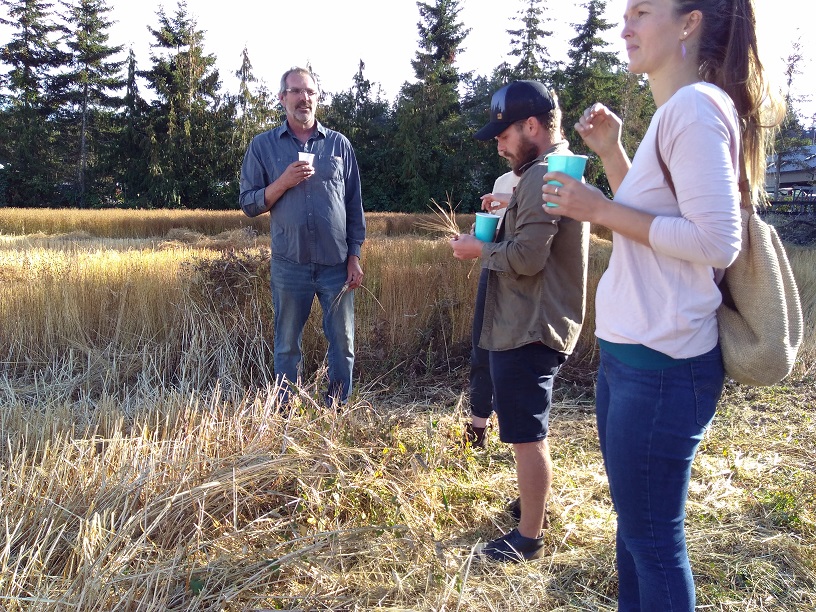
 Last Sunday I got down and dirty with the Victoria Horticultural Society’s Fruit & Vegetable Group, whose monthly meeting was a tour of Terra Nossa Farm. I’d often bought eggs or sausages or chicken from Evelyn, who commands a loyal queue each Saturday at Moss Street Market, so I was delighted to have a chance to see the farm she runs with her husband Jesse.
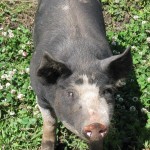
Labour of love about sums it up here. Jesse says of their pigs that they live their lives in 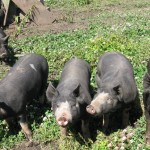 heaven, and then they die. They’re fed organic grain, fresh greens and roast sweet potatoes grown on the farm. Ten of their Berkshires, purchased as piglets from Tom Henry (there are very few organic pig breeders, Evelyn remarked), were nearing their slaughter date, and were out frolicking in a field of greens. They came to greet us, flapping their enormous eyelashes and making us question who was looking at whom. I’ve been on pig farms before, and never have I been to one where there was not a whiff of stink: they have plenty of room to run and play, and shelters provided for both summer and winter comfort.
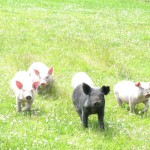
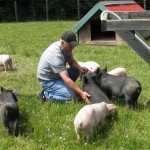
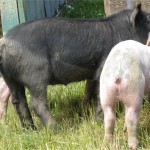
There were some piglets in another field: two varieties, black mule pigs (sourced from Lasqueti Island) and some Tamworth cross pigs bought from a commercial operation in Alberta. The white pigs were very skittish at first and prone to scattering when Jesse approached, but with patience he has been able to get them to become a bit more pig-like, curious and friendly. The white ones’ tails had been docked by the breeder, a common practice where they are kept in such overcrowded conditions they are likely to gnaw on their neighbours out of stress or for lack of anything better to do. Evelyn said they hadn’t checked their teeth but these were likely clipped as well, for similar reasons.
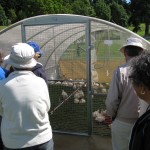 The chickens are treated kindly at Terra Nossa as well, although in the case of the meat birds, this happy life is a short one. They are purchased as chicks from a commercial breeder, so they have, as Evelyn put it, had most of the chickenness bred out of them. They’re sent to slaughter at around 8-9 weeks (commercial operations only keep them half that time); they can’t be allowed to get any bigger because the way they’ve been bred means their bodies become too large for their legs to support them and they start developing painful injuries. Jesse was out scything some fresh vetch for the
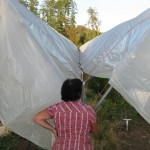
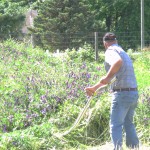 m, which they love, and they seemed to be enjoying the commodious chicken tractor, a top-of-the-line pen that keeps them shaded from the sun and lets them enjoy the view, the breeze, and the tasty snacks being delivered at regular intervals. And the tractor is an easy structure to move, which is the most important feature.
The Perrieras are choosy about where they sell their chickens. They’ve become disillusioned with restaurant sales, having experienced situations where chickens were sold to restaurants who put their farm’s name on the menu and then ceased buying from them. So now they limit their sales to the farm gate, the farmers markets they attend (Moss Street in the summer and the Downtown market in the winter), Ingredients Health Food and local food promoters Share Organics.
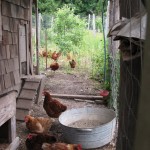
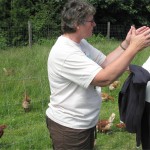 The laying hens have a nice big area to run in, and produce enough eggs to supply Moss Street Market, Origin Bakery, Terra Nossa’s farm shop and Share Organics. I noticed that they still peck one another’s tails – I suppose they are just too numerous, and a few are lost from time to time to the bald eagles we saw circling during our visit. The farm has a license allowing them to keep 399 laying hens (the limit on small producers without such a license is 99 birds) but Evelyn says they won’t be renewing that. New rules are coming in that would mean the small producers with 399 layers would be forced to adopt the same biosecurity measures as industrial producers (meaning no more farm tours, for one thing); would not be allowed to let their chickens run outside on pasture as they do now; would not be allowed to raise meat birds as well as layers; would have to invest in impossibly high-cost equipment and potentially upgrade facilities for inspection. We would not have been allowed access to the farm without suiting up, for example. So the regulatory club is still swinging directly and heavily at small producers and forcing them out of the very markets where they are needed and appreciated.
Evelyn & Jesse are acutely aware of their dependence on imported livestock feed, since 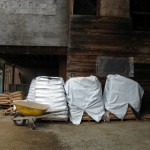 there is no organic feed producer on Vancouver Island, they must have it shipped from the mainland by ferry. Like any Islander who thinks about food security, they are conscious of the fragility of their supply, so they try to keep a reasonable reserve in store. Because organic feed is more expensive than conventional, this means quite a substantial capital outlay, at about $1000 a pallet.
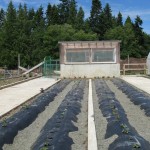 Towards the end of the tour we had a look at the sweet potatoes bravely growing under black plastic mulch. They were planted out in March, but the weather has been so chilly that they are not thriving, although with luck the summer heat should kick in and move them along. At the end of the rows is the winter pig barn, where the porkers can loll about enjoying the roasted sweet potatoes the Perrieras prepare for them (many of the larger sweet potatoes are considered unsaleable, so they go to the lucky pigs).
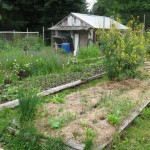
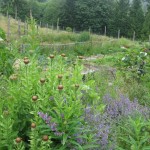
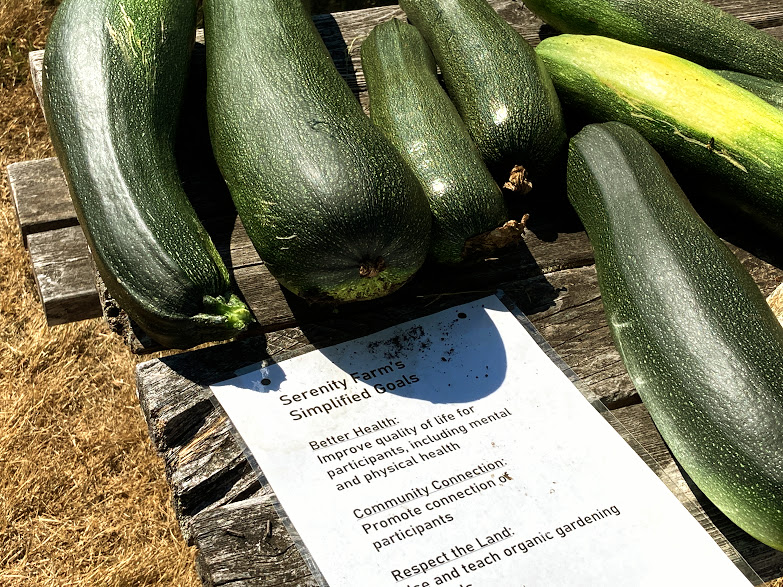 Serenity Farm had an open garden yesterday, and I’d wanted to see what went on there for a while.
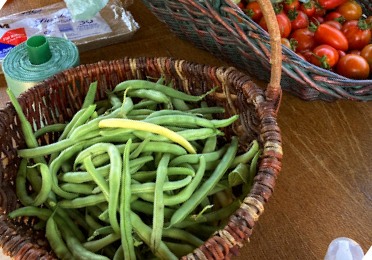 The project has been going for around 10 years and sits in a sunny field on the grounds of
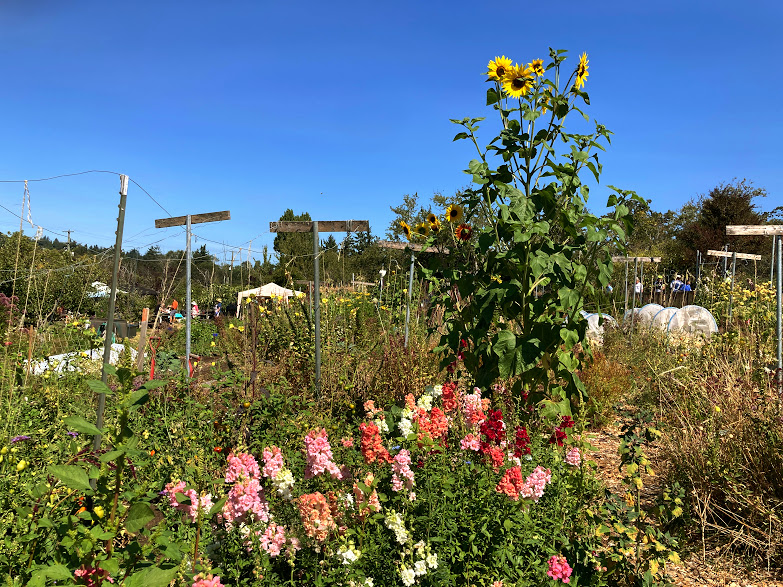
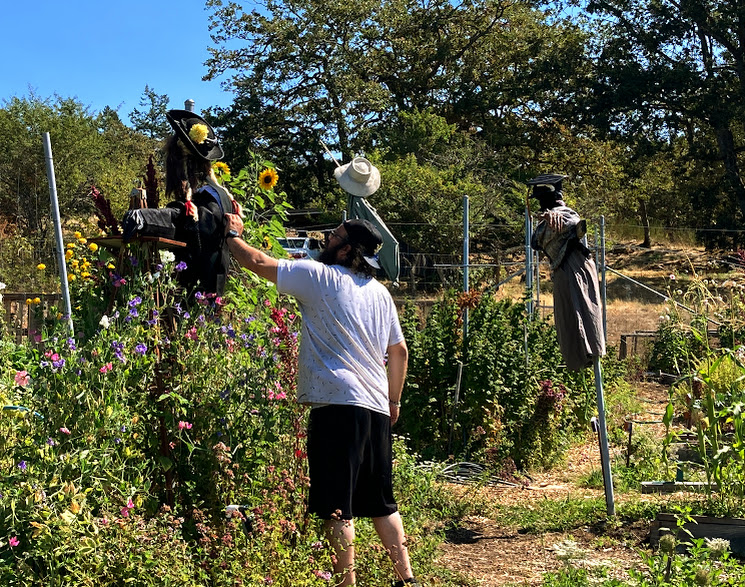
 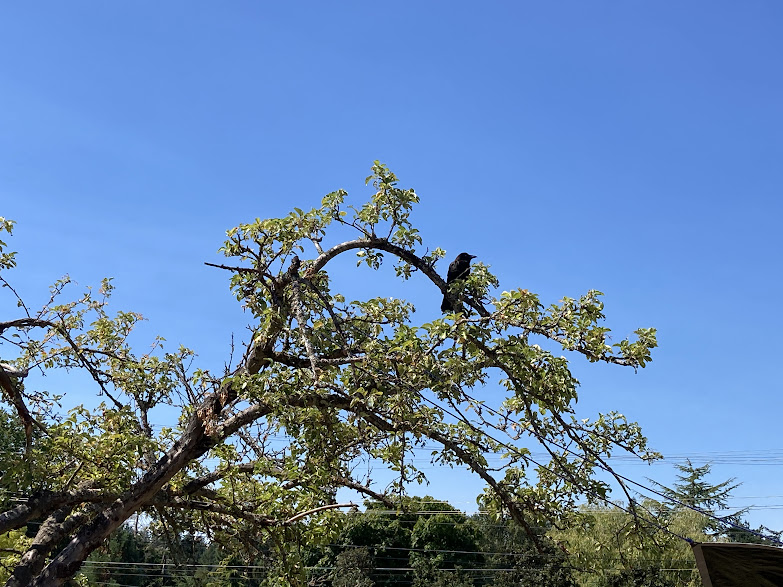 the Seven Oaks Tertiary Care Facility, in the Blenkinsop Valley. It’s always cheering to see how much food can be produced in a small space with volunteer effort, and the beans and tomatoes were abundant, as were the flowers and fruit – the plum tree was laden and the small apple tree boasted enormous apples. A crow presided from a nearby branch, presumably keen to judge the scarecrow competition that was underway.