Skip to content

permaculture

Laughing oysters, food forests and a trip to Bellingham

Last weekend I happened upon this rather lovely book display in the window of the Laughing Oyster book store in Courtenay. I’m keeping good company!

This afternoon I go head-to-head with the Superbowl, whatever that might be, giving a book talk at 4pm at the beautiful Village Books in Fairhaven, Bellingham. I took the marvelously efficient and comfortable Amtrak train from Vancouver, which gave me a little time to wrap my head around a new laptop, purchased reluctantly after my previous faithful companion died a lingering death of old age (obsolete after 5 whole years: why is this legal??).

The trip also gave me time to reflect on last night’s thoughtful and inspiring talk by Seattle’s food forest designer, Jenny Pell. She spoke about community-driven food security initiatives in Washington and Oregon, including the Beacon Hill Food Forest in Seattle, a 7-acre parcel that is being developed as the largest public food forest in all of North America. It’s had lots of media coverage.

Pell, like many permaculturalists I’ve met, was a broad thinker who has passed the stage of thinking about change: the time for change is already here, and she wants to see movement into a more sustainable and positive way of life. Why, she asked, do we behave like zoo visitors, simply marveling over model achievements (like the Bullock Brothers’ permaculture homestead, or the solitary Sea Street in Seattle) and never creating multiples of them? We know what’s coming and that change is needed, but somehow we keep our heads down and live on as if we had nothing to do with making a sustainable world possible.

She admitted she was unusual, having never had a credit card nor made a mortgage payment, so was free of the economic traps that have wrapped so many in knots. Do what you need to do, was her message, and you too can live in a world where a salad costs less than a heavily subsidized hamburger, or you don’t have to call in the media in order to be allowed to keep your front yard food garden; where municipal planners can encourage home owners and builders to incorporate features like greywater harvesting and composting toilets; and where it’s not illegal to sell produce grown in your own garden.
Ecovillage tour & Canada Day

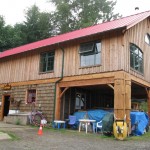
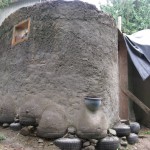
Another place I’d long wanted to see was O.U.R. Ecovillage, near Shawnigan Lake on Vancouver Island. A haven for green builders, permaculture designers, and people in search of collaborative and sustainable lifestyles, it’s a half-finished dream with a population that ebbs and flows through the seasons.

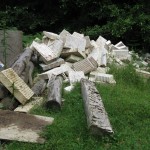
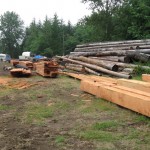
The root cellar was the subject of a green building workshop last year, and progress was documented on this Youtube video. Like many of the other buildings it uses recycled materials in its construction: car tires and styrofoam blocks are part of its structure. Like everything that happens at the Ecovillage, the decision to use these materials was taken after lengthy thought and discussion, and the feeling is that it’s better to put them into a structure where they have a purpose and are contained than into a landfill (at best). The styrofoam blocks they use are discarded tree plug trays – available by their millions, an otherwise useless and unsustainable byproduct of reforestation by the lumber industry. The community is also working its way through some 15 truckloads of reclaimed lumber – windfall timber that would otherwise have been sold as firewood or burned as slash.

Root CellarStyrofoam tree plug traysReclaimed lumber


Permaculture has always been part of the ideals of the Ecovillage; the Permaculture Design courses that are offered here result in projects of many kinds – garden, water reclamation and food forestry among others.

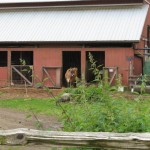
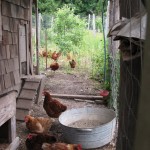
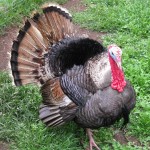
CowChickensTurkey


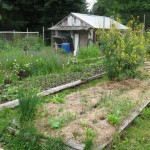
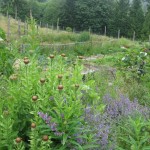
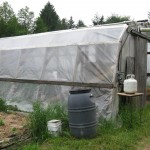
Food is a major preoccupation – it grows in various ways and places: in a deer-fenced garden and a new food forest that’s under development around the property; pigs, chickens, cows and a rather majestic turkey are part of the scene, producing food and fertilizer. This greenhouse  recirculates water, heating it for a shower stall that’s in the greenhouse itself.

Raised bedsGardenGreenhouse


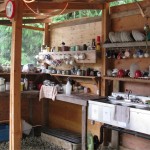
The kitchen has been recently expanded so that it could accommodate the large and small mealtimes. During our visit a Zimbabwean music camp – Nhemamusasa North – was on, and there were 130 people for meals… all of them washing their own dishes in the wash station. Grey water gets filtered and reused, of course.

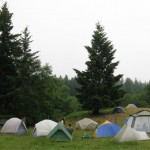
Dishwashing areaTentsPeople by fireplace


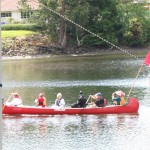
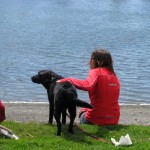
After that it was time for Canada Day celebrations. Here on the Gorge we have a street party that this year was graced by the queen, who also deigned to have her picture taken with neighbourhood dogs, and was then whisked away by canoe. There was of course food, music and a little dancing.

Queen & dogQueen in canoeStrawberry crepeRoving musiciansYoung dancersDog and person

Clay, cordyceps, clams and cucumbers

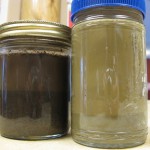
Last weekend’s permaculture course covered soil (with Christina Nikolic of Gaia College, SOUL and The Organic Gardener’s Pantry), fungi and animal husbandry. We started things off with a bit of digging in the garden to collect our soil samples, which we scooped into flat-bottomed jars, topped up with water and commenced agitating to thoroughly break the soil finely enough to settles and show its layers. We were advised to scrape aside the organic matter and just go for the soil. It was going to take some time for everything to settle – but we began to see the surprising truth of Christina’s observation that even where we thought we had hard clay soil, chances were it was simply compacted and the actual clay content would not be that great. The colour of the soil reflects the amount of organic matter, with darker samples being higher in humus, and lighter ones tending towards higher clay content… no bad thing since clay holds water and nutrients better than silt or sand.

Water made up most of the jars, and the layers then settle in this order:

  • (small amount of organic matter floating on top)
  • water
  • clay
  • silt
  • sand

Christina takes a more benign view of soil than most instructors. Knowing your soil type does not mean you have a problem to manage, she says, and nor is there any point to spending money on soil tests. Instead, focus your energies on building up the organic matter in your soil (even a great soil probably only comprises about 10% organic matter) which makes it more able to absorb and retain water and nutrients.

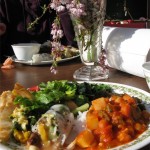
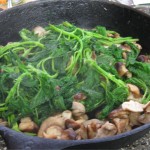
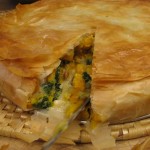
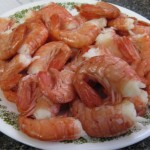
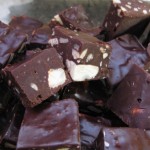
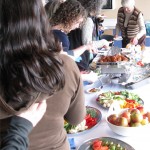
There followed one of our increasingly excellent potluck suppers, which we were delighted to be able to eat on the sunny patio, and which included such local delicacies as steamed nettles with shiitake mushrooms, kale & squash filo pie, mango spring rolls and spot prawns… but the vegan fudge shamelessly stole the show.


After our giant feed, we talked about different ways of growing mushrooms – from inoculated logs (actually bagged bricks of substrate made from grain or wood chips – these are widely

Mushroom stem butt

available here nowadays at farmers’ markets), from spore prints or even stem butts. We were told that mushroom logs can be broken up and used to inoculate mushroom beds made in various ways in the garden, or rehydrated to fruit multiple times, as the mycelium web runs throughout the substrate. By far the most entertaining moment came when Brandon told us about the cordyceps mushroom that infects carpenter ants – compelling them to take to the highest branches of trees, and killing them at the moment their mandibles bite into a leaf, at which point the fungus grows from their bodies. It is a method of pest control (carpenter ants and termites) described by the mushroom guru Paul Stamets whose TED talk also discusses how to use mushrooms to clean industrial waste and for so many other purposes – medicinal, fuel and more – that he proposes preserving old growth forests as a matter of national defense. David Attenborough has documented cordyceps too:

I finished my weekend on Monday evening when I moseyed over to Vancouver Island University to attend a discussion about local food which featured John Ehrlich (of Alderlea Farm) who has a 300-subscriber biodynamic CSA (veg box scheme), and Guy Johnston, who is starting his second year of a Community Supported Fishery offering salmon, prawns and octopus. We broke for a mid-session snack offering local foods including Natural Pastures cheese – but one of the points earlier made was proved to us: in order to offer us local food, the organizers had to buy it and bring it into the meeting. This college with its cafeteria downstairs and a well-established culinary arts program is tied like many institutions to trade agreements and supplier contracts that do not address the provenance of ingredients. In order to assure a local food supply, local food producers need local consumers, and as has been often said most of our food is made up of cheap imports purchased from off-Island wholesalers.

Farmer John Ehrlich
Fisherman Guy Johnston

Spring on the wing

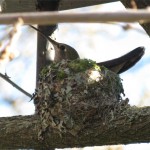
Spring is erupting in all directions. The Anna’s Hummingbird (Calypte anna) nest that graces my fence has very recently produced three newborns and I’m looking forward to watching their progress (and seeing how they all squeeze into a space that’s probably two inches across at most). It’s still damp and chilly here so the mother is spending a good deal of time warming their hairless, featherless bodies. I knew they were big on nectar – hence their value as pollinators – but hadn’t realized they also chow on insects. I’ve hung a feeder nearby that should (for now) be safe from the ants who overran it last time I hung it out. I’ll have to make an ant moat if they become a problem again.

Speaking of moats, I’m intrigued by the idea of a chicken moat. Not a chicken keeper myself, but I’m working on a group project around chickens for the Permaculture Design course I’m taking.

Other airborne creatures have been in the news lately. Meli sent me notice of the headline item that bees are being adversely affected by pesticides. I am not quite certain why it has suddenly become headline news that if pesticides kill insects, and bees are insects, then bees are going to be harmed by pesticide use, but I suppose it does not hurt to belabour this important point. To which should be added the related point that pesticides will also harm beneficial insects besides bees, as well as the higher life forms (hummingbirds, for example?) that feed on those – whether by poisoning them or by removing a food source.

Let us all (who are within geographical reach) celebrate our wisdom in these matters by heading off this Saturday to enjoy a pesticide-free work party at Haliburton Community Organic Farm.

Permaculture & poetry

The last couple of weeks have swung past in a mainly permacultural haze.

The first screening at a new permaculture film night series was Anima Mundi, a bit of a collective disappointment for the 20-odd souls who crowded into the Community Microlending Society office, but a cheery networking session, lively discussion and helpful information share ensued.

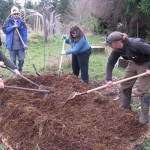
I went for my second round of Permaculture Design classes last weekend, in which we built a hot compost bed in a classically low-maintenance permacultural manner (meaning: let nature do its thing). We prepared the ground by sheet-mulching with layers of cardboard; built a hollowed shell from horse manure; filled it with weeds and seriously rotten kitchen waste; and then covered it with more horse manure. Rats apparently don’t care to dig through manure to get to rotten food. You can then plant squash on top, which keeps the weeds down and thrives on the nitrogenous waste beneath. And harvest fresh soil in a year’s time, when the hill will have sunk to about ground level. Or leave it in place and plant something else there.


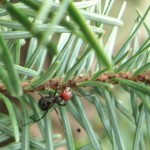
Later we went for a forest walk with Brandon Bauer in order to test our powers of observation and  taste a few ants. Very tasty indeed. A sharp organoleptic explosion that Brandon likened to tamarind or vinegar; I’d say a very acerbic sorrel.


There’s a nice-sounding workshop I won’t make it to this weekend, An Introduction to Home-Scale Permaculture with Elaine Codling; and the Duncan Seedy Saturday takes place that day as well.

And finally, back to poetry. I read with Ruth Pierson and Ted Blodgett at Vancouver Public Library last night and a good time was had by all, I’d say. I read food poems to one of the most responsive and delightful audiences ever, and sold lots of books, including the last few copies of Sunday Dinners. If you have one, you can now officially treasure it as a rare book.

Ruth Roach Pierson
E.D. Blodgett

Catching up: farmer-writers, DIY publicity, food swap & Wade Davis

I had the chance a couple of weeks ago to mosey down to Cadboro Bay Books to catch Farmers at the Mike – an evening with organic farmer-authors Heather Stretch, Robin Tunnicliffe, Rachel Fisher (who make up Saanich Organics) with special guests Mary Alice Johnson and Lana Popham. They were promoting All the Dirt: Reflections on Organic Farming and talking about the life and times of organic farming. It was a packed house and a congenial time.

I then had a chance to check out The Writers Union of Canada‘s professional development workshop, How to Be Your Own Publicist, which was outstandingly good. Heavy on use of social media, it also gave some good practical ideas for promoting books and relationship-bulding with readers. I’m not sure how far I want to go with social media but I’m pretty much in there for now: with this blog, a facebook page and twitter account I think I have as much as I can cope with. I took a look at Pinterest which was touted as the next new thing but swiftly went off it when I learned you could seemingly only access it through Facebook or Twitter and that it wanted to take some control of these media: most off-putting was its statement that if I joined it through Twitter I’d be giving it permission to see who I follow, and have me follow new people; update my profile; and post tweets for me. Which rather defeats the point of having one’s own profile and posting one’s own tweets, I would have thought.

Then it was on to Nanaimo for permaculture classes. I’m enrolled in a permaculture design certificate program that will keep me busy  until mid-May. I’ve heard bits and pieces about it – knew some of the permaculture principles, had seen bits and pieces about permaculture’s founders, Bill Mollison and David Holmgren – but wanted to get a more coherent picture. This course was perfectly timed I thought: every other weekend, so time to think, absorb, apply; and running through the spring when there is the possibility to put some of the ideas into action in one’s own garden. Though the Bullock Brothers are held up as the gold standard for permaculture training, their courses are residential, in a two week block in the middle of summer when it’s hardest to get away.. and I’m a bit past wanting to camp for the duration. So I’m happy with this, and Javan Bernakevitch is proving an excellent facilitator. We did mostly introductory work, getting to know one another (16 in the class now) and some exercises in familiarizing ourselves with zones, sectors and elements. This week we’re getting into the compost, so that should be fun.
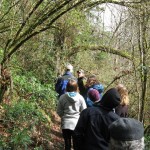
The course is being held in the Pacific Gardens Cohousing Community which is a housing concept I’d been interested in for a while, so it’s good to have a chance to really get to know it and see how things work there. It’s only been going for a couple of years and is in a pretty wonderful location. I like the common spaces – workshop, crafts room, music room – and most importantly, the compost, orchard and raised beds for food production.

I returned in time to host a food swap which yielded some fine bounty: freshly ground garam masala spice mix; freshly ground flour; fresh farm eggs; and some canned peaches and a chocolate-beet-hazelnut cake.

Wade Davis spoke to a packed house in Victoria last week – he filled the IMAX theatre in his home town, on a tour to promote his latest book and cause, The Sacred Headwaters. It’s about the northwestern part of BC where the Skeena, Nass and Stikine Rivers originate. All are important salmon rivers, and the tribal homes of the Tahltan First Nation who hunt and trap in the area. There is also abundant wildlife – grizzly bears, stone sheep and Osbourn caribou – and unfortunately for all of the above, abundant minerals including copper and coal.

Imperial Minerals has already got the go-ahead from the BC government to run the Red Chris mine, (open-pit mining of copper and gold) in the area for 30 years; now Royal Dutch Shell wants to extract coal bed methane gas there. Both operations are of course hugely contaminating. The Red Chris mine will be turning pristine lakes into toxic tailing ponds, and methane gas extraction involves drilling and fracking, which means prolific water use and contamination.

The Skeena Watershed Conservation Coalition offers some ways to get involved in asking Shell to back off:  petition, letters and actively joining the campaign.