Vic West is a neighbourhood of the city of Victoria, one of the 13 municipalities that make up the Capital Regional District (CRD), collectively known as Victoria. It’s a working-class residential neighbourhood with a lot of single family homes, with a good selection of boulevard gardens.
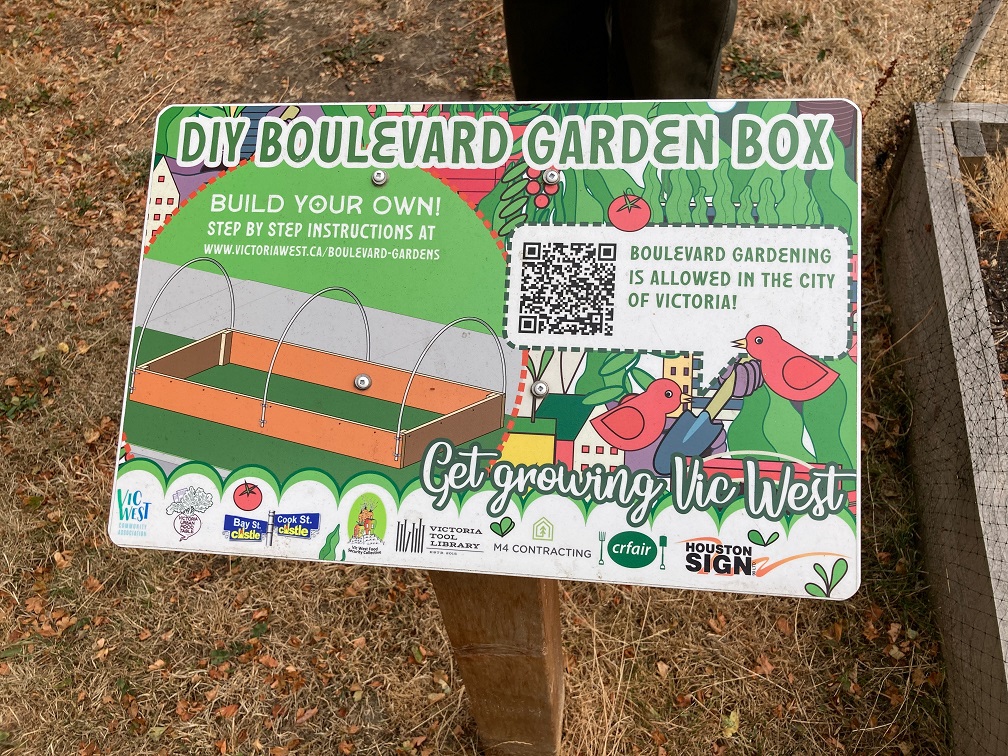
The sign posted next to many of them offers a QR code that links to instructions on how to build a bed suitable for growing fruit, vegetables, flowers or hers between the sidewalk and the street. I went on a tour to see what some of the approaches have been.
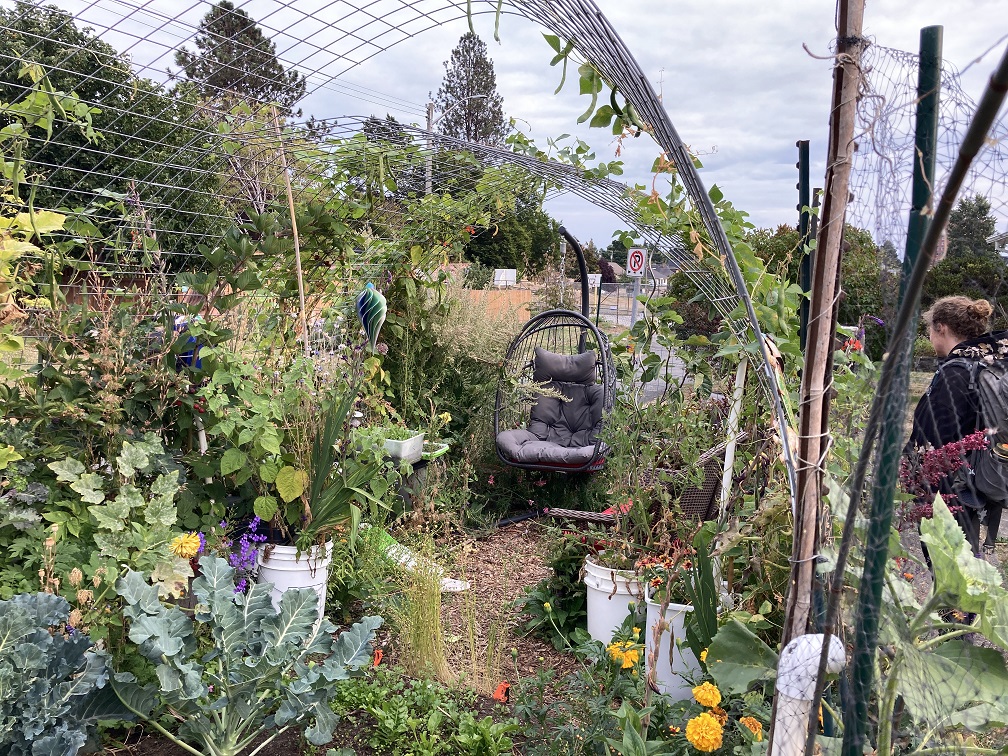
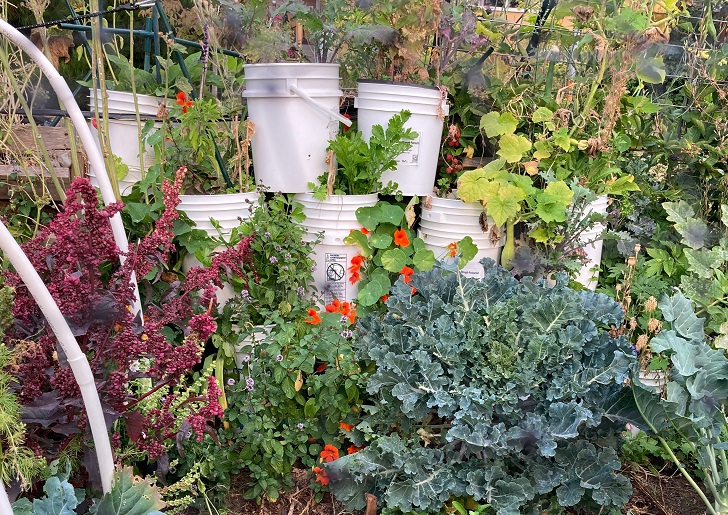
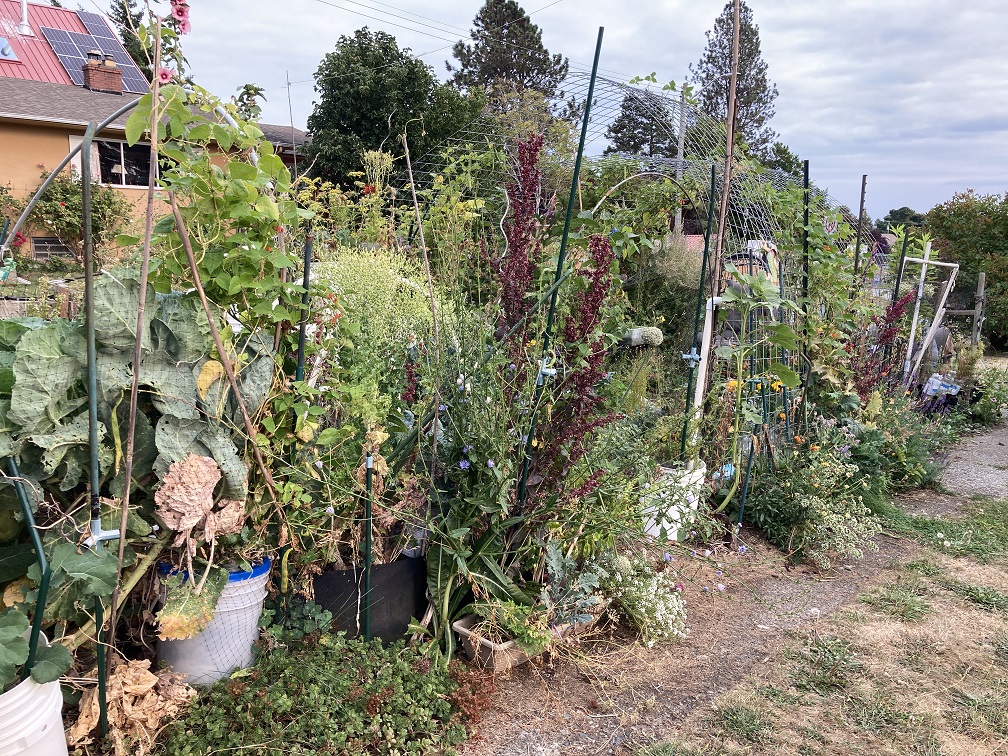
This is what the sign’s instructions suggest – open wood base and PVC hoops that can be covered with mesh to keep out deer or other garden browsers. This one also has added wooden trellises in adjoining beds, and filled the spaces between beds with pots.
Down an alleyway we found a boulevard orchard. Neighbours water and maintain the trees and signs are posted to tell people if the fruit is ready to harvest or not (and to remember it’s a community resource).
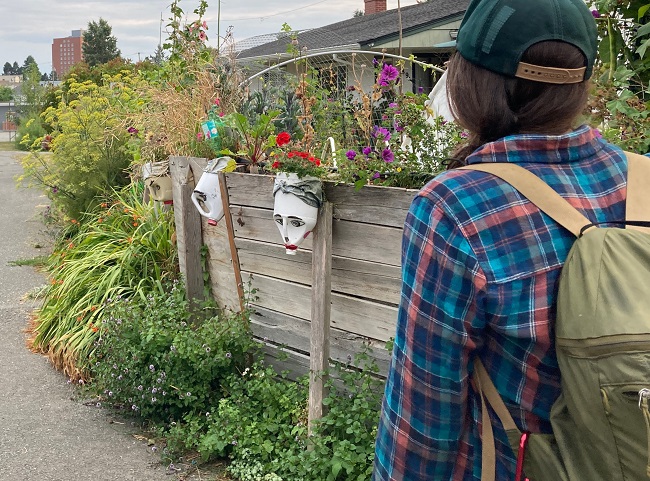
This creative garden was the work of someone who rents her home; the landlord did not want a garden on the property, so the entire glorious creation runs along the side of the property, fully on the boulevard.
Even a cosy seatUsing vertical spaceLush & pollinator-friendlyCreative use of old bleach (?) bottles
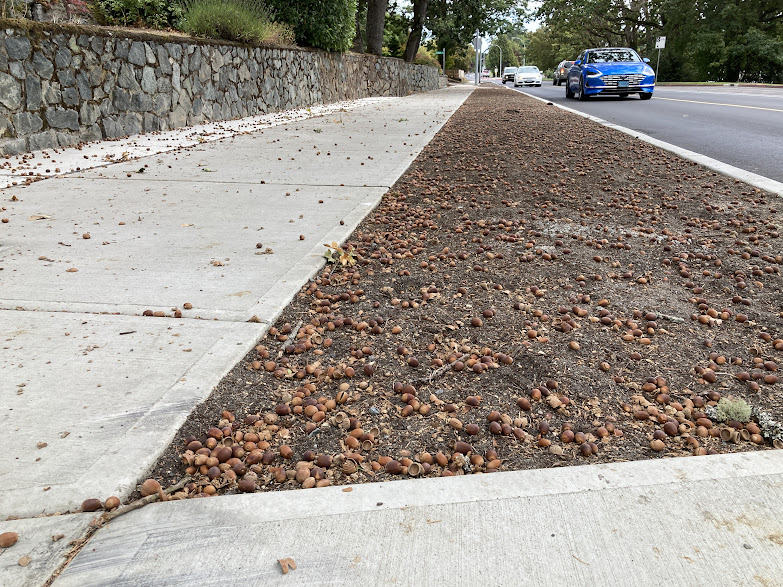
And this is the approach in nearby district of Saanich. Composted soil deposited in late summer, just in time for a mast year for Garry Oaks who clearly want to create a forest. What Saanich wants is yet to be revealed, but is likely grass.
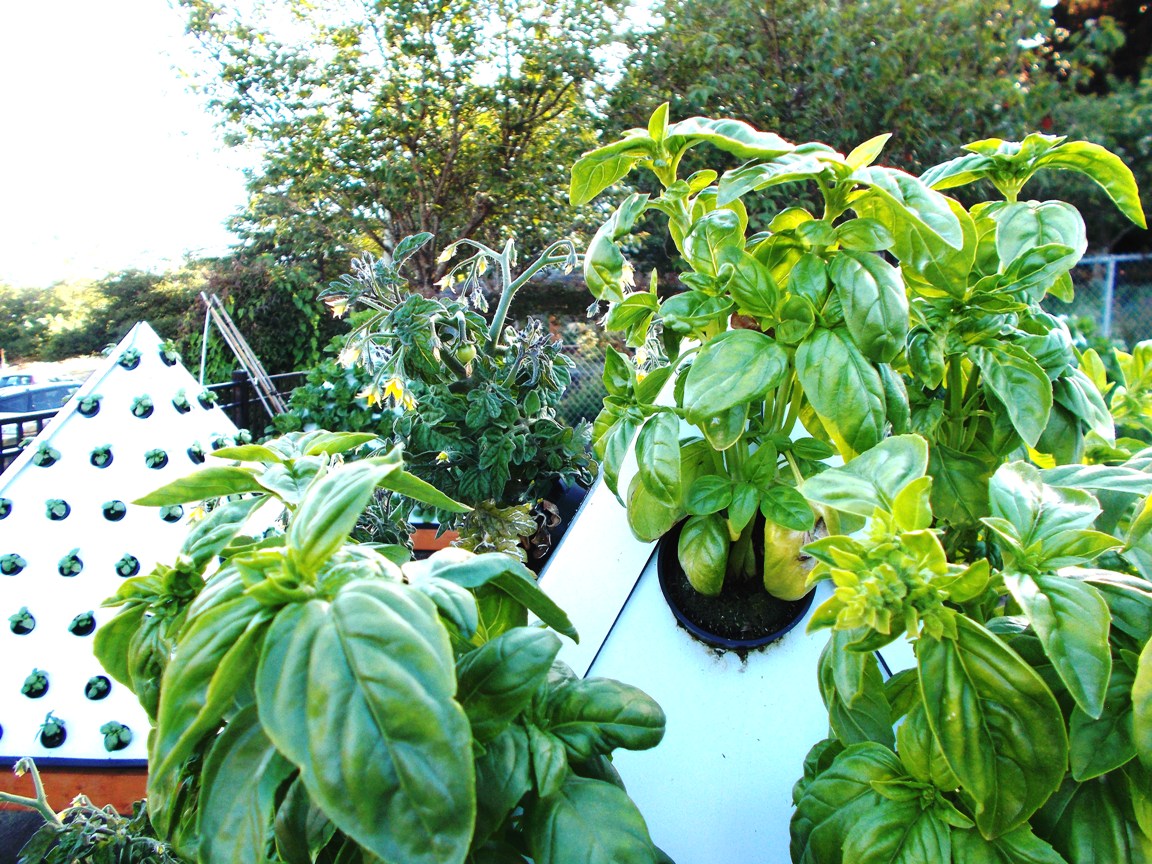
While I am not generally a big fan of artificial growing media (more on that shortly) this one was set up with the worthwhile goal to provide fresh greens to local food banks and community kitchens during the summer growing season. Currently they’re growing basil, baby romaine and tiny grape tomatoes.
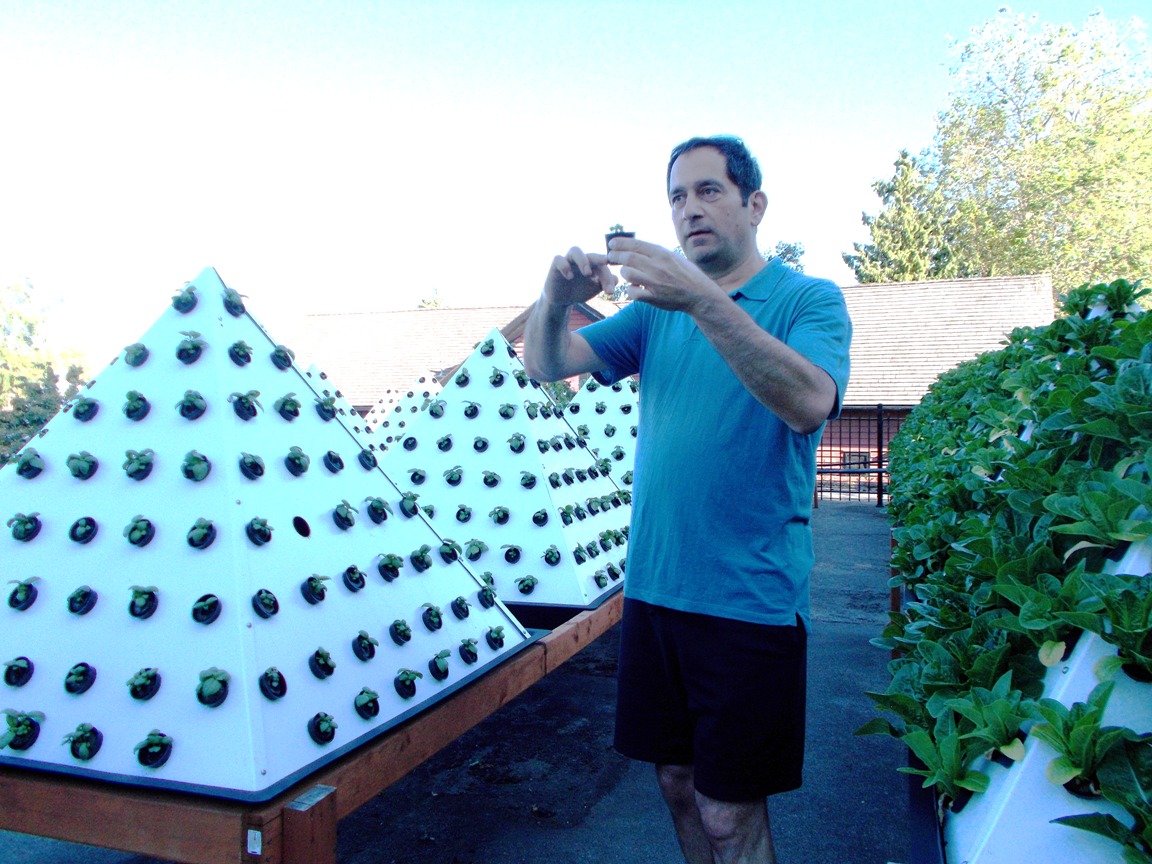
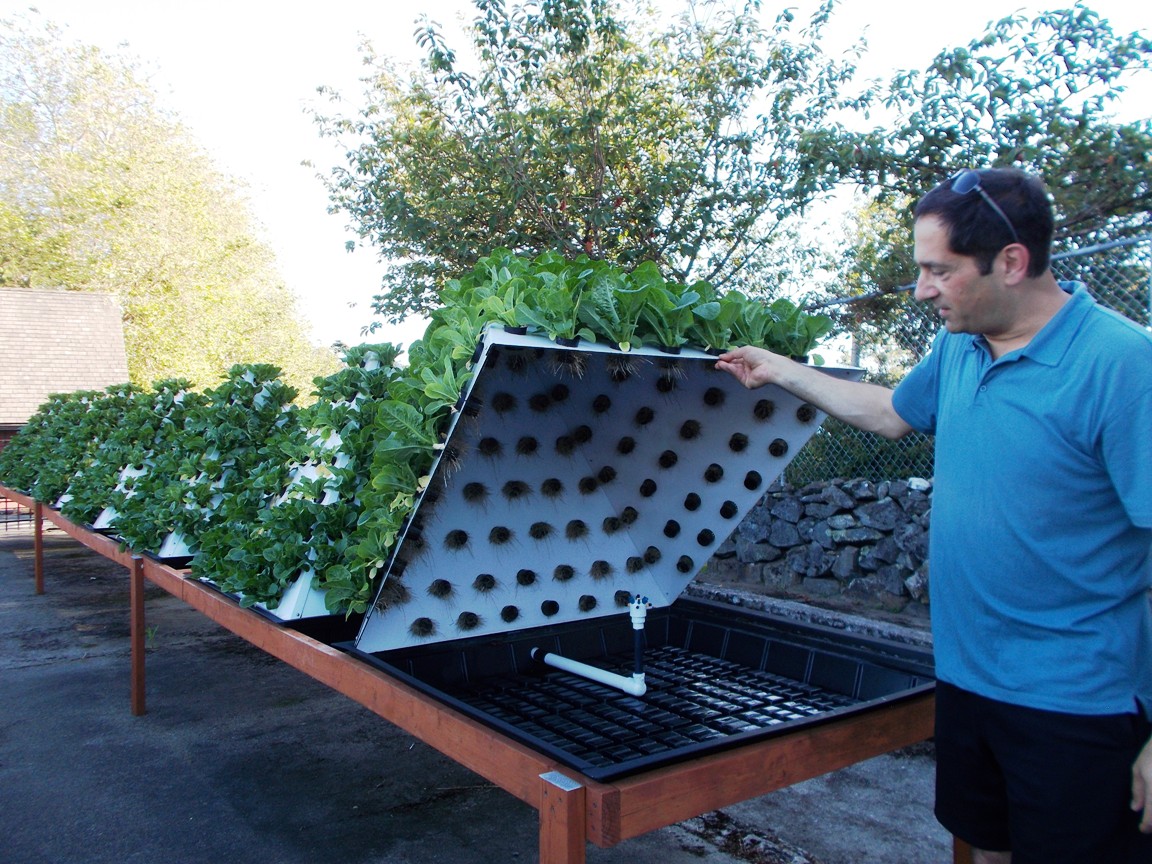
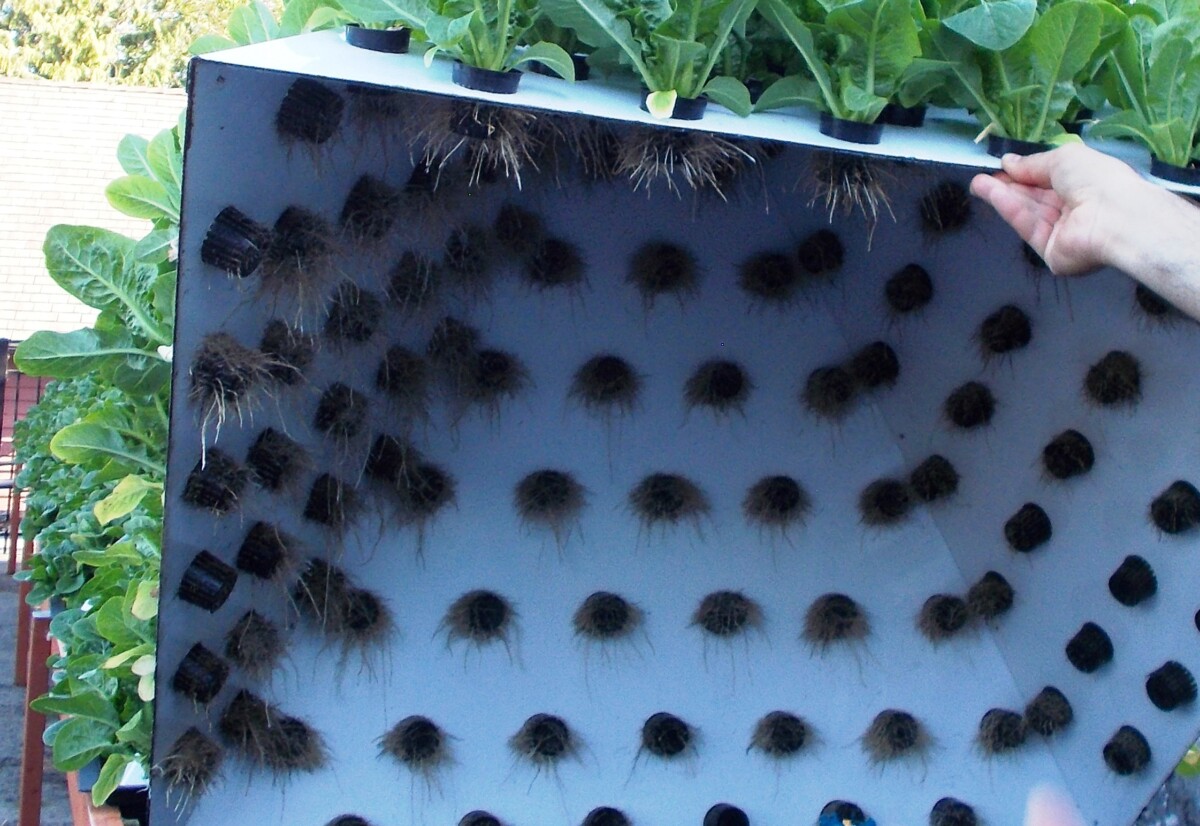
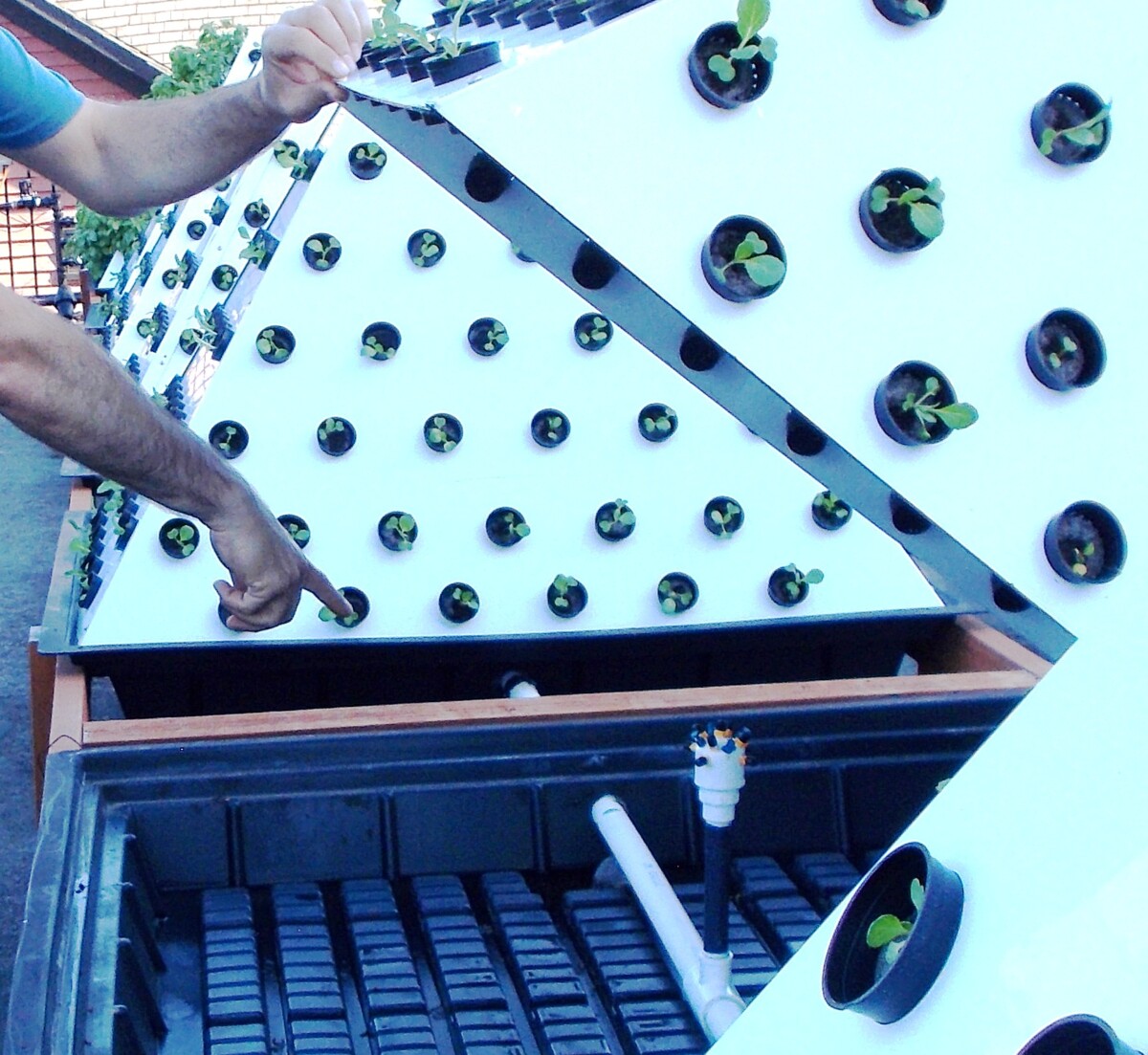
The setup involves aluminum pyramids with planting holes spaced 6 inches apart; each of the 25 planters can hold 136 plants. The plants are started in peat plugs, set into small plastic baskets that fit the planting holes. Foam (styrofoam) is often used in such systems, but can’t be cleaned or easily recycled. The system is lightweight and planters can be tipped up or moved to allow maintenance of the spray nutrient system that feeds them.
Baby romaine lettucePlanters & potsPlants seen from below
The plant roots extend into the growing space where they are misted with a liquid nutrient running through a pipe system beneath the planters, set on timers and propelled with a pump system. The excess liquid runs back into a collection bin where it is filtered and recycled. The nutrient liquid is changed at regular intervals, and the misting system needs checking and cleaning as it can get clogged.
Like many food growing innovations, some of the preliminary research into this method of food production came from the cannabis industry (Michael Pollen remarks on cannabis-grower-inspired horticultural innovation in Botany of Desire)
Plant roots within the pyramidMisting head and pipesNutrient recycling bin
The original design of this system was set up for growing basil; plants with larger leafy systems need to be spaced more widely. For example, the planters do work well with potatoes, which will extend inside the pyramid with the leafy matter above, but the plants need to be spaced more widely and/or positioned where their bushy leaves don’t intrude on what else is growing in the same planter. Other plants have been tried, including broccoli and squash, but speed and quantity are the goals in the current setup.
Hopes for the future are to extend the growing season by building a greenhouse (the system is located on the cement pad once used for the greenhouse that served the Government House kitchen).
There are compromises in every agricultural method. Aeroponics is admired for its clean, water-conserving and productive features and small footprint. The nutrients in the foods grown are believed to be similar to those in soil-based methods, although of course it depends which nutrient mix, which growing conditions, and which soil you are talking about.
However, held to a sustainability lens, this particular system does depend on peat plugs, plastic pots, plastic piping and electricity to run; and relies on an imported liquid nutrient mix. So it will never be free of external inputs as a soil-based farm can be. Done on a large scale, it can take farmland out of production and damage the health of the soil beneath its operations as readily as any other human activity. Moved indoors / into a greenhouse, additional requirements include heating and dehumidification systems = more electricity.
Growing without soil means that humans must attempt to mimic nature in providing the nutrients for plant growth; our species has determined there are 17 (or maybe 18) essential plant nutrients, but in the soil of course there are far more micronutrients, as well as microbial helpers working synergistically to nourish plants and build soil, adapted to different soil and climactic conditions. To my mind, there are as well question marks around the source (sustainability) of the ingredients in the nutrient mix, as well as the risk of diseases that can be swiftly circulated through a closed system.
So finally the Iambic Cafe dusts itself off and drags itself to its weary feet, slightly jetlagged but coming round. Sunday’s arrival in London was enlivened by the rather leisurely delivery of my baggage, but after that it was clear sailing and I was greeted by faltering sunshine on the cobblestones. Off to Paris on Tuesday, arriving by Eurostar in good time, and then an evening of bilingual readings at the Delaville Cafe, courtesy Ivy Writers Paris, comfortably accommodated and efficiently organized by expat poet Jennifer Stills. It featured Belgian poet Constance Chlore and Parisian Dominique Maurizi, as well as Saskatoon’s own Mari-Lou Rowley, shown here with Christmas tree.. We passed a relaxing Wednesday afternoon wandering around the 18th arrondissement, mostly towards Montmartre, admiring the food in the windows, prowling its shops and pausing for a leisurely coffee. Hills and steps there are many, but the sun came out from time to time and warmed the way.
Entertainingly, we passed a couple of goats gnawing on a grass fence we’d passed several times – and found we’d discovered a little pocket of urban agriculture, apparently lush in the summer but a bit bare now, with chickens pecking trackside near Porte de Clignancourt.
Our wanderings ended with a delightful dinner at the Bistrot Poulbot. Pour moi, saumon tartare, dorade , and (how could I not) a lovely confection involving lashings of my namesake Valrhona chocolate.
I arrived on the heels of a big thunderstorm that flooded basements and washed the place clean before disappearing off to neighbouring states. The air is still heavy with heat and humidity, and more storms are forecast but so far we’ve been lucky.
I flew into Kansas City, MO, which is across the Kansas River from Kansas City, KS, more or less. The Missouri River is also involved in ways I have yet to become clear on. Anyway I left that puzzle behind me and was whisked off to Lawrence, about 40 miles west, where Kansas University is hosting the tenth biennial ASLE conference, whose theme is Changing Nature: Migrations, Energies, Limits.
I spent Tuesday walking around the neighbourhood I’m staying in, which borders the university, and where there is, happily, no shortage of gardens to gawp at.
A bit of wildlife too. Funny to see the rabbits, not as pretty or numerous as the ones that entertained ASLE 2009. I throw in a gratuitous cat picture because I don’t have cats in my suitcases as often as I used to. And a Jaybird for the sports fans.
Pretty campus, on top of a steep hill which gets steeper during the hottest time of the day. And it has been warm. Not inside where the air conditioning is: there, it’s been very chilly. Never occurred to me to bring winter clothing for the meetings…
And finally, a couple more gardens. I suspect that exams and graduations got the better of the campus garden which does have some lettuce struggling for life against the weeds. But most gardens here suffer the effects of short growing seasons, which are short and powerful: hot sunny weather and lots of rain mean it’s hard to exert much control over what grows where once it starts. The school garden at right seems to be well in someone’s hands though, with the broccoli nearly ready. And that’s where I’ll leave it – more about the conference itself another time.
Lots going on this week. If you’re in town I hope you can make it to one or more of these different events!
On Tuesday evening, March 19, look for me in Fernwood, where I’m talking urban agriculture at Fernwood U. Cornerstone Cafe, 1301 Gladstone Avenue, Victoria, at 7pm. (Free!)
Friday night, March 22, I’ll be reading at Planet Earth Poetry alongside Rosemary Griebel. Moka House Cafe, #103-1633 Hillside Avenue, Victoria, at 7:30pm. (Nearly free – just $3)
It was an intense ag-food weekend starting with Seedy Saturday at the Victoria Conference Centre. Many were the crowds, nigh on as numerous as the seeds on sale, and much was the diversity on offer. I was helping out at the CRFAIR stand, conveniently situated next to Jacob of Salt Spring Sprouts & Organic Mushrooms, who is always generous with his samples. I also sampled some excellent banana pancakes made by chef Joseph from his bean flour pancake mix. Managed to escape with only one package of seeds, this one from GTUFerKendell Nielsen, PAg, who had dropped off some mini-spaghetti squash seeds that caught my eye. I did not need her giant Jerusalem artichokes though they were beautiful. There was a very busy table of volunteers repackaging the donated seeds, and a large variety on offer (free for trade or $1 a package).
My book was on sale at the CRFAIR table (near the giant rutabaga); Verna & Bob Duncan talked fruit and fruit trees at their very popular stand, and it was spring all over the place with tender snowdrops and other spring shoots waiting to be taken home. There were many workshops as well, including a preview of the Changing the Way We Eat food talks which are upcoming at the Belfry Theatre in late April. Watch this space for news..
Sunday was a double whammy. First, the GTUF meeting, in which Gabe Epstein and Belle Leon shared some photos of community gardens in Victoria, Seattle and South Africa, and invited discussion about the nature and purpose of community gardens in our area. Then we broke for snacks – including two glorious pizzas hand-crafted by local caterer Eugene Monast who has often blessed us with food at our meetings. GTUFer Robert Baker had brought a basket along to show what he’d harvested from his garden that morning, encouraging us to make the most of winter growing.
And finally it was on to the VIVA-RAW monthly potluck, to see what delectables were on the table and to hear Aika Tuomi talk about mushrooms. He focused on shiitake, reishi and chaga mushrooms and did a good plug for mushroom powders and extracts on sale where he works, Ingredients Health Foods.
And the raw food we ate: below, a delicious and beautiful salad featuring pomegranate, kiwi and avocado; seedy flax crackers; mock salmon (walnut) pate (my contribution); zucchini noodles; ingredients list from some cocoa-date cookies; and finally the groaning plate which features everything but the late-breaking and improbable-sounding but gorgeous salad of mango, citrus and sauerkraut.
 Vic West is a neighbourhood of the city of Victoria, one of the 13 municipalities that make up the Capital Regional District (CRD), collectively known as Victoria. It’s a working-class residential neighbourhood with a lot of single family homes, with a good selection of boulevard gardens.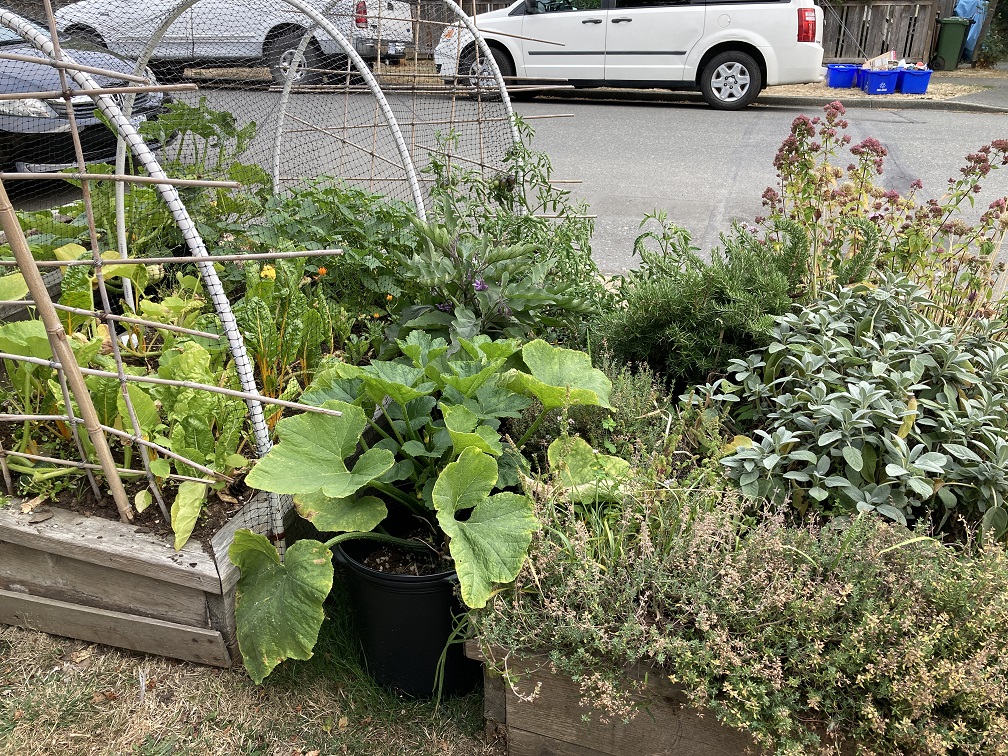
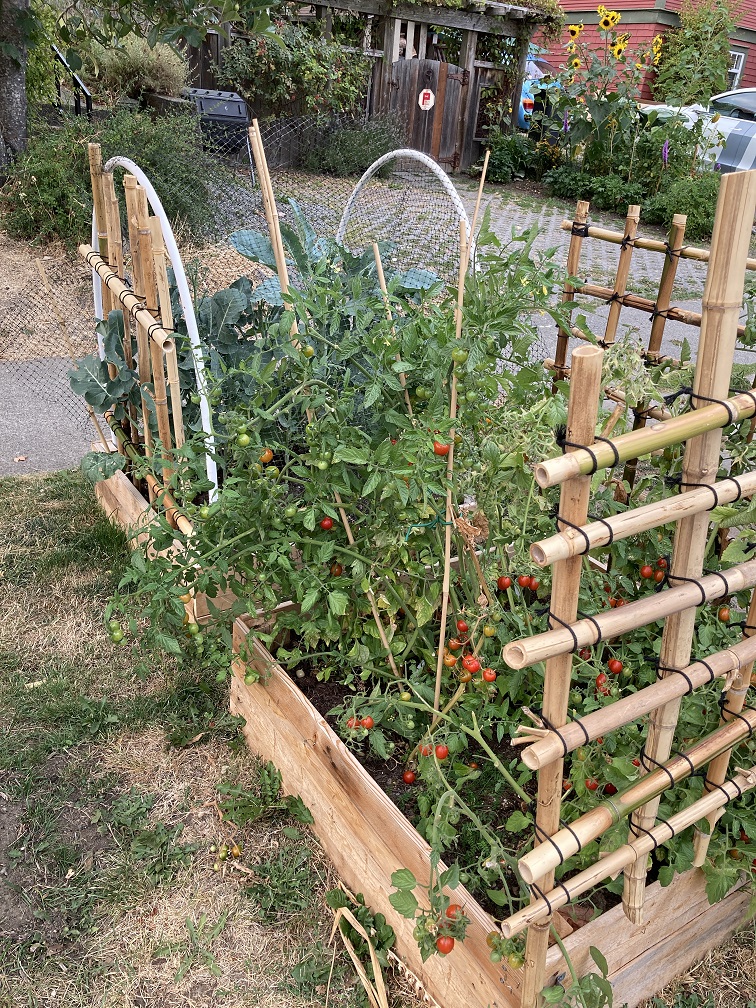
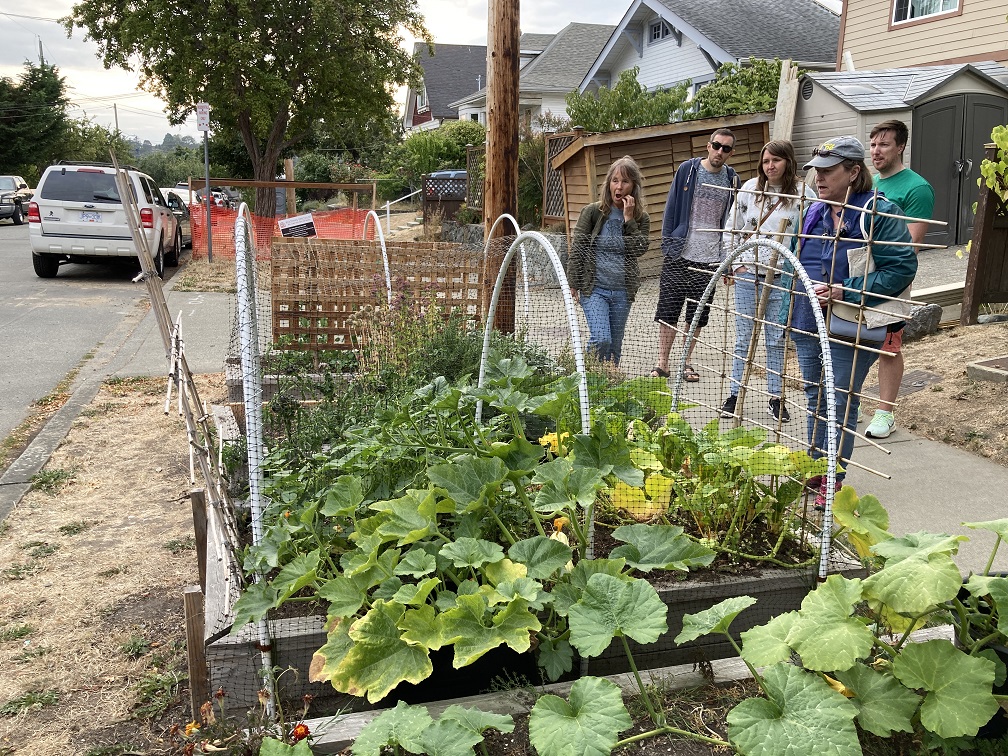 This is what the sign’s instructions suggest – open wood base and PVC hoops that can be covered with mesh to keep out deer or other garden browsers. This one also has added wooden trellises in adjoining beds, and filled the spaces between beds with pots.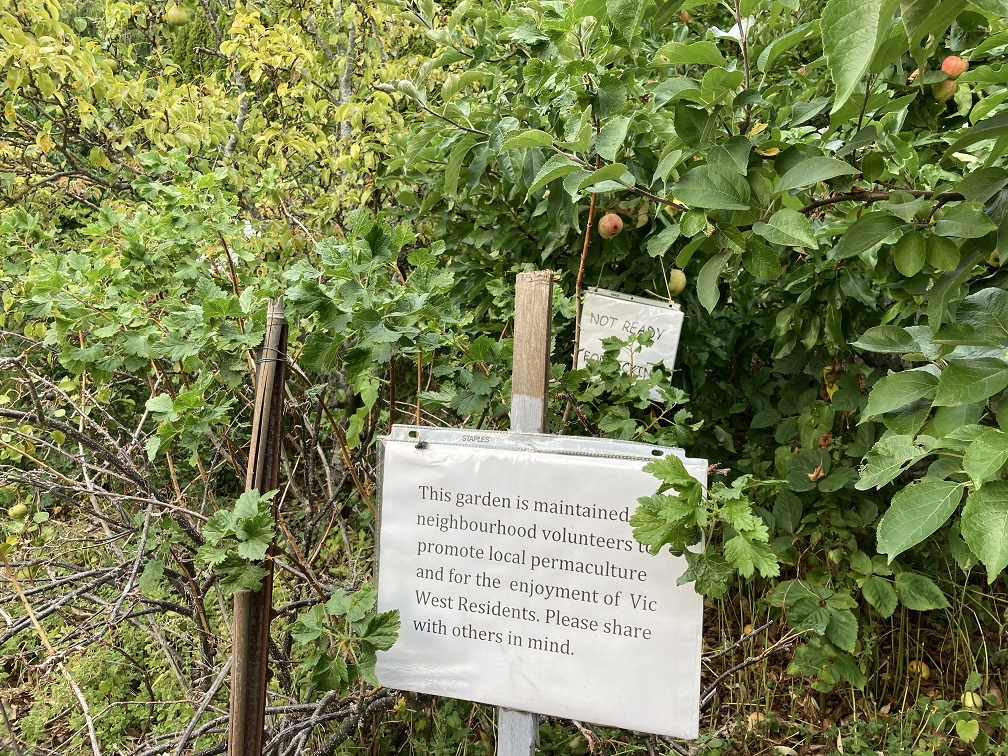
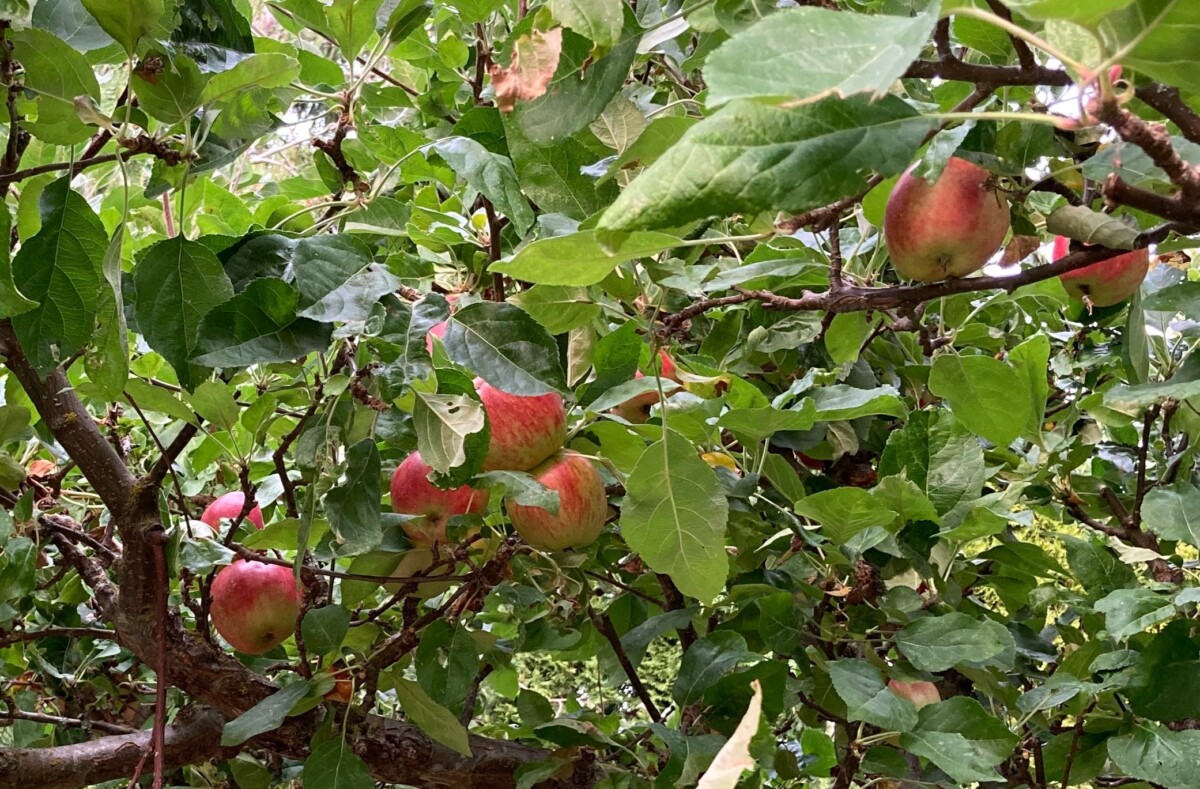
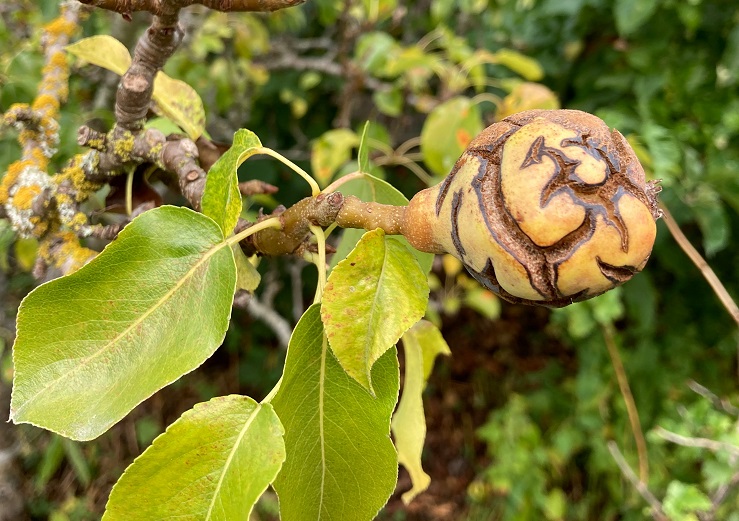 Down an alleyway we found a boulevard orchard. Neighbours water and maintain the trees and signs are posted to tell people if the fruit is ready to harvest or not (and to remember it’s a community resource).