Skip to content

conferences

Eco-lit in Portland

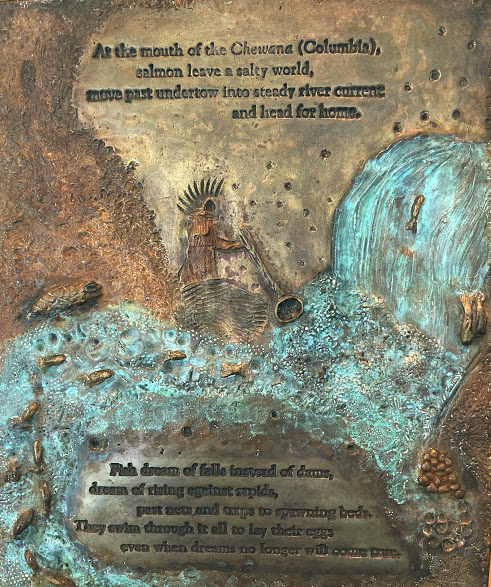
I’ve gone to quite a number of ASLE and ALECC conferences over the years. This year’s ASLE conference – its first post-pandemic gathering – was in Portland Oregon. Unusually for an organization that normally meets on campus in a smallish college town, it was a more corporate affair, a joint event with The Association for Environmental Studies and Sciences (AESS), at the Oregon Convention Centre. Which was itself a model of environmental building (LEED platinum) and stunning public art.
Eco-conferences do delve into sobering realities and there was no shortage of these in Portland. The plenary sessions included one that provided a lot of ecological context for concerns around deep sea mining. Which is being proposed to provide minerals for our ‘green economy’ – building batteries for our ‘sustainable’ electric cars and bikes, for example. Ocean mining companies have already been securing contracts in the waters around smaller coastal countries but the major headache was under discussion in Jamaica during the time of the conference: what about international waters? All a bit ludicrous in light of the fact that our oceans are all connected, so any damage done – destroying habitat for unknown species, creating plumes of silt that can choke the ocean floor for hundreds of kilometers – will in fact tamper with the substance of life on this planet, since we rely so heavily on the ocean to provide us with a breathable atmosphere.
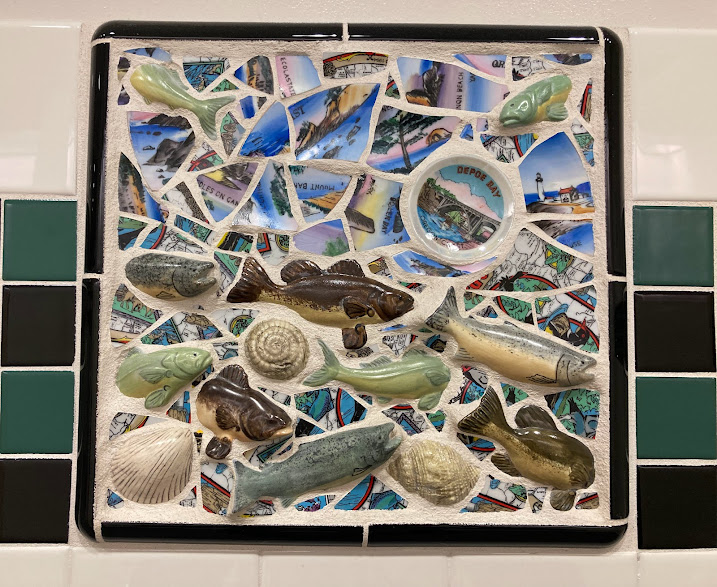
Another featured two first nations speakers from Yakima Nation, who spoke on concerns around the Yakima, an important salmon river in Washington state. As I’d learned years ago when I studied permaculture, salmon are the reason our coastal rain forests flourish – they provide the nutrients for local wildlife which in turn scatter nutrients on the forest floor. So it’s no small matter to learn that global warming will heat salmon rivers to the point where salmon cannot survive their spawning runs. What’s to be done? The modest efforts to remove dams along these rivers offers a small hope that the water can be cooled sufficiently in the short term at least. Beyond that, who knows.
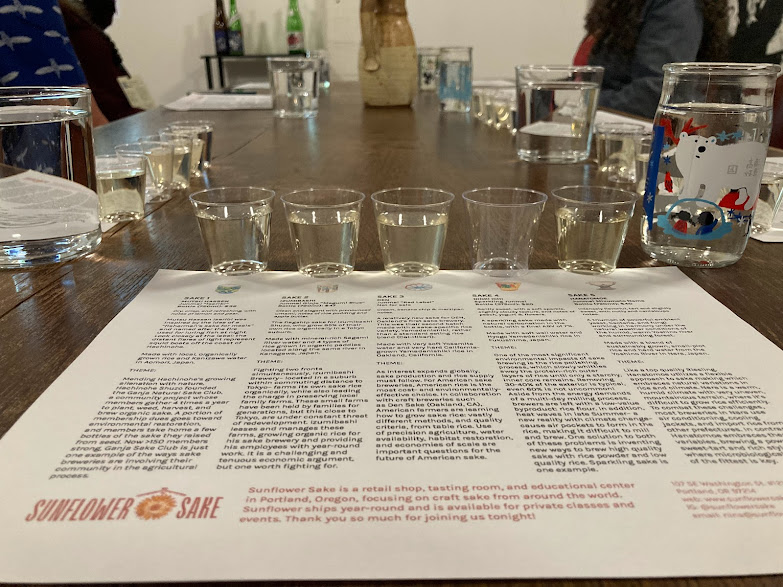
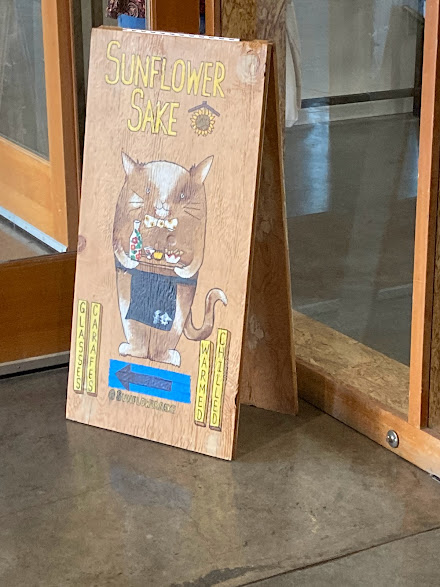
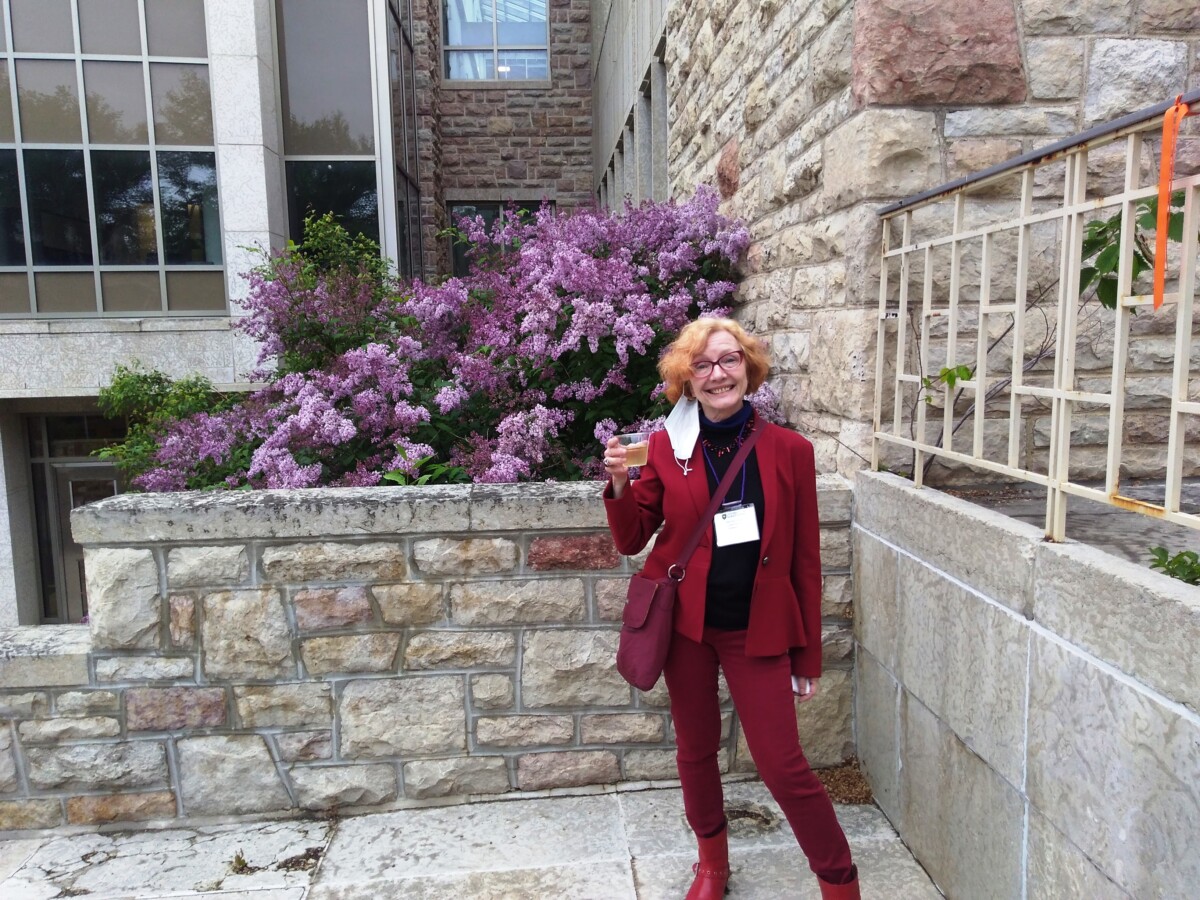
One popular feature of ASLE conferences have been the workshops and field trips before or after the main events, that are geared towards the themes or interests of the participants. This one featured a sake tasting at a local sake shop. It took me back to my wine tasting days at Unisg. All the sakes but one were offered slightly or well chilled, which was a different way, for me, of enjoying them.

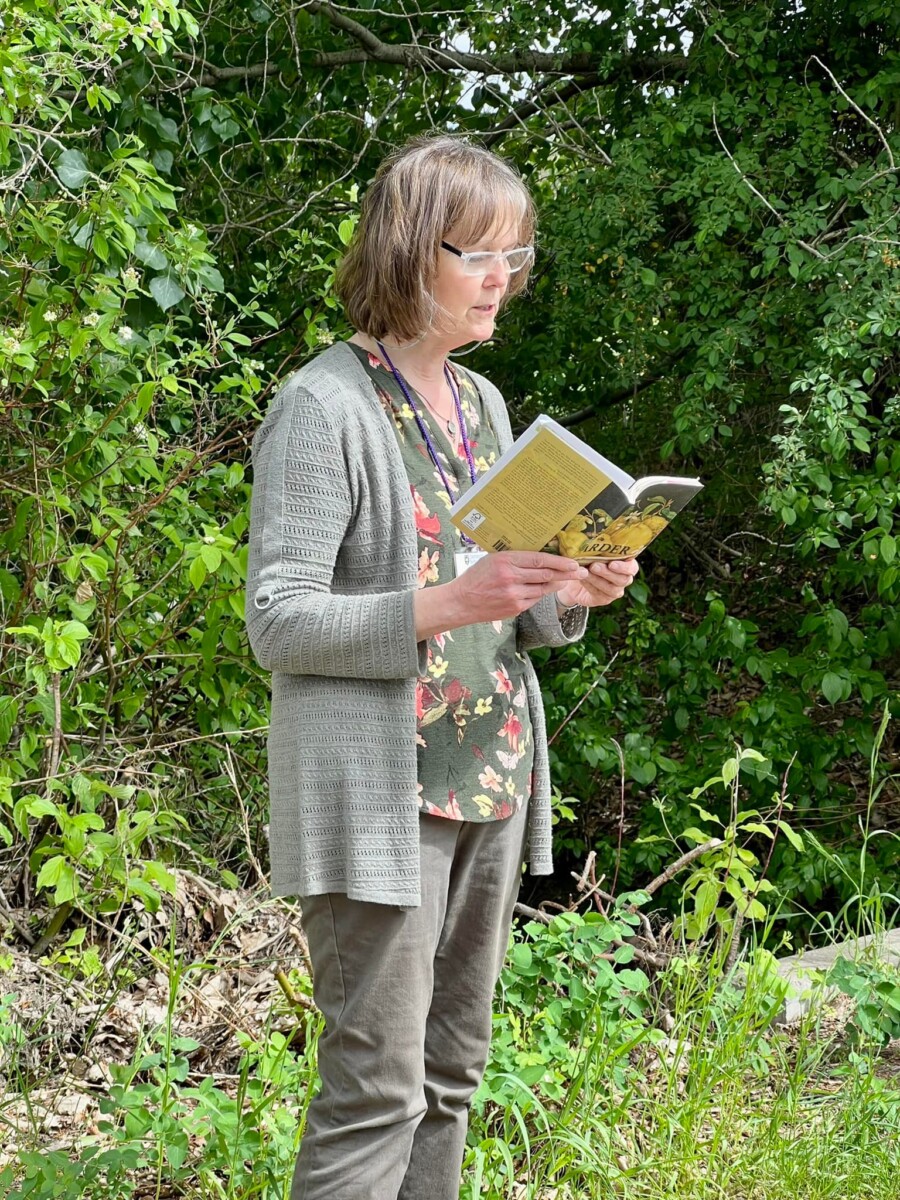
And finally, early on the last morning of the conference, I read some of my poetry on the Poems & Poetics of the Commons panel, together with Lori DiPrete Brown, Sandy Feinstein and Trey Moody. As inevitably happens when random poets are placed together on a panel,  surprising conjunctions of mood and subject emerged from our readings. So it was a good way to wrap up the conference for me!
Poetry walking in Saskatchewan

Rhona-McAdam A week spent with environmental literati from around the country and beyond was stimulating, delicious and rather warm at times. The first ALECC conference since pandemic times was, as they say, an intimate affair – not everyone who could have attended was yet willing or able to rub shoulders – but protective measures such as masked indoor events felt safe and comradely.

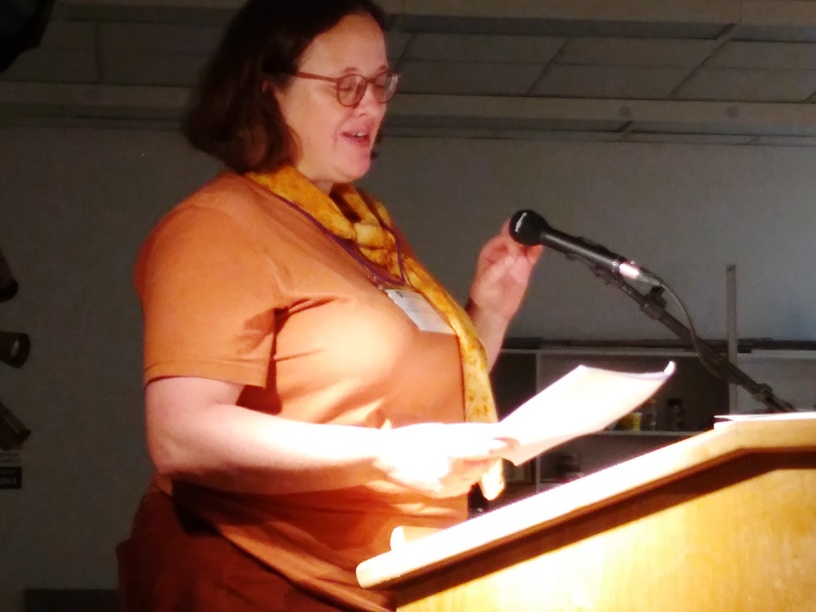
Tuesday, the evening before the conference began, Mari-Lou Rowley, Katherine Lawrence and I read from our new collections to a live (masked) audience who joyously filled the reading space at McNally Robinson, with another 35 or so attending online through the magic of live streaming.

Mari-Lou-Rowley
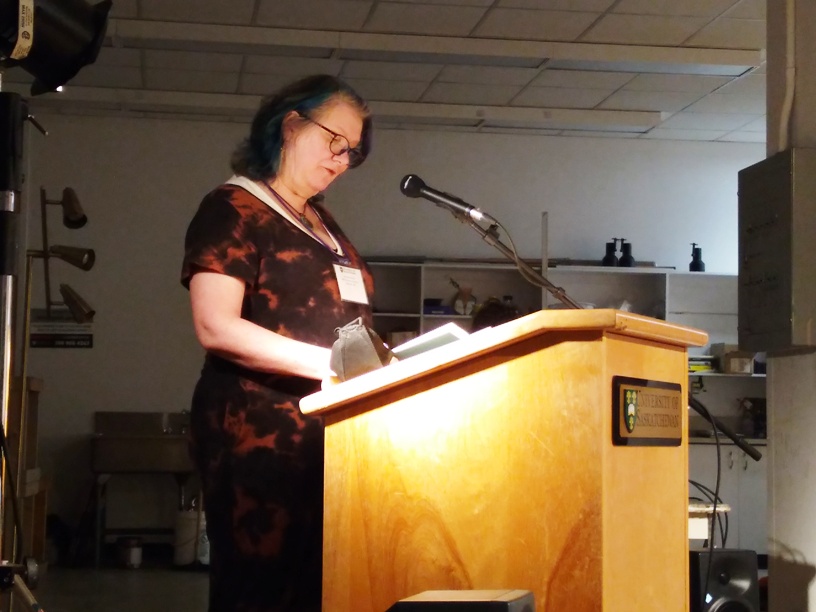
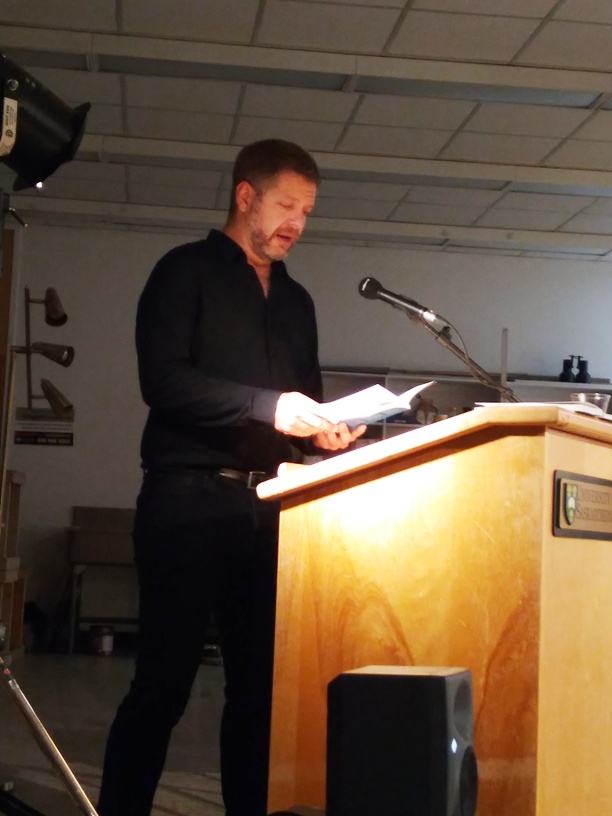
On Wednesday, Mari-Lou and I attended ALECC’s opening reception (the food was excellent and plentiful) and caught up with some familiar names and faces. Ariel Gordon, Tanis MacDonald and Kit Dobson read from their new books with Wolsak and Wynn, and the “Confluence” exhibit by Susan Shantz was on throughout the conference in the next door gallery (her talk on Friday night, “Confluences of Water, Art and Science,” with collaborator Graham Strickert, was excellent)


Ariel_Gordon
Tanis-MacDonald
Kit-Dobson

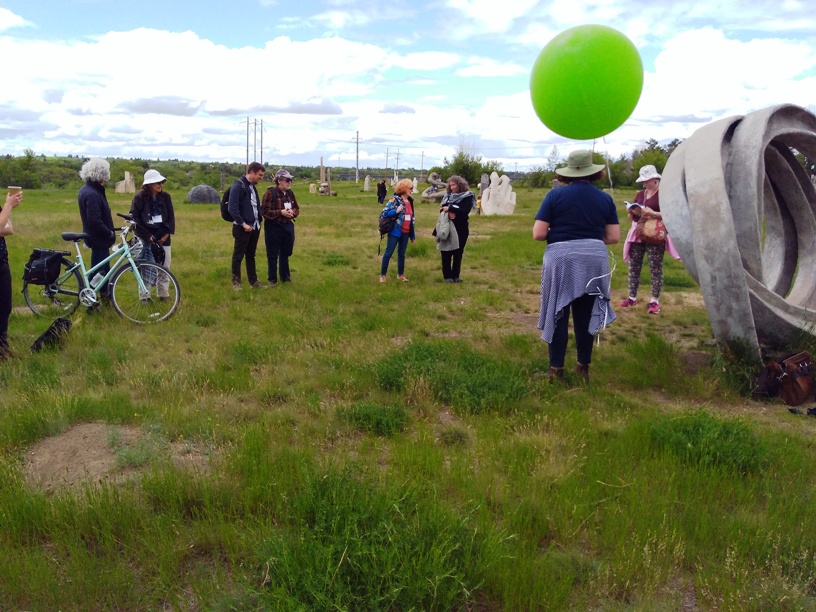
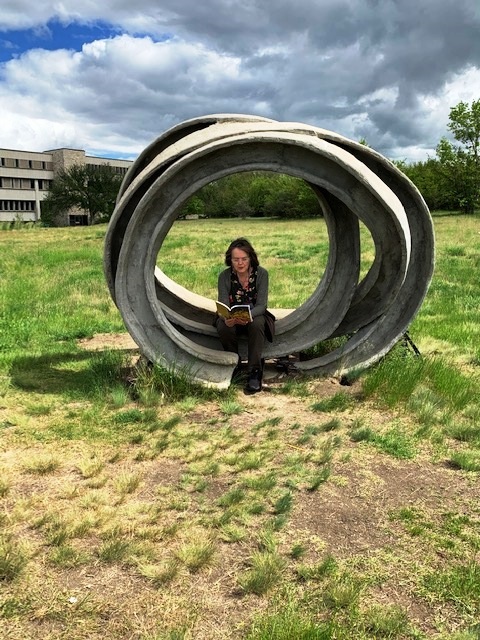
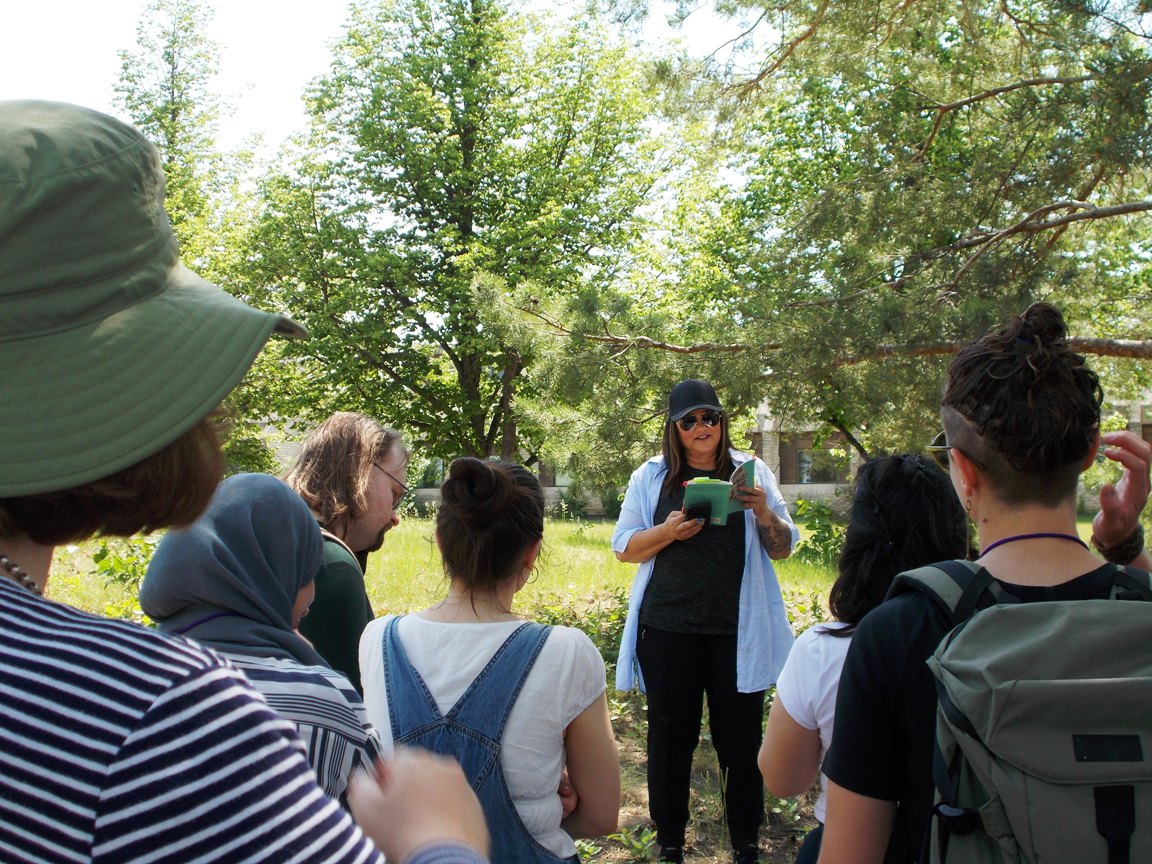
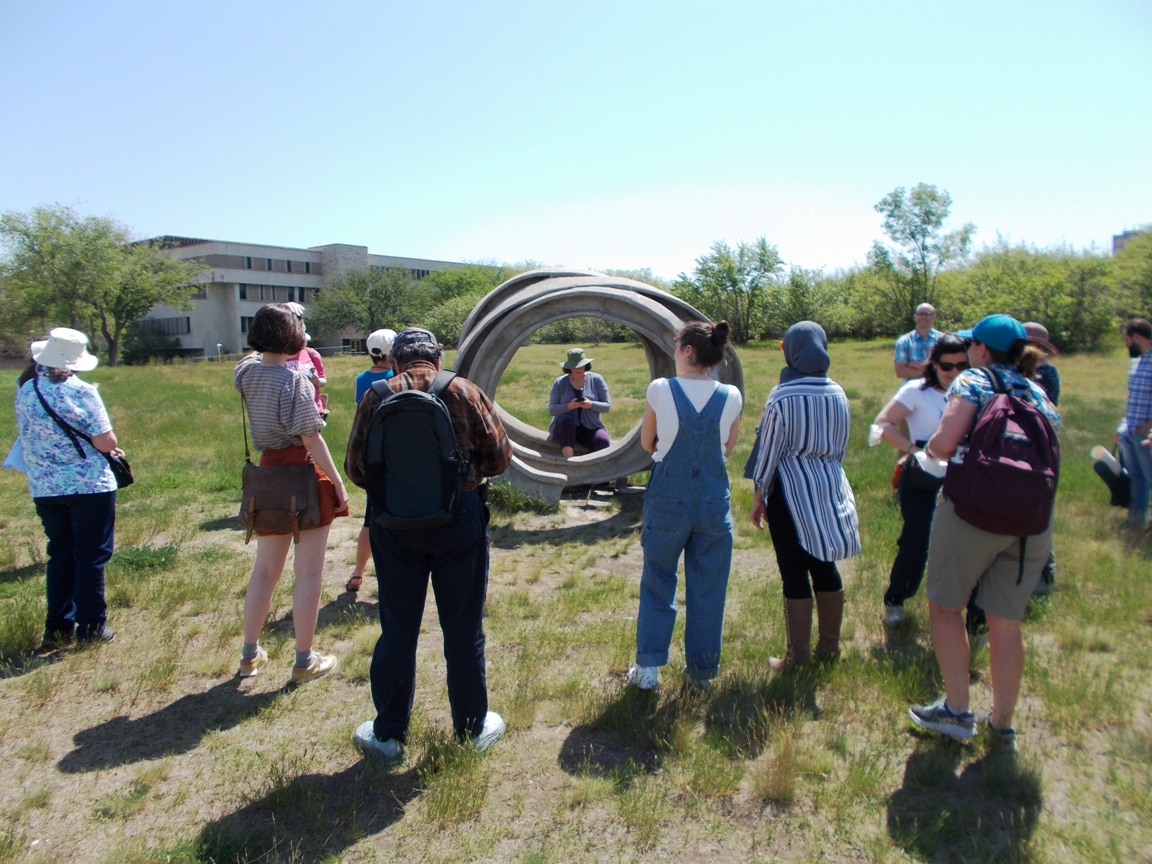
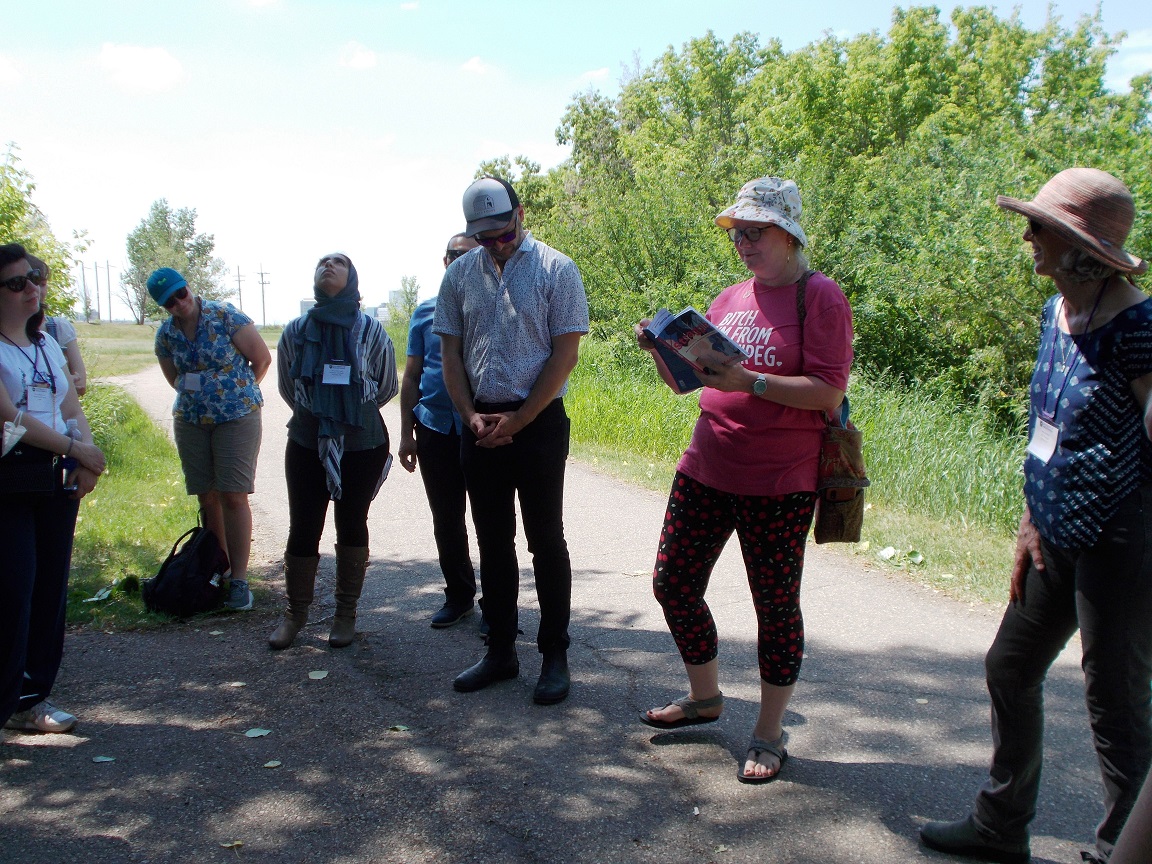
Thursday I was teaching online all morning and turned up in time for the first of two Poetry Walks, with Ariel and Tanis. It was much fun – we walked along a walking / running trail, stopping at intervals to read poems to our followers in wood, fields, sculpture park. Ariel borrowed one of ALECC’s helpful balloons to guide us.

People-standing-in-field-green-balloonTanis-MacDonald_Ariel-Gordon


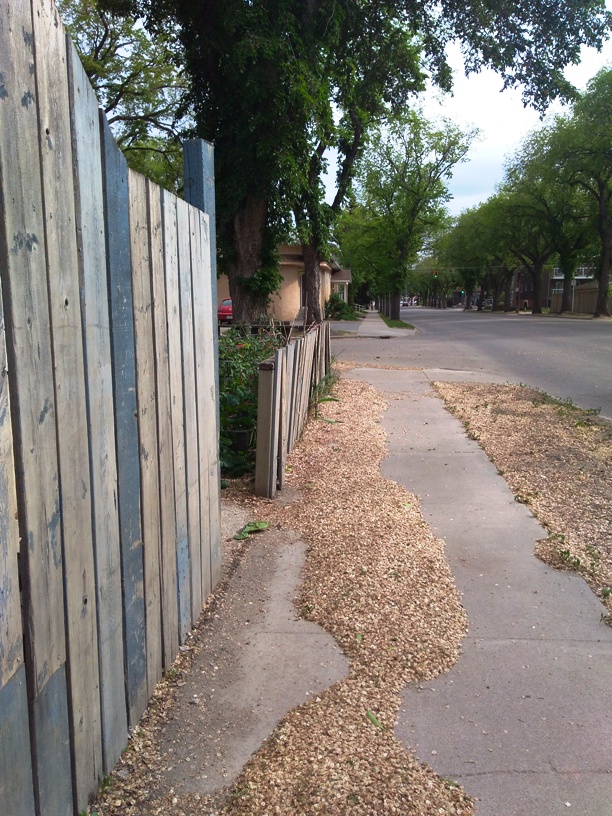
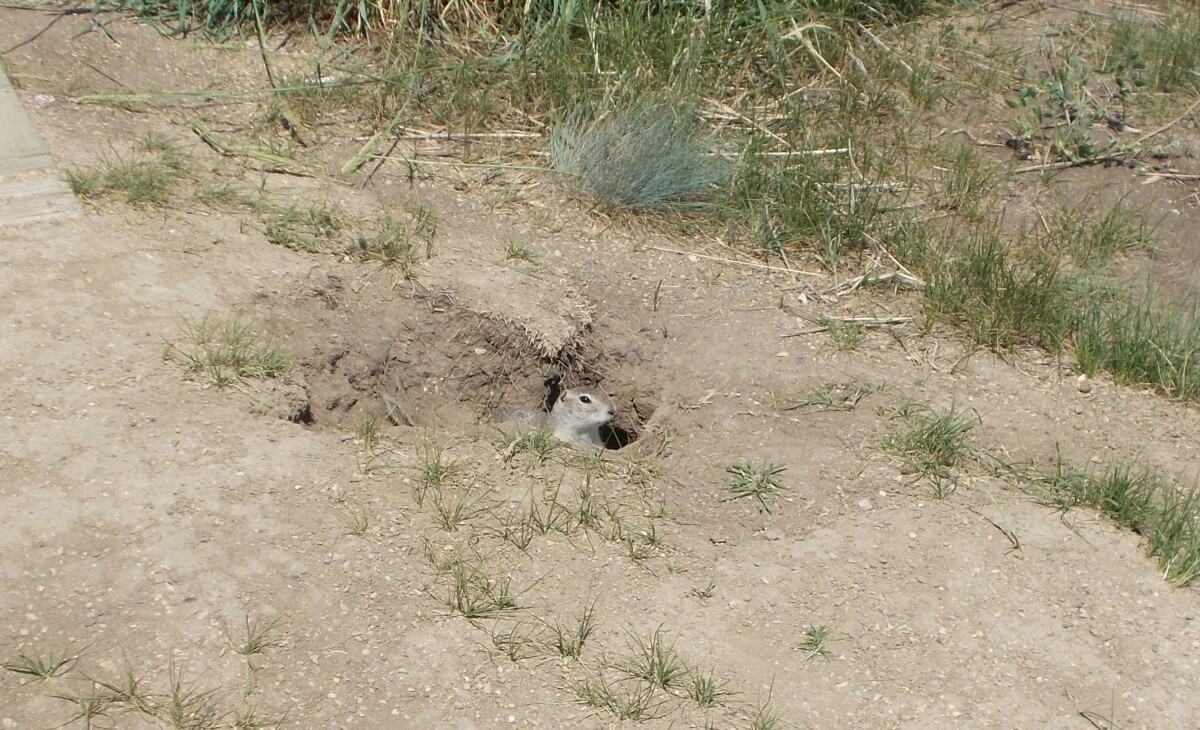
The setting for our Thursday night barbecue dinner was stunning; a hidden grove on the campus of our host organization, the University of Saskatchewan. The prairie dogs (Richardson’s Ground Squirrels) appeared not to have found this space, busy as they were gorging on the drifts of elm seed that covered much of the city… another sign of trouble, since trees shed seed when feeling stressed and needing to secure their genetic futures.

A river of elm seed on a Saskatoon street
Richardson’s Ground Squirrel – making the grounds  somewhat hazardous to human walkers

Friday was a long and rather warm day, temperatures starting to climb into the high 20s. Technical difficulties interrupted a video session, but it was all low tech for readings in the  “Ceremony, Desire, Requiem: The Poetics of Water and Land” panel. Sheri Benning kicked off with a reading from Field Requiem (starting with the beautiful “Winter Sleep” which was featured in film form on the Paris Review website last winter). Self-described “Indiginerd” Tenille K. Campbell followed with a passionate romp through poems from Nedí Nezu, and some straight talk on some realities of indigeneity in northern SK.


Saturday was a hot one, with temperatures forecast to reach 36c, so I was delighted to find we had a good following for our final poetry walk. Ariel, Tanis and I were joined by Lisa Bird-Wilson who read work about residential schools, while we read mostly environmental poems including a couple by Victoria poet Yvonne Blomer, who had planned the event but was unable to attend.

Lisa Bird-Wilson
Ariel reads, in the Sculpture Park
Tanis reads – finally some blessed shade
At least the pelicans could chill in the South Saskatchewan River

Teeth, nails, tongue, skin

Mark Schauss gave a couple of interesting talks. His research into nutrition and cognitive decline was comprehensive and detailed. One of his big messages was on the consistency he sees in research findings about the role of the two most heavily consumed excitotoxins (MSG and aspartame) in plaque development in Alzheimer’s. If you eat processed or packaged foods, both of these are hard to avoid since manufacturers play shell games with the naming. For MSG, see the comprehensive list from Truth In Labeling. For Aspartame, beware NutraSweet of course, as well as its new name, AminoSweet. He repeated an idea I’ve yet to see proven, that artificial sweeteners cause an insulin response similar to ingesting sugars, and lead as surely to insulin resistance and type 2 diabetes. I think there are lots of good reasons to stay away from them, but I await compelling evidence for this one. I do appreciate his main message thought, a plea for more attention paid to the gut microbiome: the more artificial the diet, the worse the gut, and a bad gut means poor communication along the gut-brain axis. Which means poor cognitive function. And, he added, exercise is the best thing you can do to keep the mind active.

Kelp, acid-alkaline, omnivorous environmentalism & brain food

KelpPeopleIt is possible to leave a nutrition conference freaked out about the state of the world, and in dire need of a good remineralizing kelp treatment. But ditto an environmental (literature) conference or just about any other kind of conference nowadays I suppose. Still, we must make the best of where we are, so a nutrition conference is a good place to take in ideas about both cautions and actions to get our bodies through. (And to get a kelp treatment if that will help you in the meantime.)

Chris Kresser has evoked much hand-wringing and teeth-gnashing in his cogently-argued dissection of the acid-alkaline theory, which has been the foundation of much nutritional training over recent decades. The theory holds that: (1) the foods we eat leave behind an ‘ash’ after they are metabolized, and this ash can be acid or alkaline; (2) we should eat more alkaline foods than acid foods, so that we end up with an overall alkaline load on our body, making us less vulnerable to conditions such as cancer and osteoporosis; and (3) that the pH of our blood can be determined by testing pH strips in our saliva or urine.

It is worth noting that although there is little agreement on which foods are acid and which alkaline (a red flag there?) the alkaline lists tend to heavy on fruits and vegetables, while acid foods include animal products, so the theory is a particular favourite with those who advocate vegetarian or vegan diets. And those would emphatically not be people attending a Weston A. Price conference (poles apart: see the veg view vs the WAPF view).

Kresser allows that foods do metabolize into ash, but dismisses the idea that what we eat affects our blood pH (except in metabolic disorders such as ketoacidosis, aka DKA, not to be confused with ketosis). And although the pH of saliva and urine may indeed be altered by diet, their pH has nothing to do with blood pH, which is regulated by the kidneys. He suggests that health improvements may follow any improvement in diet (and it’s pretty easy to work out what those are – fresh, whole foods vs refined carbs) rather than being caused by acidity or alkalinity of what’s been consumed.

For the full explanation, I recommend reading Kresser’s two-part article on the subject. He was, inevitably, asked why – if it is so obviously flawed – the theory is still taught and promoted, and he replied that it takes time for science to nudge belief into change. And not least when there are vested interests at work. He quoted Upton Sinclair: “It is difficult to get a man to understand something, when his salary depends on his not understanding it.”

Speaking of (former) vegans, Lierre Keith (The Vegetarian Myth) revealed that her talk last weekend was the first she’d done that had not inspired pre-event death threats. She was there to make an impassioned plea for environmental responsibility, a cause that should straddle, but instead divides, vegetarian from omnivore. She described human agriculture as the “death of the living world” – its destruction of ecosystems and soil fertility, the biological corners cut to improve financial returns on large scale production, and the misuse of farmland to grow crops for factory farming or fuel.

When you buy a soyburger, she observed, “you’re actually giving money to the people causing the problem.” In the Weston A Price way, she referred to the health of traditional peoples as proof of the damage we’ve done to modern bodies: how  European explorers noticed the good health of the populations they encountered, and how poor health inevitably follows modernization of our diets. “Cancer, like insanity, spreads with civilization” (Stanislas Tanchou)

Mark Schauss gave a couple of interesting talks. His research into nutrition and cognitive decline was comprehensive and detailed. One of his big messages was on the consistency he sees in research findings about the role of the two most heavily consumed excitotoxins (MSG and aspartame) in plaque development in Alzheimer’s. Both of these are hard to avoid if you eat processed or packaged foods, since manufacturers play shell games with the naming. For MSG, see the comprehensive list from Truth In Labeling. For Aspartame, beware NutraSweet of course, as well as its new name, AminoSweet.

He repeated an idea I’ve yet to see proven, that artificial sweeteners cause an insulin response similar to ingesting sugars, and lead as surely to insulin resistance and type 2 diabetes. While I think there are lots of good reasons to stay away from artificial sweeteners, I await compelling evidence for this one.

Few could argue with his main message though: the more artificial the diet, the worse the gut, and a bad gut means poor communication along the gut-brain axis. Which means poor cognitive function. And of course, daily exercise is the first best thing you can do to keep your mind fit and healthy.

Nourishing Indiana

StairwellHere in the curious world of the conference hotel, if you can find the stairs, they won’t necessarily take you where you want to go. And they are bleak enough to discourage the faint-hearted. I enjoyed a good fifteen minute cardio workout yesterday, travelling with a well-intentioned Marriott employee who tried in vain to help me find the elusive “up-stairs” to get one floor above.

Never mind, there are plenty of long hallways to cover finding my way from FridayDinnerroom to meal to conference at the 51st instance of the Weston A Price annual conference in Indianapolis, where we “Focus on Food”. Which is invariably excellent and plentiful at these conferences. Here’s the happy queue at last night’s turkey dinner – birds donated by Fields of Athenry Farm (the farmers and producers are always credited in the menus found in our programs) and replete with several ferments (sauerkraut, fermented cranberry relish, sourdough bread, fermented herbal tea) and grass-fed butter.

Yesterday’s sessions were mostly all-day affairs. I spent most of mine fiercely concentrating on the rapid-fire thoughts and slides of Stephanie Seneff, whose talk covered Pesticides, Antibiotics, Vaccines & Pharmaceuticals at dizzying speed (see her web page to download her slides, as well as find links to  her research).

She walked us through research papers a-plenty to illustrate her points. She is a strong advocate of sulfur – it’s one of the least discussed yet most common mineral in the body after calcium and phosphorus and plays a huge role in amino acid development (essential, in short, for protein in the body). The American population tends to be deficient in it (esp. vegetarians and those on low protein diets), and chronic acetaminophen (Tylenol) use further depletes sulfate.

Glyphosate (Roundup) is implicated in many conditions, contrary to studies which claim it to be harmless. For licensing purposes, glyphosate is only tested in isolation, but Roundup contains many other ingredients designed to enhance its effects (up to 1000x); and of course it’s only studied for 90 days, whereas its health effects are cumulative. Seneff had tracked some interesting correlations: glyphosate use tracks closely with autism rates, anemia, sleep disorders, breast cancer rates, kidney disease and more.

Glyphosate has been found in breast milk, urine and water. That it hasn’t been found sooner is probably a product of the few labs willing to test for it.

Seneff explained that the reason glyphosate affects human health is its effect on beneficial gut bacteria, which serve a protective role in the body. Glyphosate blocks the production of tyrosine, tryptophan, and phenylalanine – three essential amino acids formed on the shikimate pathway. This pathway, the argument goes, “is only found in plants and microorganisms, never in humans” – however, it is found in our gut bacteria, which help to synthesize amino acids. Glyphosate also inhibits cytochrome P450 (CYP) enzymes which in humans help to break down toxins.

The best way to avoid glyphosate is to eat certified organic foods, including many sulfur-containing foods (and have epsom salt baths – which allows you to absorb sulfur and magnesium through your skin).

She had a lot to say about statins as well – I strongly recommend anyone taking these have a look at her slides and do their own research. The gist was that they may protect you from heart attacks, but they will cause heart failure – a long and limiting way to go – as well as weakening many other body systems.

I ended yesterday with a talk by naturopath Louisa Williams, who spoke about antibiotic-resistant bacteria. She believes these to be causing many chronic disorders (pain, anxiety, depression, fatigue, movement disorders, memory loss, constipation/diarrhea) and contributing to others (cancer, Crohn’s meningitis, multiple sclerosis, Parkinson’s, Pertussis, Sarcoidosis, Lyme’s…) . The gist is that antibiotic over-use has created resistant bacteria, which then mutate into cell wall defective (CWD) bacteria. These lack the structure that allows antibiotics and our own immune systems to recognize and deal with them.

Diagnosis is difficult. Treatment includes the usual detox protocols (removing environmental and dietary toxins); stop ‘feeding the fire’ by taking antibiotics except for acute conditions (even over-using microbial oils such as oregano will lead to problems); seek constitutional homeopathy remedies; and heal the gut with plant polysaccharides (mannose – though she felt the amounts needed exceeded what could be obtained through diet) and special probiotics.

ASLE 2013 – been & gone


Water could have been the theme at ASLE 2013. At the opening reception, the Provost of KU promised us that Kansas is a great place when it’s not raining or snowing… but life does end up being a lot about water management when you get, as Lawrence did, five inches of rain in three days.  Lots of impermeable surfaces on the hilltop campus mean lots of extra drainage. I guess it all ends up in the Kansas River, which ends up in the Missouri River, which ends up in the Mississippi and on into the Gulf of Mexico, instead of back in the groundwater. Although as we heard from Kelly Kindscher, the impassioned ethnobotanist who led our Friday afternoon tour of the university’s Native Medicinal Herb Garden, some of the topsoil is very deep and there are clay deposits of such depth that may be separating groundwater from deeper water deposits.

My first conference appearance was on Wednesday when I chaired a panel called Race, Gender, Garden, Region which rambled across Leslie Marmon Silko’s novel Gardens in the Dunes, gendered landscapes in early 20th century New England Ballads and an analysis of “A French Garden in England: A record of the successes & failures of a first year of intensive culture” by Helen Nussey and Olive J. Cockerell, a garden memoir from 1909, which sounded fascinating. It is charmingly illustrated by Cockerell – who had made a name illustrating fairytales – and faithfully records instructions, successes and failures. I’ll have to have a look next time I’m at the British Library.

The first plenary I attended featured Stacy Alaimo and Cary Wolfe. Alaimo kicked off her discussion of deep sea environmentalism with an apt New Yorker cartoon, and then took us through some of the decade’s worth of work from the Census of Marine Life. Wolfe, referring to his recent book Before the Law: Humans and Other Animals in a Biopolitical Frame, riffed on such thoughts as what kinds of creatures is it ok to do what to; and whose lives count as lives and whose life counts as a “grievable life”.

Picking a couple of favourite presentations from favourite sessions – hundreds? thousands? to choose from – I was particularly moved by a paper by Hillary J Fogerty, from  Missouri Southern State University,  the irresistably-titled Why she can`t stop talking about the farmers market: Considering the role of activism and Advocacy in Food Studies Pedagogy and Curriculum. She described a research course for English students which she rewrote to allow students – largely from disadvantaged socio-economic groups – to study their own food security, developing research and writing skills while keeping food diaries, analyzing food advertising and ultimately in many cases changing the way they ate. She described students three years later shouting across parking lots at her to share weight loss, dietary changes and other improvements which were all the more remarkable for taking place in a town that is the headquarters for Tyson Foods, with Walmart down the road and in the looming shadow of Monsanto. Those students were likely directly dependent on those companies by direct or indirect family ties.

My other favourite, a no-brainer, was the personal essay by Dan Philippon describing a visit to Italy where he guest-lectured at the University of Gastronomic Sciences and spent time with his family visiting food producers in the Piemonte region. His talk, Slow Food or Small Food? Learning from Italian Producers, hinged on his visit to a small flour and polenta mill, Mulino Marino, and what he learned there about perceptions of quality, marketing, tradition and technology. He summed up his findings – what the producers he spoke to believed – as:

1. quality matters
2. organic and natural do not equal quality
3. history and tradition matter, but so do technology and innovation
4. local cannot be untangled from global
5. small food good; big food bad

I will finish in my next posting to mention my own paper, two different but inspiring plenaries and a field trip.