Skip to content

climate change

Sublime

I was honoured to be one of the 110 poets included in Yvonne Blomer’s latest and last poetry anthology dealing with the difficult aspects of climate change and water.

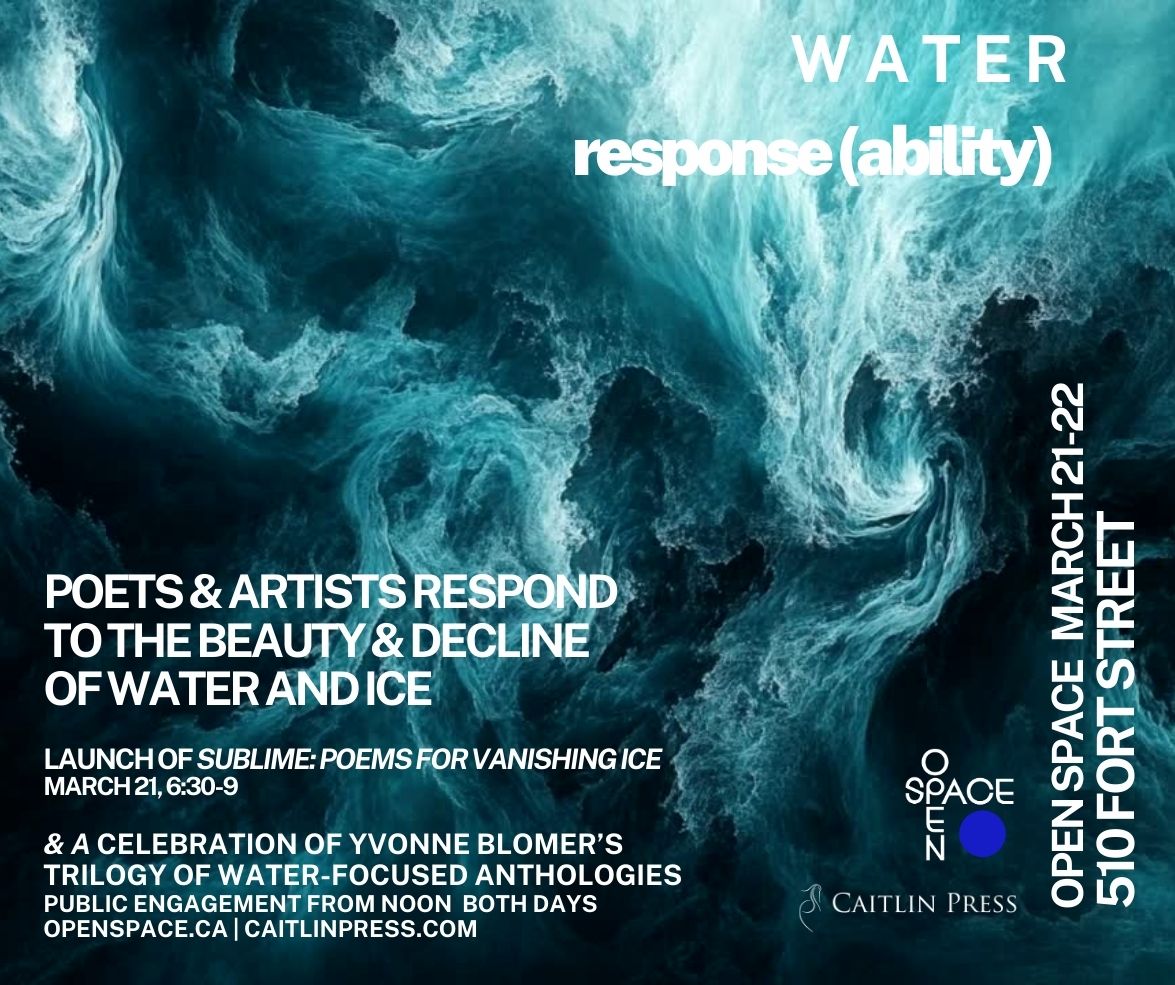
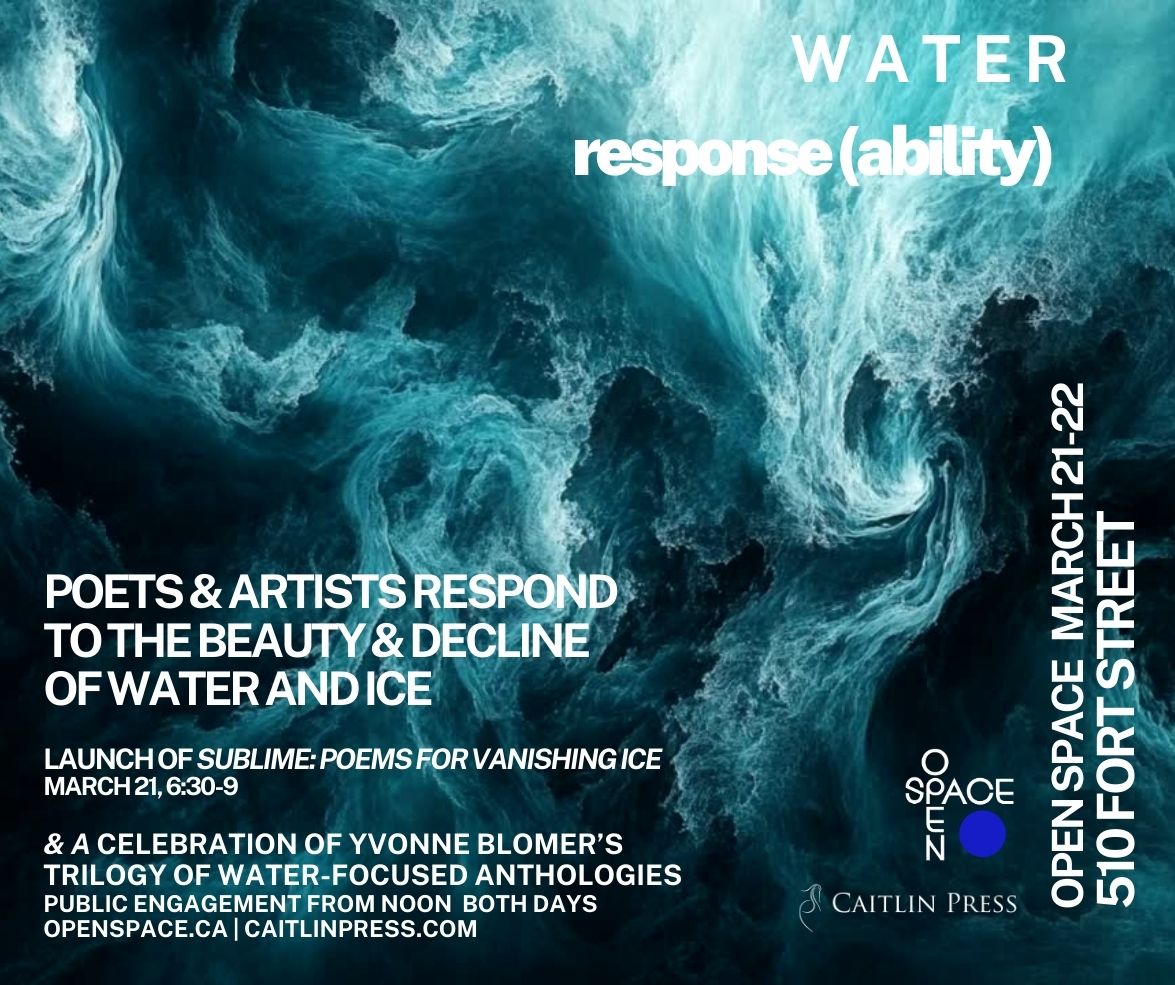
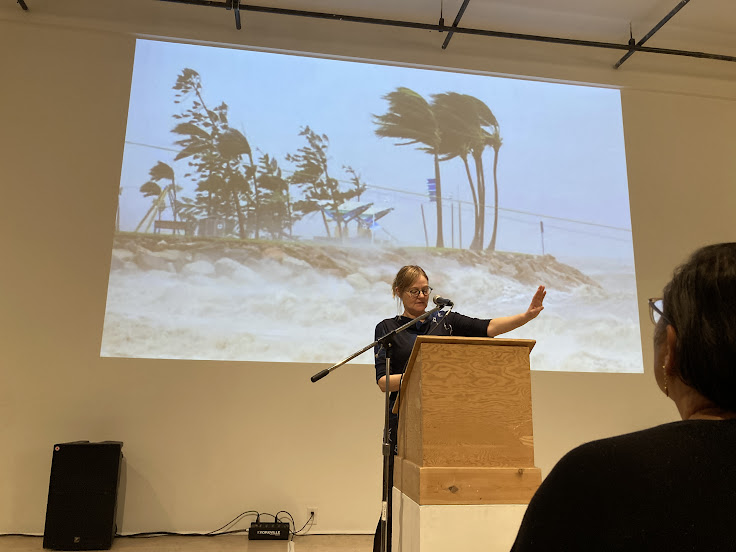
Sublime: Poems for Vanishing Ice is now freshly launched, following two days of readings, commencing on what was appropriately both World Poetry Day and World Water Day.

Not all 110 poets featured read, but 28 of us came from near and far, with pleasure, gratitude and admiration for Yvonne’s perseverance over the past decade of her work on the trilogy.


Three gorgeous posters for silent auction: Refugium, Sweet Water, and Sublime.

Good weather for reading

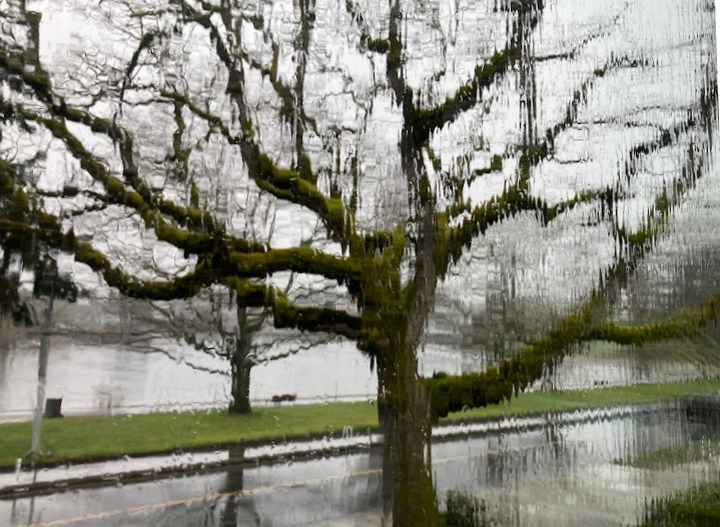
It is La Niña, I’m told, that is responsible for our cold, wet spring, after a warm, wet winter. A good time to settle in with reading and writing, I suppose, although I find it increasingly difficult to do more than listen to audiobooks while I potter around the kitchen or carry them around the house in my phone.

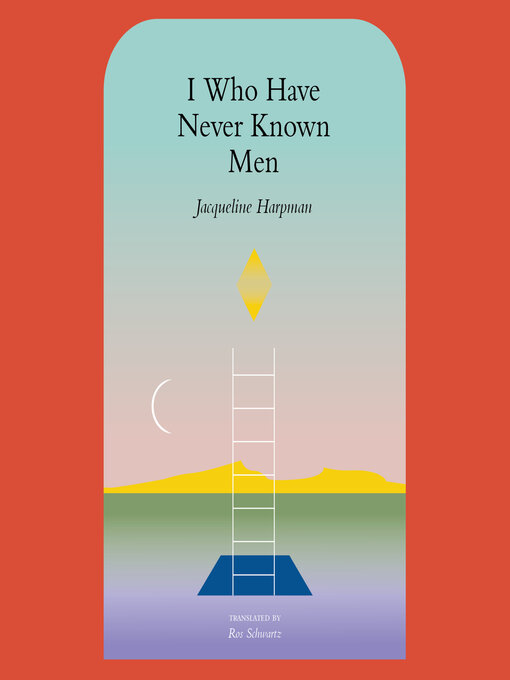
Most recently I listened to I Who Have Never Known Men, a post-apocalyptic Belgian novel by Jacqueline Harpman, whose new translation, I gather, has been giving it new life. It was thoughtful, and, like so much speculative fiction, unsettlingly prescient in its depiction, in this case, of unexplained imprisonment. I did appreciate its turning some male views of forced communities – think Lord of the Flies – on their heads. The women in this novel manage to get along and get things done and built. Reading her bio, I see that Harpman was trained as a psychoanalyst, which perhaps explains much about the carefully constructed relationships between the women.

Before that, I was in an entirely different world. A couple of years ago, a friend from my boarding school childhood sent along some comments responding to a review in the Guardian of Charles Spencer’s memoir, A Very Private School. This led me down some rabbit holes, not least of which were a couple of fascinating nonfiction books about boarding school syndrome; Joy Schaverien had coined the term and written about it in a book of that name, as had another therapist, Nick Duffell, in his book The Making of Them.

Though Spencer’s school’s structure and terminology were very close matches to mine, my experiences were, mercifully, without the physical and sexual brutality of Spencer’s schooldays. Girls’ schools are  (were, in the time period Spencer and I share, the seventies) kinder places, at least physically. And perhaps that makes them harder to write about, so there are far fewer books on the topic. Much of what I’ve seen is of the Enid Blyton variety; who knows, perhaps even back then there were a lot of girls who enjoyed the experience.

At a dinner with half a dozen of my former classmates from boarding school days a couple of summers ago, it did seem that most had more or less favourable memories. It may have helped that they had graduated from the school, which means they reached the age when they were able to exercise some control over their lives there than I had when I left after grade 10; and they also graduated under the eye of a different head of school than was running things in my day.

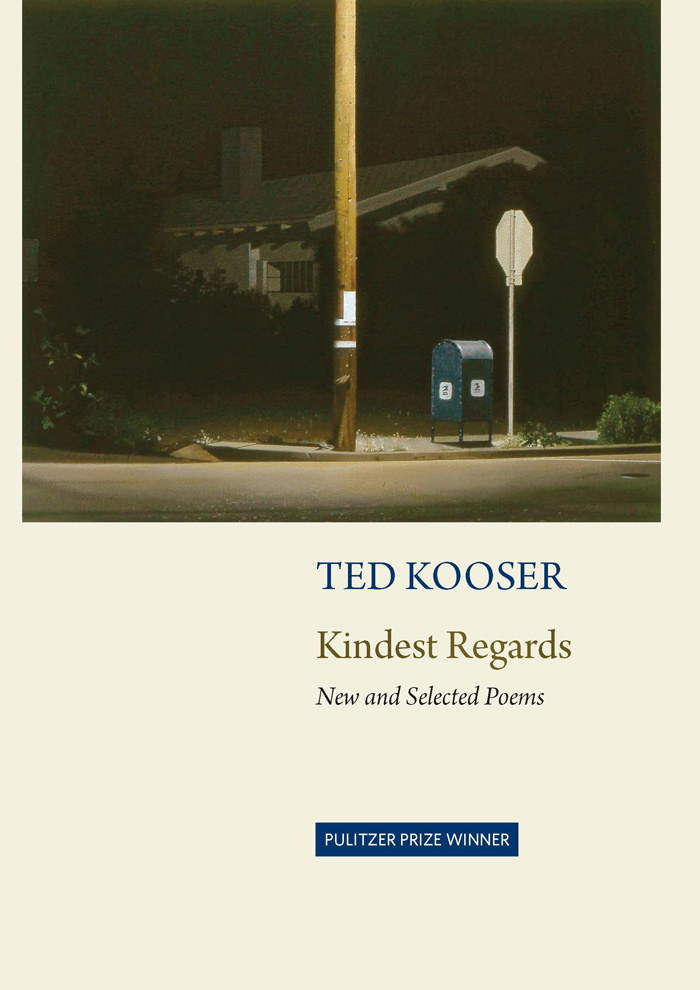
And the actual physical book I’ve been enjoying is Kindest Regards : New and Selected Poems by Ted Kooser. I had heard his name and seen the odd poem but hadn’t sat down with a full collection before. Alas for my shelf space and budget, I was compelled to return the library copy and buy my own as it’s something I expect to dip into for some time to come. Readable and rich in its language – a tough trick to pull off.

And something I had been reflecting on after seeing an old interview with Scottish poet Norman MacCaig, who believed strongly in poetry as a communication. Said that when this had become clear to him, had gone through and edited the obfuscations out of his old work in the interests of clarity.

Sublime launch!

The amazing Yvonne Blomer has completed her massive editing project – a trilogy of poetry anthologies about water – Refugium addressed concerns about our oceans; Sweet Water, the watersheds; and now Sublime: Poems for Vanishing Ice makes its debut (with snowcones!) on World Poetry Day (March 21) and (March 22), at Open Space. The launch days include joyous mingling, workshops, and  lots of other stuff. Here’s the story so far – hope you can join us!

Saturday March 21 Gallery hours from 12-5
Launch from 5:30-9
12-9 – Exhibit of visual art, videos and knowledge displays
12:30-2 – Ekphrastic poetry and collage workshops
12-5 – CRD Table “A Drop of Water”
5:30 evening event begins: public coming to attend the reading can come early to view the art and videos and interact with the books and collage table
7:00 launch of Sublime: Poems for Vanishing Ice
Yvonne opens the evening reading and performance. Poets will read dispersed by performance art by Grace Salez, Judie Price, Jane Story
9:00 event ends.
Sunday March 22 Gallery from 12-5
12-5 – Exhibit of visual art, videos and knowledge displays
12:30-2 – Ekphrastic poetry and collage workshops
12-5 – CRD Table “A Drop of Water”
3-4:30 – Second reading with questions from audience
4:30-5 – mingle, chat, vide videos and art Auction of Cover Art posters


Eco-lit in Portland

I’ve gone to quite a number of ASLE and ALECC conferences over the years. This year’s ASLE conference – its first post-pandemic gathering – was in Portland Oregon. Unusually for an organization that normally meets on campus in a smallish college town, it was a more corporate affair, a joint event with The Association for Environmental Studies and Sciences (AESS), at the Oregon Convention Centre. Which was itself a model of environmental building (LEED platinum) and stunning public art.

Eco-conferences do delve into sobering realities and there was no shortage of these in Portland. The plenary sessions included one that provided a lot of ecological context for concerns around deep sea mining. Which is being proposed to provide minerals for our ‘green economy’ – building batteries for our ‘sustainable’ electric cars and bikes, for example. Ocean mining companies have already been securing contracts in the waters around smaller coastal countries but the major headache was under discussion in Jamaica during the time of the conference: what about international waters? All a bit ludicrous in light of the fact that our oceans are all connected, so any damage done – destroying habitat for unknown species, creating plumes of silt that can choke the ocean floor for hundreds of kilometers – will in fact tamper with the substance of life on this planet, since we rely so heavily on the ocean to provide us with a breathable atmosphere.

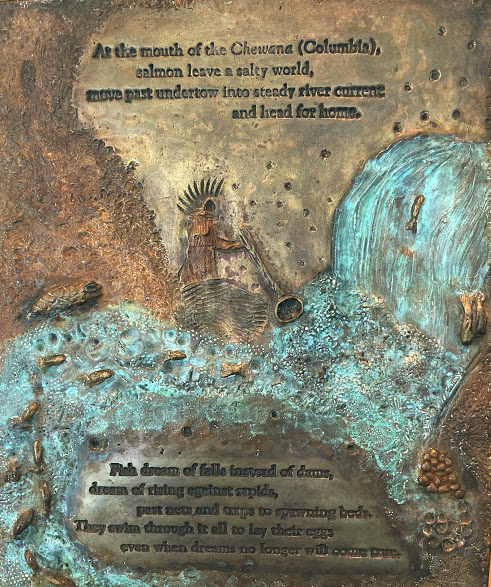
Another featured two first nations speakers from Yakima Nation, who spoke on concerns around the Yakima, an important salmon river in Washington state. As I’d learned years ago when I studied permaculture, salmon are the reason our coastal rain forests flourish – they provide the nutrients for local wildlife which in turn scatter nutrients on the forest floor. So it’s no small matter to learn that global warming will heat salmon rivers to the point where salmon cannot survive their spawning runs. What’s to be done? The modest efforts to remove dams along these rivers offers a small hope that the water can be cooled sufficiently in the short term at least. Beyond that, who knows.

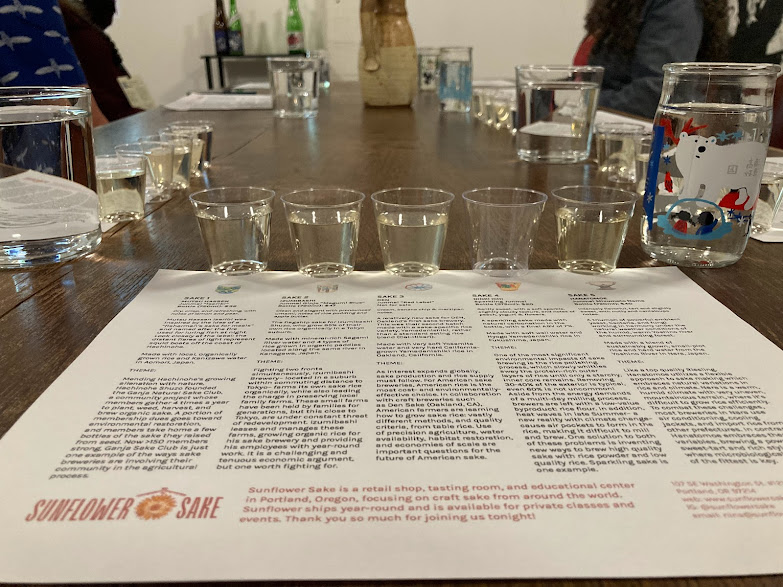
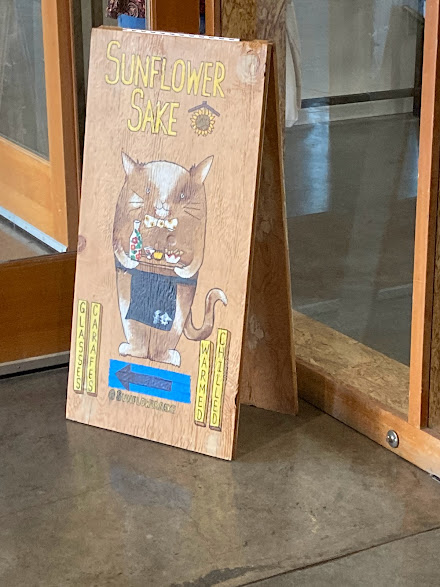
One popular feature of ASLE conferences have been the workshops and field trips before or after the main events, that are geared towards the themes or interests of the participants. This one featured a sake tasting at a local sake shop. It took me back to my wine tasting days at Unisg. All the sakes but one were offered slightly or well chilled, which was a different way, for me, of enjoying them.

And finally, early on the last morning of the conference, I read some of my poetry on the Poems & Poetics of the Commons panel, together with Lori DiPrete Brown, Sandy Feinstein and Trey Moody. As inevitably happens when random poets are placed together on a panel,  surprising conjunctions of mood and subject emerged from our readings. So it was a good way to wrap up the conference for me!

Gary Nabhan – Climate change and traditional diets

Tuesday after Tuesday has slipped by in another busy month. A couple of Tuesdays ago, American ethno-botanist Gary Nabhan visited the University of Victoria to give one of the Landsdowne Lectures. A distinguished writer, teacher and conservation biologist from Arizona, Nabhan has published work whose subject matter ranges from tequila, to place-based foods, to diabetes in desert-dwellers, to the marriage of science and poetry, to his special passion for chile peppers. He delivered a fascinating and fast-moving talk to a crowded lecture theatre, covering climate change, indigenous diets and the need for adaptation and knowledge-sharing among First Nations communities struggling to protect sources of their native plants and other food sources.

He began with an expression of concern about the rapidity of climate change inserting itself into food security: the ravages of drought, he said, are changing what’s going to be on our plate in the near and long term. If you don’t think that climate change alters access to food, wait and see what happens to food selection and price in both developing and developed world this year. Five Canadian provinces, 1,800 rural counties in US and 7 Mexican states have experiences droughts and climactic disasters this year that count as the worst in recorded history. Newly introduced plants, weeds and insects are causing problems for traditional plants even as climate works its changes.

He spent quite a bit of time on the notion of terroir, and its “relationship to place” that draws lines between flavour and culture. Both physical environment and cultural perceptions contribute to the particular flavour profile in indigenous foods. It doesn’t really make much difference whether landscape, soil or culture is the most important to these flavours, since all these things are now being affected by climate change. It is affecting both wild and managed place-based foods, like heirloom vegetables and fruits, heritage livestock and poultry, and “Salmon nation” foods, some of which were introduced, while others went feral: giant camas, Olympia oysters, Pacific littleneck (butter) clams, wapato, Hooker’s onion, moss cranberry all of which had stewardship traditions.

Traditional foods in all cultures are undergoing both availability and flavour shifts due to climate change. Where once terroir was perceived as a stable quality, now its definition is being scrambled by the “new normal” of climate change: both flavours and price will change as a result. “Many grape varieties may now be at their ripening limits,” he observed: they won’t taste the same unless we grow them at different latitudes which can offer them the growing season and temperatures they’re accustomed to.

Other foods just simply won’t be able to be grown where they used to be: for example many wild and cultivated fruits and nuts require adequate winter chill hours and optimum mean temperatures that are no longer available. The wild relatives of cultivated crops have not been well studied, but will also be subject to these changes: lacking the winter chill hours for budding, fruiting and optimum yield. The bog cranberry, cloudberry, trailing blackberry, Pacific crabapple and beaked hazelnut are a few examples.

This whole situation puts any traditional food products – such as those protected by geographical indications – at particular risk, worldwide, as climate change begins to bite. Seed banks are not the answer, since they lock seeds into climactic conditions that will no longer exist by the time the seeds are needed.

He turned to his own beloved chile peppers as an example of what’s happening to traditional crops. They are particularly vulnerable to changes in climate, as they flower and set fruit in hurricane season. Drought has brought disruption: low yields, insect predation (the nitrate counts increase due to drought stress, which attracts insects); freak freezing weather in 2011 killed 60-80% of the American chile crop that year.

Ironically, we have, through urbanization, inadvertently created laboratories to study climate change: urban heat islands can forecast what will happen in adjoining rural areas within a few decades. Now is the time to be observing those changes and learning from them.

The action required? Assisted migration of heat-stressed plants or food animals is one option, though this won’t help wild foods. Knowledge will have to be shared by southerly neighbours as the growing conditions move northwards. Traditional agro-ecological practices will be needed in order to create climatically buffered micro-habitats for vulnerable foods, in a system he called “ethno-mimicry” – preserving foods that are ceremonially, medicinally or nutritionally necessary in indigenous food systems.

Traditional food managers are not passively victims of climate change, but are already adapting, through such methods as water harvesting and conservation, or using “nurse plants” to shelter temperature-sensitive edibles and medicinals. We’ll need new alliances of producers and consumers to redesign food systems for resilience, changing our “food prints”.

Knowing where our food comes from, he concluded, is “the surest way we have to lodge ourselves within this blessed earth.”
The future of meat?

The last few days at the SWG writers and artists colony are shooting past. The nuthatches returned last week, in fighting form, shooing away chickadees and picking all the largest peanuts to stash in nearby tree trunks.

Meanwhile my inbox has been attracting distractions. Stan has been sending me some meaty articles so I am sharing them with the rest of you as you prepare to tuck into your Sunday roasts.

The Guardian has just posted an article about the £200,000 burger that’s been whipped up in a test tube, in a well-intentioned move to cut greenhouse gas emissions linked to intensive cattle farming. Fair enough, sez I: if people really don’t care to know where their food comes from, and few seem to, why not? Could it taste any worse than TVP, or a frozen supermarket soyburger? It might even be healthier than a school cafeteria burger or frozen hamburger patty, since it wouldn’t be walking around in its own contaminants. Gwynne Dyer had been talking about cultured meat earlier this week, and some months ago we learned about the amazing progress Japanese scientists had made in recycling.. erm.. certain waste products into meat-like substances.

We are eating, I hope, closer to the source of our food at the abbey, although there were some niggling questions in my mind about the historical accuracy of the menu for last week’s Medieval Feast, which featured breaded fried chicken and macaroni and cheese served on locally-made bread trenchers. Try it yourself next time you don’t feel like doing dishes and your meal leaves your guests hungry enough to eat their plates!