Skip to content
Home » Parmigiano-Reggiano

Parmigiano-Reggiano

Vancouver’s Italian food trail

The day after the BC government announced funding for improvements for the province’s transportation, I travelled from Victoria to Vancouver using only public transportation. For those not familiar with the art of getting off this island, my options were:

1. Fly: from the Inner Harbour, round-trip fares run about $275 (tax included) on a seaplane; airport to airport it’s about $300, plus local travel costs. I guess it would take 2-3 hours door to door. Each direction.

2. Drive: the ferry fare would have been $47.80 in each direction, a round-trip cost of $95.60, plus gas and parking in Vancouver. To make the ferry I wanted (without incurring an extra $35 round-trip reservation fee) I would have had to allow about 4-5 hours travel time door to door, in each direction.

3.
Private bus line (this company has a monopoly on direct non-stop service to and from ferry terminals on both sides): the round-trip cost would be $83.00 plus about $10 in local bus fares, and it would have taken (door to door) about 5 hours in each direction.

4. Public bus service
: the round trip cost was $39.60 and it took me about 6 hours, door to door each way. Curiosities of public bus travel include: the Vancouver bus fare was a nice round $5 from Tsawwassen terminal, but they will only take coins! The Victoria bus that runs from Swartz Bay terminal to downtown costs $3 (and will take bills) but the route’s publicity shouts out that they have no room for luggage: We do our best to accommodate all customers, they tell us, but oversize luggage and backpacks can be difficult to accommodate on any transit system.

So whatever you do, you lose. Though I was happy with the economies of my route – and I managed to read all of Michael Pollan‘s terrific new book, In Defense of Food, during the trip, which put the ferry’s dismal food offerings into perspective. I was pleased to have brought my own: which was indeed food; not too much; mostly plants.

Once I arrived, I had just time to forage for a quick supper, and found some truly awful sushi on the food floor of an underground mall at Granville Station, then went on to an STC meeting to learn something about authoring documents with DITA.

The next day, to keep me from drifting too fully into the dark world of technical writing, I was whisked away to spend a delightful day touring some Italian groceries. Our first stop was the wonderful Cioffi’s, which has an awesome meat counter, generous offerings of salumi, olives and cheeses. I bought some taralli! and a few pieces of their excellent pancetta for our risotto of the evening; the staff were extremely kind and charming.

Then on to Ugo & Joe’s, which was very big and had lots and lots of meats and cheeses on offer, although I paused at seeing some cheese labelled as “Grana Parmigiano”… hmm; something not quite kosher there; because they were also selling cheese labelled Parmigiano-Reggiano, I wonder if the mystery cheese may have been my old friend Grana Padano, the labelling blurring some boundaries between two quite different products. Because both these cheeses are technically referred to as “Grana” cheeses, meaning they are similar styles of cheese – hard and granular – produced in much the same way (though the rules over milk quality and length of aging are the chief differences) it is technically correct to call the artisanal product Grana Parmigiano-Reggiano; what this particular shop meant by “Grana Parmigiano” will have to remain a mystery until my next visit.

After that, we were a little peckish, so we stopped at Pasticceria Italia where the pizza had been recommended to us. It looks like their bread can’t get any fresher as there was a customer outside cooling his loaves on the roof of his car when we got there. We bought a giant slab of tomato & cheese pizza, which was fabulous. The lovely woman behind the counter said to us, “See you tomorrow!” and we sure understood what she meant.

Then another treasure – Renzullo Food Market was compact but well-provisioned, and the owners were delightful, knowledgeable and friendly.

We then did a swift little tour of offerings on one corner of Commercial Drive.

We stopped first at Fratelli bakery, then to the La Grotta del Formaggio (lots of cheese, yes, and a great selection of olive oils which we had to fight the crowd thronging the sandwich bar to get to). Most excitingly, I saw a familiar package on the pasta shelf: it was our old pal Spinosi from Le Marche! Very thrilling to know that his products have made it to this far outpost of the pasta eating world.


We then nipped down the block to the doors of
JN & Z Deli which sadly for us were closed (winter holiday), and so we finally subsided with a giant, strong and beautiful cappuccino at Continental.


A final stop at Bosa‘s spacious big store, where I came away with a giant bag of beautiful fresh walnuts.

Scotland it ain’t

The company which provides my email has also decided to change my surname. So maybe you can understand why I dislike being in North America in general, and why I have a special hate on for the Beach Boys?

It is maybe not as specific and passionate a hatred as I have for Canada Post, that government agency which has the bare-faced cheek to charge tax when it sells us stamps, and who took my money for holding my mail and then sent a selection of it back to Italy. So now I can choose to enjoy playing a complicated long-distance game of hide and seek in Italian with Poste Italiane during the Christmas rush.

However. I did have an outstanding meal in London before I left, at La Trompette. Here’s the evidence:

A starter of mixed leaves – endive of two colours and rocket – with roquefort, walnuts and poached quince:

Followed by an exquisite piece of sea-bream, crunchy and melting, on a bed of pureed potatoes with a darling lettuce heart and perfectly roasted parsnips for company, in a chicken jus with capers.

We would not dare to call this delicious morsel Pineapple Fluff, but superficially, and passion fruit aside, the resemblance was striking…

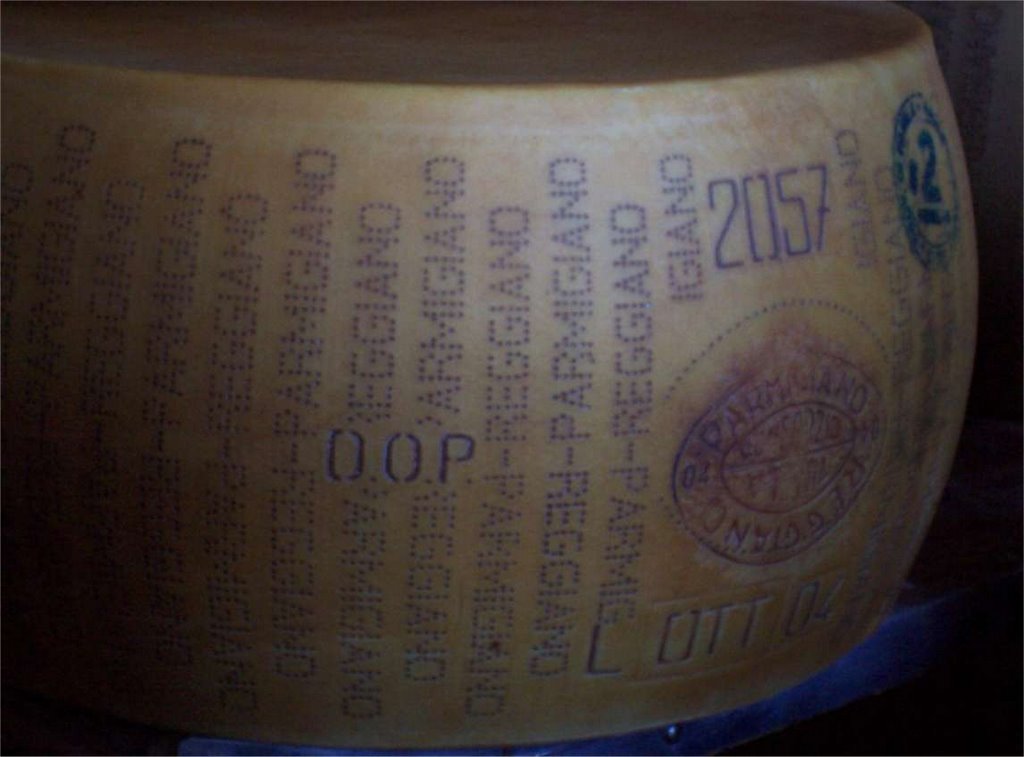
And on my first visit to an Italian grocery in Vancouver, which shall remain nameless for the moment, I was able to spot my first instance of cheese fraud. They had vac-packed Grana Padano and were selling it as Parmigiano-Reggiano; you can tell by the markings on the rind, which are diamond-shaped for Grana, whereas Parmigiano-Reggiano simply has its name spelled out together with the production date (which makes it annoying not to get a specific answer when I asked the seller how old their Parmigiano-Reggiano was: basically you are looking for something in the 24-36 month range, but all she could tell me was the piece in my hand would be between 2 and 4 years… since the producers will have charged the wholesaler more for a 36 month wheel than for a 24, it does matter to me the consumer which I am buying).

Grana is a cheaper, industrial version of Parmigiano-Reggiano, so it is more than cheeky to try to pass it off as its higher-priced cousin. I told the clerk at the cheese counter that the cheese had been mislabelled; she looked confused but gamely started filling a basket to get the offending merchandise off the display. But when I looked again, most of it was still there. I will hold judgement and whistle-blowing until I have a chance to check them out again. I greatly fear that my year’s experience has only served to make me potentially unwelcome everywhere I go.

Meat and cheese

Today when the UK is again struggling with Foot & Mouth disease, I have retreated to the couch where I have been reading a terrific book, Last Chance to Eat, by a Canadian (via England) food writer, Gina Mallet.

Although it’s full of interesting facts, figures, anecdotes and recipes, I’ve found (thanks to this year’s education) two factual errors. One of the errors – that sent me running for my cheese technology notes – has to do with Parmigiano Reggiano cheese, which she says can only, according to the rules of the “Dominazione di Origine Controllata… be made only between 15 April and 11 November, when the cattle – producers of a quality milk called Pezzato Rosso – are grazing on fresh grass rather than eating silage.”

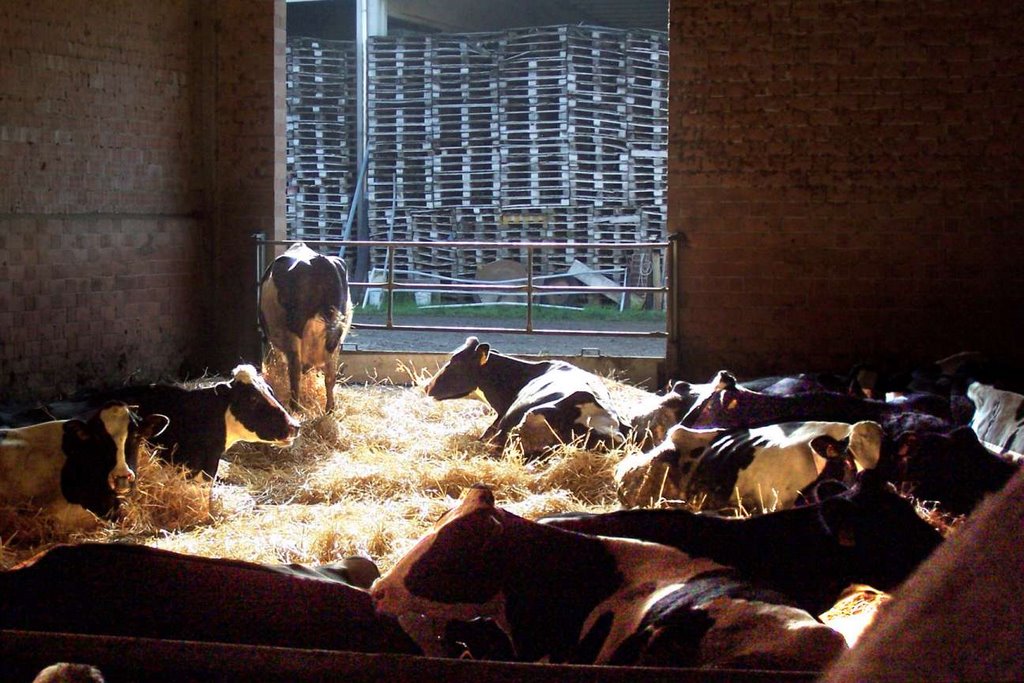
What is wrong with this statement is: there is no date restriction on production of Parmigiano-Reggiano cheese (it’s made year round); and the cattle are not allowed to eat silage or to graze on fresh grass because of the risk they might eat wet grass that has the same fermentative effect as silage. Fermented feed puts the milk at risk of developing heat-resistant bacteria, butyric clostridia, which causes cracks and holes in the cheese paste, making the cheese unsaleable as Parmigiano-Reggiano. (The cows producing milk for Parmigiano-Reggiano are, for this reason, not free range; they spend their lives in cow sheds.)

The regulations actually specify no silage, to preserve the safety of the cheese, the reliability of the ripening process, and the purity of the flavour. The rules are laid out and administered by the Consorzio del Formaggio Parmigiano-Reggiano.

The Pezzata Rossa she mentions is a traditional breed of cow once widely used for Parmigiano-Reggiano production, and is still used for a more exclusive product, Parmigiano-Reggiano delle Vacche Rosse. But since there is no restriction on the type of cow used for Parmigiano-Reggiano, dairies use higher yield breeds like Friesians.

The other error I came upon is to do with BSE, mad cow disease and its human incarnation, variant CJD, which Mallet attributes to 109 sufferers identified in 1993 having eaten more veal than others. But I remembered it being reported that the 10 sufferers identified in 1996 had eaten more beef (except for the one case who was vegetarian, presumably) – the highly processed kind, found in pre-fab meat pies, frozen burgers and the like, where presumably there is more animal byproduct than you’d normally be consuming.

And according to a WHO fact sheet on the subject, “infectivity is mainly found in the brain and spinal cord of clinically ill animals over two years of age.”

Anyway, the latest statistics for world-wide infection show that there have been a world-wide total of 201 infected through to July 2007. So I’m not sure where the figure of 109 UK cases came from; perhaps there was some early confusion between sporadic CJD and variant CJD.

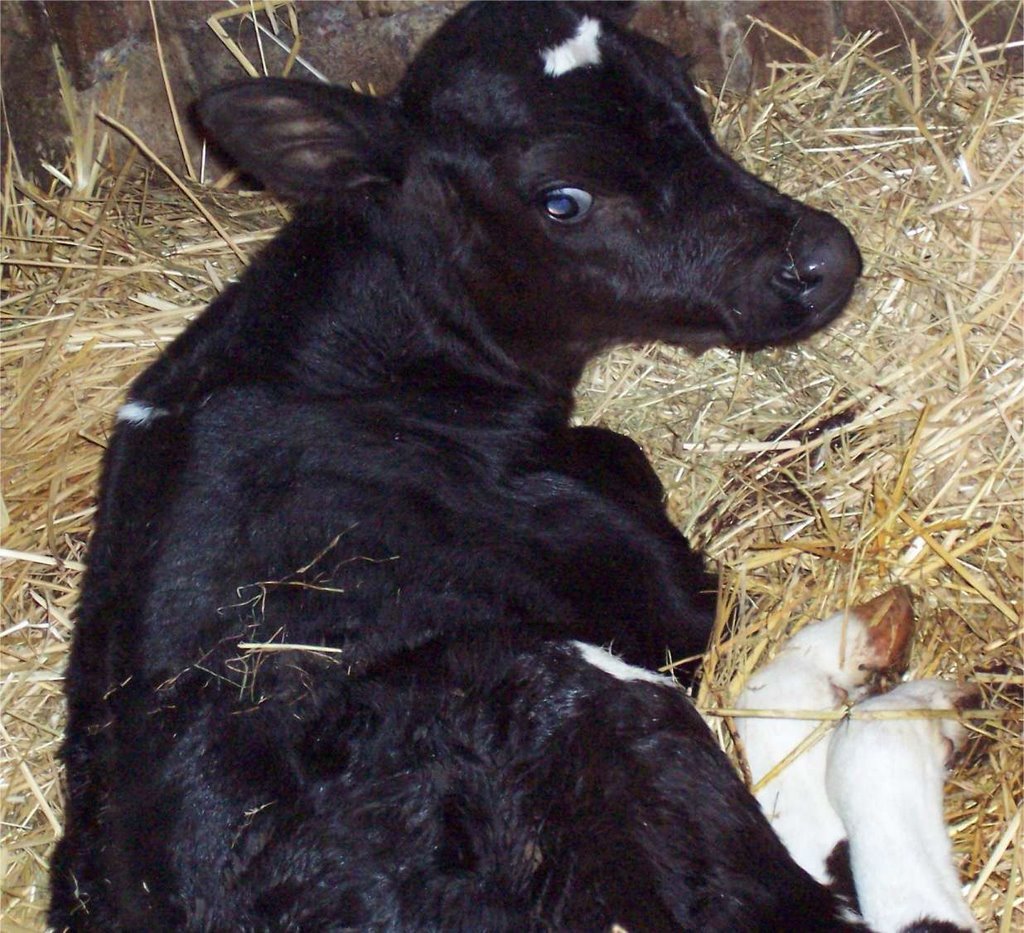
Anyway it led me into some interesting reading around veal, including a piece by the rather fierce Guardian food writer, Joanna Blythman, which is a good summary of the ‘why to eat more veal’ argument – which hinges on the biological fact of dairy, namely that cows must get pregnant and give birth in order to lactate and give us milk and dairy products, resulting in a living byproduct, namely veal. Which is a point most of us, in our blissful detachment from the source of our food, have never considered, in our haste to condemn veal crates, which are banned in Europe from this year in any case.

An amusing animation about dairy farming in the US…

And finally, if you liked The Matrix, you’ll love The Meatrix.

Where the milk comes from

So today’s trip was to the dairy farm:
we got in the bus
to go to the farm
to meet the man
who owns the cows
who give the milk
that makes the cheese…


But before the farm, there was the Christmas market, and a stall selling small round edibles of a Sicilian persuasion.

Then there was the farm. More round things.


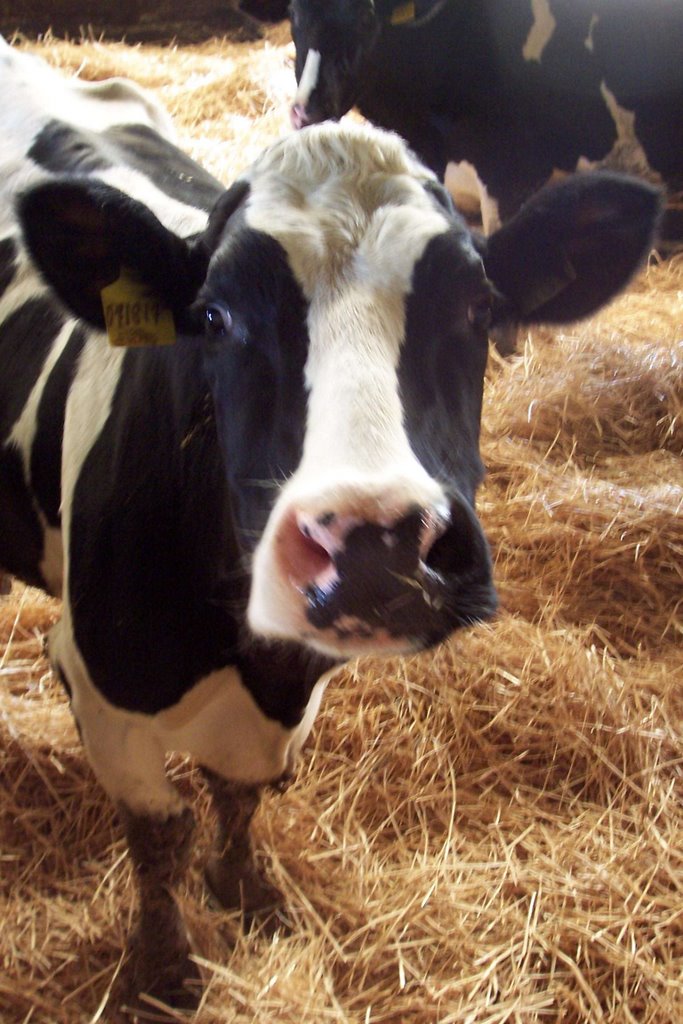
In addition to a persimmon tree, they had 200 cows, about half of which are giving milk at any time while the others are either growing up or getting ready to give birth. This farm had only Friesians, which came from Canada and the U.S. The farmer belonged to a dairy co-op of 11 farms and was very near his cheese factory, convenient for making that 2 hour deadline to deliver the milk. The other restriction on milking for Parmigiano-Reggiano is that the actual milking must be completed within four hours, start to finish (this farm managed it in one and a half hours, twice a day).


Hmm… these remind me of something I’ve seen lately… cylindrical, straw-coloured, stacked to the ceiling… The Parmigiano-Reggiano consortium obliges its dairy farms to produce – on-site – at least 50% of the feed for their cattle; this farm produces 90% of its feed. No animal products can be included in the diet of the dairy cattle, and no silage or wet grass, all to preserve the safety of the cheese, the reliability of the ripening process, and the purity of the flavour.


My fellow Canadian?


We observed the bedroom of the cows.


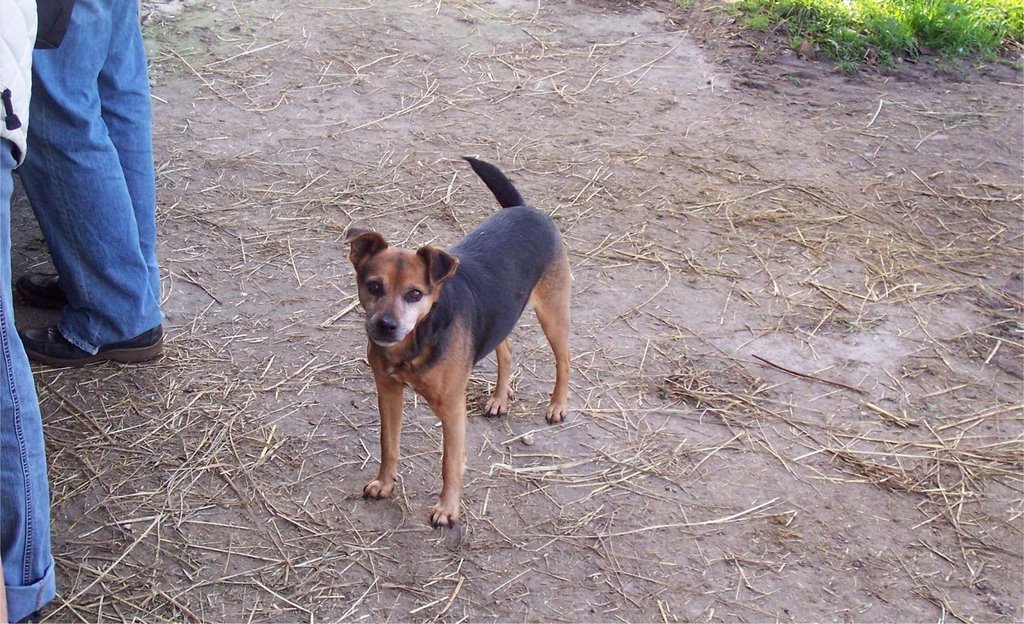
Scary farm dog.


And on that farm there was a cow…


Why yes, as a matter of fact, I was born yesterday.

The real thing – Parmigiano-Reggiano

Again the sciopero raises its ugly head. We had been scheduled to visit a cheesemaking factory and then a dairy farm on Wednesday and Thursday, but the bus strike would have affected our, um, bus, so the visit and our classes were rescheduled so we could go Thursday and Friday instead. Then the Wednesday strike was cancelled. Then we heard an all-out strike (buses, trains, planes) was planned for Friday instead. Then that was cancelled. Or was it? All so confusing.

Anyway we were, on Thursday, very happy to visit a Parmigiano-Reggiano cheese factory in nearby Baganzolino on Thursday and see all that had been described to us actually happen before our eyes. We arrived at 8am in time to see the whole range of the day’s cheese production. and were well briefed on the bus.

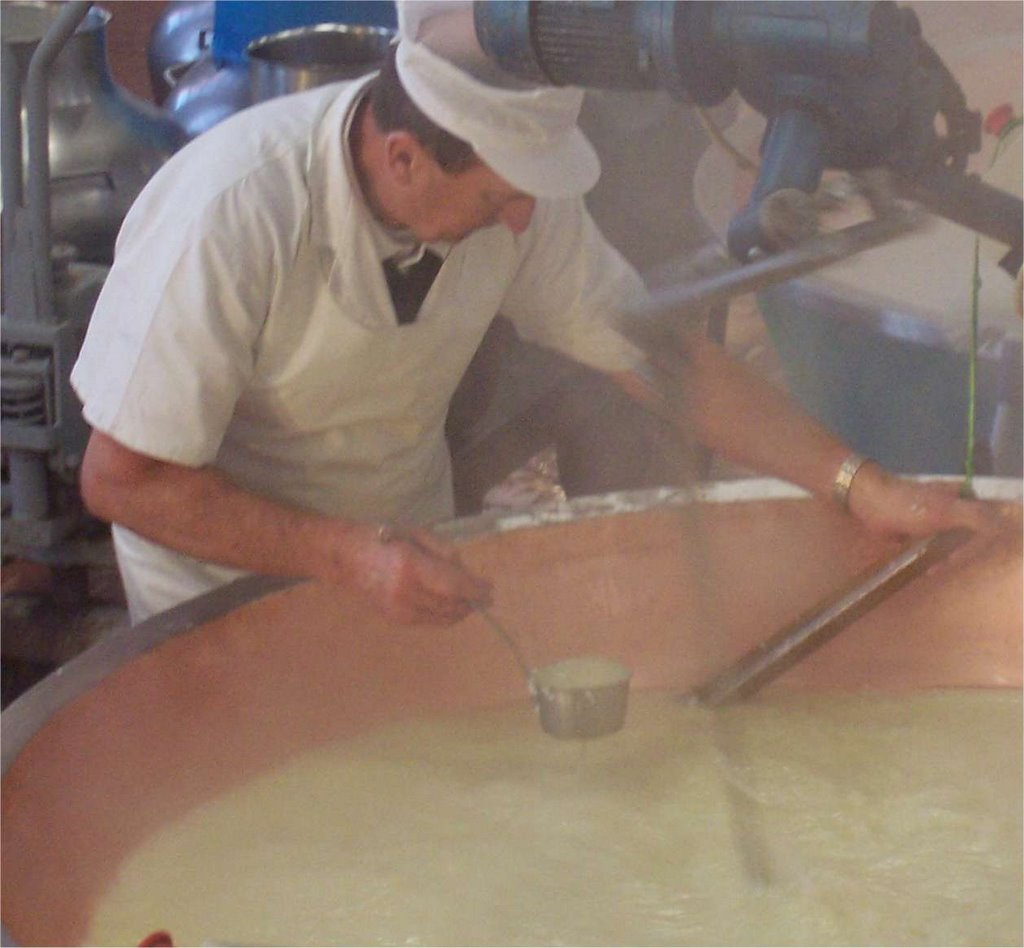
The milk that arrives at the factory must be delivered within two hours of milking, so there was no time to lose. Everybody went wild with cameras and I think several thousand images were taken as we watched it all unfold; here are a few of mine.


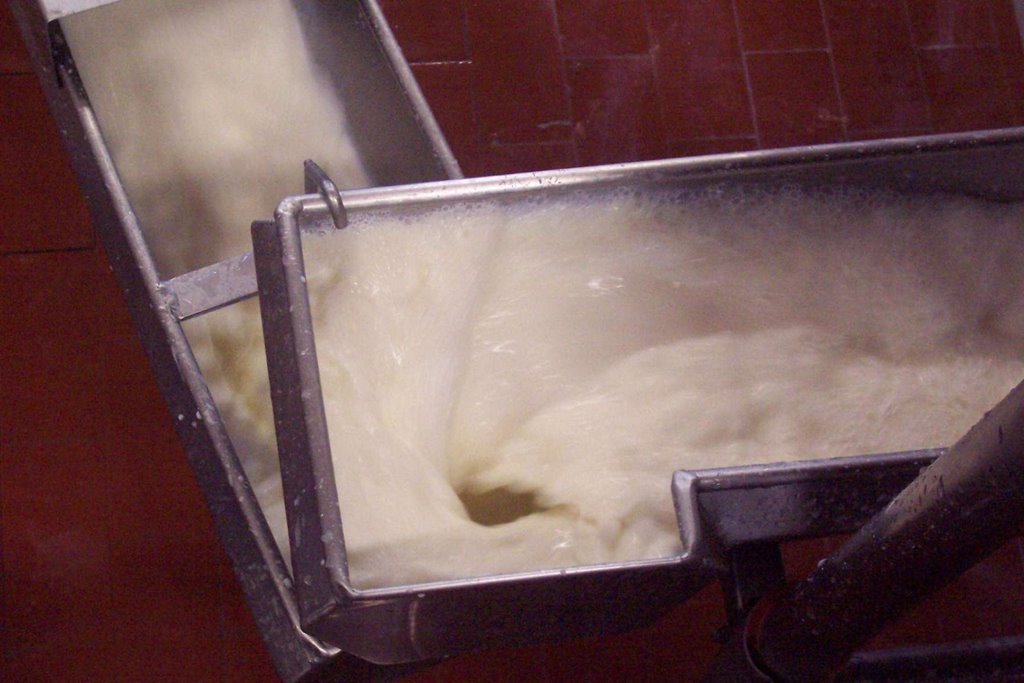
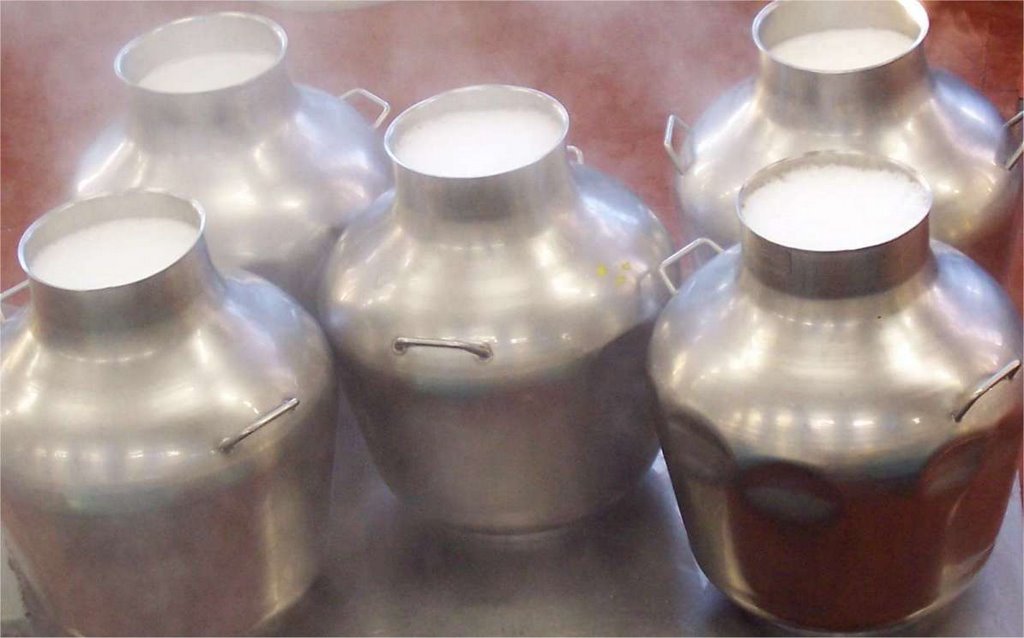
The milk from the evening milking is set out in trays to separate overnight. The cream is skimmed off and this milk is mixed with that of the morning milking, so it’s genuinely partly skimmed. It’s then heated, and whey (naturally fermented from the previous milking) and rennet are added.


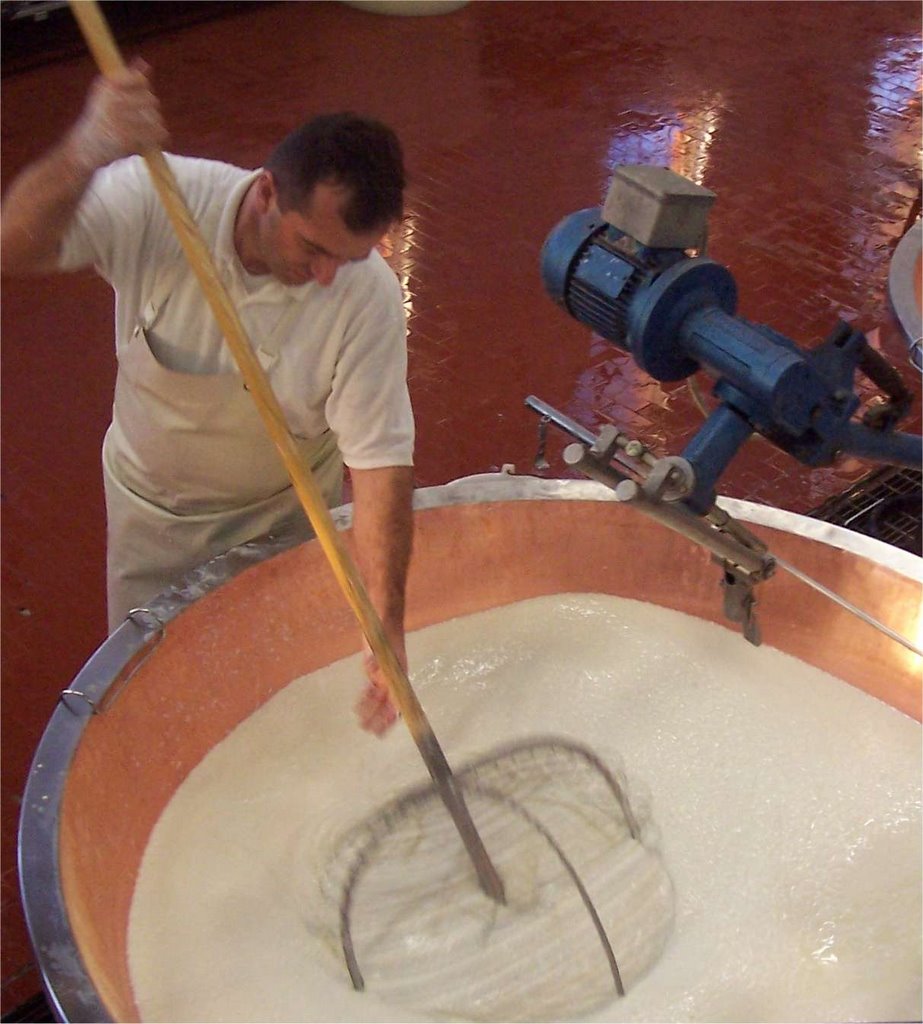
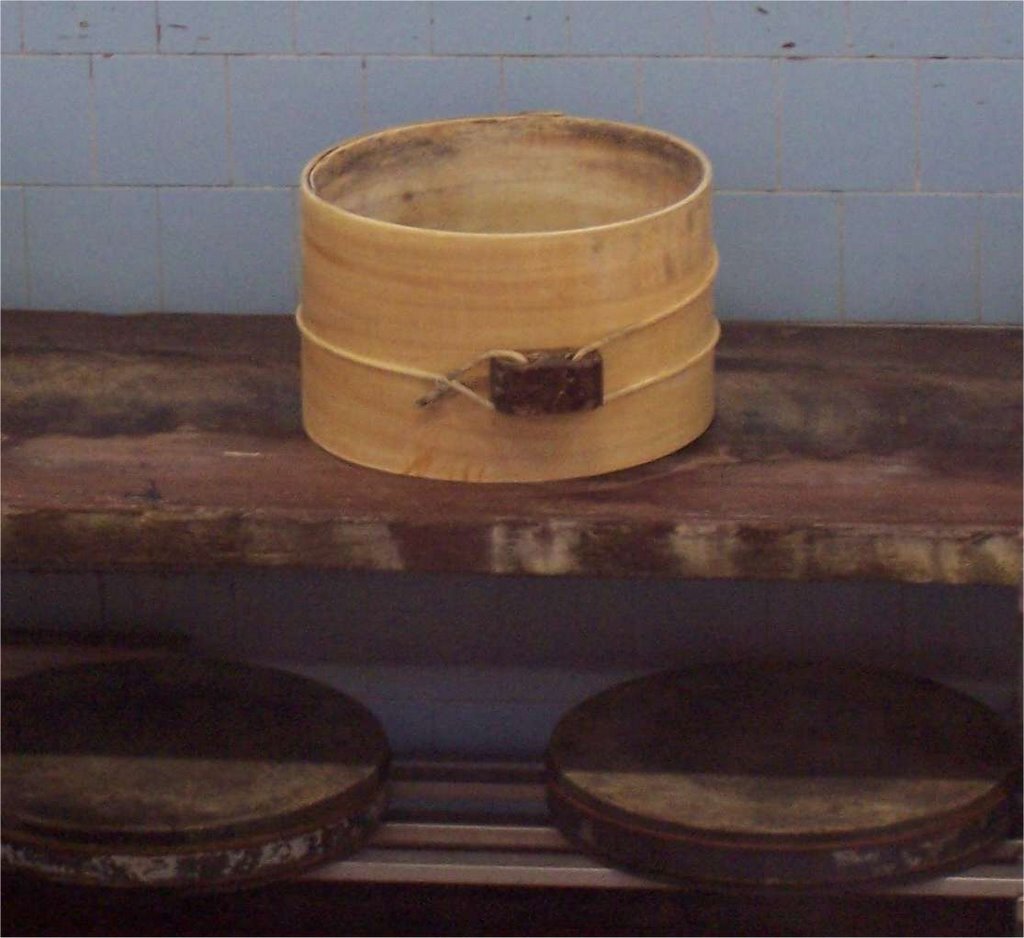
The whey and rennet have been added to the milk; it has coagulated and the curds are being broken up into grains the size of wheat kernels. For this task they use the spino, a whisk unique to Parmigiano-Reggiano cheese-making, named for the thorn branches that were originally used (hawthorne, according to our Italian teacher).


The master cheesemaker – we were told that, like the cows, he never gets a day off – checks the temperature and curd. Once he deems it cooked, the heat is switched off. Traditionally and practically, copper urns are used because of their excellent conductivity: and their ability to both heat up and cool down quickly.


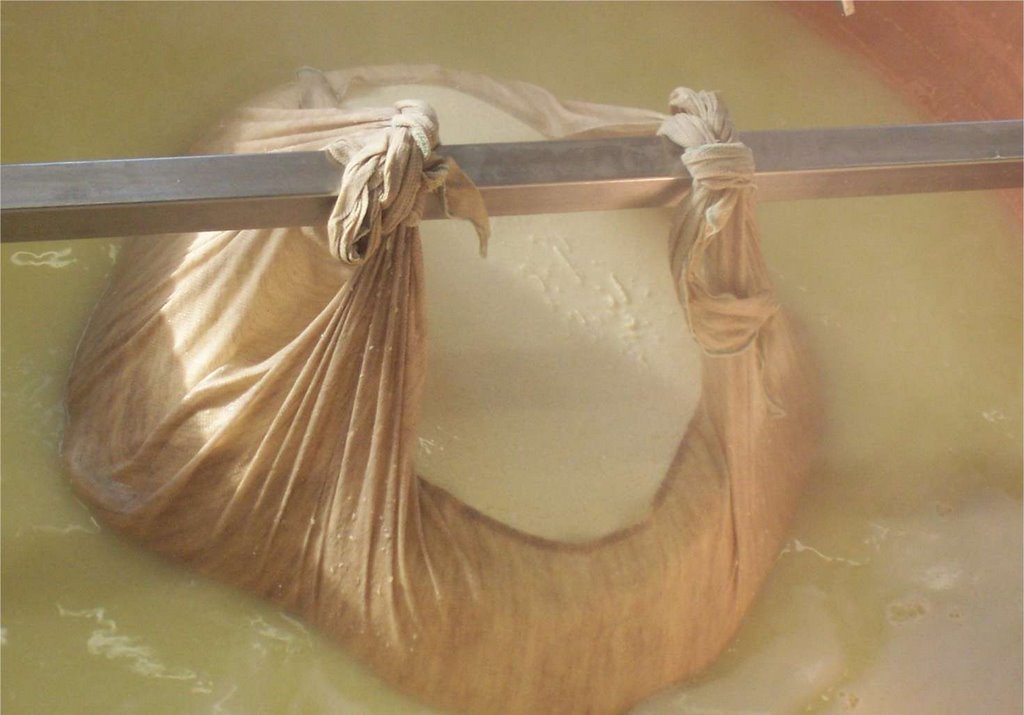
The cheese has coagulated into a nice big ball. It’s cut in half after this; each vat makes two cheeses, a total – for this factory – of 24 cheeses a day.


Most of the whey goes to the pigs (this be prosciutto country after all); some is made into ricotta; this batch will be used for the next day’s cheesemaking.


The first mould for the cheese.


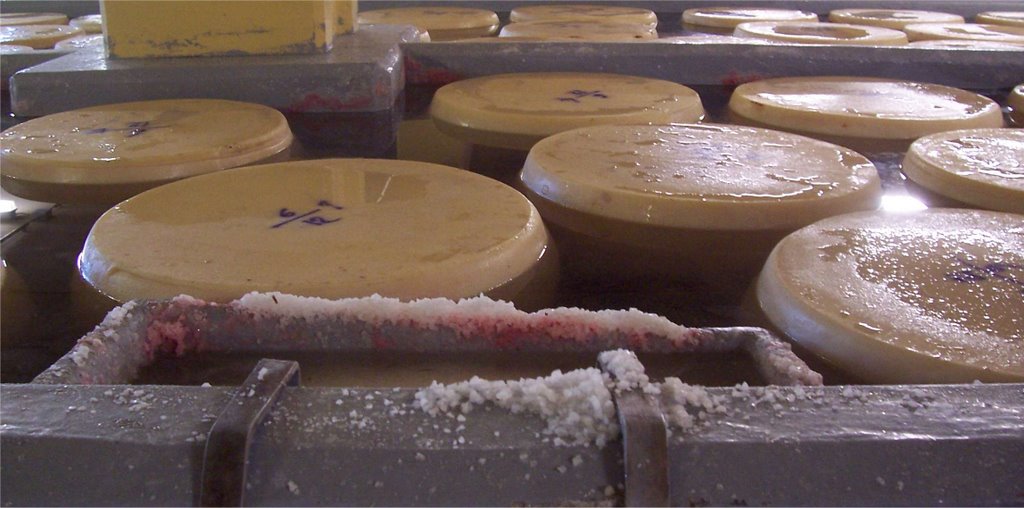
After two days – the Parmigiano-Reggiano brand having been imprinted the first day and the cheese shaped in metal moulds the next – the cheeses are floated in brine for 20-odd days, to firm up the rinds and allow osmosis to do the work of removing excess moisture and prepare the texture for a good long aging process. The cheeses are turned and re-salted regularly. Salt is the only preservative allowed in Parmigiano-Reggiano.


Look up… look wheeeeeyy up!


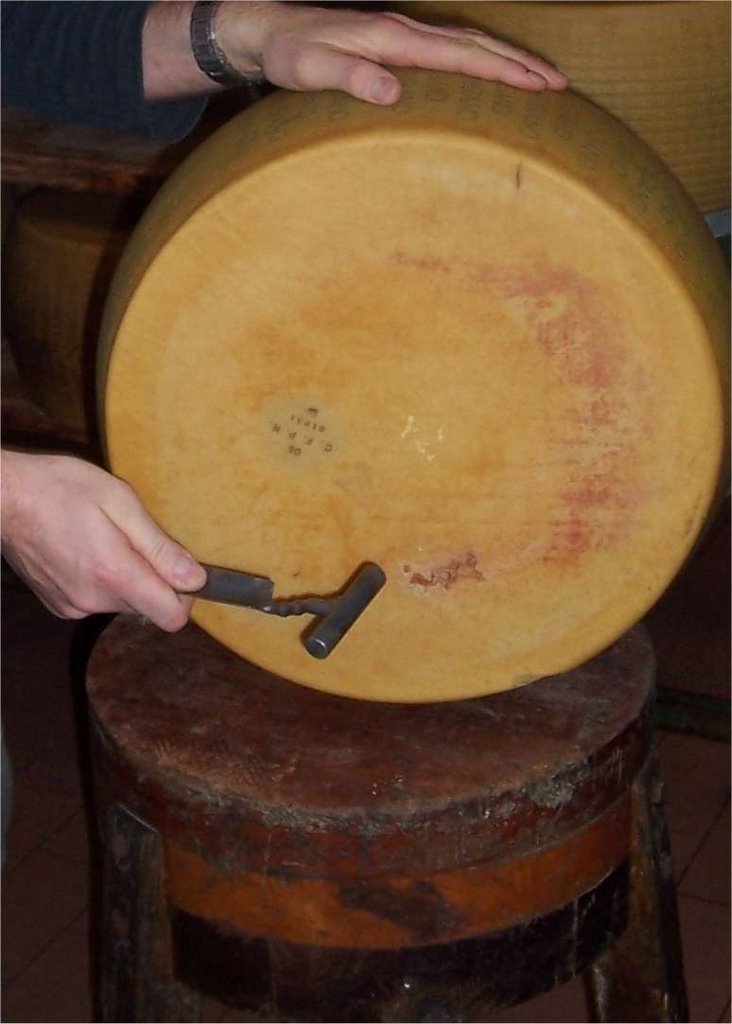
Once aged, the cheeses are tested by experts (battitore) who use a hammer to determine the depth of the rind and the quality of the cheese through sound alone. A hollow note can indicate uneven texture or holes (eyes). We’ve heard from several directions that holes are an impermissible defect in Parmigiano-Reggiano; formed by fermentation within the cheese paste, they can allow bacterial growth and spoil the flavour. The farmers go to great lengths to prevent the cows from eating wet grass, and neither are they permitted to eat silage, because these can promote lactic fermentation that could spoil the cheese during aging; so notes on permissible feed for the cows have been included in the regulations that govern Parmigiano-Reggiano production.

Much of the cheese is sold after 12 months, just to pay the bills. We were told that currently the Parmigiano-Reggiano consortium cheesemakers are operating at a loss, and the earliest they can sell their product is 12 months, at which point it is fine for grating, though the preferred age for eating it as a table cheese is after 24 months. Its digestibility and flavour improve, but its texture gets drier as it ages. One of the distinguishing features of the well-aged Parmigiano-Reggiano is the presence of small white crystals – an amino acid called tyrosine – which you find also in other long-aged hard cheeses such as (yum) gouda.

British cookery writer Delia Smith visited this region and learned about Parmigiano-Reggiano and documented her take on it on her website. I especially liked what she revealed about its noble history in England:

During the Great Fire of London, that most discerning of diners, Samuel Pepys, thought the cheese so precious that he dug a hole to bury his Parmigiano Reggiano to preserve it from the flames.

Cheese-off


Colorno fountain

We learned something about cheese tasting yesterday in a first class on that subject, when we went nose-to-rind with four fabulous cheeses. It was very exciting and entirely delicious, which was a small miracle given the continuing cold-type ailment which has been working its way around my upper respiratory sytem since the first week of classes.

It helped that we were mostly trying strong cheeses – Fontina, Pecorino Toscano (an unusual one, aged 4 months in a cave!) and a very rare and exquisite four year old Parmigiano-Reggiano – as well as a fresh Mozzarella di Bufala Campana that was soft and yummy and totally unlike most anything that goes by the term “mozzarella” in Canada.

Someone had asked the cheese technology prof why there was no control over the use of the name Mozzarella, since it’s used worldwide to describe substances that only remotely resemble the original product in production methods, appearance and least of all taste, and he said something like, “oh to ask that question is to make wider the wound in the heart of every Italian”.

I’ve been awed and impressed by the pride and passion the people we’re meeting have about their food. His answer to the mozzarella question was that basically by the time Italian producers got around to applying to protect the name, “mozzarella cheese” was in really wide production (from a variety of methods) worldwide and Italy didn’t have an argument of scale sufficient to make a case for reclaiming the name. They did protect the “Mozzarella di Bufala” designation though, since water buffalo are not widely used for this kind of cheese production and are mostly found only in Italy, India and east Asia.

We discussed cheese tasting terminology, needed to capture the effects of various combinations of the 200+ different chemical compounds that make up tastes, smells and aromas in cheese. One important point was that it is fairly critical to have eaten widely and well if you want to taste cheese (or wine, I suppose) because in order to master the terminology you need to know other flavours as they are suggested to your palate – call on your olfactory memory: no easy thing. Apparently there is an international vocabulary to describe all this, that was only developed about six years ago. To supplement our handouts, I came across a good list of terms – the Cheese Connoisseur’s Glossary, at an artisanal cheese website – and an even better one: CheeseNet’s Cheese Glossary.

We did find it difficult to appreciate the full meaning of some of the tasting terms: for those of us not familiar with the exact nature of chestnut or arbutus honey, for example, the term is not so meaningful. Being one who enjoys splitting hairs, I’ve been speculating that given the differences that regional climate, vegetation and soil types make in end products of just about every agricultural enterprise, I’m guessing that there would be a noticeable difference in flavour between Italian and Canadian (and other) chestnut honeys. We’ll have to have a taste-off sometime to find out.

Well. That was it for today. We’ll be tasting six more cheeses next time.

Here are some more photos ’round town:


Parma specialties, Via Farini


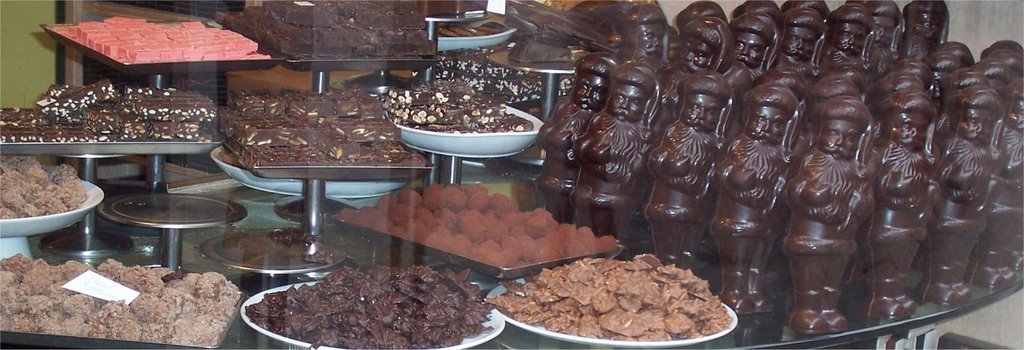
Some scary Santas (Babbi Natale)


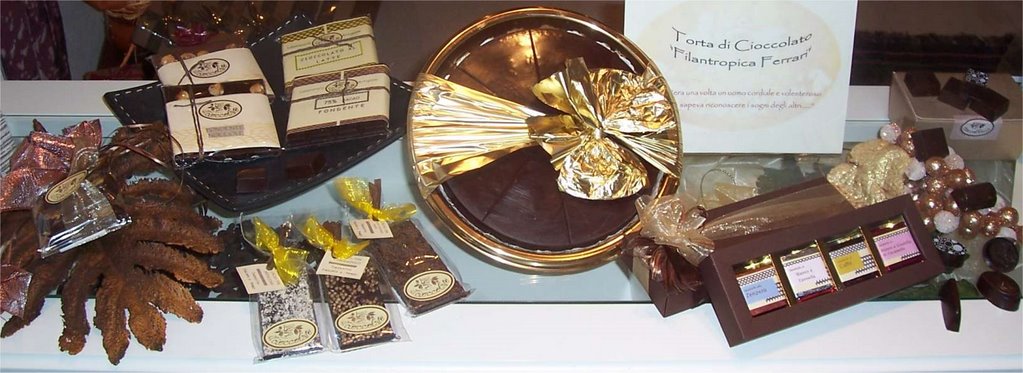
More chocolate…


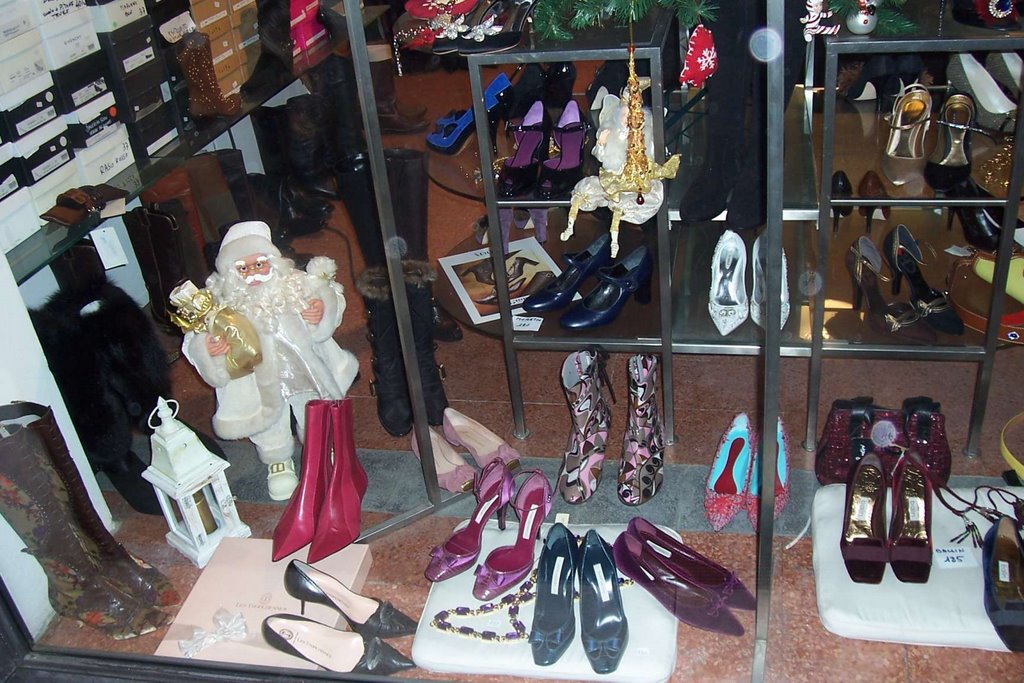
One for the shoe fetishists