Skip to content
Home » prosciutto

prosciutto

Nutella, Faust, wine and cured meats

Corrie passed along the important news about World Nutella Day which is coming up very quickly, on February 6.

Last night a group of us shared a box at the opera to see The Damnation of Faust. Reviews from our company were mixed, but I think it was agreed that overall the second half was better than the first, all beautifully sung of course, by a very large cast, but possibly overwhelmed by some of the visuals that were projected over the proceedings, and the choreography and circus work were a bit much. All in all I enjoyed the evening, though thought I sensed a touch of Lord of the Rings in the depiction of hell, and a lot of loin cloths were used in the making of this opera. Anyway, can’t come to Italy and not see opera, even a French one, so I’ve got that one under my belt.


We have been having “sniff parties” chez nous. MJ has a pretty comprehensive wine aromas kit which we’ve been working our way through with some diligence. We sniff 18 different bottles containing everything from acacia to leather to chocolate to mushroom to smoke, and then sample some wines to see what we can detect in them, and then we eat nice food. This week’s menu featured MJ’s gazpacho – an unorthodox version apparently as it lacked bread, but it was beautiful without – and the near unpronounceable kolokythokeftedes (zucchini cakes with feta and mint). Mint was actually the hardest ingredient to find, but I bought a bag from an erborista, which wasn’t quite right so to me it tasted a bit like mint tea, but it went down all right with some tzadziki. Corrie brought an Orange- cheesecakey- moussey- souffle- kind- of- thing, I think that was the official recipe name, and topped with blood oranges it was delightful.

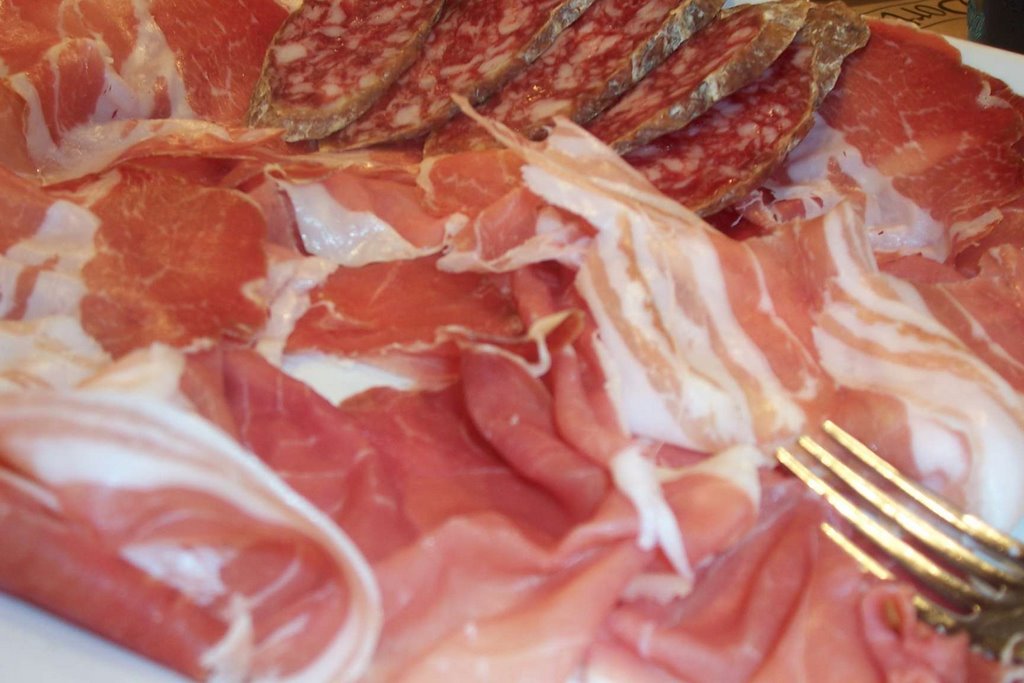
We kept our menu quasi-vegetarian because we’d spent the afternoon doing a meat tasting, which was exhaustive and somewhat overwhelming: 21 different meats I think. I’d missed the salami tasting before Christmas, and this time we were doing only cured meats made from whole cuts. So we had prosciutto crudo e cotto (raw cured and cooked hams), some smoked hams and a couple of different kinds of lardo which were surprisingly good, even if we did have to take them without the requisite hot toast.

Some Culatello and Culaccia, Spalla crudo and cotto, Prosciutto di Sauris (a whole smoked prosciutto crudo), Alto Aldige (smoked), Cinta Sinese (Tuscan pig), Jamon Iberico, some black pig prosciutto with flavours of blue cheese; and the lardos came later, which I didn’t photograph.

Many prosciuttos: 16 months, 24 months, crudo and cotto, smoked and salted.

Monday: Prosciutto di Parma

A meltingly sweet bit of salt-cured pork, sliced paper thin, draped on ripe melon: what could be better? A ham that is just ham and salt, no other ingredients; a bit of chemical magic. One of the most wonderful things about Italy, I always thought.

But that was on Monday. A bit predictably, I’m less keen having seen where the pork comes from.

But we start at the beginning, when we visited the Prosciutto di Parma Consortium office. Like most food consortia, this one spends much of its time and money defending the brand from imitators and fraudsters, who aim to confuse the market and reap the benefits without investing in the advertising. The consortium also has an active marketing program, both for the 82% internal and 18% international markets for its products. Not a small market either, with 10 million hams produced as Prosciutto di Parma alone: and there are scores of variations, sold simply as prosciutto crudo, or with other regional designations such as Prosciutto Toscano.

Prosciutto di Parma, a DOP designation, has a narrow and specialised definition. The pig must have been of the Large White, Landrance or Duroc breed, born and raised in one of the 11 regions of central-northern Italy specified in the regulations. It must be raised to a certain weight (a minimum of 140kg); the leg, weighing usually 10-14kg (for a finished weight of not less than seven kg), must be cut in a characteristic shape with a specific percentage of fat; it must be preserved using only salt, and aged for at least 10 months (- depending on weight – but at the production plant we visited, was at least 18 months).

After lunch (yes, it featured prosciutto) we visited a prosciuttificio, prosciutto producer, in Langhirano, a village where 50% of the Prosciutto di Parma is produced. Like all of the producers, it was located within the geographical boundaries of the Parma production area, 5 km south of the via Emilia, bordered to the east by the river Enza and on the west by the river Stirone, and up to an altitude of 900m.

Unfortunately we saw very little of the actual production, but were walked through the plant and shown the hams in various stages of curing. Interestingly we heard that every step in the process is a skilled one, but it is difficult to find people interested in working in this field nowadays, and a lot of the workers are Moslem – so they handle food they cannot eat. Here’s how it all went.

After arrival at the production centre from the slaughterhouse, and about 24 hours in cold storage, the pork legs have been cleaned and salted by machine and by hand, and set on these racks for a week or so, in la cella da prima sale – the room of first salting. Then another salting, and another 12-18 days cold storage, and then they hang for 60 to 70 days in refrigerated, humidity-controlled rooms. Lots and lots of legs.


The hams are now finished with 100 days of salt curing. The salt has penetrated the meat through to the bone and the hams have been washed and brushed and hung in drying rooms, and then hung for another three months in “pre-curing” rooms. It’s time for their final aging, which will last another three to five months in the curing cellar. To soften the meat and prevent the hams from drying out, la sugna – lard mixed with a bit of pepper and perhaps some rice flour – is applied to the exposed surfaces of the meat.

The final test; the ham is now fully cured and properly aged – a minimum of 18 months for the ones we saw; some connoisseurs prefer it aged 24-30 months, but this can be risky as the ham can develop a strong flavour, or become too dry if it’s at the older end of the spectrum. Using a tasto di prosciutti, a horse-bone needle prized for its porous quality, the inspector pierces the ham and then smells the needle to see if the aroma is one of cured ham or.. well, something less aromatic.

If it’s good, it can be sold as Prosciutto di Parma; you can see its ducal crown logo stamped on the rind of the whole ham, or recognise it by the consortium’s branding (a black triangle featuring the ducal crown on the corner of the packaging for pre-packed sliced ham). Shown here and in the testing, you can see the mould that develops naturally during the aging process. Before slicing for consumer use, the hams are brushed and cleaned of course, and the rind is removed. Wholesalers buy the hams and the retailers either de-bone them for slicing or cut them into (de-boned) chunks to sell for consumers to slice at home.

Dining in Viadana

Last night’s welcome dinner was an amazing and many-splendoured thing. It began with a logistical assembly on the Piazza, where beneath the Christmas tree, 24 of us were sorted and parcelled into car-sized batches, according to ultimate destination, for transport to the restaurant by various staff members. Our convoy (convoglio?) then hurtled through the darkness for half an hour or so, towards Mantova, over the River Po (largest river in Italy), to Viadana. We doubled back beneath the considerable span of its bridge to the Osteria da Bortolino, on the Po’s flood plain. The restauranteur said that they do occasionally have problems for this reason and that where we sat had been under several feet of water during the epic floods – the worst in 100 years – that hit Northern Italy in 2000.

There was a photograph of the building – neglected and run-down – from 1975. Since then it has been restored and embraced by locals and the Slow Food folk alike (it figures in the famed Osterie d’Italia guide – now available in English).

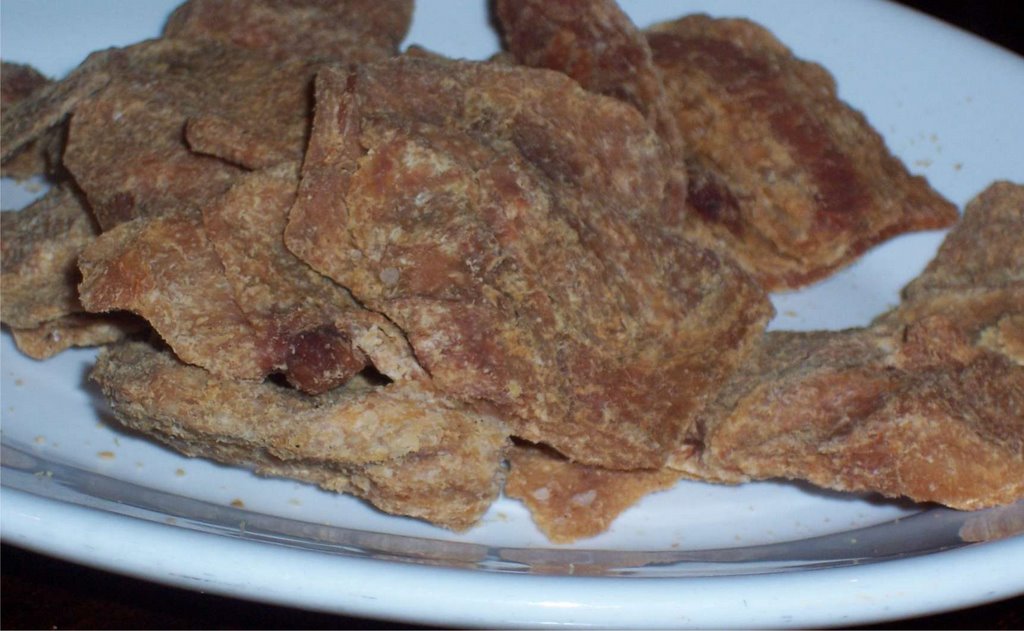
A nice plate of cicoli

Chosen as a good example of simple and typical osteria fare, it offered us five courses of Mantovan specialties. When we arrived the table was provisioned with baskets of bread and plates of cicoli, the local version of pork scratchings – as they’re called in England – these ones thin slices of fatty pork, fried and salted. Then arrived large platters of salumi – prosciutto of course, and coppa, pancetta and local salami. Delightful of course, and we followed Paolo’s advice that these things were normally eaten with the hands, on some of the bread.

Two courses of pasta ensued. The first, tortelli verdi, looking to me like ravioli – but we’re learning that pasta is named and filled regionally – apparently the pasta fillings change every twenty kilometres in this country. And though it looked like spinach the filling was in fact swiss chard.

The next round was tortelli di zucca – a traditional Mantovese pumpkin filling, with mostarda and amaretti – sweet but tangy, not quite as sweet as the pure pumpkin pasta we had last week, sharpened by the mostarda (a sort of fruit jam made with mustard, and served mostly with cheeses). The aroma of the butter in which the tortelli were bathing, sprinkled with parmiggiano, swam out as we passed it around.

Meanwhile the university’s director, Vittorio Manganelli (a serious wine expert whose work on the Italian wine guide requires as many as 80 tastings per day each August!) arrived with a couple of heavy wooden boxes which the director of the Colorno campus, Carlo Catani, pried open, and they then attempted to begin educating our palates with tastings of a couple of the featured wines from the wine guide: first a Langhe Rosso “Bric du Luv” 2003 Ca Viola, from Piemonte. Delightful we thought and certainly preferred over the Lambrusco (a local sparkling red that, well, we had to try for the experience), though our expert somewhat dismissed it for its ‘international’ flavour. And we were then treated to a Barolo, venerated for its long-living tannens and – well – perhaps my vocabulary will be more adequate after next week’s Barolo tasting at a Parma enoteca (wine shop). It was very good, however we want to say that.

We next had a mystery dish – fried polenta slices with a stew that was, afterwards, revealed to be one of the house specialties: la carne di asina, lo stracotto di asinina. Sorry, Eeyore, it were a donkey. A female one. It is a dish traditional to the region, but the meat is hard to source now, and much of it comes from Slovenia or other countries; horse meat is apparently much easier to find locally these days. It’s a dish that takes three days to cook, as it’s rested between incarnations, and then served when it’s meltingly tender and richly flavoured. But to be honest, I don’t think I could have identified it as other than a well-cooked beef-like substance. It came with a platter of warm, meltingly tender spalla cotta – a kind of ham that had been cooked in wine and water.
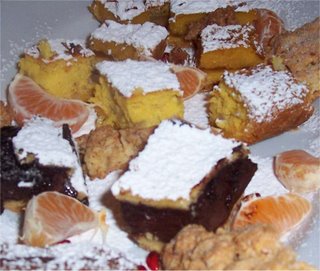

On to the dessert which was a selection of cakes: pear and chocolate; lemon (perhaps a rice cake, from the cheesecake-like consistency?); and a Mantovan specialty, sbrisolona whose name suggests the crumbs (briciole) that will fall from your lips as you eat.
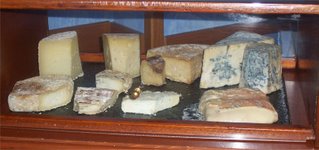

We passed by the beautiful cheese but did not eat…

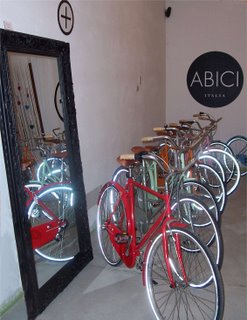
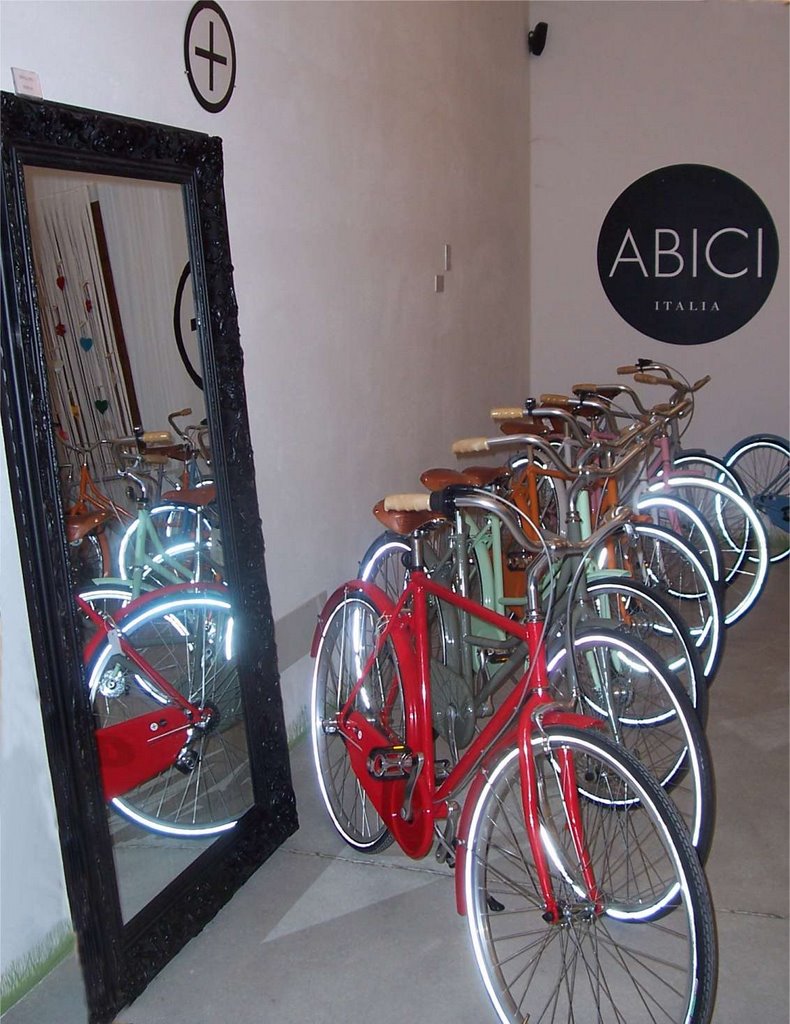
After supper we were bundled back into our vehicles and taken to a mystery location: ABICI (a pun on the Italian a-b-c; bici means bicycle) – a smart and unlikely shop we found on a cobbled street in Viadana. In we trooped for an impromptu party – bottles of prosecco were opened and the beer cooler was opened to us as well, as we marvelled at the designer knick-knacks and of course the bicycles.


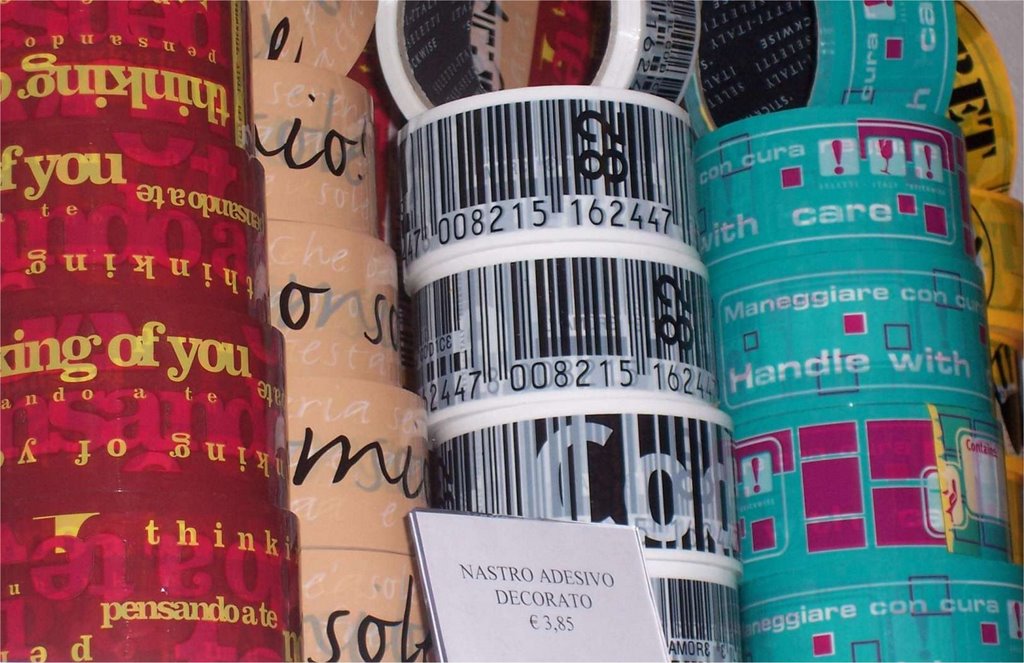
Cool Italian packing tape
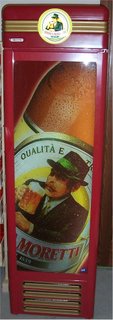

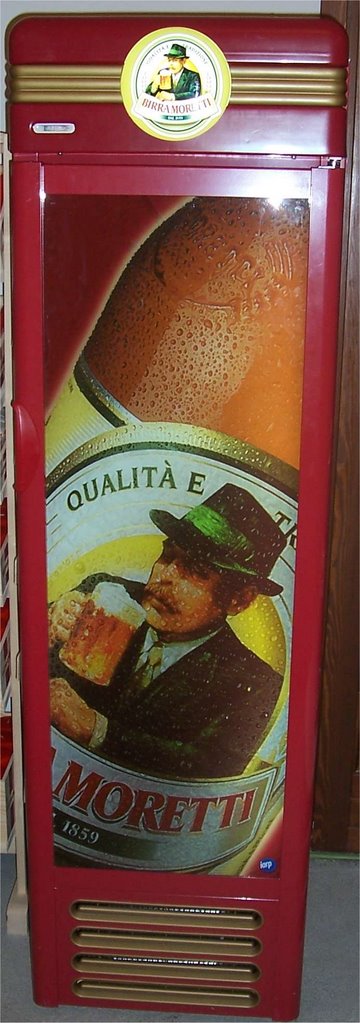
Cool Italian beer

The owners have started a small but flourishing business in producing traditional-styled Italian bicycles, based on models of the 1950s. They have a particular style which differs from the ubiquitous bikes of Amsterdam – which to my untrained eye they resembled. I was told the seating style is different: in Amsterdam they sit upright, and in Italy the riders lean slightly forward. The exact purpose to which these bicycles will be put by the Slow Food movement is a closely guarded secret, or perhaps a yet to be fully planned project, but we will encounter these bicycles again next year.