Skip to content
Home » salumi

salumi

Spain 3: bread and sausage

On our second day in Spain, we headed to the University of Vic, also known as UVic (- and I guess, fair enough, they have more claim to the name than Victoria, which lacks a school of idioms).

On our way across campus, we passed a steely statue commemorating Catalonian poet, the letters of whose name had been picked off the base, so I can’t tell you who it was. But perhaps we can assume a towering intellect?

We had a presentation by a nouveau baker called Francesco Daviva who runs Forn de Pa Altarriba, where for 25 years he has been trying to radicalise bread. He talked about the shape of bread (there are only three: round, baguette, loaf/square), its presentation on restaurant tables, and the various ways of making it divisible for diners. Mediterranean tables seldom have bread plates, so there are issues about crumbs and cutting that quite naturally have to be considered: the sorts of things I suppose bakers used to instinctively incorporate into their work instead of giving a stand-up lecture. Although we passed a few rolls around to look at shape and colour and aroma, we were not offered anything material to chew on, and wandered off for an hour or so before reconvening for lunch in a campus cafeteria. (The bread at lunch was, well, unremarkable.)

It was blistering hot when we followed the leader to our next destination, Casa Riera Ordeix, to see some more sausage-making. Curious emblem over the door…

Fuet, (Salchichon de Vic) the sausage of Vic , has been made for about 150 years in the centre of Vic, run to this day as a family business. This was high quality meat: nothing but prime cuts of pork (well trimmed legs and pork belly for fat). They produce 3000 kg of sausage per week from January to July and then double the volume between September and Christmas, as it’s a product traditionally eaten at Christmas. They have a strictly scheduled week: Mondays they fill the casings; Tuesdays through Thursdays they trim the meat, as we saw:

Fridays they grind and season the meat, which is left to macerate over the weekend. The sausages are hung from nails in aging rooms where the temperature and humidity – much like prosciutto di parma – are regulated by opening and closing windows; the local flora of course play a part in the curing.

The sausages are brushed and re-hung periodically until they have done their two to three months’ stint. The product was absolutely delicious: spicy and peppery, firm and chewy. They sell the sausages everywhere in the world — except Canada and the US whose hygiene regulations exclude these and a great many artisanal products. (Hey y’all: the Europeans eat this stuff every day and are still standing…!)

(Except for the one who fell ill during the tour; perhaps heat, perhaps an early symptom of the flu that would catch up with her later.)

We packed our bags and headed to our next destination in Calafell, where we checked into the weird and somewhat horrible Hotel Solimar, a massive complex where we got to witness European-style mass tourism close up. Luckily our university escorts reviewed the offerings at the hotel buffet we were supposed to eat from that evening and realised it was in fact an inedible wasteland of fried and processed foods, prefixed by stacks of badly washed plates, and so we got to choose our meal in the somewhat better offerings along the seafront.

Spain 2: cured meat and wine

Our first day we left behind three casualties: two recovering from queasiness from the previous night’s tapas feed, and one sore throat.

We drove through the wooded hills – a surprise to many of us, expecting a parched, desert-like landscape – to sausage-maker Fussimanya, which has been operating for 35 years. It started life as a restaurant serving Catalan specialties, and, as we had a chance to discover, is still hugely popular (it was pretty much full on a Monday lunchtime when we left). They began by making sausages for the restaurant but now produce a full range of products which are sold through their own shops on the site and in Vic.

Here we watched the production of brisba, a hefty boiled sausage which comes in white (made from a lot of things you might not wish to see listed here) or black (made from blood, fat and meat).

They also make five varieties of cured sausage: longaniza, churizada, chorizo, fuet and sumaya. This one, fuet, uses 3 grams of pepper per kilo of meat: whole peppercorns inside and ground pepper outside; it’s a firm, dry sausage, very moreish as we discovered in a tasting.

We also got to see how the traditional wine vessels are used:

No wine was spilled, but one knee was grazed, ironically right after negotiating oh so carefully the slippery floor of the factory.

Afterwards we were taken for a look at Vall de Sau Collsacabra – a valley whose centre is a drowned village, its church steeple showing in times of drought – as now – from the middle of the lake. This was part of Franco’s legacy, the translator told us; he wanted to bring water to the country and created a series of artificial lakes through damming rivers and walling in valleys, and drowned more than one village in the process. I’m not sure what the villagers must have thought of it all, but such areas are now rich playgrounds, studded with posh hotels like the one we were standing in front of. Nearby was a former Benedictine monastery (Sant Pere de Casserres) which had been founded in 1005 but abandoned after the 14th century; it was restored in 1998 and is a popular attraction– but we didn’t get to see it.

Instead we headed back to Fussimanya for a long and excessive lunch:

More pan con tomate..

Cold roasted vegetables:

A platter of raw cod:

Some fried mushrooms:

The ever present aoli, called allioli in Catalonia:

Crema Catalana: is it so different from Crème Brûlée? We thought maybe it was not as dense a custard. And served in this characteristic bowl, with the wafer.

After lunch we drove to Santa Maria d’Horta d’Avinyo to visit the winery Bodegues Masia d’Avinyo, home of the Roqueta family, wine producers since the 12th century.

Most of the old bits and pieces from this history of winemaking are now part of a museum. We saw the sunken wine vats, over which were suspended ropes for the grape-treaders; a system of drains then allowed the juice to drain out by gravity. The vats had to be cleaned by hand, but it was very dangerous work, because there could be a lethal build-up of carbon dioxide, and so in a twist on the canary in a mineshaft idea, the winemakers suspended cats inside first; if they died, it wasn’t safe to go in. Lucky for the local felines, they later realised that candles worked just as well.

Here’s an olde worlde kind of way to put corks in your wine bottles:

We had a small lesson in historical market economics as we finished the museum tour. This was always a big wine producing area, and became even more so at the end of the nineteenth century, when phylloxera had devastated the vines of France and stepped up demand for Spanish wine. Many of the French workers moved to Spain. Once the French restored their industry (by grafting their vines onto phylloxera-resistant American root stock), and when phylloxera reached Spain in the 1890s, Spanish wine production dropped still further; with the arrival of the industrial revolution, the winemaking families turned to more reliable factory work, so it became difficult to convince workers to return to the vineyards. But the winery is now producing some 476,000 bottles a year, under the supervision of youthful oenologist Joan Soler.

They produce two labels (Roqueta and Avadal) and we enjoyed a tasting of some of Avadal’s offerings. Here’s the elegant tasting room, lined with barrels that have been autographed by visiting celebrities, including Ferran Adria who we’d be meeting just a few days later.

The wines included Picapoll – a local grape named for a Catalan word meaning how chickens peck. Quite an acidic one. Then a very nice Chardonnay, a couple of Merlots and a Cabernet Franc/Cabernet Sauvignon/Syrah blend.

And then back to Vic, where thanks to a free dinner, and a possible bad reaction to some gazpacho, two more of our classmates would fall to stomach ailments.

Piemonte Wednesday

We had a morning at the Pollenzo campus with some of the Slow Food folk on Wednesday. Representatives of the Slow Food International, Slow Food Editore and the Foundation for Biodiversity gave us a talk on their mandates and activities. It was a helpful boost to our understanding, half a year since our last talk from them, and was particularly useful for classmates hoping to do internship postings with the organisation. We left for Bra, where the offices and our lunch were waiting.

Where it all began: the restaurant in Bra where the Slow Food movement became a reality.

Italian sushi, quipped Piero Rondolino, who joined us for lunch. We had lardo, salsiccia di Bra – a delicately spiced raw veal sausage, and carne cruda battuta al coltello (raw, hand-cut veal). All delicious.

Then some pasta, followed by the best panna cotta in the world? Maybe, surely in the running, lots more research needed. It was sweet, soft, delicate. Creamy but not too rich. And very pretty.

Back on the bus, after a shuffle round the hot, closed-for-lunch town, and away we sped towards our final Italian winery in San Martino Alfieri. Not sure what was ahead, we strolled up the path…

Heading in the right direction for Marchesi Alfieri winery…

A very old grapevine (for table grapes)

And hey presto there we were in a castle with beautiful grounds, meeting our winemaker Mario Olivero, who gave us another talk about my beloved Barbera, which is the main one of the several varieties of red wines they produce. A neglected grape, it was dismissed as fit only for table wine until about fifteen years ago, when a few and then many Piemonte winemakers began to take it seriously for its fruit and body and capacity for ageing. Now there are some 50 million bottles produced in the region, and it’s the area’s second most important variety. We sampled a couple of different years each of Marchesi Alfieri’s Alfiera and La Tota wines, and yes they were very good indeed.

After the cellar tour, Marco introduced Elena Rovera, from Cascina del Cornale, the organic cooperative that is an agriturismo, restaurant and seller of organic products, situated in Magliano Alfieri, between Alba and Asti. And what a spread she put on for us…


Pausing in Puglia

Greetings from Puglia, where pigs fly.

Here in the heel of Italy, the weather has turned wet and cold and I have passed on a trip to Lecce to catch up with a few things. Naturally now that I have made that decision the rain has lifted and the sun has come out… Ah well.

We arrived in Brindisi yesterday at a desperately early hour and carried on to IAMB, the Bari centre of the Mediterranean Agronomic Institute: we will be visiting the institute’s Chania centre when we visit Crete next month.

Our Escher moment at IAMB.

They offer research training to agronomists from Mediterranean countries to study such issues as irrigation and water management, aspects of organic agronomy, and methods of managing endemic insects such as the olive fly.

Clever way to catch crawly insects on an olive tree: a collar of fiberglass.

We had an incredibly good lunch of local dishes, many of them seafood, and then paused for half an hour or so to view the characteristic conical houses, the Trulli, which are found in abundance in the area but particularly in a town called Alberobello.

On we sped to our appointment with butchers in Martina Franca where we watched the making of capocollo, another cured meat made of a whole cut of pork.

This one is trimmed to size, seasoned and dried for a few days, then marinated in boiled wine must and white wine, then wrapped in pork intestine, tied in a tea towel, dried a bit longer, unwrapped, hung to dry, then briefly smoked, and then hung again until start to finish it has gone through its paces for a total of about 120-150 days. By then it is a firm, sweet, slightly salty and lightly smoky treat, made in small quantities between October and Easter, when the climate is suitable for the cool dry winds it needs over part of the process.

After that we had a surprise gift of music and dance from a local folk troupe, then watched a bit of hand-crafting of orecchiette and maccheroni and sat down to another wonderful meal. We had a couple of soups – zuppa verde and zuppa di carciofi – and some pastas including the ones we had seen made. There was, for the strong, a further buffet featuring such specialties as Puglian salumi, raw artichoke and cheese salad, and a kind of risotto made with orzo (barley) and mushrooms. Some pastry and fruit followed, and a merciful sleep.

This morning we had a talk by Gino di Mitri, author of a book on Tarantism, the historic and region-specific ailment of Puglia, attributed to the bite of a spider, and which may have its pagan roots in Dionysian rituals, while its Christian expression took the form of prayers to St. Paul, saint of spiders. Affecting mainly, but not exclusively, women, tarantism was treated by music and a highly energetic dance, in which the sufferer used her body to describe the circumstances of the bite, and which ultimately evoked a trance that would allow the sufferer reconciliation with the spirit of the spider. The musicians – a tambourine player (almost exclusively female), accompanied by violin, guitar and accordion – would diagnose the colour of the spider, which corresponded to the nature of the ailment: for example, a blue spider would express melancholy and disharmony with the community. Homosexuality, we were told, was often entwined with the condition. Women who did not want to marry might claim to have been bitten, and the contaminating nature of the spider bite might in any case render them unmarriageable.

Last week is already a blur, but we had some wonderful people talking to us, including Stuart Franklin who walked us through a fraction of his formidable portfolio and spoke movingly about his latest project and forthcoming book on the changing landscapes of Europe, a depressing tale of overproduction, land-grabbing, overdevelopment and standardisation. We also enjoyed Richard Baudains who led us through some of the issues of wine reviewing: the extreme ends of its readership and the difficulties of communicating subjective analysis of an edible subject. We saw some wonderful films as well, from the Slow Food on Film curator, including a fantastic documentary called Life Running Out of Control which encapsulated the complex issues of genetic engineering, including the contamination of organic seed stocks by GM crops in North America, the risks to the farmers of India of the dubious economics of GM seed developers, and the moral and practical issues of experimental animal development. Shades of Oryx & Crake

Nutella, Faust, wine and cured meats

Corrie passed along the important news about World Nutella Day which is coming up very quickly, on February 6.

Last night a group of us shared a box at the opera to see The Damnation of Faust. Reviews from our company were mixed, but I think it was agreed that overall the second half was better than the first, all beautifully sung of course, by a very large cast, but possibly overwhelmed by some of the visuals that were projected over the proceedings, and the choreography and circus work were a bit much. All in all I enjoyed the evening, though thought I sensed a touch of Lord of the Rings in the depiction of hell, and a lot of loin cloths were used in the making of this opera. Anyway, can’t come to Italy and not see opera, even a French one, so I’ve got that one under my belt.


We have been having “sniff parties” chez nous. MJ has a pretty comprehensive wine aromas kit which we’ve been working our way through with some diligence. We sniff 18 different bottles containing everything from acacia to leather to chocolate to mushroom to smoke, and then sample some wines to see what we can detect in them, and then we eat nice food. This week’s menu featured MJ’s gazpacho – an unorthodox version apparently as it lacked bread, but it was beautiful without – and the near unpronounceable kolokythokeftedes (zucchini cakes with feta and mint). Mint was actually the hardest ingredient to find, but I bought a bag from an erborista, which wasn’t quite right so to me it tasted a bit like mint tea, but it went down all right with some tzadziki. Corrie brought an Orange- cheesecakey- moussey- souffle- kind- of- thing, I think that was the official recipe name, and topped with blood oranges it was delightful.

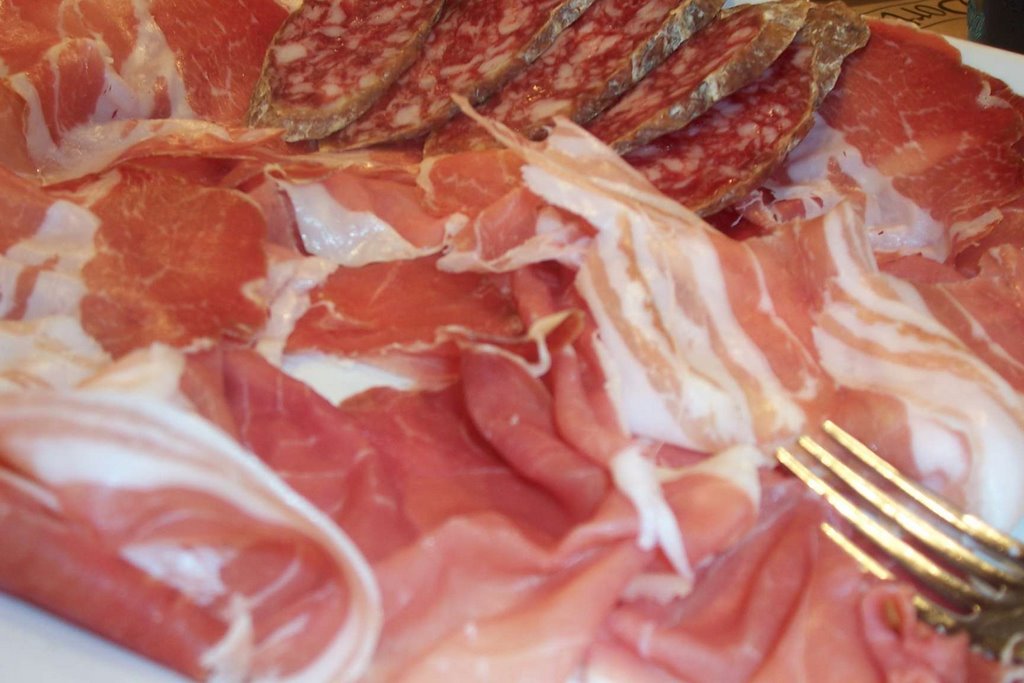
We kept our menu quasi-vegetarian because we’d spent the afternoon doing a meat tasting, which was exhaustive and somewhat overwhelming: 21 different meats I think. I’d missed the salami tasting before Christmas, and this time we were doing only cured meats made from whole cuts. So we had prosciutto crudo e cotto (raw cured and cooked hams), some smoked hams and a couple of different kinds of lardo which were surprisingly good, even if we did have to take them without the requisite hot toast.

Some Culatello and Culaccia, Spalla crudo and cotto, Prosciutto di Sauris (a whole smoked prosciutto crudo), Alto Aldige (smoked), Cinta Sinese (Tuscan pig), Jamon Iberico, some black pig prosciutto with flavours of blue cheese; and the lardos came later, which I didn’t photograph.

Many prosciuttos: 16 months, 24 months, crudo and cotto, smoked and salted.

Dining in Viadana

Last night’s welcome dinner was an amazing and many-splendoured thing. It began with a logistical assembly on the Piazza, where beneath the Christmas tree, 24 of us were sorted and parcelled into car-sized batches, according to ultimate destination, for transport to the restaurant by various staff members. Our convoy (convoglio?) then hurtled through the darkness for half an hour or so, towards Mantova, over the River Po (largest river in Italy), to Viadana. We doubled back beneath the considerable span of its bridge to the Osteria da Bortolino, on the Po’s flood plain. The restauranteur said that they do occasionally have problems for this reason and that where we sat had been under several feet of water during the epic floods – the worst in 100 years – that hit Northern Italy in 2000.

There was a photograph of the building – neglected and run-down – from 1975. Since then it has been restored and embraced by locals and the Slow Food folk alike (it figures in the famed Osterie d’Italia guide – now available in English).


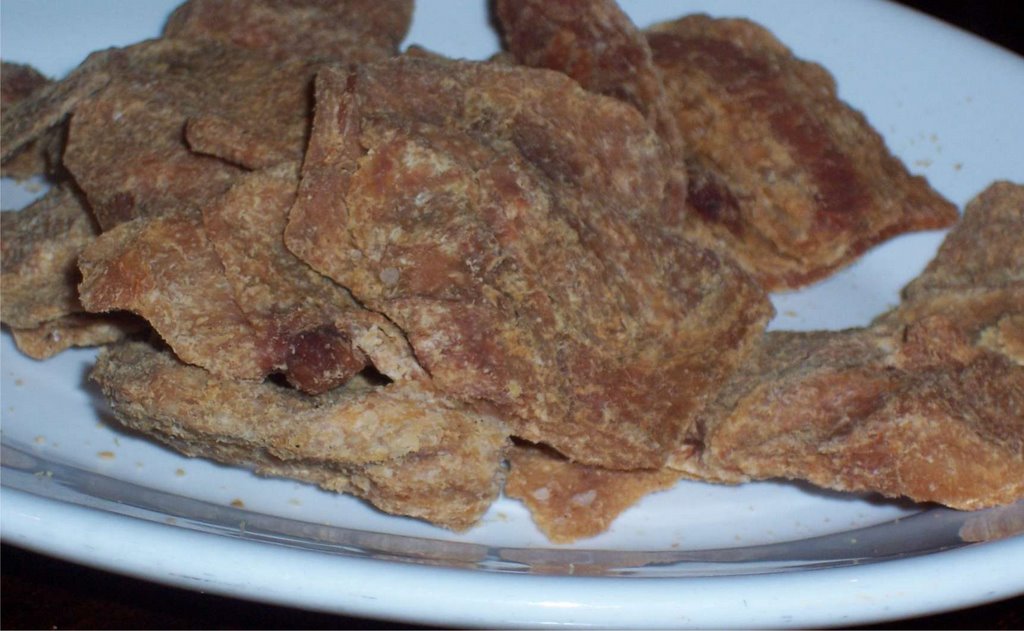
A nice plate of cicoli

Chosen as a good example of simple and typical osteria fare, it offered us five courses of Mantovan specialties. When we arrived the table was provisioned with baskets of bread and plates of cicoli, the local version of pork scratchings – as they’re called in England – these ones thin slices of fatty pork, fried and salted. Then arrived large platters of salumi – prosciutto of course, and coppa, pancetta and local salami. Delightful of course, and we followed Paolo’s advice that these things were normally eaten with the hands, on some of the bread.


Two courses of pasta ensued. The first, tortelli verdi, looking to me like ravioli – but we’re learning that pasta is named and filled regionally – apparently the pasta fillings change every twenty kilometres in this country. And though it looked like spinach the filling was in fact swiss chard.

The next round was tortelli di zucca – a traditional Mantovese pumpkin filling, with mostarda and amaretti – sweet but tangy, not quite as sweet as the pure pumpkin pasta we had last week, sharpened by the mostarda (a sort of fruit jam made with mustard, and served mostly with cheeses). The aroma of the butter in which the tortelli were bathing, sprinkled with parmiggiano, swam out as we passed it around.

Meanwhile the university’s director, Vittorio Manganelli (a serious wine expert whose work on the Italian wine guide requires as many as 80 tastings per day each August!) arrived with a couple of heavy wooden boxes which the director of the Colorno campus, Carlo Catani, pried open, and they then attempted to begin educating our palates with tastings of a couple of the featured wines from the wine guide: first a Langhe Rosso “Bric du Luv” 2003 Ca Viola, from Piemonte. Delightful we thought and certainly preferred over the Lambrusco (a local sparkling red that, well, we had to try for the experience), though our expert somewhat dismissed it for its ‘international’ flavour. And we were then treated to a Barolo, venerated for its long-living tannens and – well – perhaps my vocabulary will be more adequate after next week’s Barolo tasting at a Parma enoteca (wine shop). It was very good, however we want to say that.

We next had a mystery dish – fried polenta slices with a stew that was, afterwards, revealed to be one of the house specialties: la carne di asina, lo stracotto di asinina. Sorry, Eeyore, it were a donkey. A female one. It is a dish traditional to the region, but the meat is hard to source now, and much of it comes from Slovenia or other countries; horse meat is apparently much easier to find locally these days. It’s a dish that takes three days to cook, as it’s rested between incarnations, and then served when it’s meltingly tender and richly flavoured. But to be honest, I don’t think I could have identified it as other than a well-cooked beef-like substance. It came with a platter of warm, meltingly tender spalla cotta – a kind of ham that had been cooked in wine and water.


On to the dessert which was a selection of cakes: pear and chocolate; lemon (perhaps a rice cake, from the cheesecake-like consistency?); and a Mantovan specialty, sbrisolona whose name suggests the crumbs (briciole) that will fall from your lips as you eat.


We passed by the beautiful cheese but did not eat…

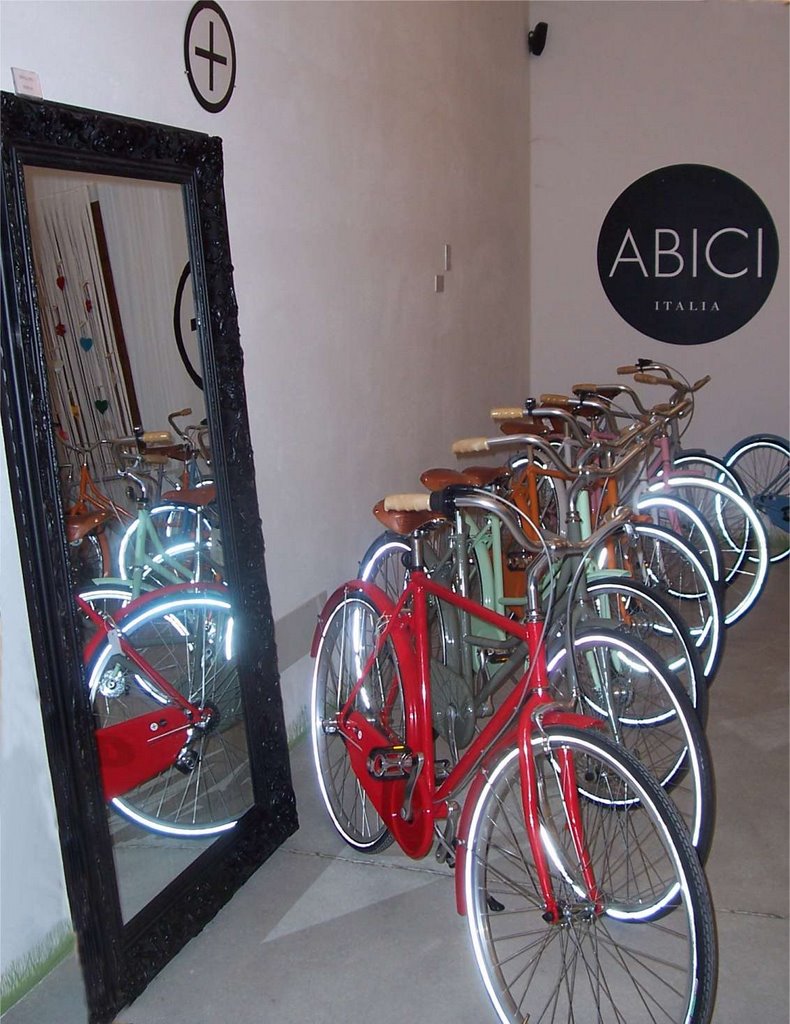
After supper we were bundled back into our vehicles and taken to a mystery location: ABICI (a pun on the Italian a-b-c; bici means bicycle) – a smart and unlikely shop we found on a cobbled street in Viadana. In we trooped for an impromptu party – bottles of prosecco were opened and the beer cooler was opened to us as well, as we marvelled at the designer knick-knacks and of course the bicycles.


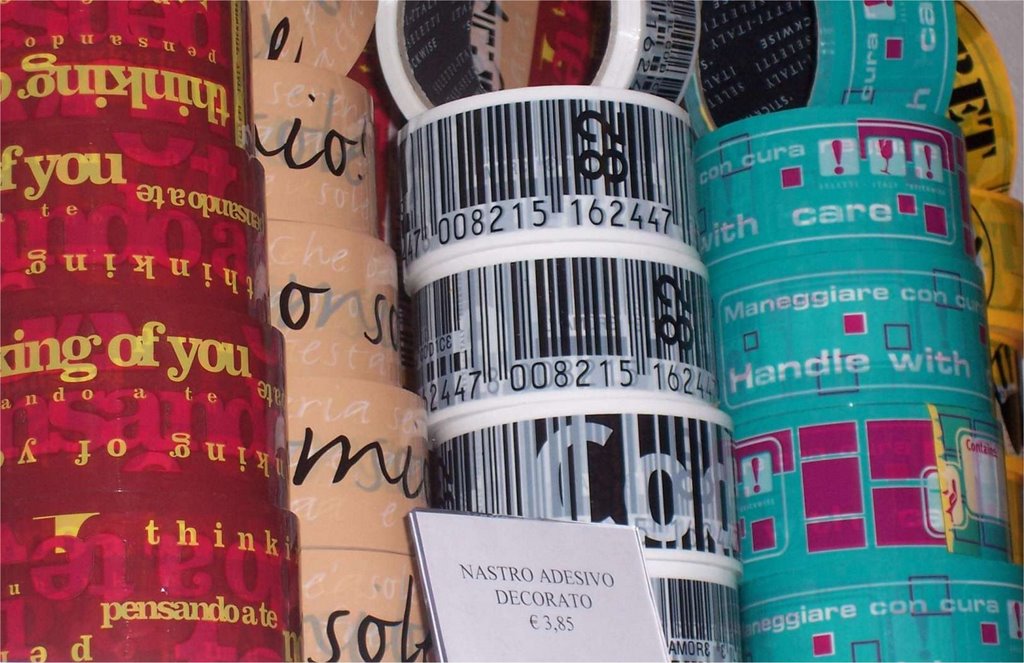
Cool Italian packing tape


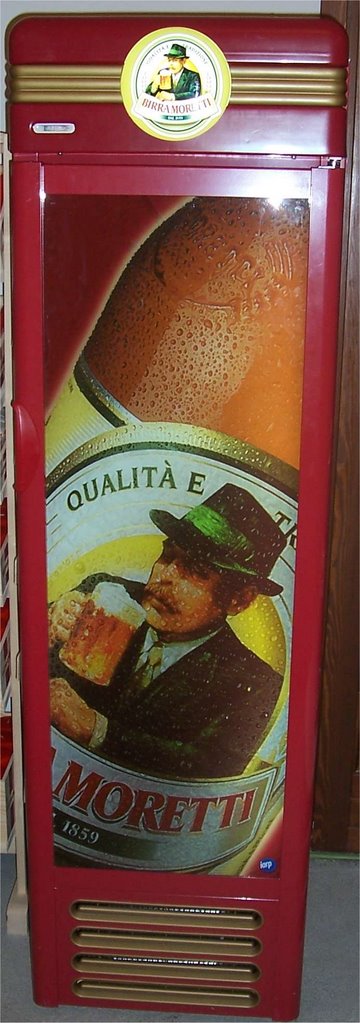
Cool Italian beer

The owners have started a small but flourishing business in producing traditional-styled Italian bicycles, based on models of the 1950s. They have a particular style which differs from the ubiquitous bikes of Amsterdam – which to my untrained eye they resembled. I was told the seating style is different: in Amsterdam they sit upright, and in Italy the riders lean slightly forward. The exact purpose to which these bicycles will be put by the Slow Food movement is a closely guarded secret, or perhaps a yet to be fully planned project, but we will encounter these bicycles again next year.