Skip to content

bread

Bake Sale Update – The Final Tally!

The bake sale! We did it! The final menu featured 21 different items baked by six local bakers. Of these items, 19 were gluten-free, 20 were dairy free, 15 were vegan and 2 were raw foods.

Grateful thanks to the bakers, to the shoppers, and to the people who donated funds that got us to an eye-popping $1000 by the end of that long and tiring day! Funds went to Red Cross Canada’s Humanitarian Crisis in Ukraine. From the generosity shown, it seems I was not the only one wanting to stop anguishing and actively support something.

A number of those who stopped by were unable to eat gluten, and expressed delight at having so many options to choose from at a bake sale.

Here is what we had on offer, just so you know what you missed, if you missed it:

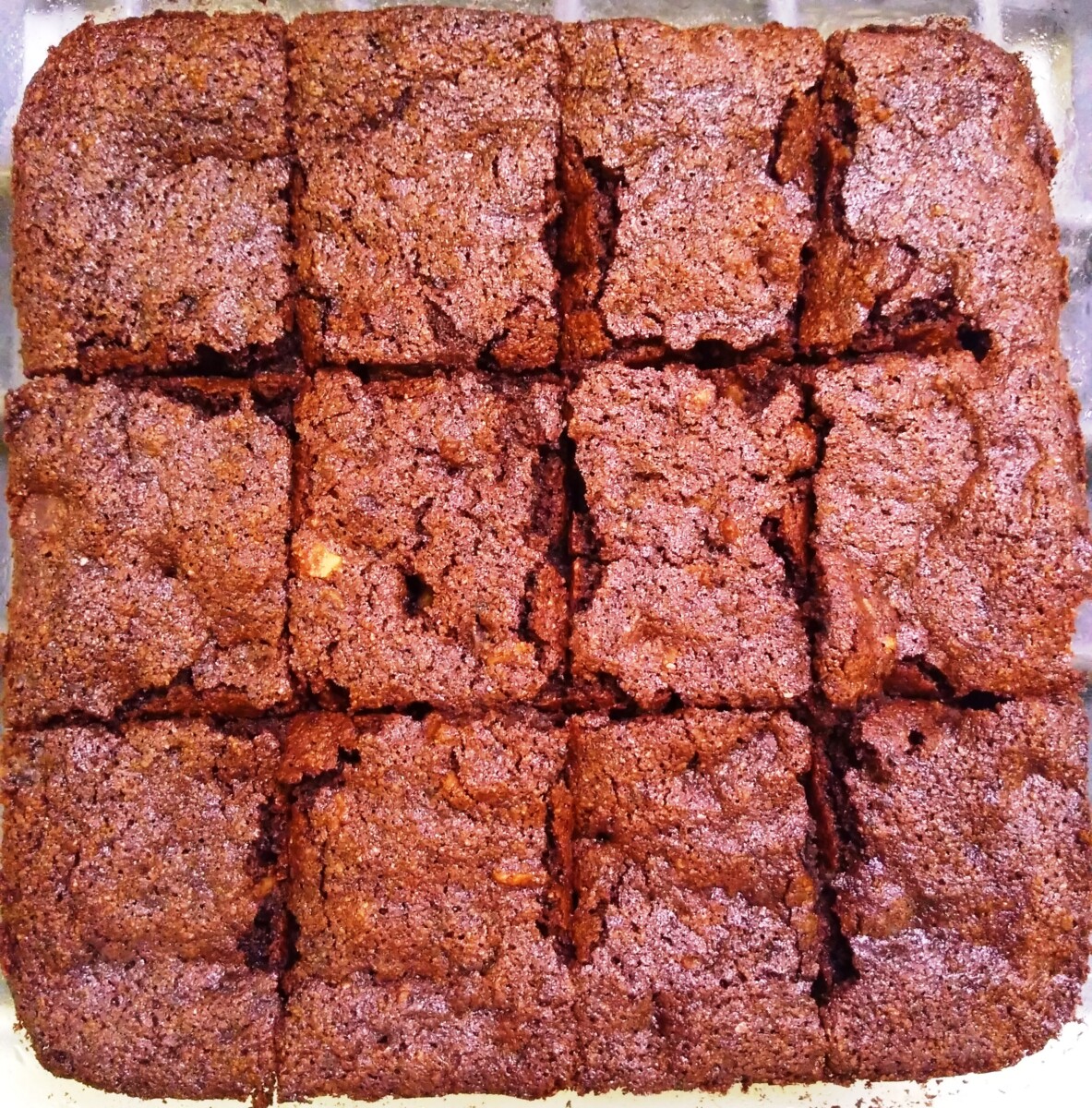
  1. Almond Brownies (GF, DF)
  2. Banana bread (GF, DF)
  3. Breakfast bars (GF, DF)
  4. Cassava Flour Pizza Crackers (GF, DF, vegan)
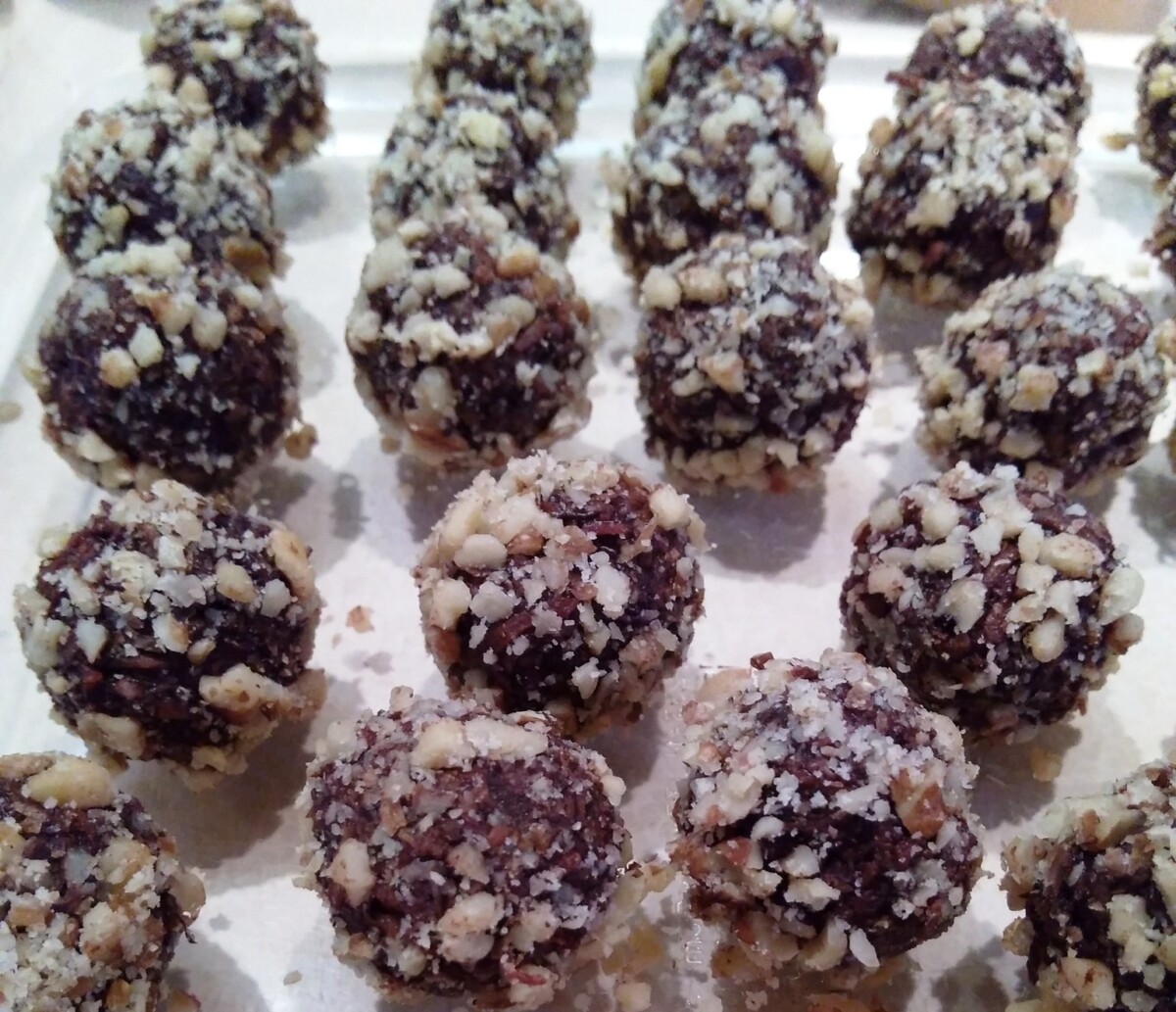
  5. Coconut Chocolate Truffles (GF, DF, vegan, raw)
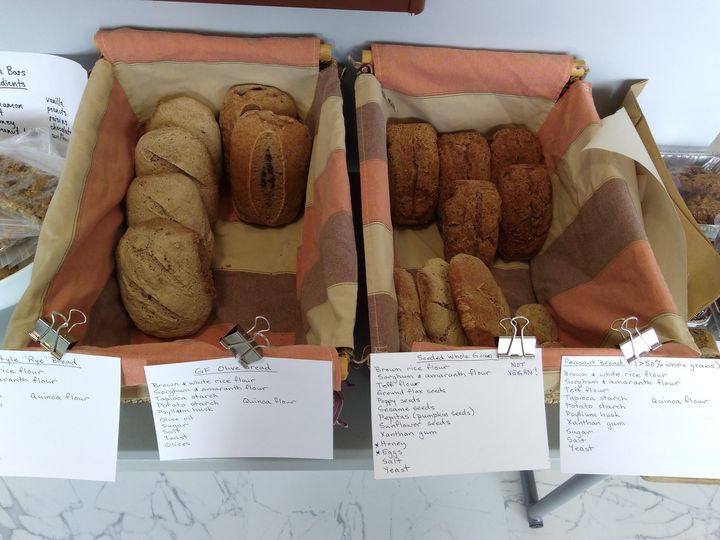
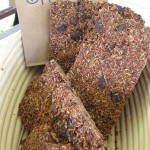
  6. Deli “Rye” bread (GF, vegan)
  7. Granola bars (vegan)
  8. Mama’s Muffins (GF, DF, vegan)
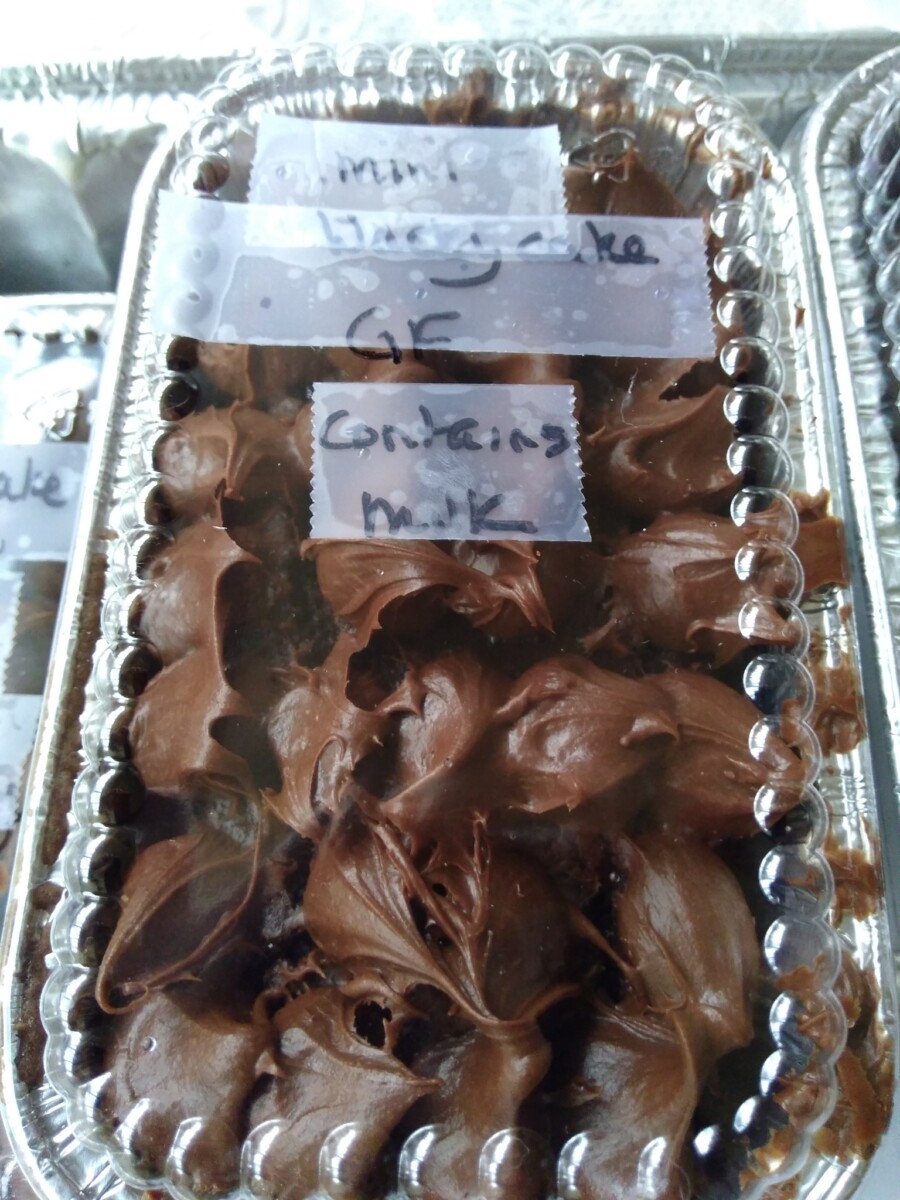
  9. Mini chocolate cakes w/ chocolate icing (GF)
  10. Oat cakes (DF, vegan)
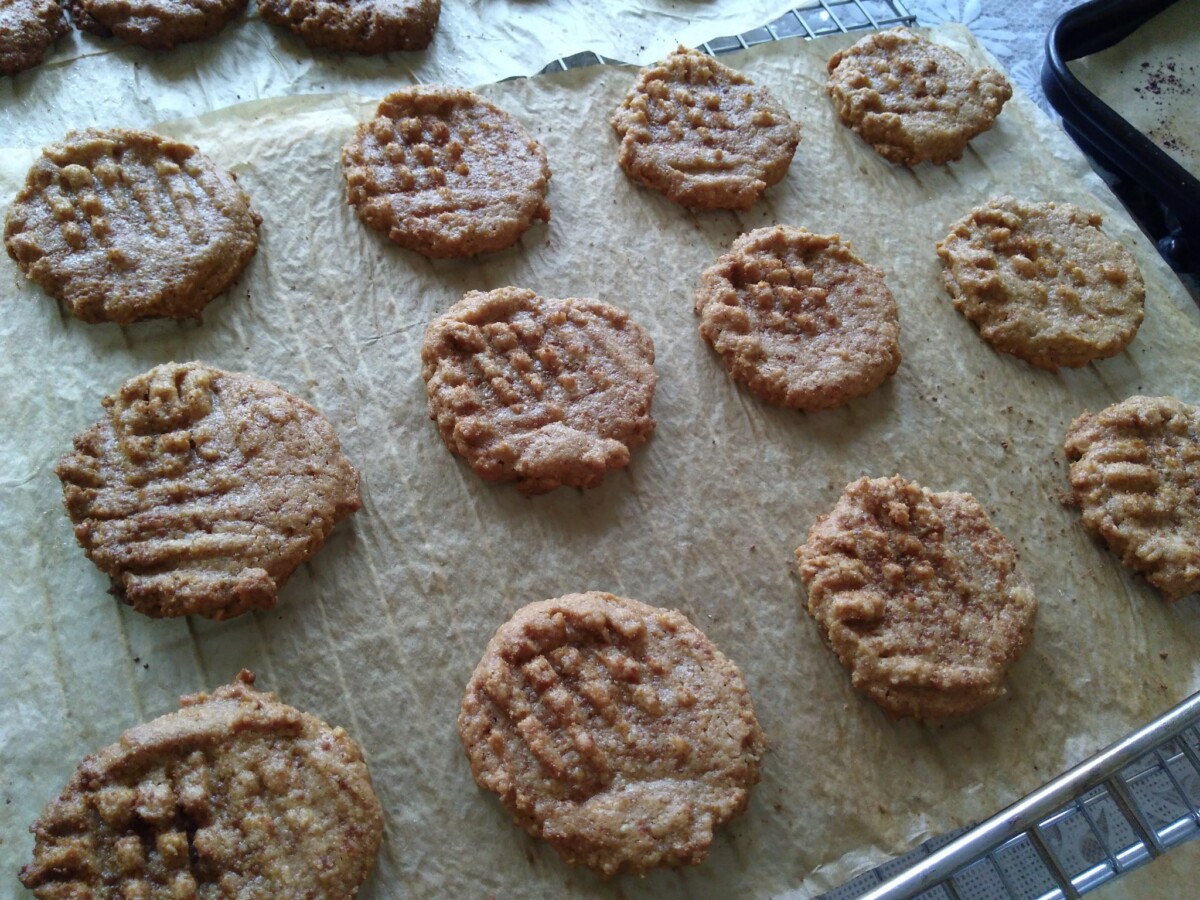
  11. Oat peanut butter chocolate chip cookies (GF, DF, vegan)
  12. Olive bread (GF, vegan)
  13. Orange Mini Muffins (GF, vegan)
  14. Paleo Seed Crackers (GF, DF, vegan)
  15. Peach Upside-Down Cake (GF)
  16. Peanut butter cookies (GF, DF, vegan)
  17. Peasant Bread (GF, vegan)
  18. Savoury muffins (GF, DF, vegan)
  19. Sourdough Flax Crackers (GF, DF, vegan, raw)
  20. Twix bites (GF, DF, vegan)
  21. Whole Grain Seeded bread (GF)

The Poetry of a Healthy Bake Sale

The News has become a dark place, and February 24 was a darker day than most. For a couple of months I felt crushed, dodged war reports, hunkered down in helpless anguish.

Then one day an email dropped into my inbox from The Real Bread Campaign, reminding me that there was indeed something I could do. I could bake!

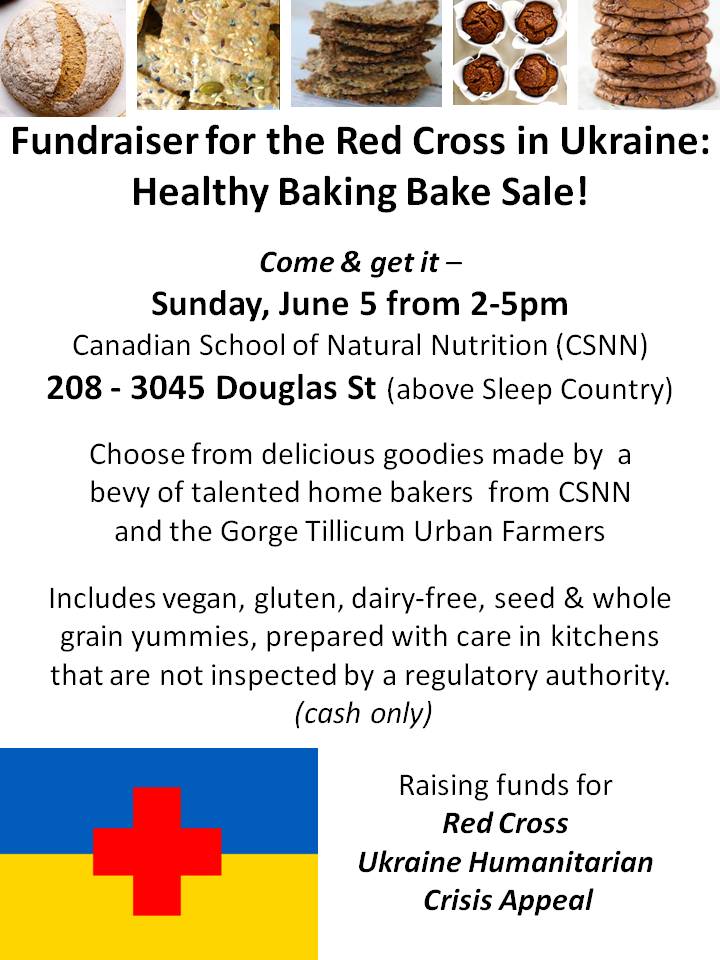
I managed to enlist a few other like-minded bakers, and an idea was born. A healthy baking bake sale!

And so it will be, this very weekend. We’re defining healthy in any way we choose; the only condition being an ingredient list so buyers can decide if our views match up.

I’m still deciding what to make. So far I’ve made some favourite crackers – cassava flour – and some sourdough flax crackers. Planning to make some banana bread (GF) and some chocolate-coconut truffles; some muffins; maybe if there’s time some cookies too.

By other hands we also have GF / vegan peanut butter choc chip cookies, rhubarb bars, savory muffins and homemade Twix bars; and some magnificent gluten free olive bread and GF “fake rye” bread.

Our bakers include CSNN grads and GTUF members and I thank them for their generous donations of food and time. Quality cooking takes quality ingredients, and great care. I’m hoping we’ll get a good turnout on Sunday afternoon and be able to turn over some needed funds for the Ukraine Humanitarian Crisis Appeal. Any leftovers will be donated to a local community kitchen or two.


Bread and summer

Gratuitous Strawberry Shortcake shot
Denman Island Strawberry Shortcake

Things have gone into summer drift here at the Iambic Cafe. I’ve been jolted into action by my friends at the Kneading Conference West, who’d like me to share with you news of their upcoming gathering, September 12-14, to be held once again in the exquisitely perfect setting of the experimental orchard at the Mount Vernon Research Station. If you love bread and/or grain and want to spend a delicious weekend with farmers, millers, bakers and foodies in the gorgeous Skagit County countryside for a paltry $300 (meals included) you should register now! Keynote speakers this year include  renowned New York grain grower/flour producer Thor Oechsner and Gastronomica founding editor Darra Goldstein and there will be workshops in artisan bread baking, pastry baking, grain growing, milling and wood-fired oven construction.

In other news, here’s a taste of my summer so far:

Bellingham: Fairhaven Farmers Market
Reading in Bellingham
Denman Island Garden Tour
Denman Isl.Garden Tour
Michelle Rose CSF
CSF seafood share
Solstice Moon on the Gorge
June Strawberry
Oddly shaped fruit
Gorge Canada Day Picnic
Canada Day on the Gorge
GTUF garden tour
GTUF garden tour
Nettie Wiebe
Nettie Wiebe at CAFS
Duncan Market Beets
Lots of farmers markets
Haliburton Farm Chickens
Haliburton Farm chicks


Flavour of September, with a pinch of October


How busy can one month be? Very very in September’s case. Here it is October and I’m still rushing. A quick review will show why I’ve been too crazed to post, though it’s been delightful and stimulating.

Friday Sept. 21 was the long-anticipated (by me, certainly) panel discussion featuring visiting baker Andrew Whitley, community-supported fisherman Guy Johnston and urban farmer Angela Moran, with her chicken wrangler Trevor van Hemert. Whitley kicked off with a description of the organic baking career that led him to his current life as a baking instructor and organic activist. He is helping to launch a local community supported baking enterprise, and through the Real Bread Campaign which he co-founded, to raise awareness about different ways to promote bread in communities. Johnston described his two-year old community supported fishery, which helps him keep his boat in the water and his family in the sustainable fishing business. He urged us to join in the October 22 protest against the Northern Gateway Pipeline, which will endanger the livelihood of all those who fish in west coast waters. Moran and van Hemert have arranged with eight neighbours to share both chicken-shaped responsibilities and egg-shaped outcomes so that Moran’s urban farm is able to keep its flock of laying hens. They’ve come up with a model agreement they want to share with others to spread the joy of shared chicken ownership.

Saturday we put Andrew back in the kitchen to lead a breadmaking workshop for a lucky baker’s dozen who were spared the cost of airfare to Scotland to take the class at Bread Matters. In the beautifully equipped domestic science lab at Royal Oak Middle School, Andrew and the participants faced some challenges with the limitations of domestic ovens and unfamiliar flours while he shared some of his knowledge about bread, flour and the state of grain in the world today.


Sunday Sept. 23 marked the first offering of the Flavour Gourmet Picnic, held at Coastal Winery in Black Creek, just north of the Comox Valley. I’d been to Feast of Fields and the Island Chefs Collaborative festivals, and thought it would be interesting to experience a north Island event. Andrew & Veronica joined us to sample the many, many wares on offer at a gentle, sun-warmed and well-organized afternoon of sipping and tasting. One of those who’d attended Andrew’s talk to the VIU Professional Baking program in Nanaimo the week before was there with her Church Street Bakery breads, and he make an appearance in the rather lovely video made to commemorate the day (accepting one of the most delicious items on offer: a piece of chocolate pave from Kingfisher Lodge).


On Monday, after a relaxing morning gathering oysters for supper, we headed back to Victoria where I attended a meeting of the Victoria Horticultural Society‘s Veggie group – one of the members was explaining her planting calendar and use of cover crops, which is something I’d like to do better even in my tiny garden.

By Wednesday 26th Andrew & Veronica were packed and ready to leave, but not until we’d stopped in to see Cliff Leir’s operation at Fol Epi. He’d described his grain soaking and flour milling operations at the Kneading Conference, but seeing the tiny space in which the magic happens made it the more special. Good things, small packages etc. (and the pumpkin pie and sausage roll we sampled, among other treats, were formidably good).

Wednesday evening arrived promptly and after a small misspelling on the poster had been swiftly corrected (yes, I pine still for England where there is never a D in my name) the maiden voyage of Digging the City took place in a room in my local library filled with interesting and interested people, many from GTUF.

Thursday saw me back on the farmstand at Haliburton and then back on the road to Nanaimo where we were discussing vitamins and minerals in the CSNN introductory holistic nutrition course. Fascinating but mind-blowing.

Friday 28th I went to a permaculture potluck to hear Brandon Bauer, one of the instructors in the permaculture design course I took earlier this year, talk about his work replenishing the soil on his property on Salt Spring Island. He’s currently teaching a permaculture and site planning workshop and as ever had some pithy things to say about his own experiences in those areas. Saturday was a workshop on tenancy management (better late than never) that was fascinating and offered by one of the very knowledgeable souls at ROMS. That evening we went for supper at the Moon Under Water brewpub which I hadn’t had a chance to try out, and enjoyed my Fanny Bay Oyster Burger for auld lang syne.

Sunday was my weekly family dinner, plus some lying-in, sitting-down and catching-up, which meant I missed the Saanich Sustainable Food Festival and the 5th Annual Chef Survival Challenge and Feast at Madrona Farm… I’ll get to one of those one of these days… AND the Slow Food Terra Madre fundraiser Last Hurrah At Orange Hall.

Monday it was suddenly October, and I joined some other GTUFers to talk about food security at Gorge-ous Coffee, our newly opened local hangout. While we did not quite set the world to rights, we had an interesting chat about foraging in the neighbourhood, rooftop gardens, preserving skills, grafting tours and nut trees, among others.


After a quasi-restful Tuesday in which I attempted to catch up on a few more things, like a bit of light tomato canning, and a chat with my neighbour who’d attracted a frog to his garden, and a bit of acorn gathering, it was suddenly Wednesday and time for the debut screening of Symphony of the Soil, Deborah Koons Garcia’s (The Future of Food) second feature film  and an excellent one it is. It explains very beautifully what soil is, how it produces food (not just for humans) and how it can be preserved and nourished. Recommended viewing for all living things. We too were nourished with birthday cake as the occasion marked Open Cinema’s tenth anniversary and afterwards there was a panel discussion with Robin Tunnicliffe, Heide Hermary and the filmmaker.


Kneading with a k

I’d been looking forward to the second offering of the Kneading Conference West, held in the idyllic gardens and fruit orchard of the Mount Vernon Research Station, where grains are being grown, tested and much discussed. Over this past September weekend they were also being ground, mixed, cooked and tasted to delicious ends.

There was enough variety to keep the 200 or so various types of grain geeks amused, from tasting sessions – grains baked into crackers or breads, or liquified into beer – to talks on the science of baking (complete with easy-to-grasp 3D models) to demos on how pizza can turn into pita.

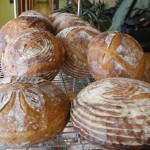
Local wheat test loaves


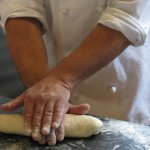
There were baking workshops too. Last year I’d missed most of George de Pasquale‘s session on sourdough/artisan bread for home bakers so made sure to attend it this year, though it was packed to the rafters. He walked us through equipment, explained ingredients, and guided those able to reach the counter on mixing, kneading, shaping and fermenting bread dough.


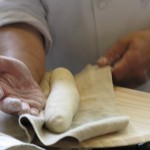
He demonstrated with a few swift cuts how to make Epi


And he critiqued a baked loaf, explaining some of the features to test for done-ness and the physical clues of underproofed and properly baked loaves. There were other demos too: one of the keynote speakers, food writer Naomi Duguid, demonstrated some of her favourite flatbreads (Finnish barley bread, Naan, Pugliese and Burmese breads) with help from Toronto baker Dawn Woodward. Oregon barley scientist Pat Hayes was there showing off his wares and giving out samples of his team’s Streaker (naked) Barley, so named for its hullessness.


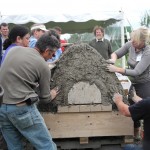
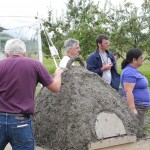
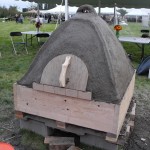
Then there were the mud people, led by Kiko Denzer, who slapped together a wood-fired oven in less than a day. One minute he was demonstrating an oversized hand blender in a bucket of mud and water, the next he was tamping down the base, and a few hours later it was done and decorated. Miraculous.


Andrew Whitley – who’d enlivened a panel on Thursday, discussing grain quality with Tom Dunston (an Oregon miller with Camas Country Mill) and Cliff Leir (of Victoria’s own Fol Epi Bakery) among others was the keynote speaker on Friday morning, introduced by last year’s barley baker, Andrew Ross from Oregon State University, and he gave us a rousing talk about his own history as a baker and small-scale grain grower, having started off in a spirit of self-sufficiency growing wheat for his own bread. He started and ran the Village Bakery in Cumbria for more than 30 years, during which time he produced rye bread that I had, to my delight, discovered at my local Waitrose in London when I lived there back in the nineties.


After reviewing his past life as a rural wholegrain baker using only local wheat in 1970s England, with a business plan someone had once summarized for him as “going to a place where there were no people, making a product for which there was no demand, from a material that was impossible to work with for its purpose,” Whitley’s talk ranged over issues facing all today’s eaters. There are the centralized production and monocropping issues that reduce choice for all of us and mean that in wheat breeding we’ve allowed production requirements to trump nutrition and taste (the only grains measured for such are for feedstock); the nutritional issues – the decline in nutritional value through breeding and milling “advances” (we have lost important mineral content through the change from stone ground to roller milled wheat, for example). And there’s the accelerated production time demanded by industrial operations, that rob our bread of the lactic acids and enzymes that work on naturally leavened bread to make it more digestible (not to mention tasty). He talked a bit about the Community Supported Bakery he’s supporting, the work of the Real Bread Campaign, and offered some ideas for bringing good bread to people who might not feel comfortable crossing the threshold of an artisan bakery. Bring our bread back home, he said, and gain liberation from larger corporations who don’t have our interests at heart.

And few would argue with that, enjoying excellent baked goods all weekend. We were certainly well fed and entertained through a superbly sunny and pleasant weekend. And really, how many times will someone offer you a slice of pie, freshly made with duck fat pastry and filled with caramelized apples? Not many, I’d say. I’ll be back…

Kneading Conference West – day 2

Sun broke out on day 2, causing some basking on the grass at lunchtime.

We began the day with a PowerPoint tour of local and small scale wheat producers from non-wheat areas; wheat breeder and conference organizer Stephen Jones showed maps revealing the transition to commodity scale production, which has redrawn the country’s pattern of wheat production. While almost every state in the US used to produce wheat, now the focus is on large scale production – nothing less than 1000 acres shows on the maps. But there’s a welcome resurgence across the board with small producers from Whidbey Island – where Ebey’s Prairie farmers once held the world record for productivity (119 bushels/acre in 1919 – a figure that dwarfs today’s industrial scale yields of around 45 bushels/acre) to Vermont – where farmer Jack Lazor has dealt with the loss of infrastructure by building his own grain elevator. Here at the Mount Vernon Research & Extension Centre (where the conference is being held) Jones is working on developing varieties that are resistant to local problems – notably rust – and has been working closely with local producers and bakers.

Starting to get hard to choose between sessions. I stopped for a few minutes at various points to watch Seattle baker George DePasquale on Artisan Sourdough for Home Bakers where he had some smooth moves for shaping boules, batards and baguettes,


and offered advice on setting each on the couche, as well as transferring from the couche to the peel. He also took his scissors to a baguette to demonstrate the making of an épi de blé – remarking it was a tricky one to get in and out of the oven in one piece.

On to a panel discussion: A Question of Scale, where farmers and bakers talked through some issues to do wtih ethics and economics of producing local and organic.

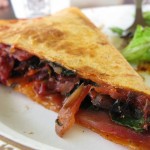
Lunch beckoned aromatically from the tent where the Patty Pan Grill folk were preparing the innards of our meal, which, alongside an excellent salad and three kinds of tamales, offered a spectacular discovery for me: it is possible to enjoy a quesadilla, if it is prepared from beets and other nicely turned veg together with some good cheese.

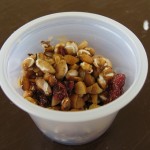
Some Vancouver Island talent: Fol Epi baker/owner Cliff Leir with “beer farmer” Mike Doehnel. Mike walked us through the barley malting process, after an introduction to barley breeding by Patrick Hayes, who set us loose on samples of hull-less and hulled barley, perled barley and even an incredibly good toasted barley snack (with local hazelnuts and cranberries) that’s soon to be marketed.


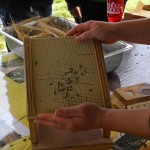
There was also discussion of something called Bappir, an ancient trail food made with barley, honey and dates which served a dual purpose: it could be soaked in water where it would be colonized by wild yeasts and serve as the foundation to early beers. We were also encouraged to try a barley head thresher – a basic manual model or an automated version – and a barley perler.

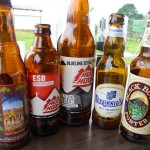
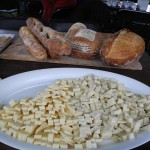
Some beer tasting ensued while Mike managed a demonstration barley mash in the background, eventually offering sips of the wort (if I followed the process correctly) which is the sweet dregs of the washed mash. It can be cooked down into malt extract for baking, or carried through the process and combined with hops to make beer. Of which we’d sampled five versions – four of them local, and some quite excellent. Thus fortified we wandered off to wait for… a beer and cheese tasting.

Behind us there was a small commotion of slapping and patting, which was the wood fired oven workshop group putting the finishing touches on their labour of love, which was to be silently auctioned off later in the evening, with proceeds to go towards the next Kneading Conference West – a worthy cause in my view. All you needed was the means to take it home with you…

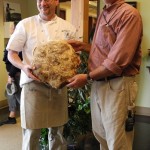
Elsewhere I happened upon Michael Eggebrecht and Stephen Jones wrangling a giant loaf from the Professional Baking workshop – came off a large rack of loaves that were on the way to the food tents where we covered them in more local cheese – a dill/garlic herbed number and an aged gouda style – before settling in to a dinner of barbequed chicken, corn and beans. And that was our Friday.


I retire with trepidation, for tomorrow’s schedule is too tempting and I cannot decide between four simultaneous sessions…

épi de blé