 We began our Friday in a state of suspended animation, awaiting the arrival of various participants and speakers who were caught in a spectacular traffic snarl caused by a 3am accident that took down power lines in central Kelowna and led to the complete closure of the city’s main artery, highway 97, in both directions.
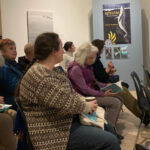
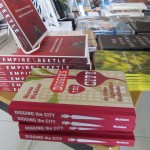
For my part I was grateful and delighted both to see my beautiful new book on the book table, my first glimpse of it, and to have a chance to hear Andrew Nikiforuk – who by some miracle had arrived on time – give what must be a well travelled talk by now, on the impact of the bark beetle on the forests of Canada and many other parts of North America – extending in fact from Alaska to Belize. I’d read about these beetles in The Insatiable Bark Beetle, an informative and particularly charmingly designed fellow filly in my publisher’s Manifesto stable. Nikiforuk’s book, Empire of the Beetle, has the space to go into much more detail about the pros – there are some – and cons of the beetles that are literally changing the face of our planet.
As Nikiforuk pointed, out, beetles make up one third of all animal life on the planet; there 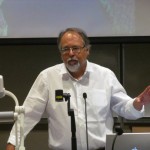 are over 7,000 species of bark beetles alone. No other living creature can change landscape as quickly as we can except for bark beetles. But they have a crucial environmental role to play in managing the forest, by removing old, sick or drought-stressed trees in order to encourage regrowth. Humans have messed with that role by imposing monoculture on our forests and by interfering with the role that forest fires also play in forest revitalization, not to mention altering the climate so that winters are no longer cold enough to slow the beetles down. In an old tale about man against nature, not to mention man in pursuit of financial profit, humans have tried to destroy the beetles using a range of futile weapons, from poisons (injecting arsenic into the trees), to clearcutting, to explosives and even electrocution. The bark beetles have not only survived every human attempt to eradicate them but adapted to changing conditions of habitat and thwarted all the predictions of scientists, travelling over mountains and switching from lodgepole to jackpine as circumstances required.
 Nikiforuk concluded with some sobering insights. We have taken out all the redundancy in our global forest, and made it highly vulnerable. We have imposed a false stability on the landscape through our use of hydrocarbons. With the effects already occurring to our landscape due to climate change, forests are rapidly changing, and we may be left with grasslands where forests can no longer grow.
As these changes progress, we need to reconnect with the natural world in a way we have not been connected for at least 100 years. In Canada, we make so much money as a resource economy, he said, we forget that 40% of our population is illiterate (why would you fi nish school when you can make good money without it in the oilpatch?).
Canada needs to get over its reluctance to address the core of the problem, he told us: who are we as a culture? Do we really want to dig a hole the size of Rhode Island or Delaware in order to keep cars on the road in the United States or China?
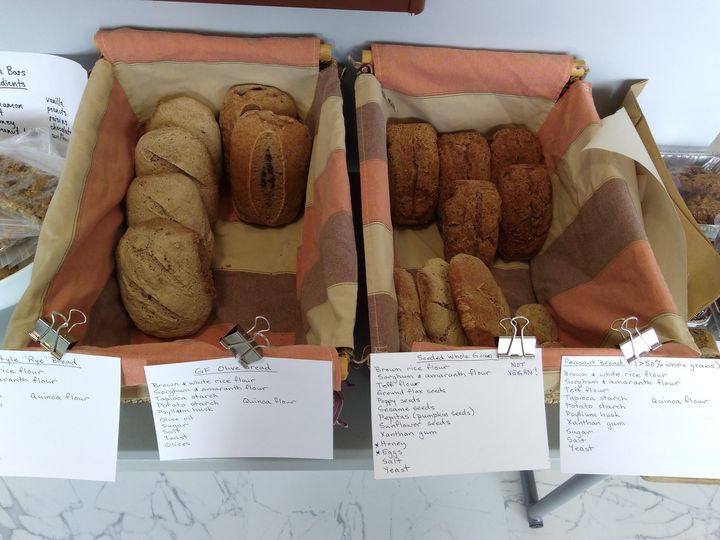
Having slipped into the programs of ASLE conferences past by reading poetry, on Friday I made my ALECC debut as a paper presenter, holding the first spot in the first session following the plenary (and following a luscious coffee break in which we were supplied with good quality baked goods and condiments) with my paper Reaping the Past: Gardens as Repositories of Local Food Memory. I reflected on the aspects of memory to be found in soil, seed, plant and gardener, and the impact of our cultural amnesia around food production, drawing on some interesting reading I’d done (I was particularly taken with The Secret Life of Dust). One of my fellow presenters, Jennifer Wheat, took us later for a ramble round lost gardens and the possibilities of guerrilla and community gardening.
For the rest of the conference, technology ruled the sessions I went to, and it was not a benign dictatorship. PowerPoint slides that ran ahead and out of control, papers read off iPads without having been timed, speakers seating themselves squarely in front of their screens, presentations delivered off websites that had to be manually dragged into frame, disappearing pictures, and the irritating Apple-shrinkage of screens at the hands of PC users. It is hard to think of a way we could prevent all these diverse problems in today’s technological ocean, whose tides travel in both positive and negative directions. Bringing a child along to these conferences as technology adviser might be a start.
I had certainly been grateful,earlier in the day, for the tweeted and emailed updates to the traffic situation and the location of key participants. But I also had ample time to reflect, as I have over the years in which technology has overtaken the simplicity of the spoken word in lectures everywhere, on just how many wasted learner-years must have accrued in the endless waiting for technological problems to be righted.
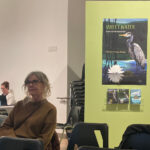
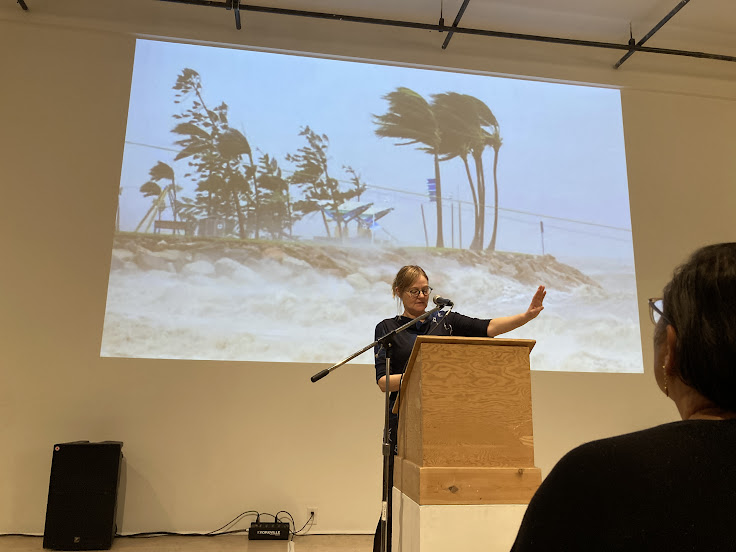 I was honoured to be one of the 110 poets included in Yvonne Blomer’s latest and last poetry anthology dealing with the difficult aspects of climate change and water.
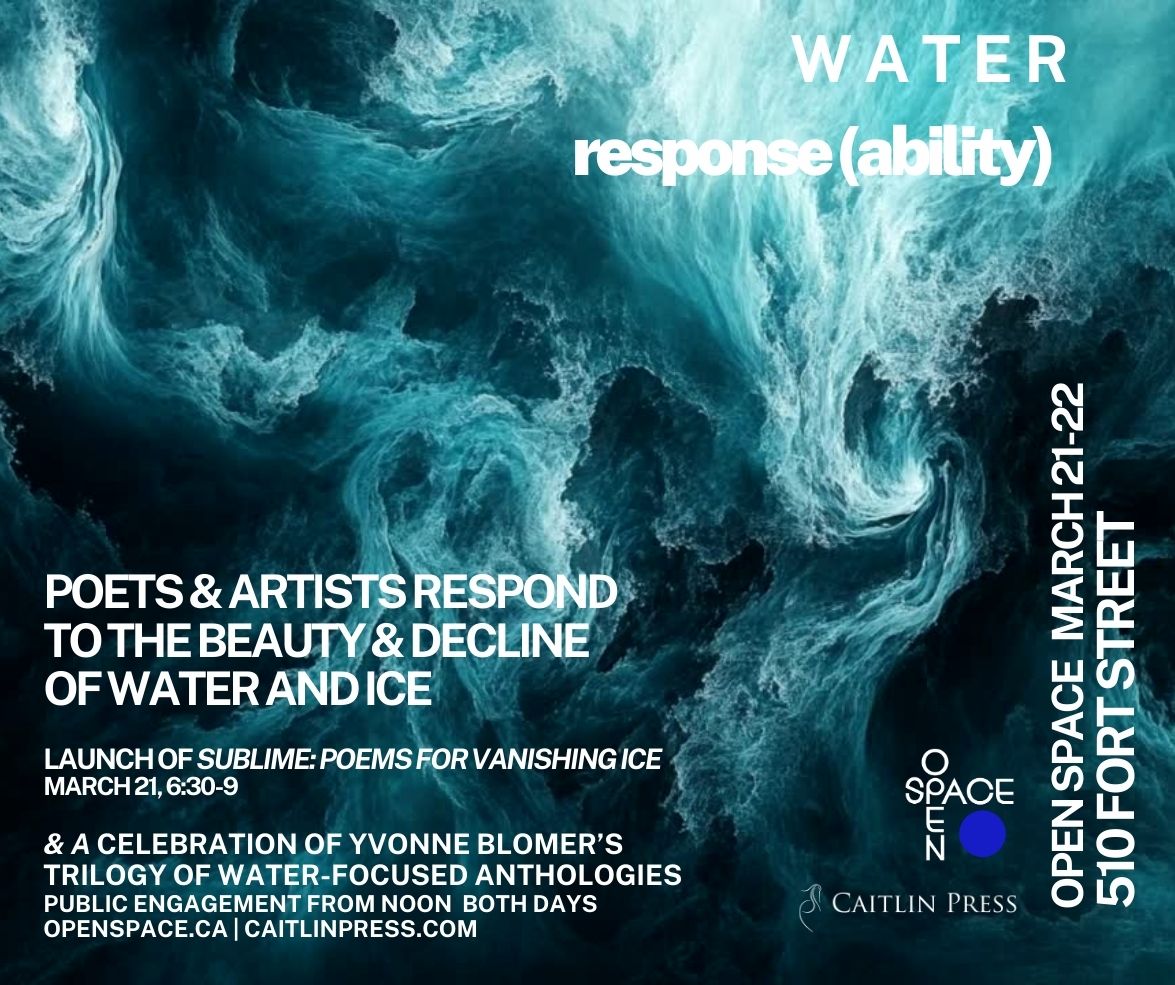 easure, gratitude and admiration for Yvonne’s perseverance over the past decade of her work on the trilogy.