Skip to content

GMOs

Save seeds, save the world

Last night’s talk by Vandana Shiva left a sold out auditorium at the University of Victoria humming with righteous energy.

She reported with eloquent passion on the state of food in the world today, leading with the unfortunate news of the “Monsanto protection act” which Obama signed only a couple of days ago, and which protects the biotech industry from any liability for the harm it may cause.

And biotech is causing great harm. It has not increased yields or fed more people or reduced the use of chemicals in agriculture. The yields are the same, for it is the nature of the seed, not the pesticide technology that governs yield; 90% of the GM soy and corn crops grown are not grown for human consumption, but for animal feed or fuel; and now that Roundup has created Roundup-resistant weeds, the biotech crops need to be doused in Agent Orange to keep the weeds down. The fact remains that the vast majority of people, globally, are being fed by small farms, and this remains the only hope for feeding the world in the future.

She acknowledged that we are living in tyrannical times, but said there was still much we can do. The small rebellions can be the most satisfying. When the British tried to place a monopoly on salt in India, Gandhi’s response was to wade into the ocean and show that nature provides what we need. Similarly, when multinationals inject genetic material into plants and claim ownership, they are playing god. Our individual response should be to save seeds, she says. Even something in a flowerpot on your balcony will do it.

And there was much more, of course. Watch for a video record of her talk which I’m told will be posted on UVic’s website next week.


Sweet beginnings

Obesity and its brethren (diabetes, cancer, GERD etc.) are the latest uninvited guests at the 21st century table. And what they’re eating is sugar.

Or is that all they’re eating? I do think we overdo it with sugar of all kinds, and that we owe it to ourselves to avoid any foods (if we can!) that contain added sugar as well as a host of polysyllables, as part of my campaign against the trend of involuntary consumption. And where stealth campaigns have been led by vested interests – check out this eye-opening article about the sugar industry’s attempt to build its market regardless of cost to human health – my hackles get raised and my consumer dollar goes elsewhere.

But I also think that we humans are obsessed with single solutions, while nature is insanely complex in every possible way: as a species we’re a long way from understanding the difference between ruling the world and knowing our place in the ecosystem. Where food is concerned, we’re no less determined. Michael Pollan wrote about it as nutritionism; David Katz reviles it as the ONNAT fallacy.

So while I absolutely agree we should drastically reduce our consumption of it, I don’t think sugar is the only villain. But it’s been very topical in recent years.

Michael Pollan, in The Omnivore’s Dilemma, explained to a shocked readership back in 2006 the many faces of the number one subsidized crop in the US — in the words of the bookstore clerk who handed my copies across the counter: corn, eh: who knew? Pollan was appalled at what he’d discovered about corn’s new evil incarnation as high fructose corn syrup (HFCS), which is in just about everything these days. Though he recently admitted to being appalled at how his exposé had been turned into marketing leverage by the sugar industry, his book certainly spread the word to a wider public. On food labels, it can be hard to spot HFCS – or many other sugars – as the manufacturers keep adding new names to confuse us, but there are guides out there to help us dodge the bullet.

Last year’s GMO film, Genetic Roulette, presented the theory that genetically modified corn, impregnated with Bt toxin designed to explode the stomachs of caterpillars, could be implicated in this century’s astonishing increase in food allergies. We have been assured that Bt will not affect humans, but it has been found in the human bloodstream (along with glyphosate/Roundup). What is it doing there? Is GM corn contributing to leaky gut in humans? One theory holds that food allergies can be caused by food particles entering the bloodstream through a weakened intestinal wall (“leaky gut”) and the body sees the food substance as a threat and creates antibodies against it, creating a food allergy or intolerance. A good subject for further study. Meanwhile, I think we should all avoid GM products until they’re proven safe: and that includes anything containing HFCS, since it’s likely made from GM corn. Our own table sugar in Western Canada is made from genetically modified sugar beets, so avoid that too.

Then we had evidence that HFCS caused more weight gain than other sweeteners. But then Marion Nestle trashed the study design. Another weird study emerged: the “Australian paradox” claimed that Australian sugar consumption had gone down, while obesity levels had gone up. Then that study was trashed.

Then in 2009 we got Robert Lustig’s seminal lecture, The Bitter Truth About Sugar, where we learned in no uncertain terms that sugar of any kind is toxic, addictive and best friend to cancer, arthritis and all manner of inflammation. You can (and should, if you haven’t joined the 3 million viewers to date) watch it for yourself. But discovery is followed by rebuttal, and in 2011 David Katz took issue with the scapegoating of sugar and only sugar and urged the holistic approach to food. He took issue with Lustig’s definition of fructose as an addictive substance, and pointed to its origins in fruit which is not addictive. But the problem is that the fructose we’re being fed is not in fruit any more: it’s been isolated by the food industry and robbed of its accompanying fibre, enzymes and nutrients.

And, the way simplifications go, simply not eating sugar won’t necessarily protect you from cancer. Last year a study found that cancer will turn to other sources of nourishment if it can’t get sugar (glucose): cancer cells feed quite happily on glutamine, which is not a sugar but an amino acid, and the most common one in our bodies.

And now we start the new year with another study that says there is something different about fructose: an imaging study of human brains reveals its effect on appetite. It doesn’t make you feel full (as glucose does). And if you don’t feel full, you don’t know when to stop eating, and round and rounder you go.

Perhaps, then, it’s not so much an addiction as a treadmill. Stay tuned. The story is far from over…

Food so clean & local

It’s been a couple of weeks of book promotion and food events… I keep waiting for things to slow down but they keep speeding up instead, so I will try to catch up a little.

Last week began well, with a unanimous vote by Saanich District Council in favour of a no-GMO motion that had been in the works for a couple of years:

“That the Healthy Saanich Advisory Committee recommends that Saanich Council does not support the use of genetically modified seed crops within the District of Saanich, and that Council write to the federal Minister of Agriculture, the Canadian Food Inspection Agency, and local MPs in support of the mandatory labeling of genetically modified foods.”

For those who don’t hail from these parts, Saanich is one of the largest of the 13 municipalities that make up the Capital Regional District (what outsiders would call “Victoria”) and one that has an interesting mixture of urban and rural properties. It joins other BC communities, including Powell River, New Denver, Kaslo, Rossland, Nelson and Richmond in banning GMOs.

Biotech Crop Countries+Mega-Countries 2010I was among those who spoke in favour of this motion at a public meeting in October, on the grounds that GMOs have not been proven safe for human consumption. While some might argue the horse has long since exited the barn, I am with those who believe we can only carry on letting people know they have a choice and a voice and trying to educate the wider public on under-discussed aspects of what should still be a lively GMO debate. I pointed out that since our parliament has failed to allow our population to safeguard itself against eating GMO products by introducing mandatory GMO labeling, all Canadians have been fed GMO foods without their knowledge or consent since 1996. So I was particularly pleased to see that the municipality would be writing to the federal representatives about labeling. And would urge all sensible people to do likewise while they have ink in their pens or pixels on their screens. Sanity may yet prevail in this country when poor brainwashed Canadians manage to grasp the same realities as the citizens of more advanced nations including South Africa, Kenya and Peru.

Tuesday there was a round-table meeting of Victoria’s CR-FAIR which brought a couple of dozen food and agriculture activists together to discuss local initiatives. The range of activities was heartening and included work or plans for community gardens, agricultural land protection, community seed banks, access to food by low income residents, community kitchens and kitchen gardens, gardening workshops, food redistribution tools and access to farmland.

Friday I was at a promotional do for my beautiful book, held at the even more beautiful Maritime Museum. Appropriately for a daughter of the bench, I took my turn speaking from the place where Judge Begbie had thumped the gavel in days of yore (and he was *not* a hanging judge, according to Marlyn Horsdal, who also presented as author of a novel in which he is a character). Thirteen books from the Heritage Group of publishers were celebrated by 14 authors, each of whom had five minutes to say something about their books. One book, in fact the only one I bought (in a spirit of strictest frugality) – Saanich Ethnobotany – was co-authored by the excellent Nancy Turner and Richard Hebda whose collaborative tale-spinning made a fitting finale for an evening well spiced with food, drink and tantalizing introductions to a good mix of fiction, nonfiction and anthologies.

And finally, tonight I launched Digging the City at the Cornerstone Cafe in fabulous Fernwood, with the kind assistance of Don Genova as my celebrity host. About which event I will say not much except a good time and tasty treats were had by all.. and my generous readers took away some purdy books and free seeds!


Genetically-modified October

There has been a fair amount of GMO action, good and bad, this month.

On October 10, the Healthy Saanich Advisory Committee bravely invited public input into their deliberations on the question of whether to allow Genetically-Modified (GM) seed crops into the municipal district. [For those who don’t live here, Saanich is one of the largest of our 13 municipal districts and 3 electoral areas that make up what is commonly known as Victoria (plus the Gulf Islands), but more accurately named the Capital Regional District. It is also a daunting mixture of urban, suburban and rural (peri-urban really, on this increasingly crowded tip of Vancouver Island) areas.] The Healthy Saanich Committee took the public input into their own deliberations, and will be making a recommendation against allowing GM crops to Saanich Council in November. One of the presenters requested that the meeting where the recommendation would be made should be one where the public could be present.

At least fifteen residents made written presentations to the committee, and another fourteen each made five-minute verbal presentations to the committee, who will have left the meeting groaning under the weight of much additional reading. Local farmers, gardeners, citizens, doctors, scientists and church groups were represented, and thirteen of the fourteen presenters spoke emphatically against allowing GMOs into the community.

In my five minutes I spoke as one of the millions of people in North America who have, for the past 18 years, been obliged to consume GM foods without our knowledge or consent, because our federal government has twice blocked the introduction of mandatory GM food labelling, thereby removing our choice over whether or not to eat it. And GM ingredients are present in, so the estimates go, some 70% of the foods in Canadian grocery stores (if you eat a lot of processed foods, your consumption is probably higher than that). Other presenters pointed out the failure of governments to require adequate long-term studies of GM products on animal and human health and on the environment. Still others argued that GM crops would increase the amount of pesticides used on our soil, and therefore the quantity of pesticides introduced into our diets and water supply.

In a timely reminder that the pesticide threat was no idle supposition, we’ve just had news that Canada is on the brink of approving GM corn and soybeans – destined for human and livestock consumption – designed for use with the pesticide 2,4-D (an ingredient in Agent Orange), which is needed because Roundup-Ready GM crops have created glyphosate-resistant weeds, creating what had been predicted from the outset: an increase in pesticide use, not the decrease originally promised by the biotech industry.

In Ontario, farmers gathered to protest the planned introduction of GM alfalfa into Canadian fields. The prospect is more than worrying, because alfalfa is a hugely important crop, which forms the bottom of our own food chain. Organic growers are heavily dependent on it both as a livestock feed, an export crop and a cover crop. Since the only alternative Canadians have if they don’t want to eat unlabelled GM foods is to buy certified organic (no GM ingredients or agricultural inputs are allowed in Canada’s certified organic production), this puts our whole organic food system at risk. Given the rates of contamination of non-GM corn, soy and canola by their GM counterparts in North America, and the sorry tale of the “Triffid” flax that killed Canada’s European flax export trade, it is a certainty that GM alfalfa will cross with non GM.

And finally, Michael Pollan has written a thoughtful analysis of California’s pending vote on mandatory labelling of food containing GMOs, coming up November 6, and the need in today’s damaged food system, for a more vigorous and less one-sided blending of food with politics.

Stuffed & stirred

Raj Patel made a welcome visit to Victoria last week, supporting the Horticultural Centre of the Pacific’s efforts to raise funds to rebuild the greenhouse, gardener’s office and tool shed that were destroyed by fire last year. For such a high profile name and entertaining speaker there was a puzzling number of empty seats, but those who came were treated to a whirlwind tour through the complexities of feeding an imbalanced world.

Author of Stuffed and Starved and The Value of Nothing, Patel is fond of an hourglass metaphor (you can see this graphic explained on page 3 of Food Security in a Volatile World) to explain the world’s food economies. Consumers are the numerous bulge in the hourglass’s wide top, farmers & producers make up the wide bottom, and a few corporations act as gatekeepers, pinching the middle and squeezing profits from both ends. The aim, he says, is to try to keep those corporations out of the relationship between consumers and producers: in that way, food can be fairly exchanged and there is no need for hunger.

We do have enough food for the world, we just don’t distribute it well, because we’ve commodified it and a small minority is fixated on making  large profits rather than nourishing populations. What we have is wasted and poorly distributed. India leads the world in diabetes – some cities have 20% rate. In his own family every man over 50 must watch his blood sugar.

He spoke about market economies and the disastrous effects they’ve had on food security by removing the obligation found in, for example, feudal economies, where the landlord ensured that food was distributed in times of hardship. In a market economy, there is no such concept. In India, he said, a nation of farmers, the market economy was forced upon a working feudal system by the British, who reaped vast financial rewards and left the country in economic ruin. Where famines had happened once in a hundred years in India, after the British occupation they occurred every four years.

Market economy damages food security by treating food as infinitely produceable and marketable, failing to recognize that it takes time to grow and produce: if there’s a food shortage, it can’t be solved until the crop comes in. Patel reminded us of the concept of grain reserves – a tradition of grain stores whose loss puts the world at tremendous risk. The Mayans, he said, had enough for 15 million people for 6 months; the US public corn store has enough for 9 hours. This is a public grain store: there are private ones, but this will not feed a hungry public in times of need.

Haiti was another example of a food economy crippled by the imposition of a market economy. It had been self-sufficient in rice, but following American intervention and then an American-backed coup, Haiti made a forced entry into market economy. Local rice farmers were swiftly driven out of business by subsidized American rice farmers. There was widespread deforestation and poverty. Farmers were driven into cities to work in sweatshops. Even before Haiti’s earthquake, the country was being hammered into worse poverty by the likes of economist Paul Collier who maintained that Haitians could pull themselves out of debt if the 8 hour sweat shops were made 24 hour (workers were being paid around $3 a day at this time and the American government cooperated with such profitable US clothing companies as Fruit of the Loom, Hanes, Dockers, Nautica and Levi’s in stalling a minimum wage increase to $5 a day, which we now know thanks to WikiLeaks).

Patel expended much of his venom on the World Bank, where he once worked. To illustrate its workings he suggested we watch the Terry Gillian film Time Bandits, in the scene where Robin Hood distributes goods to the poor, while a big thug behind him punches the peasant in the face. And that, he said, is the world Bank. It goes around setting up market economies and lending money that can’t be repaid. Lending more money to cover the debts.

He turned to agriculture, at the root of the food security issue. GMO crops are said to be more productive, he observed. In fact they are, but it has nothing to do with genetic manipulation: it is that seed companies are dedicating their conventional seed breeding efforts to develop the strains that they are pairing with the GMO. So it’s not technology, it’s old fashioned seed breeding that’s improving the yields; but it’s the genetic manipulation of those strains that makes the improved varieties unavailable to organic farmers and those who don’t want/can’t afford to invest in GMO.

He mentioned as well one of the great media blackouts of the past five years: the IAASTD report (Agriculture at a Crossroads) was buried after 4 years work by 400 scientists from 64 countries, working under the request of the United Nations to predict ways to feed the world’s population. The report to its cost said industrial agriculture has had its day and that small scale ecological farming methods are our only hope. Biotech might have a role to play, the report said, but the jury was out.

In brighter news, he spoke about food sovereignty initiatives in Malawi where they’re growing millet, sorghum, cow peas – traditional subsistence crops grown for local consumption. In what sounds like a permaculture move to me, they’re also growing leguminous trees which will also fix nitrogen in the soil while providing shade: 15% more shade means 15% more yield – these are the practicalities of climate change. Despite the success of these crops, children are going hungry, because harvest is woman’s work. Gender roles impair success, so to counter this they’re holding cooking parties, where men, women and children cook together: the women teach the men how to cook.


Year of the Dragon: seeds, storms and Sipsmith gin

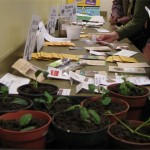
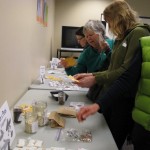
For the past three years, the Gorge Tillicum Urban Farmers have met in January, ahead of the larger “seedy” events in Victoria and elsewhere, in order to swap and share our locally grown seeds. It’s one of my favourite things about this neighbourhood’s delightfully mixed group of gardeners, chicken-lovers and food geeks. There’s no guarantee the seeds will sprout, no fancy packaging and no cost. The seeds mostly come from plants that GTUF members have grown in their own gardens and then saved, so are tested and adapted to our local climate. This gives them a big advantage over seeds purchased from major seed producers, who may be in a completely different growing zone from the consumer. Our seeds also come with an opportunity to tap the knowledge of the producer: could be someone with years of skill, or maybe just a delighted first-timer.

This year 60 of us were joined by affable seed guru Dan Jason, the visionary behind Salt Spring Seeds and the Seed and Plant Sanctuary for Canada. He’s also the star of Gardens of Destiny, a documentary about the importance of seed saving. Jason had put out a call a year or so ago inviting communities to consider establishing community seed banks, in order to preserve locally-adapted plant varieties (all seeds are under threat from seed patents and GMO contamination by seed multinationals) and to provide a hedge against food insecurity. Some of GTUF’s members ran with the idea and we’re in process of starting our first plantings for a seed bank this year.

After the first half hour of picking and choosing for our gardens, we settled in to hear Jason speak and answer questions on seed saving and community seed banks. He began with a primer on why we should do this: in short, because our food seeds are at risk: multinationals have been ramming through GMO legislation despite the lack of testing for food safety, the potential health dangers from unlabelled GMO ingredients (which are in nearly every processed food you can buy in North America) and cross-contamination of our food supply with GMO. This puts our ability to grow safe and nourishing food at risk.

The good news is that Jason believes we can take matters into our own hands and make a positive difference, if we join with our neighbours to safeguard our seeds and learn to grow food:

“Community seed banks are an extension of something people have done throughout recorded history. With a community seed supply, people become the custodian of their own seeds; this empowers a community to grow what is wanted to eat there.”

He stressed the importance and also the ease of saving your own seeds:

“Plants produce a phenomenal amount of seeds. You mostly get so much back from a single plant it doesn’t take a huge number of people to do this. You maybe need just a couple of dozen in each community. You don’t have to be an expert in all seeds. Just go with the people who know tomatoes or beans or parsley, and make them the mentors for those varieties. They can advise and teach others about details of saving seeds in a particular family.

Jason was particularly encouraging about the prospects for urban farmers who are buffered from cross contamination by GMOs because of their distance from large farms, the only economically-feasible places GMOs can be grown. He spoke in praise of the higher yields that any small scale production can get (large scale industrial producers are handicapped by input costs, including fuel and equipment, and by the risks of monoculture; small growers can diversity to protect against crop losses, and can monitor and deal with potential problems more easily) and observed that growing in neighbourhoods we can share the strengths and weaknesses of our situation: the shady side of a street growing greens and the sunny side growing the heat-loving crops like tomatoes and peppers.

More of the same message seems to be contained in this book, The Vegetarian Myth: Food, Justice and Sustainability which I suspect is not the simple attack on vegetarianism that its title suggests, but more of what its subtitle says. A preview in this video:

And finally, I will be nursing myself through the dragonly blasts of wind and water that have started this year with  sips from a precious bottle of Sipsmith Gin, made in Hammersmith, London which I brought back from the UK.  I’d heard a bit about on a Radio 4 program that talked to artisanal gin makers in London and am looking forward to taste-testing it against my favourite local brand, Victoria Gin.