Skip to content

GMOs

Organics ABC

I spent much of this past weekend at the COABC (Certified Organic Associations of British Columbia) annual conference which was conveniently held in Sidney and attracted some great speakers and lots of friendly farm folk, with tasty organic fare to fuel the conversation (“When was the last time you saw organic milk at a conference?” we marvelled in the coffee queue; “This would be a first” we agreed.)

The two headliners for my interests were Chris Thoreau, an urban farmer from Vancouver, speaking about how to make money from farming in cities, and Todd Kabaluk, a researcher from Agriculture Canada, speaking on current research into wireworm.

Thoreau’s talk on Friday night promised to go beyond community gardens to explore some of the economic aspects of urban farming. An entrepreneurial bent is needed to make money from farming in the city, and Thoreau’s aim is to prove it’s a viable economic model for some, both by farming himself and by creating an urban farming network in Vancouver (where there are 19 urban farms – comparing poorly with the 700+ that now exist in Detroit .. but on the other hand, there is – let us be grateful – not the same degree of vacant lots in Vancouver)

City FarmBoy is believed to be the longest standing urban farmer in Vancouver, farming 14 backyards and one rooftop. Farmers on 57th work with residents of the George Pearson Centre providing food and involvment to people living in the facility. Thoreau’s own business, My Urban Farm: small scale sunflower sprouts delivered by bicycle. SOLEfood has literally taken over a parking lot on East Hastings, with the help of a grant from the city to set up. They use raised beds to grow food to sell at high end restaurants, farmers market, recreation centres and so on, using the proceeds to hire people and train farmers.

And then there was a reception, featuring Crannog Ales and Summerhill wines.
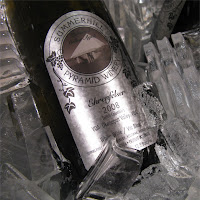
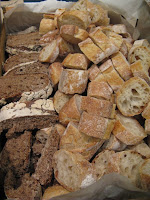
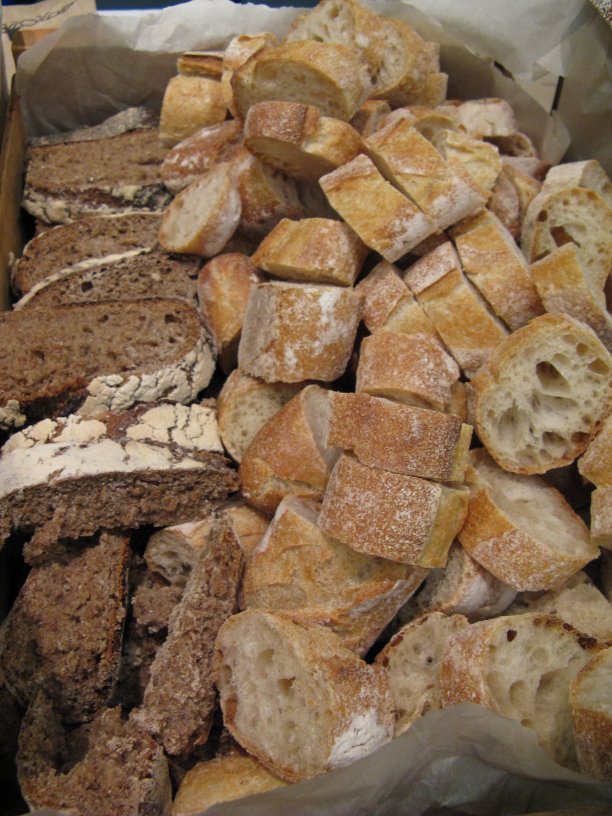
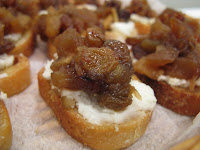
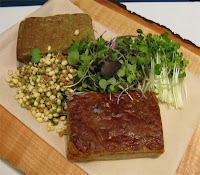
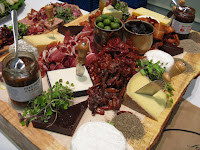
Friday night nibbles included…
On Saturday, we had opening addresses from Dag Falck,
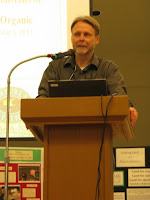
of Nature’s Path, explaining the negative effect that “natural” food branding is having on certified organic food sales. He pointed out that only half a percent of all farmland in North America is under organic cultivation, which means that shortages of organic ingredients are imminent if the sector continues to grow. There is a widespread misunderstanding of the meaning of the term – led by marketing – that leads the public to pay a premium for goods made from agricultural products that are – and cost- exactly the same as conventional products. There is a white paper on the subject, from COTA (Canadian Organic Trade Association).

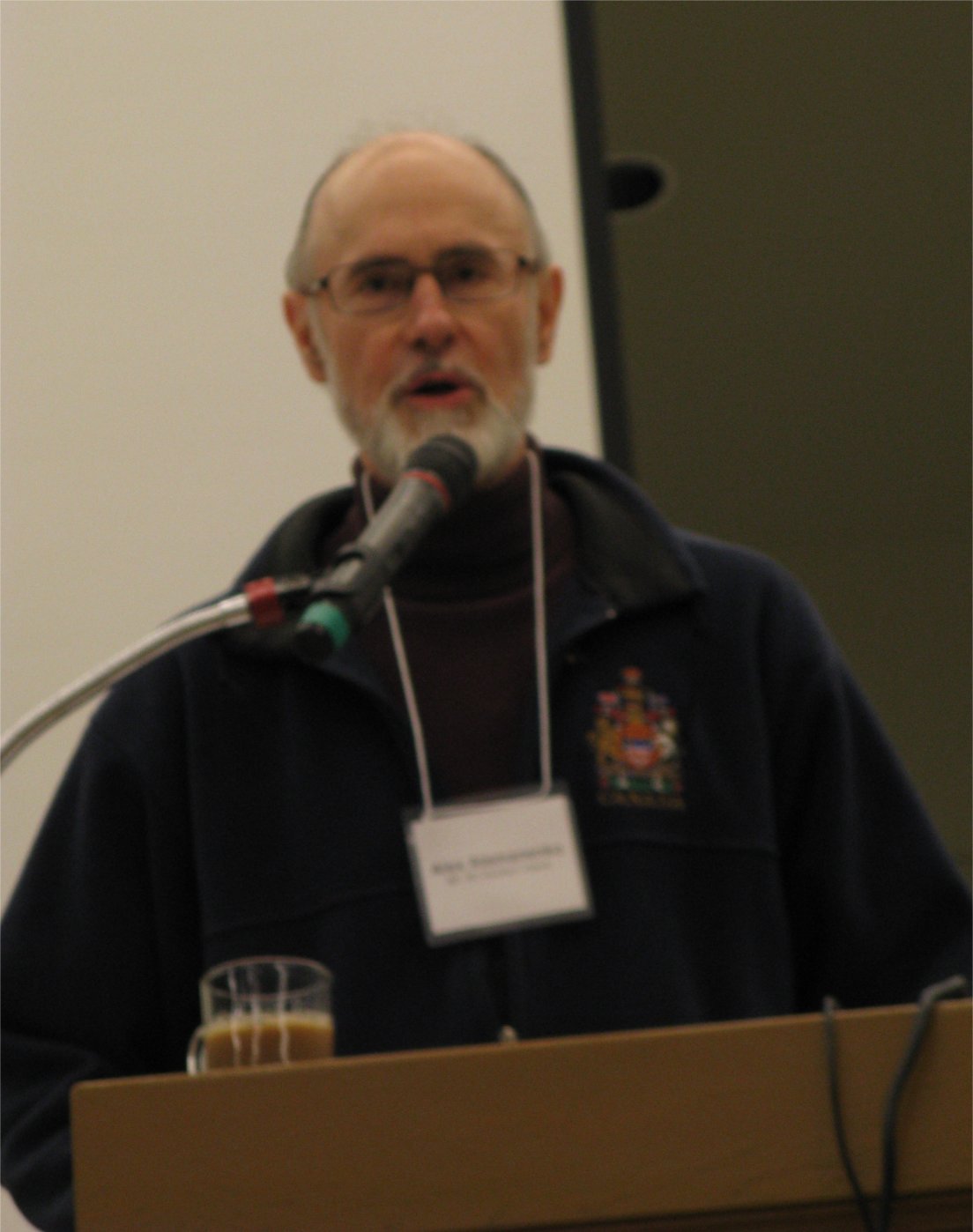
Alex Atamanenko
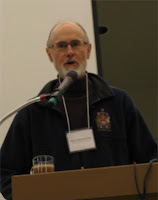
spoke about organic items topical in Ottawa, including Bill C-474. There is still a shred of hope around the topic, with a new campaign to support a moratorium on GM alfalfa in Canada. He addressed the worrying elements in CETA (Canada–European Union) trade negotiations that threaten seed-saving, and later confirmed what I’d heard about the first-time inclusion of municipal level obligations that could end institutional support for local foods (the proposed changes would “prohibit municipalities from using procurement for sustainable development purposes such as promoting food security by adopting “buy local” food practices”). So lobbying is suggested at the municipal as well as federal level.

I went on to a talk abou soil ecology and alternative mulches for organic blueberry production; basically a discussion about traditional use of sawdust vs composts. One of the reasons was to reduce the loss or injury of plants through plant-parasitic nematodes, which can more easily be kept in check by natural predators such as those found in soil enriched with organic matter.

Then there was a coffee break
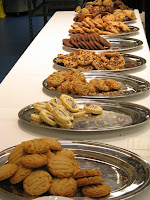
and I skipped out to do some errands. After a vibrant lunch
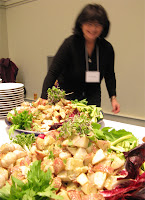
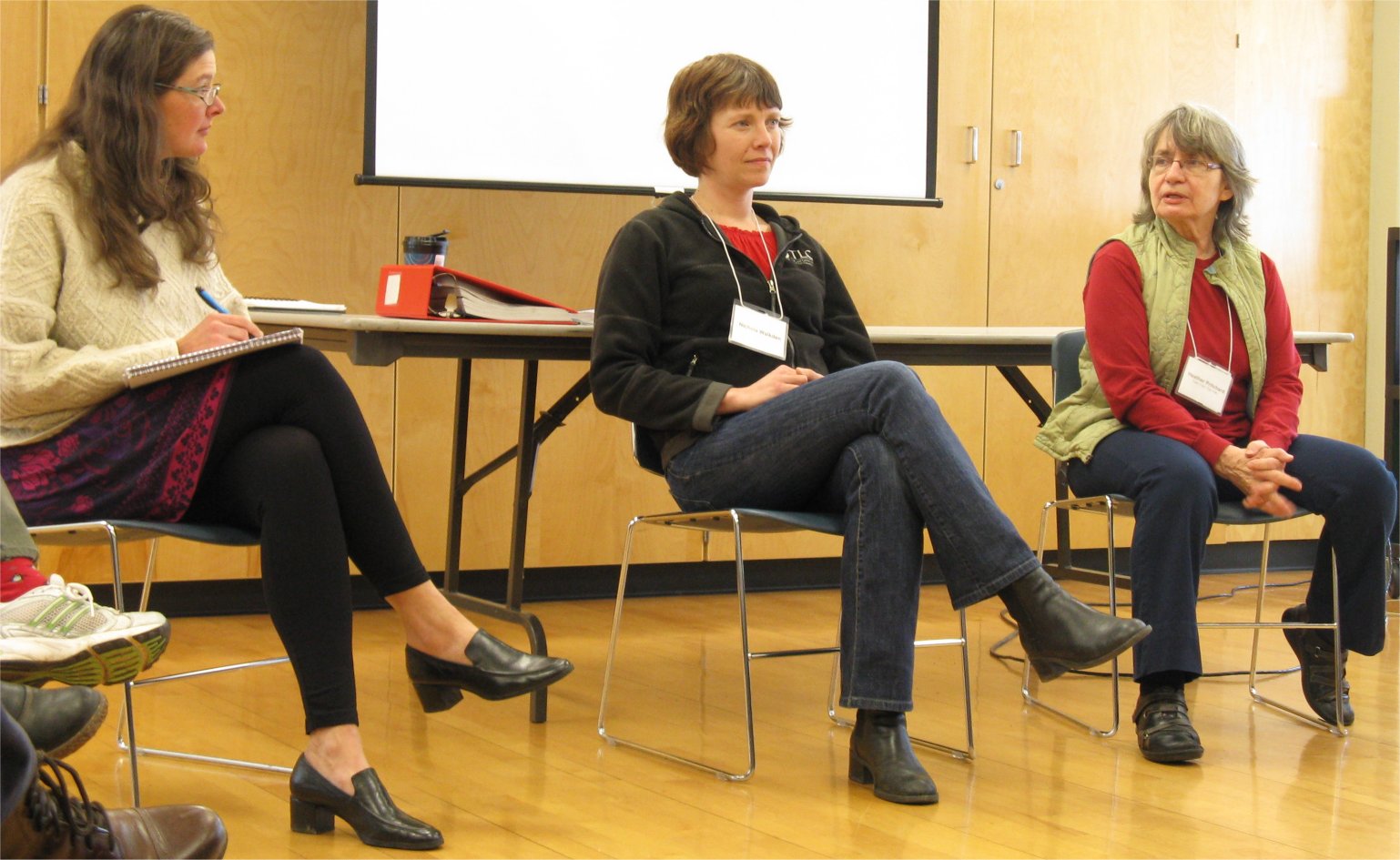
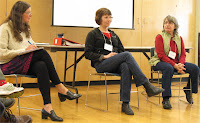
there was a panel on Community Farms, land leasing and other ownership models with Jen Cody of Growing Opportunities; Nichola Walkden of The Land Conservancy; and Heather Pritchard of Farm Folk City Folk. There was a lot of discussion about the ins and outs of land tenure when working with a collective or community model; issues to do with zoning, neighbours and conditions of tenancy.
Then it was time to turn to the most evil insect of them all. Todd Kabaluk gave a thorough consideration to the life and times of the wireworm, mortal enemy to all potato growers and many others besides. As has been previously discussed here, it’s a long-lived pest with a big hunger and an undiscriminating palate; laying waste to seedlings and rendering root vegetables unsaleable. There are no known enemies, though research is looking for these; and it’s hard to kill since its whiskers allow it to whisk up and down in the soil, so you can’t be sure exactly where it is. As Kabaluk wryly observed, “Wireworms are where you find them”.

One place you will certainly find them is in forage crops/ set-aside/ any longer-term grass (like lawns and turf) where moisture levels are steady and there’s lots of food in the roots of grasses. Till that under and you move the grass and the wireworm beneath the soil; when the grass decomposes, and the wireworm loses its food source, you have created a situation where the wireworm must seek a new food source. If you’ve planted a crop, expect visitors, as they’re attracted to the CO2 emitted by the roots.

Although some useful research has been done – involving brown mustard as a rotation crop; use of aromatic oils like citronella; and use of a fungal biological control – there is no quick fix available yet. Kabaluk is focusing on better methods of monitoring their numbers (to reduce the need, e.g., for corn farmers to automatically treat seed with clothianidin even where wireworm numbers are not known). The best summary he could recommend of non-chemical treatments is this article from 2008.

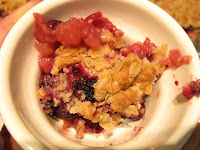
Supper was good and featured lots of salmon from Sointula, as well as local cheese and charcuterie. And a very nice apple and berry crumble to finish.
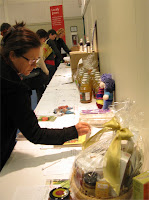
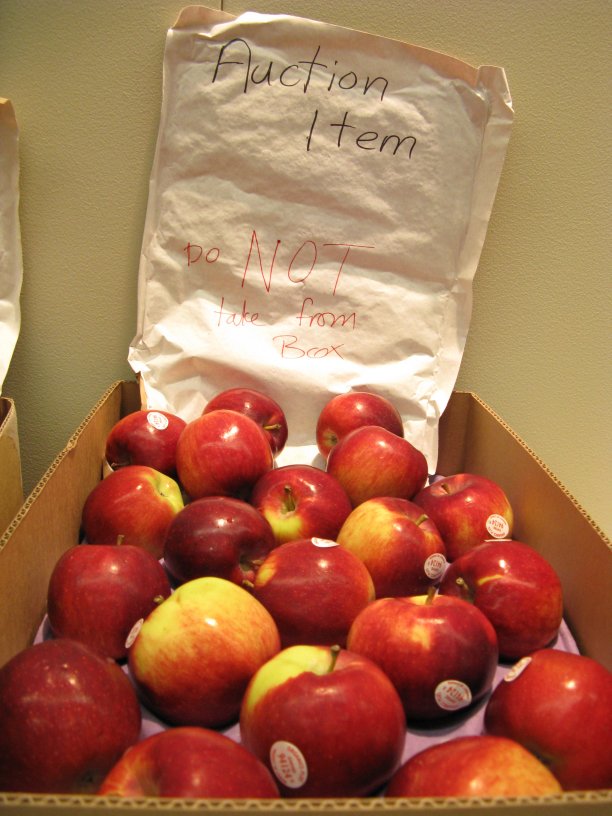
A last look at the silent auction items
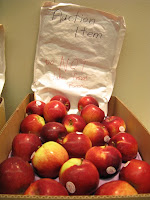
– I was outbid on everything (luckily) – and some jolly tunes from the Jugbandits, and that was it for me. I couldn’t make it to the Sunday sessions as I had a bee talk to attend.
Countdown – Bill C-474

There’s so much going on in the GMO world right now. All a-flutter about GM Alfalfa down south, and tomorrow there’s the final debate on Bill C-474, with the vote on February 9.

If you’re Canadian, it’s worth writing your MP. CBAN makes it easy…

And if you’re interested in knowing more about why it’s worth trying to protect our organic and non-GM growers, there are good reasons why you as a consumer might not want to be eating genetically modified foods. Or exporting them elsewhere.

Because there is no mandatory labelling of GM foods in this country, at the moment your only option not to eat genetically modified foods in Canada is to buy organic .

And here’s why organics might be worth your investment, excerpt from the American Academy of Environmental Medicine’s Position Paper on GMOs (from May, 2009):

Natural breeding processes have been safely utilized for the past several thousand years. In contrast, “GE crop technology abrogates natural reproductive processes, selection occurs at the single cell level, the procedure is highly mutagenic and routinely breeches genera barriers, and the technique has only been used commercially for 10 years.”

Despite these differences, safety assessment of GM foods has been based on the idea of “substantial equivalence” such that “if a new food is found to be substantially equivalent in composition and nutritional characteristics to an existing food, it can be regarded as safe as the conventional food.” However, several animal studies indicate serious health risks associated with GM food consumption including infertility, immune dysregulation, accelerated aging, dysregulation of genes associated with cholesterol synthesis, insulin regulation, cell signaling, and protein formation, and changes in the liver, kidney, spleen and gastrointestinal system.

According to Dr. Arpad Pusztai,who exposed risks to the immune system associated with GM potatoes, “it’s not the foreign gene that’s added to a food product or animal hybrid that is dangerous – these things taken on their own had little to no effect – but it’s the entire process of changing the genes that creates the problem” (quoted last March). And that’s the outcome on which we’re gambling our health and that of our children.

The other thing to remember about genetically-modified foods is that they’re not developed for better flavour or nutritional qualities. They’re developed to tackle weeds by making the patented seeds resistant to a patented pesticide, the herbicide Roundup (glyphosate). So that means that when you eat genetically-modified foods, you are consuming foods produced with ever-increasing amounts of pesticides, which are proving ever less effective.

We have Monsanto’s assurance that glyphosate is not harmful to us. Curiously, it’s been deemed safe for us to eat, but is labelled a groundwater contaminant and is toxic to fish and marine life. I can’t help but wonder what long-term effect will it have if it reaches human digestive systems through seafood or groundwater?

The Alfalfa thing and final debate & vote on C-474

A year or two ago I was interviewing someone about organic issues and genetically modified something or other and the topic of GM alfalfa came up. She told me that GM wheat had been on the regulatory table some years ago, but the public outcry was such that it was soundly defeated.

Which she thought was great, but the real problem would come when GM alfalfa came knocking at Canada’s door. That, she said, would kill organics, and the public wouldn’t even know to get excited because who cares about alfalfa? Wheat we can identify with; it’s part of being Canadian. But alfalfa’s just hay or something, right? Actually it’s at the bottom of our food chain, and so you had better care deeply, because it’s about to change your life.

As you may have heard, the American government has not just opened the door but laid down a red carpet for GM alfalfa, so it seems we have pretty much lost the battle before the bugle has even sounded. Alfalfa is the fourth most widely-grown crop in the United States behind corn, wheat and soybeans.

It is the primary animal feed – forage crop – in Canada. It is heavily used to feed dairy cattle, as well as horses, beef cattle, sheep, chickens, turkeys and other farm animals. Which means it feeds the dairy industry and the meat and egg industries. It’s popular in animal feeds because it’s high in protein, vitamins and minerals; this is why people eat alfalfa sprouts as well.

Organic producers are not allowed to use genetically modified ingredients or feeds, so if you buy organic eggs, milk, cheese, butter or meat, get ready to kiss them goodbye. Likewise organic alfalfa sprouts.

One thing to know about alfalfa is that it’s pollinated by bees, so it will travel. The bees who pollinate it are specialized (alfalfa leafcutter bees/Megachile rotundata). Honeybees can’t do the work because of the mechanics of the flower and the size and shape of the bee. Alfalfa leafcutters do not have the range of honeybees, but travel they will, and the GM alfalfa pollen with them.

Alfalfa is hugely important in farming because it’s a legume, meaning it has nitrogen-fixing qualities for gardens as well as farms, and so it’s frequently grown as a cover crop, as well as a forage crop.

Because of its position in our food chain, contamination of organic alfalfa with GM alfalfa means no more organic meat, eggs, dairy or sprouts for us, but it also means no more organic *or* conventional meat, egg or dairy products can be exported by Canada to protected markets like the EU which refuses to buy GM foods.

Surely this situation gives Canada grounds to sue the USA for violation of NAFTA’s environmental and trade protections? I think we should be questioning long and loud why Obama’s government’s love affair with the biotech industry is allowed to rob Canada of the right to choose whether or not to allow GM plants and foods into our environment and agricultural production. Won’t the American decision cause Canada clear economic losses by crippling our ability to produce organic foods and supply our export markets?

Therefore, this is a particularly important time to heed CEBan’s call to action over Bill C-474 which is thoroughly entangled in the alfalfa issue. Bill C-474 aims to protect farmers who wish to export non-GM crops into protected markets; it came up because of the accidental contamination of Canadian flaxseed with GM flax.

The final debate takes place February 8; the final vote on February 9. We need the Liberals to vote for this bill, so if you are in a liberal (or even conservative) riding (or care to drop a line to Michael Ignatieff and Stephen Harper) write, phone or otherwise harangue your MP today.

Write to Tom Vilsack and Barack Obama while you’re at it. Do not let them say that nobody complained so they did what they liked.

Rambling in London

Have spent a pleasant – if still snivelly – couple of days wandering familiar streets and revisiting what old haunts remain, like my beloved Food For Thought, whose quiche and salad plate has changed little in the 20 years I’ve been eating it – still a good deal and a good meal with no room for the unfailingly tempting desserts. You still queue up on a narrow staircase, take your earthenware plate to the nearest corner of the nearest unfailingly occupied table, grab yourself a glass and drink from the unfailingly replenished jugs of tap water, and sprinkle on a bit of salt and pepper from the bowls in front of you.

No mistaking mushroom season is here. I had a really nice wild mushroom soup the other day at a most unlikely place. The croutons were particularly good (I suspect nice bread that was given a good dredging in tasty olive oil helped them along)

and the bruschetta wasn’t bad either.

Speaking of fungi, some of the more interesting mushrooms on sale at Mortimer’s just now..

The Bath House, although part of the evil empire, (since 1996, the Greene King chain has bought up 2,200 pubs in Britain, taking its total to 2,587 pubs and restaurants across the country; it’s notorious for buying up small breweries and closing them down, reducing the number of traditional beers on the market) has for the moment at least agreed to host Ambit’s poetry readings (as long, goes the dark clause, as we spend enough money to make it worth their while)(Ambit could use a hand too, having become one of the latest casualties of cultural funding cuts – they only need 200 subscribers to break even).

I passed on any “home made coleslaw” or “British beef” they might have on offer in favour of a lotus seed bun from an old familiar Chinese bakery en route.

One of Tony Blair’s London neighbours overstayed his welcome and is going nowhere fast.

A visit to the most lovely and useful of bookshops, Daunt’s on Marylebone High Street.

I saw a most astonishingly fabulous film in a favourite old cinema in Notting Hill.


In other news, there was an update in the Guardian the other day about the debate over GM crops which makes interesting reading. Although how anyone can say they will solve world hunger is beyond me, when they are developed with corporate interests in mind: corporate profits for multinationals inevitably have pretty questionable benefits for everyone else, in the old ‘someone has to win’ equation. That is, such profit-oriented products (in this case, remember, this time it’s food) are marketed in order to create an enduring economic bond with purchasers (farmers) by requiring the annual purchase of seed (an attempt to eliminate the rights of farmers to develop and save seed) and associated technologies (e.g. specialised pesticides and fertilisers) so that they can be grown in some cases (e.g. soya in Brazil) in eco-systems that cannot sustain them, with the profits going to multinationals while the local economy is driven ever lower.