Skip to content

organic farming

White Rock reading for National Organic Week

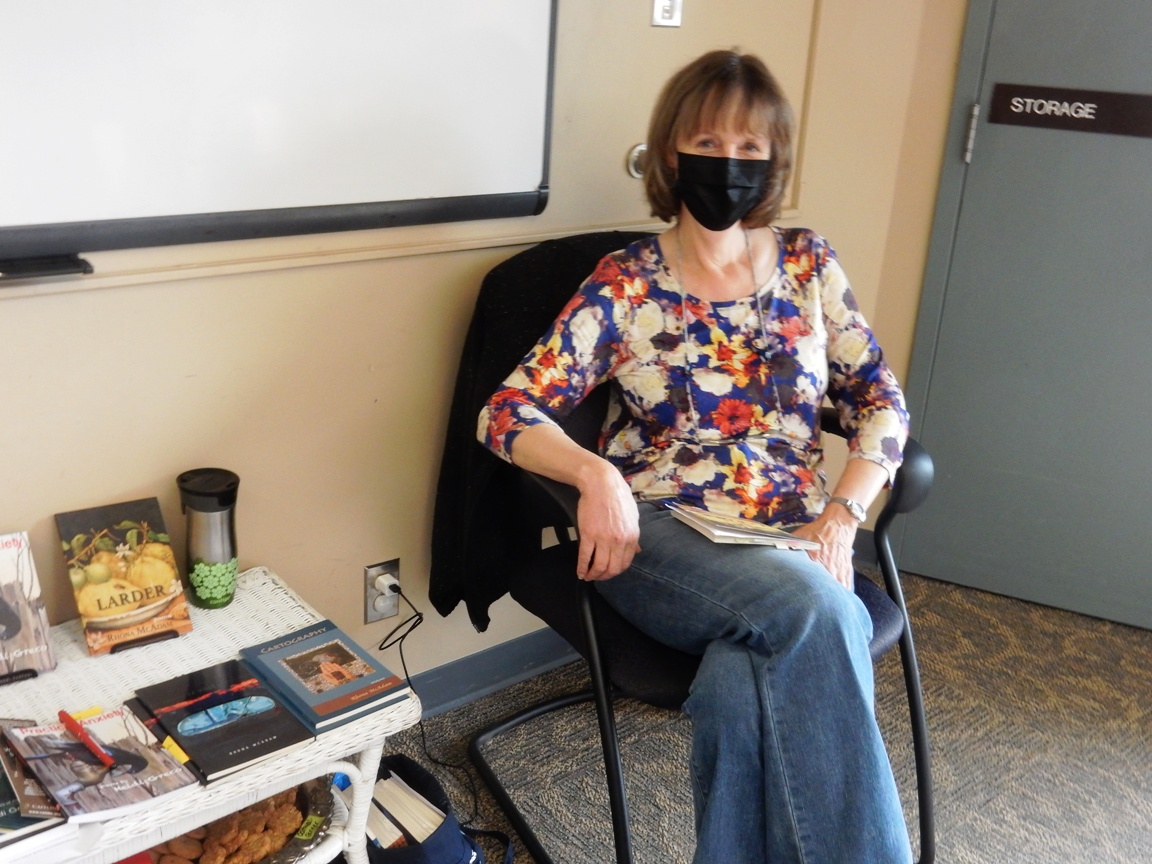
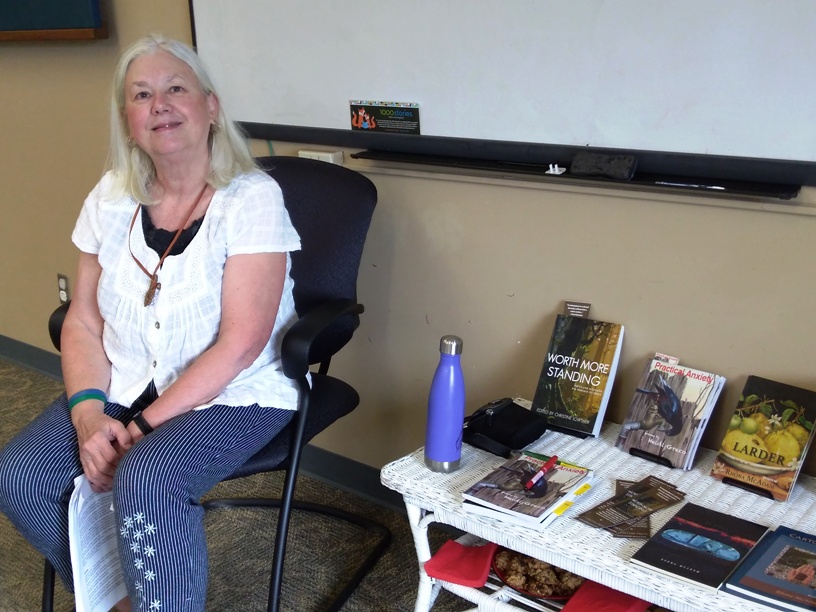
I was delighted to have a chance to read with local (Surrey BC) poet and civic treasure Heidi Greco, a fellow foodie and activist in all good causes. We decided to celebrate National Organic Week with a poetry conversation at White Rock Public Library on September 17.

Our poetry extended into a bit of baking, and we provided cookies as a reward to our delightful audience.


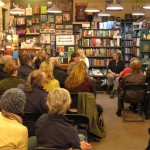
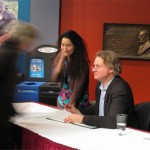
We made it a poetry conversation, alternating poems and thoughts on trees, food and matters ecological. Was busy reading and talking so not much time for photos, but here we were beforehand!

Oysters, Abattoir, perennial food crops and Eco-Fair

All blissfully quiet at my end of the Gorge these days, now that Craigflower Bridge has been closed for rebuilding and traffic re-routed. I was gratified to learn that not only were there viable oyster beds in the Gorge, but the planners had taken steps to relocate and preserve them so that the construction does not do away with this rare species (for the next eight months or so). These are our native Olympia oysters, not the Pacific upstarts introduced from Japan that now dominate the West Coast’s shoreline and oyster farming operations. I happened to pass what I assume to be the relocation action as it was unfolding and snapped them at it.

Meanwhile, I’ve been spreading myself thin in recent weeks, trying to keep up with different social media (Twitter, Facebook and most recently Pinterest), working on some of my own writing, and going nose to grindstone with my holistic nutrition studies. We’re deep into preventive nutrition this month, studying up on nutritional approaches to digestive, blood sugar, cardiovascular and arthritic conditions. Quite a ride.

On Friday I returned from Nanaimo via Salt Spring Island where the community abattoir was officially launched with an open house in the drizzly rain. I’d visited earlier this year but was interested to have a look at the finished structure. There is more work to be done if larger animals (cattle) are to be slaughtered here, but it’s up and running for poultry, rabbit, goat and lamb. It’s going very well so far: an arrangement with a local farmer has meant all the offal and skins are being composted, which has taken one of the main economic headaches for an abattoir out of the picture, and has solid community support – no small achievement for this kind of business.

Saturday I took in a workshop on perennial fruit crops at ALM Farm in Sooke, in which farmer Jordan took us for a tour of the farm’s apple, pear, fig and plum trees, kiwi vines, strawberries, raspberries, rhubarb, Jerusalem artichokes, hazelnuts, gooseberries, herbs and asparagus before I had to whistle off to take my place behind my books, alongside the Haliburton farmers at the Reynolds School Eco-Fair. It was a lively and well-attended event with speakers including Green Party leader Elizabeth May and Brandy Gallagher from O.U.R. Ecovillage, and lots of well-chosen information tables, including Pedal to Petal, LifeCycles, Growing Young Farmers, Organic Gardeners Pantry, BC Sustainable Energy Association and more. The Hali stand was peddling organic food boxes (CSA subscriptions), seeds, plants and good advice.

Clay, cordyceps, clams and cucumbers

Last weekend’s permaculture course covered soil (with Christina Nikolic of Gaia College, SOUL and The Organic Gardener’s Pantry), fungi and animal husbandry. We started things off with a bit of digging in the garden to collect our soil samples, which we scooped into flat-bottomed jars, topped up with water and commenced agitating to thoroughly break the soil finely enough to settles and show its layers. We were advised to scrape aside the organic matter and just go for the soil. It was going to take some time for everything to settle – but we began to see the surprising truth of Christina’s observation that even where we thought we had hard clay soil, chances were it was simply compacted and the actual clay content would not be that great. The colour of the soil reflects the amount of organic matter, with darker samples being higher in humus, and lighter ones tending towards higher clay content… no bad thing since clay holds water and nutrients better than silt or sand.

Water made up most of the jars, and the layers then settle in this order:

  • (small amount of organic matter floating on top)
  • water
  • clay
  • silt
  • sand

Christina takes a more benign view of soil than most instructors. Knowing your soil type does not mean you have a problem to manage, she says, and nor is there any point to spending money on soil tests. Instead, focus your energies on building up the organic matter in your soil (even a great soil probably only comprises about 10% organic matter) which makes it more able to absorb and retain water and nutrients.

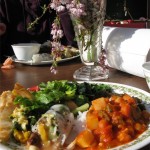
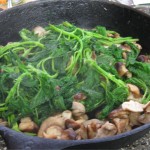
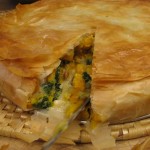
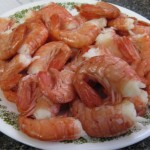
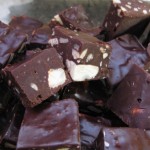
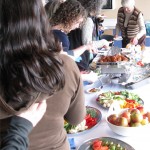
There followed one of our increasingly excellent potluck suppers, which we were delighted to be able to eat on the sunny patio, and which included such local delicacies as steamed nettles with shiitake mushrooms, kale & squash filo pie, mango spring rolls and spot prawns… but the vegan fudge shamelessly stole the show.


After our giant feed, we talked about different ways of growing mushrooms – from inoculated logs (actually bagged bricks of substrate made from grain or wood chips – these are widely

Mushroom stem butt

available here nowadays at farmers’ markets), from spore prints or even stem butts. We were told that mushroom logs can be broken up and used to inoculate mushroom beds made in various ways in the garden, or rehydrated to fruit multiple times, as the mycelium web runs throughout the substrate. By far the most entertaining moment came when Brandon told us about the cordyceps mushroom that infects carpenter ants – compelling them to take to the highest branches of trees, and killing them at the moment their mandibles bite into a leaf, at which point the fungus grows from their bodies. It is a method of pest control (carpenter ants and termites) described by the mushroom guru Paul Stamets whose TED talk also discusses how to use mushrooms to clean industrial waste and for so many other purposes – medicinal, fuel and more – that he proposes preserving old growth forests as a matter of national defense. David Attenborough has documented cordyceps too:

I finished my weekend on Monday evening when I moseyed over to Vancouver Island University to attend a discussion about local food which featured John Ehrlich (of Alderlea Farm) who has a 300-subscriber biodynamic CSA (veg box scheme), and Guy Johnston, who is starting his second year of a Community Supported Fishery offering salmon, prawns and octopus. We broke for a mid-session snack offering local foods including Natural Pastures cheese – but one of the points earlier made was proved to us: in order to offer us local food, the organizers had to buy it and bring it into the meeting. This college with its cafeteria downstairs and a well-established culinary arts program is tied like many institutions to trade agreements and supplier contracts that do not address the provenance of ingredients. In order to assure a local food supply, local food producers need local consumers, and as has been often said most of our food is made up of cheap imports purchased from off-Island wholesalers.

Farmer John Ehrlich
Fisherman Guy Johnston

Spring at Haliburton Farm

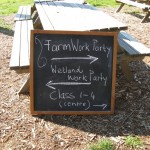
Managed to get to my first Haliburton Farm work party on Saturday. A lovely day for planting spinach, which we then covered with row cover to keep the critters out and give it some warmth while it grows. Might be the solution for my own garden where the leafminers dine well on all my leafy greens. Meanwhile, back in the kitchen Naomi had whipped up one of her nourishing soups for lunch, which we ate with some bread from her local organic bakery, and then ended the work party early. We had to clear out to make room for the new course running there, Growing Food in the City, but that left the better part of a (finally) sunny afternoon to play in our own gardens.


I was delighted to come across this clip of local TV coverage showing off Haliburton’s farmers. Thanks to Permaculture BC for posting it.

Of those featured, some extra info: Farmer Derek is in the process of taking over Carolyn Herriot‘s organic seed company, Seeds of Victoria, and Farmer Ray will be showing his considerable skills in compost building to attendees of the next COG-VI meeting that takes place at the farm next week (Canadian Organic Growers is another endangered species due to funding cuts – membership an inexpensive and hugely worthwhile way to help support organic farming – join today!).

Catching up: farmer-writers, DIY publicity, food swap & Wade Davis

I had the chance a couple of weeks ago to mosey down to Cadboro Bay Books to catch Farmers at the Mike – an evening with organic farmer-authors Heather Stretch, Robin Tunnicliffe, Rachel Fisher (who make up Saanich Organics) with special guests Mary Alice Johnson and Lana Popham. They were promoting All the Dirt: Reflections on Organic Farming and talking about the life and times of organic farming. It was a packed house and a congenial time.

I then had a chance to check out The Writers Union of Canada‘s professional development workshop, How to Be Your Own Publicist, which was outstandingly good. Heavy on use of social media, it also gave some good practical ideas for promoting books and relationship-bulding with readers. I’m not sure how far I want to go with social media but I’m pretty much in there for now: with this blog, a facebook page and twitter account I think I have as much as I can cope with. I took a look at Pinterest which was touted as the next new thing but swiftly went off it when I learned you could seemingly only access it through Facebook or Twitter and that it wanted to take some control of these media: most off-putting was its statement that if I joined it through Twitter I’d be giving it permission to see who I follow, and have me follow new people; update my profile; and post tweets for me. Which rather defeats the point of having one’s own profile and posting one’s own tweets, I would have thought.

Then it was on to Nanaimo for permaculture classes. I’m enrolled in a permaculture design certificate program that will keep me busy  until mid-May. I’ve heard bits and pieces about it – knew some of the permaculture principles, had seen bits and pieces about permaculture’s founders, Bill Mollison and David Holmgren – but wanted to get a more coherent picture. This course was perfectly timed I thought: every other weekend, so time to think, absorb, apply; and running through the spring when there is the possibility to put some of the ideas into action in one’s own garden. Though the Bullock Brothers are held up as the gold standard for permaculture training, their courses are residential, in a two week block in the middle of summer when it’s hardest to get away.. and I’m a bit past wanting to camp for the duration. So I’m happy with this, and Javan Bernakevitch is proving an excellent facilitator. We did mostly introductory work, getting to know one another (16 in the class now) and some exercises in familiarizing ourselves with zones, sectors and elements. This week we’re getting into the compost, so that should be fun.

The course is being held in the Pacific Gardens Cohousing Community which is a housing concept I’d been interested in for a while, so it’s good to have a chance to really get to know it and see how things work there. It’s only been going for a couple of years and is in a pretty wonderful location. I like the common spaces – workshop, crafts room, music room – and most importantly, the compost, orchard and raised beds for food production.

I returned in time to host a food swap which yielded some fine bounty: freshly ground garam masala spice mix; freshly ground flour; fresh farm eggs; and some canned peaches and a chocolate-beet-hazelnut cake.
Wade Davis spoke to a packed house in Victoria last week – he filled the IMAX theatre in his home town, on a tour to promote his latest book and cause, The Sacred Headwaters. It’s about the northwestern part of BC where the Skeena, Nass and Stikine Rivers originate. All are important salmon rivers, and the tribal homes of the Tahltan First Nation who hunt and trap in the area. There is also abundant wildlife – grizzly bears, stone sheep and Osbourn caribou – and unfortunately for all of the above, abundant minerals including copper and coal.

Imperial Minerals has already got the go-ahead from the BC government to run the Red Chris mine, (open-pit mining of copper and gold) in the area for 30 years; now Royal Dutch Shell wants to extract coal bed methane gas there. Both operations are of course hugely contaminating. The Red Chris mine will be turning pristine lakes into toxic tailing ponds, and methane gas extraction involves drilling and fracking, which means prolific water use and contamination.

The Skeena Watershed Conservation Coalition offers some ways to get involved in asking Shell to back off:  petition, letters and actively joining the campaign.
Visiting Cuban agronomist at UVic this Friday, with music

The University of Victoria’s Geography department with the Office for Community-Based Research, the SOGS (Society of Geography Students), and the department of Sociology are pleased to co-present:

Travelling from Agri to Culture:
The secrets of Myko on Rural Innovation in Cuba

by Dr. Humberto Ríos Labrada

Friday, March 2nd: 3-5pm

Geography dept, Social Sciences and Math Building, Room B211

3-4pm The talk: This special Friday colloquium will illustrate Dr. Rios’ work through a musical journey telling the story of Myko – a folk musician and an agricultural sciences PhD student traveling the Cuban countryside as the country switched from industrial farming to ecological agricultural practices.

Dr. Humberto Ríos Labrada was the 2010 recipient of the Goldman Environmental Prize, one of the highest distinctions for grassroots leaders of environmental initiatives.  Working towards increasing biodiversity and resilience in agricultural systems, Dr. Rios’ work includes participatory plant breeding and farmer to farmer knowledge sharing as key components.

All undergrad, graduate students, faculty, staff and community are invited to attend the talk and join in the music hosted by Humberto Ríos Labrada and his son Humberto Ríos Rodriguez this Friday afternoon!!

4-5pm – MUSIC Jam!

Bring instruments !  Some refreshments provided !

Check out a Youtube video of Dr. Rios’ work.