Skip to content

bees

Edible Gardens, Terra Madre Day & Digging the City on TV

I was over on the Mainland earlier this week and spent three days enjoying many things, including a tour of some urban agriculture in practice, Terra Madre Day celebrations Vancouver style, and a few minutes in the public eye to promote Digging the City.

On Monday afternoon I was delighted to be able to meet up with Emily Jubenvill, community liaison with the Edible Garden Project in North Vancouver. They use a mixture of community gardens and corporate partnerships to grow food, teach gardening skills and increase the amount of food growing going on in the community.

They’d planted an urban plot behind a skateboard shop which demonstrated a couple of the problems that can arise with urban growing. The shop’s ownership was about to change, and so the garden’s future is as uncertain as on any borrowed land. This is something that affects SPIN farmers and other farmers working under leases rather than secure tenure: it determines the kind of crops they can grow and the amount of long term planning they can do. And then there’s urban vandalism: a ripped polytunnel and a few torn plants here; earlier at the community garden we’d passed a sign asking people not to steal the vegetables.


One of EGP’s high profile projects, Loutet Farm, was built on the underused edge of a city park with considerable help from private and public funds. It’s a place for workshops and demonstrations, but mostly it’s land for growing food, which can be sold to raise money to fund green jobs in the community. Its success, Emily thinks, is due in large part to the fact they can pay a farmer to manage it: anyone who’s struggled with the ebb and flow of energy and funds around community garden management – or any other social enterprise run by volunteers – will understand what a big deal it is to be able to have someone in charge! On our visit the drainage was being revamped with the help of some grant money and a lot of free muscle. An apiary was under construction as well: this being North Vancouver, it has to be bear-proof: the sturdy mesh cages for the hives will be sunk into concrete before they’re stocked next spring.


Monday evening was of course Terra Madre Day everywhere, a global celebration of local eating. As I was missing the carnivore culinary book exchange that Slow Food Vancouver Island was hosting, I was grateful to catch wind of Slow Food Vancouver’s  celebration, which took place at Chill Winston in Gastown. Chef Derek Bothwell is a hand-crafter if ever there was, and brought many of his wares for us to sample. Ingredients included house smoked steelhead, bison (he’s an Alberta boy, originally), a pretty amazing lentil caviar, and local pork belly, with some salt caramel chocolates to finish. We ordered some nice limey crab cakes, smashed potatoes and wild mushrooms to tide us over in between.

Tuesday I made my television debut on CTV with a short spot on a noon show where I was grilled on food security in Canada. You can still catch my moments here.

Bee-gone cruel world

Bombus vosnesenskiiAs mentioned previously I returned home to find my Bombus box deserted and only a couple of sickly bees still staggering about under the bedding.

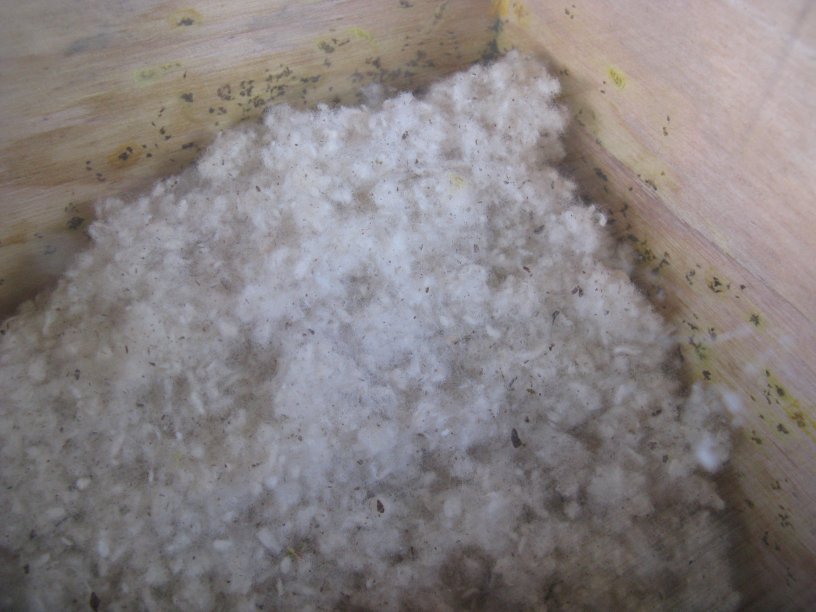
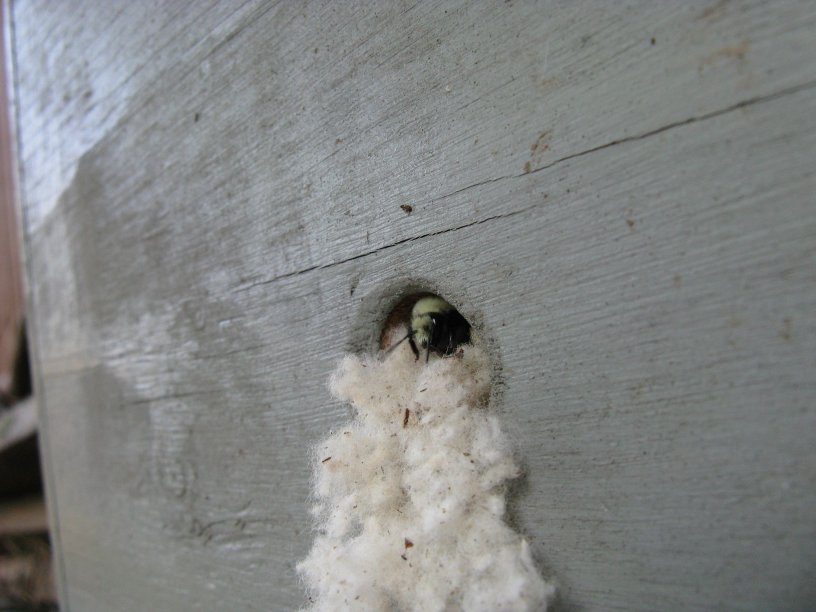
Mine were Bombus vosnesenskii or yellow-faced bumblebees, and I’d lured them into the box in the spring by placing it their path after I’d noticed the queen bumbling around my wood pile with the determined air of a house hunter. The box came pre-bedded with cotton mattress stuffing, and the first sign that the box was occupied was a spill of bedding out the entry hole. When I lifted the lid to look, the bedding seemed mounded up, and there was, well, bee dung on the walls. As soon as the lid was open, a bee shot out the front to ask what my business was, and after a while I noticed there was always at least one bee stationed at the entrance, with workers coming and going around her.

Bombus box entranceOccupied Bombus nestBombus vosnesenski


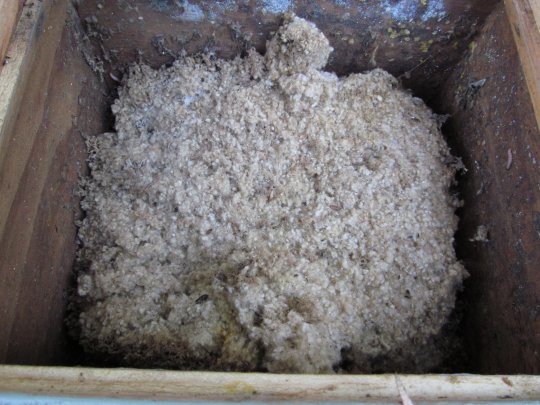
The hive was thriving up until the time I left, in late July. When I returned last weekend I noticed there was no bee in the doorway, and when I poked around inside, there was no more activity, and the bedding was grey, the walls were grey, and there were moths and maggots crawling around.Abandoned Bombus nest

I asked my friendly neighbourhood entomologist (every neighbourhood should certainly have one!) for advice. He said it had happened to him as well sometimes, and put me onto a bumblebee specialist, who swiftly replied with the following comforting words:

That’s a pretty standard finding towards the end of the colony.  There are many parasites that take over once the queen is done laying her eggs and the males and new queens leave the nest.

Well, comforting for me anyway. I had seen a yellow-face bopping around in my tomato flowers just the other day, so I knew they were still about, and I hoped that the tomato-lover had been one of the hearty offspring of “my” hive.

In truth I was a tiny bit relieved they had gone as they were quite frisky, if not downright aggressive: for some reason one would always emerge to dive bomb me when I went into my compost bin for any length of time, and then zoom around in the bin while I was trying to dig it over. I finally had to resort to wearing a headscarf if I wanted to dig things into the pile to keep them from tangling in my hair.

But then yesterday as I was starting to clean the box out – all maggoty and grey and sticky – I paused at the compost bin and darned if I wasn’t bopped in the head by a bombus. A big one, a queen I guess, as she was about three times the size of the workers who’d been hanging out the door in days gone by. She flew around and around the space where the box had been until I ran and fetched it. She entered and quickly backed out, then wandered around the front as if checking to be sure it was her own front door. Put her head in the door again, backed out, and so on for five or ten minutes,  until she finally gave up and flew away.

Wrecked comb+Bombus corpsesBombus vosnesenski QueenBombus vosnesenski queen


I emptied the box, washed it and set it out on the grass to dry. I’ll bleach it later. But as I was climbing the ladder to the apple tree nearby, darned if she didn’t buzz me again. Clearly she has assigned blame for the whole sorry state of affairs, and I am the villain. But how do you apologize to a bee?

Here’s a good video showing the amazing things that happened in bombus world, under all that cotton fluff.. for a few months anyway.

ALECC 2012 – Space + Memory = Place (days 4&5)

Saturday morning we repaired (by schoolbus) to the beautiful spaces at Okanagan College, where the luckiest presenters spoke in the curvy pod at the top of the stairs, but really everything was lovely there, including a fine breakfast of fresh muffins (featuring Okanagan apricots) and lots of fruit.

Okanagan College PodBreakfast fruitFruit+muffin


The best overall session of the conference for me was one called Looking Away, Looking In, Looking Under: Perspectives on the Okanagan on Saturday morning, which featured a lively talk by Kelowna’s own George Grinnell on Patrick Lane’s novel Red Dog, Red Dog which is set in the Okanagan; followed by an entertaining if depressing look at development by another local speaker, Daniel Keyes (White + Green Space Invader: The Rhetoric of Development in the Okanagan) – check out the toe-curling promotional video. Poet, blogger and essayist Harold Rhenisch finished things off with Caraway & Pippins, a luscious essay that circled around the Newtown Apple (each “a tiny earth, a green planet”) as an emblem of the cultural and agrarian changes wrought by commerce and industrialization on the Okanagan.

The Saturday junket to the farmers market was a brilliant idea, but much too short a visit. No sooner had I downed my black bean-chickpea quesadilla than I was sprinting up and down the aisles, power-shopping for produce – a giant fennel bulb, a jar of local salsa, a box of sweet yellow cherry tomatoes – the latter from Curtis Stone, who had mentored another SPIN farmer at the market, Janice Elliott – and trying to find an organic peach grower.

Kelowna Farmers MarketKelownaFarmersMarketKelowna Farmers Market


I had come to the Okanagan with a mission: organic peaches were on my mind. As you may know, dear reader, peaches are right near the top of the Dirty Dozen, a couple of fruits below apples, and so one of the best places to put your money when buying organic produce. I’d been warned that I might have to make a side trip to Cawston or Keremeos to find organic growers, as most of the Okanagan fruit in the Kelowna area is chemically produced. At the 11th hour (12:58 in fact, since the stallholders start packing up at 1pm) I was pointed to the Fruit Guy, Michael Welsh, who grows without pesticides and sold me a 20lb case of beauties (he also writes very fine poetry, according to Nancy Holmes, but I didn’t know that at the time.) The catch was I had to drag it back on the bus and get it back to our residence so I could pack it into the car for the morrow’s trip back to Victoria.

Mission accomplished, fruit in hand, grateful to be back in the cool of the building, I settled into an easy chair in the pod for the last Saturday session, Unmemoried Heights? Thinking In/With the Rockies, starring Gyorgyi Voros who took us on an excellent adventure: Wallace Stevens‘ hunting trip to BC; Tempest Emery who talked about landscape and memory in Sid Marty‘s work; and Benedict Fullalove who invoked a host of odd characters, from Rupert Brooke to Viscount Milton & WB Cheadle and Howard O’Hagan before the clock ran out on his Unmemoried Heights: Historicizing the Rockies.

Sunday morning began with probably the best yoga session I’ve ever attended, at 7am on a sunny, dewy lawn overlooking the valley. After that, temperatures already starting to climb, came a blur of packing and vacating and hanging about waiting for the most welcome coffee, fruit and pastries which arrived mid-session: our saintly panel chair released us to seek refreshment mid-panel, while being entertained on the subject of Generation A by Richard Pickard, Cate Sandilands and Jenny Kerber.

I had to depart after that session in order to get to the ferry with reasonable confidence of getting home before midnight; the traffic was horrendous, stop and go for an hour or two on the baking highway beyonFerry, sunsetd Hope, until I got nearer Tsawwassen and those welcome sea breezes. Ironically, given the last session of the conference, the saddest news awaiting me when I returned to my garden later that night was the death of my bumblebee colony. My local entomologist can’t be sure what the cause was, just disease of some kind he thinks.

Mason bees in the summer

Mason bee (male)By now all my Blue Orchard Mason Bees (Osmia lignaria) are finished: this year’s adults have gone to the great flower garden in the sky and the next generation is tucked up in its nesting tubes waiting for spring.

It seemed to me there were not as many this year as in previous years, perhaps because of the cool damp spring, and perhaps because I removed the popular block-style bee homes. These were a quick fix for the first couple of years, when I began trying to attract the bees to my garden, but I was persuaded that it would be better to switch to cleanable versions. These were pretty much impossible to clean because as soon as a tube was vacated, someone else came and filled it up again. I tried putting the house under a cardboard box with a hole in it, the theory being they’d leave and be unable to find their way back, but I was also told the tubes can provide homes to parasitic wasps and other insects with different life cycles than the mason bees, so you never know who might be sleeping in there when you dunk it in bleach solution (as I’d been advised to do).

Block style mason bee house 1Block style mason bee house 2Tube style mason bee house


I kept my tube home (made from a plastic pipe with an angled front to provide some protection from rain) up on the fence, adding fresh tubes rolled out of advertising flyers, and moved my Hutchings Bee Condo to the woodpile where it would be protected from the elements.

I’d read that the houses were best positioned on an east-facing wall where sunlight could warm them, but my bees seemed perfectly happy to populate the west-facing, shaded condo next door to the Bombus (bumblebee) house (where a tribe of feisty Bombus vosnesenskii have settled in for the season)

Hutchings bombus box Bombus vosnesenskii


but a gratifying number of tubes have been filled and I’m going to look after these guys for next year.

Hutchings mason bee condo Bee condo viewing panes


Given the handy viewing panes that cover the laying tubes in a Hutchings Bee Condo, I’ve been peeking every so often to see how things are progressing and was fascinated to see the eggs had mostly hatched and the larvae were busy pupating.

Mason bee egg & larvaeMason bee larvaMason bee cocoon


They’ll live in their cocoons until next spring. I missed the boat last year, but this year I’ll be joining the many other gardeners who wash the cocoons in the winter – some use water, some  use water and bleach, and some use sand – to free them of mold, bee turds and mites (Krombein’s Hairy-Footed Mite is the enemy of this wild bee; a different sort of mite from the one that plagues honeybees).

Spring on the wing

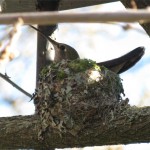
Spring is erupting in all directions. The Anna’s Hummingbird (Calypte anna) nest that graces my fence has very recently produced three newborns and I’m looking forward to watching their progress (and seeing how they all squeeze into a space that’s probably two inches across at most). It’s still damp and chilly here so the mother is spending a good deal of time warming their hairless, featherless bodies. I knew they were big on nectar – hence their value as pollinators – but hadn’t realized they also chow on insects. I’ve hung a feeder nearby that should (for now) be safe from the ants who overran it last time I hung it out. I’ll have to make an ant moat if they become a problem again.

Speaking of moats, I’m intrigued by the idea of a chicken moat. Not a chicken keeper myself, but I’m working on a group project around chickens for the Permaculture Design course I’m taking.

Other airborne creatures have been in the news lately. Meli sent me notice of the headline item that bees are being adversely affected by pesticides. I am not quite certain why it has suddenly become headline news that if pesticides kill insects, and bees are insects, then bees are going to be harmed by pesticide use, but I suppose it does not hurt to belabour this important point. To which should be added the related point that pesticides will also harm beneficial insects besides bees, as well as the higher life forms (hummingbirds, for example?) that feed on those – whether by poisoning them or by removing a food source.

Let us all (who are within geographical reach) celebrate our wisdom in these matters by heading off this Saturday to enjoy a pesticide-free work party at Haliburton Community Organic Farm.

Vancouver’s urban farms

Time, food and agriculture never sleep, at least not where interesting stories are concerned.

There’s a link here to a rather beautiful brochure  shows that shows you who’s growing what and where in twenty-six urban farms in Vancouver.

And a nice story about the loneliness of the the farming life which I suppose applies to urban farmers as well; it offers a reminder that we are often in too much of a hurry, and too accustomed to shopping anonymously for food, to thank those who provide it.

And some good news for Victoria food shoppers, with a new whole/local foods store opening, conveniently situated near the wondrous Capital Iron.

A wrist-slapping lesson in public consultation for Stephen Harper whose decision to bring to fruition his longtime plan to dismantle the Canadian Wheat Board was declared illegal by a federal court.

And an opportunity for British Columbians to participate in a public consultation on a province-wide ban on cosmetic pesticides is open until December 15. Anyone who cares about the continuing health of honeybees and other wild pollinators, other species in the food chain/eco system, as well as pet-owners and parents should take a moment to speak in favour of this ban.

The soil is the thing: the EU Soil Report warns about what the soil Soil: Worth standing your ground for from The European Environmental Bureau