I’m in Vancouver at the moment, so will be missing the annual Seedy Sunday that my community food security group will be holding this weekend. It’s lower key than some of the fancy schmancy ones we used to enjoy in the beforetimes; no speakers or commercial vendors, just a good honest seed swap. Most of the seeds are harvested from local gardens, meaning they are well adapted to local (though ever-changing!) conditions and pests, and are open-pollinated, aside from the surplus from seed packets retrieved from drawers and cupboards.
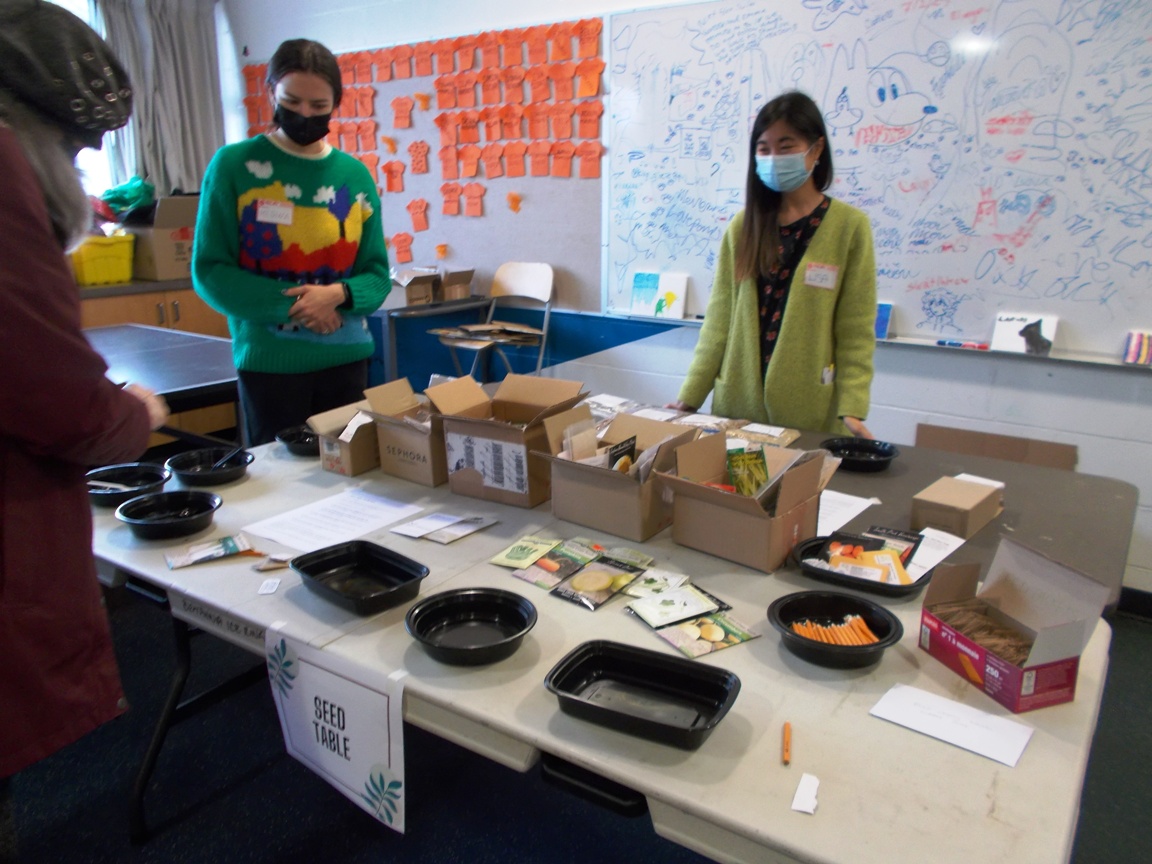
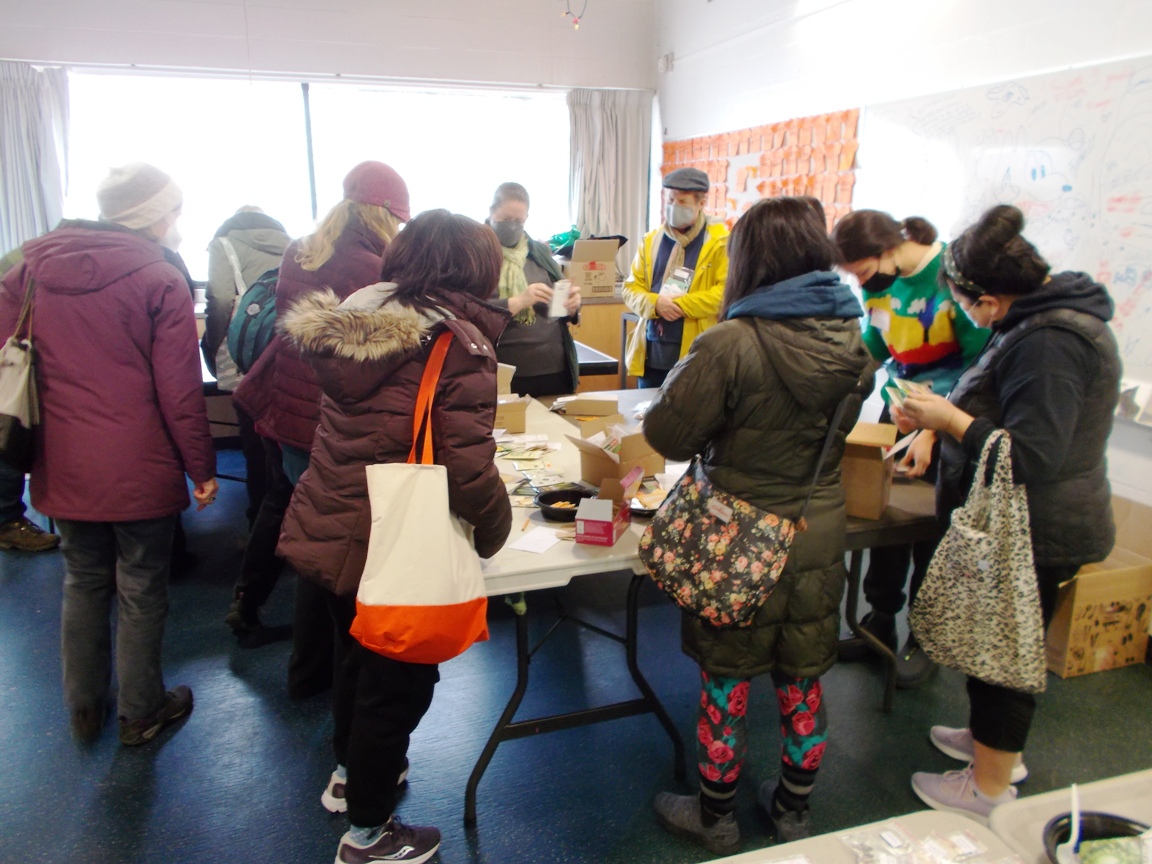
However, making a pre-emptive strike, I irresponsibly wandered into a community seed swap here last month, at the Britannia Centre, on Commercial Drive. I say irresponsible given the quantity of seeds I have in my seed box back home… but I did bring contributions (parsley and cherry tomato seeds). Came away with a few packages of some new and interesting things to try: Ethiopian kale; Tokyo long white onion; Flamingo Pink Swiss Chard; Scarlet Nantes Carrots (well, I’ll try again!).
The seed table.. before!The seed table… with seed-lovers!
Well – long in the preparation and now over! Some 450 people from around the province registered for BC’s Virtual Seedy Saturday, and there were audiences of around 150 for each session.
I attended most of the events, with growing admiration for the Farm Folk City Folk team’s stamina. They were on hand at every session to keep on top of technical issues, monitor the chat and field the questions, so speakers were well supported.
The live sessions were not recorded. These zoom days we have become accustomed to having recordings at our disposal if we cannot attend an event. The organizers explained, when this came up on the last day, that a great deal of thought and discussion had gone into the decision not to record sessions. One reason was simple logistics: how to distribute recordings after the fact to participants. Another was permissions: the speakers would have had to consent to having their images and content shared, potentially to people other than those who had registered.
And my feeling is that the sense of constant availability really knocks participation down, since many people (guilty!) do sign up for things and then don’t attend, thinking they will watch later. But this means fewer people in a live audience – which affects the energy in the ‘room’ and means some questions don’t get asked or answered.
Among my favourite sessions, though, and there were many…
Vandana Shiva kicked things off on Friday night with a fiery talk on the importance of seed and food security, and the value of local action for both.
On Saturday The Master Gardeners Q&A was lively and well-attended, with MGs from around the province, able to discuss garden issues that differ hugely in the wide range of growing climates in this province. Kristen Miskelly of Saanich Native Plants (atHaliburton Farm) gave a great overview on the value – environmental, cultural and ornamental – of native plants for gardens and restoration. Saturday’s screening of Gather was a pleasure – I’d long wanted to see this film on indigenous foodways.
On Sunday, a panel on invasive species gave some helpful reminders on the perils of random seed and plant sharing, an update on problematic species of plants and insects, and recommendations on contacting local experts to report suspects when spotted. There was Bob Wildfong‘s (Seeds of Diversity) helpful talk on how to preserve seeds and build a usable local seed collection of any size. And Connie Kuramoto gave thorough coverage of seed germination and healthy soil.
Some months ago, when the idea for a virtual event was mooted, I was talking to Carla Hick, one of the organizers from Farm Folk City Folk. She said they were open to all kinds of ideas, and the word “poetry” crossed her lips. I jumped on that and offered to organize something.
I conferred with a couple of people – Yvonne Blomer, who’s well connected in the Island poetry community; and then Nancy Holmes, who teaches at UBC-Okanagan in Kelowna and knows many of the mainland and BC Interior poets.
It was Nancy who put her finger on the key issue: a regular poetry reading would not do, as our audience was not a literary one, but made up of farmers and gardeners whose focus is seeds, plants and the products of horti- and agriculture. She suggested something more multimedia. “Why not poetry videos?” she mused. Inwardly I cringed – learn another thing? Would there be enough BC poets writing around our subjects and comfortable with the technology?
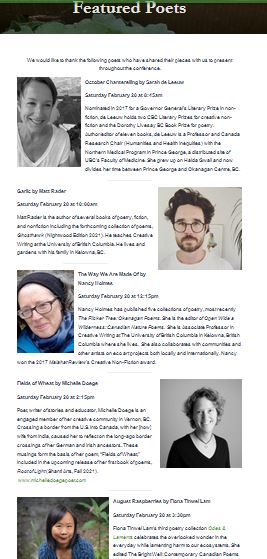
Turns out there were! Farm Folk City Folk reckoned we’d have room for 10 videos, scattered through the weekend’s program rather than posted as one long piece. In the end we’ve got 11 poets represented, and here they are, with the names of their pieces and the date/timing in the program:
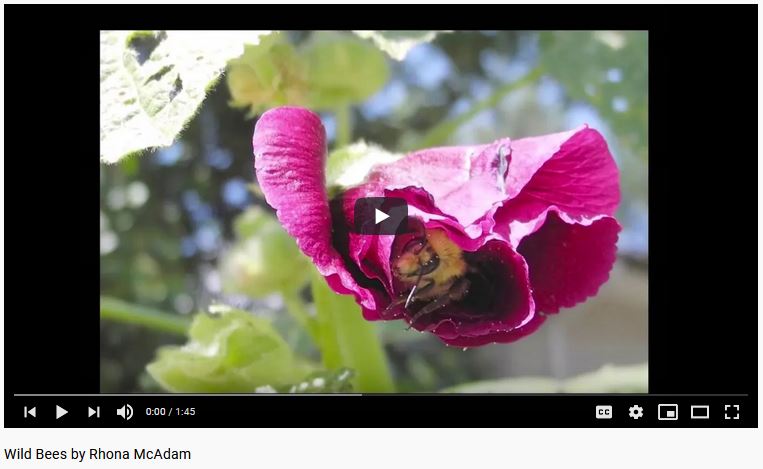
Sarah de Leeuw – October Chanterelling – Sat Feb 20, 8:45am Matt Rader – Garlic – Sat Feb 20, 10am Nancy Holmes – The Way We Are Made Of – Sat Feb 20, 12:15pm Michelle Doege – Fields of Wheat – Sat Feb 20, 2:15pm Fiona Tinwei Lam – August Raspberries – Sat Feb 20, 3:30pm Yvonne Blomer – Rhubarb, Death in a Garden – Sun Feb 21, 8:45am Renée Sarojini Saklikar – Grandmother’s Instruction, Sun Feb 21, 10:05am Shelley Leedahl – Sometimes – Sun Feb 21, 11:15am John BartonMalus Pumila – Sun Feb 21, 12:30pm Rhona McAdam! – Wild Bees – Sun Feb 21, 1:45pm Cornelia Hoogland – Seaweed, Sun Feb 21, 3:45pm
All the poets used their own poems and created new videos for this program, so check ’em out! Registration for the weekend is only $5 (or more if you want to donate towards a share that goes to the organizing nonprofits). See you there!
I’ve just been reading Thor Hanson’s delightful book, Seeds, which delves into the unanswered questions we have about seeds. Why some of them are crazy large and impenetrable, like coconuts or brazil nuts, while others are almost too small to see: petunia seeds, arugula, amaranth. They have touched human evolution in every possible way. No question they have, as the subtitle puts it, “conquered the plant kingdom and shaped human history.”
So, mulling this over and with Victoria Seedy Saturday coming up in less than a week, I’ve been thinking about seeds a lot. Not just the seeds of wisdom I’ll be sharing in my talk (Superfoods in your own backyard) but the overarching importance of seeds in our lives.
One of the most valuable lessons I’ve learned over the years is how important seed-saving is. And like everything in this beautifully complex life, it’s a complex business. Or maybe a simple one. You can take it to any length you’re up to – from isolating and hand-pollinating squash flowers to simply shaking the yield of a leek’s seed head into a paper bag to sort out later.
In our neighbourhood we have a community seed bank. It’s a collection of seeds that we’ve grown for several years in this area, harvested and deposited into containers that a couple of our neighbours hold onto for us. It’s food security for times of disaster. It’s also a living record of seed evolution in this microclimate, which is changing as surely as all the others on this planet. And it’s a bond between those who grow and eat and keep our back yards fertile today with those in generations to come.
So many heritage varieties of garden vegetables and fruits have been lost as the seed companies seek to narrow their offerings down to profitable and popular lines. Our work with the community seed bank helps to maintain and develop our local seed stock. And our gardens help to maintain the soil that nourishes those plants, because that is part of a culture’s heritage too.
For as much as we know our farmland is being steadily lost to development, so are our backyard gardens, as houses are torn down to make way for multi-occupancy dwellings. You’ve seen it as you walk around your own area. The topsoil is scraped off and taken away, and what’s left is clay, gravel and fill. Mostly that’s covered with concrete. That irreplaceable topsoil is sold off, its unique and localized fingerprint lost along with the micro-organisms that give it life and nourish the plants that have grown in it for millennia.
We can’t do much about the scale of development and population growth, we individual home-owners and gardeners. But we can look after our soil while we have it, and encourage others to do likewise. Some of that wisdom, some of those seeds, will follow us down the years to feed future generations.
Already I am falling behind. Weekend before last was a nutty, seedy time, marked by intermittent rainstorms and – for my part – a missing battery from my camera, so the photos are few.
On the Saturday morning, some of the Gorge Tillicum Urban Farmers went out to Bailiwick Farm, where Barbara Brennan led us round her nut tree orchard. We went nose to nose with a herd of alpacas, dodged the hanging fruits of a bumper kiwi crop, and got some honest advice about how not to make one’s fortune from growing nuts, .
Piñons , aside from being slow growing, yield sticky cones that are messy to harvest and whose nuts are difficult to extract and hull. In addition to which, despite advice to the contrary, the juvenile pines did in fact turn out to appeal to the tastes of the resident alpacas, so they were looking a bit nibbled.
Hazelnuts, on the other hand, are easier to grow and harvest. Maybe a bit too easy: the squirrels and crows got Bailiwick’s entire crop this year. The walnuts have done pretty well, and although the crows and squirrels helped themselves, there was still a fair crop left. Unfortunately some of that had been hit by a blight, so the Brennans were going to have to sift through the nuts that they had managed to harvest. And walnuts are not a huge money-spinner either.
The crop that was doing well for them was kiwi, which grows well in our climate, and our amazing growing season this past summer had yielded an excellent crop, still a couple of weeks from harvest. Kiwis store well, too, so can be sold right through the winter.
On Sunday I went to Fernwood to join in the Seeds of Diversity Canada annual meeting which marked the organization’s 25th anniversary. It’s been an important presence in this crazy world where seeds have been removed from the natural order to become patented commodities, and there was much passion in the voices of members invited to pass their issues on to the board.
I attended a seed saving workshop in the morning, led by the very able Michelle Smith, from of Northwind Farm, Cape Breton. She talked about the value and principles of growing open-pollinated seeds. This practice offers plants a gradual adaptation to local conditions, strengthens the plant lines (since you save only seeds from the best plants) and frees growers from having to purchase hybrid seeds (which don’t grow true if harvested and saved).
Of course it’s not a simple process, since plants can cross (squash and brassicas for example will cross readily within their respective plant families) so there are planting or isolation distances to take into consideration; and you’ll need to know your plant families. Seed savers grow a number of the same plants (minimum population) from which to save seeds in order to preserve genetic diversity. You need to know if your plant is wind, insect or self-pollinating, as that will affect how it reproduces and what conditions you may need for producing seeds. And you’ll need to take season extension into consideration: seeds ripen well after most crops are harvested, so if you’re in a climate where the plants may freeze before you get the seeds, you’ll have to find ways to keep them warm or bring them inside.
The keynote speaker who followed an excellent lunch (ah the season of butternut squash soup…) was the always popular Linda Gilkeson, with a talk on all-season growing. She drew on her science background and peppered the discussion with notes on seed needs – for example, she warns that the number of winter cauliflower varieties has dwindled from over a dozen 20 years ago to only two at present. The story is the same for most vegetables: fewer varieties commercially available.
Most seed companies grow to sell in high volumes, and in reaching a wider market will grow seeds poorly suited to many climactic regions. Less profitable and harder to grow plants will fall by the commercial wayside. So the message to all backyard growers is that the seeds we save really do matter: our small work with local varieties helps to keep them strong and well-adapted, and most importantly, available within our regions.
And biotech is causing great harm. It has not increased yields or fed more people or reduced the use of chemicals in agriculture. The yields are the same, for it is the nature of the seed, not the pesticide technology that governs yield; 90% of the GM soy and corn crops grown are not grown for human consumption, but for animal feed or fuel; and now that Roundup has created Roundup-resistant weeds, the biotech crops need to be doused in Agent Orange to keep the weeds down. The fact remains that the vast majority of people, globally, are being fed by small farms, and this remains the only hope for feeding the world in the future.
She acknowledged that we are living in tyrannical times, but said there was still much we can do. The small rebellions can be the most satisfying. When the British tried to place a monopoly on salt in India, Gandhi’s response was to wade into the ocean and show that nature provides what we need. Similarly, when multinationals inject genetic material into plants and claim ownership, they are playing god. Our individual response should be to save seeds, she says. Even something in a flowerpot on your balcony will do it.
And there was much more, of course. Watch for a video record of her talk which I’m told will be posted on UVic’s website next week.