Nuts & Seeds

Already I am falling behind. Weekend before last was a nutty, seedy time, marked by intermittent rainstorms and – for my part – a missing battery from my camera, so the photos are few.
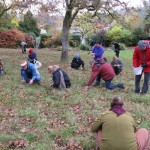
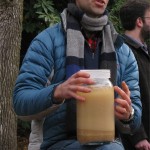
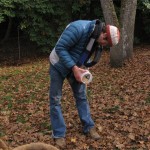
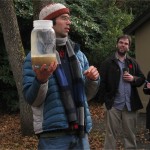
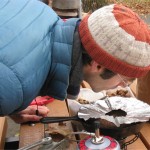
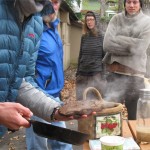
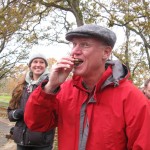
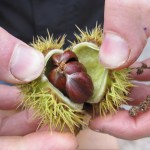
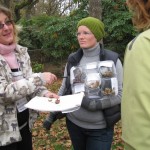
On the Saturday morning, some of the Gorge Tillicum Urban Farmers went out to Bailiwick Farm, where Barbara Brennan led us round her nut tree orchard. We went nose to nose with a herd of alpacas, dodged the hanging fruits of a bumper kiwi crop, and got some honest advice about how not to make one’s fortune from growing nuts, .
Piñons , aside from being slow growing, yield sticky cones that are messy to harvest and whose nuts are difficult to extract and hull. In addition to which, despite advice to the contrary, the juvenile pines did in fact turn out to appeal to the tastes of the resident alpacas, so they were looking a bit nibbled.
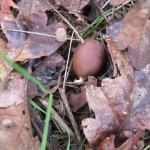
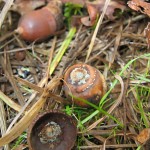
Hazelnuts, on the other hand, are easier to grow and harvest. Maybe a bit too easy: the squirrels and crows got Bailiwick’s entire crop this year. The walnuts have done pretty well, and although the crows and squirrels helped themselves, there was still a fair crop left. Unfortunately some of that had been hit by a blight, so the Brennans were going to have to sift through the nuts that they had managed to harvest. And walnuts are not a huge money-spinner either.
The crop that was doing well for them was kiwi, which grows well in our climate, and our amazing growing season this past summer had yielded an excellent crop, still a couple of weeks from harvest. Kiwis store well, too, so can be sold right through the winter.
 On Sunday I went to Fernwood to join in the Seeds of Diversity Canada annual meeting which marked the organization’s 25th anniversary. It’s been an important presence in this crazy world where seeds have been removed from the natural order to become patented commodities, and there was much passion in the voices of members invited to pass their issues on to the board.
I attended a seed saving workshop in the morning, led by the very able Michelle Smith, from of Northwind Farm, Cape Breton. She talked about the value and principles of growing open-pollinated seeds. This practice offers plants a gradual adaptation to local conditions, strengthens the plant lines (since you save only seeds from the best plants) and frees growers from having to purchase hybrid seeds (which don’t grow true if harvested and saved).
Of course it’s not a simple process, since plants can cross (squash and brassicas for example will cross readily within their respective plant families) so there are planting or isolation distances to take into consideration; and you’ll need to know your plant families. Seed savers grow a number of the same plants (minimum population) from which to save seeds in order to preserve genetic diversity. You need to know if your plant is wind, insect or self-pollinating, as that will affect how it reproduces and what conditions you may need for producing seeds. And you’ll need to take season extension into consideration: seeds ripen well after most crops are harvested, so if you’re in a climate where the plants may freeze before you get the seeds, you’ll have to find ways to keep them warm or bring them inside.
The keynote speaker who followed an excellent lunch (ah the season of butternut squash soup…) was the always popular Linda Gilkeson, with a talk on all-season growing. She drew on her science background and peppered the discussion with notes on seed needs – for example, she warns that the number of winter cauliflower varieties has dwindled from over a dozen 20 years ago to only two at present. The story is the same for most vegetables: fewer varieties commercially available.
Most seed companies grow to sell in high volumes, and in reaching a wider market will grow seeds poorly suited to many climactic regions. Less profitable and harder to grow plants will fall by the commercial wayside. So the message to all backyard growers is that the seeds we save really do matter: our small work with local varieties helps to keep them strong and well-adapted, and most importantly, available within our regions.