Skip to content

foraging

Wild & raw

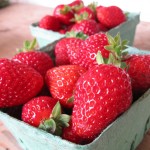
Haliburton farm strawberriesIt’s been a slightly wild week, and the weather’s been bordering on raw at times, but I think we’re safely and belatedly into our summer now, if a mild one. The strawberries think so, anyway. Farmer Ray’s berries have been flying off the farm stand at Haliburton Farm this month, and even my own meagre crop of neglected strawbs which I strategically placed next to the bus stop have been yielding enough for a passing taste. I am rather touched that local travellers are too polite to steal a morsel from my garden. If it were at child level I suppose it would be a different story.

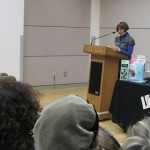
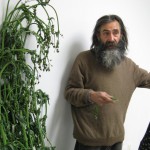
I was tempted back to the VIVA Raw Food Potluck on Sunday by the guest speaker: Roger FoucRoger Foucher with Sow Thistleher, a local expert in wild foods. I’d seen him around – at the Duncan Seedy Saturday for instance, and knew he had given a workshop at Spring Ridge Commons that I wasn’t able to attend, so it seemed an opportunity not to be missed.
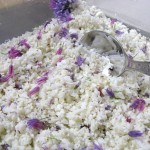
Besides, coming up with a raw Raw Cauliflower "Risotto"vegan dish is always an invigorating challenge. After meditating on my garden and what was on offer there, I settled on garlic scape pesto. The garlic was intense so I cut it a bit with tomato and cucumber, and served it with raw cauliflower “risotto” that I seasoned with sea salt and olive oil and prettied up with chive blossom, and “parmesan” “cheese” made out of walnuts, garlic and sea salt. And it went down a treat. We’d been asked to go easy on the salt, so I put a minimal amount in the pesto and “risotto” – I think people seized on the “cheese” as a way of brightening up some of the blander offerings. The “risotto” would make a good rice substitute (just as many recipes suggested cooking and mashing cauliflower as a potato substitute). I may have said before that one of my chief complaints against raw food is its lack of vocabulary and its devotion to the parent cuisine to which it pays tribute through endless approximation.. and endless quotation marks.
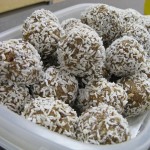
Other items of note included comfrey rolls, filled with sweet potato and fresh herbs and seasonings. The texture of raw comfrey leaf is not, to my palate, very pleasant, with a definite prickle. But comfrey is a much-treasured plant of many purposes.  There were a lot of salads, and lots of colour. This carrot salad was pretty, especially beside a beet and carrot salad. There was also a spinach and strawberry salad and a lot of cut fruit, which made me happy. And there were some energy balls (sunflower seeds, pumpkin, sesame, rolled oats, ginger, raisin etc) which were softer and, I think, less interesting than the variations I’ve had that are based on nut butters.
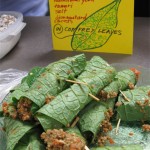
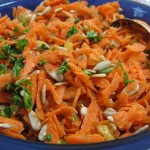
Comfrey RollsCarrot SaladEnergy Balls


The meal over, we had an hour of talk and another hour of Q&A with Foucher, and didn’t come close to exhausting his knowledge or enthusiasm for eating raw and wild foods. He follows ayurvedic principles when eating them, and suggests that it is in our own interests to explore more fully alternative food sources such as “weeds” and learn what nutritional sources are available outside conventional food systems (which are of course subject to changes and disruptions beyond our control).
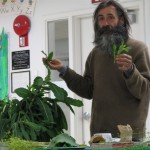
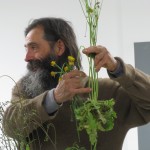
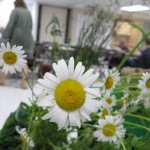
Roger Foucher with Wild LettuceRoger Foucher with CatsearOxeye Daisy

He had brought many samples of the sorts of plants he eats regularly, and commented about the importance of understanding their life cycles: they are all best eaten in season, and most plants should not be harvested for teas after they have flowered and are beginning to form seeds, as the leaves become bitter and the plant’s energy is directed to producing seed. He was expansive on the subject of wild lettuce (Lactuca virosa), which he said has been given to opium addicts as a nonaddictive detox therapy and which exudes a kind of latex that is a helpful cure for toothache. Oxeye daisy (Leucanthemum vulgare) he said would make an excellent tea together with yarrow; and he praised catsear (Hypochaeris radicata) for its flower’s similarity to chocolate (I tasted some the following day and frankly could not sense that resemblance).

He has been eating wild plants for some  years and is more sensitive to their flavours and effects than most novices would be. He remarked that his sensitivity to bitterness has changed over time, and what seemed to him very bitter at first is now a pleasant and complex flavour. “Our palates are habituated to sweet things” he observed. “Bitter tastes take time and practice.” Which was something I noticed in Italy, where there are far more bitter vegetables (radicchio, endive, chicory etc.); one of our tasting instructors told us that not everyone has sensitivity to bitterness, but I’m inclined to agree with Foucher that it is a matter of exposure. Here in the land of sugar, we avoid it and so never grow to appreciate it as a distinct flavour.

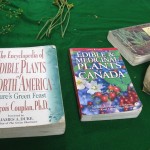
He recommended a few texts: there are many such books about but these are his favoBooks on wild foodsurites. The Encyclopedia of Edible Plants of North America is his favourite, but it contains no colour photos of the 4000 plants described, though there are some line drawings. Edible and Medicinal Plants of Canada is illustrated with photos and describes some 800 different plants. And Plants of Coastal British Columbia is, I’m sure, already in the libraries of most local gardeners (or should be).
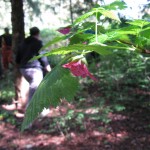
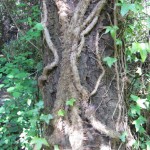
Earth Day: gruesome gorse and wild food

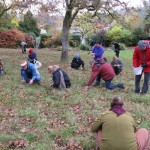
It was a busy Earth Day weekend. Saturday I spent grubbing around in the undergrowth of Gorge Park where a community cleanup was underway, in an attempt to control the spread of gorse as well as other invasives familiar to me from my own garden: English ivy, Spurge Laurel (a toxic black-berried invasive, what I’ve heard called daphnea but is really Daphne laureola), Ivy rootsand holly. The Himalayan blackberries were everywhere too but I think we would have needed two or three pairs of the leather gloves they issued the gorse-gatherers to tackle those. Even the ivy had grown to such staggering strength we had to take an axe to some of it to slow its spread. I considered that we were doing invasive species interruption rather than elimination as the problem of escaped garden plants is pretty much out of control. Still, there’s an ongoing series of cleanup parties planned for the Gorge Tillicum parks to try to get a grip on some of it.

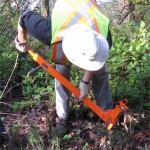
Gorge Park cleanup - gorseOne of the Saanich Parks staff who accompanied us glumly observed at one clearing that he’d been there when they had a gorse removal task ten years ago. But, he said, there’s been no funding since then and it wasn’t a priority. Our mission of the day was to try to keep the spread to a minimum by removing flowering plants before they could set seed, and removing what we could without disturbing the soil too much. We were instructed to pull the smallest gorse seedlings and then tamp the earth back down to slow the replacement through buried seed. LarPulling gorse rootger plants have strong taproots and as they mature the roots branch outward and new plants sprout from those. So we were told to cut below the first root nodule, or to flag the plant for someone to pull later. The largest plants will be strategically poisoned: there is a pesticide ban in Saanich but it is sometimes the only route available to parks workers trying to contain well-established invasives.

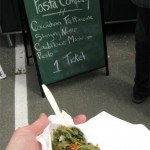
Nanaimo Wild Food Fest-Cowichan Pasta Nettle fettucineYesterday’s treat was a trip to the third annual Wild Food Festival in Nanaimo. A gorgeous day for it and a good throng already queued up by 11:30, half an hour after it opened. I was able to control my consumer urges by sagely bringing only a little cash, but I managed some fine sampling for the half dozen food tickets I did purchase.

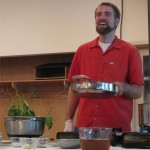
Later I watched a cooking demo with Francois deJong, from Francois deJong - Nanaimo FoodshareNanaimo Foodshare, who was whipping up a generous batch of Nettle Polenta with Blackberry Hazelnut Brown Butter, with a side salad of kale and miner’s lettuce. He had brought along a bag of gleaned local hazelnuts which grow wild and cultivated in the area, and another of stinging nettles, which were the most popular food ingredient at the fair. There was nettle soup, nettle in wild food smoothies, nettle gyoza, nettle pasta and nettle ice cream.

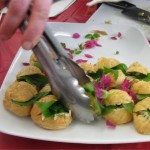
It’s Gougere with wild leaves and salmonberry blossomsa good food with many health benefits, but I think we need to move on and learn to eat a few other things too. So I was happy to see raw blackberry cheesecake; a lovely gougere filled with wild greens and local cheese and apples; and a wild greens salad (chickweed, miner’s lettuce, sorrel and dead nettle) among the offerings. I came away with a bag of delicious Immuni-tea (made from rose hips, wild ginger, peppermint, catnip, elderflower and yarrow) and a few more ideas about turning my weeds into feeds.

Seedy weekend

What has come to feel like a rare weekend of glorious (if not warm) sunshine brought out the seedies at Duncan’s Seedy Saturday. I’d been to one other at this venue, in 2010, and it’s grown hugely in popularity since then.

It takes place at the Mercury Theatre, which is getting a little small to contain the interest. Upstairs was mobbed; downstairs was quieter, and featured my friends from Haliburton Community Organic Farm.


RogerFoucher

Meanwhile outside there was some action: food vendors,  plus fruit and nut trees and bushes, and a display of edible weeds from the highly knowledgeable wild foods educator Roger Foucher, who will be offering a workshop on wild & cultivated perennials in Victoria on April 1).
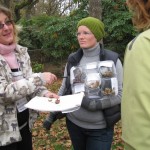
I got away with only five packages of seeds, and a shiny new blackcurrant bush. With luck I’ll be growing part of my own Christmas cake this year.


Permaculture & poetry

The last couple of weeks have swung past in a mainly permacultural haze.

The first screening at a new permaculture film night series was Anima Mundi, a bit of a collective disappointment for the 20-odd souls who crowded into the Community Microlending Society office, but a cheery networking session, lively discussion and helpful information share ensued.

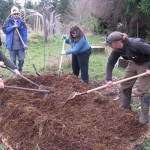
I went for my second round of Permaculture Design classes last weekend, in which we built a hot compost bed in a classically low-maintenance permacultural manner (meaning: let nature do its thing). We prepared the ground by sheet-mulching with layers of cardboard; built a hollowed shell from horse manure; filled it with weeds and seriously rotten kitchen waste; and then covered it with more horse manure. Rats apparently don’t care to dig through manure to get to rotten food. You can then plant squash on top, which keeps the weeds down and thrives on the nitrogenous waste beneath. And harvest fresh soil in a year’s time, when the hill will have sunk to about ground level. Or leave it in place and plant something else there.


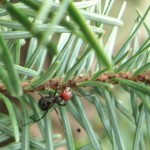
Later we went for a forest walk with Brandon Bauer in order to test our powers of observation and  taste a few ants. Very tasty indeed. A sharp organoleptic explosion that Brandon likened to tamarind or vinegar; I’d say a very acerbic sorrel.


There’s a nice-sounding workshop I won’t make it to this weekend, An Introduction to Home-Scale Permaculture with Elaine Codling; and the Duncan Seedy Saturday takes place that day as well.

And finally, back to poetry. I read with Ruth Pierson and Ted Blodgett at Vancouver Public Library last night and a good time was had by all, I’d say. I read food poems to one of the most responsive and delightful audiences ever, and sold lots of books, including the last few copies of Sunday Dinners. If you have one, you can now officially treasure it as a rare book.

Ruth Roach Pierson
E.D. Blodgett

A lot of words on waste

I spend a lot of time thinking about waste. (And wonder: is this a waste of my time?)

Waste is inescapable in this culture, and we need to be talking and acting more decisively. Rubbish is engineered into every product we pick off a shelf. How much money have I wasted buying things that didn’t work, that didn’t last? What further damage are we doing to our environment by our willingness to live the throwaway life?

Waste doesn’t stop with the craziness we call consumerism; it’s patterned into our style of eating as well. Truly ethical meat eating demands that we use the entire animal if we kill one for food. My sister-in-law told me a hair-raising tale of an acquaintance who buys whole pre-cooked broiler chickens for her family, cuts the breast meat off and throws the rest into the garbage because nobody in her family will eat anything but white meat. Such people, in my opinion, don’t deserve to eat meat at all.

However. This article about nose to tail cooking concentrates on one body part that those raised on safely anonymous chicken nuggets or pre-formed luncheon meat will have particular problems preparing. Not so the bold souls at The Punter in Cambridge, whose Lamb Fries I had reported on back in November.

Some groups feel strongly enough about commercial food waste to do something about it. On my course in Italy we learned about Last Minute Market, which whisks unwanted food away from Italian supermarkets and processes or redistributes it. Second Harvest does this in Canada.Back in November, some plucky Londoners threw a free lunch for 5,000 to raise awareness about food waste.

It’s never too early to start preparing ourselves for Waste Reduction Week, coming up in October.  There are so many things we could do. How about bringing your own container for takeaways? Takeoutwithout is a great idea in Toronto; you can do your own thing by investing in a tiffin box and taking that. One British journalist experimented with the concept of shopping packaging-free a couple of years ago; and another offered 20 suggestions for reducing food waste. Our own David Suzuki has a few ideas as well. In the commercial kitchen, frugal is finding new panache among San Francisco’s chefs, according to this article.

People can educate themselves about using food they would otherwise have wasted, as this article shows, or learn to understand what the “best before” date means – because it’s not an arbitrary line after which your food will go bad.

Freegans and Freecyclers have understood this for a while. In her book Farm City, Novella Carpenter describes how she foraged in dumpsters and garbage bins to feed her urban animals. But there’s good, edible food in there still fit for humans too. In fact, here’s an excellent letter (originally written to the editors of Monday Magazine) from a resident of the Fernwood neighbourhood in Victoria, who watches waste more closely than most.

From: Edward Butterworth
Date: February 17, 2012
Subject: dumpster demise

Dear Editor,

It is with great sadness that we, the Fernwood Urban Gleaners Group, note the passing of possibly the last major open dumpster in Victoria, outside Thriftys Hillside supermarket this week. It was our ‘golden’ dumpster, reliably supplying us enough good food to feed ten or more hungry mouths. We expect it to be replaced with a second locked compactor, as exist at all the other large supermarkets in town, thus ensuring that surplus food goes to waste.

Far be it from us to moralize about Thriftys’ behaviour. They are locked into a system which make such waste inevitable. I have no doubt that their decision was an ‘economic’ one with moral implications not even discussed. What I question is the narrow view of economic decisions, that don’t see waste in a world of scarcity, that don’t see degradation and pollution of the environment as debts being accumulated. It is not a moral shortfall but lack of consciousness, a sort of blindness to the consequences of our actions, to the fact that humanity is on the brink of paying these debts. Every plastic tub of yoghurt, sour cream, salsa, hummus, etc. we salvaged was recycled, saving them from the landfill.

I joked that dumpster diving was the best paid job I ever had. Organic fruit and veg., half a dozen $35 spiral sliced hams, boxes of organic yoghurt, milk, bulk nuts, artisan bread… One night I opened a garbage bag to find $400-worth of gourmet imported cheese. For a week I was the cheese fairy, dealing out exotic French cheese to all and sundry. It was the dumpster land of milk and honey too good to last, I suppose, in this world of impermanence.

So many people thought we were taking undue risks eating discarded food. But I have spent years wandering the third world and understand the rudiments of hygiene and food safety. Foodsafe is about ensuring zero liability and thus errs heavily on the side of caution. Cheese, for example, goes mouldy at a certain point, but unlike with bread, the mould can be cut off leaving the rest of the cheese good to eat. There was no sign of mould on any in that bag. There is still cheese in my fridge that was gleaned a month ago. I consider myself well-informed enough to take responsibility for my own body and what I put into it.

While I feel gratitude for the gift that was this brief window of abundance I am impatient to see change in this society. For example, while we enthusiastically recycle all plastics that come over our doorstep, supermarkets and all businesses are free to dump them with impunity and do so in huge quantities. I want to see regulations to stop this. Businesses would whine that this would undermine their profitability but with a level playing field they would just pass on the increased costs to consumers. Then we would begin to pay the real costs of what we consume without generating environmental debt. In a world where a billion people go hungry, in a society where homelessness is on the increase and people are expected to live on $650 a month on welfare, I want to see laws prohibiting such waste of food.

It was taboo when I was young.

Edward Butterworth

Had enough? If not, here are a few more links:

Food Waste in Canada (November 2010)
Why Wasting Food Wastes Nature (May, 2011)
Redirecting food waste (March 2011)

Breaking bread with Capital Nuts

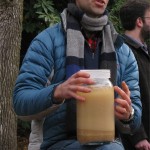
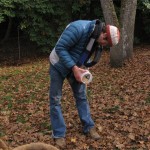
I attended a workshop yesterday organized by the Victoria Transition Capital Nut Project in Playfair Park, a restored Garry Oak Meadow in Victoria. It attracted a couple of dozen brave souls willing to stand in the November chill and learn how to make Garry Oak acorns edible. Being the proud custodian of a very large tree myself, and being overshadowed by a number of others, I thought it would be a worthwhile skill. We were led through the process by ethnoecologist and wild food forager Abe Lloyd.

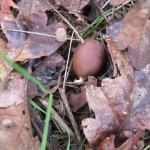
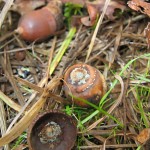
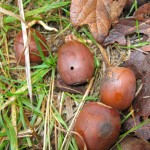
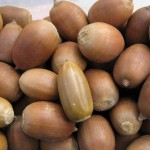
We learned about defects to watch for. Sprouted acorns (Garry Oaks are white oaks, a class of tree whose seed germinates in the autumn) are not necessarily a problem, although they are often cracked, which may allow insects or mould into the nut. Acorns with caps still in place when they fall are no good because the cap usually covers some mould. A small hold indicates that a worm has eaten the contents and left the premises. Spotting – especially dark discolouration – can indicate damage. The best way to find out is to open the nut (they are soft enough to crack with your teeth) and check. This time of year – October or November – is the best for hunting acorns. Early falls (August, September) are usually unripe or damaged nuts so should be avoided.


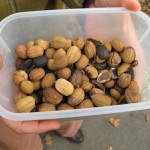
He showed us some samples – with a couple of English Oak acorns for comparison (there are a few of these trees in Victoria, though Garry Oaks are the native species). The ones that were still in their shells had been dried; his guideline for readiness was when the shell could be cracked easily by hand or nutcracker (or hammer). The shelled samples included some black ones which he said were still fine, but he’d hastened the drying process and discoloured them (they can be dried on racks, with fans or with a dehydrator). After drying, he ground them to flour in a blender. Because they have an oil content of about 10% they’re not well-suited to grain mills that use stone grinders, as they might gum them up (there is less oil in flour grains like wheat).


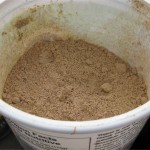
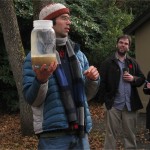
As it circulated, Abe invited us to have a sniff and a taste of the flour. We could smell the sugars in the flour, but it tasted bitter, because of the high tannin content in these acorns. The next step was to leech out these tannins, by soaking the flour in water for four or five days, pouring the liquids off morning and night, and then tasting the final product to check for bitterness. The colour of the liquid changes, growing lighter as the tannins are removed. The final sludge can be used straight away as a batter for flatbread, or dried and used with flour for flavour (bearing in mind it is low in glutens so wouldn’t make great yeast bread on its own).


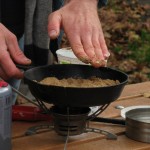
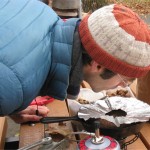
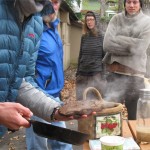
Abe demonstrated his flatbread technique. He usually adds maple syrup to sweeten the bread a little, but it worked well without.


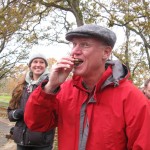
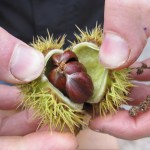
A morsel of hot acorn flatbread: just the ticket. Someone had brought some Spanish chestnuts – the edible variety which unfortunately don’t have quite enough time to ripen in our temperate climate. And local agrologist Kendell Neilsen was on hand with a sample of hazelnuts she’d gathered in the area.