Skip to content

food waste

Circular Food

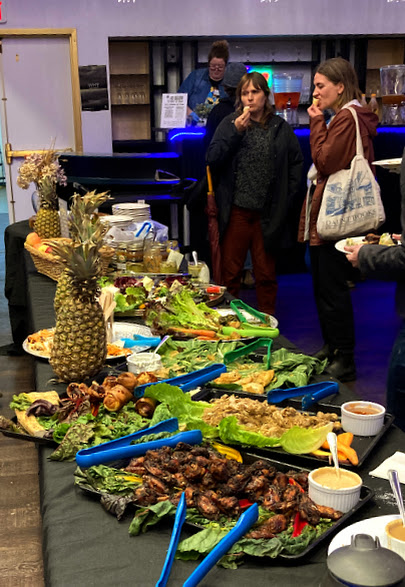
As the organizers might have expected, registration for this evening on the circular food economy mushroomed when it was known that food would be offered!

Turns out there’s a lot happening in Victoria to rescue food from grocery outlets, then sort and redistribute it in various forms.

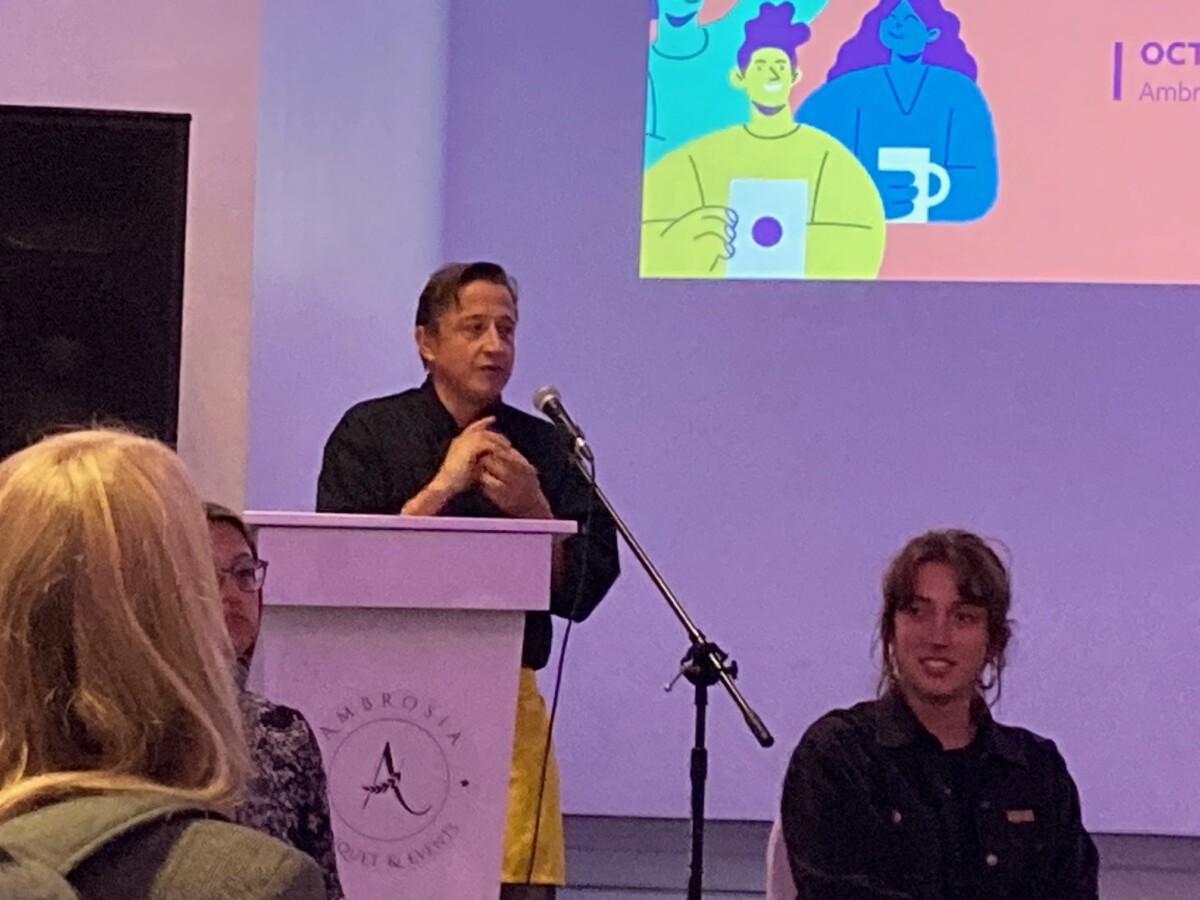
Chef Chris Hammer

In keeping with the presentations, all the food on offer had been donated or rescued and then prepared for the participants. The buffet was vast and included  vegetarian, vegan, omnivore and gluten free offerings. All the items were the same or similar to what would be provided to the recipients of some of the organizations represented. There was a predictable surge of interest in sampling some ice cream from 49 Below, and when we had eaten our fill, Mustard Seed’s chef Chris Hammer came out for a bow and a word on his creations.

Speakers represented a wide range of food waste and food security groups: Mustard Seed Food Bank and the Food Security Distribution Centre; Love Food Hate Waste, which targets food waste in the home;  the Food Share Network which coordinates food security nonprofits; the South Island Farm Hub, which arose during the pandemic and continues to support local farmers with distribution; Reroot, which processes surplus food into meals for the Vancouver Downtown East Side; and Community Food Support, which provides a free fridge in Victoria’s Rock Bay neighbourhood.


Where does all the garbage go?

I learned the important connection between food and sewage years ago when I came across the excellent documentary Crapshoot: The Gamble with Our Wastes. The film of course talked also about garbage disposal and the endless growth of landfill waste which humans create so easily and dispose of so badly.

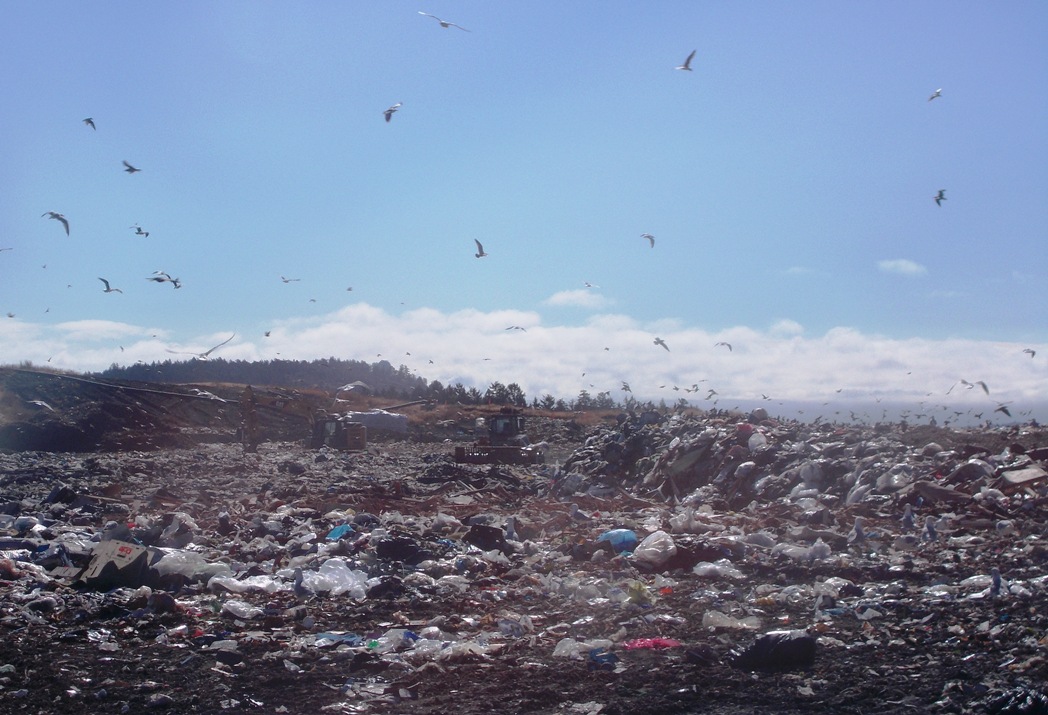
So I was pleased to finally be able to catch a Hartland Landfill tour, which I’d heard was well worth taking. So much has already been written and said about the growth of food waste in well-fed nations I won’t belabour the point here; but just to say it seems we are not willing or able to manage the food we buy, grow or manufacture, and despite composting pick-up systems now in place, too much of it still finds its way to places like Hartland, where it generates greenhouse gases.

So one of the features that most intrigued me was the methane capture system – basically a series of pipes laid into and across the ever growing garbage mountain, feeding into an electricity plant – which powers (so far) about 1600 homes in the area, with plans for expansion. However, as long as food waste – the primary source of this methane – can be diverted into composting programs, the growth will slow.


Our tour bus spent time sitting at the top of the current garbage mountain, so we could watch birds scavenging and scattering. Our guide told us that birds of prey (from the Cowichan Raptor Centre) come to keep order later in the year, and this program of Natural Predation is by far the most effective preventive measure they have found. The birds who feed on our garbage end up the worse for it because of consuming microplastics and toxins.


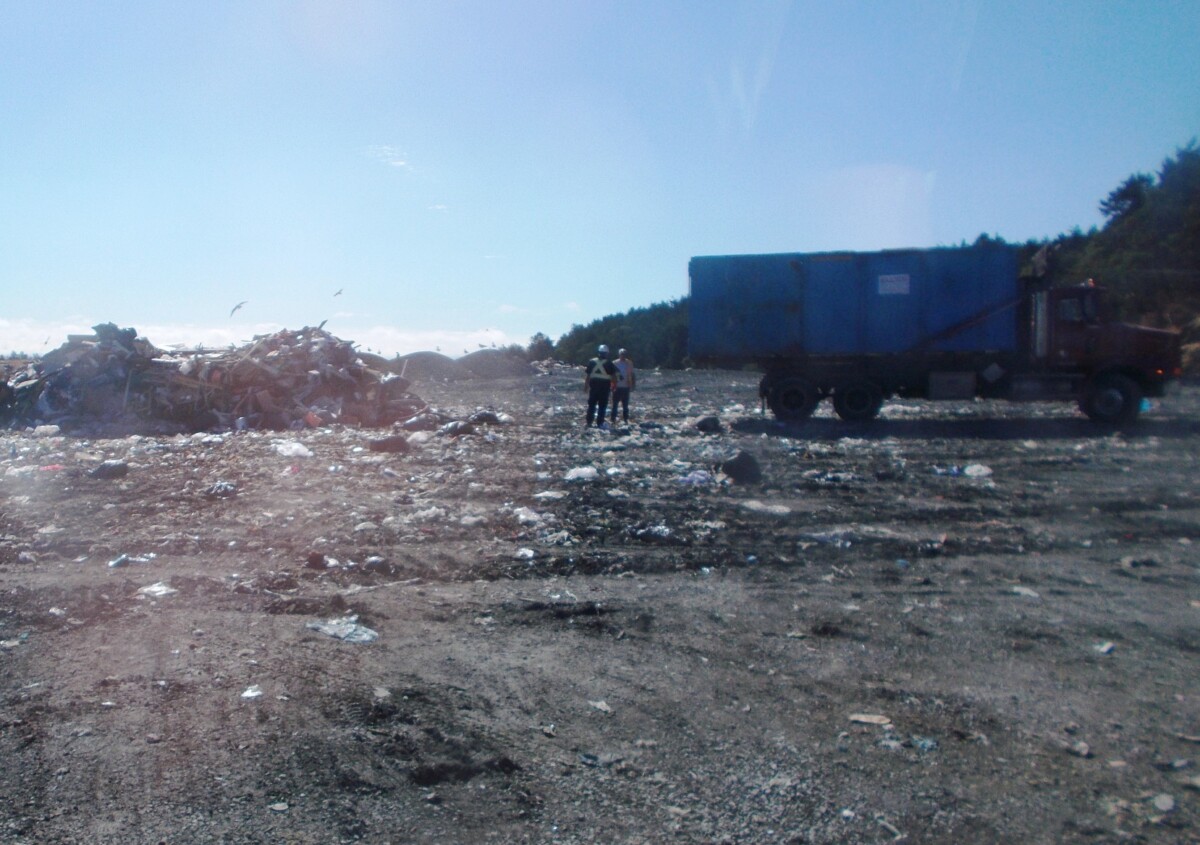
I was also encouraged to see inspectors checking each load that was deposited by garbage trucks. Because space is limited by planetary constraints, our municipalities have strict guidelines about garbage vs recyclables and compostables; the guidelines are enforced through fining the trucks that pick up our bins. A 2016 study of Hartland found that organics, paper and plastics made up half of what is thrown away by locals; hence our blue and green bin pick-up programs.


Even so, unless consumers and businesses change their ways by reducing their annual waste load of 400kg/person to 125kg, Hartland expects to run out of space by 2045. At this point the waste will be destined to take over some of the local hiking and bike trails on a neighbouring mountain.

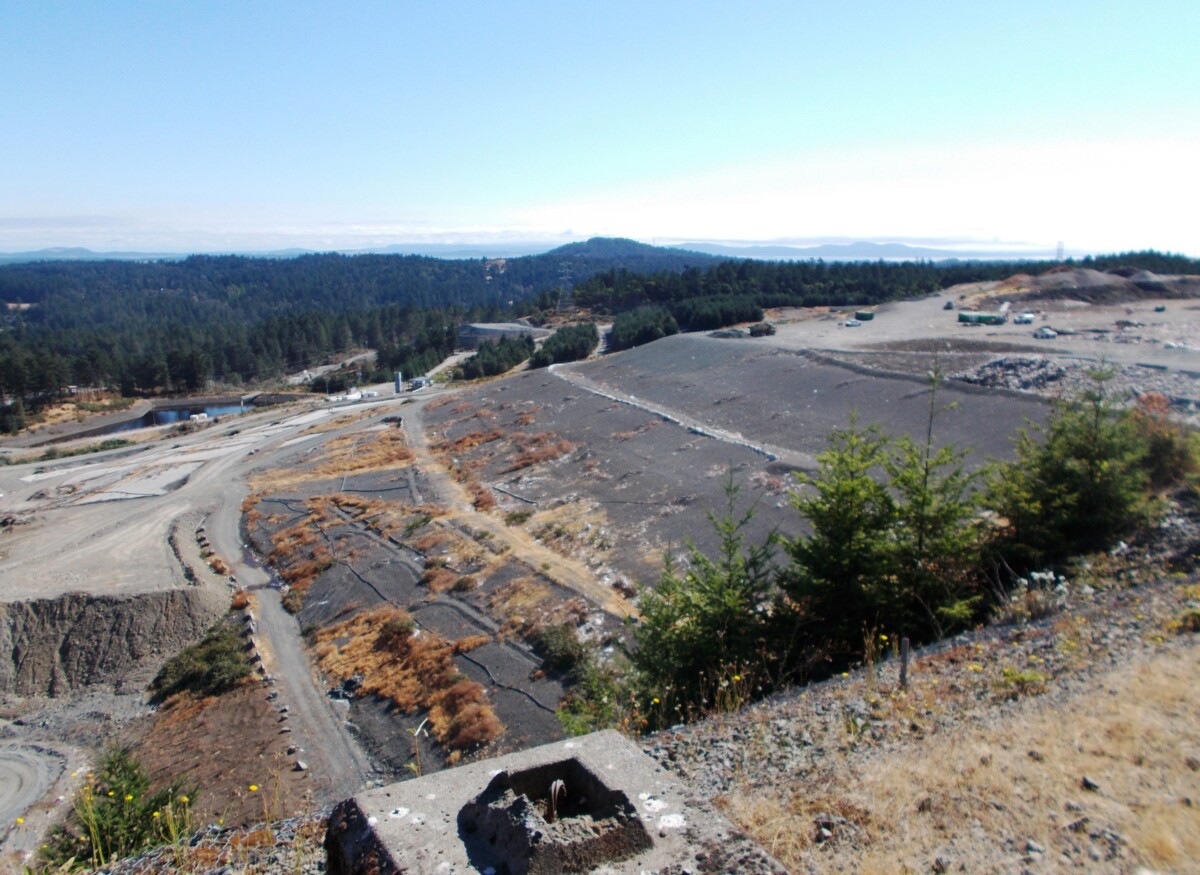
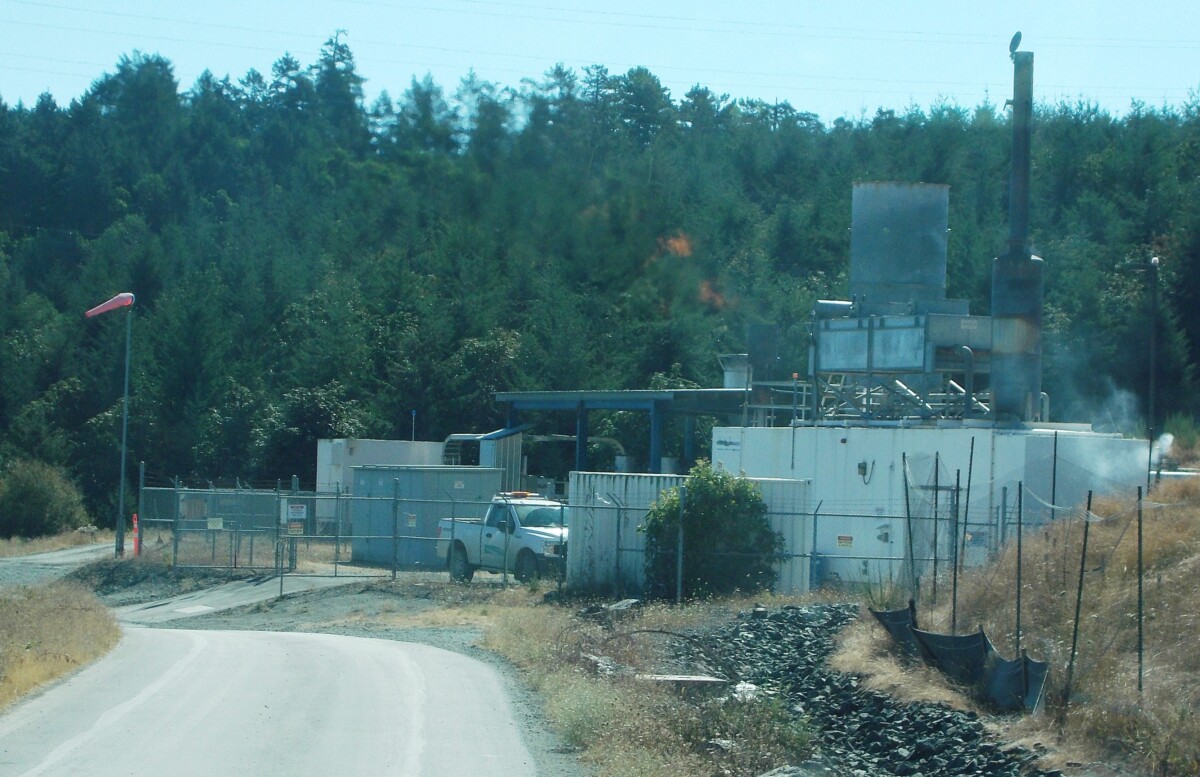
Adjoining the current mountain is a new valley being excavated ready to fill; in the background are sea, sky and mountains. And here’s what the power station looks like. There’s a nearby leachate pond as well, which is toxic fluid runoff, contaminated by


The landfill site is also a busy recycling centre, trying to reclaim as much as possible from consumer waste – people can bring in plastics, metal, clothing, paint etc to a public drop-off area, and the centre distributes and sorts it for whatever further life it might have. There’s composting available for larger scale drops, for a fee.

Here’s a closing thought: one of the items that has been deemed not recyclable is a damaged blue box!

A lot of words on waste

I spend a lot of time thinking about waste. (And wonder: is this a waste of my time?)

Waste is inescapable in this culture, and we need to be talking and acting more decisively. Rubbish is engineered into every product we pick off a shelf. How much money have I wasted buying things that didn’t work, that didn’t last? What further damage are we doing to our environment by our willingness to live the throwaway life?

Waste doesn’t stop with the craziness we call consumerism; it’s patterned into our style of eating as well. Truly ethical meat eating demands that we use the entire animal if we kill one for food. My sister-in-law told me a hair-raising tale of an acquaintance who buys whole pre-cooked broiler chickens for her family, cuts the breast meat off and throws the rest into the garbage because nobody in her family will eat anything but white meat. Such people, in my opinion, don’t deserve to eat meat at all.

However. This article about nose to tail cooking concentrates on one body part that those raised on safely anonymous chicken nuggets or pre-formed luncheon meat will have particular problems preparing. Not so the bold souls at The Punter in Cambridge, whose Lamb Fries I had reported on back in November.

Some groups feel strongly enough about commercial food waste to do something about it. On my course in Italy we learned about Last Minute Market, which whisks unwanted food away from Italian supermarkets and processes or redistributes it. Second Harvest does this in Canada.Back in November, some plucky Londoners threw a free lunch for 5,000 to raise awareness about food waste.

It’s never too early to start preparing ourselves for Waste Reduction Week, coming up in October.  There are so many things we could do. How about bringing your own container for takeaways? Takeoutwithout is a great idea in Toronto; you can do your own thing by investing in a tiffin box and taking that. One British journalist experimented with the concept of shopping packaging-free a couple of years ago; and another offered 20 suggestions for reducing food waste. Our own David Suzuki has a few ideas as well. In the commercial kitchen, frugal is finding new panache among San Francisco’s chefs, according to this article.

People can educate themselves about using food they would otherwise have wasted, as this article shows, or learn to understand what the “best before” date means – because it’s not an arbitrary line after which your food will go bad.

Freegans and Freecyclers have understood this for a while. In her book Farm City, Novella Carpenter describes how she foraged in dumpsters and garbage bins to feed her urban animals. But there’s good, edible food in there still fit for humans too. In fact, here’s an excellent letter (originally written to the editors of Monday Magazine) from a resident of the Fernwood neighbourhood in Victoria, who watches waste more closely than most.

From: Edward Butterworth
Date: February 17, 2012
Subject: dumpster demise

Dear Editor,

It is with great sadness that we, the Fernwood Urban Gleaners Group, note the passing of possibly the last major open dumpster in Victoria, outside Thriftys Hillside supermarket this week. It was our ‘golden’ dumpster, reliably supplying us enough good food to feed ten or more hungry mouths. We expect it to be replaced with a second locked compactor, as exist at all the other large supermarkets in town, thus ensuring that surplus food goes to waste.

Far be it from us to moralize about Thriftys’ behaviour. They are locked into a system which make such waste inevitable. I have no doubt that their decision was an ‘economic’ one with moral implications not even discussed. What I question is the narrow view of economic decisions, that don’t see waste in a world of scarcity, that don’t see degradation and pollution of the environment as debts being accumulated. It is not a moral shortfall but lack of consciousness, a sort of blindness to the consequences of our actions, to the fact that humanity is on the brink of paying these debts. Every plastic tub of yoghurt, sour cream, salsa, hummus, etc. we salvaged was recycled, saving them from the landfill.

I joked that dumpster diving was the best paid job I ever had. Organic fruit and veg., half a dozen $35 spiral sliced hams, boxes of organic yoghurt, milk, bulk nuts, artisan bread… One night I opened a garbage bag to find $400-worth of gourmet imported cheese. For a week I was the cheese fairy, dealing out exotic French cheese to all and sundry. It was the dumpster land of milk and honey too good to last, I suppose, in this world of impermanence.

So many people thought we were taking undue risks eating discarded food. But I have spent years wandering the third world and understand the rudiments of hygiene and food safety. Foodsafe is about ensuring zero liability and thus errs heavily on the side of caution. Cheese, for example, goes mouldy at a certain point, but unlike with bread, the mould can be cut off leaving the rest of the cheese good to eat. There was no sign of mould on any in that bag. There is still cheese in my fridge that was gleaned a month ago. I consider myself well-informed enough to take responsibility for my own body and what I put into it.

While I feel gratitude for the gift that was this brief window of abundance I am impatient to see change in this society. For example, while we enthusiastically recycle all plastics that come over our doorstep, supermarkets and all businesses are free to dump them with impunity and do so in huge quantities. I want to see regulations to stop this. Businesses would whine that this would undermine their profitability but with a level playing field they would just pass on the increased costs to consumers. Then we would begin to pay the real costs of what we consume without generating environmental debt. In a world where a billion people go hungry, in a society where homelessness is on the increase and people are expected to live on $650 a month on welfare, I want to see laws prohibiting such waste of food.

It was taboo when I was young.

Edward Butterworth

Had enough? If not, here are a few more links:

Food Waste in Canada (November 2010)
Why Wasting Food Wastes Nature (May, 2011)
Redirecting food waste (March 2011)
Another countdown

Commencing the last seven days in Parma; my final report is done, and must only be presented at Monday’s all-day marathon back on campus. Then there will be graduation festivities of various times. A few more visits to my friends at Poste Italiane and I’m outta here.

Not the most enthralling week. Monday was enlivened by the visit of an aspirapolvere salesman – my first door to door salesman in Italian. He was, he swore, more eager to show me the wonderful cleaning abilities of his product than to sell me anything, but left swiftly when I said I would not be living there much longer. I would have thought the complete absence of carpets would be a bit of a drawback too, but never mind.

The rest of the week I can’t really account for; a couple of coffees with people, and a lot of report writing and packing of boxes, half maddened by dodgy internet connections. Yesterday a long walk in the twilight in search of a quad band mobile phone to replace my more limited relic; I ended up in the horrific churn of Esselunga (its name means ‘long S’ – just like its rather unattractive logo) and with the help of the kind man at the electronics counter managed to achieve my objective and leave quickly. Happier still when I managed to find the English language settings on the phone and get it operational.

Today I’ve been reading something of relevance, as I cook my way through the remaining dry goods in my cupboard. It’s a continuation of earlier reports that British shoppers throw away a third of what they buy – which when you think about it, as Wrap has, is like throwing one of every three bags of groceries straight into the garbage. I would be hugely surprised if other developed-world shoppers throw away anything less than this; I haven’t seen anything that reports on Canadian food waste, but I did find a report from 2004 that said Americans don’t eat half the food they produce, although other reports suggest a more conservative one-quarter waste rate. Which I frankly don’t believe. Be that as it may, I’ve enjoyed the challenge of using things up. Leftovers cuisine: can there be anything more random?

A few surplus and possibly excessive words on waste

There’s obviously something in the air right now; there was a well-portioned segment of the BBC program You and Yours about consumer food waste on Wednesday.

The core of the discussion was a recently released survey by the UK recycling and waste management organisation WRAP, that revealed that about one-third of food people buy in Britain is thrown away; half of it is edible. (That doesn’t include the food that is wasted by consumers when eating at restaurants, and by the food service industry itself, a whole new discussion I’d like to hear about.)

The survey suggested a lot of waste is down to several controllable factors: fridges may not be set cold enough to keep the food properly; people do not eat perishables quickly enough; and they simply buy more than they can eat, because they shop without planning or making shopping lists, and they shop for informal eating rather than prepared meals. Food retailers can manipulate us into buying more than we need through over-packaging, or by discounts or two-for-one deals.

The waste is not simply financial, it is also environmental, since the food industry alone produces about a quarter of the world’s total carbon emissions. Consumer waste is compounded by supermarket waste – when we pick through the shelves to find the freshest products by their sell-by dates, we contribute directly to this of course – and by industrial waste at the farming and factory end of things.

As we’ve certainly heard time and again this year, the speakers agreed that one of the big underlying causes of waste is the cheapness of our food; and I know it doesn’t feel all that cheap when you look at the prices in the shops and compare them with prices a few years ago, but it is a relative thing. Where, Lord Haskins observed, fifty years ago we used to spend thirty percent of our disposable income on food, we now spend less than ten percent. It’s the same as cheap clothes, he said: if it’s cheap, we don’t value it, and it becomes disposable. (I’ll bet there are roughly equal numbers of people in this world today making crumbs and croûtons out of stale bread as there are darning holes in socks that are otherwise wearable.)

Food historian Ivan Day pointed out that there’s a whole branch of British cuisine, a pudding tradition, based on recycling bread: he cited treacle tart, bread and butter pudding, and a Tudor pudding called whitepot that’s made with cream and dates and cinnamon. We don’t make the time to make those traditional puddings nowadays, he said. We’d rather chuck the bread and buy our puddings from the supermarket.

The speakers also agreed that there isn’t as much common knowledge about food nowadays, which means they aren’t always sensible about what they throw away and how long to keep things. Honey keeps for years, but industry is obliged to date it. Yogurt was mentioned as a food that was created in order to stabilise milk for storage; its use-before date can be safely ignored if you keep it refrigerated and use your nose and eyes to see if it’s still edible. If it’s not bubbling or mouldy, it’s safe to eat, it just might not taste its best. They talked about salad bags: pre-washed salads and vegetables are usually washed in chlorine and the water that remains in the bag can turn the produce swampy if you don’t eat it promptly.

Interestingly, WRAP’s CE Liz Atkins said the survey revealed that about ninety percent of consumers don’t think they are wasteful; a further third simply don’t see food waste as a problem. She suggested that if we got control only over the food we could have eaten, it is equivalent environmentally to taking one in five cars off the road. We’re all at fault, she said, it does matter, and we can make a difference individually. Now let’s start with that list…

And now a word from M.F.K. Fisher

..who speaks of her time in Dijon, that started in 1929:

It was there that I learned it is blessed to receive, as well as that every human being, no matter how base, is worthy of my respect and even my envy because he knows something that I many never be old or wise or kind or tender enough to know.

from Long Ago in France.

She speaks tellingly about her fierce and frugal landlady, Madame Ollangnier, who scours the markets and badgers the food sellers into handing over the lamest and haltest of edible foodstuffs which she then transforms into excellent meals for M.F.K. and her other lodgers.

So having read that last night I was delighted by the coincidence of this morning’s speaker, Andrea Segre of the University of Bologna, who told us a fabulous tale about his students’ food economics project that has blossomed into a many-fingered enterprise: Last Minute Market began as a way to turn the horrific waste of supermarket surpluses – those imperfect, unwrapped or dented items the ordinary consumer won’t touch with a ten foot euro – into nutritious meals for the local needy.

More food economy in the afternoon with Riccardo Vecchio who walked us through the ins and outs of PDO (Protected Denomination of Origin) and PGI (Protected Geographical Indication) marks on foods, from a marketing and economic point of view. They’re not just in Italy, not just in Europe or the UK, but potentially all over the place now. And he gave us a briefing on farmers’ markets, which are new to Italy (being gradually brought back in after they died out here around 1900, that is). There are plenty of food markets in Italy, it’s true, but the stall-holders are typically not farmers or food producers selling their own wares.

And now, back to my books. Food technology exam tomorrow. More later.