Skip to content

local food

Flavour of September, with a pinch of October


How busy can one month be? Very very in September’s case. Here it is October and I’m still rushing. A quick review will show why I’ve been too crazed to post, though it’s been delightful and stimulating.

Friday Sept. 21 was the long-anticipated (by me, certainly) panel discussion featuring visiting baker Andrew Whitley, community-supported fisherman Guy Johnston and urban farmer Angela Moran, with her chicken wrangler Trevor van Hemert. Whitley kicked off with a description of the organic baking career that led him to his current life as a baking instructor and organic activist. He is helping to launch a local community supported baking enterprise, and through the Real Bread Campaign which he co-founded, to raise awareness about different ways to promote bread in communities. Johnston described his two-year old community supported fishery, which helps him keep his boat in the water and his family in the sustainable fishing business. He urged us to join in the October 22 protest against the Northern Gateway Pipeline, which will endanger the livelihood of all those who fish in west coast waters. Moran and van Hemert have arranged with eight neighbours to share both chicken-shaped responsibilities and egg-shaped outcomes so that Moran’s urban farm is able to keep its flock of laying hens. They’ve come up with a model agreement they want to share with others to spread the joy of shared chicken ownership.

Saturday we put Andrew back in the kitchen to lead a breadmaking workshop for a lucky baker’s dozen who were spared the cost of airfare to Scotland to take the class at Bread Matters. In the beautifully equipped domestic science lab at Royal Oak Middle School, Andrew and the participants faced some challenges with the limitations of domestic ovens and unfamiliar flours while he shared some of his knowledge about bread, flour and the state of grain in the world today.


Sunday Sept. 23 marked the first offering of the Flavour Gourmet Picnic, held at Coastal Winery in Black Creek, just north of the Comox Valley. I’d been to Feast of Fields and the Island Chefs Collaborative festivals, and thought it would be interesting to experience a north Island event. Andrew & Veronica joined us to sample the many, many wares on offer at a gentle, sun-warmed and well-organized afternoon of sipping and tasting. One of those who’d attended Andrew’s talk to the VIU Professional Baking program in Nanaimo the week before was there with her Church Street Bakery breads, and he make an appearance in the rather lovely video made to commemorate the day (accepting one of the most delicious items on offer: a piece of chocolate pave from Kingfisher Lodge).


On Monday, after a relaxing morning gathering oysters for supper, we headed back to Victoria where I attended a meeting of the Victoria Horticultural Society‘s Veggie group – one of the members was explaining her planting calendar and use of cover crops, which is something I’d like to do better even in my tiny garden.

By Wednesday 26th Andrew & Veronica were packed and ready to leave, but not until we’d stopped in to see Cliff Leir’s operation at Fol Epi. He’d described his grain soaking and flour milling operations at the Kneading Conference, but seeing the tiny space in which the magic happens made it the more special. Good things, small packages etc. (and the pumpkin pie and sausage roll we sampled, among other treats, were formidably good).

Wednesday evening arrived promptly and after a small misspelling on the poster had been swiftly corrected (yes, I pine still for England where there is never a D in my name) the maiden voyage of Digging the City took place in a room in my local library filled with interesting and interested people, many from GTUF.

Thursday saw me back on the farmstand at Haliburton and then back on the road to Nanaimo where we were discussing vitamins and minerals in the CSNN introductory holistic nutrition course. Fascinating but mind-blowing.

Friday 28th I went to a permaculture potluck to hear Brandon Bauer, one of the instructors in the permaculture design course I took earlier this year, talk about his work replenishing the soil on his property on Salt Spring Island. He’s currently teaching a permaculture and site planning workshop and as ever had some pithy things to say about his own experiences in those areas. Saturday was a workshop on tenancy management (better late than never) that was fascinating and offered by one of the very knowledgeable souls at ROMS. That evening we went for supper at the Moon Under Water brewpub which I hadn’t had a chance to try out, and enjoyed my Fanny Bay Oyster Burger for auld lang syne.

Sunday was my weekly family dinner, plus some lying-in, sitting-down and catching-up, which meant I missed the Saanich Sustainable Food Festival and the 5th Annual Chef Survival Challenge and Feast at Madrona Farm… I’ll get to one of those one of these days… AND the Slow Food Terra Madre fundraiser Last Hurrah At Orange Hall.

Monday it was suddenly October, and I joined some other GTUFers to talk about food security at Gorge-ous Coffee, our newly opened local hangout. While we did not quite set the world to rights, we had an interesting chat about foraging in the neighbourhood, rooftop gardens, preserving skills, grafting tours and nut trees, among others.


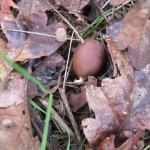
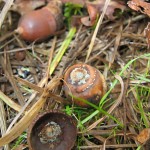
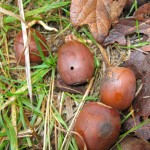
After a quasi-restful Tuesday in which I attempted to catch up on a few more things, like a bit of light tomato canning, and a chat with my neighbour who’d attracted a frog to his garden, and a bit of acorn gathering, it was suddenly Wednesday and time for the debut screening of Symphony of the Soil, Deborah Koons Garcia’s (The Future of Food) second feature film  and an excellent one it is. It explains very beautifully what soil is, how it produces food (not just for humans) and how it can be preserved and nourished. Recommended viewing for all living things. We too were nourished with birthday cake as the occasion marked Open Cinema’s tenth anniversary and afterwards there was a panel discussion with Robin Tunnicliffe, Heide Hermary and the filmmaker.


Eat there then

Eat Here Now signI’m a week behind in my entries, so here goes the catch-up. Last Sunday’s Eat Here Now festival looked to me to have been enormously popular, with lots of food being eaten and bought and talked about in Market Square.

The square had been divided into an eating and entertainment side, and a vendors’ side. Crowds seemed to be milling evenly between the two by the time I left, but as I arrived at lunchtime, I headed with sooo many others to the taste for a toony buffet provided by locally-oriented restaurants. Cosmo Meens, as always, drew a crowd, this time offering a curried tofu soup with focaccia, an offering from his new Hot and cold Cafe. Relish was there with a “Vietnamese sub” of house-smoked pork terrine and asian vegetables; Sooke Harbour House’s lovely little quinoa salad with salmon, seaweed and other local delicacies, came with an all-too tasty edible scoop, but I’d be surprised if many of them lasted long enough to do their job. All in all it was a hard day for vegetarians: aside from those mentioned, and some mushroom ravioli from Cowichan Pasta, almost every stand offered meat; of which Kulu’s spicy sausage got my vote, if only because it came laden with kimchi! (Luckily for the non-carnivores, Green Cuisine was open for business on the fringes of the festival.)

Relish Vietnamese SubSooke Harbour House Salad


Canoe Brewpub's Pulled PorkKulu's Spicy SausageSmoken Bones Meaty Sandwiches


And then it was time to browse the vendors’ stalls, which of course included Haliburton Farm, where Farmers Nate & Mike were holding the fort; Libby Seabrook was doing a brisk trade in InfuseTea (her blueberry & rosemary blend is to die for, just for the record); Fry’s Bakery was selling mini-pizzas, blueberry scones and rather beautiful baguettes – can’t wait for them to open their shop on Craigflower Rd, which is rumoured to be happening later this month. City Harvest was there with urban abundance, Wildfire had some tempting shortbreads (lavender and local wheat were my picks) and Sun Trio’s tomatoes were as beautiful as the day was long and sunny.

Haliburton - Farmers Nate & MikeInfuseTea - Libby Seabrook

Frys BakeryFrys BaguettesFrys Blueberry SconesCity HarvestWildfire Bakery


Sun Trio Tomatoes

Slow Food Lamb Roast

Cory Pelan loves lamb, and he likes it best in a farmer’s field with lots of people bringing lots of lovely food to go with it. So yesterday afternoon he and the Slow Island convivium put on a summer party to raise funds for sending Vancouver Islanders to Terra Madre this October.
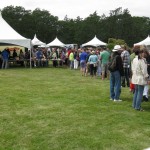
We sat on hay bales (invited to bring blankets to cover them) and watched the lamb turn on its spit until it was time to dine. Some idled away the time visiting the pig pens to see the heritage breed pigs that farmer Tom Henry raises there. Cory did the carving, assisted by Peter Zambri and watched by a host of hungry foodies.


By this time platter after platter of side dishes had arrived (I think it best to let the food speak for itself):


…and there was a groaning board of desserts as well.

Another Fabulous Food Fest

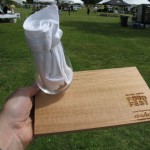
Sunday dawned gloomy and grey and I feared we were in for yet another chilly drizzly day, but things had warmed and brightened considerably by noon when the ICC Food Fest opened its gates to a sold out mob of gastronomes. We were each equipped with glasses, boards and napkins and set loose in the grassy grounds of Fort Rodd Hill for an afternoon’s fine browsing.

Wine+beer tent queue

There was a lot on offer, but not so much that a hungry diner couldn’t manage to sample it all at least once. Hungry and thirsty diners were pretty much out of luck, though, since the fine minds of the BC Liquor Control Board had deemed it necessary to sequester the alcohol into an undersized tent entirely separate from the food it was meant to accompany. This is the same sharp thinking that prevents the apparently uncontrollable drinkers of British Columbia from enjoying a glass of wine with their meal on the ferries, a task that Europeans have been managing for decades without mass drunkenness. And just last month I witnessed numerous brave Americans taking beer or wine with their otherwise unspeakable meals on one of the Washington State Ferries, and we all drove off that ship without any trouble.

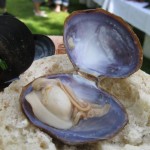
Aside from that, it was a relaxed and convivial affair. Taste with thine eyes. The varnish clam was a surprise – I’ve seen the shells on the beach but hadn’t been served one before. They’re an invasive species, one of the newer ones (though the other popular variety, Manila Clams, are also invasive) and quite tasty, though I still fondly remember the butter clams of my youth.
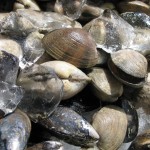
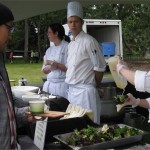
Clams from Spinnakers Salad coneSpinnakers Varnish clam


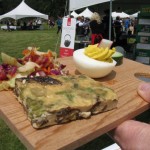
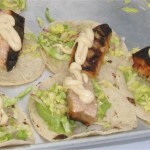
The veggie platter included an asparagus and morel frittata, which was delicious; so were the salmon tacos which tasted that much better after a lengthy queue while the fish was gentled on the bbq. And the LifeCycles plum gelato with its whisper of balsamic vinegar was excellent: it was made from urban fruit from the Fruit Tree Project.

Veggie platter Salmon tacos Lifecycles plum gelato


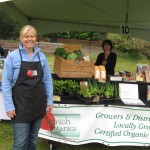
Farmers were there too: for the chefs revere the growers of their food. Farmer Mike Nyberg manned the Haliburton Farm stand; Heather Stretch and Rachel Fisher were on hand next door at Saanich Organics, where their very handsome and helpful book All the Dirt was on sale alongside the beautiful produce. And Farmer Derek Powell from Haliburton was spotted yukking it up with some City Harvesters.

Farmer Mike from Haliburton Farm Farmers Heather+Rachel from Saanich Organics Haliburton's Farmer Derek with City Harvest


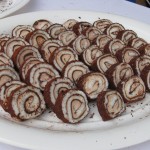
Best till last. There were some gorgeous sweets, including a a chocolate roll, a hazelnut biscuit, and some creamy crispy raspberry macarons from the wunderkind of VIU’s Culinary Arts program.

Chocolate roll Hazelnut Cookies Raspberry Macarons

Back in Victoria… just in time for winter

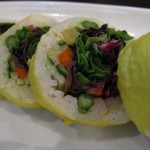
Before I left Vancouver we took a spin around a newish supermarket in West Vancouver: Osaka (the nineteenth store to be opened by T&T Supermarkets) is huge with a mind-boggling selection of just about anything Asian – from soya sauce to rice and noodles, and vast quantities of everything in between. There were large fish tanks offering shoppers live seafood: king and Dungeness crab, lobster and abalone as well as several varieties of oysters, clams and fish, and a bakery with all manner of Asian pastries and decorated cakes. While we browsed, reading labels as best we could, I couldn’t help but wonder what effect all these ultra-processed foods, high in sugar, salt, fats and all kinds of preservatives, will have on the much-studied Japanese life expectancy. We calmed ourselves at Bene with a couple of platters of sushi, including this vegan roll in a cheerful soybean wrapping.

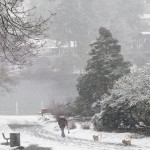
Back in Victoria, winter waited politely until I was settled, unpacked and the larder stocked with vegetables before drawing in with a little snow and cold weather, ideal for making soup and catching up on my reading. One of my astoundingly heavy bags held a copy of the River Cottage Veg Every Day! cookbook which holds some worthy temptations.

With my poetry ear I’ve been listening to the Saturday Play on BBC Radio 4, Tom and Viv, which explores the problematic relationship of TS and Valerie Eliot. Available until Saturday January 21, and starring Benedict Cumberbatch who seems to be everywhere just now. Listen for the reference to Robert W. Service…

Time, food and agriculture never sleep, at least not where interesting stories are concerned. Here are some that have been stacking up while I was away.

There’s a link here to a rather beautiful brochure  shows that shows you who’s growing what and where in twenty-six urban farms in Vancouver.

And a nice story about the loneliness of the the farming life which I suppose applies to urban farmers as well; it offers a reminder that we are often in too much of a hurry, and too accustomed to shopping anonymously for food, to thank those who provide it.

Some good news for Victoria food shoppers, with a new whole/local foods store opening, conveniently situated near the wondrous Capital Iron.

There was  wrist-slapping lesson in public consultation for Stephen Harper whose decision to bring to fruition his longtime plan to dismantle the Canadian Wheat Board was declared illegal by a federal court.

And finally, the soil is the thing: the EU Soil Report warns about the cost of doing nothing in a time when we are quickly losing the soil we’ll need to grow food by building on and contaminating it. Soil: Worth standing your ground for from The European Environmental Bureau explains why we should be paying attention, in urbanizing and industrialized countries everywhere:

Soil is the basis of all our food and fibre production and plays an essential role in water purification, waste decomposition and climate mitigation. It therefore must be regarded as a natural resource of strategic importance which should be protected adequately and used efficiently throughout Europe. The reality however is that Europe is losing this natural asset, thereby jeopardising Europe’s food security and its ability to deal with the consequences of climate change.

Breaking bread with Capital Nuts

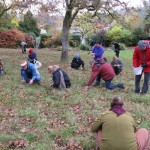
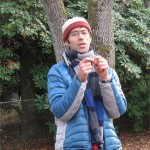
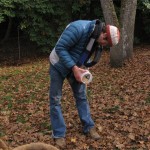
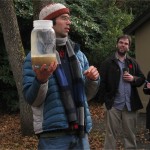
I attended a workshop yesterday organized by the Victoria Transition Capital Nut Project in Playfair Park, a restored Garry Oak Meadow in Victoria. It attracted a couple of dozen brave souls willing to stand in the November chill and learn how to make Garry Oak acorns edible. Being the proud custodian of a very large tree myself, and being overshadowed by a number of others, I thought it would be a worthwhile skill. We were led through the process by ethnoecologist and wild food forager Abe Lloyd.

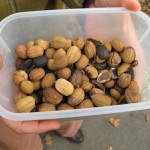
We learned about defects to watch for. Sprouted acorns (Garry Oaks are white oaks, a class of tree whose seed germinates in the autumn) are not necessarily a problem, although they are often cracked, which may allow insects or mould into the nut. Acorns with caps still in place when they fall are no good because the cap usually covers some mould. A small hold indicates that a worm has eaten the contents and left the premises. Spotting – especially dark discolouration – can indicate damage. The best way to find out is to open the nut (they are soft enough to crack with your teeth) and check. This time of year – October or November – is the best for hunting acorns. Early falls (August, September) are usually unripe or damaged nuts so should be avoided.


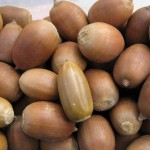
He showed us some samples – with a couple of English Oak acorns for comparison (there are a few of these trees in Victoria, though Garry Oaks are the native species). The ones that were still in their shells had been dried; his guideline for readiness was when the shell could be cracked easily by hand or nutcracker (or hammer). The shelled samples included some black ones which he said were still fine, but he’d hastened the drying process and discoloured them (they can be dried on racks, with fans or with a dehydrator). After drying, he ground them to flour in a blender. Because they have an oil content of about 10% they’re not well-suited to grain mills that use stone grinders, as they might gum them up (there is less oil in flour grains like wheat).


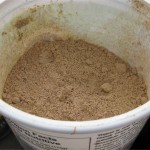
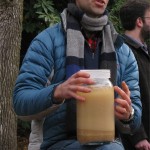
As it circulated, Abe invited us to have a sniff and a taste of the flour. We could smell the sugars in the flour, but it tasted bitter, because of the high tannin content in these acorns. The next step was to leech out these tannins, by soaking the flour in water for four or five days, pouring the liquids off morning and night, and then tasting the final product to check for bitterness. The colour of the liquid changes, growing lighter as the tannins are removed. The final sludge can be used straight away as a batter for flatbread, or dried and used with flour for flavour (bearing in mind it is low in glutens so wouldn’t make great yeast bread on its own).


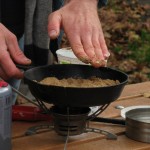
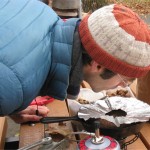
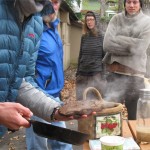
Abe demonstrated his flatbread technique. He usually adds maple syrup to sweeten the bread a little, but it worked well without.


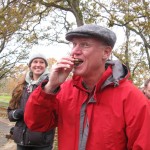
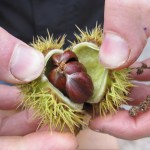
A morsel of hot acorn flatbread: just the ticket. Someone had brought some Spanish chestnuts – the edible variety which unfortunately don’t have quite enough time to ripen in our temperate climate. And local agrologist Kendell Neilsen was on hand with a sample of hazelnuts she’d gathered in the area.