Skip to content

local food

Eat Here Now… and we did

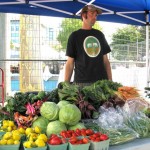
A glorious hot Sunday in the middle of Victoria, with food, music and more food. What could be better? The Downtown Public Market Society put on a great day in the interests of furthering interest in a permanent year-round downtown food market.  While I don’t know how far that goal is from being realized, the group certainly soldiered on through a bleak winter with regular markets offered in Market Square.

Last weekend it gathered together some fine local food food talent for a sunny celebration that featured food stands from local farms and small producers, including Hilary’s Cheese – promoting his new shop in Victoria – and the usual mob scene around Salt Spring Cheese’s ample samples, and Cottlestone Apiary with their wildflower, raw creamed and orange-infused tastes of heaven.


Baked, canned and hand-filled goods too…


Lots of farmers around, including my Haliburton friends


and City Harvest, Madrona Farm, Sun Trio (with their gorgeous lemon cucumbers) and many more.


There were food tickets on sale – a very reasonable $1 per ticket gave you a sample from most booths, stocked with everything from “kaleslaw” to cream puffs, and I proved to my own satisfaction that it was possible to eat extremely well for under $10. The barbecued salmon and boiled corn stands were mobbed for most of the time we were there; there were tasty treats from the likes of Canoe Brewpub, Bliss, Relish, Choux-Choux Charcuterie, AJ Organics and others…so after taking in all that with a taste of music and lots of sunshine we finally left, sated and laden with produce.

Traditional west coast plants, and some healing lip balm

Yesterday CR-FAIR hosted a brilliant speaker, native plant specialist and herbalist Elise Krohn, who runs the Diabetes Prevention Through Traditional Plants program at Northwest Indian College in Bellingham, Washington, as well as the Native Plant Nutrition program at the Northwest Indian Drug and Alcohol Treatment Center.

She was speaking at the Victoria Native Friendship Centre, and began by introducing her programs and talking about the various people who’d guided her along the path to a pretty impressive level of knowledge about native foods, herbs and medicines, and how these have been used by various tribes in the Pacific Northwest, and elsewhere. (One of her teachers, Skokomish spiritual leader Bruce Miller, was featured in the film Teachings of the Tree People.)

Her talk included discussion of the foods used in traditional diets and ceremonial meals. For example: horsetail, thimbleberry and salmonberry shoots can be peeled and eaten. Spruce tips are high in Vitamin C and can be eaten straight off the tree or made into tea. Bull kelp can be pickled, or dried and eaten as chips, for its thyroid-controlling properties and its ability to remove toxins from the digestive system.

Skunk cabbage leaves are “Indian wax paper” used to wrap food for storage or cooking: salmon baked in green skunk cabbage leaf stays moist and has a sweet flavour. Leaves should not be eaten without knowledgeable preparation, because they contain calcium oxalate crystals which are an extreme irritant to say the least (this is what kidney stones are made of).

Huckleberries contain flavonoids (to protect and strengthen arterials) and antioxidants; berries and leaves both contain compounds that will lower blood sugar – eat the berries and dry the leaves for tea. Evergreen huckleberries are sweetest after the frost.

Salmonberries have been so important in native diets that families used to cultivate their own patches. Its name might originate in its appearance, since it resembles salmon eggs (and can be used as trout bait for that reason). Salmonberry abundance in its preferred habitat – near fast-running streams – is said to be an indicator of a good salmon year.

Then we got to camas, which is one of the best known native foods in this area; in fact, Victoria is built upon one of the best camas prairies in the area, cultivated for centuries through a system of burns and careful harvest. (We also heard that the Empress Hotel, built on a portion of James Bay that was dredged, drained, and filled, sits on one of the richest clam beds on the Island) Camas bulbs are harvested with a traditional digging stick which allows the root to be lifted and the bulblets that surround it to be replanted, leaving the ground relatively undisturbed. This aerates the soil and gives the remaining bulbs room to grow, so will result in larger crop yields.

The burning that was traditional for maintaining the camas prairies took place in the fall (seed having been collected in the spring); it improves the habitat by reducing competition to the camas bulb by other vegetation. Camas prairies are important habitat for other native vegetation, including chocolate lily and serviceberry (saskatoon). The bulbs are harvested nowadays in the spring, while the flowers are blooming, although they grow sweeter and fatter in the fall; but the flowers are needed for identification, so as to avoid a toxic imitator, the death camas, which has a very similar leaf. I’d tasted some camas bulb at a pit cook several years ago, but found it inedibly bitter; I learned that this was due to undercooking. It needs about 24 hours to cook fully (and should be black, inside and out) before the inulin it contains activates and becomes sweet and delicious. Nowadays it’s often precooked in pressure cookers before being added to pit cooks with other foods.

Elise then turned to discussing the various projects that culminated in a resource and recipe book I’m grateful to have been able to purchase from her, as the book (together with a companion volume I’d also like to get one day, Wild Rose and Western Red Cedar: The Gifts of the Northwest Plants) is normally only available within tribal communities, to protect the cultural property rights of the tribal contributors. Feeding the People, Feeding the Spirit: Revitalizing Northwest Coastal Indian Food Culture was developed using research from the Traditional Foods of Puget Sound project, which included archaeological digs to identify traditional foods from the remains of old cooking pits and middens. There was also a round table discussion with native peoples in the area, about barriers to eating and accessing traditional foods. And then they held a Tribal Cooks Camp, where experienced tribal cooks worked together to develop a series of healthy recipes suited to modern kitchens and contemporary access to traditional foods.

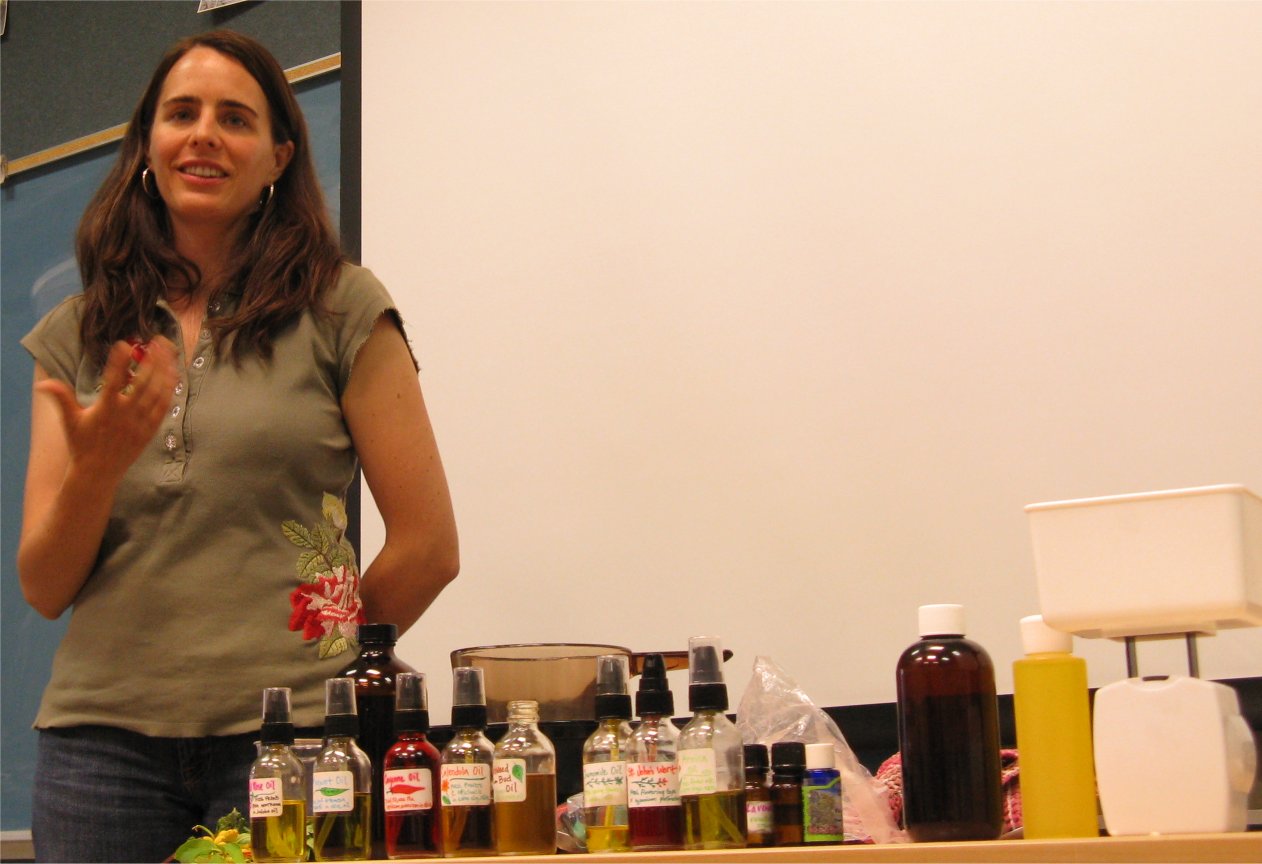
After a break, we prepared to learn how to make lip balm (a clever instructor is this one, who draws young people in by teaching them how to make their own cosmetics!) Here Elise talks about the cottonwood bud, which she’d infused in olive oil and would be using in the lip balm demo. It’s a pungent aromatic, and the oil, or salve made from it, is also known as Balm of Gilead; like most essential oils it’s anti-inflammatory and antimicrobial, and it’s also an analgesic, so a good thing to put into lip balm. Or salve.

She brought with her quite a selection of infused oils, including cedar, wild rose, cayenne (used in Tiger Balm among others), calendula, devil’s club, St John’s Wort, arnica and chamomile. She’d made these with the help of her students; some of the herbs had been heated gently with extra virgin olive oil in a water bath; the more fragile ones (like rose and calendula) had been solar-infused: placed in sunlight. The oils can then be used as massage oils (e.g. devil’s club is used for arthritis relief) or turned into lotion, salve or lip balm.

Mix grated beeswax

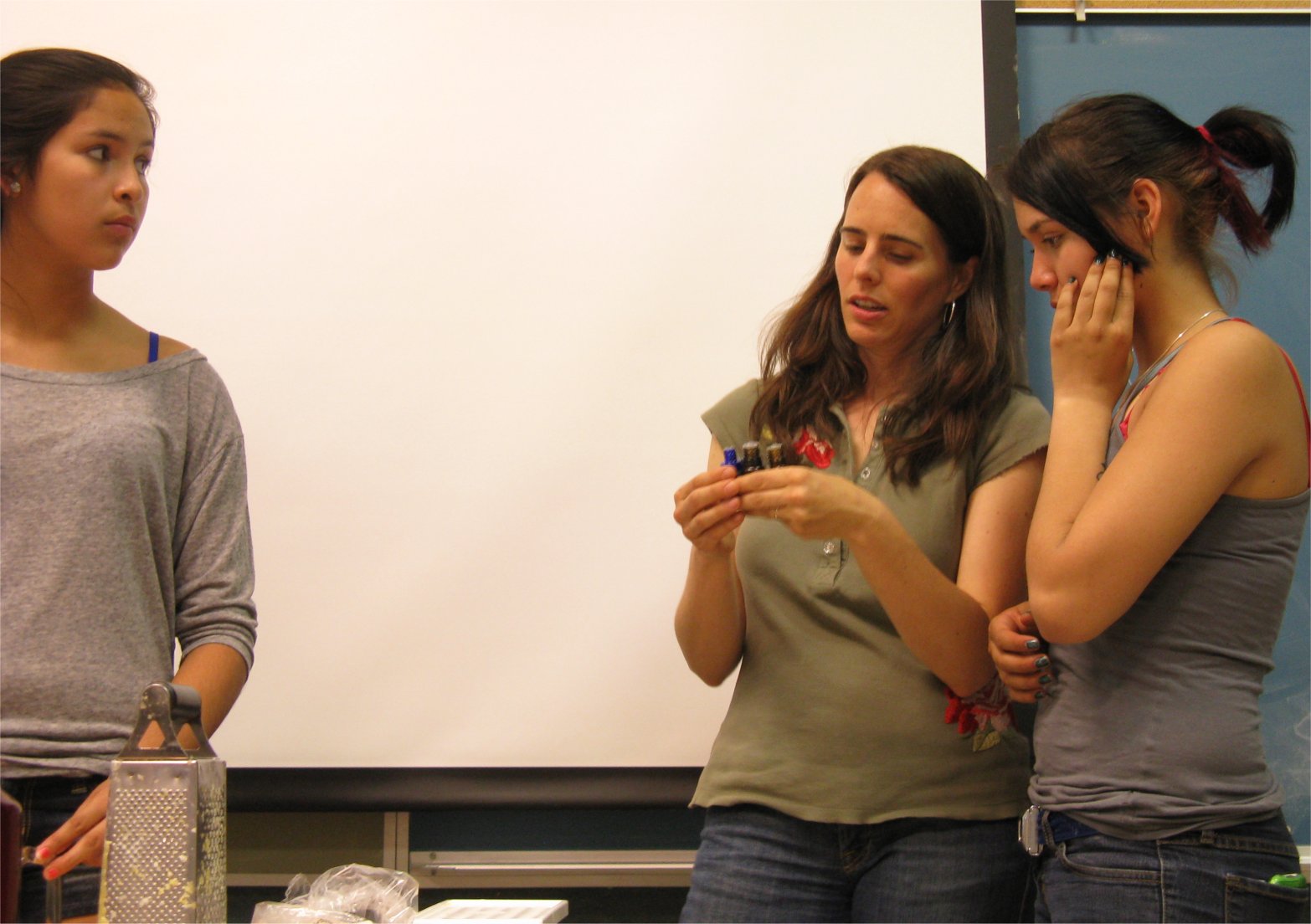
with infused oils, essential oils (for our mixture she used black spruce, western cedar and lavender),

and extra virgin olive oil (organic from the US or choose brands from Spain, Italy or Greece where there is less pesticide use). You can also, as she did in this instance, use jojoba, a plant-based oil from the American southwest, which is said to be the closest substance to bear grease (which is said to be the closest to human fats and therefore perfect for lotions and salves to rub into your own skin). Stir gently over heat until it melts.

Test on a spoon – cool to room temperature – to make sure it’s the right consistency.

Then decant into a pouring jug

and pour into tubes. If you’re making lots, this handy holder means you don’t have to spill it all over the counter: you can just scrape the excess off with a credit card.

Slap a label on the tube, and you’re done. Great gift for potlatch or canoe trips, she observed.

Farmland fun

Thursday’s excitement was participation in the Focus on Farmlands conference, where about 180 interested parties, younger and older, got together to talk about farming, food, agricultural land trusts and ownership and where to go from here. Presented by the tireless souls of LifeCycles, including Linda Geggie,
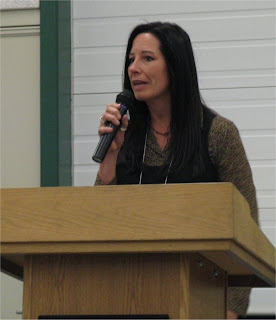
it was a stimulating day of discussion with participants from many different areas: lots of farmers, a good selection of elected officials at several levels of government, and some fringe-dwellers like myself, there to find out more and connect with the like-minded. The topics ranged from farmland trusts, community farms and other models of land access, to farm status and assessment, to political strategies, to urban and traditional methods of growing food. There was too much for any one soul to take in, so LifeCycles plans to post information from the sessions as soon as they can get it onto their website. Video footage from sessions and interviews is being posted on www.farmlands.blip.tv

We began with some prayer and drumming from Scott Sam, of the Tsartlip Nation
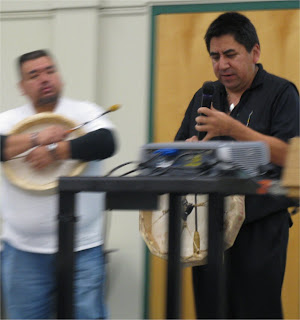
and then had a briefing from agrologist, farmer and BC Agriculture Council member Niels Holbek who had many interesting statistics to share, including some on farmland loss from the American Farmland Trust and the Farmland Preservation Research Project at the University of Guelph; and a local stat that came up several times through the day: 3% of the province’s land has both 80% of the population and 80% of the province’s gross farm receipts; not a good formula, observed someone, should there be a food security crisis, and the reason why there is so much competition for the same land for farming and housing.
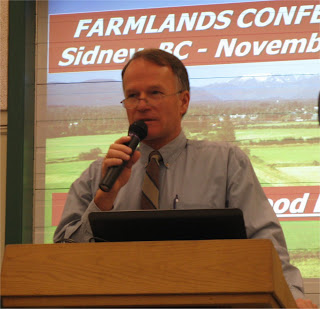
We then broke into workshop sessions. I went to the one called The “Regional Food Basket” – Looking Beyond Farmlands, where we heard from two members of the Tsawout Nation, JB Williams and Earl Claxton Jr, who are working to restore first nation ties to traditional food sources and culture; observing that their populations had been devastated by the introduction of some foods and the loss of others. Lee Fuge of Food Roots talked about pocket markets and the distributors’ warehouse space they share with Share Organics and LifeCycles – but she then had to dash back to the kitchen to make sure our lunch wouldn’t be delayed. Melanie Sommerville of LifeCycles threw a few more numbers into the statistics pool: about 80% of Canadians now live in urban centres; 84.5% do so in BC, with just over 50% of the province’s population in the Victoria and Vancouver regions combined. There is a lot of interest in growing food nowadays – local seed selling has tripled this year – and there are many great examples of local urban agriculture projects – the Fruit Tree program, the Sharing Back Yards program, HomeGrown Gardens, Growing Schools and Spring Ridge Commons. Deb Heighway talked about SPIN farming in Victoria, and recommended the online resources which helped her join the 2000 others worldwide who are farming in other people’s under-used back yards.

In the afternoon I attended the From Ideas to Action: Farmers and Eaters Taking Action on Farmland Issues workshop led by David Mincey,
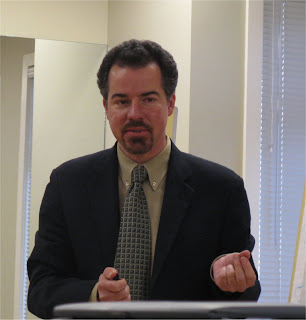
whose Camille‘s restaurant has long been known for its use of local products.

He was joined by fellow restauranteur and Island Chefs Cooperative member Ken Hueston, whose Smoken Bones Cookshack sounds worth a visit. He talked a bit about ‘food trending’ – which is a bit of a vicious cycle, where flavour-of-the-month foods get over-promoted at the expense of variety and honest experimentation by restaurants. A veteran protester (he’s only recently been allowed back into Safeway where 10 years ago he kicked over a display of Mexican corn when there was a local farm visible out the window) he made another good point to do with consumer demand: if we simply go on accepting only 5% local produce in our supermarkets, there’s no motivation on the part of supermarket buyers to change their sourcing. Next to him was David Chambers from Madrona Farm,
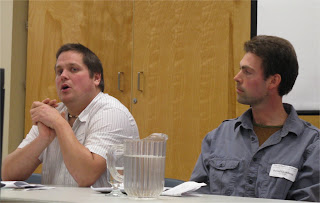
who spoke persuasively and from personal experience on the idea of channelling what farmland we have left through The Land Conservancy, so that it’s preserved for agricultural land in perpetuity, and not loosed to the whims of marketplace when farmers retire. His family farm is in the process of being bought by TLC who – if the needed funds are raised by July 2010 – can assure its future better than the Agricultural Land Reserve, which has proven itself unequal to the forces brought to bear by speculators and developers, and which protects relatively little of the most fertile land in the province, down here in the southern third where all the people want to live. In fact, as Niels Holbeck had told us at the start of the day, 90% of the land included now in the ALR is in the north of the province, and 70% of the lands excluded from the ALR are in the south.

Elmarie Roberts gave a primer on what community support for agricultural land can do, from her experience at Haliburton Farm, which is one chunk of land rescued from subdivision and property development by the local council, and protected by its nonprofit status. She’s one of six farmers who’ll be bringing in the veggies for thirty lucky supporters of their Community Supported Agriculture program. She said that in its purest form, a CSA helps to fund the farm’s operation by small scale investment by members of its community, and its members also work the land alongside the farmers. Here, though, it’s a pick-up scheme that provides a selection of seasonal fruits and vegetables to members, with volunteer work parties picking up the slack in weeding and field work. To her right is Lana Popham,
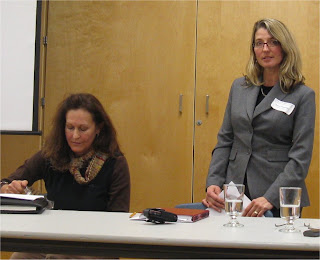
whose family runs the Barking Dog organic vineyard (and makes a rather special local gin!) and who is running for a seat in the next provincial election. David Cubberley
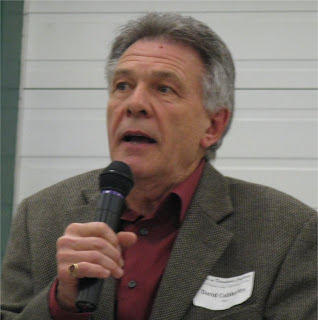
is already there (and put his money where his mouth was by laying down a significant donation to the Madrona Farm purchase fund). He talked about a few of the ALR properties that were topical at present: Panama Flats and Beckwith Farm, both owned by developers claiming to want to grow organic blueberries – I guess they’ve really turned a page in their career books – and he ran us through the political history of Haliburton’s acquisition; it had been owned by the water board who had been sorely tempted by developers who were only stopped by a group of active and well organised community members.

Corky Evans
gave the closing address.
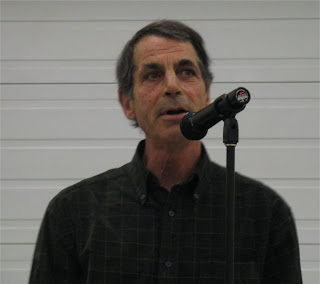
He’s retiring after 25 years in politics, including stints as provincial Agriculture minister and most recently Agriculture critic, and he wanted to share some insights into motivating politicians. He urged people to start showing up at council meetings, to organise into large enough audiences that politicians would have to come and answer to us: “We don’t listen to small groups of people who don’t all live in the same constituency.”

Food, he said, has never appeared on the agenda of any party meeting, any poll, any election in this province; there are no farmers elected to the legislature: and that is why there is no food policy in this province. Someone has to educate the politicians, he said, and a crisis point such as the one we’re in is the best time we’ll ever have to keep them focused on food as an issue; without focus, no action.

Words dear to my heart: “The drug of our time that dissipates focus is television. If you want to keep focused through the next election, don’t watch television, don’t get distracted by what the television stations tell you are the issues.”

He pointed out that BC pays less to support its farmers than Newfoundland; that it would cost $143 million to bring the province to an average rating, compared to other provinces; which amount is .4 of 1% of the annual budget, or $1 million less than tax breaks currently awarded by the government. He wasn’t talking subsidies, which he feels promote bad farmers and bad food, but there are all kinds of ways to support farming other than subsidies.

He said if we were looking for something to ask for in the next election, how about voting for the party that votes to end exclusions (from the ALR): but only if that party also supports farmers: “You can’t protect the land and abandon the people.”

And of course we ended with food: provided all day by the resourceful crew from Food Roots, including apples
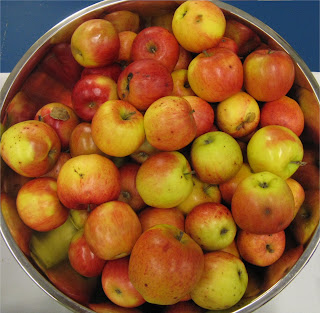
from the Fruit Tree Project. I had to skip out smartly so missed the wine and cheese which featured beverages from local brewers and vintners and Natural Pastures cheeses.

Berries ‘n Cherries

I think while the fruit’s still with us, we should go on celebrating National Cherry Day in England! Read all about it at CherryBites, or join the CherryAid group on Facebook.

Over here, we too love cherries. Some of us might be lucky enough to be in Bruno for some sour cherries ‘n poetry… But if you can’t make that, how about heading to bing country in Kelowna for their festival?

A happy discovery on my walk the other day: it’s native (Rubus ursinus) blackberry season and I found a bowlful’s worth in a secret location.

Smaller, sweeter and much less numerous than the Himalayan blackberries, which have overrun the Island, they pack an aromatic punch and flavour. After gorging on them (well paired with Udder Guy’s vanilla bean ice cream)

I’ve frozen a precious handful to wait for my Yellow Transparent crop to ripen, which won’t be long now. That will be one fine pie.

The Himalayans are still feeding the bees, and won’t be ready till later in August from the looks of things.

The difficulty of eating local

One of the difficulties of trying to eat local food is that you can’t trust food labels, at least not in Canada. Last October, CBC’s Marketplace broadcast an enlightening program about the meaning of the ‘Product of Canada’ label, which you can watch again online, in which they revealed that this branding means that 51% of the production costs (not even the content) were spent in Canada. This is allowed thanks to legislation created in 1985, when 20% of Canadian food was imported; now we’re at the 40% stage, it is starting to sound downright silly, let alone outdated.

So in the example given, of Highliner frozen fish products branded ‘Product of Canada’, the fish may have been farmed in Vietnam, Indonesia or China and then shipped frozen to Canada for processing, becoming Canadian somewhere en route. When the program-makers went to Lunenburg, the published address for Highliner, they were told that no fishing boats had come in there for six or seven years.

All of which is problematic to consumers: they can’t make informed choices, because the information they’re using is flawed and misleading. They can’t vote with their wallets against poor labour practices, potentially unsafe food production practices, unsustainable fishing practices, or unsound ecological practices, and they can’t even support local producers because they cannot tell (from packaged goods anyway) which products are truly local.

Local food at Sooke Harbour House


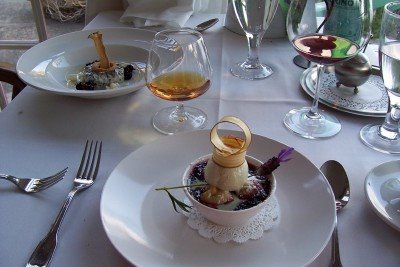
So just when my words about not knowing anyone who dines at Sooke Harbour House fall from my fingers, I get invited to dinner there. It is very good food, and they certainly go to great lengths to make it look very pretty, as you can see from photos – capturing only three of the four courses we were offered. The salad I thought was a dish that would go with any outfit. I especially liked the herbal wall that surrounded the moat of sauce (TOO many ingredients to name here) beneath the island of grilled halibut. Perfectly cooked fish: hard to beat. I did not check to see if the head dress – perching on my lavender ice cream which surmounts a couple of rosemary dumplings adrift in a wild berry sea – was edible. But most things were so I wouldn’t have been surprised.

To give you a sense of the style of the menu descriptions, had we been there on Thursday we could have had as a starter a warm smoked sablefish served with asparagus, sundried tomato, chervil, bulgur and caramelized onion bundle, sauteed gooseneck barnacles, daikon miso foam and Grand fir oil. At least there is a stunning ocean view to rest your eyes upon while you try to work out what all that would taste/look like exactly. Last night a couple of eagles drifted by, a blue heron, and one harbour seal on an evening fishing trip.

After dinner we checked out the art which is hung on every public wall – an informal gallery really – and then the garden which surrounds the building; lots of borage and calendula which are popular ingredients in many of the dishes. I had read that you won’t get a lemon with your fish because it’s not a local product, but I was glad to see they had apparently stretched the line for a few staples such as flour and sugar.

There was an interesting experiment – the 100 Mile Diet – done recently by a pair of Vancouverians who ate only local produce (from within 100 miles of their home) for a year, and they mentioned in a radio interview that wheat was the most difficult thing to give up, although they eventually did find a wheat farmer and were able to have bread and pasta again. Their website gives Canadian and American readers a tool to find the 100 mile radius round their homes if they want to try it too.