



Plum Wonderful

Ooh, even better than Lightning Cake – but not as good a name – is Dutch Plum Cake which I found in my mother’s 1955 edition of Good Housekeeping, a book in even worse physical condition than the Boston cookbook. This one has silver duct tape on the spine and crumbling pages. Luckily someone else has copied out the recipe for me. I didn’t make the vanilla sauce; it was lovely warm and on its own, or with ice cream. And a good way for me to use up a little of my personal warehouse of home made jams and jellies!

I’ve been enjoying a blast of end-of-summer reading. A wonderfully easy and useful book on my table just now is 101 Ways to Make Poems Sell, by Chris Hamilton-Emery, a poet himself as well as the publishing director of an excellent UK press, Salt Publishing. In a neat demonstration of zeitgeist, it’s appeared at the same time as Wendy Morton’s memoir about the poet as self-promoter, Six Impossible Things Before Breakfast. Hamilton-Emery’s book gives some incredibly useful background on the poetry publishing industry (if that is the word for this labour of love) and a host of well-organized and practical suggestions for poets and publishers alike to get this slowest of all selling genres out into the world.

5 Comments


Back to school

There’s the inescapable edge of gold on the maple leaves, the geese are gathering on the Gorge and the wasps are getting cranky and slow. The blackberries are getting tasteless and starting to wither, the autumn apples are beginning to drop. Those of us blessed with the permanent-student gene are feeling itchy for new stationery, the crack of textbook spines, the scent of printers ink.

And so, narrowing my view to avoid inconvenient questions like how I’ll afford it, or how I’ll make 10,000 arrangements in 60 days, I’ve accepted a place in a year-long master’s program at the Slow Food’s University of Gastronomic Sciences in Colorno, near Parma in northern Italy.

No, it’s not a cooking course, or even a study of stomach ailments – at least not deliberately – just a year of learning about food. The courses include:

Food History and Elements of Food Culture
Wine History and Wine Culture
Food Anthropology
Sociology and Psychology of Food Consumption
Journalism and Web Page
Techniques of Food Photography
Sensory Analysis
Culinary Techniques

Field trips are required, throughout Italy and in France, Spain and southern Germany, in order to study pasta, cheese, cured meat products, oil and wine. Luckily it’s taught in English, as my Italian was bad even before it was rusty, though there are language classes and of course a lot of opportunity to practice. So now I have a couple of months to get ready for the next adventure.

7 Comments


Lightning cake, sloes and plums

Looking for something to do with a basket of plums, I turned to my mother’s old Boston Cooking School Cookbook, whose spine is now made of electrical tape and which has all manner of interesting thing poking out between the pages. In it I found a recipe for Lightning Cake, and the suggestion to add a layer of plums or tinned prunes to the top, with a sprinkling of cinnamon sugar. The batter rises up and surrounds the fruit and it looks decorative and tastes heavenly. Here’s my version:

Lightning Plum Cake
1 egg
1/2 cup sugar
1 cup flour
1 tsp baking powder
1/4 tsp salt
1/4 cup milk
3 tbsp melted butter
1/4 tsp lemon zest
1/2 tsp vanilla
about a dozen fresh plums, halved and pitted
juice of half a lemon
1/4 cup sugar
1 tsp cinnamon

  • Beat egg and add sugar; add sifted flour, baking powder and salt; add the milk and melted butter, lemon and vanilla. Pour into a buttered 7×10 pan.
  • Lay the plums cut side down over the top of the batter. Sprinkle with lemon juice, and then with the sugar mixed with the cinnamon. Bake at 350 for about half an hour.

To go with this I’d recommend a poem by Gillian Clarke called Plums (which I have in her 1985 Selected Poems) rather than the William Carlos Williams one (afraid I never did like that poem and found his act of pilferage unforgiveable). Here’s a blog entry with yet another plum poem, by WS Merwin, although I am not sure that sloes are really ever known as night plums; that sounds more like a lipstick shade to me. If I could have laid my hands on any sloes in Victoria I’d have made a batch of sloe gin, which is a strange and unique substance that somehow preserves the pucker of the sloe even after its long bath in alcohol.

3 Comments


Potluck Capital of the World

Victoria seems to me to have an above average number of dinner parties of a potluck nature. (These are not to be confused with potlatch parties which are on another plane entirely and I have yet to receive an invitation to one.) For last weekend’s event – in a largely vegetarian household – I was assigned a starter or salad course, so I turned to the infallible Delia for inspiration.

In my treasured tome Delia’s Vegetarian Collection I found a winner in her Red Onion Tarte Tatin: the onions turn sweet and joyful, and the crust – a butter pastry which I’ve never had much luck with – even worked. Here are the ingredients, translated into North American measurements. Purists with kitchen scales (and those wanting photos and the recipe’s instructions!) should turn to the original recipe. (There’s a quicker variation, based on a shallot tarte tatin recipe, using commercial puff pastry, at Waitrose.com).

2½ lb (1.15 kg) red onions (about 5 medium)
2 tbsp butter
1 teaspoon sugar
6 small thyme sprigs
1 tablespoon chopped fresh thyme
1 tablespoon balsamic vinegar
salt and freshly milled black pepper
For the pastry:
3/4 c white flour
2/3 c whole wheat flour
1/4 c soft butter
1/3 c cheddar cheese, grated
1 teaspoon chopped fresh thyme leaves

And here’s a ditty from Jonathan Swift to mutter as you cook:

This is every cook’s opinion –
No savory dish without an onion,
But lest your kissing should be spoiled
Your onions must be fully boiled.

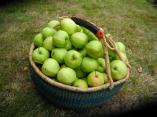
My next task will be juicing some of this year’s apple crop – nothing nicer to dig out from a winter deep freeze than home made apple juice sweetened with summer carrots – but a lot of peeling and chopping ahead of me to get those apples into the juicer. So I was pleased and inspired to find a poem called Apples in a collection I’ve been reading (Saltations, by Jennifer Still – poet and co-founder of JackPine Press, which produces exquisite chapbooks).

4 Comments


Horses and kidneys

While I was in Edmonton last week, a couple of people mentioned a book that had been recently launched – Ride The Rising Wind: One woman’s journey Across Canada by Barbara Kingscote – about a woman who rode across Canada on a horse.

This made me think of a gorgeous poem, Jack, by my heroine Maxine Kumin; it’s the title poem from her most recent poetry collection. I was lucky enough to see and hear her at the AWP conference in Vancouver in 2005, where she was the gracious and feisty subject of a tribute by five other poets. Her reading of this poem had us weeping in the aisles. I had forgotten that it starts with a meal of corn on the cob, so topical in these days of seasonal plenty.

Last night we had steak and kidney pie, which was the ritual dish my mother used to make for all large family gatherings. Kidneys can be a stinky thing to handle but surgical gloves help, as does soaking the kidneys for an hour or two in slightly salted water. I don’t think she added mushrooms to hers but I do to mine; otherwise I think this is the gist of her recipe.

Steak ‘n Kidney Pie like my mama used to make
1/2 cup flour
1/2 tsp salt
1/2 tsp black pepper
1/2 tsp paprika
1/2 kg stewing beef, in 1 inch chunks
1/4 kg beef kidneys, trimmed and soaked for 1-2 hours in salted water (or well rinsed)
1 onion, chopped
2 cups fresh mushrooms, scrubbed and sliced or quartered
2 cloves garlic, minced
2 potatoes, peeled and diced
2 medium carrots, diced
1/2 cup dry sherry or red wine
1/2 cup beef broth

  • Mix seasonings in flour and use this to dredge beef and kidneys. Fry the meat in batches in hot fat (bacon fat, according to my mother) until brown on all sides. Remove meat to a casserole. Cook the onions in the same frying pan; cook till transparent and add to casserole, scraping the brown bits into the mixture. Next brown the mushrooms and add them to the meat. Then combine the garlic, potatoes and carrots and stir into the pan for about 5 minutes, until hot and partially cooked. Mix into meat mixture. Stir in sherry and broth; add bay leaf. Cover casserole and cook in 350 oven – or on low heat on the stovetop – for 1 hour, or until the meat is tender, stirring occasionally. Remove and cool; keep overnight if you like or freeze until you need it.
  • When ready to serve, cover the mixture with puff pastry, propping up the pastry with a ceramic pie bird if you have one, and cook in a preheated 375 oven for 1/2 hour, until pastry is puffed and brown and meat is bubbling. You can divide into smaller casserole dishes so you have individual servings if you prefer; adjust cooking times accordingly.

Perhaps the poet Unknown was thinking about steak ‘n kid when (s)he penned this verse in 1880:

I surely never hope to view
A steak as luscious as a stew.
The latter is the tasty goal
Of elements in perfect whole,
A mad assemblage of legumes
Exuding warm ambrosial fumes,
Each seasoning of proper length,
Proving in Union there’s strength.
A steak is grander, it is true,
Yet needs no special skill to brew.
It is an art a stew to make,
But anyone can broil a steak.

Comments Off on Horses and kidneys