Skip to content

food tastings

Piemonte Monday

We had four busy days exploring Piemonte (Piedmont), in north-western Italy. We made an early start from Parma and lunched in Pollenzo, at the campus cafeteria of the first and other campus of our university, and were able to exchange notes with a couple of students on the degree course, which lasts three years and has a much higher enrollment (60) than our master’s program. The first group of students in this program is due to graduate this year, after many travels and many experiences. It’s an expensive proposition, but even so the tuition only covers half the expenses: with tours stretching as far afield as India, Australia and Scotland, it can be pricey and complicated to administer.

After lunch we met the first of two winemakers from the region. Michele Chiarlo specialises in two famous Piemonte grapes: nebbiolo and barbera. I had fallen in love with Barbera wine this year so was thrilled to taste a couple of excellent examples, and some excellent Barolo, while hearing about the winery’s operations from oenologist Stefano Chiarlo. The interesting details he explained included setting the corks (only natural ones – like others we’d met, he maintained that artificial materials don’t work in wines that need to age in the bottle more than three years) with the bottles upright; after two weeks, the bottles are all turned by hand into the horizontal position. He feels this keeps the cork in better condition for aging.

After the tour and the tasting, we had a particular treat when he took us up into the hills to see a barbera vineyard. He told us about the green harvest, which is the pruning, over the summer, of excess grapes, so that the plants can pour their energies into producing more concentrated flavours in the remaining bunches. He also explained that the vineyard had originally been owned by Tuscans, who brought the cypress trees in the background, which are now about 250 years old.

His family are art lovers, and there were some very cool things to see alongside the grapes.

New takes on an old tradition which posted heads on every road, as protection against malady. Note the ubiquitous rose bushes which here too play their important role in predicting fungal attacks.

They also host a summer festival in the vineyard, with music and wine.

That evening we were treated to dinner in a special osteria, the Ristorante ‘Belbo Da Bardon’ where we had some excellent meat-filled pasta, some very tender veal with broad beans, and a lovely slab of creme caramel.


Dijon continued: more wine, a few smoking barrels and a nice bit of cheese

On Friday, we visited the Château de Corton-André, to hear about the wines of Pierre André from Christian Ciamos. He told us first about the yellow tiled roof of the chateau, which had come from Bruges and which was one of few in the area, an emblem of nobility dating back to the power days of the dukes of Burgundy. The château itself had been built on Cistercian cellars: the Cistercian monks were the first vintners of the area and established most of the vineyards and techniques still in use in Burgundy wines.

In the fields, he talked about the moves to organic and biodynamic methods of cultivation that he and other winemakers are making. Basically, he said, it’s a question of respecting nature. Hence the roses still grown at the ends of many vineyards: they are prone to the same fungal attacks as vines and will show evidence before the vines do.
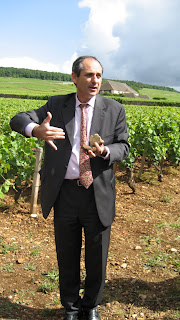
The vines of Pierre André are treated for disease, he said, not the risk of disease, otherwise you kill both the illness and the ecosystem. He and others we’d heard from during the week came back to their incontrovertable truth: that living things that are not routinely treated with chemicals (whether pesticides or antibiotics) are fundamentally more healthy and able to resist disease than those you make dependent on chemical cures. There is again no irrigation in use here: the vines are made healthier by having to sink their roots deep into the soil to find water.

We then retired to the cellar to have a tasting of wines from 2003 and 2004, and picked up an interesting snippet about wine tasting: there are three noses in wine – when it’s just poured in the glass; when it’s been swirled; and when the glass is empty.
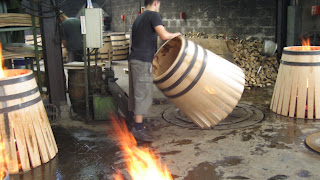
A big excitement later that afternoon was the visit to François Frères Cooperage, where we watched barrels being made. The company makes most of its own staves from lumber purchased at auction, and trims the pieces to size in a small mill on its property. The staves are then aged for two years before being trimmed again and formed into barrels. The most dramatic moment was the toasting, where the half made barrels are placed over fires so that the heat relaxes the wood and flavours it to the specification of the buyer.
Before we knew it, Monday had arrived and it was our last day in France.
We visited Gaugry, a family-run cheese factory near Dijon, to learn about the making of Epoisses. This is one of the soft smelly French cheeses that I’ve never been wild about, but I enjoyed the tastings, and found my favourite of the three we tried was mild, creamy and firm – a much gentler taste than the aroma suggested. It was nice, though not enough to cause me to risk the aromatic integrity of my fridge in Parma by bringing some back with me, but I will look forward to tasting it again one day.
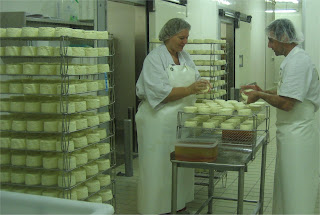
It’s a slow-coagulated, hand-salted cheese that is molded and dried before beginning a month or so of washings several times a week in marc de bourgogne (a wine solution) which gives it the orange colour we know it by.

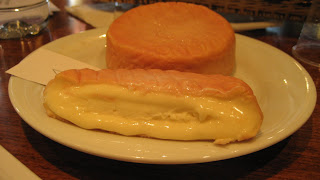
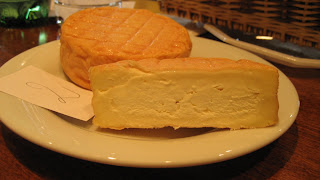
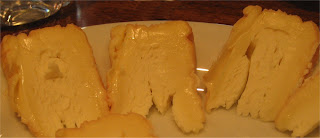
We tried three different versions: two raw milk (one a farmer’s cheese and the other made at the Gaugry factory) and one pasteurised, for markets like the US where raw milk cheeses can’t be sold. A tip for the interested is that pasteurised versions are runnier than raw milk ones, so it’s easy to spot the outsider among these three:
We had a few hours in a very warm room at the top of the Burgundy school of business in Dijon, where Peter Dunn walked us through the massively confusing layers of names and quality marks for Burgundy wines. It was new information to me on the Bordeaux Classification of 1855 and some helpful review of AOC requirements for French wine. It was more on exposure, water, soil, limestone, marl and weather systems, and a bit on pruning and vinification.

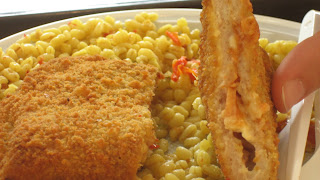
But before that, we were subjected to what may be the worst meal ever served (and not, in most cases, eaten): the cafeteria of the business school in Dijon. Curiously, they were offering this abomination during a student recruitment drive. The first photo was an unidentifiable deep fried something that was described as having a ‘bolognese’ filling; it was served on a mystery grain.
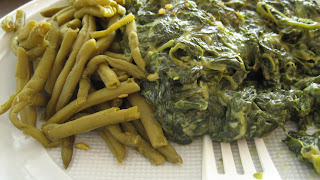
The vegetables had been cooked into some kind of alternate chemical existence; it was as if they had gone beyond their roles as long dead plants into some new and appalling incarnation that could not properly be described as a life form.
It was puzzling to us: why had we been brought here? Was there a learning point in this mealtime? This was not slow food; but neither was it particularly fast, and it was fairly certainly not even food.

When we had completed our close observation and dissection of the substances, and drunk our cups of water, we were directed to a large bin in the corner where everything – the ‘food’, plastic cutlery, plastic plates, paper cups and napkins – were tipped into a plastic-lined void. A perfect finale: this school doesn’t trouble itself with either edible meals or recycling. I wonder what other lessons the business students take away from this place when they graduate.

Beef and chicken à la française

So here we are in France. We arrived on Sunday morning, in Lyon, and I for one am rejoicing in the cooler temperatures – Parma was a steamy 35 degrees when we left. We’ve had our customary stage weather – chilly and drizzly with a bit of sun thrown in.

We had a free night in Lyon and headed for Le Nord, one of the Bocuse brasseries, on the expert recommendation of a local (thanks Jeremy). An excellent salad of green beans, artichoke hearts and a silky slab of foie gras de canard, followed by a wholesome waffle with sides of applesauce, warm chocolate and cream. Pas mal, and a good entree to France.

Monday we were up with the birds and off to Bourg-en-Bresse where we met our new friends Philippe Marchenay and Laurence Bérard, researchers in food and bio-ethnology, who talked to us about geographical designations and biodiversity in French food products.

Our first example was Charolais beef, plodding towards AOC/PDO designtion and so widely known already that they have their own museum at la Maison du Charolais, where we had a talk and a tasting.

Then onto the bus and off at a Charolais farm.

Dominique Gateau, the owner, talked to us about his breeding practices, which involve 24 hour video surveillance during calving, which lasts from January till June. We met a few of the newcomers and were shown some of the qualities that make good beef cattle.

Afterwards, he set up a little wine and cheese party on some hay bales, featuring of his own goat and cow cheese.

And then back to le Maison du Charolais where they also have a restaurant, and we had a Charolais steak before heading off into the night.

Tuesday morning we ambled across the street to Lyon’s excellent food market, les Halles de Lyon, where Philippe and Laurence guided us through the stalls.

We fetched up at a great cheese stand and bought plenty for lunch which we enjoyed in Philippe and Laurence’s comfortable house in the country.

Lots of cheese, wonderful bread, salumi, apple juice, Philippe’s cornichons, a bowl of fresh strawberries, and their neighbour’s wine.

Then to the Bresse Chicken farm owned by Christophe Vuillot, who, at 37, thanks to skills at poultry farming learned from his grandfathers, has a happy life raising his happy chickens who fill the fields around his house, with a small flock of guinea fowl and a grey border collie keeping an eye on them. The birds are long maturing, fed on a mixture of special poultry feed and what they forage in the grasses, and they are given a helping of whey in their feed which works as a natural preventative against worms and parasites. They are also, of course, healthy enough that they don’t need the chronic antibiotics that battery farmed chickens do.

We were given a demonstration of the dressing of these very special and very expensive chickens, which are slaughtered on the farm, their head and neck feathers left on (for aesthetic purposes, the farmer explained) and then sewn into a linen casing that expels air and acts as a secure protection for up to a week. The chickens are prepared this way for competitions and feast day – 150 of them are hand sewn each Christmas at this farm alone.


And for supper, we had… chicken.

Lots of fish

Two fishy events last week. The first was an enlightening visit from a veterinarian, Valentina Tepedino, whose topic was fish quality. We embarked on a preprandial nightmare into nematodes and parasites (anisakis), poisons (tetrodoxin) and various aspects of fish fraud. Here is a small fraction of what she talked about.

Fish fraud, she said, is huge in Europe; as much as 80% of the tuna sales in Europe are fraudulent, with lower grade fish (bluefin) being passed off as the more expensive yellowfin or albacore, and it can happen because the fish are not sold whole where the identifying dorsal, pectoral and anal fins cannot be seen.

Likewise there is well documented fraud involving other fish varieties; a farmed fish, Pangasius, a sort of catfish, is often passed off for sole. It’s so cheap to produce that with strategic employment of some equally cheap labour, it can be filleted to resemble sole and sold for many times its market value. Solea senegalensis, a farmed variety from Senegal, is often sold as the much more expensive Dover sole; it takes skill and experience and a close look at the whole fish, skins and gills included, to distinguish one for the other.

Another big fraud is passing farmed fish off for wild. Though there is a popular misconception that all our cod is wild, the Norwegians have in fact developed a highly successful farming industry. Salt cod (bacalau) is popular in markets like Italy, Spain and Portugal, but much of what reaches the market is either farmed or one of many cheap varieties such as pollock and hake that are almost indistinguishable from cod once decapitated, dried and salted.

And there is the fish product known as “surimi” which is pulverised whitefish (often those cheap farmed staples, pollock and hake) coloured with paprika and reformed into imitation crab, lobster, prawns, eels (anguilla). But often only a percentage of this is actually hake or pollock, as it’s often mixed with even cheaper ones.

One key area where it becomes dangerous to substitute one fish for another is in the area of, for example, pufferfish, which can be passed off as monkfish, as the two are nearly indistinguishable when skinned and decapitated. But pufferfish carry the lethal neurotoxin tetrodoxin which can cause death in as little as five minutes, an risk that eaters of Fugu undertake voluntarily, but not something the average monkfish eater would expect. One instance of this kind of fraud in Italy was enough to ban the sale of monkfish without heads, so that consumers can be sure which fish they are buying.

As always it’s a case of buyer beware, and educating yourself about the sometimes huge and complex issues to to with identification, sustainability, aquaculture and fishing methods. Websites such as Sustainable Seafood, Fishonline, the Marine Conservation Society, MareinItaly and Fishbase are good starting points.

So, thus armed, I was interested to see what was on display at Slow Fish in Genova yesterday, a good mid-sized exhibition with lots of tastings and workshops.

One of the most popular points was the enoteca and bistro where you gained admission by buying a cotton nosebag (actually a glass holder, equipped with a wineglass ready to be filled from over a thousand different bottles). There was a selection of food, including oysters and shellfish and other seafood tastings, some pasta dishes, and some local and Presidia products: focaccia, gelato, candied fruit and sugared almonds from Romanengo, and Huehuetenango coffee.

We were excited to experience a rare tasting of the Portonovo Wild Mussels we’d heard so much about – but never seen – during our visit to Le Marche.

Everyone and his (well behaved) dog was there..

Crete part 4: phyllo finale

The Crete trip was drawing to a close. We moved along to Rethymnon on Saturday, via the National Agricultural Research Foundation in Messara, where we had a talk from another gracious speaker, Dr Manolis Kambourakis

who talked about some of the issues supporting the growth in organic olive farming in the Messara Valley; the most urgent of which was the degradation of natural resources such as water.

We enjoyed another Cretan lunch,

complete with koukouvaja (rusks with tomato and fresh cheese), tzatziki, halloumi and Greek salad. Afterwards he took us to a viewpoint to see the ancient ruins of Phaistos and the sweep of the valley with its new crop of greenhouses.

On to a cooking demonstration by our evening’s host, Othonas Hristoulakis,
who showed us how our meal would be shaping up. Salad, halloumi, baked feta and lamb with artichokes were on their way, with a lovely little fried pastry with candied oranges to finish.


But first — as we had come to understand, there is always one more thing to see, just as every meal has one more course we weren’t expecting. We navigated a few narrow streets away from the restaurant to watch a demonstration of the noble art of phyllo making. The rounds of pastry have been made in large circles; the fun comes in when it’s stretched in a seemingly effortless process, much like making a bed and tugging the sheets gently until they cover the required space. Forty or fifty years of practice is all it takes…


We had a day off on Sunday, and some of us spent it at the beach in south Crete: first at Palm Beach, near the Preveli monastery,

and then a scary drive along a narrow gravel cliffside road to Ligres, where a fabulous beach beckoned while our seafood was grilling.


And then, by gum, it was our last day. We dropped into the village of Maroulas to visit a herbalist, Marianna, where we bought remedies for all that ailed us,


and then pressed on back to Amari where we met again our friend Katarina the potter, who welcomed us with cheese and raki and biscuits made from wine must, and warm cheese fritters we ate with honey. She showed us some of her wares and let us have a go.


Finally: supper in Rethymnon, the night of Too Much Food…

After which a group of hardy souls managed an hour or two round a beach fire before heading back to the hotel to rest up for morning.

And as if a 4am departure wasn’t enough to tell us it really was over, we had to face this abomination on Aegean Airlines at breakfast time. At least the yogurt was good.

Crete part 3: shepherds, cheese and village feast


One morning we ascended a steep, gravel road and shortly found ourselves a lot of the way up a mountain, at an open-air milking parlour.

The goats were corralled and driven at intervals by a pair of well trained dogs towards the shepherds who wrangled them into position, milked them and sent them off to spend the day on the mountainside.


Our host models the traditional shepherd’s bag – which used to include one essential you don’t see much nowadays: a mending kit to allow them to stitch up their boots and clothing to get through the weeks and months they might have had to spend in the mountains.

He produced platters of fresh cheese, home made biscuits, and a bottle of raki. We were told we had to eat all the cheese. So we ate cheese.

And we ate cheese.

And we ate a bit more cheese.

And then we were down to the last piece of cheese. And when that was gone, it was time to see how it was made, so we descended again and visited – what else? – a local cheesemaker.

The milk has been coagulated, the curds have been cut, and then put into baskets to drain and firm up into cheese.

Afterwards, we were offered a very tasty gruyere-style cheese, Graviera, served with rusks (paximathia) and raki. And then, full of cheese, were called away to lunch.

Talk about a village welcome!
Men make fire..


Popi, who organised the cooking, read us a poem of welcome. The four-line poem is a popular and traditional poetic form on Crete, and ideally sized for inscription on the blades of the knives that form part of the traditional costume for men.


We were walked around the room, meeting the people behind the dishes, admiring the dishes, and finally eating the dishes. As Kostas said, the beauty of the event was not just the generosity of the welcome or the extent of the food that had been prepared for us, but the fact that it had been made from what these men and women had grown, raised or foraged themselves.


We had a cooking demo – how to make wild greens pies (Kalitsoùnia).


Lots of wine to sample.

We tasted many new things, and some we’d already tried; snails finally broke free of the leaves and plants we’d been seeing them on, everywhere, and rolled right onto our dinner plates. So much food! So many impossible choices. This was one affair where we couldn’t try a little of everything, not even close.


Xerotigana

Afterwards, the men kicked up their heels.

We had a last drink, and wended our way towards a couple of hours’ relaxation before supper.