Worm bins, writers and online learning

A weekend ago I attended a composting course at the Compost Education Centre where we looked at several different ways of composting: 3 bin methods; backyard composters – both horizontal tumblers and vertical Earth Machines -; and digesters that can hold kitchen scraps and dog waste…

and even the worm bin benches they use for seating

in the straw bale classroom.

Then there was a regional meeting of the Writers Union of Canada in Nanaimo, where the potluck table was groaning

and the talk was largely about the pros and cons of the Google Book Settlement. There seems to be a move among many of Canada’s writers to opt out of the settlement, and to pull their books from Google to protest intellectual property abuses – and associated injury to the cultural and financial interests of writers – by vastly profitable corporate monoliths like Google. We have until May 5 to opt out, or until April 2011 to pull our books from the digitization machine.

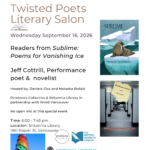
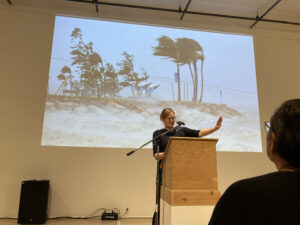
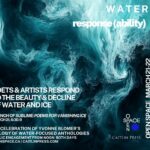
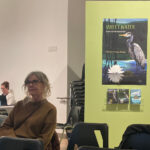
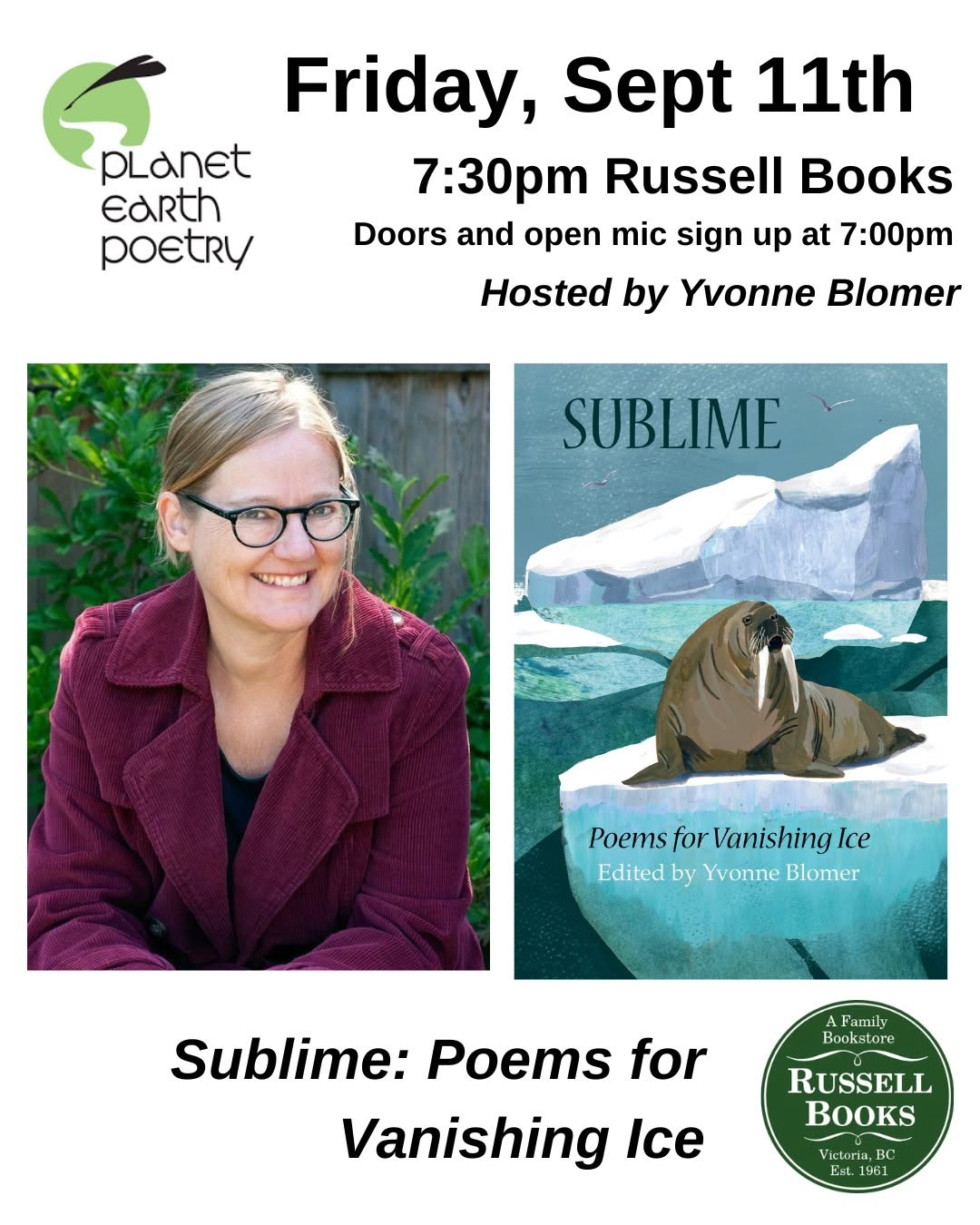
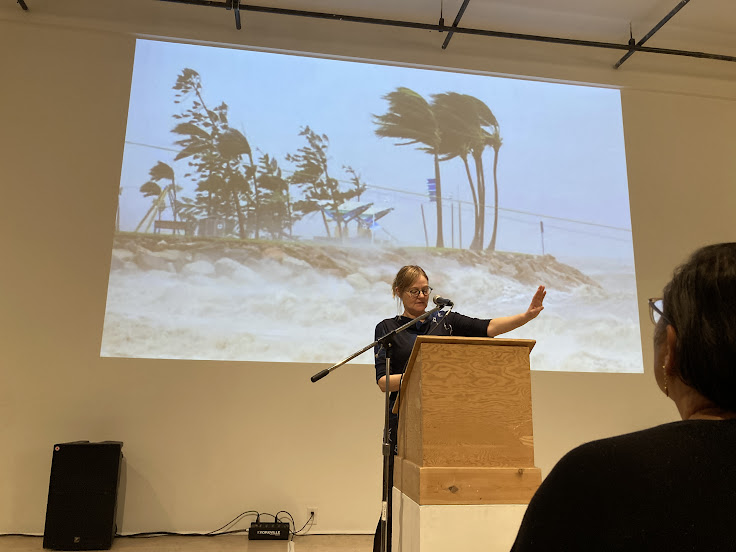
Last week’s Planet Earth Poetry will likely be the last I get to this busy season, and I was happy to hear some excellent poems from Yvonne Blomer

reading with the touring Brian Bartlett

Some food-related courses start up later this month, at the Virtual University, perhaps the solution for people too busy to get to sit-down classes. For $20US you can spend 4 or 5 weeks studying nutrition, herbalism and natural remedies, or organic gardening.

Comments Off on Worm bins, writers and online learning


Good Friday to you all

Started mine by listening to Vandana Shiva spell it out, again, in words of splendid simplicity, on CBC’s The Current. The poverty and suffering inflicted by globalised trade – poor countries unable to compete with subsidised imports from wealthy countries; massive Indian farmer suicides caused by industrial debt; the destructive nature of fuel-based agriculture; and the madness of growing crops to feed livestock or fuel cars (and subsidised commodities) while people are starving..

And she referred to the IAASTD report on the future of world farming, a year after the release of its 2500 page report, compiled by 400 scientists from 64 countries (including Canada). Its findings were never ratified by our noble country, not surprisingly since they state pretty plainly that if the world is to be fed, we must radically change farming policies and practices: large-scale industrial (fossil-fuel-based) farming, agricultural subsidies and GM do not work as a sustainable way to feed the world. In a nutshell, small-scale organic farming is the way forward.

Can’t wait till she rocks the G8 in July this year; as we were told by Carlo Petrini, an invitation has been extended by this year’s Italian presidency of the group, to have a presentation to G8 leaders by Terra Madre.. and surely Vandana must be the first voice in food sanity. They will have a chance to hear, and we must hope they listen.

Here’s an amazing poem by Alaskan poet Olena Kalytiak Davis.

1 Comment


The cultural amnesia of industrial eaters

In scrambling to finish reading a library book (The Art of the Commonplace: The Agrarian Essays of Wendell Berry) I came upon an essay called The Pleasures of Eating, which I was happy to find as well at the Center for Ecoliteracy website, which has a cornucopia of great Writings Online. (Scroll down to the Thinking Outside the Lunchbox heading to find lots of food articles.)

The nuggets in this essay include guidance for today’s consumer of industrial food, who as Berry says

is one who does not know that eating is an agricultural act, who no longer knows or imagines the connections between eating and the land, and who is, therefore, necessarily passive and uncritical – in short, a victim. When food, in the minds of eaters, is no longer associated with farming and with the land, then the eaters are suffering a kind of cultural amnesia that is misleading and dangerous.

This happens because, in the interests of those who make money – a great deal of it – producing, selling and marketing industrial food to us, regardless of the damage it does to the land, the community and the body,

…The consumer… must be kept from discovering that, in the food industry – as in any other industry – the overriding concerns are not quality and health, but volume and price.

Suggestions to help us repair this cultural amnesia include:

1. Participate in food production: grow something.
2. Prepare your own food.
3. Learn the origin of the food you buy and buy the food produced closest to your home.
4. Whenever possible, deal direct with local farmers, gardeners and orchardists.
5. Learn in self-defence as much as possible of the economy and technology of industrial food production.
6. Learn what is involved in the best farming and gardening.
7. Learn as much as you can, by direct observation and experience if possible, of the life histories of the food species (plants & animals).

In another of the essays in this book, Feminism, the Body & the Machine, I was most interested in his views on technology. It was his public decision not to use a word processor, and the public response to this decision, that brought the essay about. Here is what he thinks, overall, of technological progress:

…apart from its own highly specialized standards of quantity and efficiency, “technological progress” has produced a social and ecological decline. Industrial war, except by the most fanatically narrow standards, is worse than war used to be. Industrial agriculture, except by the standards of quantity and mechanical efficiency, diminishes everything it affects. Industrial workmanship is certainly worse than traditional workmanship and is getting shoddier every day. After forty odd years, the evidence is everywhere that television, far from proving a great tool of education, is a tool of stupefaction and disintegration. Industrial education has abandoned the old duty of passing on the culture and intelligence inheritance in favor of baby sitting and career preparation.

And the point of all this damage:

The higher aims of “technological progress” are money and ease. And this exalted greed for money and ease is disguised and justified by an obscure, cultish faith in “the future”. We do as we do, we say, “for the sake of the future: or “to make a better future for our children”. How we can hope to make a good future by doing badly in the present we do not say… A good future is implicit in the soils, forests, grasslands, marshes, deserts, mountains, rivers, lakes, and oceans that we have now, and in the good things of human culture that we have now; the only valid “futurology” available to is is to take care of those things.

A perceptive point about “ease” – we’ve been sold such a bill of goods about ‘labour saving devices’ and the efficiency of technology. How many hours have we all wasted waiting for computers to reboot, projectors to connect with laptops, video recorders to be set up, engines to be repaired? And still we find with all this mechanical help, we’re working more and more hours in dreadful soul-destroying jobs in order to pay for consuming all this disposable and destructive technology.

By the way, I found a couple of links to people and agencies mentioned in A Farm for the Future:
Agroforestry Research Trust (Martin Crawford)
Richard Heinberg and the Post Carbon Institute (whose Food and Farming Transition: Toward a post carbon food system document will have served as some of the source material for the film script, I reckon).
Colin Campbell and ASPO Ireland (Association for the Study of Peak Oil & Gas Ireland) and ASPO International

Comments Off on The cultural amnesia of industrial eaters


Herons, community meetings, poets and wood chips

All this rain and cold must have been getting to me and I’ve got a bit behind with postings, so here’s a grab-bag of things.

The herons are nesting in a nearby park which makes for great spectator sport… if you are very careful which tree you stand beneath.

Our local community association had its AGM on a food security theme which made for interesting talks and – if I do say so myself – excellent snacks, since our urban farming group brought the food, which included local grape and apple juices; what I am pretty sure are very local devilled eggs; some fabulous pizza; some of my own squash, caramelised garlic and goat cheese tart, and molasses brownies. Some of our members brought some interesting gadgets with them, including a solar oven and a hand-cranked blender; as well as some vegetable seedlings to give away.

I was up-island a couple of weeks ago and watched some amazing sockeye salmon go into this beautiful old Moffat stove. Check out the dials on this beauty…

Meanwhile, back on the poetry trail, I was lucky enough to get to Planet Earth Poetry in time to grab a seat for an excellent double bill: Jan Zwicky and Robert Bringhurst.

And – although we’ve been blessed by a few days of spring sunshine – it’s been a hard slog this spring through the puddles and gloom, which have delayed all kinds of things.

I spent one chilly afternoon at Haliburton, doing various things including spreading wood chips on the paths. They have a partnership going with a local tree-topping company that trims branches away from electricity lines, high enough that the foliage would not have been sprayed and therefore ok to throw around an organic farm.

Comments Off on Herons, community meetings, poets and wood chips


Post-fuel farming

A Farm for the Future is an excellent documentary (shown on BBC last month) by farmer-film maker Rebecca Hosking, on how farmers can overcome total dependence on fossil fuels.

It does a great job of explaining what the problem is with current farming methods, and what the fuel crisis will do to them and to our food supply, and how biodiversity, low-energy methods and good planning rather than back-breaking labour can increase food production enough to feed the world.

The picture’s pretty choppy in places (at least on my screen) but the sound is good, and the story it tells, of alternatives to fuel-heavy farming, and hope for a truly sustainable future of food production, is more encouraging than almost anything I’ve seen lately.

The solution offered is, of course, an English one, suited to an English climate. Cuba’s success story in dealing with a fuel-less agriculture is that of another small country with a different climate from our own. The bigger question is how large countries with more extreme climates – Canada, the US, Australia – and well-entrenched and protected industrial fuel-based agricultures can adapt to the loss of fuel.

4 Comments