London: British Library and Poetry International

Spent yesterday morning in the shadow of Newton

at the British Library’s Business & IP (intellectual property) centre, attending a workshop on search engine optimization. It was a fairly fleeting visit, not allowing time to go and breathe the studious air of the reading rooms, but lovely to be there nonetheless. I had to rush off up the road to Islington to see Nancy and Mike, who had laid on a lovely spread of Ottolenghi treats, the better to catch up on our mutual travels. They’d been to the Torbay Festival of Poetry and, well, I hadn’t. But I’d been some other places we could talk about.

Then we all headed out to catch a bus, since it was a tube strike night, to get to the Southbank. Owing to all the extra road traffic, the bus ground to a halt and then chucked us all off early, so we walked along the Strand for a while and crossed over Waterloo Bridge with its admirable views of the Southbank, the Eye and Parliament.

Had it been light we might have taken a look at the Drop sculpture which I saw a couple of weeks ago.

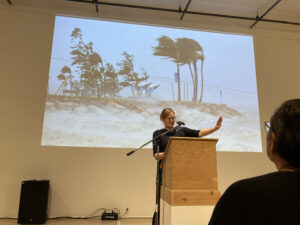
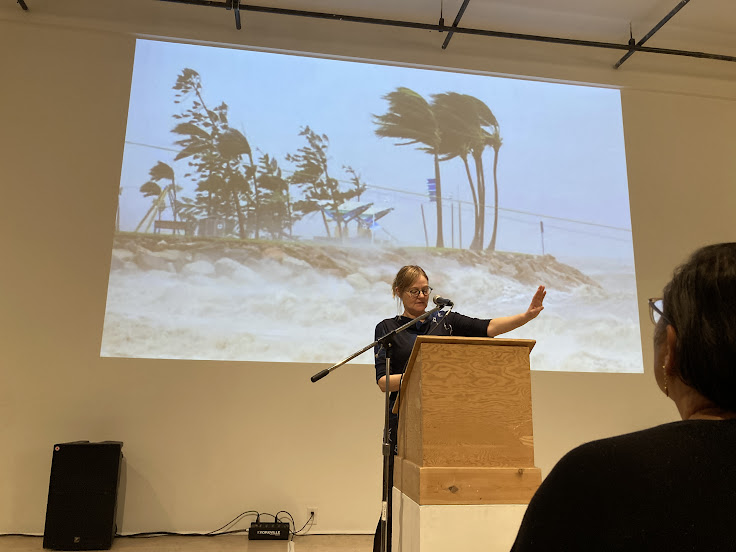
But: it was dark, and we were there for a Poetry International reading, introduced by Simon Armitage, who’ll be in residence there for the next three years, seeing in the Poetry Parnassus project which aims to bring in 200+ poets, from all participating Olympics countries.

On this occasion we heard from six poets: Anne Carson (Canada), Kristiina Ehin (Estonia), Mimi Khalvati (UK/Iran), Bill Manhire (New Zealand), William Ospina (Colombia)

and Nii Parkes (UK/Ghana). Among my favourite readers in a very good evening were Anne Carson, reading from her gorgeous new collection, Nox; the amazing William Ospina, whose haunting works are sadly not available in English (but a small selection had been translated for the occasion); and Kristiina Ehin’s wildly entertaining reading which included some wedding songs: she warned us we’d find the melodies sad, and said this was because the idea is that if Estonian brides do not weep the night of their wedding, they will weep for all the years of their marriage.

And now for a picture of a nicely named street in Asti:

Comments Off on London: British Library and Poetry International


If a supermarket chain can do it….

Carrefour’s new “Reared without GMOs”* labelling gives its customers the option of knowing what they are eating.

Carrefourgmo 251010 Cp Ogm En http://d1.scribdassets.com/ScribdViewer.swf

Comments Off on If a supermarket chain can do it….


Torino: food, glorious food

Around the corner from my hotel in Turin, there was a morning market in the square which had lots of to offer the food shopper, beyond all the designer knock-offs, budget tights and dodgy toiletries that seem to make up the bulk of street market wares in Italy. This stall, for example, offered herbs for teas:

My new Italian word of the month, topinambours (Jerusalem artichokes – new Italian experience of the month was eating them in Asti the week before)

and another new Italian word: alchechengi (Cape Gooseberry/ ground cherry / Physalis)

Of course there was cheese (several stalls)…

and the ever-popular baked beets (barbabietole cotte) and onions (cipolle al forno).

I also did a lot of window-shopping. Turin’s labyrinth of gallerias offer some magnificent window displays, like this one with its sugary treasures, everything from truffles and chocolate-covered walnuts, to marron-glacées, to Fungoni: “mushroom” éclairs hiding a hazelnut cream centre:

The Porta Palazzo market was much the same as I remembered from our visit in 2007; same tenements still standing, and perhaps still housing refugee squatters

and the covered market – housing the farmers’ market area – still gleaming and seething with custom.

In adjoining buildings there was lots to browse, including meats processed and fresh, domestic and wild,

some bread

and lots of cheese.

Meanwhile, stepping out the door from covered to uncovered areas, Europe’s largest outdoor market offered a reassuring sense of plenty on the stands that were mobbed with shoppers. There’s a large ring of non-food stands (clothing, cosmetics, flowers and so on) on the perimiter of the piazza, surrounding the food stalls in the middle. The shopkeepers did their best to out-shout one another, trying at this late time of day – around noon – to unload a bit more produce before they shut down.

Comments Off on Torino: food, glorious food


Salone Slovenia

My last tasting at Salone del Gusto was a good ‘un. Slovenian Treasures introduced us to Slovenian sea bass, salt, oils, salumi products, as well as wonderful wines and elegant desserts, with a full range of characters to present them.

First up was Irena Fonda,

whose family business began when her father, a biologist, began farming sea bass, a local variety that spawned already in the waters at Portorož. They farm them in small quantities, giving their fish more space than usual and more time to grow: the average sea bass takes 4-5 years to reach a half-kilo in weight (they have one which has reached 7 years of age). They are bred in vastly smaller numbers than more commercial operations (about one-fifth) and get high-end feeds made in France and Italy, although these she admitted were all industrially produced. She pointed out that feed has the highest impact on the smell and taste of the fish, so must be chosen carefully. They also do not use antifouling agents which are pollutants commonly used in commercial productions and she felt were not particularly good for the health of fish or eater.

The first sample we tasted was sea bass sashimi

dressed with a little Slovenian olive oil and accompanied by local salt; fresh, delicate and slightly sweet. Next up was some warm poached fish served on truffle polenta, topped with a morsel of local cheese. Delicious.

The proof being in the pudding, the third sample was smoked bass on a rucola salad topped with zabaglione. Very nice.

The salumi was from Arvaj, and included Slovenian prosciutto (pršut), hand-carved by the producer

followed by a lightly smoked pršut served with a puree of its own fat (zaseko)

and some warm, smoked ham sausage (klobasa) that was tender and just plain delectable.

We had six different wines, and some entertainment from one of the producers. We started off with a Malvazija from Rojac,

delicate and fresh enough not to overwhelm the fish, and then on to some wine theatre from 8th generation winemaker Aleš Kristancic,

who waxed lyrical on life, wine and lots of other stuff. His wines included Veliko

and what I think was his Puro, a pink sparkling wine he uncorked underwater

for reasons I confess not to fully understand. It was entertaining (and very good), and he had bottles of something even more special for a final toast I unfortunately couldn’t stay for.

A tough call but the two favourites of the day for me were from Uroš Rojac:

a Renero (red)

that clocked in at 15% and was dark, dense and fruity. A vigorous grape, the producer said, with little sugar and high acidity. The other wine he brought, which he’d bottled himself the night before, was (praise be) a 2006 passito:

Austrian muscat grapes dried for about four months before a long, slow pressing followed by aging in stainless steel and then in wooden barrels for 3 years. Heaven.

The chef, Stefano Cosattini,

came out to introduce this charming and delicious trio of desserts: the first features pumpkin seed oil and pumpkin seeds; the last was a tiny almond cake, I think, which paired exquisitely with its cheese (I was beyond note taking by this point).

And with that the sun set on Slovenia and Salone del Gusto. Until the next time…

Comments Off on Salone Slovenia


Salone tastings: Milan and Paris

One of the great joys of Salone del Gusto is the opportunity to have some real face time with some of the foods that in their vast numbers tend to overwhelm one in the exhibition halls. For an hour or so you can rest your feet, meet some producers, and learn about their wares.

Urban agriculture has been on my mind in recent years, so I was happy to see a series this year called Feeding the City, which offered panels from Berlin, Milan and Paris. I couldn’t make the Berlin one, but I had two very different experiences in the others.

Milan put on an excellent show. A panel representing Nutrire Milano (Nourishing Milan) explained the idea behind their project, which was to see if it was possible to feed the city with food from the local area, a maximum of 40 km from the city centre. They brought a variety of products that used such products as raw milk, fruits, vegetables, honey and cured meats.

Two young cheesemakers offered us some excellent ricotta and mozzarella, and some sublime aged (2 years) cheese made from Jersey milk.

Another youthful producer

who is learning sausage-making from his octogenarian grandparents introduced his salame (Filzetta – named for the casing),

Cotechino (normally served warm, but logistics dictated the circumstances)

and liver mortadella, which had been ground with mortar and pestle in a method used before mechanization.

He uses natural curing in his half-dozen varieties, which are made between September and April (not in the summer when it would be too warm).

The monks were cloistered, so couldn’t come to introduce the beers themselves. They are Benedictines, who learned the brewing methods from Trappists, and ferment the beers in the bottle (like champagne). We had an amber and a dark one

The maker of the goat cheese selection wasn’t there, but her handiwork was excellent.

We had two variations of Tronchetto, one coated in ash and the other a blue.

And one that had been aged in chestnut leaves.

Mauro the apiarist urged us to save some of the goat cheese for tasting with the honeys he’d brought, observing that the bitterest (chestnut) was excellent with aged and blue cheeses (he was quite right).

The honeys were (clockwise from the lower left): acacia, millefiore, tilia cordata (wild linden), castagno (chestnut), melata (honeydew). It was served with bread made from flour grown around Milan

and baked by Davide Longoni who pointed out the connection between the words pane (bread), padre (father) and fame (hunger). His bread is big and broad; the kind of food for which you need a table, company and good wine, he said. He said it was flawed but he was learning how to work with the flour – the know-how of working with local “extreme” flours (with little gluten) to make traditional breads has been lost – but he hopes one day to produce loaves he’s happy with.

The Paris tasting could not have been more different, in every possible way. A sell-out crowd gathered, each relieved of 40 euros for the privilege of being there to – as it turns out – drink some beer and cider

and (to be cruelly blunt) eat a bit of clear broth with half a charred onion floating in it.

It was good, but the experience left a definite bad taste in the mouth. Even the translation was crazy, after a commendably seamless week of simultaneous translation. Speakers said their bit in French; notes were taken and translated into Italian, which was then translated into English. Though we could pass the time looking at handsome slides from the handsome book that Michelin-starred chef Yannick Alléno

was flogging. Much was made by the panel host of the strikes in France and the difficulties of getting the panelists to their flights which had apparently been booked with odd timing that managed to cut the proceedings short. It is a shame the panelists hadn’t managed to pack a few more ingredients in their bags; I ended up feeling the same sense of rip-off that I have felt eating in Parisian restaurants. No, not all of them. But this was really no place to short-change your customers.

No “feed the city” sentiment at work here either. The young beerseller, SimonThillou (La Cave à Bulles) had knowledge and affection for the beers and ciders, Ok, admitting cliched expectation here but I was looking forward to a fleet of French wine, so the locally produced (from imported ingredients) beers and ciders – a bit sweet for my taste – from apples grown in the Isle de France, were disappointing.

And Samuel Nahon’s Terroirs d’Avenir caters mostly to high-level chefs like Alléno. So how commendible is it to source local (Isle de France) artisanal product for a niche and exclusive market? Not sure; not (as I grumble) that we saw much of it. He declined to expound on difficulties he’d encountered, and simply explained that he’s providing a guaranteed market for low yield or “ugly” but delicious fruits and vegetables, and giving Parisians a chance to taste foods known by their grandparents. He does sell to the public somewhat spontaneously in “marchés éphemères” (pop-up markets) as well.

Comments Off on Salone tastings: Milan and Paris