





Chocolate, gastronomy and Seedy Sunday

The writers and artists at the SWG winter retreat spend a lot of time thinking about food, and chocolate is one of the essential treats we administer to keep us healthy, happy and creative, meditating on all those dark sweet flavonoids as we search the cold white fields for inspiration. With Valentine’s day around the corner, it never hurts to spend time thinking about chocolate: what is it, where is it made and by whom? The industry has a poor record of exploiting producers and depending upon child labour, so if you want  your valentine chocolate to mean what you think it does, you should have a listen to this and ask questions wherever you buy your chocolate. Fair Trade chocolate is always the best choice: if you don’t eat the rest, savour the thought that you are contributing to a better world, one calorie at a time.

Once you have bought the best, most fairly produced chocolate you can, you might like to whip up a little mousse. This one sounds like a good bet, particularly if you are catering for the dairy-intolerant. I was a little surprised to see the recipe credit go to  Hervé This, one of the fathers of molecular gastronomy, as it’s remarkably low tech.

Speaking of gastronomy, I have just come across a 2010 broadcast of The New Gastronomy, from one of my favourite BBC radio shows, The Food Programme. It discusses academic training in gastronomy, starting with the University of Gastronomic Sciences, where I spent 2007 earning a Master’s of Food Culture & Communication (as documented on this blog). It’s an interesting look at the field of gastronomy and how and why it is being taught, though the Italian segment looks only at the three year undergraduate degree rather than the one year master’s that I did. (And I find Sheila Dillon‘s mispronunciation of Alice Waters’ name rather endearing). Other courses in the US and England are also discussed. It gave me a sense of renewed satisfaction that I had done the course.

Seedy Saturday takes place next weekend in Victoria which means winter is on its way out, and locals can start to plan for spring, buying seeds, swapping their home-reared seed and taking in a few talks about gardening. The event, which aims to encourage the sharing of seeds in the interests of protecting our country’s seed diversity, has got bigger every year, and I’ll be sorry to miss it, so am doubly grateful to have made it to the GTUF seed swap last month. GTUF will be at the Victoria event this year, joining other UFs (as we call our community food security groups) in a discussion of urban farming and food security.

Comments Off on Chocolate, gastronomy and Seedy Sunday


READing and retreating

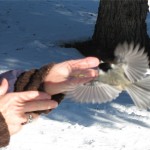
I am back at St Peter’s Abbey for another winter writing retreat with the Saskatchewan Writers Guild and CARFAC artists. Mild and sunny outside, with hungry birds loading up on free peanuts. When I first started coming to the winter artists colonies, about ten years ago, only the chickadees were bold enough to come to our hands; then the nuthatches took over. Today it was only chickadees. Indoors, the colonists, as once we were known (retreatants just doesn’t have the same ring) are unloading ideas and getting into the swing of a quiet time among the monks.

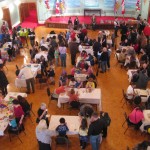
A week ago I attended an anniversary party for the Victoria READ Society, which promotes literacy to all ages. This event was a day of games held at Government House in Victoria, introduced by Steven Point who toured the proceedings and seemed to be enjoying it. Also present was David Bouchard, the society’s newly-appointed literary ambassador, who was sporting his Metis sash and entertaining youngsters on his collection of flutes. Elsewhere there was a hot game of magnetic poetry happening, and much else besides.

2 Comments


Year of the Dragon: seeds, storms and Sipsmith gin

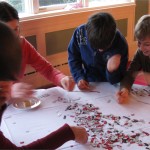
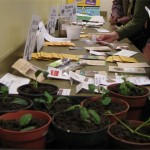
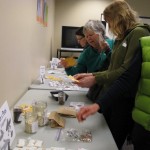
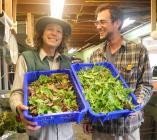
For the past three years, the Gorge Tillicum Urban Farmers have met in January, ahead of the larger “seedy” events in Victoria and elsewhere, in order to swap and share our locally grown seeds. It’s one of my favourite things about this neighbourhood’s delightfully mixed group of gardeners, chicken-lovers and food geeks. There’s no guarantee the seeds will sprout, no fancy packaging and no cost. The seeds mostly come from plants that GTUF members have grown in their own gardens and then saved, so are tested and adapted to our local climate. This gives them a big advantage over seeds purchased from major seed producers, who may be in a completely different growing zone from the consumer. Our seeds also come with an opportunity to tap the knowledge of the producer: could be someone with years of skill, or maybe just a delighted first-timer.

This year 60 of us were joined by affable seed guru Dan Jason, the visionary behind Salt Spring Seeds and the Seed and Plant Sanctuary for Canada. He’s also the star of Gardens of Destiny, a documentary about the importance of seed saving. Jason had put out a call a year or so ago inviting communities to consider establishing community seed banks, in order to preserve locally-adapted plant varieties (all seeds are under threat from seed patents and GMO contamination by seed multinationals) and to provide a hedge against food insecurity. Some of GTUF’s members ran with the idea and we’re in process of starting our first plantings for a seed bank this year.

After the first half hour of picking and choosing for our gardens, we settled in to hear Jason speak and answer questions on seed saving and community seed banks. He began with a primer on why we should do this: in short, because our food seeds are at risk: multinationals have been ramming through GMO legislation despite the lack of testing for food safety, the potential health dangers from unlabelled GMO ingredients (which are in nearly every processed food you can buy in North America) and cross-contamination of our food supply with GMO. This puts our ability to grow safe and nourishing food at risk.

The good news is that Jason believes we can take matters into our own hands and make a positive difference, if we join with our neighbours to safeguard our seeds and learn to grow food:

“Community seed banks are an extension of something people have done throughout recorded history. With a community seed supply, people become the custodian of their own seeds; this empowers a community to grow what is wanted to eat there.”

He stressed the importance and also the ease of saving your own seeds:

“Plants produce a phenomenal amount of seeds. You mostly get so much back from a single plant it doesn’t take a huge number of people to do this. You maybe need just a couple of dozen in each community. You don’t have to be an expert in all seeds. Just go with the people who know tomatoes or beans or parsley, and make them the mentors for those varieties. They can advise and teach others about details of saving seeds in a particular family.

Jason was particularly encouraging about the prospects for urban farmers who are buffered from cross contamination by GMOs because of their distance from large farms, the only economically-feasible places GMOs can be grown. He spoke in praise of the higher yields that any small scale production can get (large scale industrial producers are handicapped by input costs, including fuel and equipment, and by the risks of monoculture; small growers can diversity to protect against crop losses, and can monitor and deal with potential problems more easily) and observed that growing in neighbourhoods we can share the strengths and weaknesses of our situation: the shady side of a street growing greens and the sunny side growing the heat-loving crops like tomatoes and peppers.

More of the same message seems to be contained in this book, The Vegetarian Myth: Food, Justice and Sustainability which I suspect is not the simple attack on vegetarianism that its title suggests, but more of what its subtitle says. A preview in this video:

And finally, I will be nursing myself through the dragonly blasts of wind and water that have started this year with  sips from a precious bottle of Sipsmith Gin, made in Hammersmith, London which I brought back from the UK.  I’d heard a bit about on a Radio 4 program that talked to artisanal gin makers in London and am looking forward to taste-testing it against my favourite local brand, Victoria Gin.


1 Comment


Back in Victoria… just in time for winter

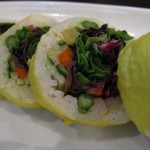
Before I left Vancouver we took a spin around a newish supermarket in West Vancouver: Osaka (the nineteenth store to be opened by T&T Supermarkets) is huge with a mind-boggling selection of just about anything Asian – from soya sauce to rice and noodles, and vast quantities of everything in between. There were large fish tanks offering shoppers live seafood: king and Dungeness crab, lobster and abalone as well as several varieties of oysters, clams and fish, and a bakery with all manner of Asian pastries and decorated cakes. While we browsed, reading labels as best we could, I couldn’t help but wonder what effect all these ultra-processed foods, high in sugar, salt, fats and all kinds of preservatives, will have on the much-studied Japanese life expectancy. We calmed ourselves at Bene with a couple of platters of sushi, including this vegan roll in a cheerful soybean wrapping.

Back in Victoria, winter waited politely until I was settled, unpacked and the larder stocked with vegetables before drawing in with a little snow and cold weather, ideal for making soup and catching up on my reading. One of my astoundingly heavy bags held a copy of the River Cottage Veg Every Day! cookbook which holds some worthy temptations.

With my poetry ear I’ve been listening to the Saturday Play on BBC Radio 4, Tom and Viv, which explores the problematic relationship of TS and Valerie Eliot. Available until Saturday January 21, and starring Benedict Cumberbatch who seems to be everywhere just now. Listen for the reference to Robert W. Service…

Time, food and agriculture never sleep, at least not where interesting stories are concerned. Here are some that have been stacking up while I was away.

There’s a link here to a rather beautiful brochure  shows that shows you who’s growing what and where in twenty-six urban farms in Vancouver.

And a nice story about the loneliness of the the farming life which I suppose applies to urban farmers as well; it offers a reminder that we are often in too much of a hurry, and too accustomed to shopping anonymously for food, to thank those who provide it.

Some good news for Victoria food shoppers, with a new whole/local foods store opening, conveniently situated near the wondrous Capital Iron.

There was  wrist-slapping lesson in public consultation for Stephen Harper whose decision to bring to fruition his longtime plan to dismantle the Canadian Wheat Board was declared illegal by a federal court.

And finally, the soil is the thing: the EU Soil Report warns about the cost of doing nothing in a time when we are quickly losing the soil we’ll need to grow food by building on and contaminating it. Soil: Worth standing your ground for from The European Environmental Bureau explains why we should be paying attention, in urbanizing and industrialized countries everywhere:

Soil is the basis of all our food and fibre production and plays an essential role in water purification, waste decomposition and climate mitigation. It therefore must be regarded as a natural resource of strategic importance which should be protected adequately and used efficiently throughout Europe. The reality however is that Europe is losing this natural asset, thereby jeopardising Europe’s food security and its ability to deal with the consequences of climate change.

Comments Off on Back in Victoria… just in time for winter


London farewells: Food, film and the future of work

My last week in London was a whirl of farewells and final thises and thats before I hopped into my minicab back to Heathrow and leapt skyward in unexpected luxury – bumped up to business class by my friends at British Airways thank you thank you – and landed in calm clear weather in Vancouver, which held off on the rain, sleet and snow until I was tucked up into bed.

It was a week of nice food in London too. Still buzzing after the Copenhagen jaunt and the pleasures of the poetry workshop in Cambridge, I joined dear friends to tuck into a most excellent Sunday lunch at Great Queen Street in Holborn.

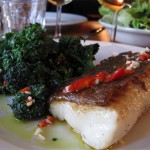
The pot roasted pheasant with poached quince looked (and tasted) wonderful but oh dear I’d just had pheasant (how often do I have the chance to say that?) so after a few reversals I opted for baked cod and spinach, which was studded with garlic and chili and was a delight, although I did think it was just barely overcooked, by a fish’s whisker. I was  afforded a morsel of the chicken pot pie on the other side of the table that satisfied my curiosity on that score (chervil in the crust we thought? very nice touch).

But there was much excitement to follow on the dessert menu: each item more delicious than the next. I had the prune and almond tart, which was soft and nutty and chewy where it should be and had a fine crunchy and slightly caramelly crust. Even so my envious fork went round and round the table. The salt creme caramel was exquisite: a silky yellow custard standing softly within its warm and salty caramel pashmina; the baked cheesecake light and lemony with a surprising and effective fruit confit alongside, and the beignets… ah the beignets. Featherlight and warm, faintly crunchy on the outside, tender on the inside. Why would anyone waste their money on donuts when they can have beignets with raspberry coulis here?


So all in all it was a great introduction for me to this restaurant – and an exceptional waiter who doted knowledgeably without being intrusive, and who had some friendly insights on the opera my dining companions were off to see. Manly yes, but I like it too.

Monday was spent mostly packing and trying out my new toy, a suitcase scale, which will be invaluable on my future travels.

Monday evening I went to The School of Life where I promptly undid all my careful work packing and weighing by losing my head in the gift/book shop. My new treasures include a beautiful hardcover copy of The Flavour Thesaurus: Pairings, recipes and ideas for the creative cook, entertainingly written by Niki Segnit, which is arranged by ingredient and offers, well, just what it says on the label. But I was there for a class – the only one I could fit into my schedule – called How to Find a Job You Love. At my stage of life I had thought through a lot of what was covered, and suspect I may have my perfect job (though I have yet to work out how to make it pay!) but this topic is a winner and the subsequent offerings are selling like hotcakes in these risky times. There were a fair number of people present who’d been made redundant, and some who were stuck in unrewarding jobs, as well as a few who were looking to round out their part time positions with something meaningful. I liked the historical and sociological context that David Baker brought to the session, the exercises were useful and we were well fed and watered as well.

Tuesday I went to see The Iron Lady, which was as I’d expected well acted and cast (except for Jim Broadbent who never convinced me he was Denis) but I thought disappointing from its current day setting and the brevity of the flashbacks into Thatcher’s time. I didn’t feel I got much more insight into those years – and the trump card had already been played a few days before when 1981 cabinet papers were released that cast new light on old questions.

Anyway we mulled all this over a few Irish rock oysters at Pescatori, followed in my case by a nice octopus salad (which did make me pine for Parma, but was good in a different way, a kind of spin on salade nicoise, with potatoes and green beans rounding it out). I confess that the treat of the day for me was a glass of Passito di Panterellia, which is quite simply heaven in a glass, and I savoured every drop.

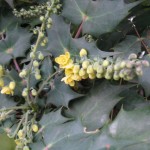
Wednesday was another lunch with dear friends and former neighbours, and a bit more folding, rolling, shoving, kneeling, sweating and swearing over suitcases. Thursday yet another lunch with dear friends and poets and a final poetry workshop. And Friday the sun shone on the parrots, the Mahonia japonica (not to be confused with the Mahonia aquifolium – Oregon Grape) shared its wintry perfume as we passed by on our way to a farewell lunch at Tarantella where the Melanzane parmigiana and Spaghetti alla vongole were both excellent. And all too soon, the cab driver was there and my Euro-time was over… for now.

Comments Off on London farewells: Food, film and the future of work