

London interlude

Just back from a week in London – a busy frantic expensive delightful week, and a week without email or internet. A novelty, but I’m glad to be back at the keyboard. I have a piece to post about the truffle hunt last weekend but will put that up in the next couple of days.

Merry… Oxo?

(from one of the dwindling number of antique dealers in Camden Passage, Islington, North London)


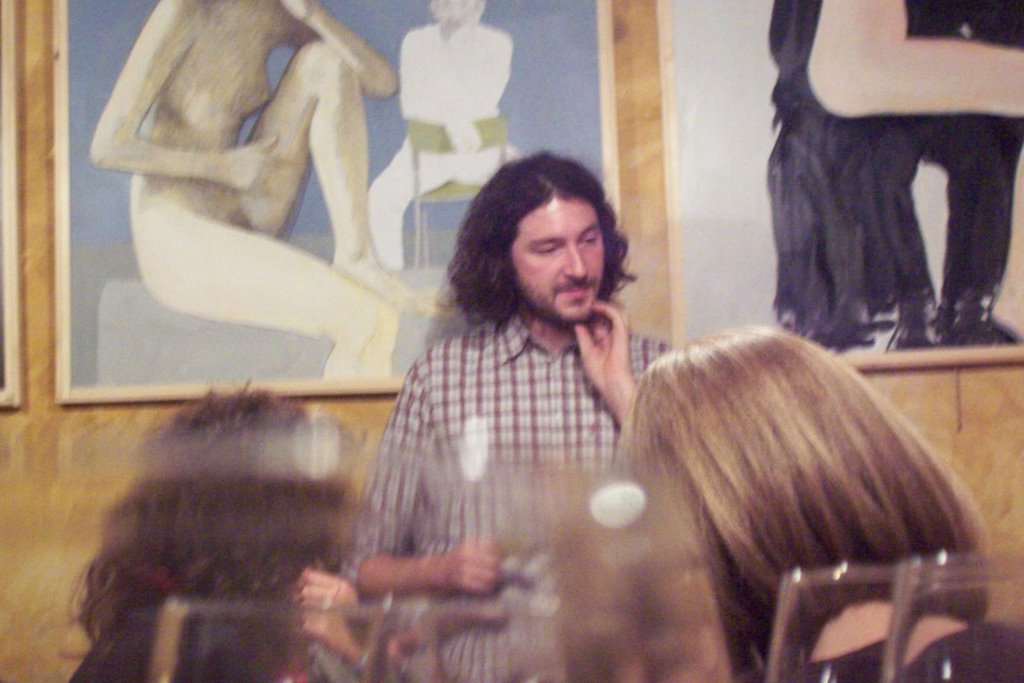
Quiz night at the Troubadour: I managed to crash the party five years after attending my last one. These are brilliant and entertaining evenings which feature themes, announced in advance so people can seek out a poem or write one for the event, and the readings are accompanied by ferociously difficult poetry quizzes. Last Monday was The Inexorable Sadness of Pencils. Here’s a taste of the quiz: What is Craig Raine describing when he says and the ground is full of pencil boxes? Name the Leeds-born author of these lines from The School of Eloquence… His home address was inked inside his cap/ and on every piece of paper that he carried. And who was he writing about?

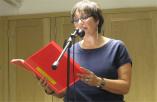
I was happy to see Catherine Temma Davidson for the first time in a long time. Her excellent first novel, The Priest Fainted, (still in print!) has a special resonance for my foodie life these days. She’s working on a second novel and says food figures in that one too.

London poet Paul McLoughlin and poet-novelist Catherine Temma Davidson.


Steve Hatt, legendary fishmonger, on Essex Road, Islington.


Fighting the neverending battle against street crime, with a taste of the week’s fog in the background. Outside Turnham Green station, West London.


Hampstead Heath. A little teeny tiny bit of it.


The big cheese at Waitrose, Brunswick Centre, near Russell Square.


Paxton and Whitfield, on Jermyn Street, been around a year or two. Cheesemongers to gentlemen, they say (–so where do the ladies shop?) and handy to Pink’s and Fortnum’s where you might like to browse on your way to tea at the Ritz, perhaps?


What we did and didn’t eat at Amato in Soho. Beautiful cheesy quiche and interesting salads (some rather middle-aged broccoli in there but otherwise good). Gorgeous pastries to admire through the glass on your way out.


What would a visit to London be without a nod to Newton and a visit to the temple of knowledge – the British Library, one of my favourite places in the world. The caff’s not bad either.


A foggy night on Primrose Hill.


And: buon natale to one and all. How it was looking earlier this evening in the Piazza Garibaldi, Parma.

Comments Off on London interlude


Where the milk comes from

So today’s trip was to the dairy farm:
we got in the bus
to go to the farm
to meet the man
who owns the cows
who give the milk
that makes the cheese…


But before the farm, there was the Christmas market, and a stall selling small round edibles of a Sicilian persuasion.

Then there was the farm. More round things.


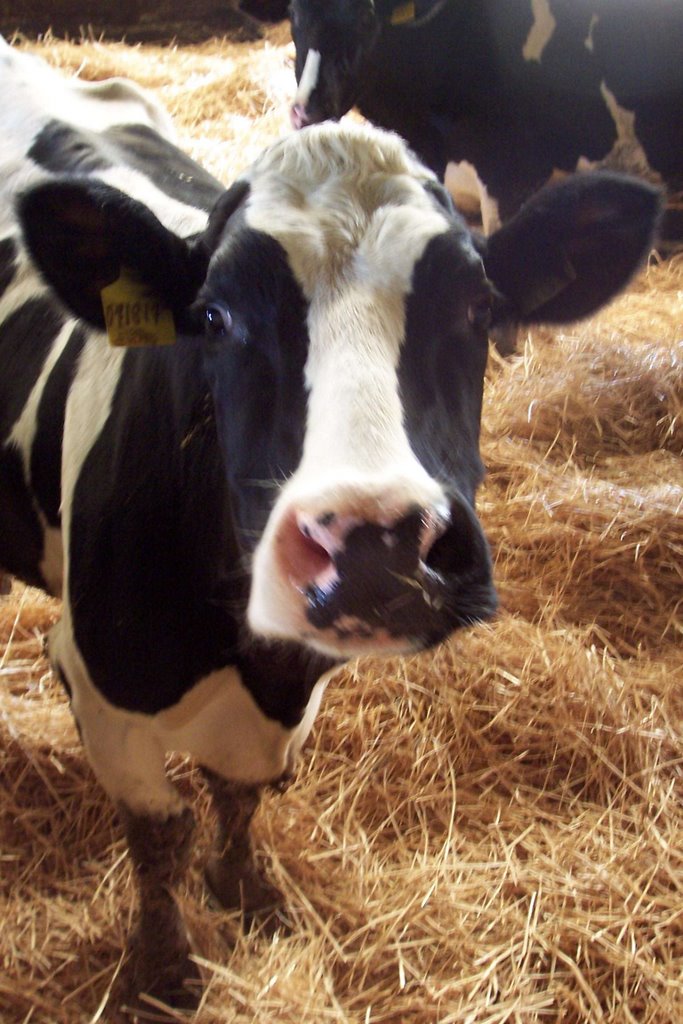
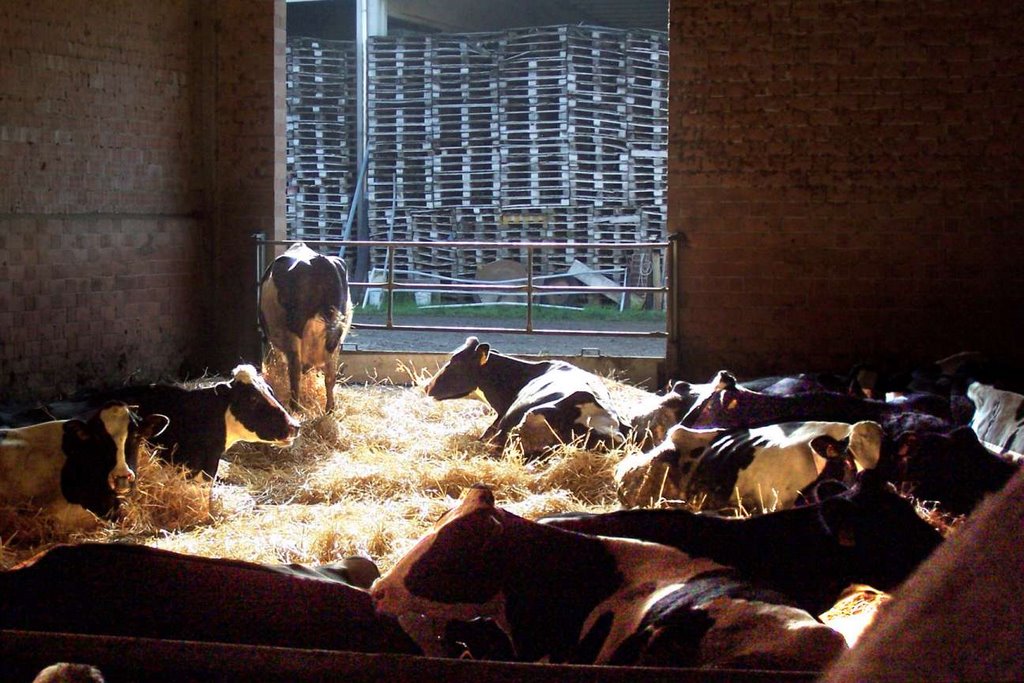
In addition to a persimmon tree, they had 200 cows, about half of which are giving milk at any time while the others are either growing up or getting ready to give birth. This farm had only Friesians, which came from Canada and the U.S. The farmer belonged to a dairy co-op of 11 farms and was very near his cheese factory, convenient for making that 2 hour deadline to deliver the milk. The other restriction on milking for Parmigiano-Reggiano is that the actual milking must be completed within four hours, start to finish (this farm managed it in one and a half hours, twice a day).


Hmm… these remind me of something I’ve seen lately… cylindrical, straw-coloured, stacked to the ceiling… The Parmigiano-Reggiano consortium obliges its dairy farms to produce – on-site – at least 50% of the feed for their cattle; this farm produces 90% of its feed. No animal products can be included in the diet of the dairy cattle, and no silage or wet grass, all to preserve the safety of the cheese, the reliability of the ripening process, and the purity of the flavour.


My fellow Canadian?


We observed the bedroom of the cows.


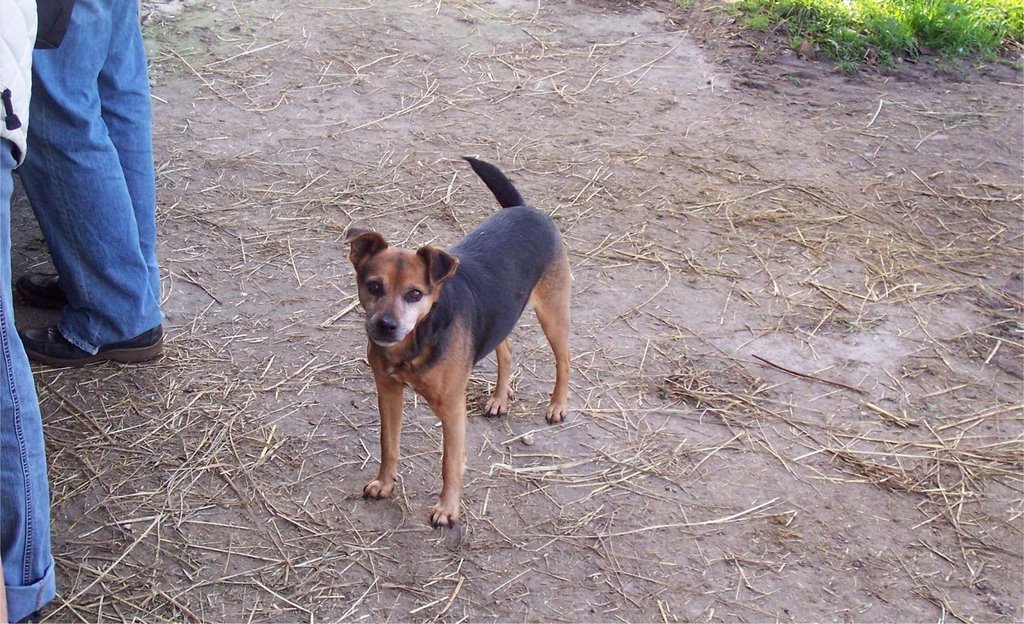
Scary farm dog.


And on that farm there was a cow…


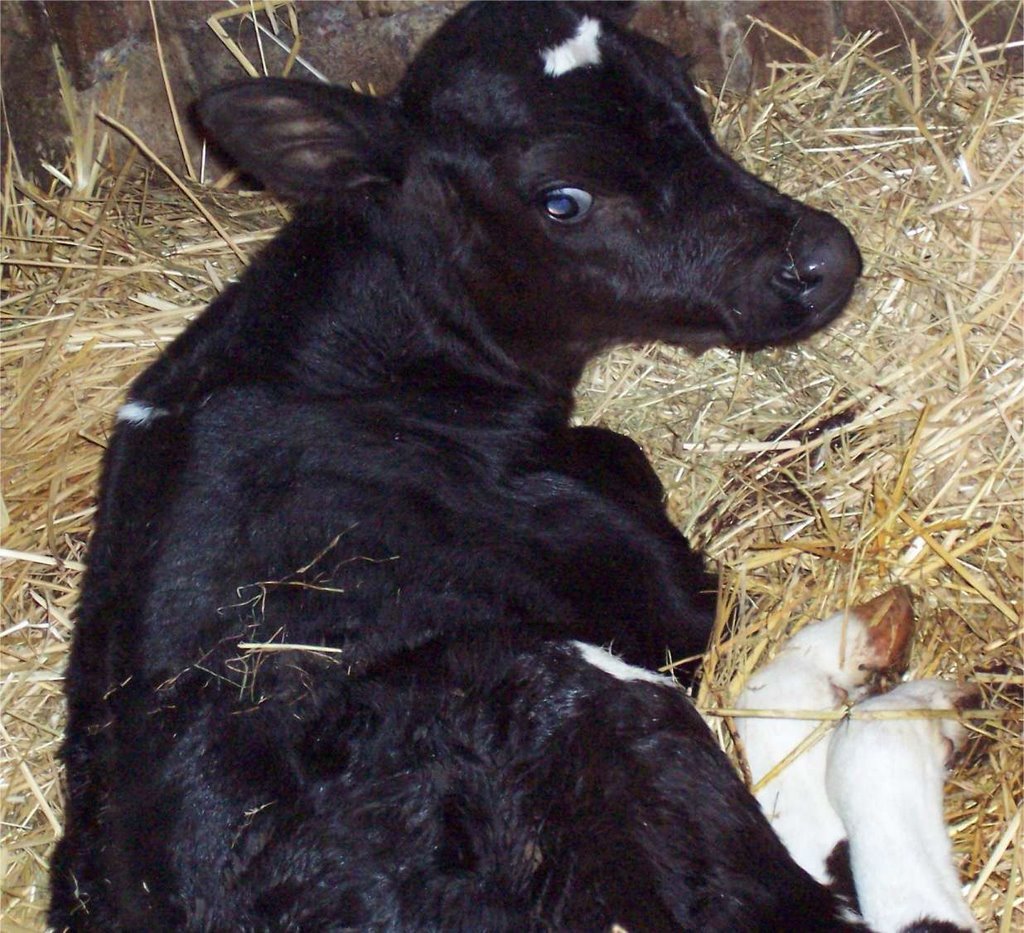
Why yes, as a matter of fact, I was born yesterday.

3 Comments


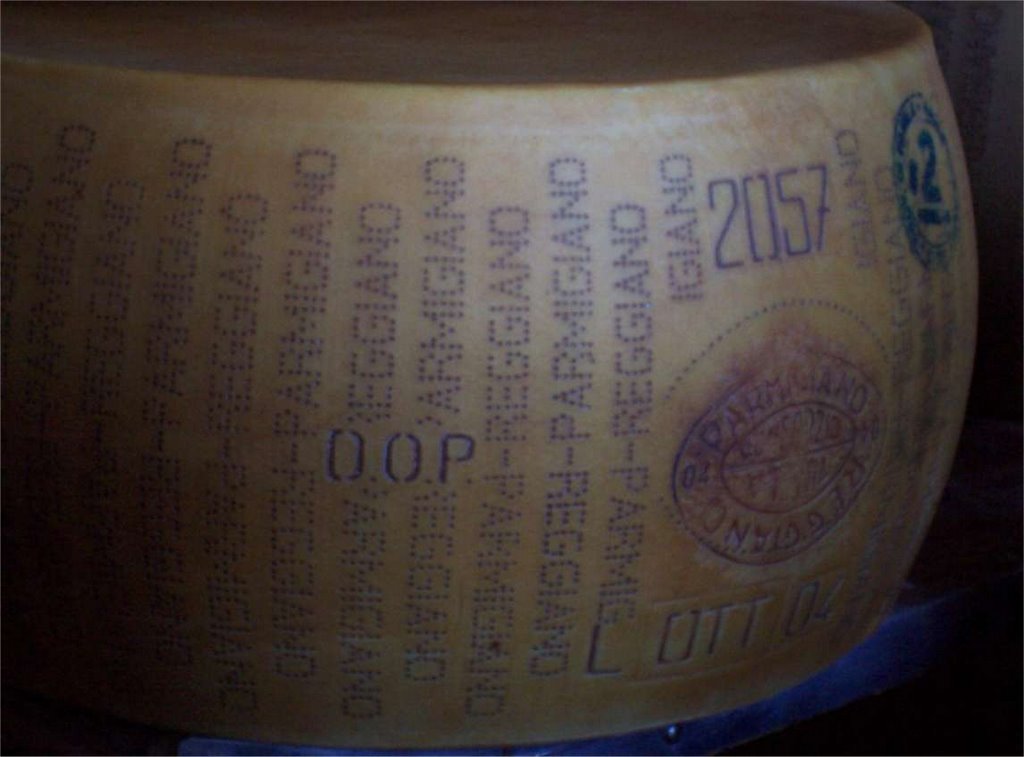
The real thing – Parmigiano-Reggiano

Again the sciopero raises its ugly head. We had been scheduled to visit a cheesemaking factory and then a dairy farm on Wednesday and Thursday, but the bus strike would have affected our, um, bus, so the visit and our classes were rescheduled so we could go Thursday and Friday instead. Then the Wednesday strike was cancelled. Then we heard an all-out strike (buses, trains, planes) was planned for Friday instead. Then that was cancelled. Or was it? All so confusing.

Anyway we were, on Thursday, very happy to visit a Parmigiano-Reggiano cheese factory in nearby Baganzolino on Thursday and see all that had been described to us actually happen before our eyes. We arrived at 8am in time to see the whole range of the day’s cheese production. and were well briefed on the bus.

The milk that arrives at the factory must be delivered within two hours of milking, so there was no time to lose. Everybody went wild with cameras and I think several thousand images were taken as we watched it all unfold; here are a few of mine.


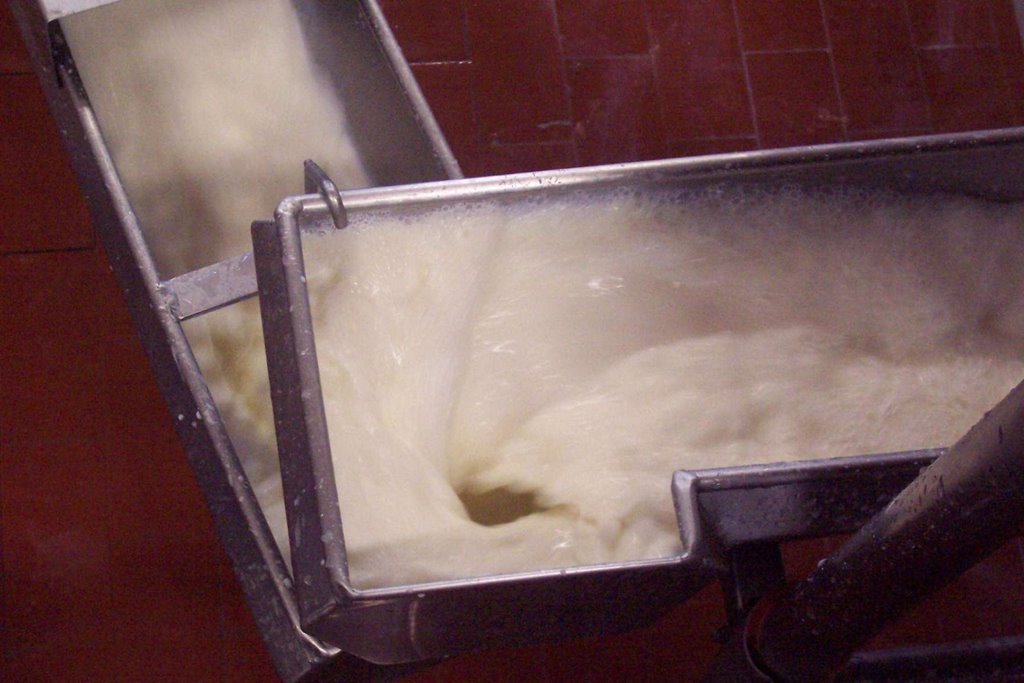
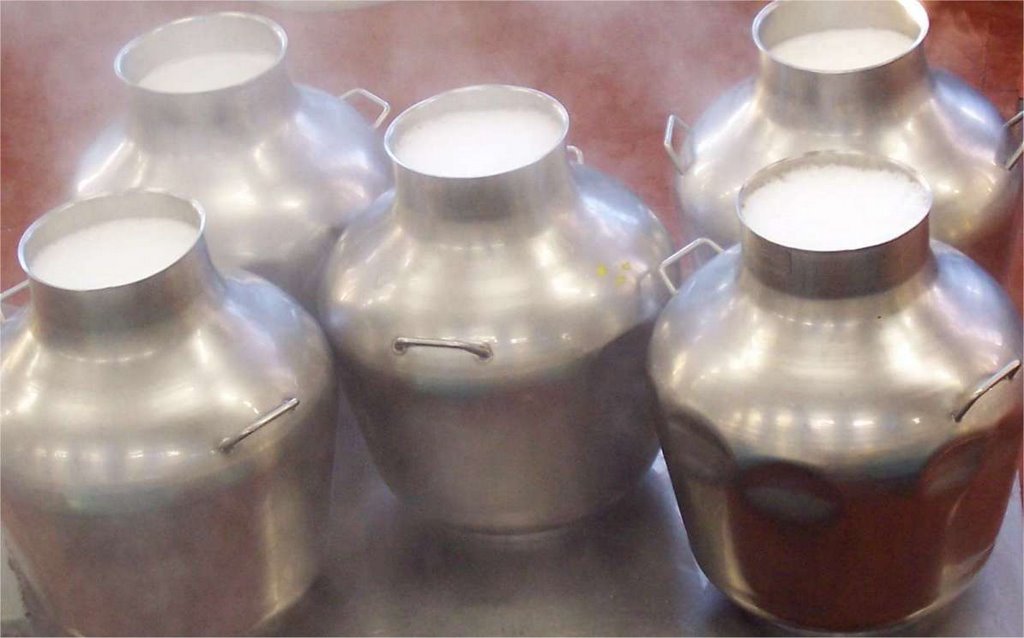
The milk from the evening milking is set out in trays to separate overnight. The cream is skimmed off and this milk is mixed with that of the morning milking, so it’s genuinely partly skimmed. It’s then heated, and whey (naturally fermented from the previous milking) and rennet are added.


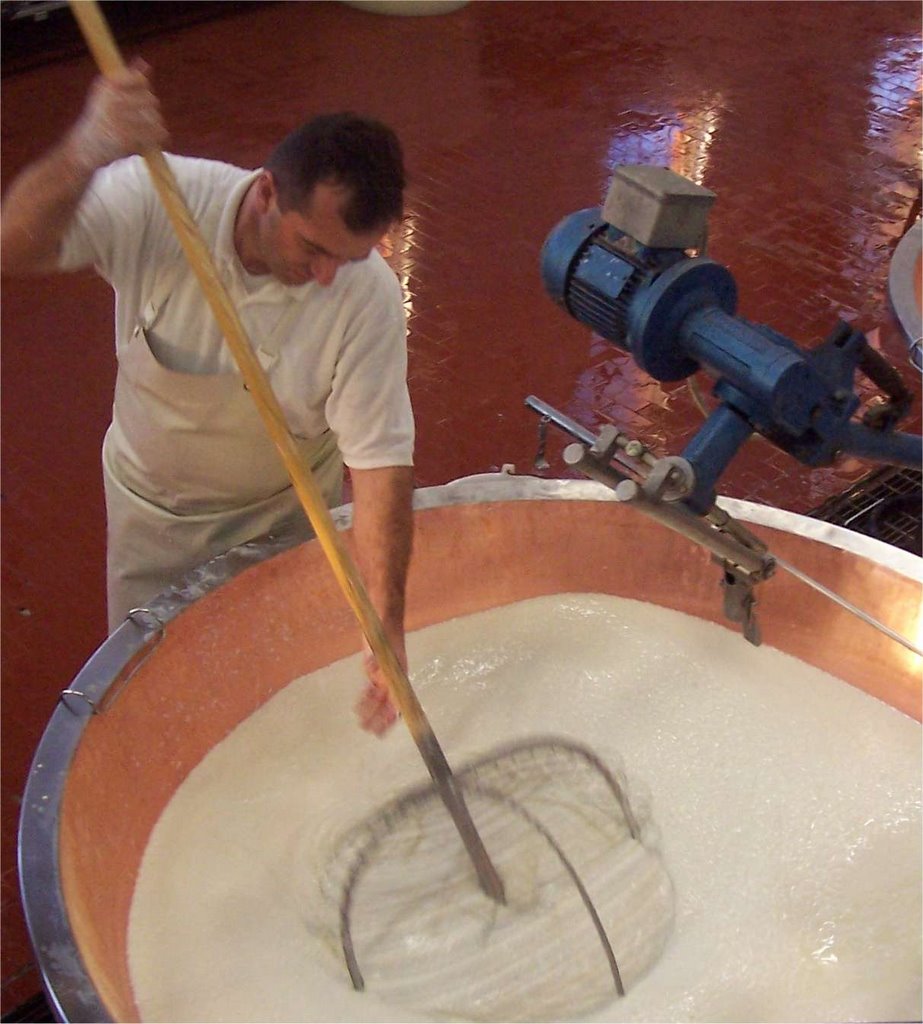
The whey and rennet have been added to the milk; it has coagulated and the curds are being broken up into grains the size of wheat kernels. For this task they use the spino, a whisk unique to Parmigiano-Reggiano cheese-making, named for the thorn branches that were originally used (hawthorne, according to our Italian teacher).


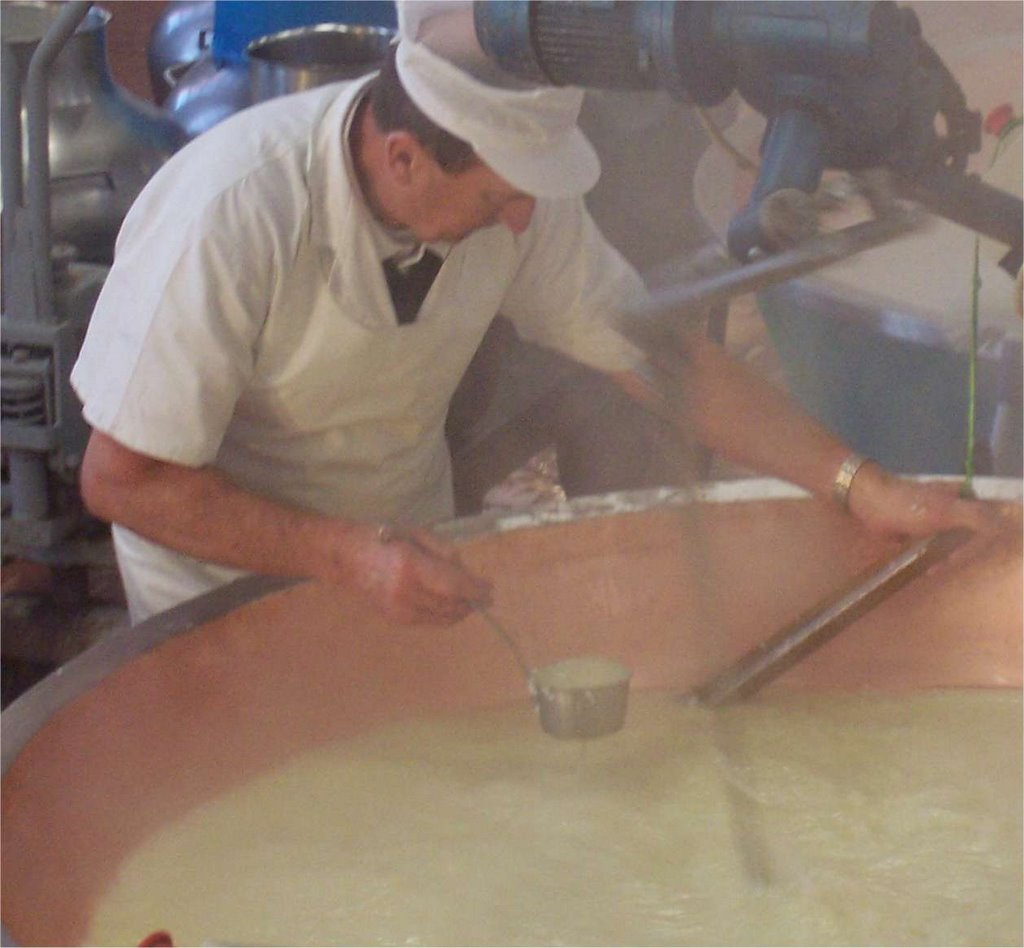
The master cheesemaker – we were told that, like the cows, he never gets a day off – checks the temperature and curd. Once he deems it cooked, the heat is switched off. Traditionally and practically, copper urns are used because of their excellent conductivity: and their ability to both heat up and cool down quickly.


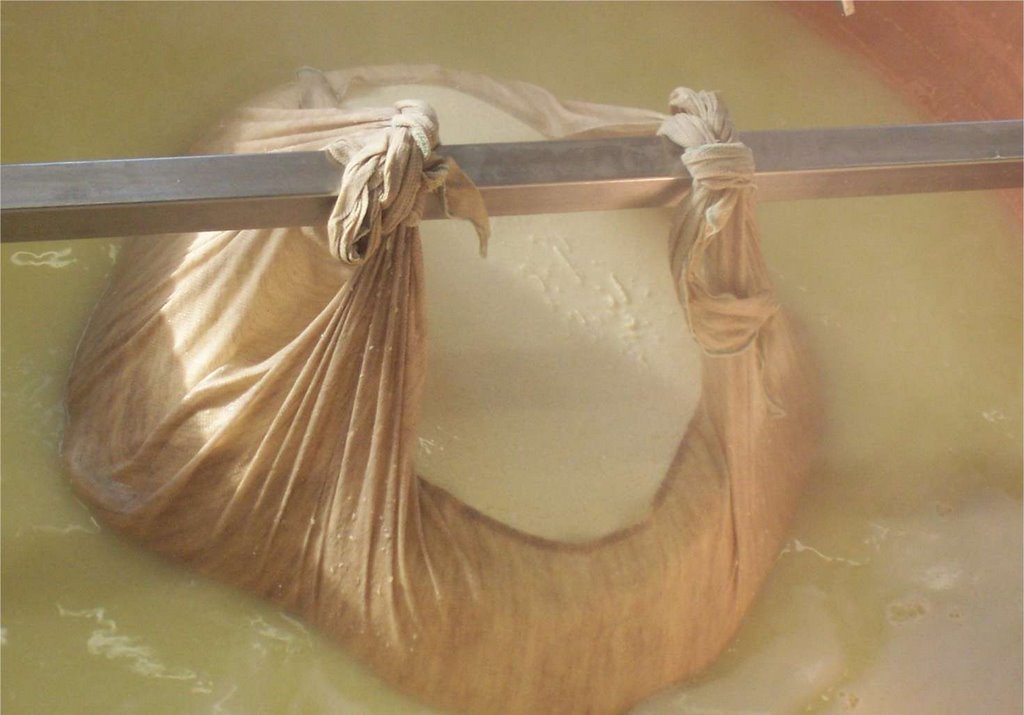
The cheese has coagulated into a nice big ball. It’s cut in half after this; each vat makes two cheeses, a total – for this factory – of 24 cheeses a day.


Most of the whey goes to the pigs (this be prosciutto country after all); some is made into ricotta; this batch will be used for the next day’s cheesemaking.


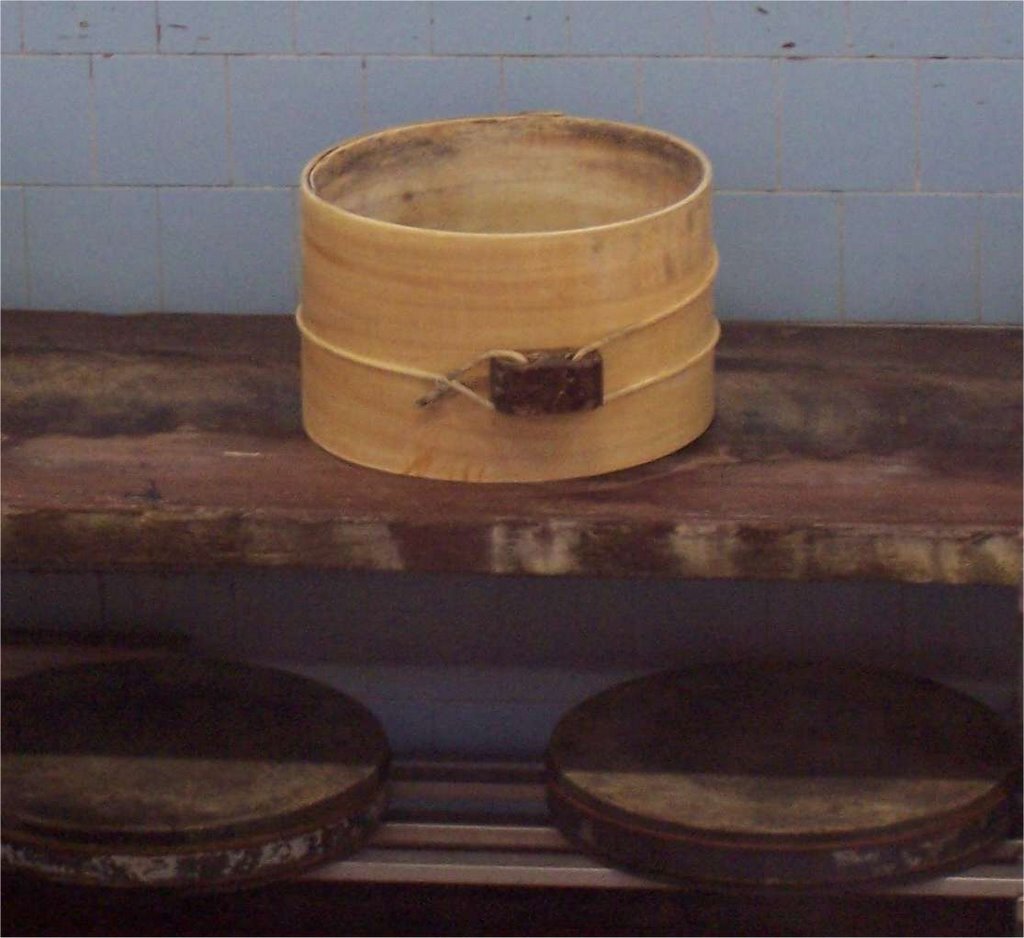
The first mould for the cheese.


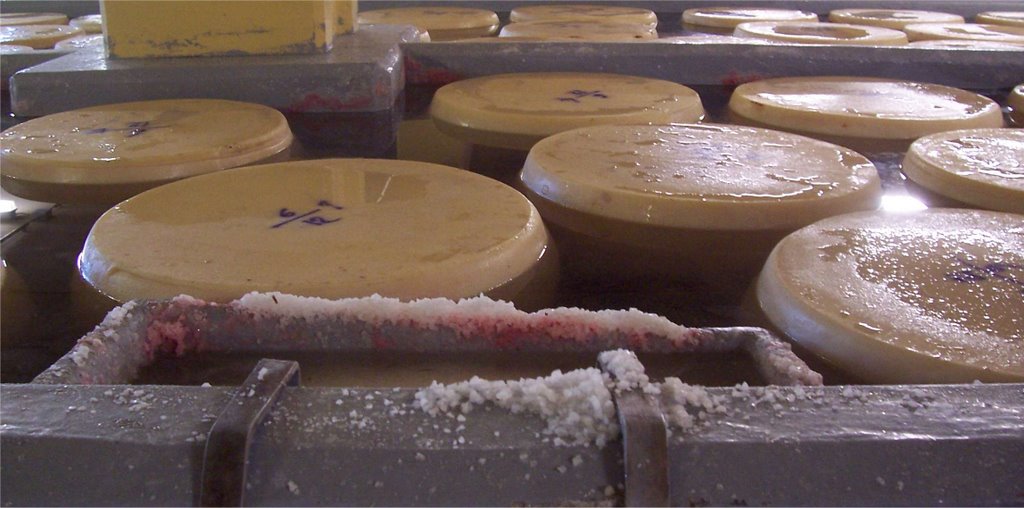
After two days – the Parmigiano-Reggiano brand having been imprinted the first day and the cheese shaped in metal moulds the next – the cheeses are floated in brine for 20-odd days, to firm up the rinds and allow osmosis to do the work of removing excess moisture and prepare the texture for a good long aging process. The cheeses are turned and re-salted regularly. Salt is the only preservative allowed in Parmigiano-Reggiano.


Look up… look wheeeeeyy up!


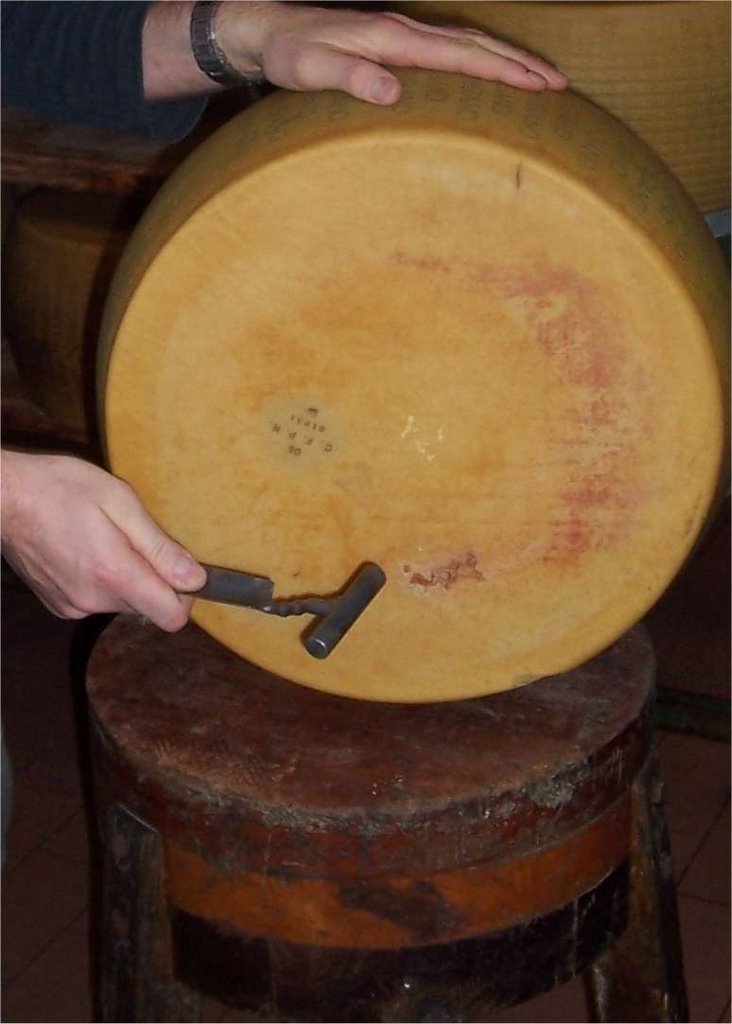
Once aged, the cheeses are tested by experts (battitore) who use a hammer to determine the depth of the rind and the quality of the cheese through sound alone. A hollow note can indicate uneven texture or holes (eyes). We’ve heard from several directions that holes are an impermissible defect in Parmigiano-Reggiano; formed by fermentation within the cheese paste, they can allow bacterial growth and spoil the flavour. The farmers go to great lengths to prevent the cows from eating wet grass, and neither are they permitted to eat silage, because these can promote lactic fermentation that could spoil the cheese during aging; so notes on permissible feed for the cows have been included in the regulations that govern Parmigiano-Reggiano production.

Much of the cheese is sold after 12 months, just to pay the bills. We were told that currently the Parmigiano-Reggiano consortium cheesemakers are operating at a loss, and the earliest they can sell their product is 12 months, at which point it is fine for grating, though the preferred age for eating it as a table cheese is after 24 months. Its digestibility and flavour improve, but its texture gets drier as it ages. One of the distinguishing features of the well-aged Parmigiano-Reggiano is the presence of small white crystals – an amino acid called tyrosine – which you find also in other long-aged hard cheeses such as (yum) gouda.

British cookery writer Delia Smith visited this region and learned about Parmigiano-Reggiano and documented her take on it on her website. I especially liked what she revealed about its noble history in England:

During the Great Fire of London, that most discerning of diners, Samuel Pepys, thought the cheese so precious that he dug a hole to bury his Parmigiano Reggiano to preserve it from the flames.

1 Comment


Barolo and back


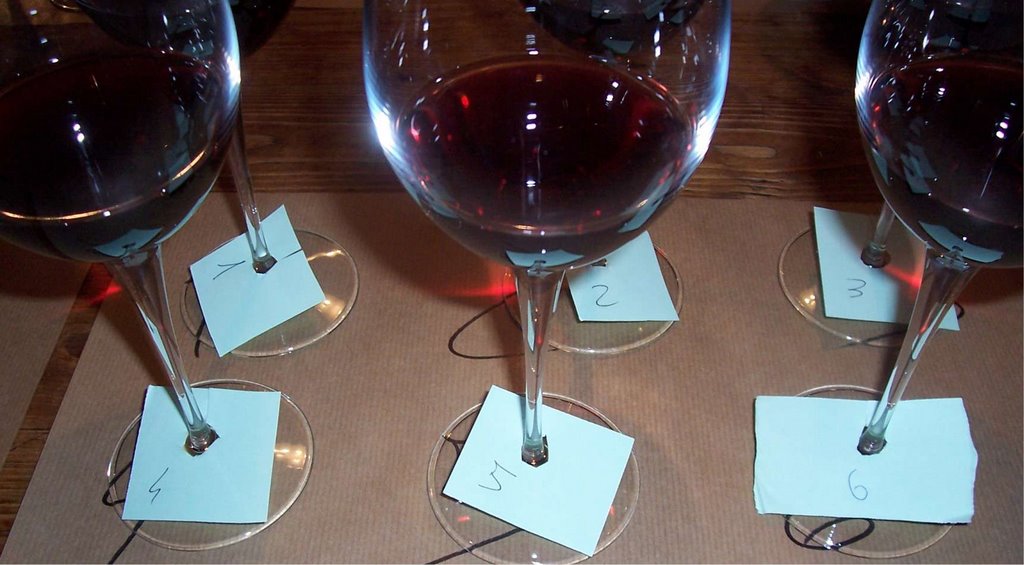
Lining up for the blind tasting

On Tuesday we attended a Barolo wine-tasting at a local enoteca (wine bar), called Ombre Rosse. We went through to a private room at the back where we rather swamped the place and probably startled the three locals who had come for the occasion.


Our host explains the wines.

We did a blind tasting of six different Barolos – by wine producers: Bartolo Mascarello, Rinaldi, Aurelio Settimo, Clerico, Aldo Conterno and Montezemolo. As a complete wine rookie I had some trouble isolating the different scents and flavours, but did eventually manage to pull out cherries, black licorice, toffee, blackberry/blackcurrant, while others talked chocolate, nutmeg, panettone, candied fruits, raspberries, figs, mint and more. From different glasses, I hasten to add. After a survey by the proprietor, he disclosed that most of us preferred the fruitiest (and priciest I think, at about €50 a bottle), from Aldo Conterno.

We called it a night around 11.30, and left a large group still there savouring the dregs and gnawing on some chewy bread rolls the management had kindly brought in at the end. The evening was €30 and worth it for the education, the company (of course!) which included some more knowledgeable noses who led others of us, and the wine itself which goes for around €7 a glass.

Comments Off on Barolo and back


Parma weekend


Monomento alla Vittoria (Victory) in Parma – unveiled in 1931 and made out of enemy weapons.

A long weekend in Parma: we had a holiday on Friday (Immaculate Conception) which I squandered on a day of rest and rehabilitation, trying to beat the bug that has been making life tiring and difficult. I hope that’s done the trick.

We had sunny days Saturday and Sunday and I spent the daylight hours of the former running errands at Brico and Ipercoop. A typical expat’s shopping expedition. Nancy has already written a poem of the wrong lightbulb, but at least she got to experience that in English. Yesterday I bought a lampada but managed to come home with the wrong lampadina – and no illustrated guidance on which is the right one. All those I’ve seen in corner shops have been standard screw-in types and this is obviously something else. Two other minor purchases went similarly awry – wrong battery, wrong size hook – and so it goes. Swimming through the murk.

Had a chance to commiserate with a few classmates over dinner. We compared notes: where can you buy a hammer? Who sells lightbulbs? Why do the service staff of Telecom Italia simply hang up when they hear an American voice? What’s the best way to get hold of the one cab that goes from Colorno to Parma at night? What’s the best way to learn Italian? What do they sell in the Chinese market? It was a convivial and delicious evening with almost as many things to eat as questions to ask.


Monumento a Corridoni – first world war memorial in Oltretorrente, near the Ponte di Mezzo.

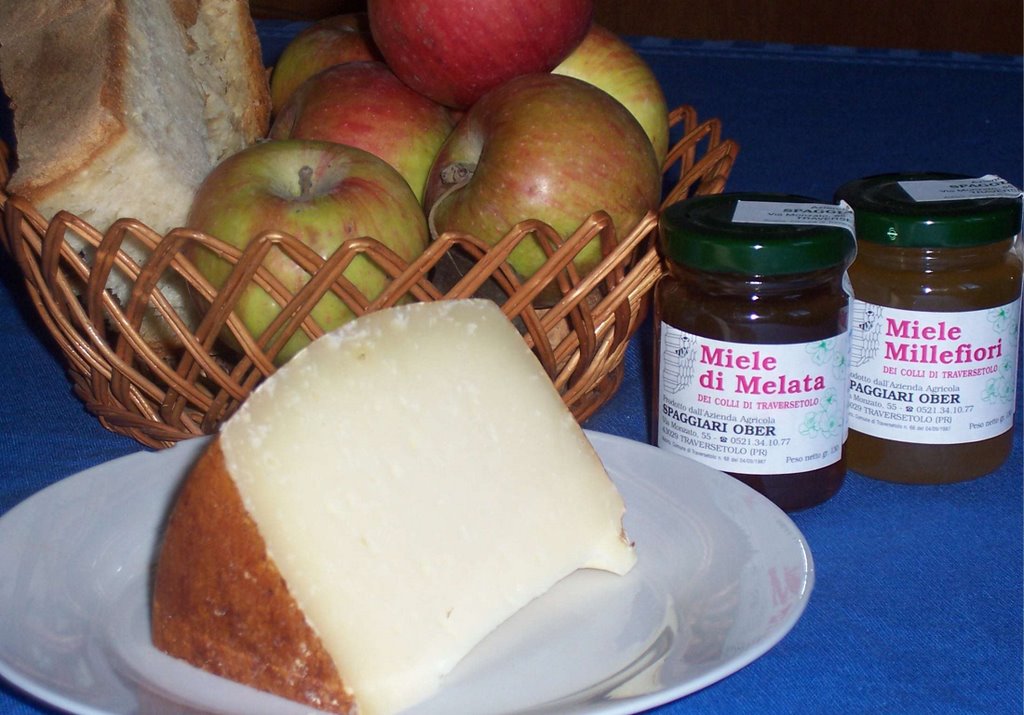
Today I set off in hopeful fashion to replenish our water supply – bottles of drinking water we prefer over the heavily mineralised tap water that to our sensitive noses says ‘eau de sulfur’. All right to bathe in (apparently this is sulfur spa country so we’re not imagining it) but we prefer something less overt in our coffee. But I managed to miss the supermarket by about 10 minutes; it was closing early today due to the holiday I guess. There was instead a Christmas market to browse, and I came back laden with ancient apples (the variety rather than the produce, I mean), a couple more flavours of honey (melata – honeydew, and millefiori – a thousand flowers!) and some bread and cheese (pecorino – sheep’s milk cheese – I forget where this one was from, Sardinia maybe?). Now, on to catching up on some Italian lessons from last week…


Still life with pane, pecorino, “mele di nonna“, e miele.

1 Comment