Skip to content

2023

Boulevard Gardens

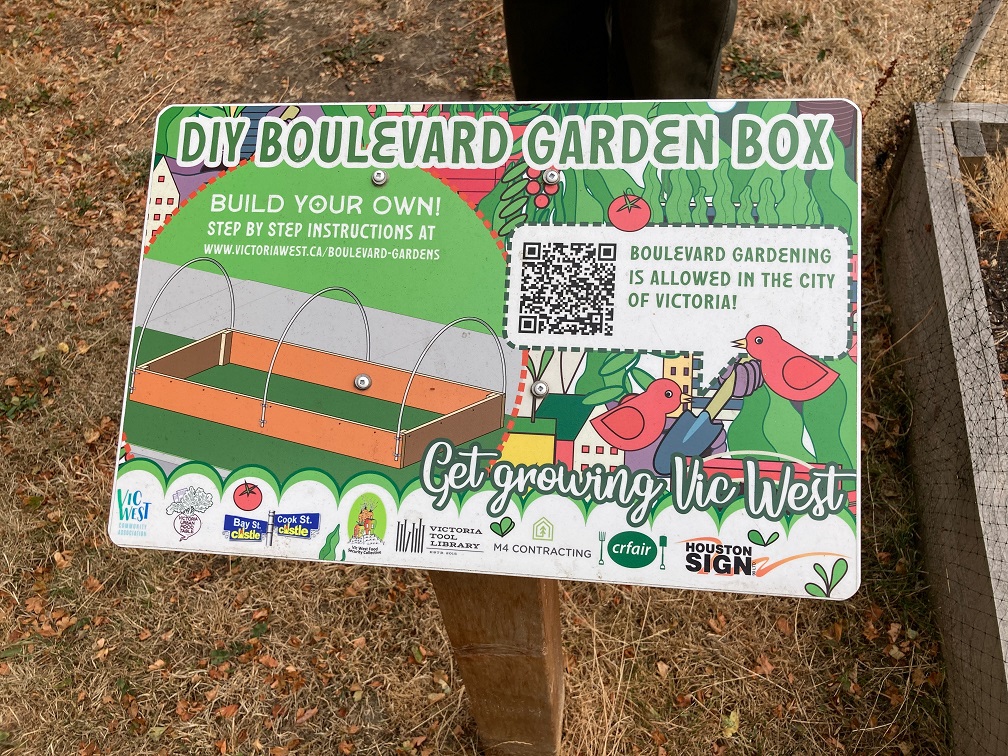
boulevard garden sign with qr codeVic West is a neighbourhood of the city of Victoria, one of the 13 municipalities that make up the Capital Regional District (CRD), collectively known as Victoria. It’s a working-class residential neighbourhood with a lot of single family homes, with a good selection of boulevard gardens.

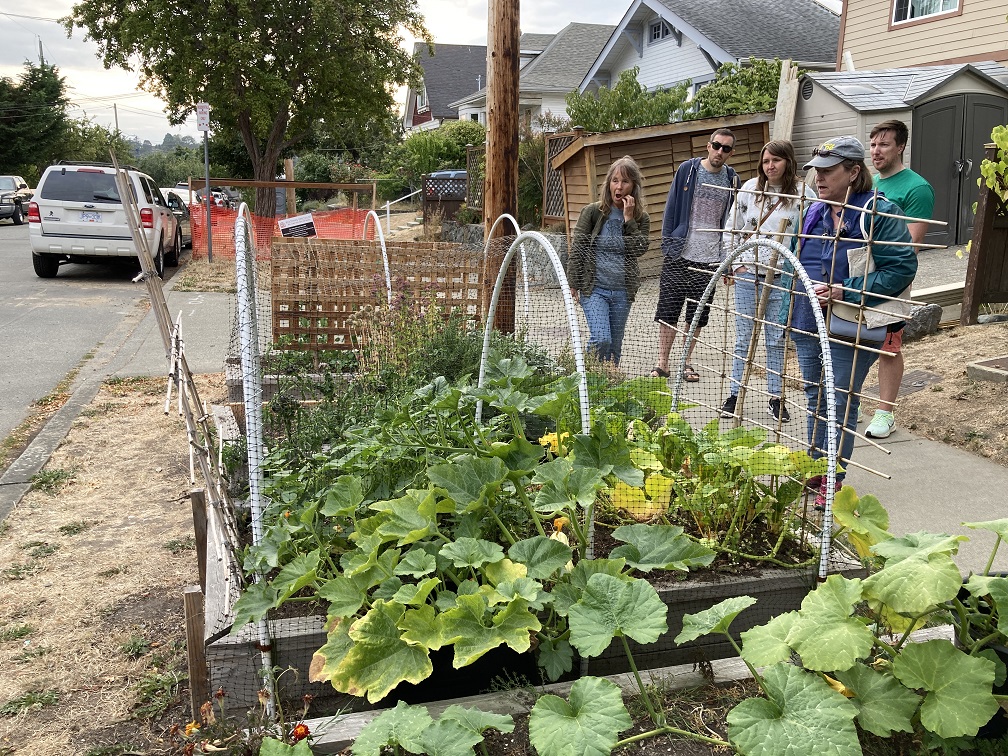
The sign posted next to many of them offers a QR code that links to instructions on how to build a bed suitable for growing fruit, vegetables, flowers or hers between the sidewalk and the street. I went on a tour to see what some of the approaches have been.
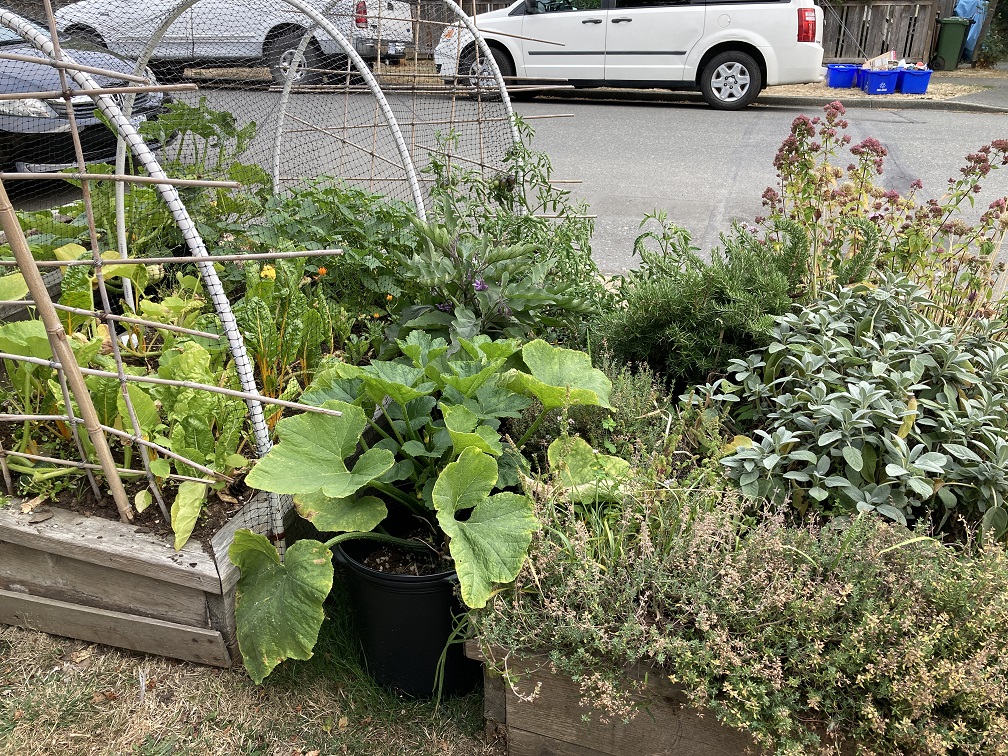
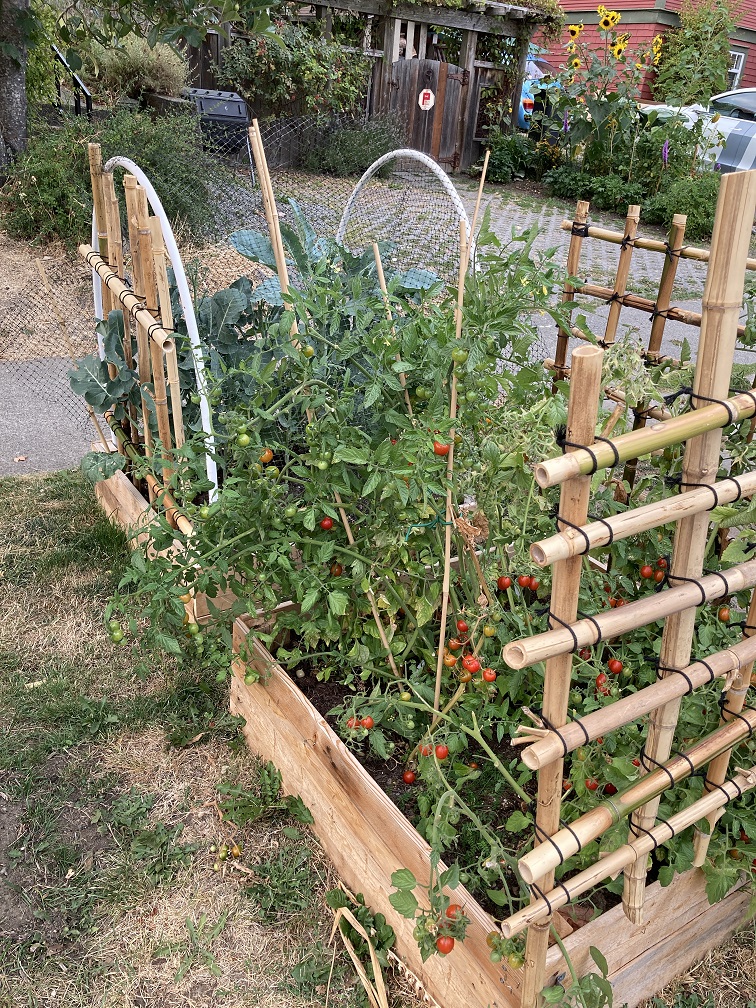
This is what the sign’s instructions suggest – open wood base and PVC hoops that can be covered with mesh to keep out deer or other garden browsers. This one also has added wooden trellises in  adjoining beds, and filled the spaces between beds with pots.
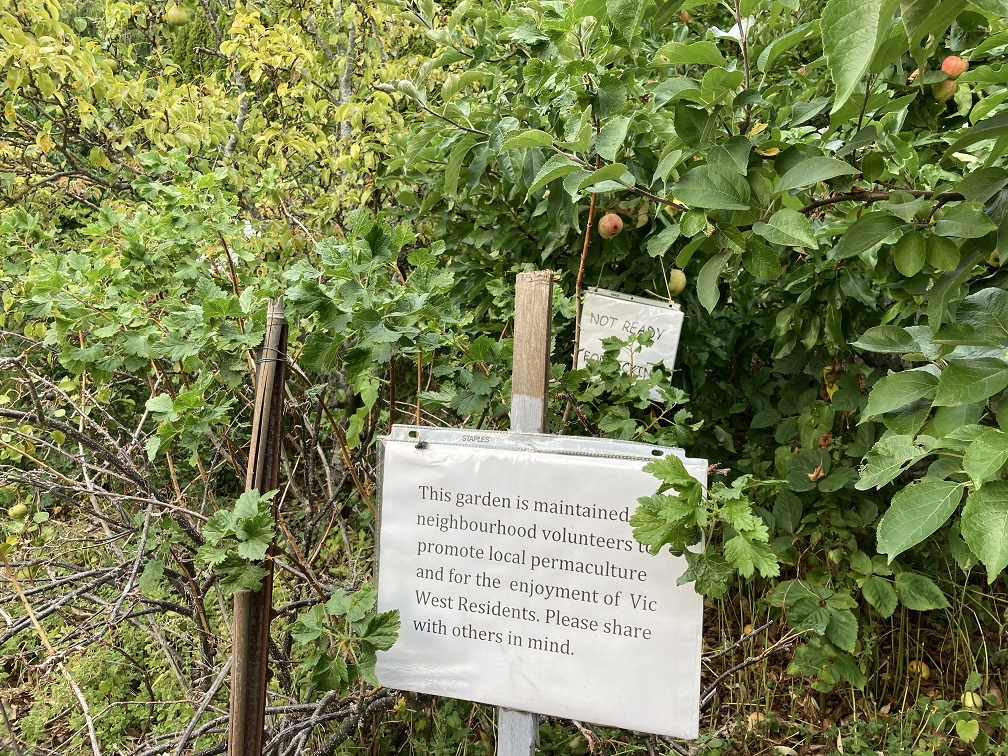
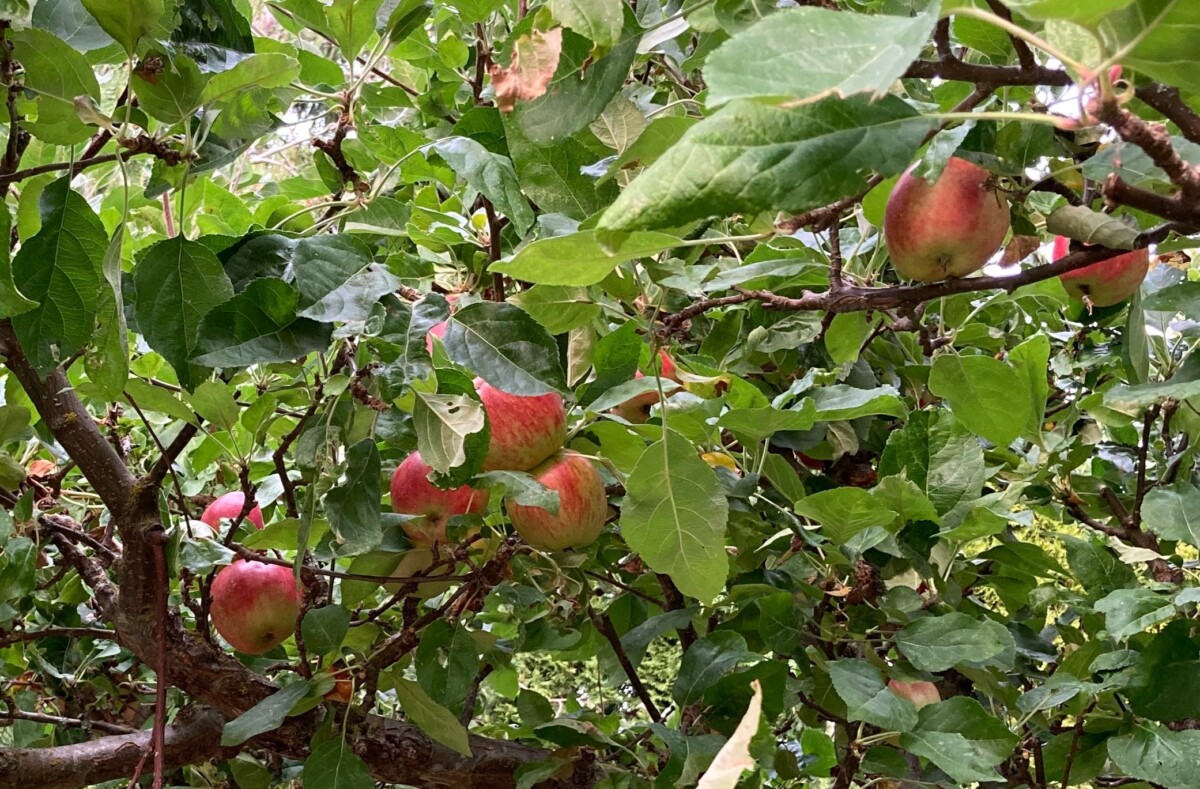
Down an alleyway we found a boulevard orchard. Neighbours water and maintain the trees and signs are posted to tell people if the fruit is ready to harvest or not (and to remember it’s a community resource).

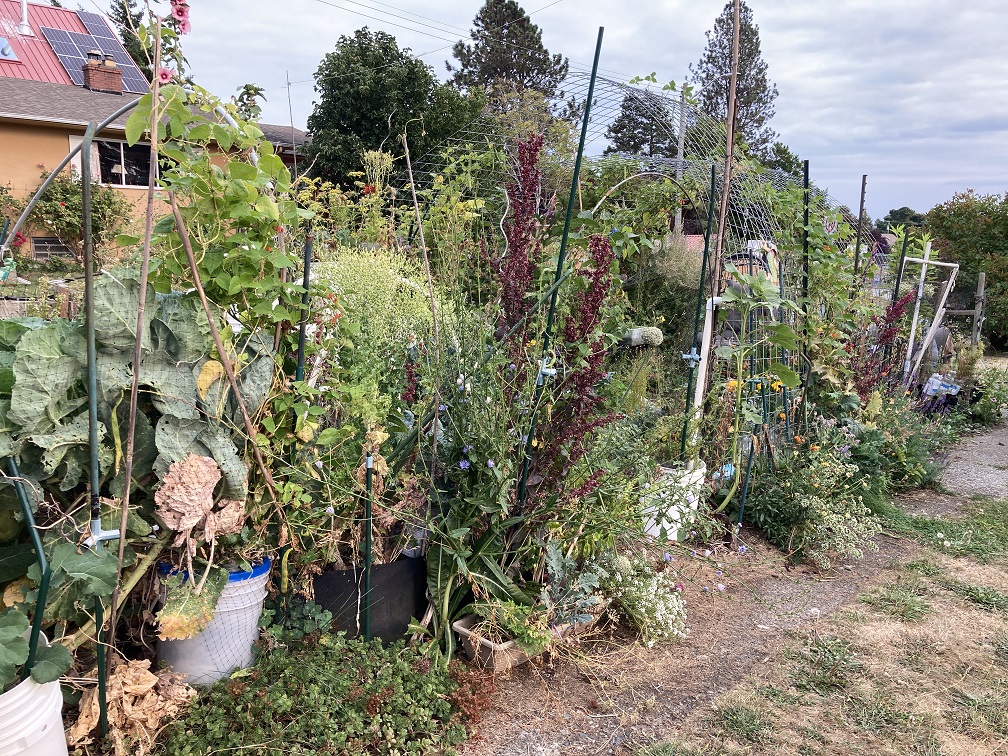
This creative garden was the work of someone who rents her home; the landlord did not want a garden on the property, so the entire glorious creation runs along the side of the property, fully on the boulevard.
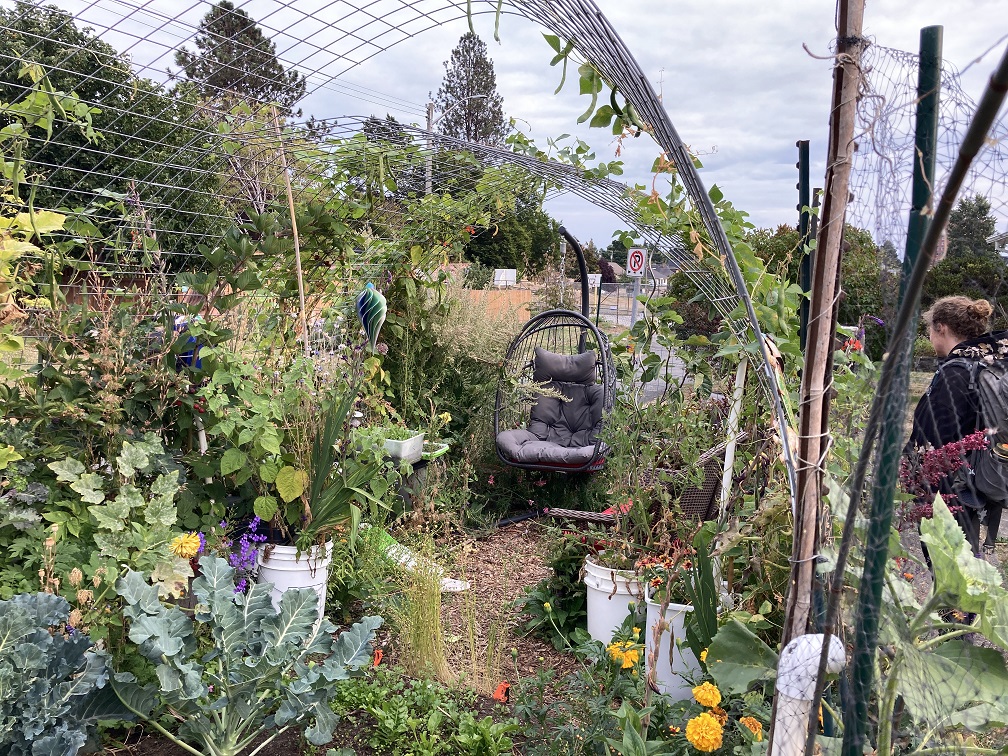
chair surrounded by garden
Even a cosy seat
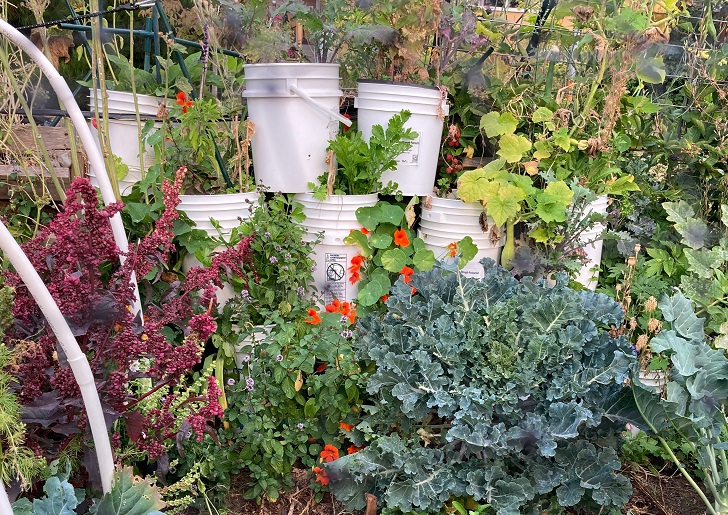
stacked plastic tubs growing plants
Using vertical space
Lush & pollinator-friendly
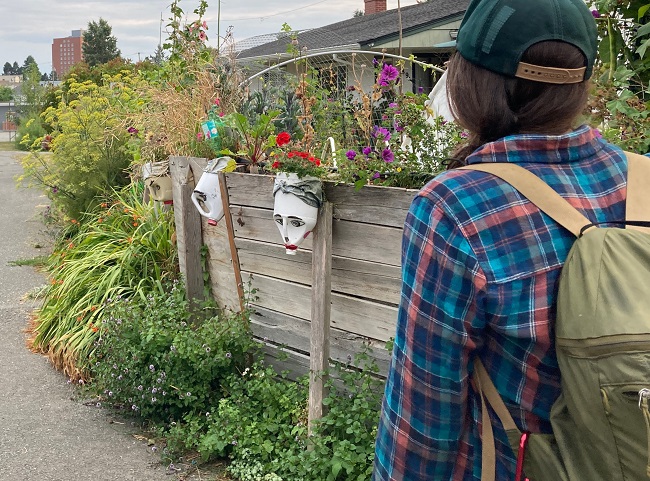
fence with planters made from plastic bottles
Creative use of old bleach (?) bottles

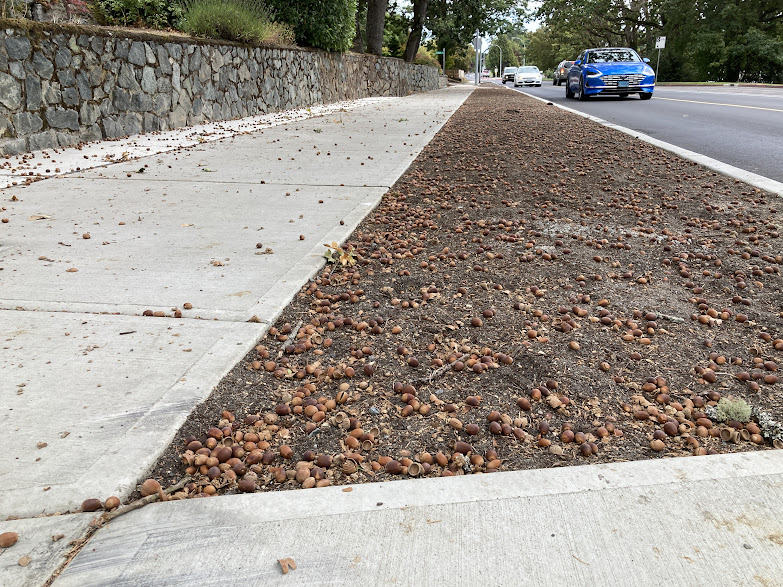
And this is the approach in nearby district of Saanich. Composted soil deposited in late summer, just in time for a mast year for Garry Oaks who clearly want to create a forest. What Saanich wants is yet to be revealed, but is likely grass.
Serenity on the Farm

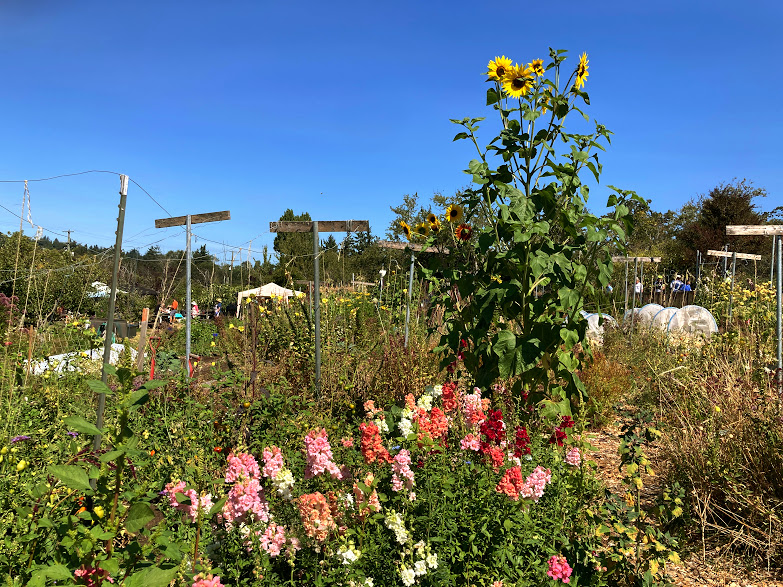
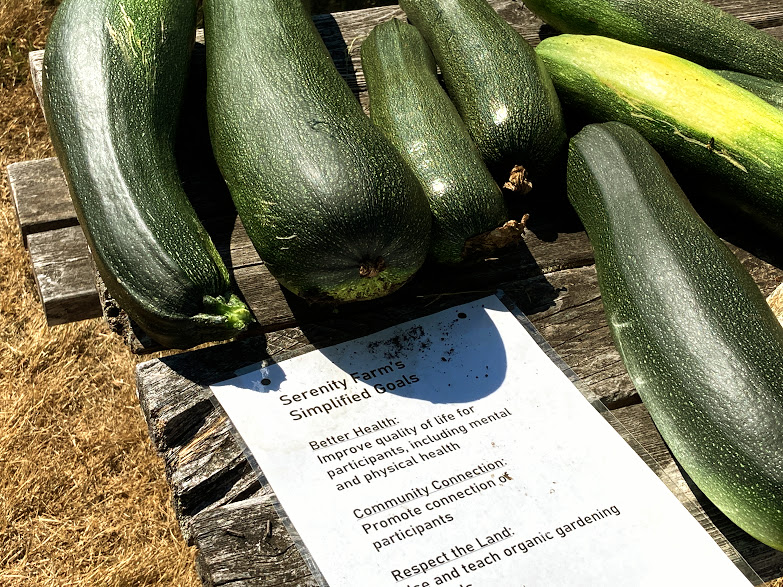
Serenity Farm had an open garden yesterday, and I’d wanted to see what went on there for a while.

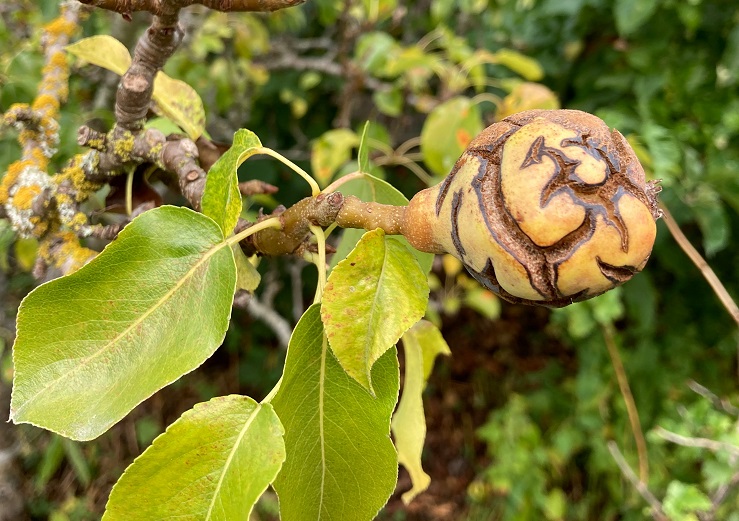
A therapeutic farm, it’s a small (half acre) site that grows flowers, vegetables and herbs, and boasts a small orchard with pears, apples, plums and figs.

The farm was established to provide a working space for people with mental illness, as well as others working off community orders. And it’s attracted a team of volunteers who come a couple of times a week to help out (more always wanted!)

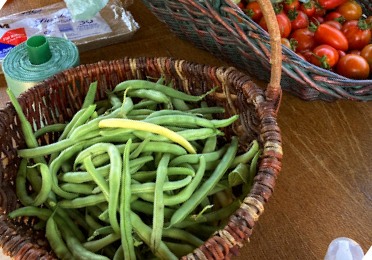
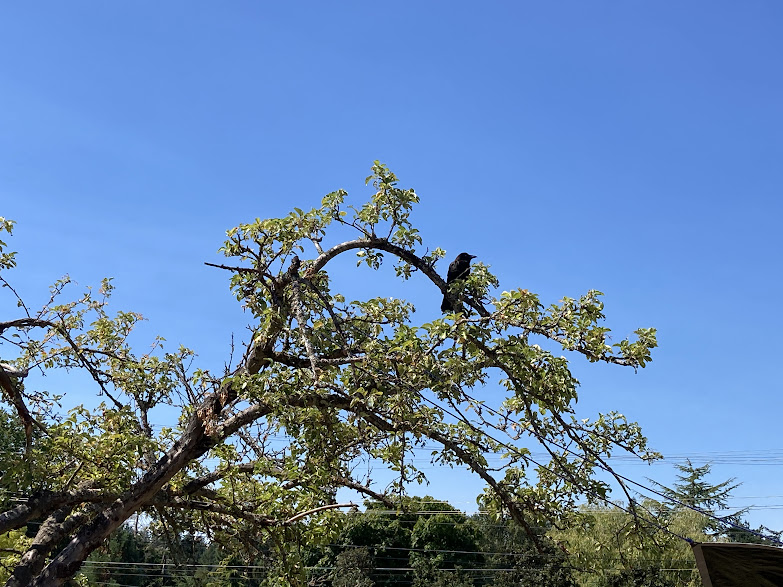
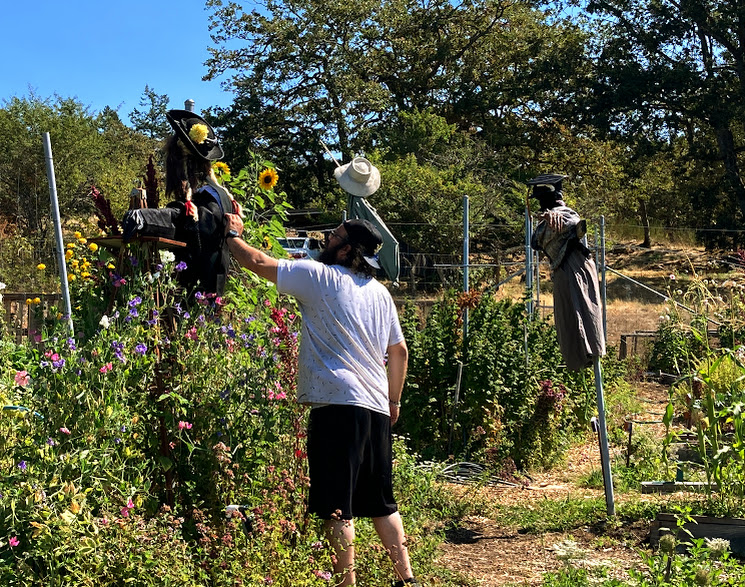
The project has been going for around 10 years and sits in a sunny field on the grounds of the Seven Oaks Tertiary Care Facility, in the Blenkinsop Valley. It’s always cheering to see how much food can be produced in a small space with volunteer effort, and the beans and tomatoes were abundant, as were the flowers and fruit – the plum tree was laden and the small apple tree boasted enormous apples. A crow presided from a nearby branch, presumably keen to judge the scarecrow competition that was underway.

Readings in my Garden

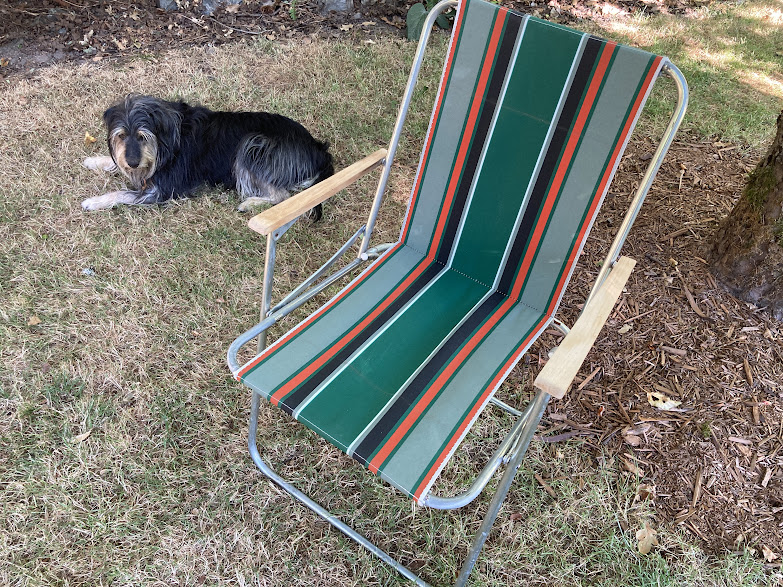
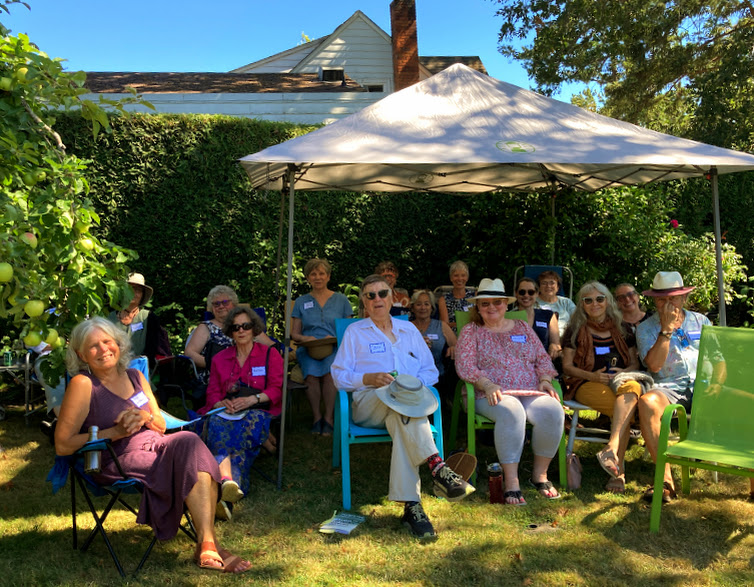
Murphy awaits an audience

It’s not every day you get to host a reading in your back yard, but yesterday was that day for me.

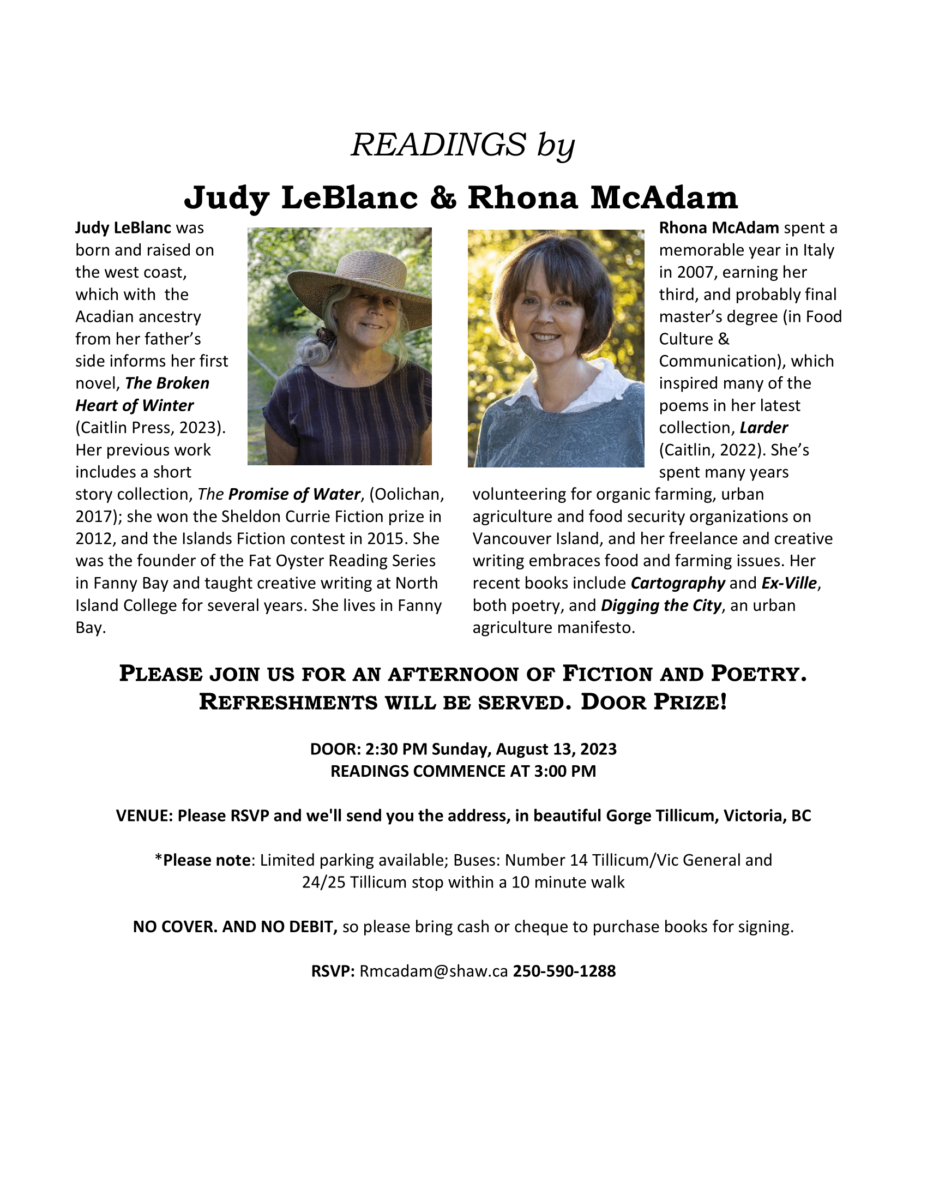
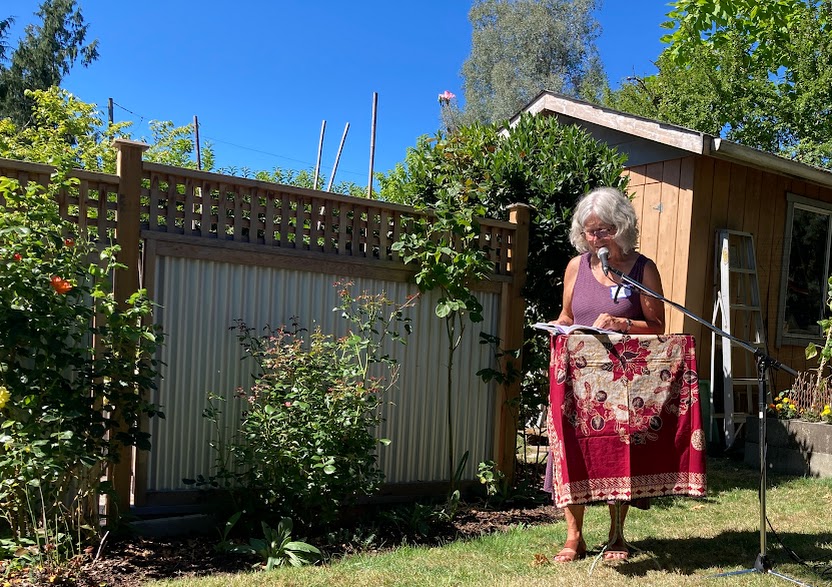
Judy LeBlanc and I cooked up this idea some months ago, to give her a proper launch and reading for her new novel, The Broken Heart of Winter.

We invited as many people as I could imagine squeezing into my living room (not

knowing what the weather would be like) and when the forecast was for sun (and then HOT sun!) we reconfigured the plan to hold the reading outside. All it took were a few borrowed chairs (thanks be to neighbours), a garden canopy and rented sound system (thanks be to Brian and Judy) and masses of lovely food (thanks be to the baking goddesses, friends and summer produce).

The event came off pretty seamlessly. We ended up with just under 30 people perched in shady chairs or lounging on the lawn beneath the over-laden apple tree. Murphy the dog was delirious with pleasure at having so many bare legs to greet, and nobody reported direct hits from falling apples or Garry oak acorns.

I enjoyed reading a few poems from Larder that had been set or inspired by my garden, and Judy gave a good sampling from the three sections of her novel, covering the recent and more distant history of Acadians as lived and told by a cast of women characters. After which our guests relaxed into party mode for a couple of hours.

By late afternoon, the temperature had reached a rather symmetrical 30c or so and a few of us repaired to the beach down the road, dodging the extensive litter of Canada geese guano (mercifully dried out by then, so less intriguing to Murphy) to take a cooling dip in the Gorge.

Poets in my Garden

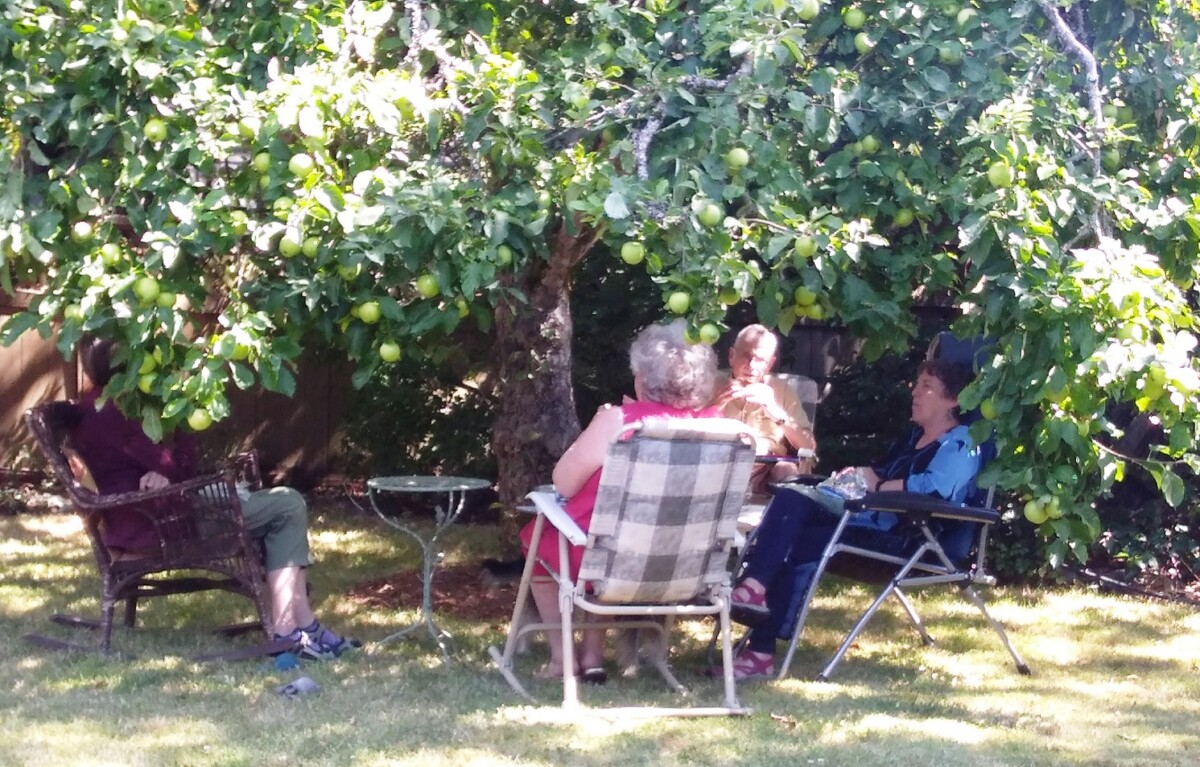
Four people seated beneath an apple tree
Poets sur l’herbe

I have been hosting Planet Earth Poetry workshops in my home and garden for the past 8 years or so. It is a glorious time for me, feeding creative spirits and having poets roaming around the property.

This year the workshop was led by Jenna Butler, who kindly and carefully led poets of all levels of experience through some difficult environmental territory, under the theme “Songs for a Changing World: Writing Our Hope and Grief About Place”.

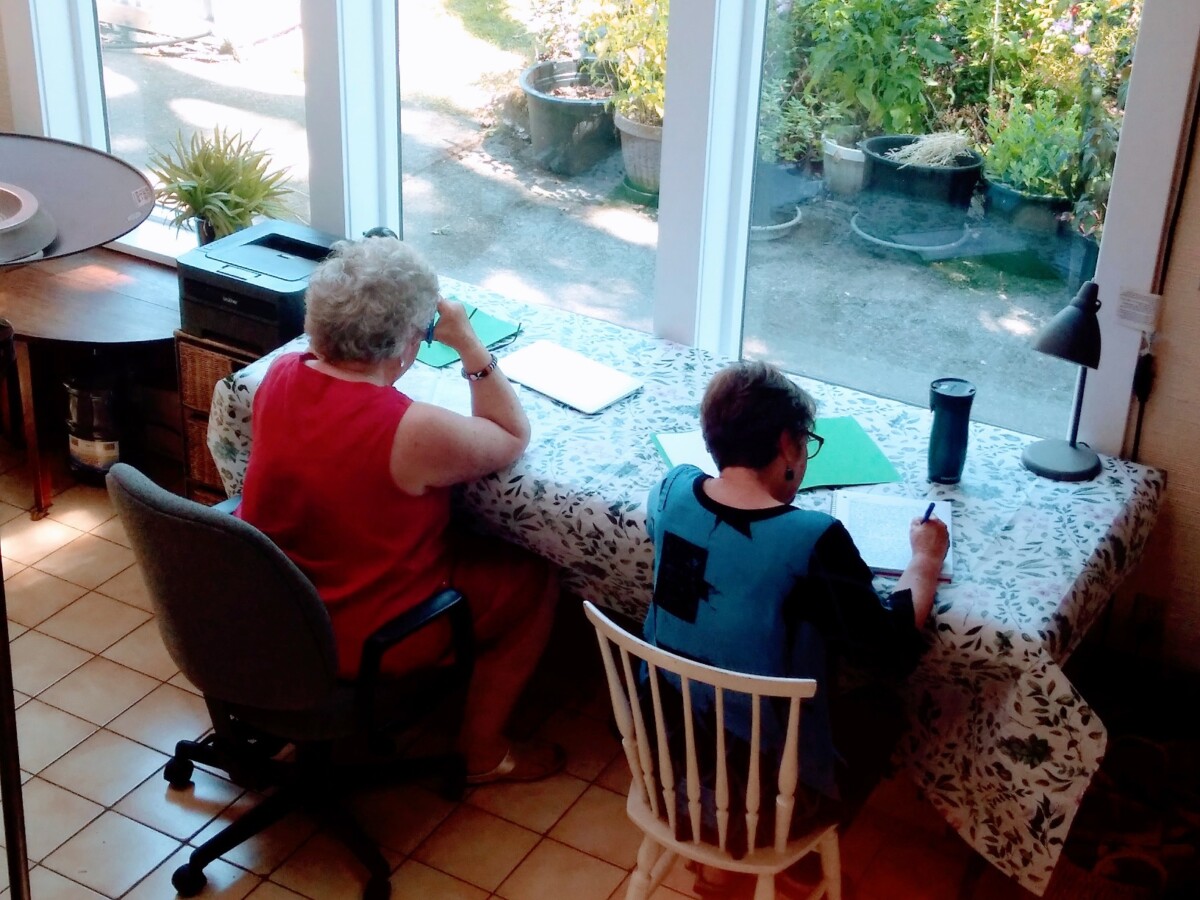
Two people writing at a tableParticipants spent some time introducing themselves and reflecting on their relationship with land (and water) before embarking on studying poetry models and being sent off at intervals to write.

My role in these events is Chief Eavesdropper and Provisioner, and it gives me a chance to do some recreational cooking and try out some new recipes. It’s also an opportunity to relive a past life: long ago I spent weekends and holidays enjoying the warmth of the kitchen at Strawberry Creek Lodge in Alberta, cooking alongside my remarkable mentor Tena Wiebe at workshops, retreats, wedding celebrations and meetings.

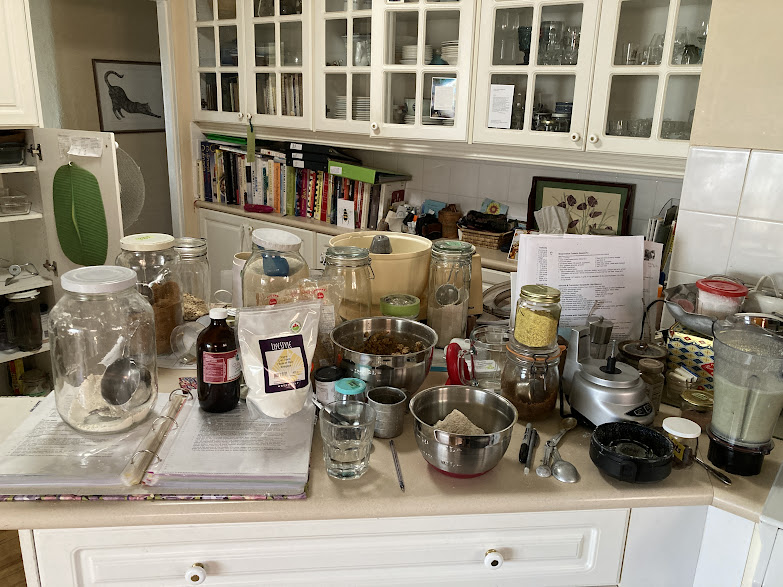
There’s a favourite New Yorker cartoon of a kitchen, captioned “So this is where the magic happens“. Here’s my version, showing my PEP workshop catering preparations. Kitchen countertop with messy arrangement of baking ingredients

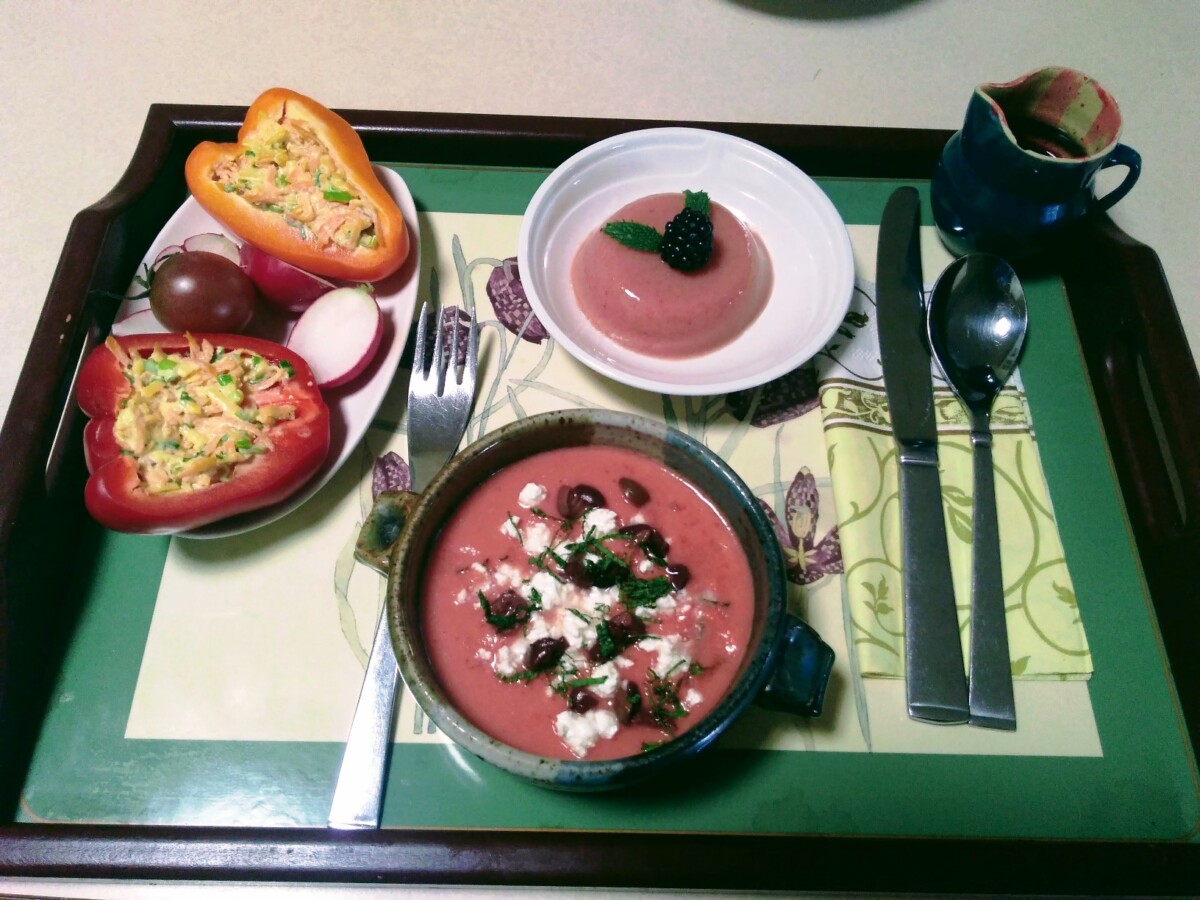
One of my tasks is to provide a lunch to the poetry mentor, and this was Sunday’s lunch for Jenna: Watermelon Gazpacho, Pepperwiches, and Plum Panna Cotta (with fresh blackberry sauce). I was relishing the opportunity to use some summer ingredients, including plums from my garden, some salad vegetables and local blackberries. My nutrition training also influenced the menu which was strong on colourful vegetables and containing no ultra-processed foods. Tena taught me the powerful lesson that serving food made from scratch, with love, is a truly satisfying way to live (and eat)!Tray with food dishes as described

Eco-lit in Portland

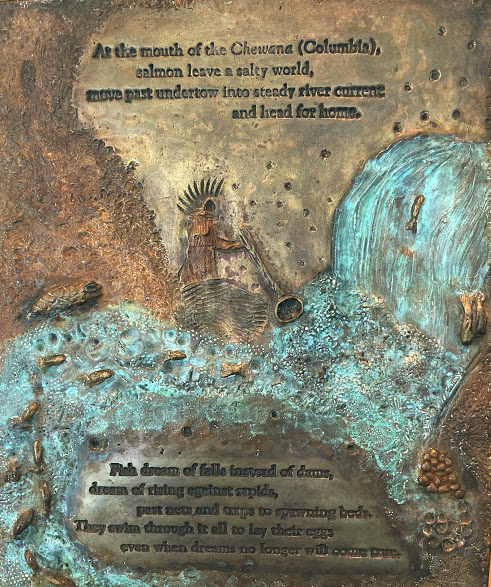
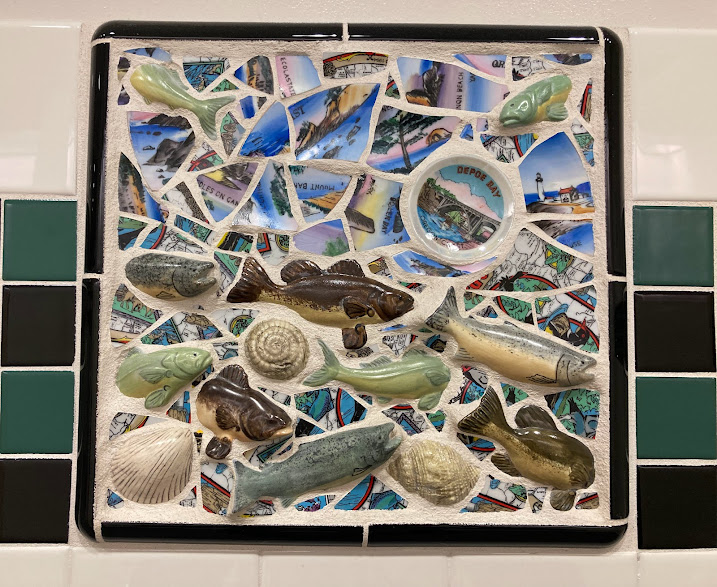
I’ve gone to quite a number of ASLE and ALECC conferences over the years. This year’s ASLE conference – its first post-pandemic gathering – was in Portland Oregon. Unusually for an organization that normally meets on campus in a smallish college town, it was a more corporate affair, a joint event with The Association for Environmental Studies and Sciences (AESS), at the Oregon Convention Centre. Which was itself a model of environmental building (LEED platinum) and stunning public art.

Eco-conferences do delve into sobering realities and there was no shortage of these in Portland. The plenary sessions included one that provided a lot of ecological context for concerns around deep sea mining. Which is being proposed to provide minerals for our ‘green economy’ – building batteries for our ‘sustainable’ electric cars and bikes, for example. Ocean mining companies have already been securing contracts in the waters around smaller coastal countries but the major headache was under discussion in Jamaica during the time of the conference: what about international waters? All a bit ludicrous in light of the fact that our oceans are all connected, so any damage done – destroying habitat for unknown species, creating plumes of silt that can choke the ocean floor for hundreds of kilometers – will in fact tamper with the substance of life on this planet, since we rely so heavily on the ocean to provide us with a breathable atmosphere.

Another featured two first nations speakers from Yakima Nation, who spoke on concerns around the Yakima, an important salmon river in Washington state. As I’d learned years ago when I studied permaculture, salmon are the reason our coastal rain forests flourish – they provide the nutrients for local wildlife which in turn scatter nutrients on the forest floor. So it’s no small matter to learn that global warming will heat salmon rivers to the point where salmon cannot survive their spawning runs. What’s to be done? The modest efforts to remove dams along these rivers offers a small hope that the water can be cooled sufficiently in the short term at least. Beyond that, who knows.

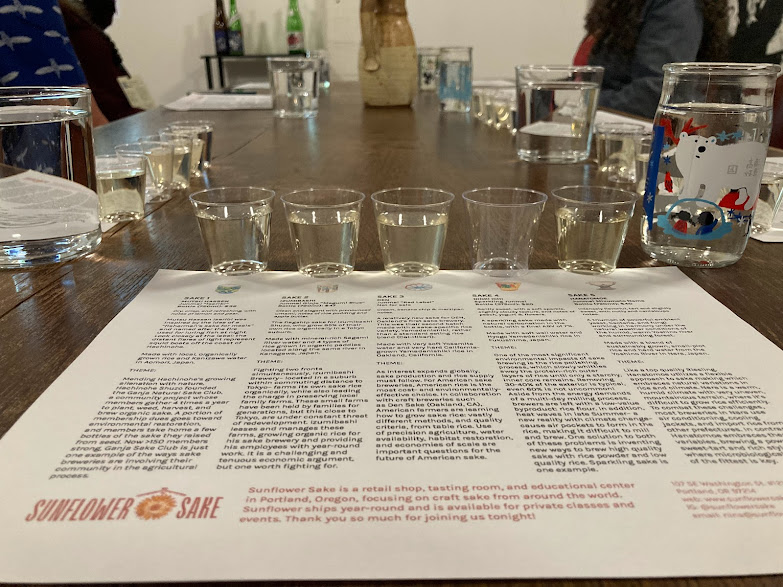
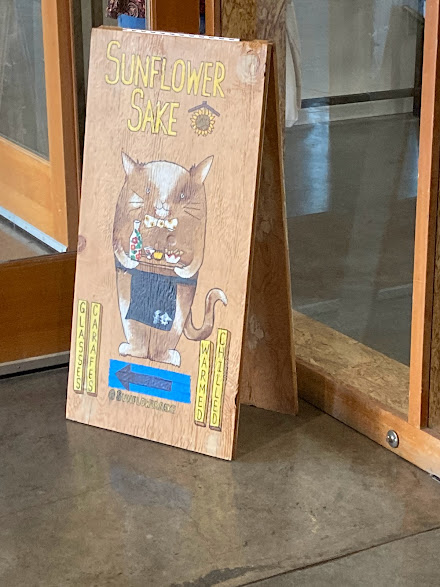
One popular feature of ASLE conferences have been the workshops and field trips before or after the main events, that are geared towards the themes or interests of the participants. This one featured a sake tasting at a local sake shop. It took me back to my wine tasting days at Unisg. All the sakes but one were offered slightly or well chilled, which was a different way, for me, of enjoying them.

And finally, early on the last morning of the conference, I read some of my poetry on the Poems & Poetics of the Commons panel, together with Lori DiPrete Brown, Sandy Feinstein and Trey Moody. As inevitably happens when random poets are placed together on a panel,  surprising conjunctions of mood and subject emerged from our readings. So it was a good way to wrap up the conference for me!

Canada Day on the Gorge

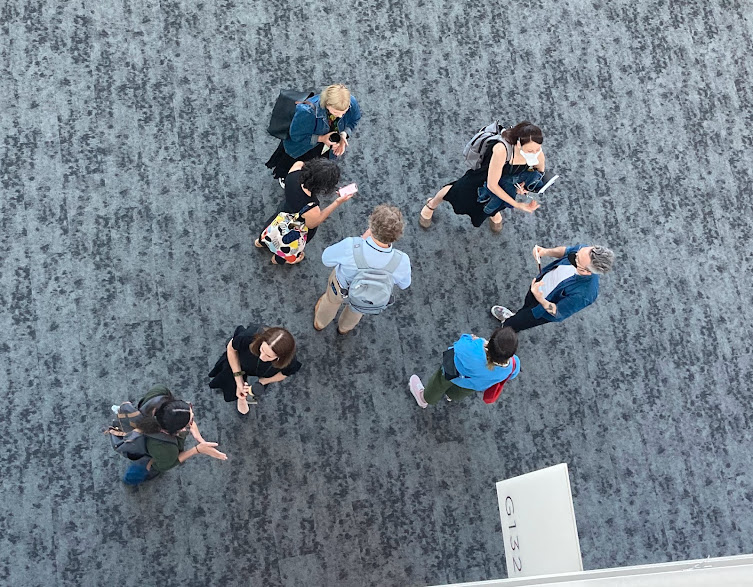
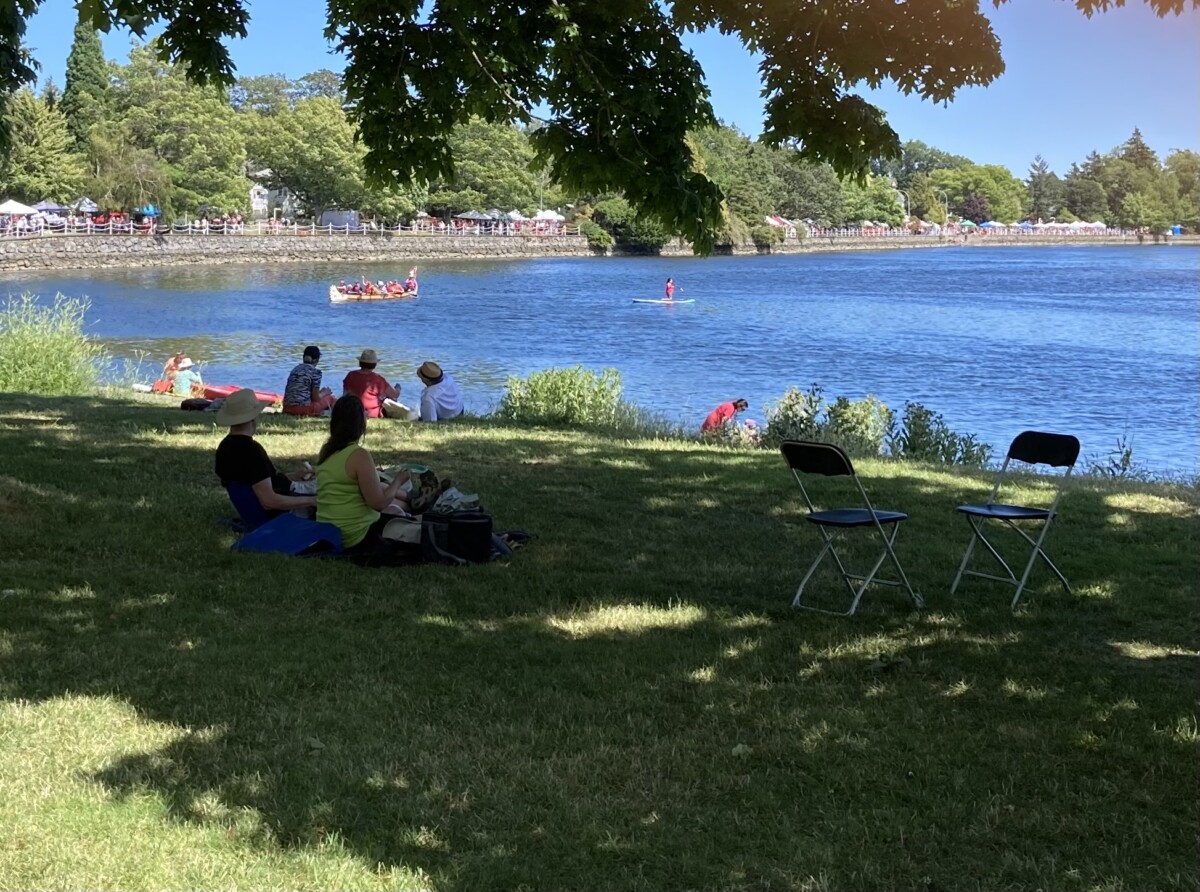
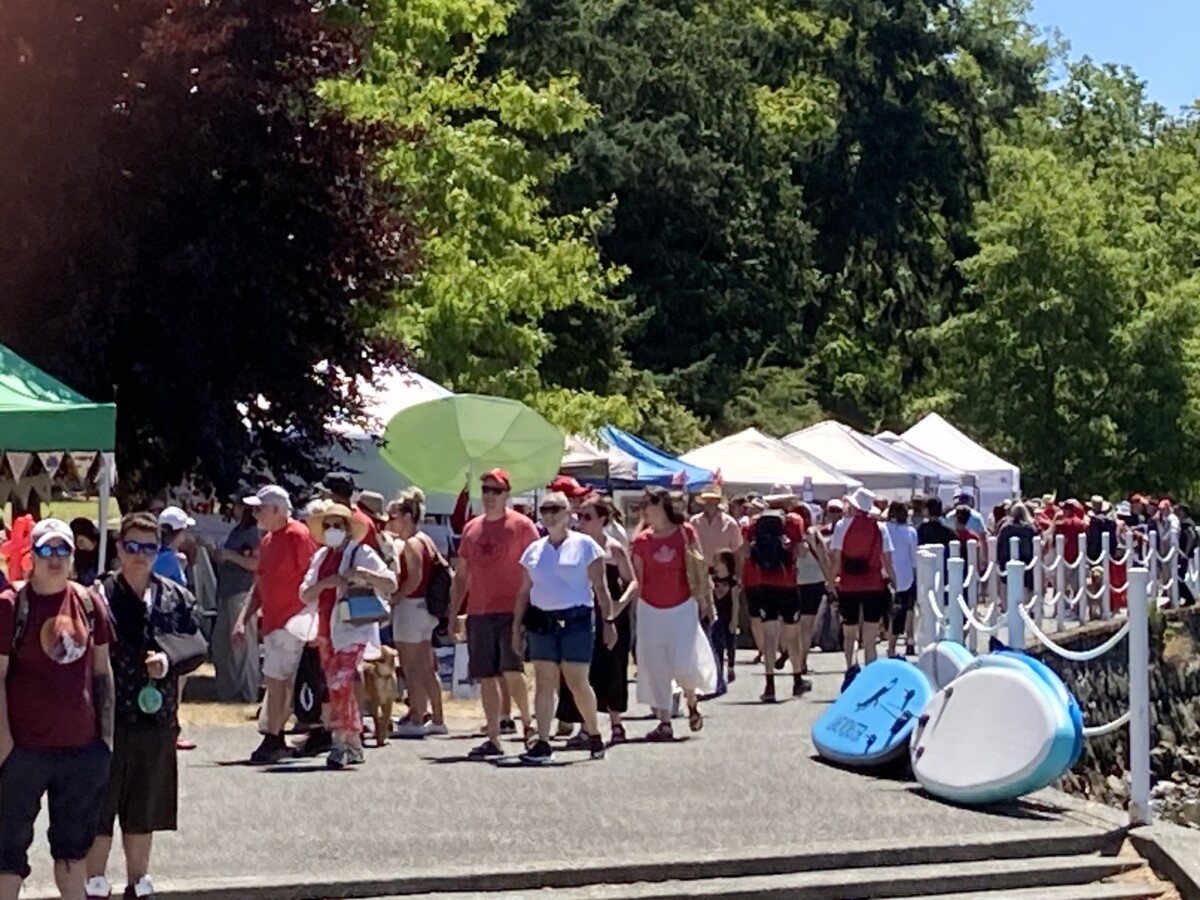
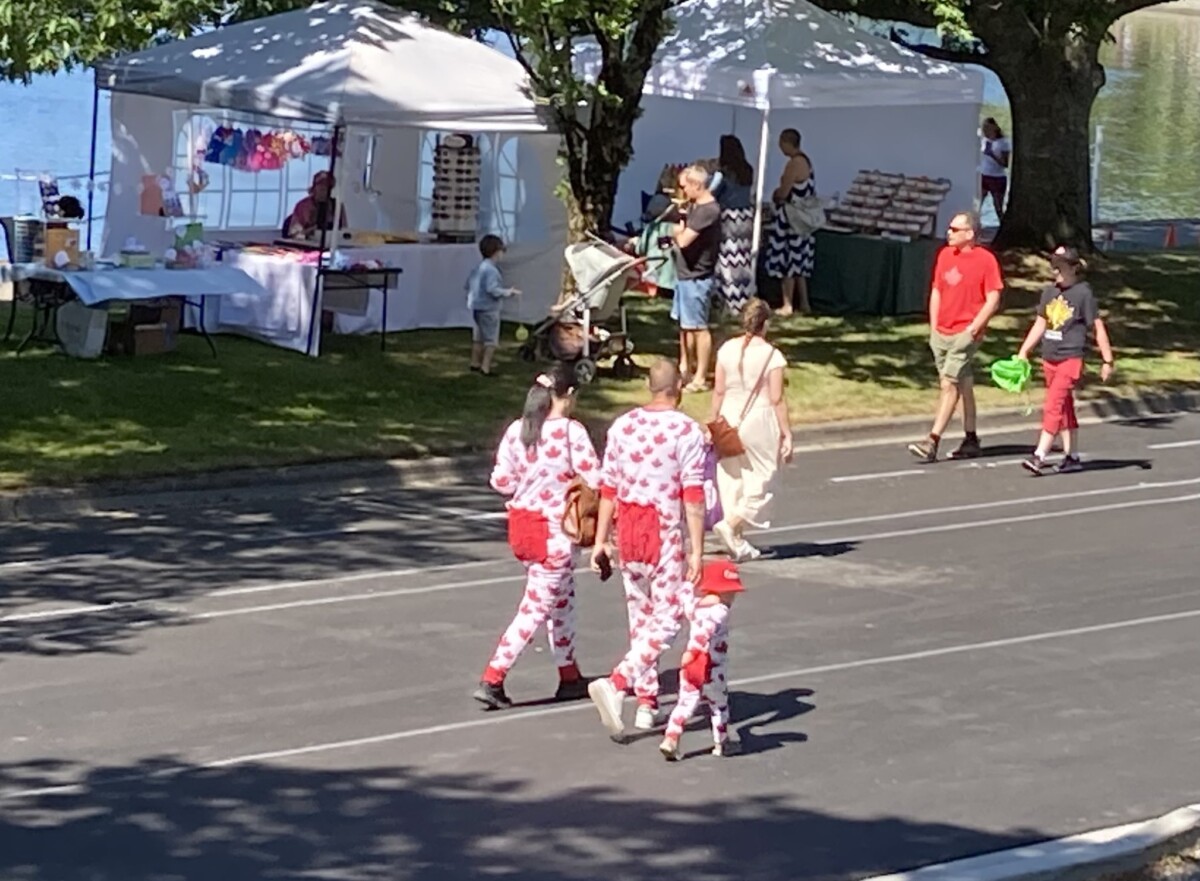
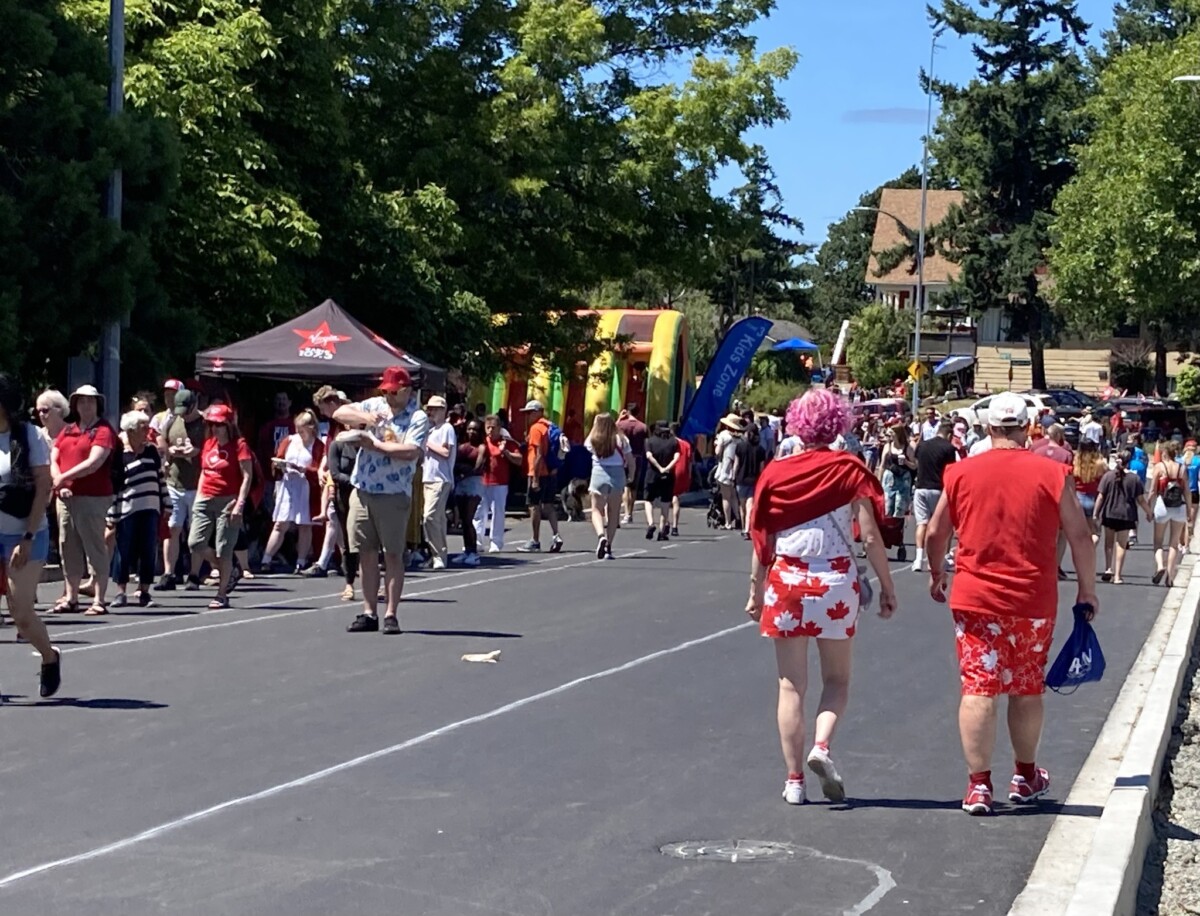
There’s been construction all year – since last October – on Gorge Road, the third time in my life here that the road’s been dug up. This time it was for replacing storm drains, and altering the road to include concrete barriers for bicycles, removing some bus stops and narrowing the driving lanes. In the contract was a clause requiring the construction company to have the road cleaned up or finished in time for annual Canada Day festivities, and they did get it to a workable state. Here’s how it looked with people on it!