Skip to content

Unisg

Tasty week – olive oil, wine technology and the physiology of taste

We’ve had a lovely oily tasty sniffy week, with our first oil tastings and some coaching on olfaction and taste thresholds.

Our oil guy, Alessandro Bosticco, is an inspired teacher, a sommelier as well as an olive oil expert, and I was happy to hear he’ll be steering us through some wine tastings as well. I particularly warmed to him when he dodged a question about his favourite olive oil by saying that he simply loved tasting new things, and if he were offered the choice between his current favourite and one he’d never tried, he’d take the one he’d never tried.


He said oil tastings were rare, even in Italy, and to do them as we were, by tasting oil from cups (rather than by dipping bread) was still fairly unusual. We tried four different kinds on each of the two days. Oil is what carries flavour to our tastebuds, and it does its job well; so, being oil, its flavour is hard to purge from the palate. We had to allow more time between tastings than we would for wine, and take sips of bottled water and slices of apple – granny smith being the apple of choice for oil tastings because it is the most acidic.

We heard about the craze for fresh, unfiltered oils in Bosticco’s own local oil-producing region (Tuscany): cloudy and bright-coloured, these oils are not, he said, good for the long run, because the particles in them are fibres that have not been extracted during filtration, and which will trap water which can in its turn trap bacteria. So murk or sediment will affect the oil’s flavour adversely over time, and he advised that if you intend to keep your oil more than a few weeks, to get a clearer one. Even then it’s not going to last more than about 18 months, with a steady decline in colour and flavour as time goes by. More than once he remarked that the oil you taste today is as good as it’s going to get: it is not a product that improves with aging. Rather it is a living thing that changes over its lifetime. And it’s vulnerable to heat and light, so store it accordingly

We got some pointers on reading labels, and learned about the legal designations of “olive oil”, “virgin olive oil” and “extra virgin olive oil”, as well as a few others, defined by the International Olive Oil Council.

Basically the big deal with extra Virgin Olive Oil is that it must be produced by mechanical means (which is always and inevitably cold pressing, so that phrase added to labels is just hyper marketing). This distinguishes it from the processes used to produce all other kinds of oils (except for specialised niche versions of course), which involve heat and chemicals. Extra virgin oil has to pass a chemical test (it can’t contain more than .8% oleic acid) and it then has to pass a taste test by a panel of experts. This doesn’t guarantee it will taste ‘good’ to everyone, but it gives a basic measure of quality. It may also be the result of blending more than one crop, including crops of different years, but is tested at bottling, so no new blending can taste place once it’s had its testing.

There’s a statement which for 2 years now must appear on bottles of Extra Virgin Olive Oil: it must be described as “superior quality oil obtained straight from olives using only mechanical means of production.” That again is no guarantee of flavour (which is subjective anyway) or origin. Most of the olive oil in Europe is produced in Spain, but Italy has the highest consumption, ergo much of what we describe as Italian olive oil is imported and only bottled in Italy.

So for those who want Italian and only Italian olive oil, there is a fairly recent DOP designation (Denominazione di Origine Protetta, or Protected Denomination of Origin) – a high falutin’ version of extra virgin, which is subject to standards governing where and how the olives may be grown, pressed and bottled as oil. This oil of course sells at a considerable premium. It would be one instance where the bottler will note the date of harvest on the bottle, giving you an indication of the freshness and therefore the power of the oil’s aroma and flavour.

Farther down the scale, what is sold simply as Olio d’Oliva, or Olive Oil, is a blend of refined (by chemical means) olive oil and virgin olive oils. Virgin Olive Oil is produced by mechanical means and has a higher measure of oleic acid than Extra Virgin.

Olive oil is used in its traditional market – Mediterranean, for example – for traditional reasons such as taste. In the newer and ever expanding world-wide markets, it’s been picked up for its health benefits, as it’s a pure unsaturated oil containing fat-soluble vitamins (A and E) and antioxidants. Among the many other advantages it has over other oils, as enumerated by the Oil Council, when you use it for frying, it adds less fat to fried foods because it forms a crust on the surface of the food that impedes the penetration of oil and improves the food’s flavour.

There are different taste preferences for olive oil that are partly cultural: people raised on animal fats tend to prefer milder olive oils to more pungent peppery ones with their bitter after-bite. We had a reinforcement of the advice about becoming a good taster: to taste and smell many different things in order to build an olfactory library, so you have a more comprehensive memory of tastes and flavours to compare.

Due to some weird global synergy, BBC Food Programme and NPR both had programs on olive oil this month.

We also had a first lesson on wine technology… ack – more chemistry. Still, we are paddling around in the sea of knowledge and one day it will all make sense.

We finished the week with a lesson on the physiology of taste from Mirco Marconi. We’d heard already about the classification of taste – sweet, salty, bitter and acid (plus the newcomer, umami, which reflects ‘meaty’ tastes). We learned that the position of taste buds on the tongue is not as static as had originally been supposed, with fixed areas for each taste, but that they are in fact in an overlapping range of regions with the central area of the tongue the least sensitive.

Bitter tastes linger longest because of their placement on the sides of the papillae where the flavour gets ‘stuck’ until it is washed out. We heard that there are varying proportions of the world’s population who are unable to taste bitter (3% in West Africa, 40% in India, 30% of white people in North America; 37% of Italians).

We heard about two theories of taste, which are called either molecular shape theory vs molecular vibrational theory, or docking criteria vs swipe card model. The first supposes that there is a ‘lock and key’ relationship between odorant and receptor: odorous molecules have shapes and sizes that “fit into” the shape and size of corresponding olfactory receptors. In the second, it’s supposed that receptors in the olfactory organs recognise molecules by their vibration, so the nose acts as a kind of spectroscope.

We got into hands-on mode for some tastings and sniffings. We sipped our way through nine samples representing sweet, salty, acid, bitter, umami and astringent – substances dissolved in water – comfortingly straightforward. We then finished by attempting to identify thirty different olfactory samples, ranging from smoke to mint, from cloves to coconut and saffron to bergamot. Fiendishly difficult.

And finally, we were welcomed to Parma officially before Christmas, and here’s the official photo!

Lodi: mozzarella and ricotta

We had a day out today, and watched some small scale mozzarella cheese making in the Istituto Sperimentale Lattiero Caseario/Institute of Dairy Science in Lodi, not far from Milan. The lab is equipped with a cheese making facility and over the course of our day-long visit, the master cheesemaker whipped up a batch of mozzarella and a little ricotta for us.


Mozzarella curd: whole milk from the institute’s dairy farm has been acidified (lowering the pH from 6.8 to 5.85) with citric acid (interesting to see it’s useful for more than cleaning one’s kettle).


Mozzarella curd: cut, drained, cut and then left to drain again.


Mozzarella curd: cut, drained, cut, drained and now cut again.


Mozzarella curd: cut, drained, cut, drained, cut, drained and then put into the basin; cut once again. Then some hot water (around 90 degrees c) is added and the stretching begins.

Hand stretching the curd – a slower, lower-yield way to make mozza. The advantages are that any problems with texture can be dealt with right away, so you end up with a better quality cheese. But you’d go bust doing it: the volume of milk you need to process to make mozzarella, together with the greater loss of milk solids into the liquid, and the slower processing (man ain’t no machine) just aren’t cost effective these days.

Stretching the cheese; shaping it into balls. Stretchy stuff with characteristic threads (elongated casein strands, eh?): practical heat and chemistry.


Hand-adjusting the steam-heated vats to start making ricotta from the mozzarella whey. Ricotta, we now know, means ri-cotta, or re-cooked/twice cooked. (Want to make your own? Here’s an illustrated guide.)


The whey starts off at the same pH as the mozzarella curd (around 5.85 – lowered from milk’s natural pH of 6.8). Sodium hydroxide was added in order to raise the pH to what’s needed for ricotta, between 6 and 6.5; the pH is regulated and if it goes too high, more citric acid can be added to lower it again. In the process we watched, there was a mistake – the pH gauge was too close to the sodium hydroxide when that was added, and gave a faulty reading, so it never quite worked out while we were watching. Which was instructive: we saw the effect of curds that were too small to bind properly for ricotta. However, under optimum conditions, the whey begins to coagulate and – after adding milk (around 6% in this case, although up to 20% might be used) – the foam needs to be skimmed off. The ricotta is then poured into baskets to drain and set, and is used most often in pasta and cake fillings.


In one of the labs: Roberto Giangiacomo tells us about a piece of equipment called ‘the sniffer’ while Richard Gere and Clive Owen look on.

Auto-indoctrination at the feet of Petrini

Monday was our first face to face meeting with Carlo Petrini, founder of Slow Food, and therefore our patron saint, since the University of Gastronomic Science fell out of the folds of the cloak of the Slow Food movement in 2003.

Somewhat unsurprisingly, he arrived late, his excuse being the exquisite tortelli he’d had to stop and sample at an excellent local restaurant. Well, he lives the dream all right. And he lived up to his reputation as a charismatic and passionate speaker.

He talked about the founding of the Slow Food movement, and the university’s role in delivering to its students a thorough education in all aspects of gastronomy. Throwing down some of the catastrophic examples of large scale farming and fishing enterprises driving small, local food producers out of business, he said each time: what is this but gastronomy?

He has a passion for the value of education, and sees, I think, the students of this university as the seeds of an educated future. Teach people what is wrong with the food of today and you initiate the action that will change it for the better. He spoke on the three principles of Slow Food (good, clean and fair = Buono, pulito e giusto, just like the name of his latest book..) and about the movement’s expanding scope, to raise public awareness about issues of biodiversity and the perils of a market-based food economy.

Produce food for profit alone, is the message we’ve been hearing from all three of the Slow Food speakers we’ve had so far, and you sever the social and economic links that allow you to produce food for reasons of hunger, tradition, love, and community — and you destroy the very means of reversing the damage. And so there is a shift in the organisation’s focus now towards community building. The remarkable achievements of the Terra Madre meetings were groundwork for this, but it will be interesting to see how the structure of the organisation changes to accommodate – or not – this wider vision.

Well, I think I was not alone in enjoying our first major indoctrination session. There is something cozy and deeply reassuring about being addressed intimately and respectfully by a leader in a field we all already believe in. This experience I’m in for the next year does feel so validated by the zeitgeist; it feels to me that we are on the crest of a wave of righteous knowledge about the evil being done to what literally feeds our most fundamental human need.

We were invited last night to join Petrini for informal drinks in a local wine bar. And so about a dozen of us descended into a private room in the cellar, picking our way around cases of wine, greeting the owner – hard at work on the meat slicer – to find a full table already of students from another program in our uni, as well as a few uni staff and unidentified (to me anyway) others. So, dodging flaking plaster, we perched on makeshift seats – boxes of wine – and nibbled on excellent salumi and bread and sipped excellent wine, and listened to the mostly Italian banter around the table. Those of my classmates present were mostly unilingual English speakers, so it was not as entirely convivial as it might have been, and as we were more or less at nose level with the table we had the distinct feeling of being literally at the feet of Petrini. But it was pleasant enough, and I made an early exit into the fogbound streets around midnight, leaving the others to enjoy it for a couple more hours.

What a week: oil, food culture, slaughterhouses, sensory analysis – and a party

Lost some time last week to the flu, but it was a well parenthesised week nonetheless. We returned to classes on Monday with a lecture on olive oil history by our very own Allen J Grieco. It was an interesting and illuminating trip and unpacked a few things that hadn’t sat side by side in front of us before: the triumvirate of wine, bread and oil, for example, which travel together through Italian history with an importance not just as food for the body, but as tools of the church as well. Note to self: to ensure perpetuity of product, make sure it’s adopted as a religious symbol (in your local dominant religion). We’re looking forward to more about oil this month; later today we have our first oil tasting which sounds exciting.

Last Thursday afternoon, I had managed to crawl out of the covers and enjoy the presentations of my classmates in Laura Mason’s final afternoon on food culture. We heard about pie, curry, marmalade, tea, cake, pudding and more; some of the groups had brought samples, but in my weakened state I thought rice pudding was about as much as I should attempt.

Friday was my first full day of classes, and we had a talk on animal welfare and slaughterhouses in the morning followed by an introduction to sensory analysis in the afternoon. We sat in what I can best describe as an uncertain silence while a number of translation difficulties in the first lecture were overcome, and took what we could from the slides. The gist of it was that there is masses of EU legislation covering animal welfare but the balance is heavily on the side of he who wields the butcher knife (or indeed the electrical stunning tongs). The animal’s welfare is protected because it is a living creature, but that’s about it for empathy and compassion; the rest of the formula aims to reduce stress and suffering because otherwise the quality of the meat suffers.

We aren’t sure yet if we’ll be visiting the slaughterhouse itself to witness the mechanics of that link in the carnivore’s food chain, but many of us are willing to see it, to understand the whole of the practice and perhaps face the reality of what we eat. The lecturer’s remark that he could not show photos on the slides because there was “too much blood to see things clearly” suggests it’s not an easy show; and he responded to one question about the emotional effect on the people working at the pointy end of things by saying that it’s not a job a sensitive person would take on. He himself was trained in veterinary science and works as an inspector in the slaughterhouse, where his job is to check that the animal’s health before and after death won’t impede its use as meat for human consumption. A far cry from coaxing kittens back to health; but doesn’t every occupation to some extent offer you a series of unlikely choices on which to apply your training? I suppose the doctors who oversee lethal injections are at similar poles of application.

About sensory analysis I will only say this to myself: get thee to a calculator. Our instructor, well known by his students as an… unusual personality, is very much an expert in his field, and I’m looking forward to seeing our tasting booths from the inside. We learned about the particularities of choosing a tasting panel, when a food producer tests, as it continuously does, its products for quality and consumer ratings. Not a simple process of pulling likely looking suspects in off the street. Nosiree, there’s math in them thar hills. We ended our first class with a brief lesson in finding the geometrical mean of a panel’s taste threshold. Yowza.

Luckily the weekend spread before us, and a happy series of gatherings to fill our calendars. I did not make it to the farewell drinking dancing extravaganza in Colorno, but it sounds like a lively and long-lived event. I did gather my strength to attend the ABCD B&W; Birthday Bash on Saturday: Amy, Bruno, Clementine and Don had alphabetically conspired to have more or less consecutive birthdays to celebrate, and the theme was a mercifully simple one: black and white, which most everyone adhered to, including Bruno’s profiteroles, fresh from Harnold’s Gelateria:

I speak from experience to say that nothing restores the strength of a post-flu victim faster than a profiterole slathered with chocolate and filled with gelato. Still, around 2am, with the dancing in full swing, I decided to be the early-to-bed type and slunk off into the Parma night. Or tried to. Turns out I am still culturally challenged by the inside, outside and all around the townside locks on the buildings here. So, having shut the main entry door behind me and proceeded a few metres to the iron gate to the street, I discovered the exit gate was well and truly locked, and swiftly deduced that the unlocking mechanism must be just inside the now locked entry door.

Choices:
a) climb the iron fence in my skirt and weakened (ok and slightly wine-soaked) state – not a great option, although doable since the gate did not have pointy bits on the top of each bar;
b) walk the perimeter of the building and seek alternate exit point (=none found);
c) buzz for assistance from hostesses of high velocity party upstairs.

I opted for c) and then realised this would entail standing on lower rung of gate to read building buzzer name plate upside down, while not strangulating self between bars (you do not want to ring the wrong bell at this hour, I reasoned). I was never a girl scout but I did have a shiny perfume lid I could hold in front of the names to help a bit. Found the right bell. Rang it. Discovered next problem, which was that due to imminent strangulation I could not actually speak into the speaker bit. Luckily Corrie thought to look out the window and came down and released me and the next guest, who swooshed off into the night on her bicycle.

And she was not the only one on wheels at that time of night.

Cheese, more cheese

Travelling on Ryanair is … an experience. One of its peculiarities is that passengers are charged many hidden fees: for use of a credit card to make the booking, and for checking a bag, for example, and they give not so much as a cup of coffee away for free in-flight. So it’s not as cheap as you might first assume when you see 99 cent fares. But okay, so it’s the only game going direct from Parma airport to London, with your (count ’em) 15 whole kilos checked baggage allowance (which you’ve paid for the privilege of bringing). And then you get the thrill of rubbing up against your fellow passengers in the scrum at the boarding gate and you can try to out-run them on the tarmac for better seating. I won’t attempt to describe the experience of dragging (heavier than it sounds) 15 kg of suitcase without wheels (never again) through the seething inferno of holiday travellers at Stansted Airport on Christmas Eve. Brrr, may I remember enough to never do that again, and may I forget the rest.

For my return to Parma, I chose to alot a hefty corner of my 15 kg to a lovely smelly bag of cheese from the well-regarded and cunningly-named Cheeses, which has been doing a queued-out-the-door trade in Muswell Hill for some years. Not least because the shop is tiny – holds three thin customers at a time, with floor to ceiling shelves of this and that to look at while you wait. It has one modest display case which manages to hold a prime selection of farmhouse cheeses from Britain and beyond. I saw a piece of Parmigiano-Reggiano lovingly displayed and simply described (“exquisite” I think was all the sign said, or needed to say) and a bevvy of French beauties perched around it in various postures of diminishment, and beyond them a hearty selection of British cheeses.

The cheesemonger looked very weary – it was getting on to the evening of December 23 and his sign advertising baby wheels of stilton had probably lured a few dozen extra souls ithrough his doors – but he cut me some fine wedges of Cornish Yarg, Berkswell and aged Caerphilly. The women behind the counter were cheery and helpful and pointed me towards some Millers Damsel digestive biscuits to go with my selection. Luckily for my baggage allowance I managed not to come away with a slate cheeseboard or jars of chutney or tins of quince cheese to go with, nor even a fragile package of inky Charcoal Wafers, though I was sorely tempted, but they were recommended for brie, camembert or goats cheese.

After a few days’ rest for the cheese, yesterday afternoon we gathered in my Parma kitchen to test our palates and practice our tasting terminology, yeah verily once more for England.

Yarg, I’d learned, was not an obscure Cornish word after all, it was the name of its early makers (Gray) turned around. A little disappointing to be disillusioned, but the cheese is made from a 13th century – and it seems a tried and true – recipe. Wrapped in nettle leaves, it looked very handsome, its ivory paste contrasting nicely with the dark green wrappings frosted by a pale mould. Lots of butter, rendered butter, and a bit of tangy sweetness – and perhaps a little pineapple? It had been described elsewhere as young with a fresh, faintly lemony taste; creamy under the crust, yet firm and slightly crumbly at the centre. And it was too. Many thumbs up for this one.

Next we examined the Berkswell, a ewe’s milk cheese made in the Midlands, and named for the village which took its name from the Saxon chief, Bercul, who was baptised in the ancient well at its centre. I read somewhere that it had been originally developed from a Caerphilly cheese recipe, although it bore little resemblance to the one we tasted after this. We admired its rind which has a tan, cobbled appearance – must be moulded in a net? We found its ivory paste smooth and firm, the tang and texture reminding us of cheddars of our pasts; a hint of animal aroma reminded us it was a sheep cheese, but the flavour was subtle and sweet. It struck us as being quite different in flavour from its Italian cousin pecorino, and people liked it for being a happy contrast to the Italian wonders all around us.

The last to fall under the knife was the aged Caerphilly; unusual, they told me at the shop, to find an aged version, as it’s usually eaten quite young. We noticed the moulds on the rind and the thick, even nail (undercrust) which when tasted was soft and silky in contrast to the dry, fine sponge of the centre. Its colour ranged from ivory in the centre to straw yellow in the nail. I’d read that it was eaten by Welsh miners to replace the salt they lost in their labours, but it wasn’t an overwhelmingly salty cheese. It had, when I unwrapped it, a whiff of ammonia but that didn’t linger after resting and cutting. It evoked aromas of yogurt most strongly, and for its texture Louisa dredged from her olfactory memory a comparison with a Greek cheese, like (but not) Halloumi. I suppose the salt content makes it a dryer cheese than most? Caerphilly is a sweet, crumbly cheese that’s nice in cooking; I remembered some Glamorgan Sausages I’d eaten at a New British restaurant once and they were a beautiful melding of salt, cheese and leek. Not nearly enough left over to cook with this time even if I wanted to…

Fungus not chocolate


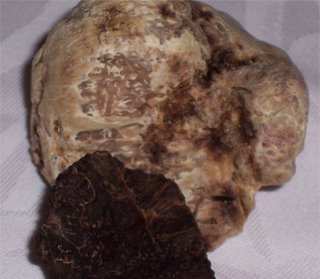
White (Tuber magnatum) and black (Tuber melanosporum) truffles.

Truffles. Tartufi. What are they? Chocolates? Tubers, like their names? Mushrooms? An acquired taste? Why so expensive? A million questions, many appetites, much interest. And so it transpired two Saturdays ago that 22 of us jumped out of bed at some breathtaking hour of the morning and piled onto a bus, on the trail of the truffles.

An hour or two later, we disembarked in Savigno, scene of the annual truffle festival in November which I’d taken in soon after arrival in Italy, and where they take their truffles very seriously, as you might expect of a town whose population is 2000, about 200 of whom are truffle hunters.

We loitered in town for a while before heading to the forest, and had the good fortune to get a tour of the basement of La Bottega del Macellaio, a 110-year-old family business. We dodged the hams curing in the rafters to see some cured lardo which we’d heard about in our cured meats lectures; it was among the first cured meats to find protection under the Arca del Gusto, (Ark of Taste), a project of Slow Food which seeks to protect traditional food products. After at least six months of seasoning and curing it’s served in thin slices like any other meat product, eaten on hot toast.

Lots of lardo

On we went. This has been a bad year for truffles, apparently: not enough rain, and ongoing and growing problem with too many hunters, too many inexperienced dogs, and poor forest management.

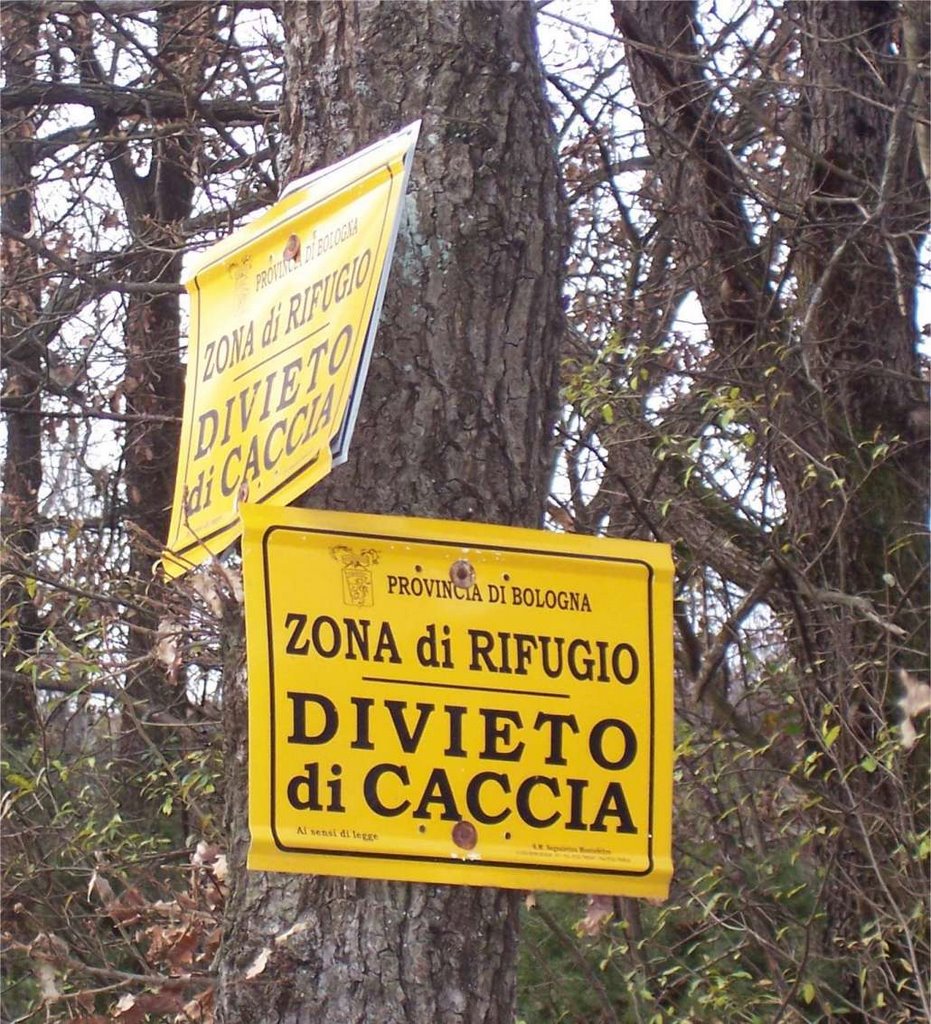
Forests in Italy mean hunters of many kinds, but we were, hopefully, not going to meet the kind with guns in this one.

We were looking for Tuber magnatum, the white truffle, found mostly in northern and central Italy and also known as the Alba truffle, because the enterprising citizens of Alba thought to nab the trademark while they could, though it’s not found only there. There are other varieties in these woods as well, like Tuber melanosporum – the black truffle. Although their Latin name is Tuber, they are not tubers, vegetables like potatoes for example. They are uncultivable fungi, a symbiotic variety: they exchange mineral salts with tree sugars, which is why they are always found in the roots, or near them, of trees.

We met two kinds of truffle dogs too. The first, the Lagotto Romagnolo, resembles a poodle and is the star among truffle dogs.

Pupa the dog and Adriano the truffle hunter.

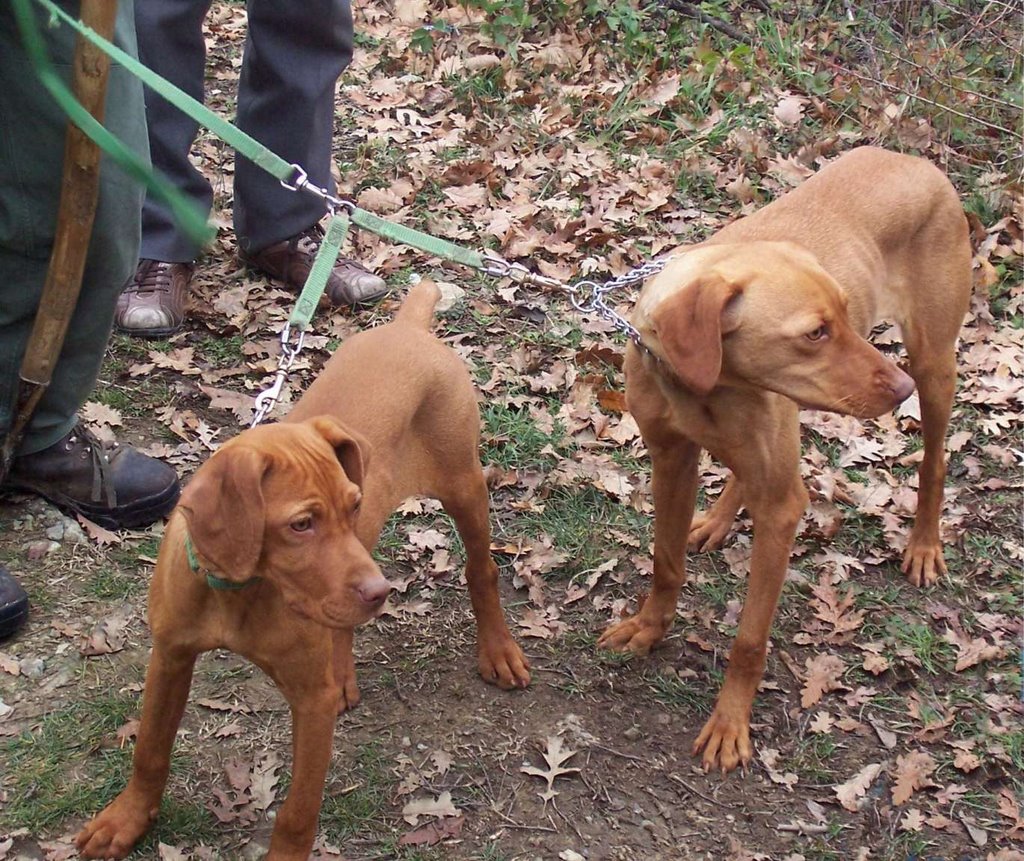
The second, Hungarian Vizla, is a short-haired hunting dog, and we had the chance to witness some truffle training of a very high spirited four-month old.

Rosita and Stella.

Both our hunters used only female dogs, and this is apparently quite common. I’d heard that pigs were sometimes used for truffle hunting, but they apparently make a terrible mess – truffle hunting is a game of stealth and concealment, and any truffle-beds must be returned to a pristine state so that the truffles may re-grow there and other hunters not see the location.

One of the tools used to dig truffles. The hunters carry long-handled short-bladed truffle spades, which double as walking sticks, and carry the sapin, a hand tool used to pry the truffle out of hiding.


Black winter truffle.

After the truffle hunt we stopped for lunch and a tour of an old flour mill, Il Mulino del Dottore, where we watched water-powered stone grinding of grain. They grind corn, wheat and chestnuts there, and the shop seemed to get a steady stream of local business. Our venue for supper, Da Amerigo, gets the flours for its pasta from this mill, which has been in operation since 1680.

The cross on the roof of the mill, surmounting the crow which was the family emblem, advised pilgrims crossing the Appenines that they could find food and lodging here.

We had a talk about truffles by longtime truffle merchant Luigi Dattilo at Appennino Funghi e Tartufi. He talked about the products – truffle oil, rice, pasta, polenta and pasta sauces flavoured with truffles – and then we watched a truffle dealer handle the merchandise – staggering to consider the monetary value of what we were observing.

He chooses them by smell, feel, weight and appearance. Because his customers may shave them at the table they need to look nice. He says that a partially-nibbled truffle is not necessarily a reject, since it says something found this one good enough to eat!
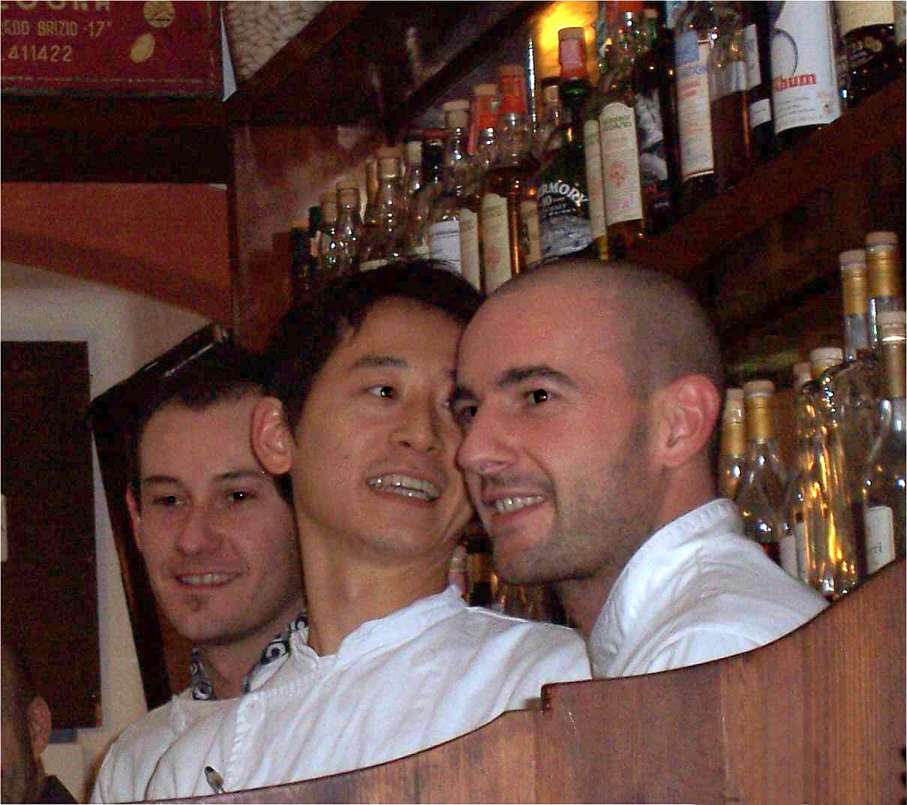
It was getting late but we found the time to taste some local wine at Vigneto San Vito and pick up a few bottles for our supper.

We then braced ourselves for a five course meal of truffles and seasonal goodies at Da Amerigo. Much loved by the Slow Food people, it’s described in the famed Osterie & Locande D’Italia guide as “a perfect combination of innovation and tradition.” Which I think we agreed with the moment the first course landed on our table.

It was a soft, warm polenta served in parfait glasses, its surface layered with shaved white truffles which we stirred into the mixture to eat — after first enjoying the perfume. Beautiful.

Swiftly followed by Parmesan gelato: parmigiano-reggiano cooked with cream, formed into gelato-sized balls, drizzled with some fine balsamico and served on a wee local flatbread. To die for.

Third starter – chicken and veal lasagne with black truffle shavings.

Mmmm… so happy…


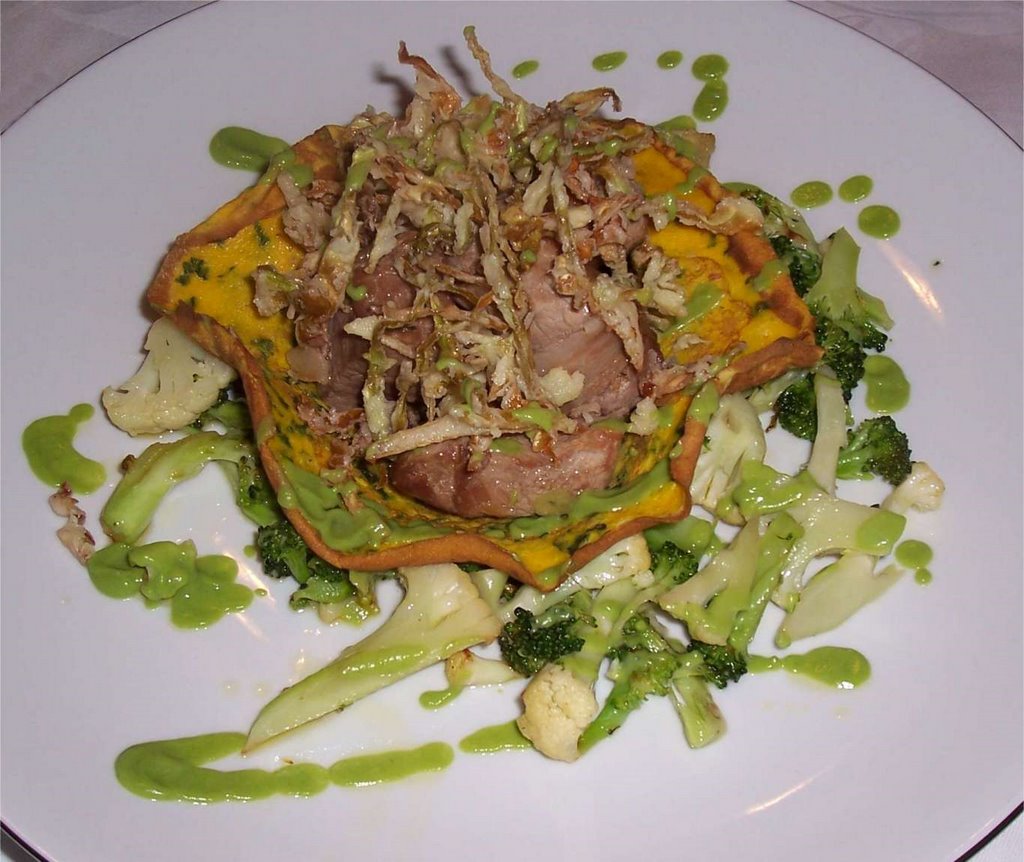
Main course – lots of lovely chili-tossed vegetables and nuggets of fresh local pork, girded in pancetta and crowned with frizzled cabbage.


Dessert was a mercifully dainty, delicate and delicious gelato trio: pumpkin (zucca) topped with some orange marmelata, pomegranate (melograno) and persimmon (cachi).


Praise to the chefs.