Skip to content

Unisg

Where the milk comes from

So today’s trip was to the dairy farm:
we got in the bus
to go to the farm
to meet the man
who owns the cows
who give the milk
that makes the cheese…


But before the farm, there was the Christmas market, and a stall selling small round edibles of a Sicilian persuasion.

Then there was the farm. More round things.


In addition to a persimmon tree, they had 200 cows, about half of which are giving milk at any time while the others are either growing up or getting ready to give birth. This farm had only Friesians, which came from Canada and the U.S. The farmer belonged to a dairy co-op of 11 farms and was very near his cheese factory, convenient for making that 2 hour deadline to deliver the milk. The other restriction on milking for Parmigiano-Reggiano is that the actual milking must be completed within four hours, start to finish (this farm managed it in one and a half hours, twice a day).


Hmm… these remind me of something I’ve seen lately… cylindrical, straw-coloured, stacked to the ceiling… The Parmigiano-Reggiano consortium obliges its dairy farms to produce – on-site – at least 50% of the feed for their cattle; this farm produces 90% of its feed. No animal products can be included in the diet of the dairy cattle, and no silage or wet grass, all to preserve the safety of the cheese, the reliability of the ripening process, and the purity of the flavour.


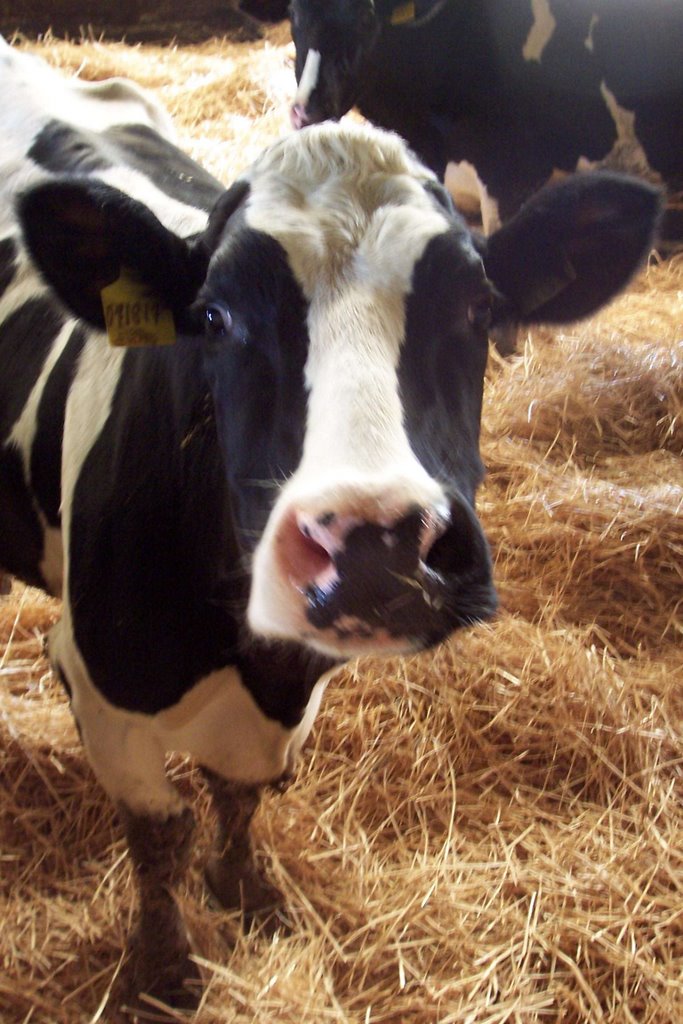
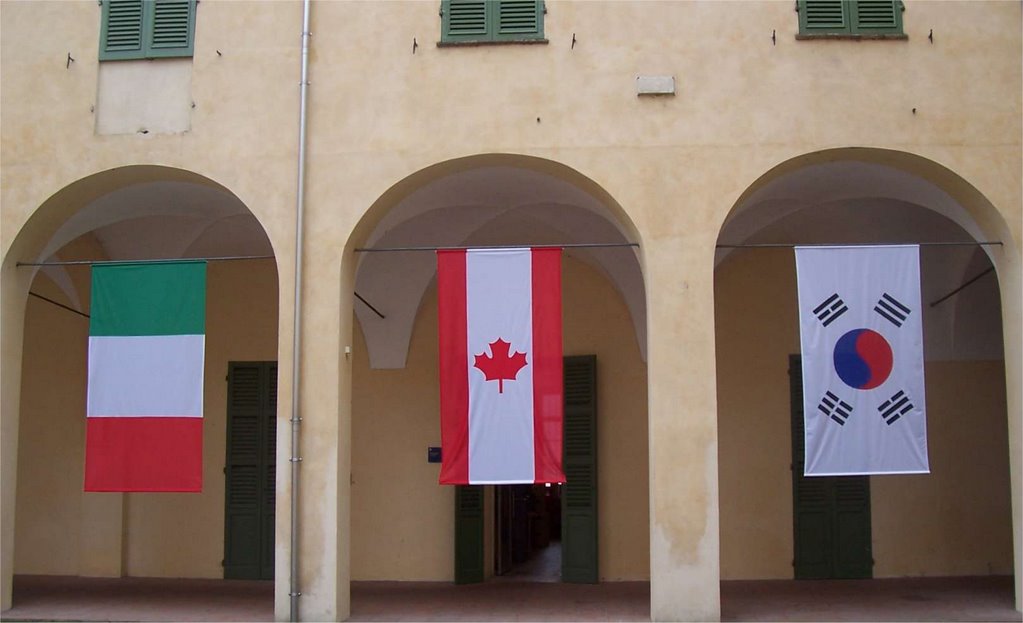
My fellow Canadian?


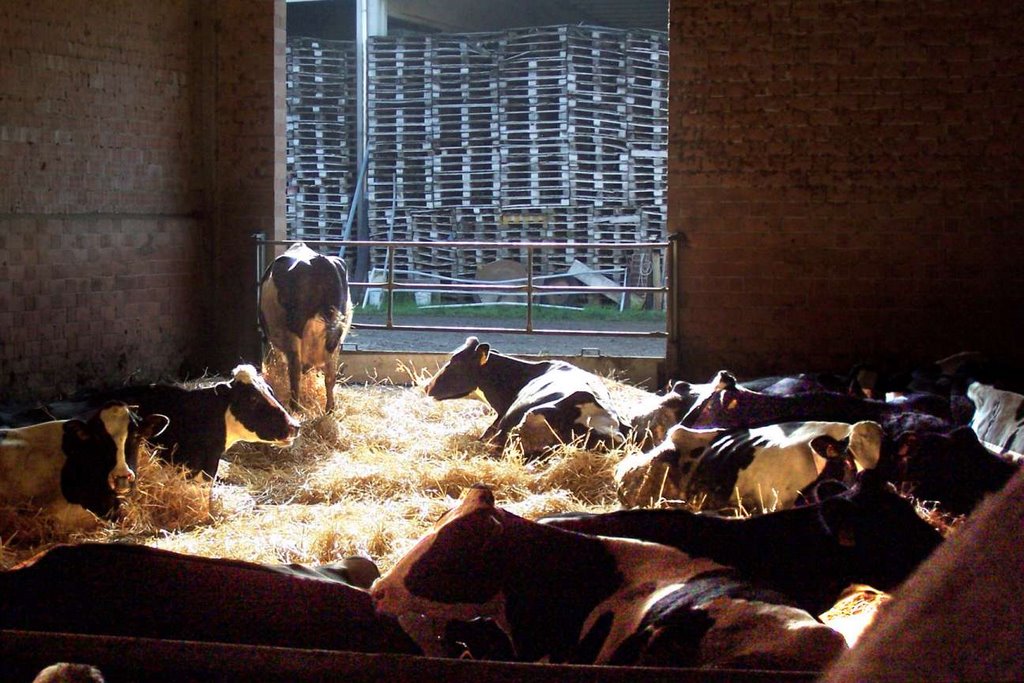
We observed the bedroom of the cows.


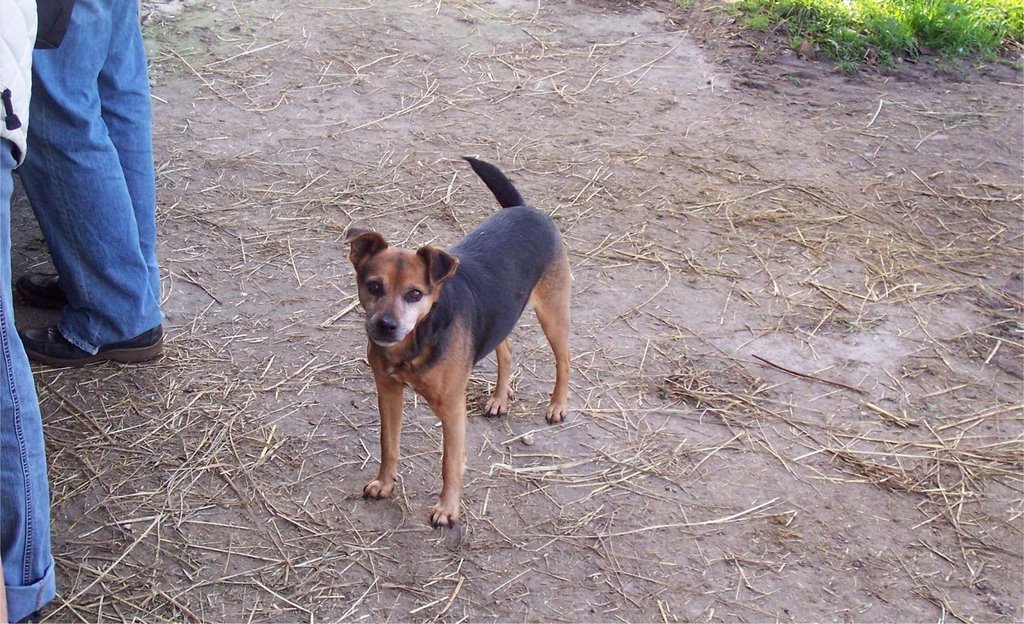
Scary farm dog.


And on that farm there was a cow…


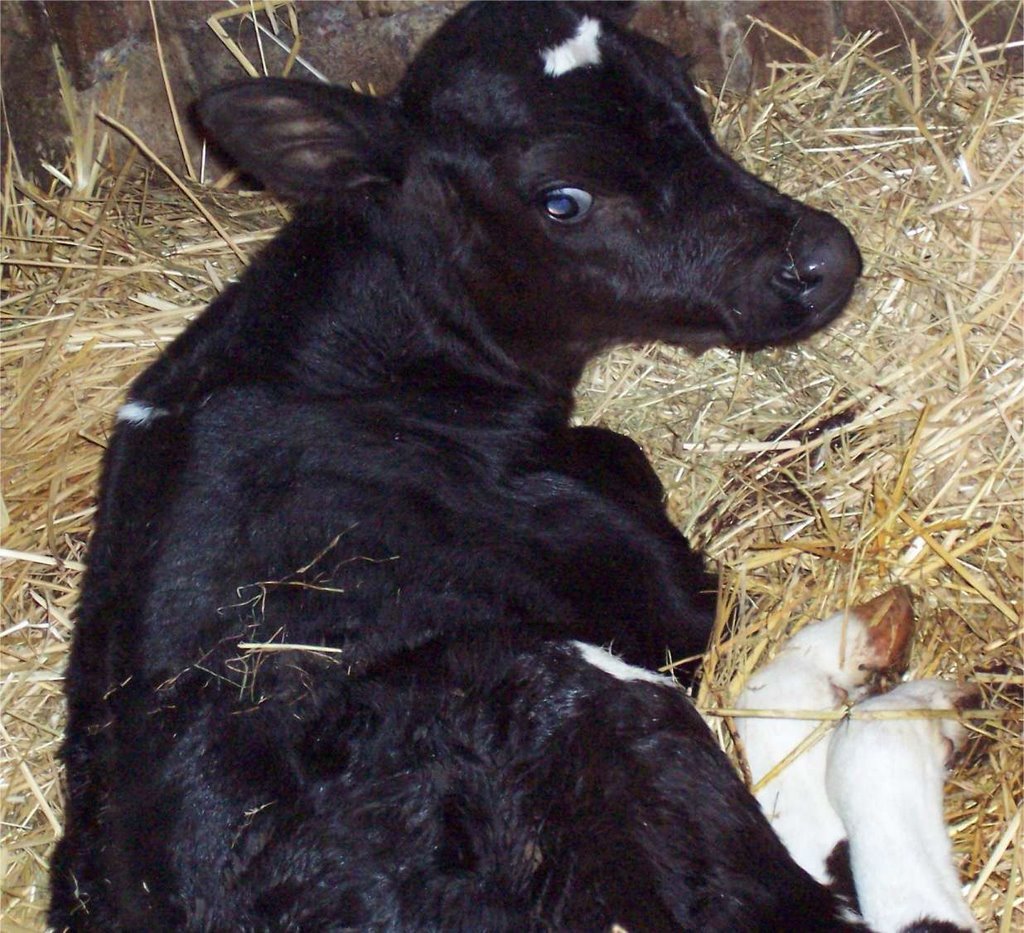
Why yes, as a matter of fact, I was born yesterday.

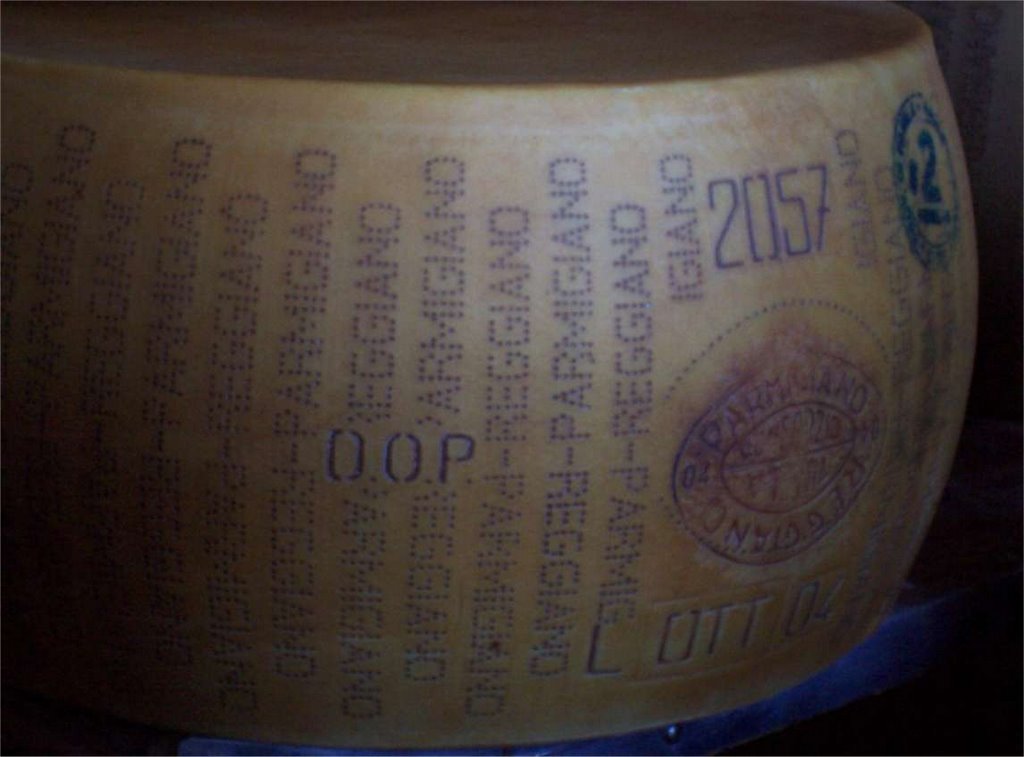
The real thing – Parmigiano-Reggiano

Again the sciopero raises its ugly head. We had been scheduled to visit a cheesemaking factory and then a dairy farm on Wednesday and Thursday, but the bus strike would have affected our, um, bus, so the visit and our classes were rescheduled so we could go Thursday and Friday instead. Then the Wednesday strike was cancelled. Then we heard an all-out strike (buses, trains, planes) was planned for Friday instead. Then that was cancelled. Or was it? All so confusing.

Anyway we were, on Thursday, very happy to visit a Parmigiano-Reggiano cheese factory in nearby Baganzolino on Thursday and see all that had been described to us actually happen before our eyes. We arrived at 8am in time to see the whole range of the day’s cheese production. and were well briefed on the bus.

The milk that arrives at the factory must be delivered within two hours of milking, so there was no time to lose. Everybody went wild with cameras and I think several thousand images were taken as we watched it all unfold; here are a few of mine.


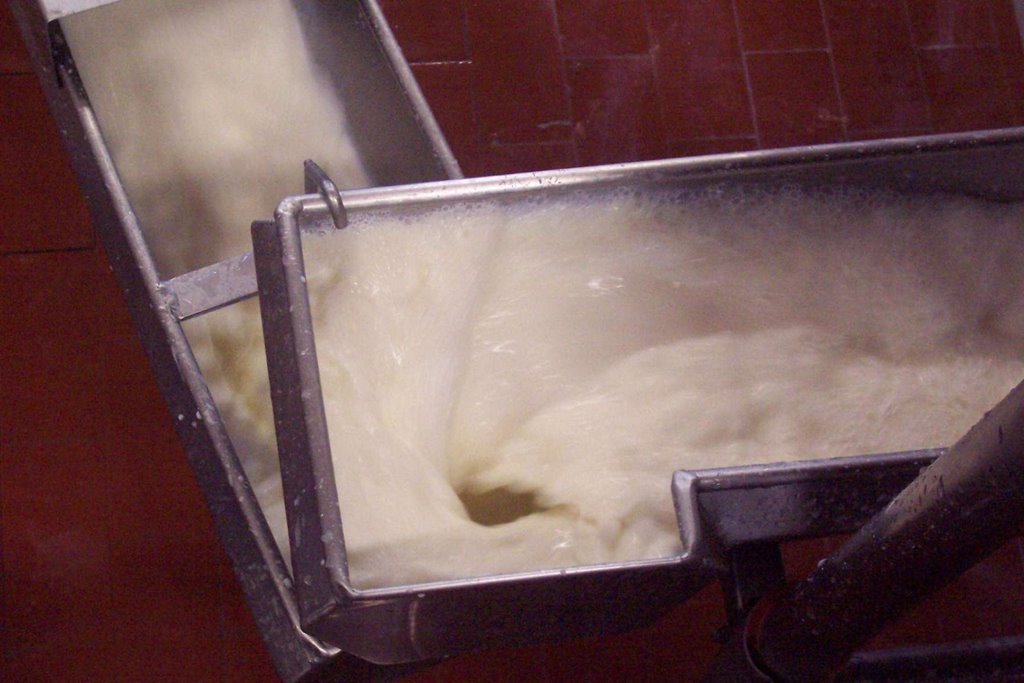
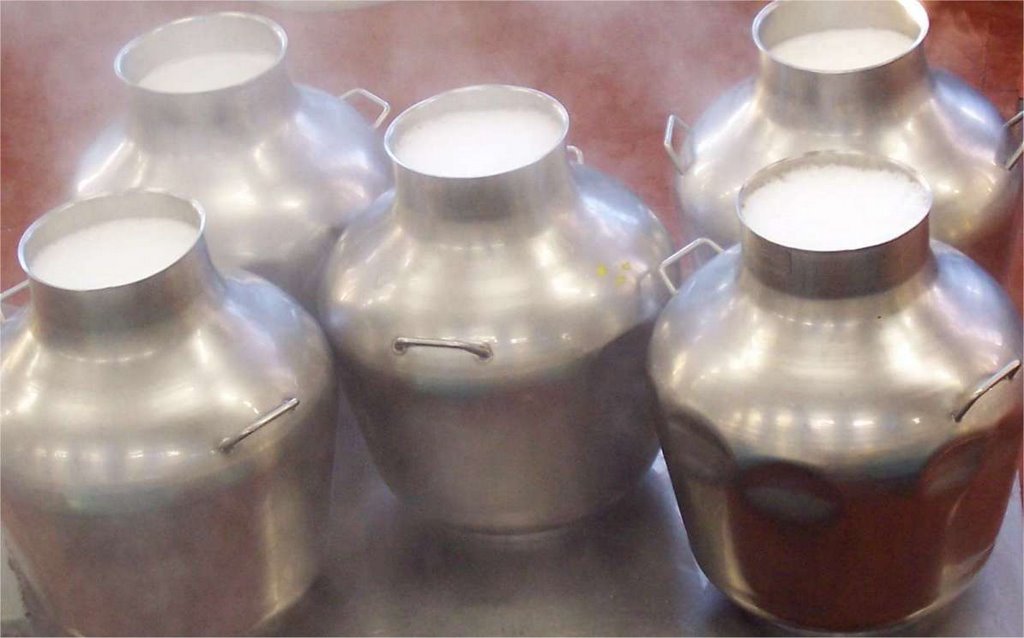
The milk from the evening milking is set out in trays to separate overnight. The cream is skimmed off and this milk is mixed with that of the morning milking, so it’s genuinely partly skimmed. It’s then heated, and whey (naturally fermented from the previous milking) and rennet are added.


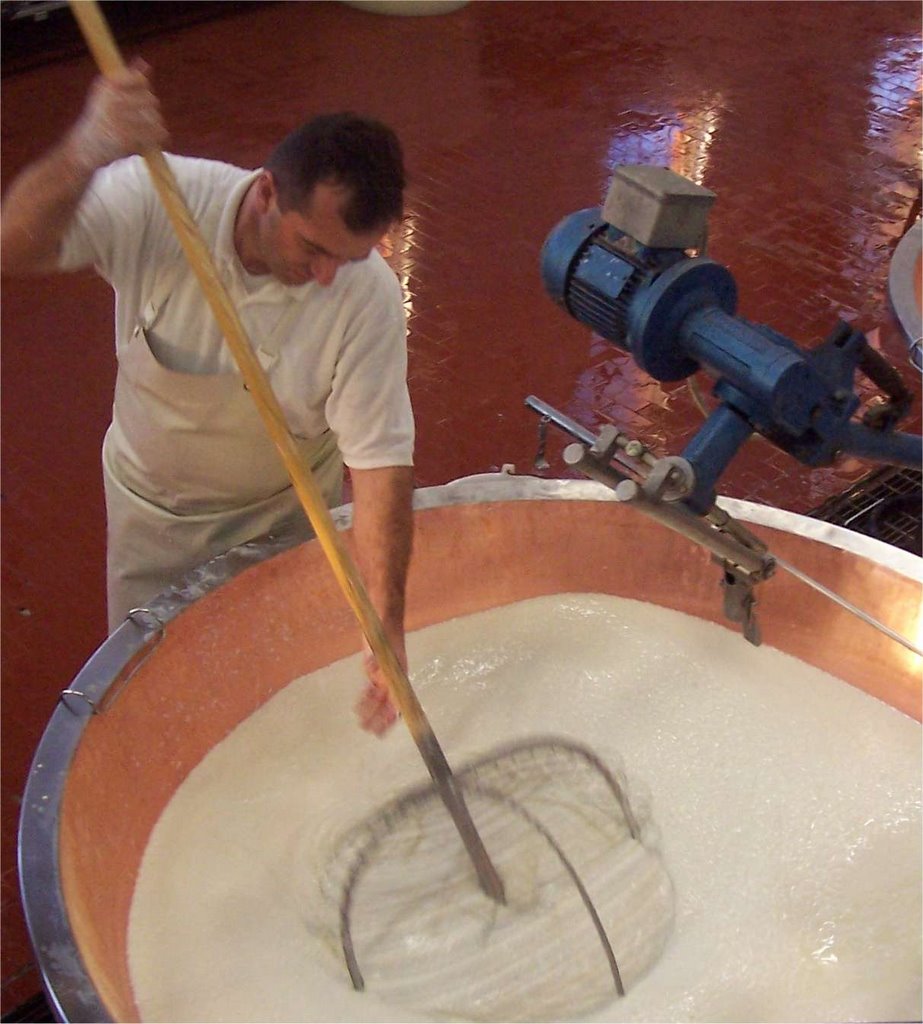
The whey and rennet have been added to the milk; it has coagulated and the curds are being broken up into grains the size of wheat kernels. For this task they use the spino, a whisk unique to Parmigiano-Reggiano cheese-making, named for the thorn branches that were originally used (hawthorne, according to our Italian teacher).


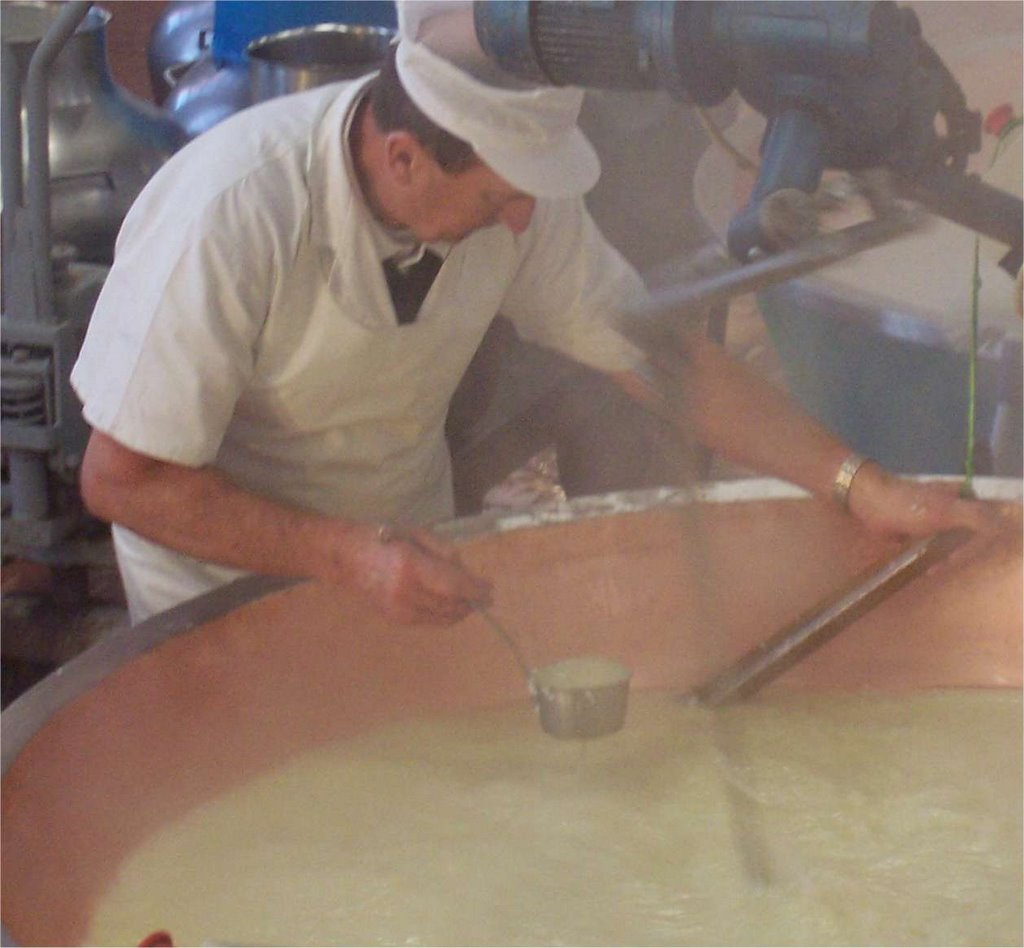
The master cheesemaker – we were told that, like the cows, he never gets a day off – checks the temperature and curd. Once he deems it cooked, the heat is switched off. Traditionally and practically, copper urns are used because of their excellent conductivity: and their ability to both heat up and cool down quickly.


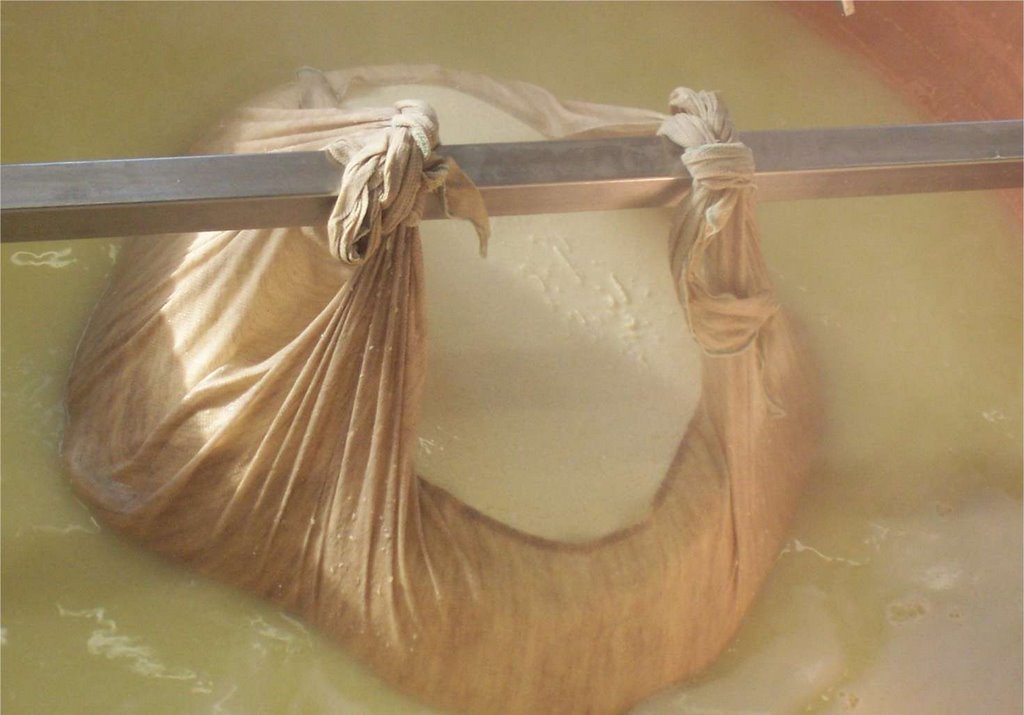
The cheese has coagulated into a nice big ball. It’s cut in half after this; each vat makes two cheeses, a total – for this factory – of 24 cheeses a day.


Most of the whey goes to the pigs (this be prosciutto country after all); some is made into ricotta; this batch will be used for the next day’s cheesemaking.


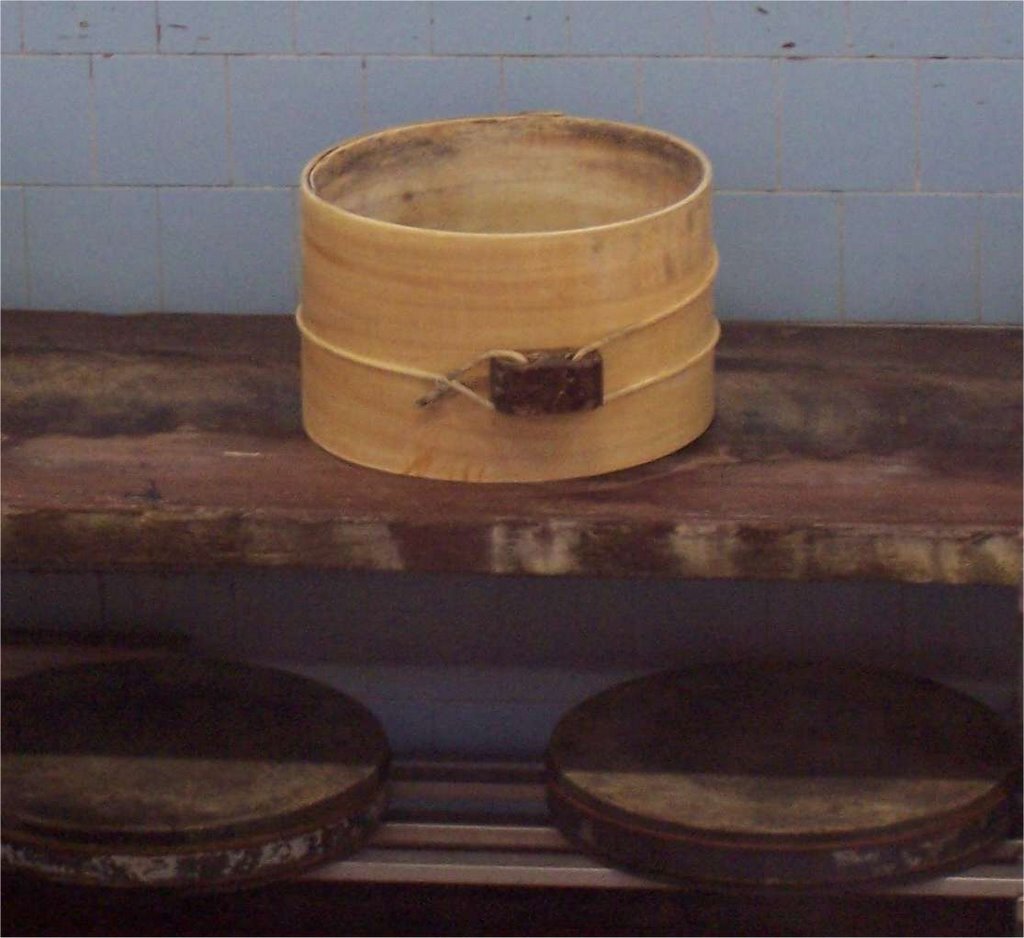
The first mould for the cheese.
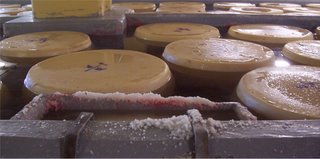

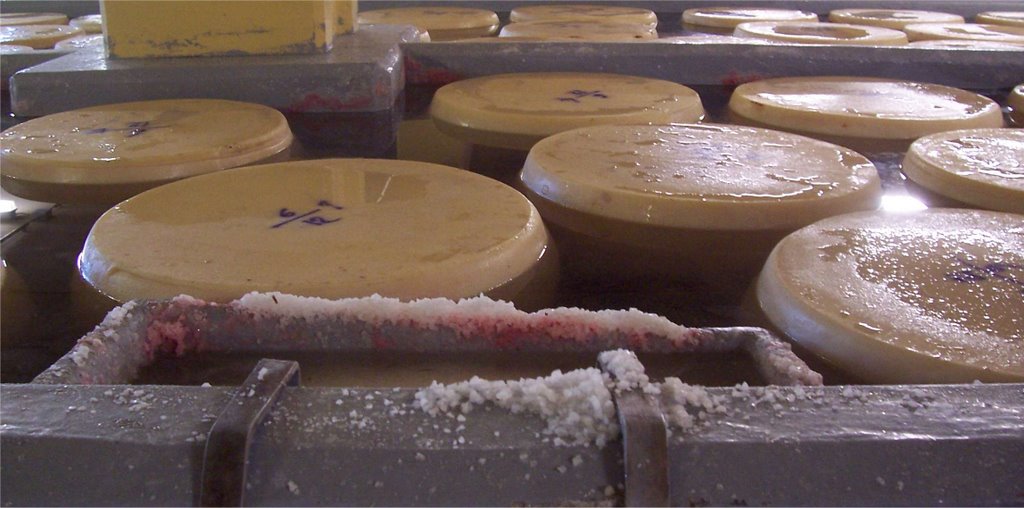
After two days – the Parmigiano-Reggiano brand having been imprinted the first day and the cheese shaped in metal moulds the next – the cheeses are floated in brine for 20-odd days, to firm up the rinds and allow osmosis to do the work of removing excess moisture and prepare the texture for a good long aging process. The cheeses are turned and re-salted regularly. Salt is the only preservative allowed in Parmigiano-Reggiano.


Look up… look wheeeeeyy up!


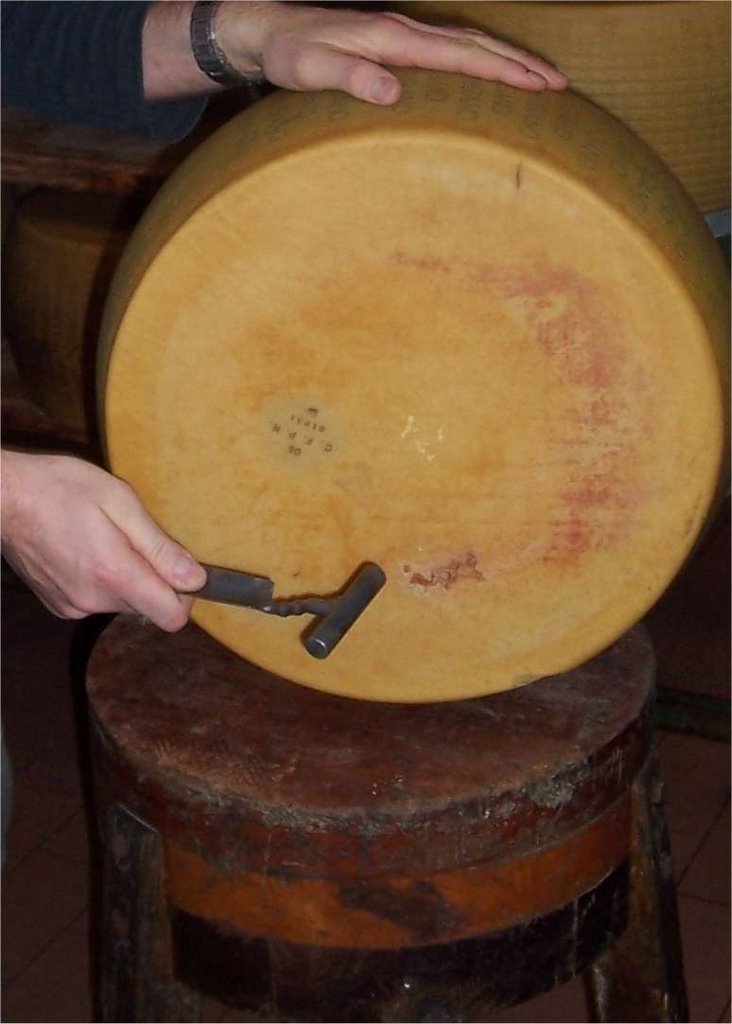
Once aged, the cheeses are tested by experts (battitore) who use a hammer to determine the depth of the rind and the quality of the cheese through sound alone. A hollow note can indicate uneven texture or holes (eyes). We’ve heard from several directions that holes are an impermissible defect in Parmigiano-Reggiano; formed by fermentation within the cheese paste, they can allow bacterial growth and spoil the flavour. The farmers go to great lengths to prevent the cows from eating wet grass, and neither are they permitted to eat silage, because these can promote lactic fermentation that could spoil the cheese during aging; so notes on permissible feed for the cows have been included in the regulations that govern Parmigiano-Reggiano production.

Much of the cheese is sold after 12 months, just to pay the bills. We were told that currently the Parmigiano-Reggiano consortium cheesemakers are operating at a loss, and the earliest they can sell their product is 12 months, at which point it is fine for grating, though the preferred age for eating it as a table cheese is after 24 months. Its digestibility and flavour improve, but its texture gets drier as it ages. One of the distinguishing features of the well-aged Parmigiano-Reggiano is the presence of small white crystals – an amino acid called tyrosine – which you find also in other long-aged hard cheeses such as (yum) gouda.

British cookery writer Delia Smith visited this region and learned about Parmigiano-Reggiano and documented her take on it on her website. I especially liked what she revealed about its noble history in England:

During the Great Fire of London, that most discerning of diners, Samuel Pepys, thought the cheese so precious that he dug a hole to bury his Parmigiano Reggiano to preserve it from the flames.

Cheese-off


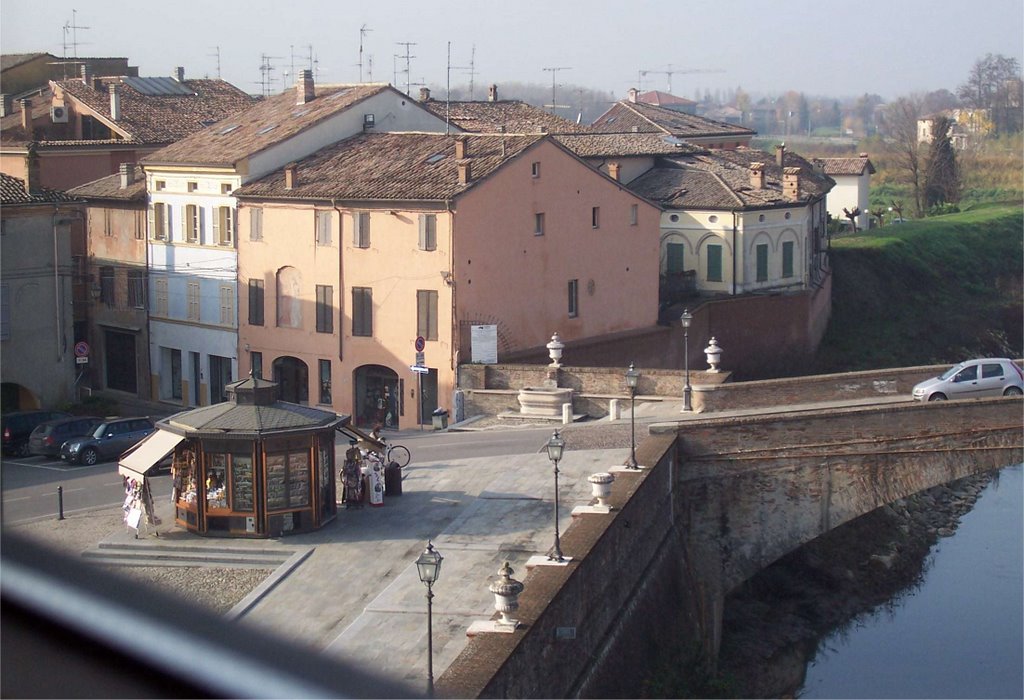
Colorno fountain

We learned something about cheese tasting yesterday in a first class on that subject, when we went nose-to-rind with four fabulous cheeses. It was very exciting and entirely delicious, which was a small miracle given the continuing cold-type ailment which has been working its way around my upper respiratory sytem since the first week of classes.

It helped that we were mostly trying strong cheeses – Fontina, Pecorino Toscano (an unusual one, aged 4 months in a cave!) and a very rare and exquisite four year old Parmigiano-Reggiano – as well as a fresh Mozzarella di Bufala Campana that was soft and yummy and totally unlike most anything that goes by the term “mozzarella” in Canada.

Someone had asked the cheese technology prof why there was no control over the use of the name Mozzarella, since it’s used worldwide to describe substances that only remotely resemble the original product in production methods, appearance and least of all taste, and he said something like, “oh to ask that question is to make wider the wound in the heart of every Italian”.

I’ve been awed and impressed by the pride and passion the people we’re meeting have about their food. His answer to the mozzarella question was that basically by the time Italian producers got around to applying to protect the name, “mozzarella cheese” was in really wide production (from a variety of methods) worldwide and Italy didn’t have an argument of scale sufficient to make a case for reclaiming the name. They did protect the “Mozzarella di Bufala” designation though, since water buffalo are not widely used for this kind of cheese production and are mostly found only in Italy, India and east Asia.

We discussed cheese tasting terminology, needed to capture the effects of various combinations of the 200+ different chemical compounds that make up tastes, smells and aromas in cheese. One important point was that it is fairly critical to have eaten widely and well if you want to taste cheese (or wine, I suppose) because in order to master the terminology you need to know other flavours as they are suggested to your palate – call on your olfactory memory: no easy thing. Apparently there is an international vocabulary to describe all this, that was only developed about six years ago. To supplement our handouts, I came across a good list of terms – the Cheese Connoisseur’s Glossary, at an artisanal cheese website – and an even better one: CheeseNet’s Cheese Glossary.

We did find it difficult to appreciate the full meaning of some of the tasting terms: for those of us not familiar with the exact nature of chestnut or arbutus honey, for example, the term is not so meaningful. Being one who enjoys splitting hairs, I’ve been speculating that given the differences that regional climate, vegetation and soil types make in end products of just about every agricultural enterprise, I’m guessing that there would be a noticeable difference in flavour between Italian and Canadian (and other) chestnut honeys. We’ll have to have a taste-off sometime to find out.

Well. That was it for today. We’ll be tasting six more cheeses next time.

Here are some more photos ’round town:


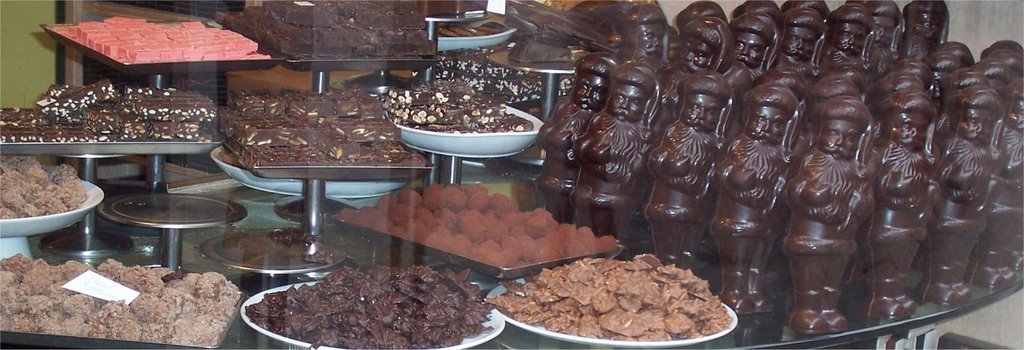
Parma specialties, Via Farini


Some scary Santas (Babbi Natale)


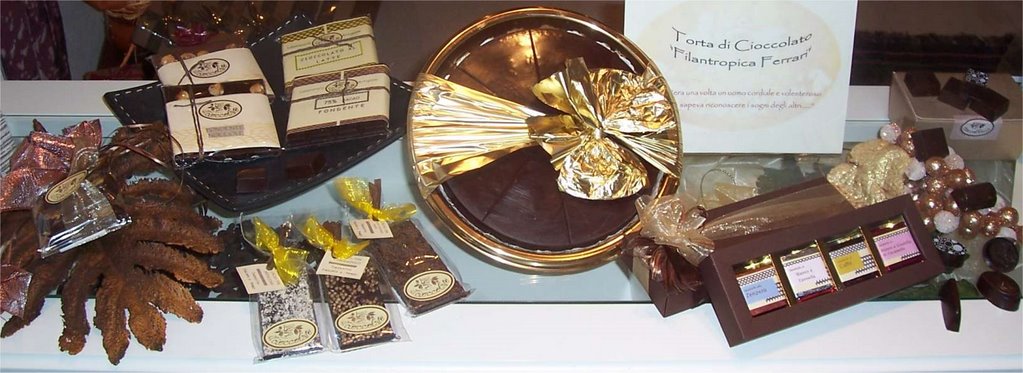
More chocolate…


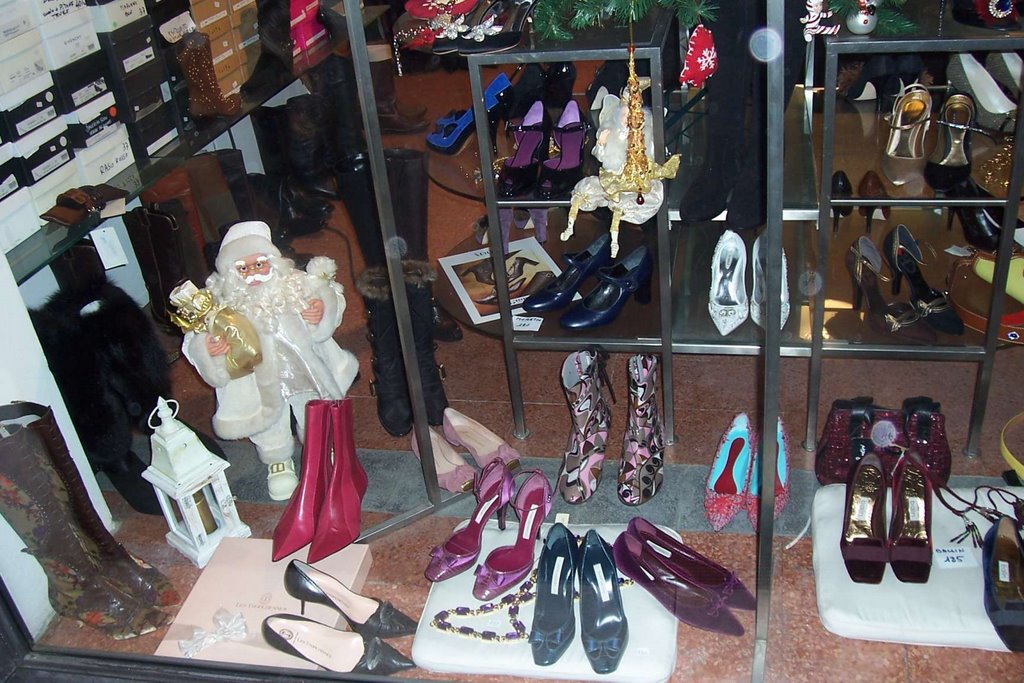
One for the shoe fetishists

The cheese, the salt and the rennet

Can I just say for starters what a rare pleasure it is to be surrounded by 24 people who do not find it the slightest bit odd to take photographs of one’s meals?

Yesterday’s supper was a better class of leftovers: risotto al limone (con zucchini) (handcrafted by me), plus booty from the supermercato: marinated anchovies, marinated fresh artichoke, thin slices of Salamini Italiani alla Cacciatora and Grana Padano, and a sprinkling of tiny Sicilian olives. Followed by a thin wedge of panforte. Just because I can.


Tonight for supper I had some fresh pasta from the grocery store: ravioli con cervo – surely my first encounter with venison ravioli. I could taste a mild game quality to it, but it was subtle and a bit unremarkable. Either my tastebuds are blown from this neverending cold, or the taste was too delicate to make much impact on this overwhelmed palate.

Anyway, we also sampled some fresh mozzarella tonight – utterly sublime, and a more meaningful mouthful as we’d learned about the making of it in cheese technology class today. I had been reading, before I left Canada, about artisan cheese makers who still produce it by hand, but our instructor was dubious on that point: and given the kneading and stretching must be done on a cheese mass whose internal temperature is 60 degrees c, in a water held at about 80 degrees c, I imagine a few artisans of yore may have been a little relieved to turn the task over to machines. Still I’d like to know what the work did to or for their skin tone…

I remember having some dinner conversations before I left Victoria about why cheese was salted, and I’m happy to report back on that with some preliminary information. We learned a bit today about salination: how cheeses are salted in brine or with dry salting, depending on the type of cheese. The salting is done after the milk has coagulated, formed into curds, been put into moulds to shape them, and then pressed; and the salt reaches the inside of the cheese through osmosis. It serves not only to flavour the cheese but to act as a retardant to the growth of bacteria, yeast and mold, and to move – again through osmosis – more of the liquids out of the cheese, in the interests of its texture and water content. We’d heard about similar effects of salt on cured meat in our classes last week as well. But it’s an imperfect preservative system as there are more bacteria to be wary of than those who perish in salt, which is why, we were told, the rind of gorgonzola is not meant to be eaten.

We had as well some instruction on the matter of heat-treating milk, including pasteurisation and UHT. Suffice to say that what you gain in food safety by killing bacteria, you may lose in flavour and the ability of your milk to coagulate predictably.

Oh, and some interesting stuff about rennet, which I’ve known about and loved for its use in making Junket since my somewhat old fashioned and clearly politically incorrect childhood (any other Junket eaters out there?). But even so, I am aware there is a political issue about the use of rennet in vegetarian cheeses, and it is simply that purely vegetarian cheeses are made with an alternative to rennet – some kind of coagulating agent made from fungi, molds, bacteria, yeasts or plant sources, or more likely and reliably, genetically engineered micro-organisms. Because rennet is made from the abomasum (fourth stomach) of newborn calves (or lambikins or even kids in the case of goat cheese I suppose); and it takes, we were told, 5 stomachs to produce 1 gram of rennet. And that’s enough about all that for one day.

Thorns in the cheese and elsewhere


Piazza Garibaldi, Colorno

Interesting fact learned the other day: the tool used to break the curd during the making of a parmigiano-reggiano cheese is called a spino, meaning thorn-bush, after the hawthorne bushes traditionally used in the process. We are looking forward to our first field trip to see the process for ourselves in the next week or so.

The week is flying by as we compare notes on our various degrees of illness and ease into life in this new country, new course of study. Tomorrow the public services have conspired to allow those of our class living in Parma to experience our first public transit sciopero (strike), and so our morning will be spent competing for taxi service to get us to classes on time. This will be swiftly followed by a train strike on the weekend. Bemused travellers in this country will have noticed alternate train and other schedules posted ‘in caso di sciopero’. Such is their regularity that you can consult a calendar of them to plan your movements accordingly.

Cheese technology, dragon sausages and rocket soup


Hmm… what’s wrong with this picture…


Enjoying the walk back to class. Postprandial view: fountain at the Reggia di Colorno.

Week two has started at the University of Gastronomic Sciences, and we’re deep into microbiology and the technology of cheese. A classmate has thrown down the gauntlet and invited me to find poetry in that.. but first I must master the terminology. No easy thing. But perhaps by the end of the week I’ll know my triglycerides from my diglycerides and my casein from my hydrolytic enzymes. Yessir… thank the lords ‘n ladies of technology for Wikipedia is all I can say. And bless the foresight and generosity of Douglas Goff for creating the Dairy Science and Technology website.

And thank heavens for email. One of my correspondents reliably informs me that at the moment a company in the UK is being hauled over the coals for calling their product “Welsh Dragon Sausages” on the grounds that it is not a true description of the contents. Apparently a commentator on this topic noted that it had blown the cold wind of fear into the makers of shepherd’s pie, angel cakes and chocolate brownies.

Owing to my continuing throat ailment I stayed in tonight and had some nourishing soup. Not chicken soup which I’m sure really does cure everything, but some rocket soup, a kind of vegetable jet fuel I’m hoping, and nice to eat while you catch up on the story of Elizabeth Smart and George Barker:

Rocket Soup

1 tbsp butter
1 large shallot, minced
1/4 cup minced fresh fennel
1 small carrot, minced
1 medium potato, diced
3 cups vegetable broth
2 cups rocket

  • Melt the butter in a saucepan on medium and add the shallot, cooking for a couple of minutes until soft.
  • Add the fennel and carrot and cook gently on low heat about 10 minutes.
  • Add the potato and then the broth. Bring to the boil and then simmer another 5-10 minutes until the vegetables are soft.
  • Add the rocket, cover and cook another few minutes until the rocket has wilted. Season with salt and pepper.
  • I was lacking a blender, but it could (should?) be blended/pureed at this point or served as is.