Skip to content

cheese

Crete part 1: snail tales from central Crete


We’ve just returned from a fantastic week on Crete, which I’ll attempt to document by day, with a very selective sampling from the 700+ photos I returned with; best I can do since I can’t share the feeling of being there.

We were hosted by the excellent and encyclopedic Kostas Bouyouris, agronomist and co-founder of the Mediterranean Association for Soil Health, who led us through Cretan food products in an enlightening and hands-on week of visits.

Our first stop was at the village of Kroussonas, where a group of women got together to start a baking cooperative; they now have a kitchen, shop and catering business. Seventeen of them get together to make traditional Cretan pastries and other baked goods, including one of our favourites: fried (in olive oil of course) pastries filled with wild greens.

Also beautiful, beautiful hand-decorated breads for weddings and other celebrations:

There was a pause when a pickup truck laden with vegetables pulled up, and we waited for some of the bakers to do their produce shopping, Cretan style. I thought this was so clever: have one guy in a truck come to the village, instead of everyone in the village driving to the shops.

We pressed on through staggering landscapes

to Gangales, in the south of Crete, to visit the Melko pasta factory where we were particularly interested to watch them make xinohondros, a traditional “pasta” made of cracked wheat, mixed with acidified fresh sheep and goat milk, cut by hand, shaped into portions and dried. It’s cooked with oil, tomato, potato, onion and celery and often with snails, and as it’s a kind of fortified pasta-cum-thickener, is one of the foods served during periods of religious fasting.

We had a tart and nourishing soup made from this pasta for supper, followed by many other traditional dishes including a platter of boiled goat.

Day two began as had day one, with luscious bowls of fresh yogurt, honey, bread, sesame halwa and strong coffee. We trooped upstairs to have a talk from another inspiring Cretan agronomist, Sotites Bampagiouris, who talked us through the enterprise known as Bio Forum, a ten-year-old economically viable organic farming enterprise.

A marvel of thrift and economy, Bio Forum creates composting heaps made of olive leaves (by-product of the olive harvest), and straw bales from mushroom cultivation, among other organic matter. They don’t use manure for these since the compost is used on vegetables and would therefore come into direct and possibly dangerous contact with food; manure can be used for composting fruit trees.

Seeds are nurtured in greenhouses and then transplanted when they are big enough to stand up against the weeds and insects.

Weeds are not automatically seen as enemies in this field: they act as wind screens, provide a refuge for insects that would otherwise head for more edible homes, help to create an anchor for topsoil through their root systems, and act as natural compost when the soil is turned after harvest. These greens were plump, spicy and delicious; members of the mustard family are particularly useful in areas where soil is compacted as their roots help to break it up, and provide salad greens while they’re at it.

After an organic fruit break at the farm, we zipped off to the Boutari winery, Fantaxometocho (“domain of the phantoms”), for a tour and lunch. The Cretan operation is only three years old, although the mainland company has been going since 1879. On Crete, the vinyards are totally organic, and, even more shocking to me, the vines are grown without irrigation. They say this makes for a lower yield, but a better wine since the plants produce healthier, sweeter grapes with more concentrated aromas; irrigation plumps the grapes up but also waters down the contents. Their late harvested grapes produce a delectable sweet wine which we were lucky enough to sample at lunch.

On the way to our new base in the Amari valley, we stopped for a retail moment in one of the Bio Forum outlets in Iraklion; Don samples a little cheese with basil.

Supper at Aravanes taverna where we began with a salad of lettuce and wild greens, fresh cheese, olives, bread… and went on to have tart rice, lentil stew and more boiled goat.

We finished with baklava we had brought from a pastry shop which we were to return to the next day for a cooking demo. More than ready for bed we crashed….

Lodi: mozzarella and ricotta

We had a day out today, and watched some small scale mozzarella cheese making in the Istituto Sperimentale Lattiero Caseario/Institute of Dairy Science in Lodi, not far from Milan. The lab is equipped with a cheese making facility and over the course of our day-long visit, the master cheesemaker whipped up a batch of mozzarella and a little ricotta for us.

Mozzarella curd: whole milk from the institute’s dairy farm has been acidified (lowering the pH from 6.8 to 5.85) with citric acid (interesting to see it’s useful for more than cleaning one’s kettle).


Mozzarella curd: cut, drained, cut and then left to drain again.


Mozzarella curd: cut, drained, cut, drained and now cut again.


Mozzarella curd: cut, drained, cut, drained, cut, drained and then put into the basin; cut once again. Then some hot water (around 90 degrees c) is added and the stretching begins.

Hand stretching the curd – a slower, lower-yield way to make mozza. The advantages are that any problems with texture can be dealt with right away, so you end up with a better quality cheese. But you’d go bust doing it: the volume of milk you need to process to make mozzarella, together with the greater loss of milk solids into the liquid, and the slower processing (man ain’t no machine) just aren’t cost effective these days.

Stretching the cheese; shaping it into balls. Stretchy stuff with characteristic threads (elongated casein strands, eh?): practical heat and chemistry.


Hand-adjusting the steam-heated vats to start making ricotta from the mozzarella whey. Ricotta, we now know, means ri-cotta, or re-cooked/twice cooked. (Want to make your own? Here’s an illustrated guide.)


The whey starts off at the same pH as the mozzarella curd (around 5.85 – lowered from milk’s natural pH of 6.8). Sodium hydroxide was added in order to raise the pH to what’s needed for ricotta, between 6 and 6.5; the pH is regulated and if it goes too high, more citric acid can be added to lower it again. In the process we watched, there was a mistake – the pH gauge was too close to the sodium hydroxide when that was added, and gave a faulty reading, so it never quite worked out while we were watching. Which was instructive: we saw the effect of curds that were too small to bind properly for ricotta. However, under optimum conditions, the whey begins to coagulate and – after adding milk (around 6% in this case, although up to 20% might be used) – the foam needs to be skimmed off. The ricotta is then poured into baskets to drain and set, and is used most often in pasta and cake fillings.


In one of the labs: Roberto Giangiacomo tells us about a piece of equipment called ‘the sniffer’ while Richard Gere and Clive Owen look on.

Cheese, more cheese

Travelling on Ryanair is … an experience. One of its peculiarities is that passengers are charged many hidden fees: for use of a credit card to make the booking, and for checking a bag, for example, and they give not so much as a cup of coffee away for free in-flight. So it’s not as cheap as you might first assume when you see 99 cent fares. But okay, so it’s the only game going direct from Parma airport to London, with your (count ’em) 15 whole kilos checked baggage allowance (which you’ve paid for the privilege of bringing). And then you get the thrill of rubbing up against your fellow passengers in the scrum at the boarding gate and you can try to out-run them on the tarmac for better seating. I won’t attempt to describe the experience of dragging (heavier than it sounds) 15 kg of suitcase without wheels (never again) through the seething inferno of holiday travellers at Stansted Airport on Christmas Eve. Brrr, may I remember enough to never do that again, and may I forget the rest.

For my return to Parma, I chose to alot a hefty corner of my 15 kg to a lovely smelly bag of cheese from the well-regarded and cunningly-named Cheeses, which has been doing a queued-out-the-door trade in Muswell Hill for some years. Not least because the shop is tiny – holds three thin customers at a time, with floor to ceiling shelves of this and that to look at while you wait. It has one modest display case which manages to hold a prime selection of farmhouse cheeses from Britain and beyond. I saw a piece of Parmigiano-Reggiano lovingly displayed and simply described (“exquisite” I think was all the sign said, or needed to say) and a bevvy of French beauties perched around it in various postures of diminishment, and beyond them a hearty selection of British cheeses.

The cheesemonger looked very weary – it was getting on to the evening of December 23 and his sign advertising baby wheels of stilton had probably lured a few dozen extra souls ithrough his doors – but he cut me some fine wedges of Cornish Yarg, Berkswell and aged Caerphilly. The women behind the counter were cheery and helpful and pointed me towards some Millers Damsel digestive biscuits to go with my selection. Luckily for my baggage allowance I managed not to come away with a slate cheeseboard or jars of chutney or tins of quince cheese to go with, nor even a fragile package of inky Charcoal Wafers, though I was sorely tempted, but they were recommended for brie, camembert or goats cheese.

After a few days’ rest for the cheese, yesterday afternoon we gathered in my Parma kitchen to test our palates and practice our tasting terminology, yeah verily once more for England.

Yarg, I’d learned, was not an obscure Cornish word after all, it was the name of its early makers (Gray) turned around. A little disappointing to be disillusioned, but the cheese is made from a 13th century – and it seems a tried and true – recipe. Wrapped in nettle leaves, it looked very handsome, its ivory paste contrasting nicely with the dark green wrappings frosted by a pale mould. Lots of butter, rendered butter, and a bit of tangy sweetness – and perhaps a little pineapple? It had been described elsewhere as young with a fresh, faintly lemony taste; creamy under the crust, yet firm and slightly crumbly at the centre. And it was too. Many thumbs up for this one.

Next we examined the Berkswell, a ewe’s milk cheese made in the Midlands, and named for the village which took its name from the Saxon chief, Bercul, who was baptised in the ancient well at its centre. I read somewhere that it had been originally developed from a Caerphilly cheese recipe, although it bore little resemblance to the one we tasted after this. We admired its rind which has a tan, cobbled appearance – must be moulded in a net? We found its ivory paste smooth and firm, the tang and texture reminding us of cheddars of our pasts; a hint of animal aroma reminded us it was a sheep cheese, but the flavour was subtle and sweet. It struck us as being quite different in flavour from its Italian cousin pecorino, and people liked it for being a happy contrast to the Italian wonders all around us.

The last to fall under the knife was the aged Caerphilly; unusual, they told me at the shop, to find an aged version, as it’s usually eaten quite young. We noticed the moulds on the rind and the thick, even nail (undercrust) which when tasted was soft and silky in contrast to the dry, fine sponge of the centre. Its colour ranged from ivory in the centre to straw yellow in the nail. I’d read that it was eaten by Welsh miners to replace the salt they lost in their labours, but it wasn’t an overwhelmingly salty cheese. It had, when I unwrapped it, a whiff of ammonia but that didn’t linger after resting and cutting. It evoked aromas of yogurt most strongly, and for its texture Louisa dredged from her olfactory memory a comparison with a Greek cheese, like (but not) Halloumi. I suppose the salt content makes it a dryer cheese than most? Caerphilly is a sweet, crumbly cheese that’s nice in cooking; I remembered some Glamorgan Sausages I’d eaten at a New British restaurant once and they were a beautiful melding of salt, cheese and leek. Not nearly enough left over to cook with this time even if I wanted to…

Where the milk comes from

So today’s trip was to the dairy farm:
we got in the bus
to go to the farm
to meet the man
who owns the cows
who give the milk
that makes the cheese…


But before the farm, there was the Christmas market, and a stall selling small round edibles of a Sicilian persuasion.

Then there was the farm. More round things.


In addition to a persimmon tree, they had 200 cows, about half of which are giving milk at any time while the others are either growing up or getting ready to give birth. This farm had only Friesians, which came from Canada and the U.S. The farmer belonged to a dairy co-op of 11 farms and was very near his cheese factory, convenient for making that 2 hour deadline to deliver the milk. The other restriction on milking for Parmigiano-Reggiano is that the actual milking must be completed within four hours, start to finish (this farm managed it in one and a half hours, twice a day).


Hmm… these remind me of something I’ve seen lately… cylindrical, straw-coloured, stacked to the ceiling… The Parmigiano-Reggiano consortium obliges its dairy farms to produce – on-site – at least 50% of the feed for their cattle; this farm produces 90% of its feed. No animal products can be included in the diet of the dairy cattle, and no silage or wet grass, all to preserve the safety of the cheese, the reliability of the ripening process, and the purity of the flavour.


My fellow Canadian?


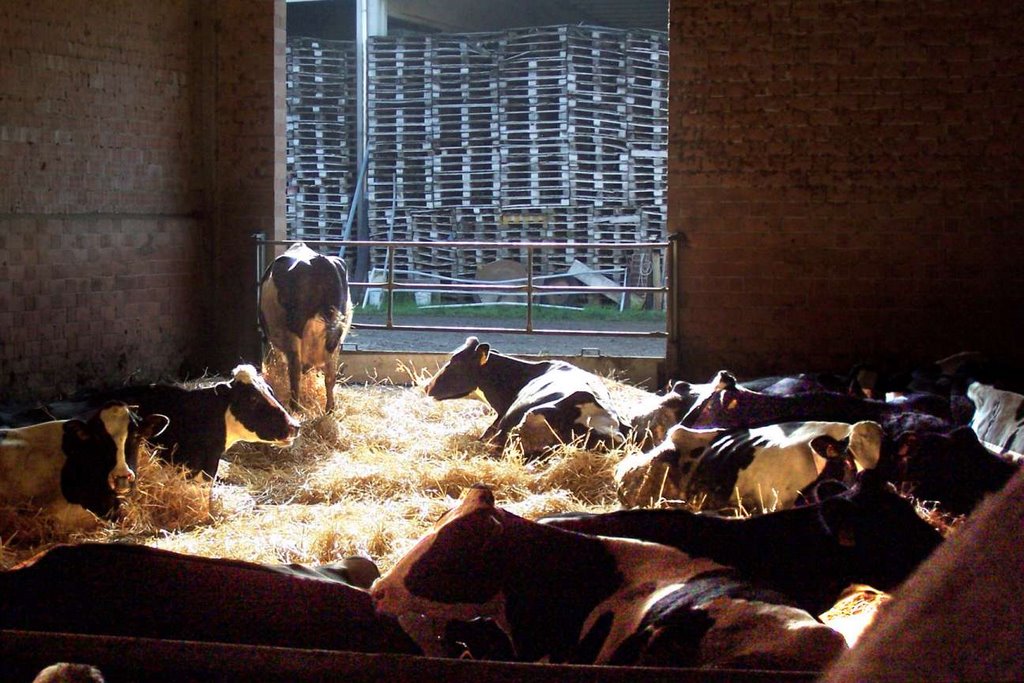
We observed the bedroom of the cows.


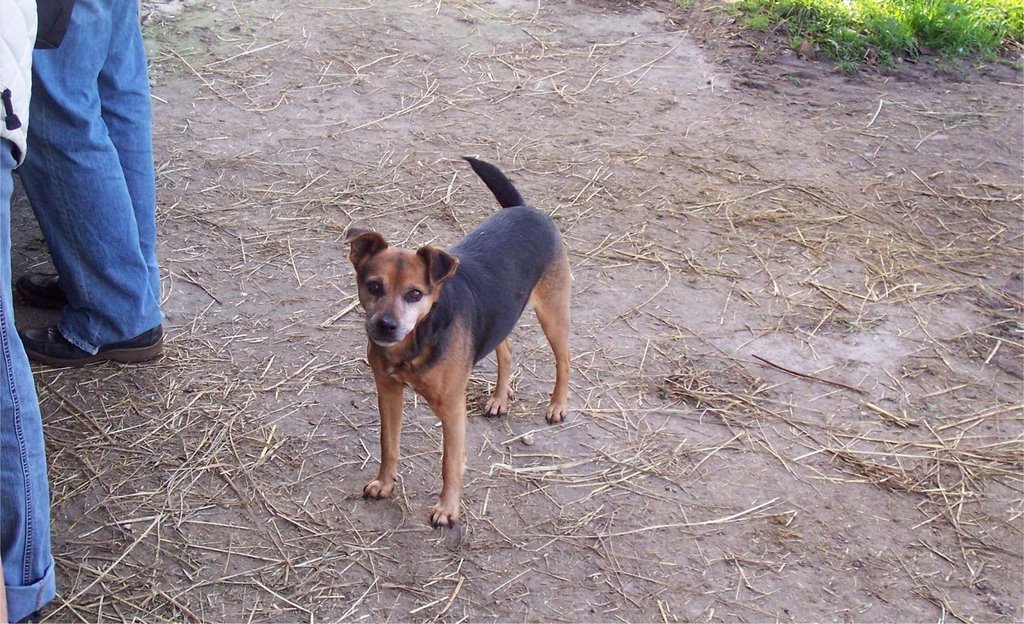
Scary farm dog.


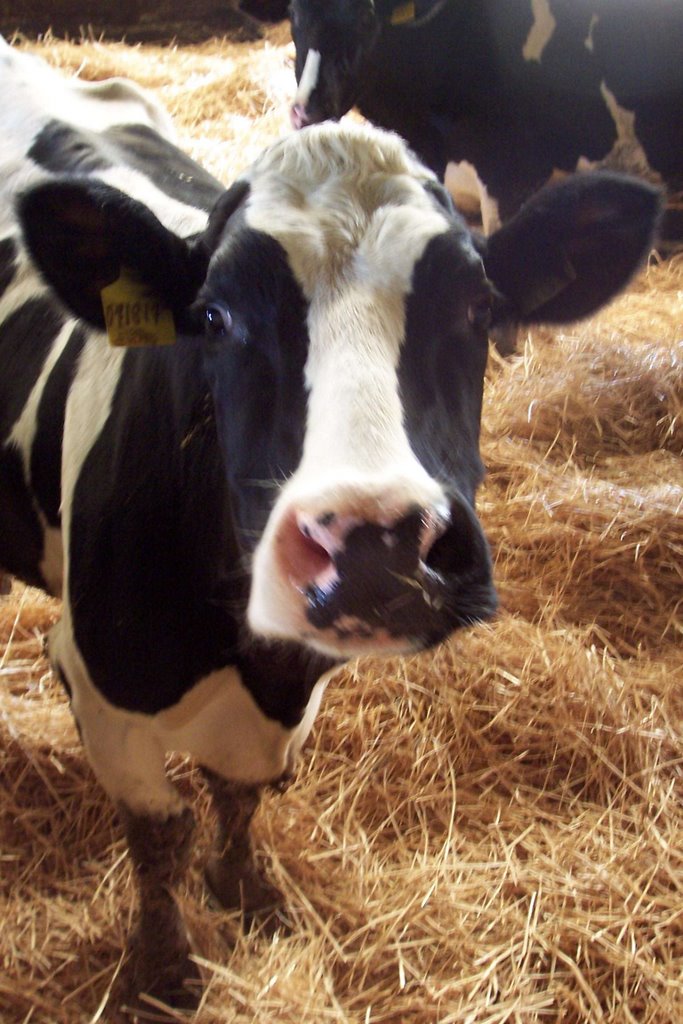
And on that farm there was a cow…


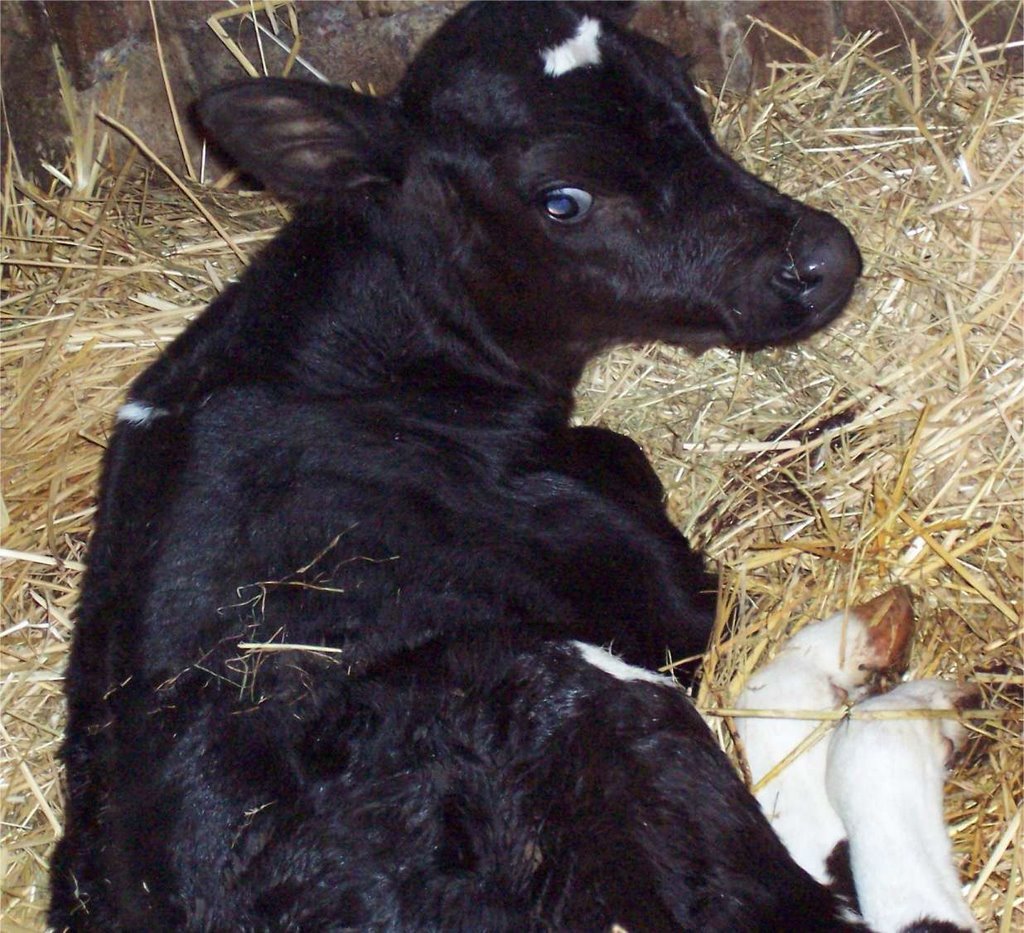
Why yes, as a matter of fact, I was born yesterday.

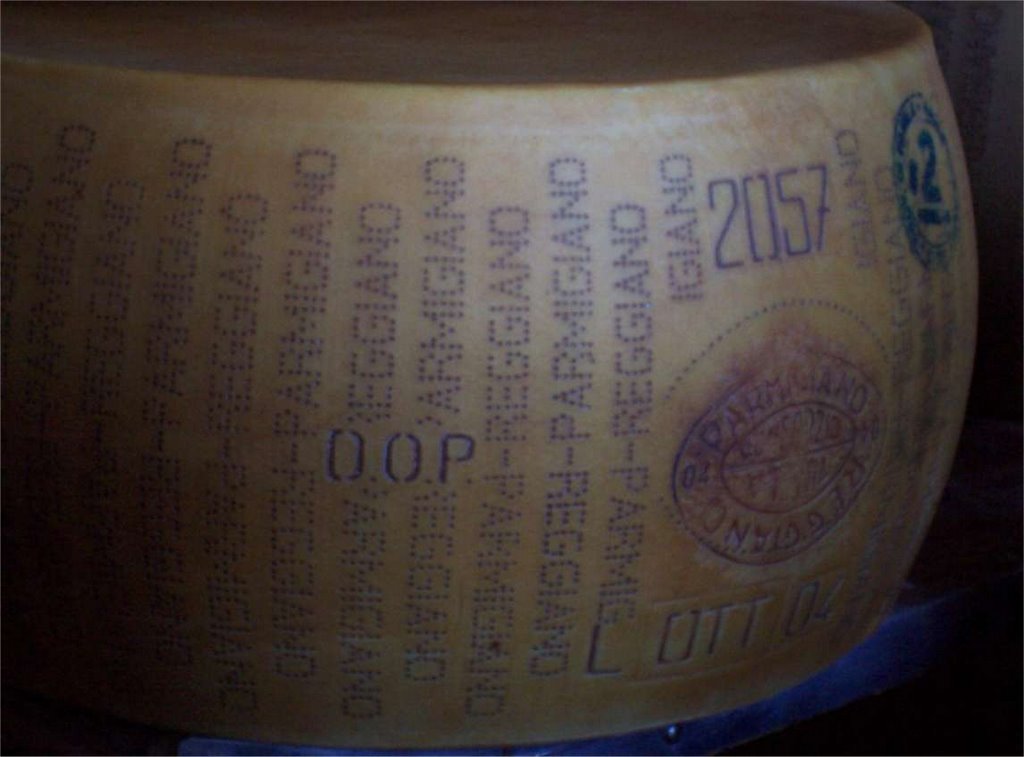
The real thing – Parmigiano-Reggiano

Again the sciopero raises its ugly head. We had been scheduled to visit a cheesemaking factory and then a dairy farm on Wednesday and Thursday, but the bus strike would have affected our, um, bus, so the visit and our classes were rescheduled so we could go Thursday and Friday instead. Then the Wednesday strike was cancelled. Then we heard an all-out strike (buses, trains, planes) was planned for Friday instead. Then that was cancelled. Or was it? All so confusing.

Anyway we were, on Thursday, very happy to visit a Parmigiano-Reggiano cheese factory in nearby Baganzolino on Thursday and see all that had been described to us actually happen before our eyes. We arrived at 8am in time to see the whole range of the day’s cheese production. and were well briefed on the bus.

The milk that arrives at the factory must be delivered within two hours of milking, so there was no time to lose. Everybody went wild with cameras and I think several thousand images were taken as we watched it all unfold; here are a few of mine.


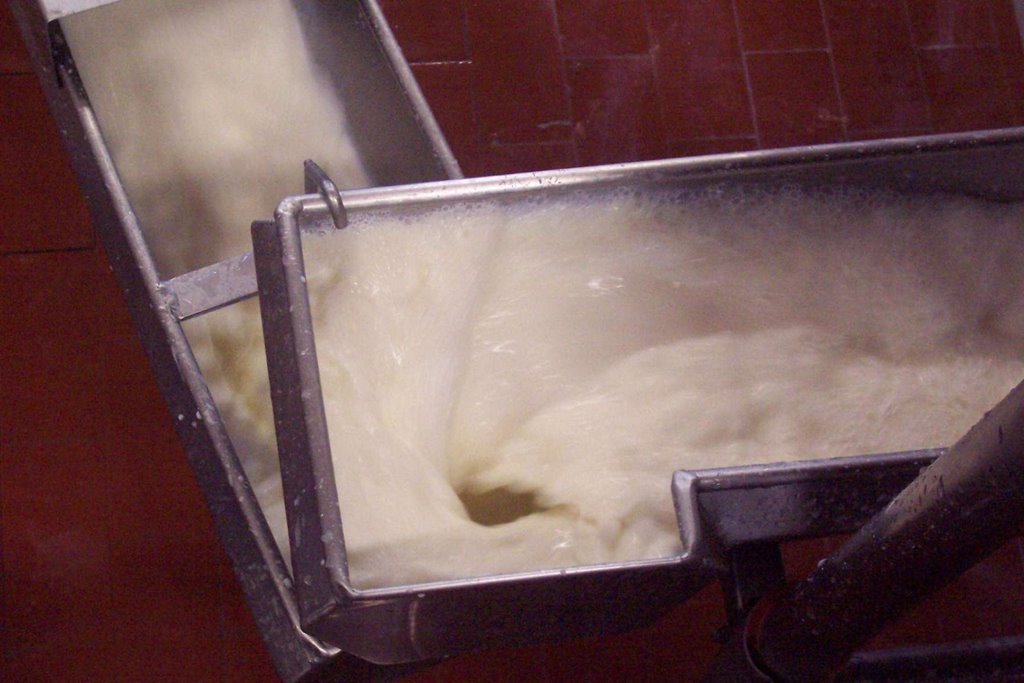
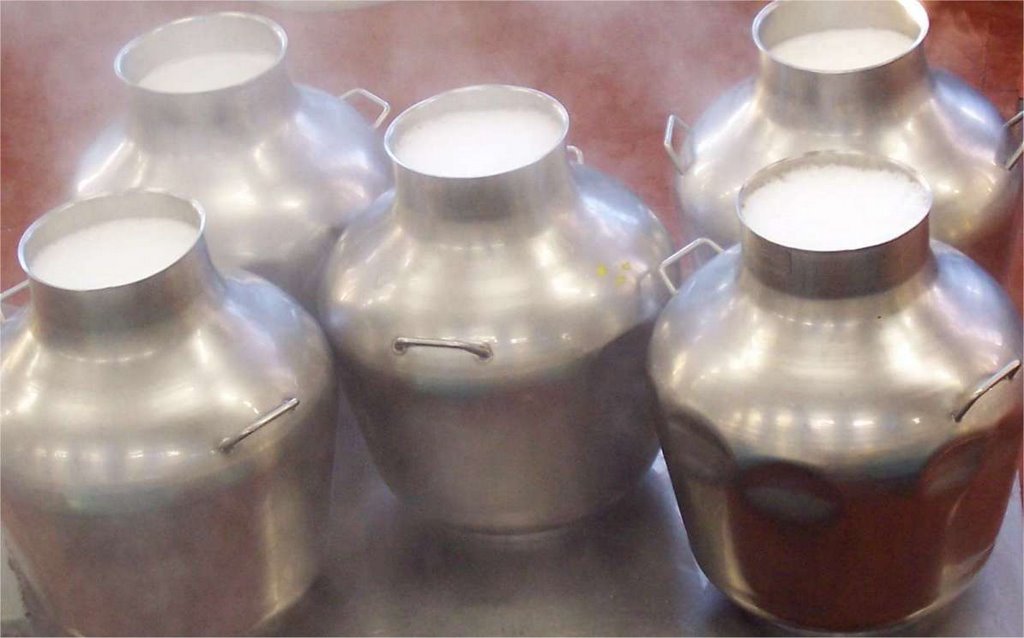
The milk from the evening milking is set out in trays to separate overnight. The cream is skimmed off and this milk is mixed with that of the morning milking, so it’s genuinely partly skimmed. It’s then heated, and whey (naturally fermented from the previous milking) and rennet are added.


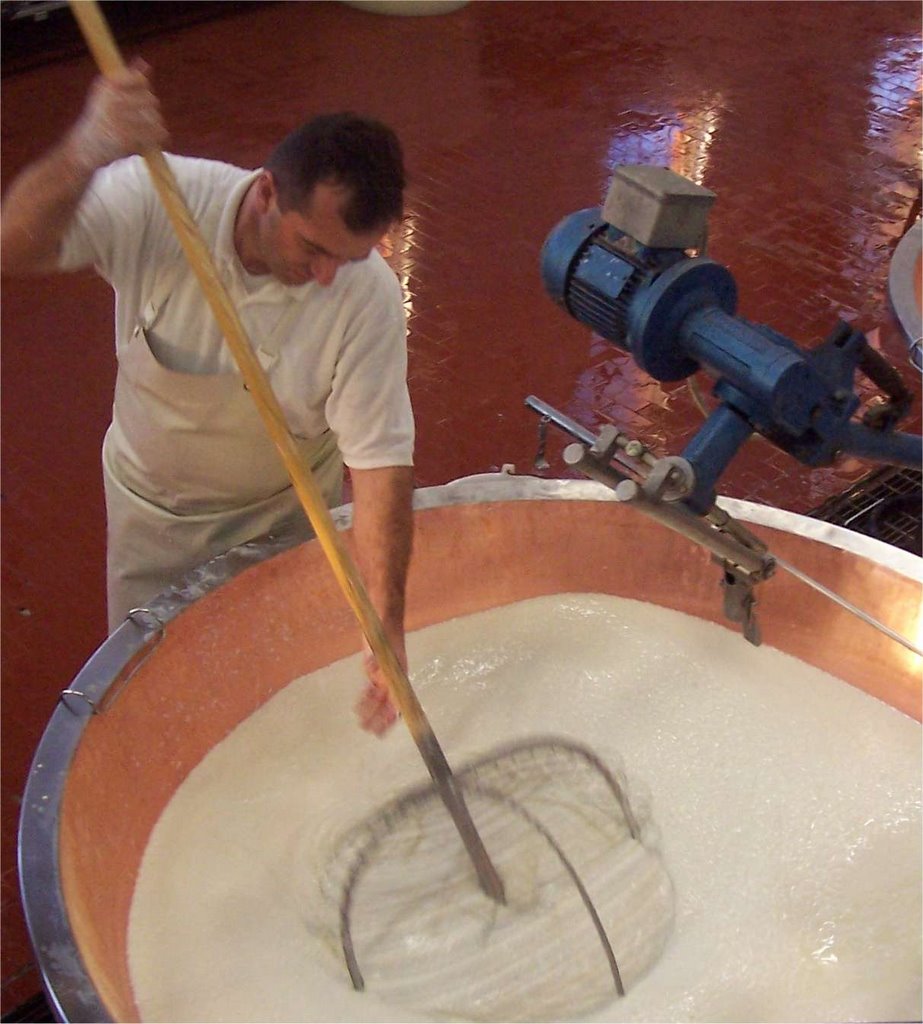
The whey and rennet have been added to the milk; it has coagulated and the curds are being broken up into grains the size of wheat kernels. For this task they use the spino, a whisk unique to Parmigiano-Reggiano cheese-making, named for the thorn branches that were originally used (hawthorne, according to our Italian teacher).


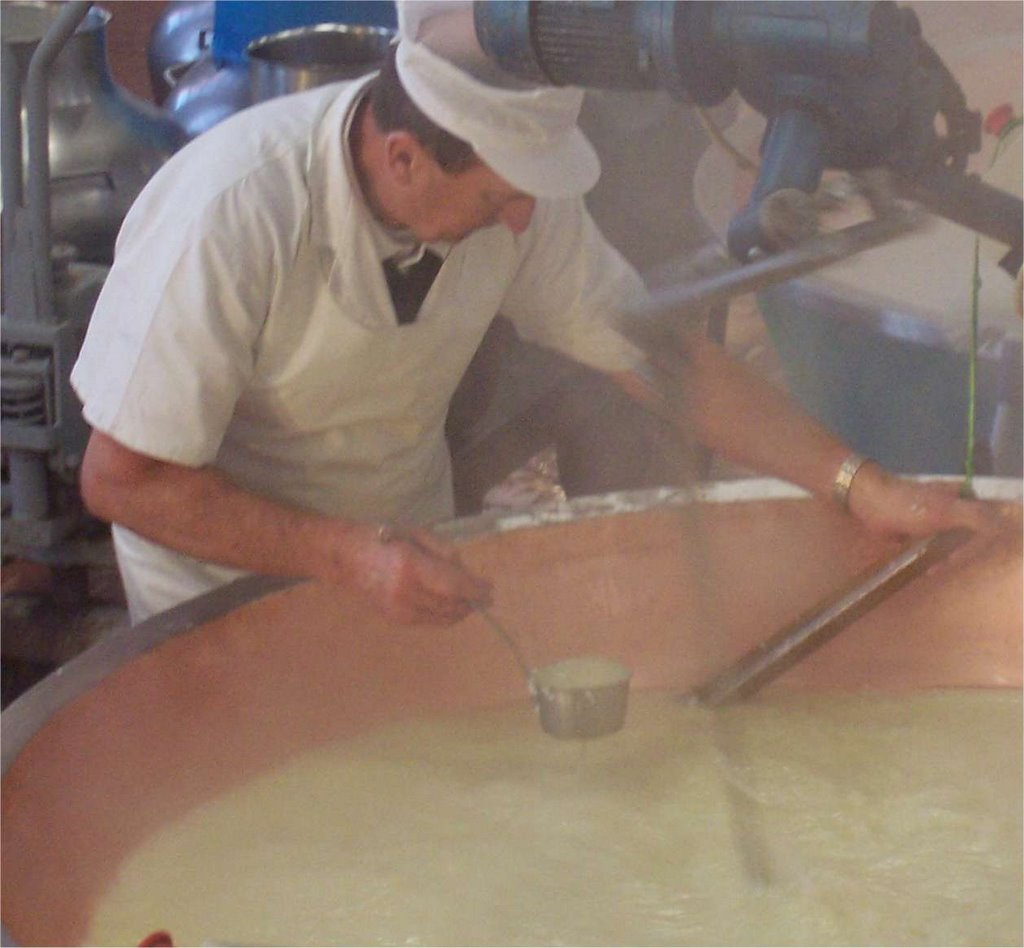
The master cheesemaker – we were told that, like the cows, he never gets a day off – checks the temperature and curd. Once he deems it cooked, the heat is switched off. Traditionally and practically, copper urns are used because of their excellent conductivity: and their ability to both heat up and cool down quickly.


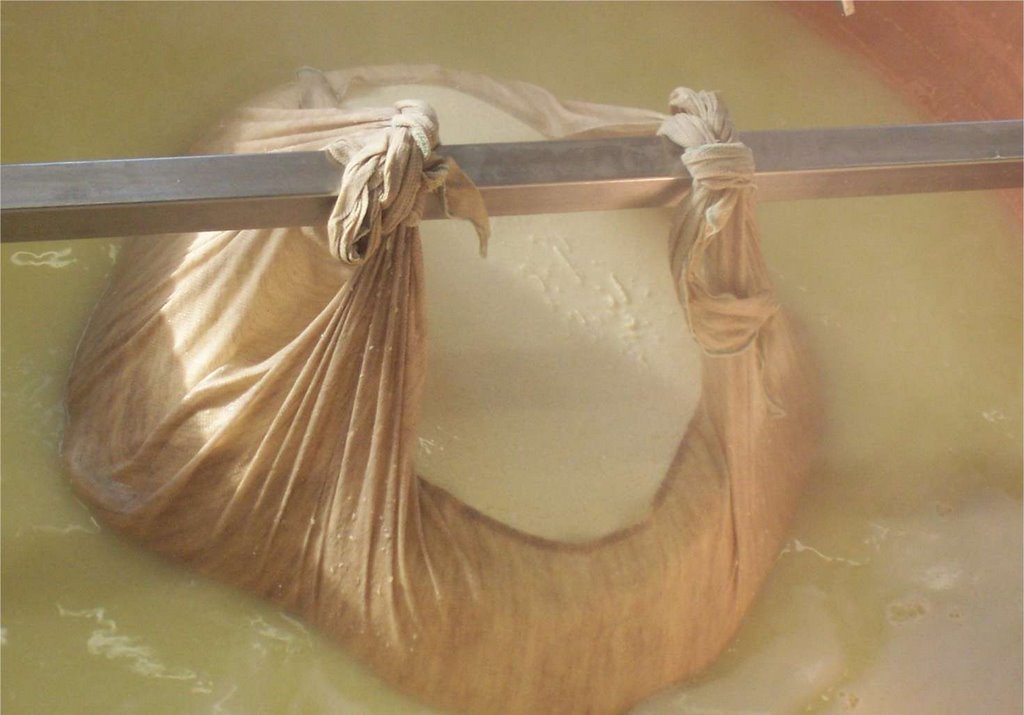
The cheese has coagulated into a nice big ball. It’s cut in half after this; each vat makes two cheeses, a total – for this factory – of 24 cheeses a day.


Most of the whey goes to the pigs (this be prosciutto country after all); some is made into ricotta; this batch will be used for the next day’s cheesemaking.


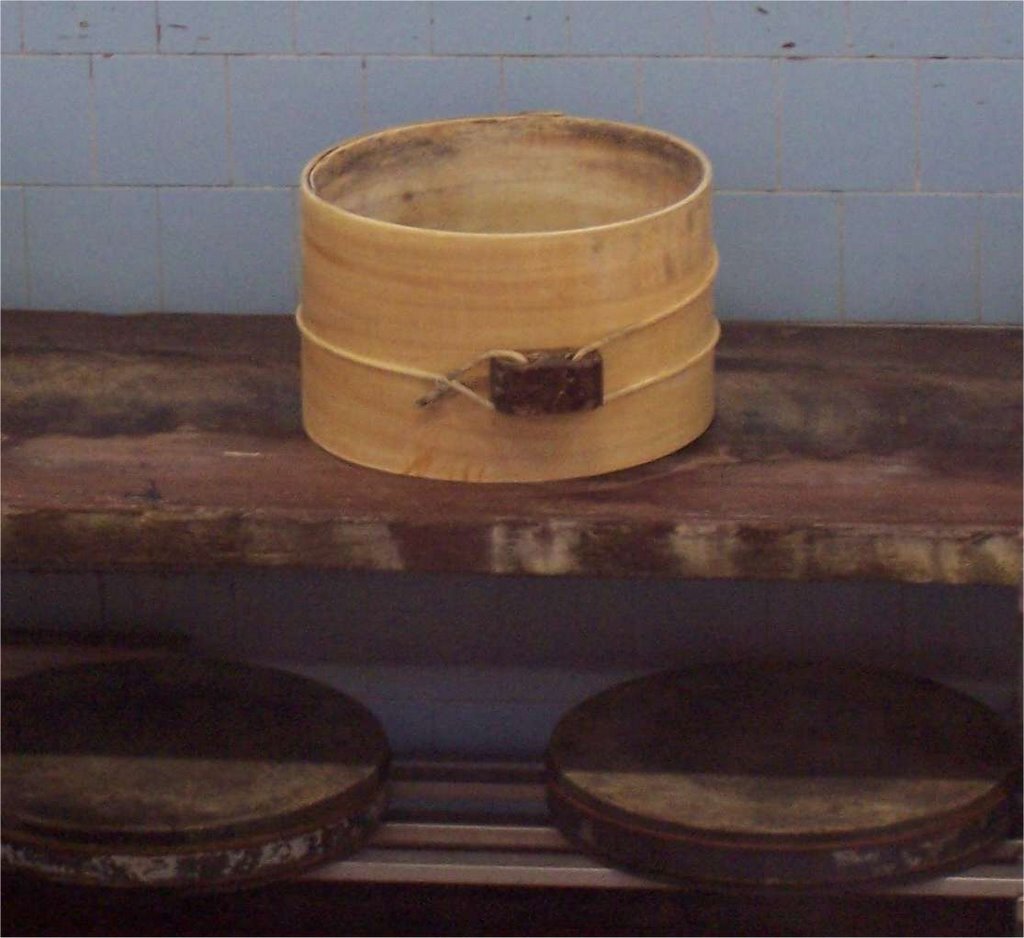
The first mould for the cheese.


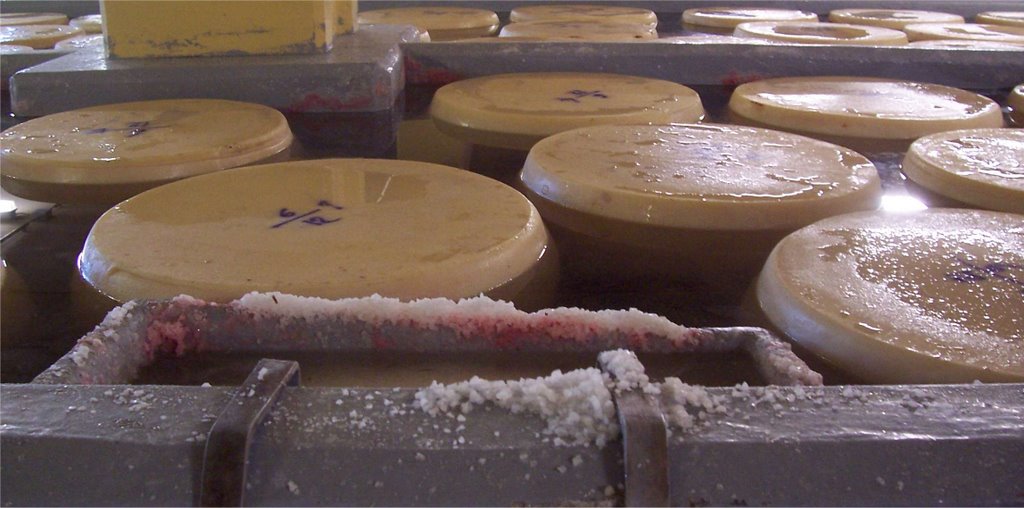
After two days – the Parmigiano-Reggiano brand having been imprinted the first day and the cheese shaped in metal moulds the next – the cheeses are floated in brine for 20-odd days, to firm up the rinds and allow osmosis to do the work of removing excess moisture and prepare the texture for a good long aging process. The cheeses are turned and re-salted regularly. Salt is the only preservative allowed in Parmigiano-Reggiano.


Look up… look wheeeeeyy up!


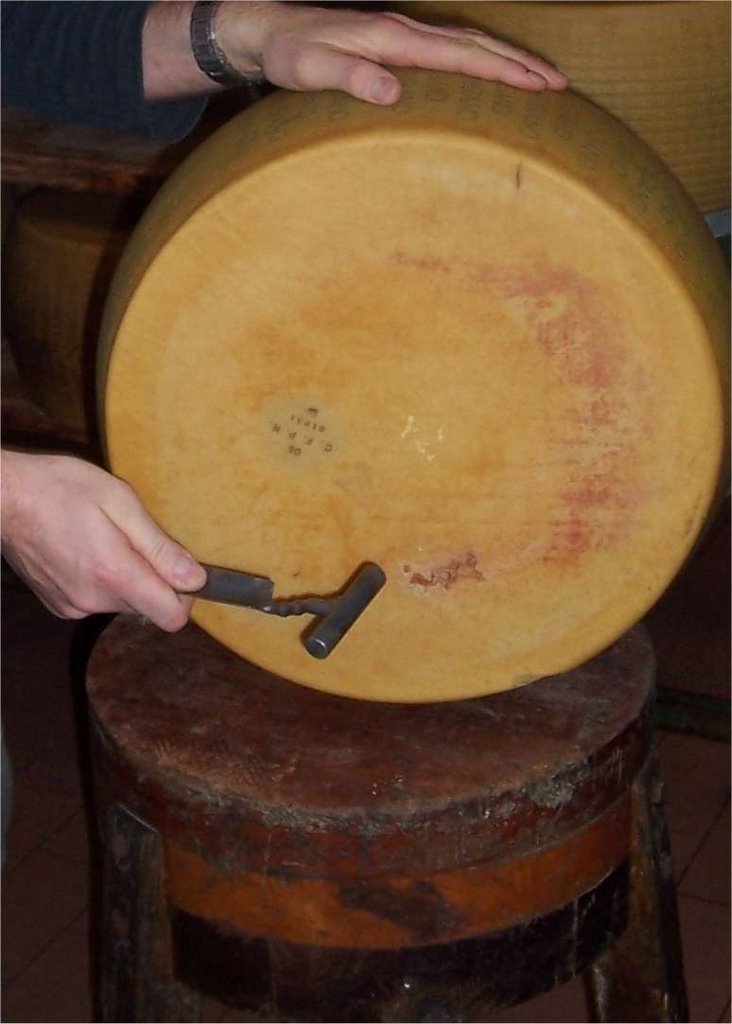
Once aged, the cheeses are tested by experts (battitore) who use a hammer to determine the depth of the rind and the quality of the cheese through sound alone. A hollow note can indicate uneven texture or holes (eyes). We’ve heard from several directions that holes are an impermissible defect in Parmigiano-Reggiano; formed by fermentation within the cheese paste, they can allow bacterial growth and spoil the flavour. The farmers go to great lengths to prevent the cows from eating wet grass, and neither are they permitted to eat silage, because these can promote lactic fermentation that could spoil the cheese during aging; so notes on permissible feed for the cows have been included in the regulations that govern Parmigiano-Reggiano production.

Much of the cheese is sold after 12 months, just to pay the bills. We were told that currently the Parmigiano-Reggiano consortium cheesemakers are operating at a loss, and the earliest they can sell their product is 12 months, at which point it is fine for grating, though the preferred age for eating it as a table cheese is after 24 months. Its digestibility and flavour improve, but its texture gets drier as it ages. One of the distinguishing features of the well-aged Parmigiano-Reggiano is the presence of small white crystals – an amino acid called tyrosine – which you find also in other long-aged hard cheeses such as (yum) gouda.

British cookery writer Delia Smith visited this region and learned about Parmigiano-Reggiano and documented her take on it on her website. I especially liked what she revealed about its noble history in England:

During the Great Fire of London, that most discerning of diners, Samuel Pepys, thought the cheese so precious that he dug a hole to bury his Parmigiano Reggiano to preserve it from the flames.

Cheese-off


Colorno fountain

We learned something about cheese tasting yesterday in a first class on that subject, when we went nose-to-rind with four fabulous cheeses. It was very exciting and entirely delicious, which was a small miracle given the continuing cold-type ailment which has been working its way around my upper respiratory sytem since the first week of classes.

It helped that we were mostly trying strong cheeses – Fontina, Pecorino Toscano (an unusual one, aged 4 months in a cave!) and a very rare and exquisite four year old Parmigiano-Reggiano – as well as a fresh Mozzarella di Bufala Campana that was soft and yummy and totally unlike most anything that goes by the term “mozzarella” in Canada.

Someone had asked the cheese technology prof why there was no control over the use of the name Mozzarella, since it’s used worldwide to describe substances that only remotely resemble the original product in production methods, appearance and least of all taste, and he said something like, “oh to ask that question is to make wider the wound in the heart of every Italian”.

I’ve been awed and impressed by the pride and passion the people we’re meeting have about their food. His answer to the mozzarella question was that basically by the time Italian producers got around to applying to protect the name, “mozzarella cheese” was in really wide production (from a variety of methods) worldwide and Italy didn’t have an argument of scale sufficient to make a case for reclaiming the name. They did protect the “Mozzarella di Bufala” designation though, since water buffalo are not widely used for this kind of cheese production and are mostly found only in Italy, India and east Asia.

We discussed cheese tasting terminology, needed to capture the effects of various combinations of the 200+ different chemical compounds that make up tastes, smells and aromas in cheese. One important point was that it is fairly critical to have eaten widely and well if you want to taste cheese (or wine, I suppose) because in order to master the terminology you need to know other flavours as they are suggested to your palate – call on your olfactory memory: no easy thing. Apparently there is an international vocabulary to describe all this, that was only developed about six years ago. To supplement our handouts, I came across a good list of terms – the Cheese Connoisseur’s Glossary, at an artisanal cheese website – and an even better one: CheeseNet’s Cheese Glossary.

We did find it difficult to appreciate the full meaning of some of the tasting terms: for those of us not familiar with the exact nature of chestnut or arbutus honey, for example, the term is not so meaningful. Being one who enjoys splitting hairs, I’ve been speculating that given the differences that regional climate, vegetation and soil types make in end products of just about every agricultural enterprise, I’m guessing that there would be a noticeable difference in flavour between Italian and Canadian (and other) chestnut honeys. We’ll have to have a taste-off sometime to find out.

Well. That was it for today. We’ll be tasting six more cheeses next time.

Here are some more photos ’round town:


Parma specialties, Via Farini


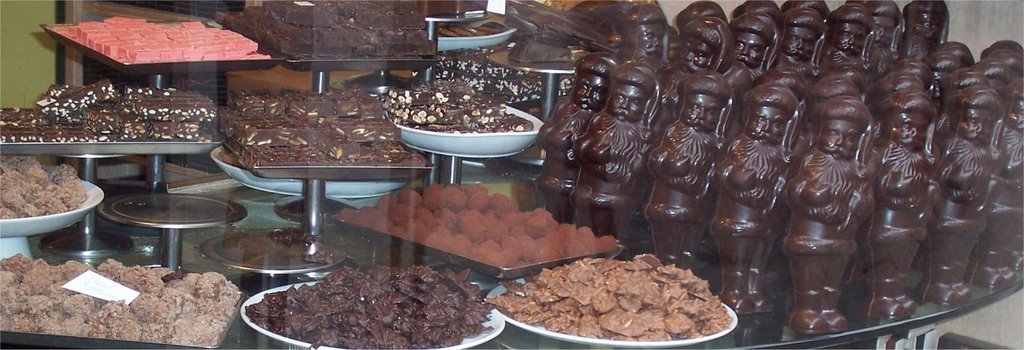
Some scary Santas (Babbi Natale)


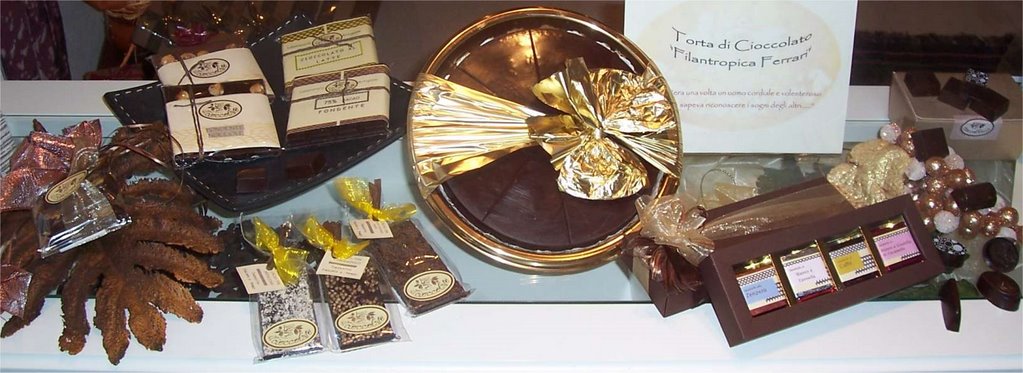
More chocolate…


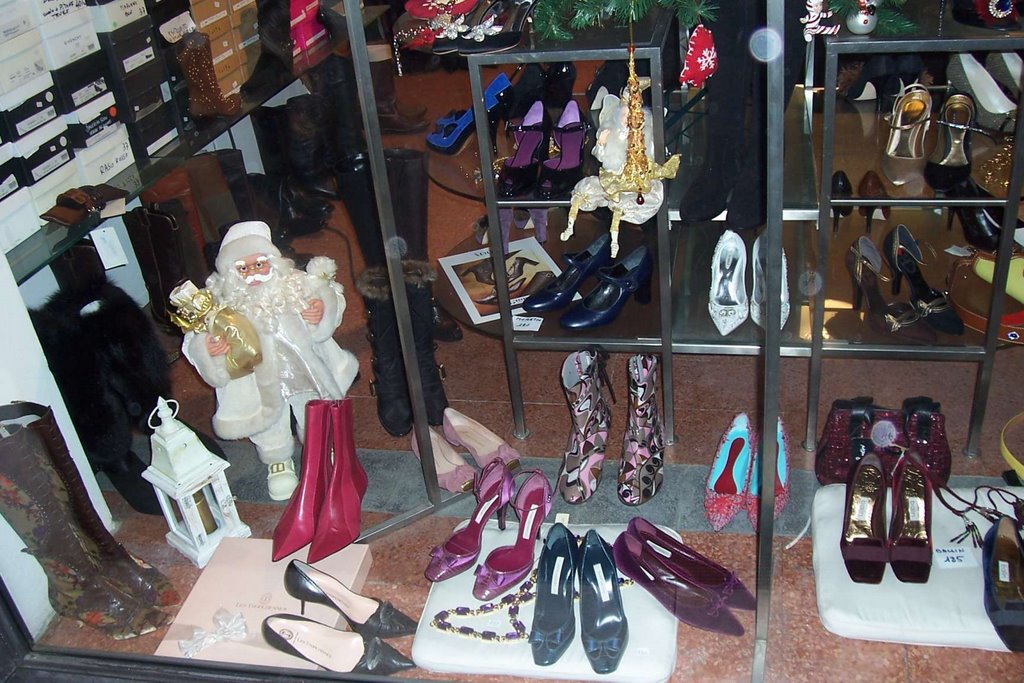
One for the shoe fetishists