Organics ABC

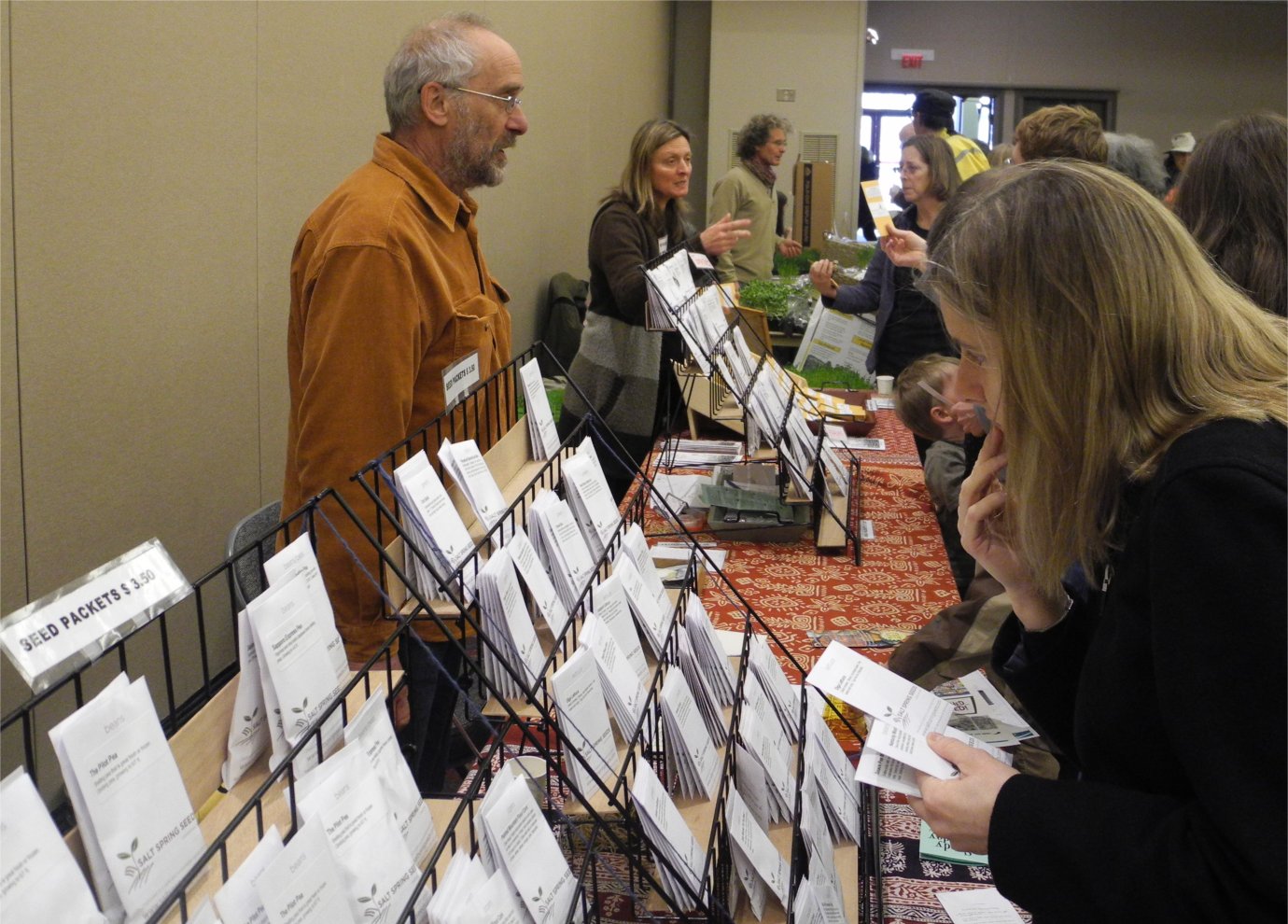
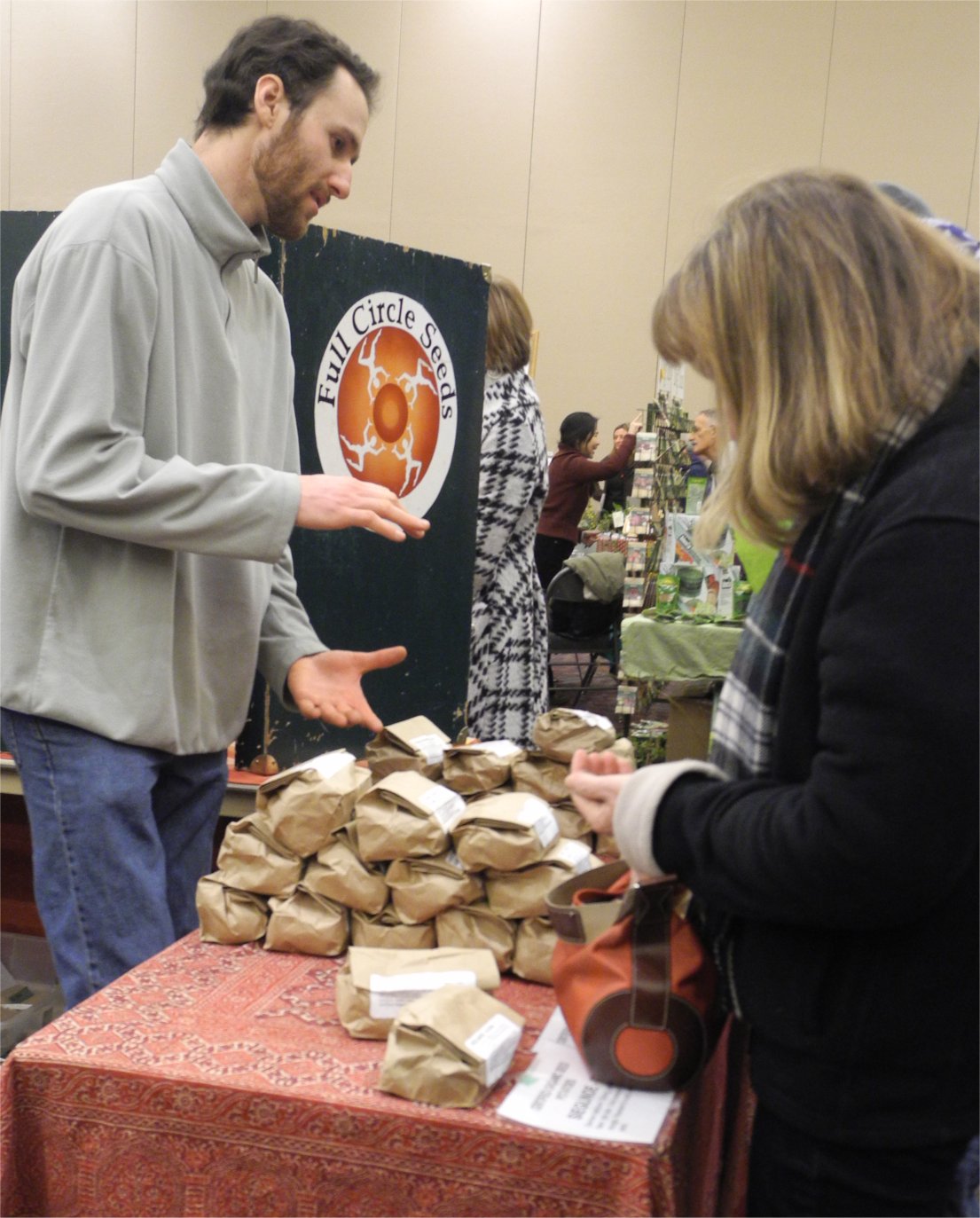
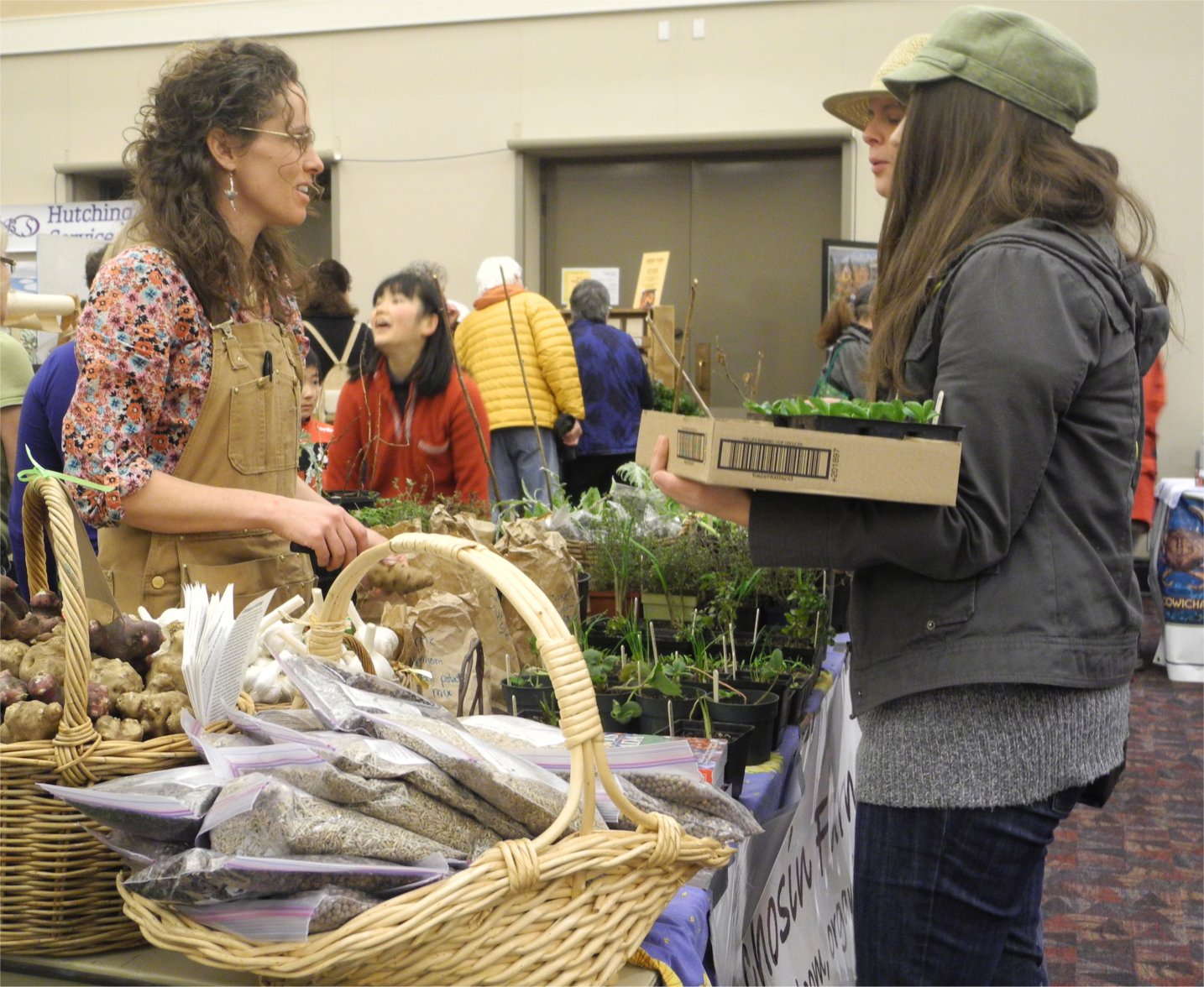
I spent much of this past weekend at the COABC (Certified Organic Associations of British Columbia) annual conference which was conveniently held in Sidney and attracted some great speakers and lots of friendly farm folk, with tasty organic fare to fuel the conversation (“When was the last time you saw organic milk at a conference?” we marvelled in the coffee queue; “This would be a first” we agreed.)
The two headliners for my interests were Chris Thoreau, an urban farmer from Vancouver, speaking about how to make money from farming in cities, and Todd Kabaluk, a researcher from Agriculture Canada, speaking on current research into wireworm.
Thoreau’s talk on Friday night promised to go beyond community gardens to explore some of the economic aspects of urban farming. An entrepreneurial bent is needed to make money from farming in the city, and Thoreau’s aim is to prove it’s a viable economic model for some, both by farming himself and by creating an urban farming network in Vancouver (where there are 19 urban farms – comparing poorly with the 700+ that now exist in Detroit .. but on the other hand, there is – let us be grateful – not the same degree of vacant lots in Vancouver)
City FarmBoy is believed to be the longest standing urban farmer in Vancouver, farming 14 backyards and one rooftop. Farmers on 57th work with residents of the George Pearson Centre providing food and involvment to people living in the facility. Thoreau’s own business, My Urban Farm: small scale sunflower sprouts delivered by bicycle. SOLEfood has literally taken over a parking lot on East Hastings, with the help of a grant from the city to set up. They use raised beds to grow food to sell at high end restaurants, farmers market, recreation centres and so on, using the proceeds to hire people and train farmers.
And then there was a reception, featuring Crannog Ales and Summerhill wines.

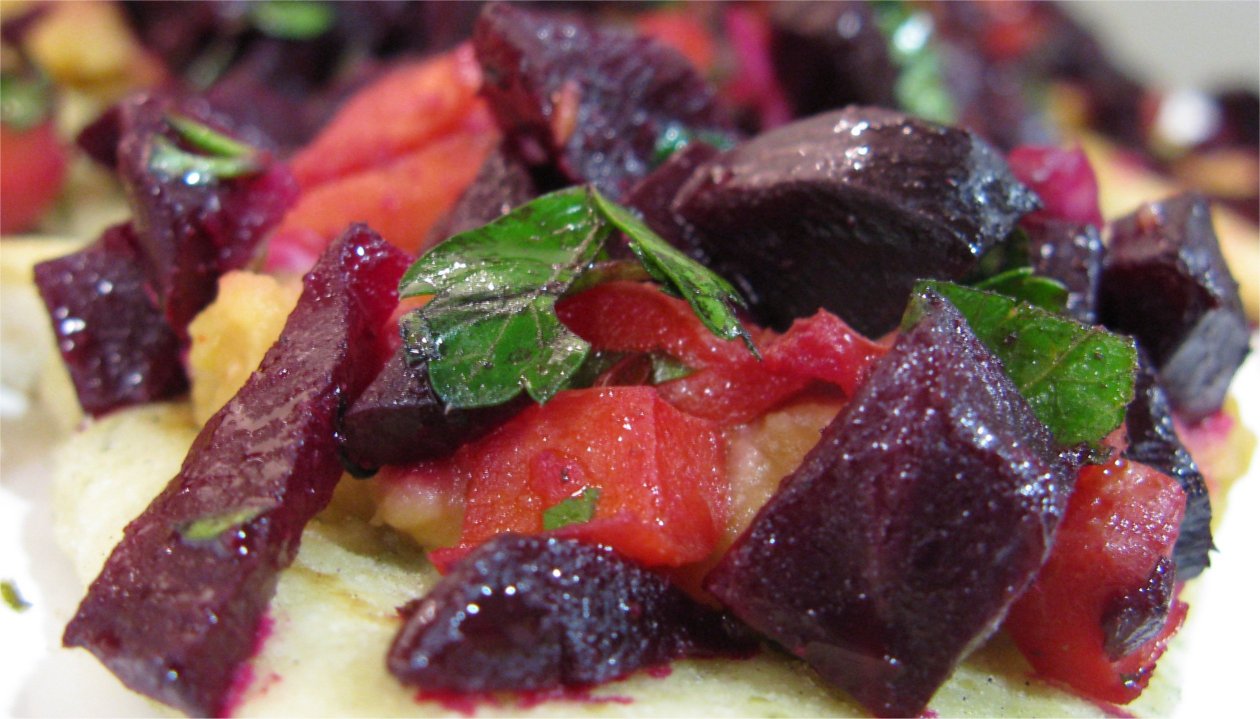
Friday night nibbles included…

On Saturday, we had opening addresses from Dag Falck,

of Nature’s Path, explaining the negative effect that “natural” food branding is having on certified organic food sales. He pointed out that only half a percent of all farmland in North America is under organic cultivation, which means that shortages of organic ingredients are imminent if the sector continues to grow. There is a widespread misunderstanding of the meaning of the term – led by marketing – that leads the public to pay a premium for goods made from agricultural products that are – and cost- exactly the same as conventional products. There is a white paper on the subject, from COTA (Canadian Organic Trade Association).
spoke about organic items topical in Ottawa, including Bill C-474. There is still a shred of hope around the topic, with a new campaign to support a moratorium on GM alfalfa in Canada. He addressed the worrying elements in CETA (Canada–European Union) trade negotiations that threaten seed-saving, and later confirmed what I’d heard about the first-time inclusion of municipal level obligations that could end institutional support for local foods (the proposed changes would “prohibit municipalities from using procurement for sustainable development purposes such as promoting food security by adopting “buy local” food practices”). So lobbying is suggested at the municipal as well as federal level.
I went on to a talk abou soil ecology and alternative mulches for organic blueberry production; basically a discussion about traditional use of sawdust vs composts. One of the reasons was to reduce the loss or injury of plants through plant-parasitic nematodes, which can more easily be kept in check by natural predators such as those found in soil enriched with organic matter.
Then there was a coffee break

and I skipped out to do some errands. After a vibrant lunch


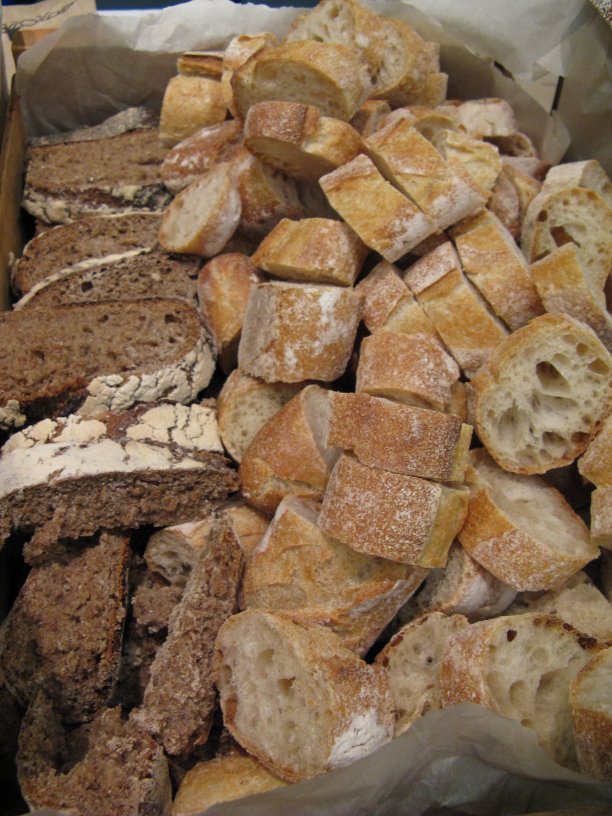
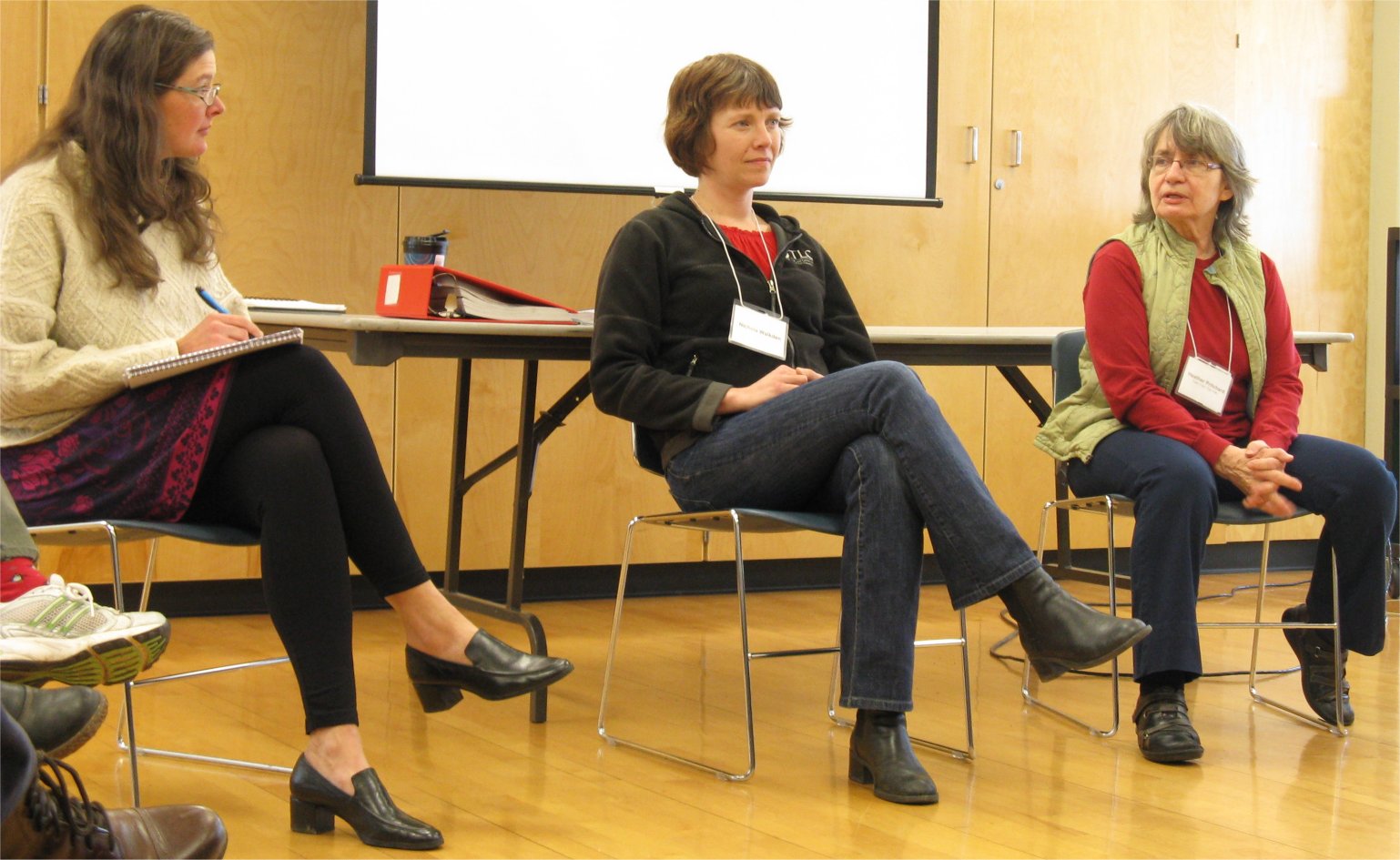
there was a panel on Community Farms, land leasing and other ownership models with Jen Cody of Growing Opportunities; Nichola Walkden of The Land Conservancy; and Heather Pritchard of Farm Folk City Folk. There was a lot of discussion about the ins and outs of land tenure when working with a collective or community model; issues to do with zoning, neighbours and conditions of tenancy.
Then it was time to turn to the most evil insect of them all. Todd Kabaluk gave a thorough consideration to the life and times of the wireworm, mortal enemy to all potato growers and many others besides. As has been previously discussed here, it’s a long-lived pest with a big hunger and an undiscriminating palate; laying waste to seedlings and rendering root vegetables unsaleable. There are no known enemies, though research is looking for these; and it’s hard to kill since its whiskers allow it to whisk up and down in the soil, so you can’t be sure exactly where it is. As Kabaluk wryly observed, “Wireworms are where you find them”.
One place you will certainly find them is in forage crops/ set-aside/ any longer-term grass (like lawns and turf) where moisture levels are steady and there’s lots of food in the roots of grasses. Till that under and you move the grass and the wireworm beneath the soil; when the grass decomposes, and the wireworm loses its food source, you have created a situation where the wireworm must seek a new food source. If you’ve planted a crop, expect visitors, as they’re attracted to the CO2 emitted by the roots.
Although some useful research has been done – involving brown mustard as a rotation crop; use of aromatic oils like citronella; and use of a fungal biological control – there is no quick fix available yet. Kabaluk is focusing on better methods of monitoring their numbers (to reduce the need, e.g., for corn farmers to automatically treat seed with clothianidin even where wireworm numbers are not known). The best summary he could recommend of non-chemical treatments is this article from 2008.
Supper was good and featured lots of salmon from Sointula, as well as local cheese and charcuterie. And a very nice apple and berry crumble to finish.


A last look at the silent auction items
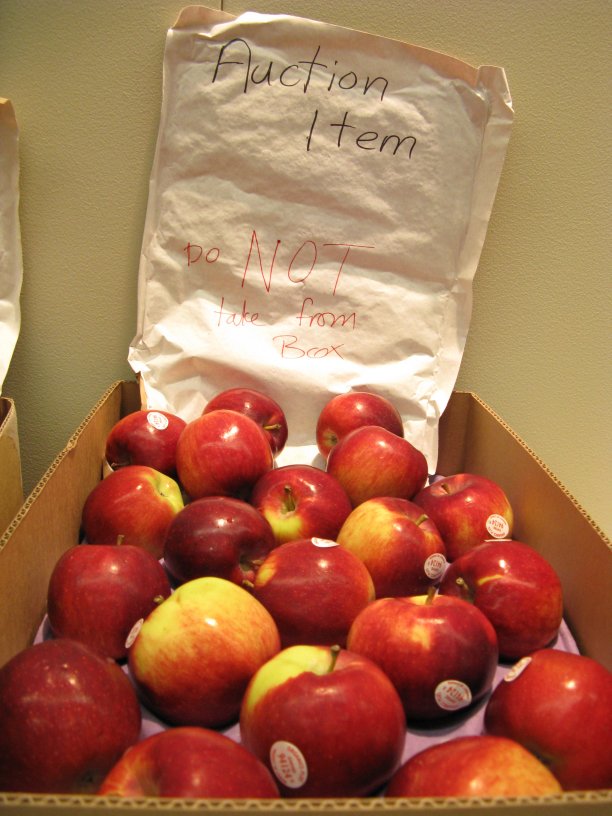

– I was outbid on everything (luckily) – and some jolly tunes from the Jugbandits, and that was it for me. I couldn’t make it to the Sunday sessions as I had a bee talk to attend.