Skip to content

copyright

Textbooks

I have been a student in my day. Several times over in fact. And I know the pain of textbook costs, which is a large pain. As a poet, I also know the pleasure of being included in textbooks, and it is a large pleasure. Though relative to the pleasure of a living wage, it is a veritable widow’s mite.

I know we live in Google’s world, which promises to deliver free information to everyone, and I know that Google doesn’t really care how that information is created or obtained, so long as it’s provided free to the user in ways that help Google boost its revenues through other channels.

And in keeping with this spirit of largesse, the Chronicle of Higher Education recently published a revealing article (which, it has to be said, I read for free) about the struggles of Washington State to meet the cap of $30 per online textbook that will unlock a large grant from Bill & Melissa Gates, with the aim of reducing textbook costs for the state’s students.

What I find most interesting about this article is that it makes not the slightest attempt to address the reasons why textbooks are expensive, which include – but are not limited to – that irritating cog in the wheel of free information: the textbook’s author, who must be paid. Or more typically, the several authors and/or editors who put the material together. All the article does is bemoan the fact that it’s very hard to find good quality educational materials for free or cheap.

Like many of us, I sit on both sides of this particular fence. I benefit greatly from all the free information that’s available online. On the other hand, for many of the past few years if I were living on my earnings from writing alone I couldn’t have afforded to pay for what I accessed, had the authors been fairly compensated for their work. Because the opportunities for me to earn a living wage from my writing – once a respectable and reasonably lucrative profession – dwindle with the days.

In discussing course materials for the online course I teach, for a college with a less than ample budget, it became clear that new online program areas in bricks ‘n mortar institutions take a while to catch up with details like copyright fees and electronic rights. So for the time being I point students to a lot of free newspaper articles and other freely available materials to augment the (reasonably priced) textbook.

Are these freebies the best available materials? Possibly not, but who knows? It’s as hard for academic publishers to keep up with changing trends and topics as it is for today’s academics to monitor the listservs and discussion boards, the conferences and webinars and workshops, the tweets and the blogs. And of course the published materials, whether online or in paper.
Canadian Copyright

Thanks to Mona for passing along this article from the Georgia Straight by the excellent Bill Freeman, one of Canada’s best spokespeople on the topic of copyright, and chair of the Creators’ Copyright Coalition, an organization of 17 of the largest creator groups in the country, representing over 100,000 Canadian creators.

As Freeman says, once things were simple; then along came the internet and that changed everything. And the proposed amendment (Bill C-32) to the Canadian copyright act, which has received second reading and is now before a legislative committee, threatens the livelihood of anyone who hopes to make a living from a creative profession.

It seems that the internet, which started life as a tool for free dissemination of just about everything, is starting to become another floor in the towering edifice of our have/have not society. Wealth is so polarized for so many of us now — and it’s worsening by the day.

Have a listen to CBC Spark‘s recent program on innovation, and particularly to Barbara van Shewick who explains how and why changes to the internet’s architecture will put an end to innovation of the kind that spawned eBay and Facebook. She outlines the kinds of harm that can be done when internet service providers are allowed to limit access to information, and explains why developers of the future will have to have money and power behind them. Gone the days of making a killer app from the comfort and safety of your basement… Oh wait, I never did get the hang of that either…

Sick of being sick, food in Britain, and copyrighting recipes

I have been languishing in my sickbed for two solid days, mostly too ill for meditation, although I have reached the following conclusion: surely the ailment that delivers the hardest blow to the solar plexis of the student of food culture is stomach flu. My diet since Monday has consisted of a large bottle of water, two glasses of juice, and this evening about a half cup of cooked white rice. Not least of my discomforts was the irritation of knowing I was missing lectures by visiting food culture expert Laura Mason, who I’d particularly wanted to hear. I did manage to listen to the radio for a little while today, and reflect on some recent articles I’d read.

I listened again to a report on Italian vs British food on the latest Food Programme, which is available online until Sunday when it is replaced by a report on olive oil: very timely for us as we begin a few weeks of study on that very topic. This episode was built around a visit to Fiera del Bue Grasso in Piemonte. Some interesting discussion about attitudes to food, issues around steroid use in cattle, and a recipe for brasato. One remark caught my ear (by eminent food writer Anna del Conte, a longtime Italian expat living in Dorset), which was that there was good food to be had in Britain, and the opportunity to buy from producers, but getting hold of it was tied to class (and income).

On a partially connected note I spotted a piece by Israeli food writer Daniel Rogov on finding good food in Britain. I was amused by his observation that “French restaurants have become the rage in the city and many of these serve meals that, in addition to being creative and exquisite are often so expensive that a weekend in Paris is a cheaper way to enjoy French food than by dining in London.”

I had come upon Rogov while reading his excellent commentary on recipe writing which I’d been led to by following a report on some weird things happening with food patents and copyrights Oddly enough, a friend (thanks Ruth!) had earlier in the week sent me a link to an article about food experiments by the very chef Cantu mentioned in the copyright article. Not convinced this is the kind of food I want to spend my money on just now: too many unprocessed foods I haven’t tried yet, still in their original packaging. (Why does everything I read lately make me want to wail “what have we done to our food??”)

A different kind of Easter egg

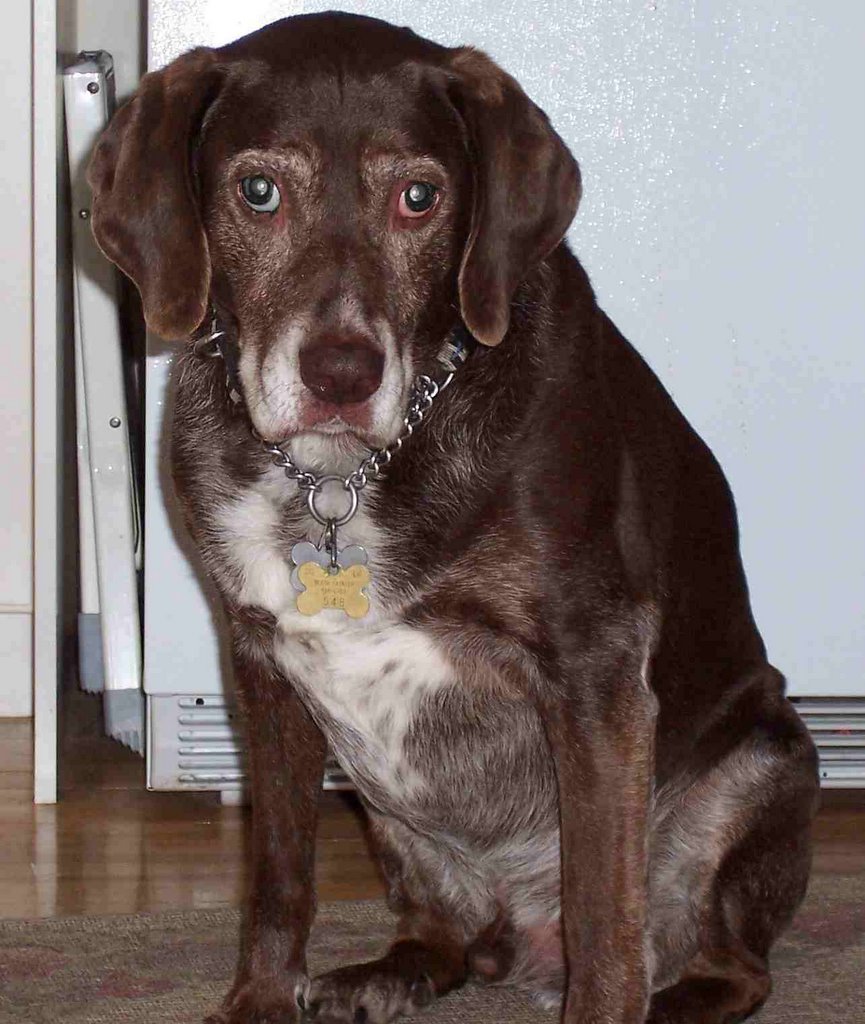
I found a recipe of a different kind for a different kind of appetite. Poor old Anton was scratching away after he returned from a perhaps too cozy weekend with some other dogs when I was away in Campbell River. So I thought, maybe fleas, and looked up some home remedies (the flea collar wasn’t cutting it, although he’s keeping it on as I do NOT like pulling ticks out of dogs’ faces, no I do not) . (Be careful when using remedies with borax, by the way, as you don’t want dogs or children rolling in or ingesting that.)

My absolute favourite was the cure where you place a dish of water in the flea-ridden room, switch off the lights, and place a candle in the dish, the idea being that the fleas will jump towards the light, fall in the water and drown. There was something heroic and tragic in the idea that really appealed to me, but I don’t think it works. Maybe I wasn’t playing the right music?

My, has it only been a decade? The Heather Robinson copyright case is coming up for re-hearing by the Supreme Court of Canada. It feels like it’s been going on all my life. The case seeks to help freelance writers retain copyright on their works, and to obtain payment if their works are sold again by the publisher. It began when Heather Robertson sold first serial rights to a story, and the newspaper without further payment or permission included the story on its digital (online database) services, which re-sell published pieces.

On Sunday April 16, 8 am, CBC North by Northwest host Sheryl McKay will interview Kate Braid and Sandy Shreve, editors of In Fine Form.

A new week’s news – TWUC, launches and lovely dogs

Drove up to Nanaimo on Saturday, in the always entertaining company of Peter Such, to a regional meeting of the Writers Union of Canada.

As ever there were lots of things to talk about. The digitalization initiatives of libraries is a looming concern: what will it do to our already slender income (according to our regional rep’s research the average income for Canadian writers is $11,000 – well below the poverty line)? How on earth can it be done without violating an author’s copyright? These initiatives place at risk the very channels through which Canadian writers have managed – by virtue of some very hard battles fought by our union members among others – to receive some reliable payments for their created works: copyright payments and PLR, as well as royalties; and publishers, whose sales and subsidiary rights deals will be jeopardized, have big concerns about their digital income prospects as well.

Writers were asked to consider doing something for Freedom to Read Week this week, February 26th-March 4th.

My lovely publisher, Oolichan’s General Editor Hiro Boga, a writer herself (ambidextrous: she’s published a novel and a poetry collection) was also at the meeting, so we got to talk shop for a moment or two. Peter had swiftly stepped in when I mused aloud about where I would have my book launch for Cartography, and so it will be at his fabulous home, sometime in April.

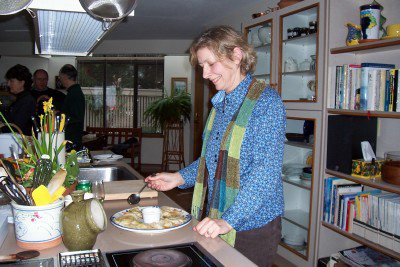
At the potluck meal which followed, our BC rep Marion Quednau demonstrated her finesse with some hand made perogies, which she’d bought on Terminal Avenue in Nanaimo. She says she likes them best boiled and then gently browned in butter till golden; her secret weapons are leeks and cumin, and of course she serves them with a dollop of sour cream. Lots of other good stuff: home smoked oysters, dolmathes, chocolate mousse cake. Enough ballast to set off back down-island through snow flurries which tapered off as we approached Victoria.

Looking forward to the BBC Afternoon Play on Monday – a broadcast of Rapture, the TS Eliot award winning poems by Carol Ann Duffy. Online for 7 days from broadcast.

And finally, I welcome back Anton the Orphan, who spent three weeks working with me as my personal trainer before I headed to the writing retreat, and who will be lodging here for another week while his current custodian is otherwise occupied. He is being fostered through a great animal rescue society called Animals for Life – it is a sort of animal shelter, but its shelters are all private homes. They have a charity shop in Sidney which you’re advised to steer clear of if you have a weakness for kittens, as they keep a cage of them there which is always surrounded by animal lovers.