Skip to content

poetic form

Some live to travel, others travel to cook

When I was in Santa Fe last September, I took a few classes at the Santa Fe School of Cooking to get me oriented to my new surroundings. Mostly demonstration classes, except for a hands-on session on roasting chiles and pressing tortillas, they were a fabulous introduction to the town and the food, and a great way to pass the morning, ending with a gourmet lunch prepared before our eyes.

Our chef was Rocky Durham, who was absolutely wonderful: a passionate travel resource for his home town, a quirky advocate of southwestern cuisine – though marked forever by his classical French training – with a well-travelled palate to draw on, and of course a life-long love of good food. One of the best parts of the class were the dining Q and A: Rocky gave his unadulterated opinion of any local restaurant we cared to ask him about, and both tourists and locals (there were some in all the classes I attended) shared their picks as well. But if you go there… just don’t expect to leave without a bag of chiles and seasonings from the cooking school’s well provisioned gift shop.

Rocky gave us a few enduring tips for the road as well. One very useful one was to invest in a cheap electric coffee grinder, and another was not to buy ground spices, but rather to roast whole ones (cumin, cinnamon, oregano etc) as needed in a dry pan and then grind them in aforementioned grinder. It can be cleaned easily, he said, by whizzing a spoonful of plain white rice or salt or fresh bread crumbs. Works like a damn.

One of my classmates, by a strange coincidence, was an American expat living in London, who works at Divertimenti, a stellar cookware shop that has branched out into cooking classes. Though I still have some of their cookware, I’ve never attended their classes, but I have been to some at a much beloved cookbook shop in Notting Hill’s Portobello Market, Books for Cooks, which were endlessly interesting and delicious as well.

And now, after a morning canter along the Gorge with old Anton, I must return to a meditation on rhyme. I’m giving a short presentation on rhyme to the form class on Wednesday; so far I have identified 34 kinds of rhyme and around 40 poetry forms that use rhyme (including 5 different sonnet forms). My favourite kind of rhyme so far is Procrustean Rhyme: rhyme on words which have no conventional rhymes. Uses the method Procrustes used on his victims: stretching them if they were too short to fit his bed, and lopping something off if they were too long. So you end up truncating words (enjambing them awkwardly with hyphens) or extending them into phrases.

Music ‘n poetry

Just received my brochure for the Wired Writing Studio which starts with the Banff Centre residency October 2-14, 2006. A wonderful thing is Wired. Robert Hilles and Marilyn Dumont will be excellent poetry resources. Fred Stenson runs a comradely ship, with the hilariously droll technical support stylings of Chris Fisher. The food’s not bad either, and there are some great deals on concerts for participants: I began my lifetime of fandom to the Jaybirds early in my stay, and also attended a bone-shaking appearance by Steve Earle and the Dukes (I prefer him acoustic, thanks, but good to have had the experience). And the Calgary/Banff Wordfest happens during the studio time as well. Geez, what am I waiting for??

Among the many musical offerings we noticed in Austin, the best ones all seemed scheduled to begin after we left. The rodeo, the SXSW conference, everyone but AWP seems to schedule music. (Actually that’s not fair: there was a boogie night at AWP that we were simply too whacked to attend.) Playing in town after we left: Eliza Gilkyson, Ruthie Foster, The Gourds, Bela Fleck & the Flecktones, Lucinda Williams, Rhonda Vincent. It’s not fair it’s not it’s not. But I have to think, on the other hand, why do I know about these people? Because I have seen them play way up here, at the Vancouver Island Music Festival in Courtenay/Comox, and the Edmonton Folk Music Festival. All that is except Bela and he comes up here from time to time, so I live in hope. And except Lucinda, because you have to have some event to look forward to.

So I spent yesterday meditating on oulipo. It sounds like about as much fun as you can have with poetry, but I need more than that, or do I mean less, to move me in a poem, and I wonder at the wisdom of narrowing the readership of the already microscopic readership of poetry for the sake of intellectual gymnastics. Old fartism I suppose, and there are doubtless many fine, coherent examples out there I wouldn’t guess were oulipean. Christian Bok certainly made headlines with Eunoia a couple of years ago, each section consisting of poems made of words that use only one vowel. Damned clever it may be, but it’s not for me, except in small doses. There’s no getting around the fact you have to compromise the sense of a line when you’re performing that scale of legerdemain. Anyway, I found a charming interview by John Ashbery with Harry Mathews, the only American oulipoean, which was worth the journey.

So the point of all this was that we had to invent our own form and write a poem in it for last night’s class. I decided, since I was in sonnet mode, to mess with that. I took the end-rhymed words from an existing sonnet (arbitrarily chosen; I used Richard Wilbur’s Praise in Summer) and used them as the first word of each line of a new poem. To escalate the challenge, I decided to invert the metre into predominantly trochaic pentameter (which makes sense since the chosen words were stressed syllables from the end of iambic pentameter lines) and to rhyme as best I could the first word of the line with the last, so that the poem still rhymes (murderous rhyme scheme too: ababbcbccdcdaa), but it does so at both ends of the line, which pleased my symmetrical soul. Some of the rhymes had to be feminine rather than masculine, and a lot of them are very loose, but I did what I could. And I thought I should mirror, to some extent, the meaning of the source poem, so mine is a rant about winter. It took me so long to write it ended up being an imperfect first draft and I’m waiting for workshop feedback next week before I carry on working it, but I enjoyed the challenge.

Sonnets a-gogo

Double-barrelled week for me, this. I missed last week’s class on sonnets and am plunging in to the one on oulipo. Thought I’d catch up on last week by reading the always readable Don Paterson‘s introduction to his anthology, 101 Sonnets. He did not disappoint:

“Academics, in particular, have talked an awful lot of rubbish on the subject of rhyme; they often make the crucial error of failing to understand that the poem ends up on the page as a result of a messy and unique process, not a single operation.”

“Rhyme always unifies sense, and can make sense out of nonsense; it can trick a logic from the shadows where one would not have otherwise existed.”

“…[the sonnet is] a box for [poets’] dreams, and represents one of the most characteristic shapes human thought can take. Poets write sonnets because it makes poems easier to write. Readers read them because it makes their lives easier to bear.”

And the anthology is a little treasure, not least because of Paterson’s brief notes on each piece tucked away at the back of the book. So helpful to have had someone else do the brow-clutching and rhyme analysis for us.

I also enjoyed reading the American queen of formalism, Marilyn Hacker, who wrote the chapter on sonnets in An Exaltation of Forms. She notes that the North American rant against form often uses the sonnet as its kicking post, and that this scale of objection is absent from British and Irish debate “perhaps because the sonnet, if an ‘interloper’ from the Romance languages, nonetheless has five hundred years of history in their literature…” And nonetheless herself finds early and perhaps unexpected examples in American literature: Ezra Pound, H.D. and Gwendolyn Brooks.

What both poets say is that sonnets have had a bad rap, to be tagged as difficult and constricting. But poets, it seems – if the Oulipians are anything to go by – not only thrive on difficulty but invent it if it appears to be lacking in their lives:

Raymond Queneau, Oulipo’s co-founder: Oulipians are “Rats who build the labyrinth from which they will try to escape.”

As for eats, this week has been a wash since return from foodsville, TX. Not least because there’s been no time to get to the grocery store and I’ve been surviving on things I stashed in the freezer before I left, and a few limp vegetables that survived my absence. I did attempt cajun blackened ribs last night, but although they were acceptably spicy, I’d call them undistinguished. I think I prefer tomato-based rib recipes. The spice mix will be employed in further experimentation once the weather warms enough to bring out the barbecue.

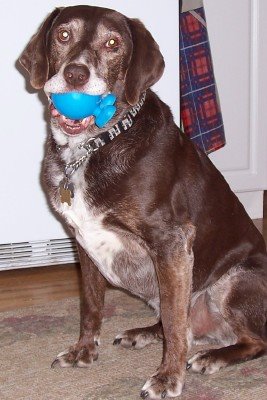
Anyway, Anton the awesome is returning for indefinite stay tomorrow. Maybe I’ll make him some Flea Fighting Biscuits to welcome him home? These rely heavily on garlic and brewer’s yeast to work their magic. Gives dog breath a whole new dimension…

Meter mania

The lovely Saskatchewan-born neo-formalist Elizabeth Bachinsky shared her passion for sonnets with Kate Braid’s form class in Nanaimo last night. She is very fond of palindromes and Sapphic stanzas as well, and her first book, Curio, included a translation into anagrams of part of The Wasteland. She has done some wild things with Google search results too.

There was a preliminary discussion of meter, and while reading the chapter on Iambic meter from the excellent text, An Exaltation of Forms, we ran into diverging opinions on how to scan the line, which I now learn is “oft-debated” in scansion: “When to the sessions of sweet silent thought” (–Shakespeare, Sonnet 30).

Kate said that Keith Maillard had once told her that it was important not to confuse rhythm with meter and that this had made sense of the metrical world for her. If I’m paraphrasing her correctly, she said that rhythm has more to do with the emphasis we might put on a line when we read it, and meter is the more abstract “unreal” template we put over that line to measure it, within the context of the rest of the poem.

I’m still puzzling on that, but I found something that supports Maillard’s view, if music and poetry are this strongly connected, on a page about music theory. It says:

Many modern conceptions of rhythm and meter place them in opposition. Rhythm is often defined to consist of the actually sounding durations of music, while meter is the alternation of strong and weak beats, or the interaction of pulse strata, that are inferred from the rhythm. Rhythm is thus conceived as emerging and active— a “concrete” patterning that is measured by, and heard to work with or against the “abstract,” deterministic, rigid metrical grid.

Does that make sense to anyone? A couple of us thought the line (see second paragraph above) could be scanned as more or less straight dactylic tetrameter (quibbles over whether “silent” could be read without an initial stress, in context), but others wanted to put it into iambic pentameter with a double ionic (unstressed/unstressed/stressed/stressed) foot in the middle and a trochaic substitution in the first foot.

Ok, any [other] prosody geeks out there? For the rest of us, I like this page for a nice basic summary of meter. And I was having a little fun today with this one that has some online quizzes and tutorials on prosody.

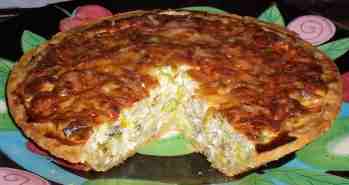
And for those of you who prefer food, here’s what I had for supper last night (Rich Leek Tart, it’s called). Obviously I have a long way to go as both a cook and a food photographer, but it was pretty tasty. The leeks were sweated for about half an hour, with minced shallots and a couple of sliced mushrooms, before being mixed with strained yogurt, swiss cheese and eggs, and the result was sweet and dense; it almost tasted like I’d added sugar.

Closing Time

Almost done the 2006 winter colony, and counting down to this evening’s final readings and (thank you artists) studio visits. We have scaled the chip mountain and made our contributions to the local economy. We have written and read and walked and skied and skated and scrabbled. We have exchanged the obscurest trivia and the easiest recipes; blogged and emailed and even pinned writings to our doors. And tomorrow we return to reality.

Wednesday’s afternoon highlight was a visit to St Peter’s Cathedral, with live commentary from Fr. Demetrius. I’d heard about the paintings by Berthold Imhoff from people who’d been there before, and they were something to see in the streaming sunlight.

Spent the past three days wrestling with terza rima. Fiendish, I call it. Paul Farley calls it “the very devil of a form” in his review of George Szirtes’ book, Reel. But it was an invigorating work-out, and although I’m still grappling with a final sticky rhyme (–any suggestions for rhyming “novel” with other than “grovel”??) I might be fool enough to attempt it again sometime. Some other imaginary time when I have the luxury of three days to spend on nothing but sifting three way rhymes for iambic lines. **11:21 Update – since I can’t figure out how to include hyperlinking in comments – Thanks Ariel: hovel it is. I love Rhymezone too but I must say that after this exercise I have developed a renewed passion for my poet-centric Poet’s Manual and Rhyming Dictionary, which gives masculine, feminine and triple rhymes, and makes it fairly easy to work out half rhymes.

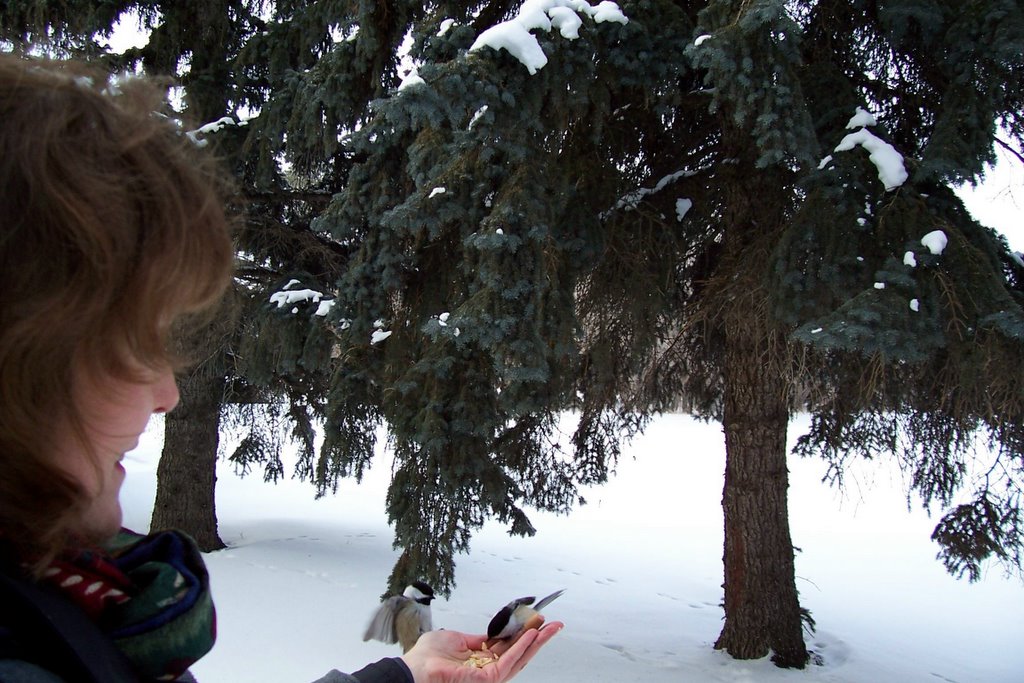
Hoping I experience again the miracle of St Peter’s and weigh in at home to discover I haven’t gained (or lost) an ounce despite two weeks of feverish chip consumption, daily cocktails, lashings of gravy on everything, and a respectful sampling of each and every dessert on offer. And only two hours of badminton in the balance. But I like to believe that all those hours spent out on the lane to the cemetery, ungloved, with a palmful of peanuts, feeding chickadees and braving incipient frostbite, have some counter-calorific effect.

And so, as that classic British football ballad has it,

Here we go, here we go, here we go, here we go, here we go, here we go-o…
(rep. refr.)