Skip to content

poetry

Larder.. the cover!

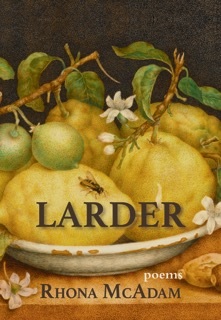
And the winning cover image turns out to be.. Still Life with Bowl of Citrons, by Giovanna Garzoni. Very pleased with the look of this one.

Much as I would have liked to feature the work of a living woman artist, Garzoni is an impressive figure in art history, and the Italian connection is satisfying, given the presence of poems written during my studies in Italy.

I had wanted something food related, but also to bring in the natural world. The insect figure may or may not be a wasp; but for purposes of this collection, that’s what we’re calling it, to chime with the wasp poem within!

The book will be out sometime in May, but pre-orders can be taken now by visiting Caitlin Press.

Upcoming readings and appearances are on my News page, which I’ll update as details change or get added. But here’s what’s coming up in the next couple of months:

Covering poetry

We’re getting close – the new poetry collection heads to the printer late next week! Over the past month I’ve looked at thousands of images, trying to reconcile the themes in the book, the title (Larder), cost (small press, no budget for images), orientation (vertical preferred for ease of design), size (bigger than 1mb)… my head spins.

I loved so many of the images I saw, so here are a few that didn’t make the cut but which I offer for your enjoyment:

Raspberries on a Leaf (1858) oil on panel painting by Lilly Martin Spencer

I simply love this surprising still life for its simplicity and unexpected juxtaposition of raspberries and the cabbage leaf.

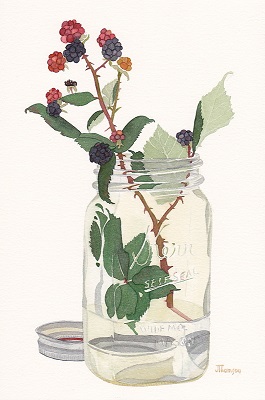
Mason Jar with Blackberry Fruit by Joanne Thomson

Victoria artist Joanne Thomson painted a whole Mason Jar series which is incredibly beautiful. I liked this jar in particular because it had blackberries in it, and blackberries do occur in my poetry.

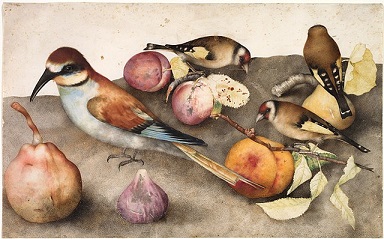
Still Life with Birds and Fruit by Giovanna Garzoni & Jacopo Ligozzi c. 1650

I would happily have anything by Giovanna Garzoni on my book cover. Discovering her 17th century still life paintings, which look fresh and contemporary to me, was a delight. They frequently include birds or insects, which combines the natural world with food items, and my poems address both.

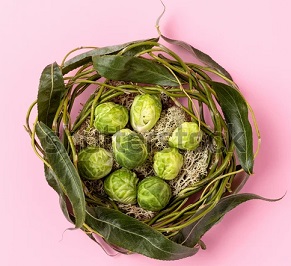
from shutterstock

I have been looking for images with that ‘look again’ quality, which somehow integrate food imagery with the natural world. Brussels sprouts do look egg-like, and I like the loose and leafy basket.

Playing catch-up

Time has got away from me, but here are a few highlights of my doings since November.

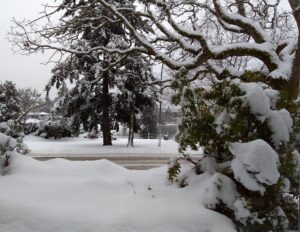
Christmas came and went – abbreviated by pandemic restrictions, but enlivened by snow, which after a couple of days of heavy shovelling became old fairly soon, particularly when accompanied by a polar vortex. Which was then followed by an atmospheric river, though happily not to the degree we experienced in November.

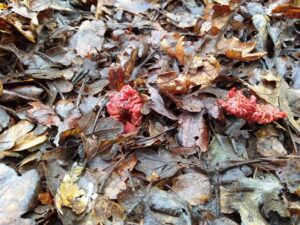
And then some signs of spring (rhubarb) to come, though it’s frozen and thawed and frozen and thawed since then. It will be a while until the soil is warm and dry enough to start planting anything. Meanwhile, I’m sorting and swapping seeds with neighbours and getting ready to plan this year’s garden.

In literary news, one of my poems, Tasting Dirt (all about compost!) appears boldly on the front inner cover of the current issue of Small Farmer’s Journal (winter 2021). Fascinating and one of a kind journal, lavishly illustrated, with lots on farming with horses and oxen, and all kinds of interesting detail on everything from setting up a binder to a report on the apples of New York in 1908.

Another poem, Hügelkultur, which happens also to be on a soil-amendment theme, appeared in the autumn issue of the long running UK literary journal Acumen, and was featured as a guest poem.

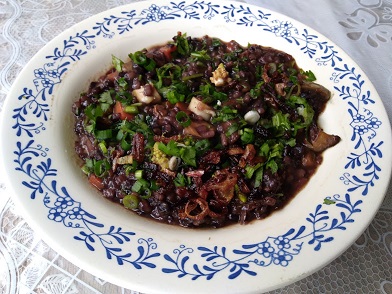
And finally, an update on the rice porridge post below, from last summer: I made some with black (“Forbidden”) rice and it was as delicious as I remembered. In addition to the spring onions, crispy shallots, cilantro, sesame oil etc, I added some winter broccoli and Romanesco florets, and fennel fronds and slices and a dash of gomasio. A perfect winter food.

Life on Planet Poetry

Way back in 1988 I visited England for the first time as an adult. I had just published my second poetry collection, with a third on the way, and was keen to learn more about what was going on poetically in the UK. Before I left I got in touch with Mike Shields, then editor of the long running litmag Orbis, where I had had a few poems published. I asked if he knew any London poets I could meet, and he sent me the names Judi Benson and Peter Kenny, both of whom I met that visit and who both became longtime friends.

Towards the end of last year, Peter started up a podcast, Planet Poetry, with fellow poet Robin Houghton. Still fairly new, it charmed me from the outset with its straightforward approach; it feels like joining these two in the pub for a pleasant chat about poets they like, and what they’ve been reading and what they think about it.

So I was charmed to be invited into the virtual pub recently for a chat with Peter about long ago poems and themes of Arrivals/Departures. Hope you enjoy the trip!

Poetry & the Wild

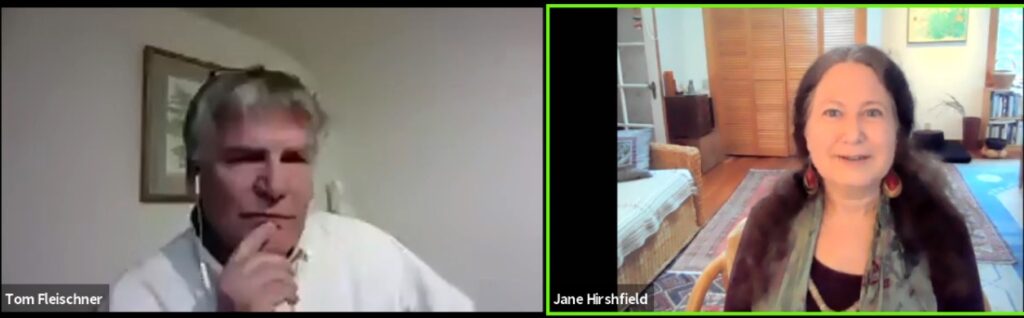
I attended a livestreamed reading and talk called Poetry & the Wild: A Reading and Conversation with Jane Hirshfield last Thursday. Hosted by Tom Fleischner, of the Natural History Institute, the conversation touched on poetry, Zen, natural history… whale trails, Poets for Science, climate change, and much more.

Hirshfield is a poet who’s embraced, or perhaps entered, the natural world more than many. Her Zen practice informed many of her observations. “When the self disappears, the self is happiest” she said, discussing the need to be open to observation in order to engage fully with the world. And citing Robinson Jeffers – “falling in love outward”.

She was asked, how does poetry help us? It’s thinking and understanding with the whole body, she replied. Poetry is a journey of discovery for her, as a reader and a writer. With all that is before us just now, she said, poetry can provide assistance towards a sense of resilience. It can help us engage with what feels beyond understanding — or simply respond to a curiosity. You want to be left changed when you read a poem, and “to find wholeness among the broken”.

When she asked in return why natural history? the answer was also zen-like: the practice of focused attentiveness to the more than human world; “the practice of falling in love with the natural world”, and an observation that natural history should be seen as a verb rather than a noun. And nurtures the deeper feelings about engagement with the world that poetry does.

Fleischner quoted Hirshfield’s own words: “Everything changes, everything is connected, pay attention.”

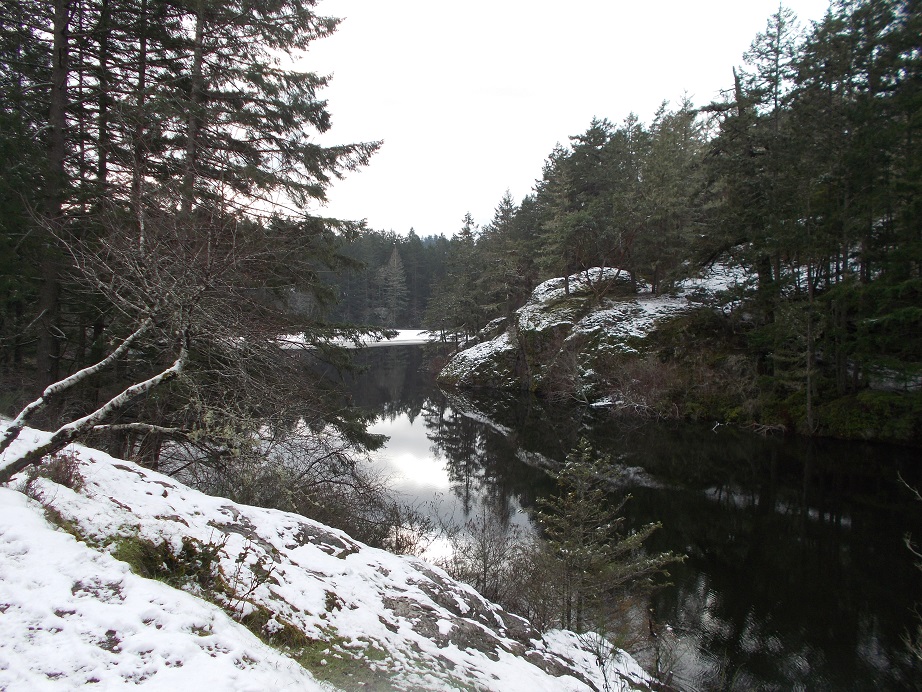
Thetis Lake Park, Victoria BC