Skip to content

pharmaceuticals

London – food & drugs

Mystery revellers at Westminster

Gorgeous springtime weather here in the UK, which has earned it after a sodden couple of months. Last weekend it hit 17c on Sunday which brought all the picnickers out in force. Primrose Hill was littered with everyone and his dog, and the market at Camden Lock was seething. It’s not the market that was during my day, but I was pleased to see a few things have endured, like Marine Ices and Belgo Noord. But the market itself – once a jumble of knick-knacks, housewares, jewelery, and oddities with a bit of food – has become one big street food extravaganza with little else on offer. If you’re hungry and willing to eat and run, it’s the place to be on a weekend. But otherwise, other markets.

Camden Regents Canal


I’ve managed to arrive in time to attend some of the free lectures on offer at Kings College London in its Feed Your Mind series. I went to the well-attended first session, Obese London, to learn about obesity rates and their consequences for Londoners. These are highest among immigrant populations, whose diet plummets away from traditional foods into heavy consumption of the worst foods (chips, sugary drinks, chocolate, sweets and processed foods) the longer they’ve been in the country. And of course these deliver obesity and its associated chronic illnesses including diabetes, hypertension, cardiovascular disease and higher mortality.


Yesterday I headed to KCL’s Guy’s Campus, in the shadow of the Shard, and arrived as the Tuesday farmers market was underway. The afternoon’s entertainment was called Hot & Spicy Drugs, which focused somewhat disappointingly and pretty much exclusively on capsaicin (the heat in chilli peppers) and its possible uses in pharmacology. I’d been hoping for a bit more talk about more of the hot & spicy foods and their uses both traditional and pharmacological, but I learned some interesting things. Birds lack the receptor protein that gives chillies their heat; drugs that block this receptor in humans have been developed but are not used since they also block our ability to feel external heat, which seems a pretty undesirable side effect. Applied topically, capsaicin (after an introductory period of discomfort) has a desensitizing effect which can help a lot of kinds of neuralgia and neuropathy. Capsaicin creams and patches have been found to be helpful in relieving pain associated with arthritis, shingles, psoriasis and a number of other conditions. And we got to do a taste test with randomly assigned chocolates with different amounts of chilli in them; as might have been expected, the perception of heat varied wildly among tasters.

Tomorrow I’m off to hear the creator of meat from stem cells, Professor Mark Post of Maastricht University, extoll the virtues of stemburgers. Yum.

Plants to swap, buy and heal

Wednesday’s fun was the GTUF plant swap, at which we shared around our surplus plant starts. It was our monthly meeting and this time the theme was growing and cooking herbs. A couple of our members – Donna Neve & Gene Monast – presented a wealth of information about the power of such herbs as sage and rosemary and extolled their many benefits – ease of growing, beauty in knot gardens and the like, and offered some delicious ways to use them, in breads, cookies and other baking. Then we pushed our chairs back and set to gathering plants for our gardens. Many of the starts had been grown from seeds shared at our seed swap back in January, so the plants go round and round the neighbourhood.

More plants were on offer at Haliburton Farm on Saturday, when the farmers set out a large display of vegetable and berry starts as well as succulents, ornamentals and native plants. The farm now includes five farming businesses, an organic seedling greenhouse and an organic native plant business, so it’s thriving and developing in interesting ways.


Last night I went to hear Karin Kilpatrick talk about healing with plants. She is the medically-trained partner of the amazing herbalist and food forester Richard Walker, who’s in town this weekend to give another of his dazzlingly informative and wide-ranging workshops on food forests. Karin is a doctor who’s worked emergency rooms and general practice in South Africa and rural Canada, and she told us about the “trance-breaking” first encounter with Walker, when he transformed one of her patients from “raw meat” stage eczema to perfect skin in two weeks using diet and herbal tea (the magic food was kicheree, and the tea was dandelion).

She has watched the vibrant health of rural Canadians plummet over the past thirty years of her medical practice and she is categorical in her diagnosis: inflammation, depleted immune systems and accelerated aging brought about by malnutrition. “You don’t give the immune system the right food,” she said, “and it loses.”

But our bodies are exhausted too by the stress of working and living in an oppressive system. The strain of working in increasingly demanding jobs with dwindling budgets takes its toll even from doctors: the pay-per-patient system imposed on GPs “keeps us all in serfdom,” explaining that after office and staff costs are taking into consideration she earns $7 per patient. In reducing patients to the sum of their parts, “it’s reductionist and dehumanizing.”

All colonization systems begin to take control of populations by taking away food autonomy, she observed, pointing to the way “we were sold a bill of goods: cheap, centralized food. We ate it and we got sick.” We do not live in a system where growing your food and healing yourself has a dollar value, and we live in a culture in thrall to monetary reward, so nothing will change unless we change ourselves.

She has changed her life, and sworn off the 10-minute rule for patient consultation. She takes fewer patients and spends longer with them, and she brings the chronically ill together in circle groups for extended education on how to nourish themselves back to health. She meets with them for an hour and a half each week, for 28 weeks, to teach them about nutrient-dense foods, stress management and natural cures for their conditions. “And I’m making my rent,” she added proudly.

Showing her roots – as a South African and as an allopathic doctor – she told us she had one day realized that she was guilty of “apartheid towards plants”. But she was not alone in this: all those who do scientific studies on plant remedies are guilty, because they don’t examine the effects of the whole plant as indigenous cultures do. Instead, science in its reductionist way seeks to find the “active ingredient” and extract that for study. And so of course the results are skewed (as Michael Pollan reported in In Defense of Food, in his discussion of nutritionism and the tragic misuse of plant compounds like beta-carotene instead of whole foods).

The most actively entertaining part of the evening came when we passed a bottle of Spilanthes (tincture) around the room and sampled for ourselves a powerful traditional antifungal, anti-inflammatory and analgesic remedy with some unusual properties, including tremendous qualities in stimulating saliva production. It may, we were warned, remind you of childhood experiments in putting a 9 volt battery in your mouth. And it certainly did fizz and sparkle on the tongue, lips and gums – Karin swears by it for dental hygiene and says it cured her abscessed tooth in days, and a patient’s cold sore in front of her eyes.

Anything more we can do to change the world? someone asked. Her answer was simple. Tell your health care system administrators that you want naturopathy, herbalism and other health-promoting practices included in health care coverage, so that we’re not just paying to treat sick people, but to make good health available to everyone.

Silence, prawns and barley

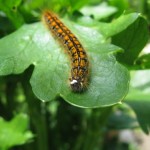
Tent caterpillar
Tent caterpillar with 3 predatory tachinid fly larvae attached.

I have been off-line for a while. In this space should have been some amusing tidbits from the Writers Union AGM which I unfortunately missed in its entirety due to what I am calling Italian influenza, since I received it from someone who brought it back with her from Rome.

I have passed the time of my recovery (and then some) picking tent caterpillars off my roses, blueberries and rhubarb. Not nearly enough of them have the tachinid fly larvae attached, but those that do seem to have two or three, which is hopeful, as the tachinids are helpful against caterpillars of many kinds, so I’m letting those afflicted eat their fill before they get the last headache of their lives.. and will be planting lots of tachinid-friendly plants like dill, parsley and Queen Anne’s Lace.

Meanwhile, BBC has been broadcasting Strands on its Book of the Week (sigh.. I remember when CBC used to have such offerings) by poet Jean Sprackland. In the second installment, she discusses the effects of anti-depressants on prawns. The excess fluoxetine excreted by Prozac users ends up in the ocean. It affects prawns by causing them to throw caution to the winds and swim towards the light… whereupon they become easy pickings for predators. This chemical also affects reproduction in mussels and has been found in fish near Montreal. Who knows, after that, how the fluoxetine travels through the food chain.

Add this to what we already know – the effects on fish of excreted birth control pill hormones, the drugs that we’re obliged to ingest through drinking water and produce grown in fields fertilized with sewage sludge – and to all we don’t yet know about the effects on other organisms.

In this anthropocentric world, we have invented a reality in which curing human ailments trumps any effect on other living beings. There are no legal checks on pharmaceutical companies to prove their products will not harm other species, or even humans who find them in their drinking water or vegetables down the line. Surely it’s long past time big  pharma should be required to prove its products will not harm the rest of our ecosystem?

I have become a barley bore while plodding away these past few weeks on an article that will appear in a future issue of Small Farm Canada. I had a lot of great information I couldn’t include so here are some of my overflow facts that prove barley is the best thing ever:

  • Our oldest grain, barley has been cultivated for around 10,000 years: it was found in Egyptian tombs and has a long and varied history, as a grain, a flour and a beer starter among others.
  • It’s the grain highest in beta glucan, a soluble fibre which slows digestion of glucose, making it helpful for diabetics, and is getting attention for potential in fighting obesity and heart disease.
  • In Nepal and Tibet tsampa (sampa) is a staple:  toasted barley flour that is mixed with yak butter to make a nutritious (B vitamins, minerals and of course that all important beta glucan) bread or cake called pa. (A disheartening news item in the Nepali Times reports that tsampa is losing ground to instant noodles which are nutritionally bankrupt. The result of course is an increasingly malnourished population.)
  • In parts of India, the beverage sattu is made of roasted barley, wheat/rice/chickpea flour, jaggery (raw sugar) and water. It’s quenching, nutritious and a long established fast food for travellers.
  • In the British Isles, barley water is an old traditional drink whose benefits are said to include: clearing the complexion, preventing wrinkles, soothing the digestion, cleansing the kidneys, curing cystitis, treating atherosclerosis and preventing gallstones.
  • In Italy, roasted barley is brewed as a coffee substitute: caffe orzo (not to be confused with the pasta)
  • Roasted barley tea is called mugicha (麦茶?) in Japanese, dàmàichá (大麦茶) or màichá (麦茶 or 麥茶) in Mandarin Chinese, and boricha (보리차) in Korean.
  • Barley has been studied for use in bioremediation:
    • Bioremediation of coal bed methane product water
    • Bioremediation of CCA-treated wood (using malted barley as a nutrient source for the metal-tolerant bacterium Bacillus licheniformis)
    • Barley is a metallothionein (as are wheat, peas and soy): in animals they have been shown to bind copper, cadmium, zinc and silver and to detoxify normally lethal concentrations of cadmium and copper in yeast
    • Barley is salt-tolerant and has been used to extract sodium chloride to reclaim sea water-flooded fields (it’s being studied as a way to remediate the tsunami-damaged farmland in Japan)
    • Barley is thought to be an aluminum hyperaccumulator.
    • Barley straw is a traditional treatment to prevent blue-green algae in ponds.