Skip to content

Scallops, poetry and lots of SPIN
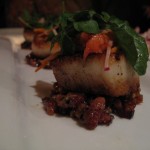
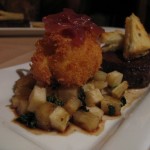
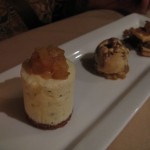
It’s been quite a week. Tuesday I enjoyed a meal at Camille‘s which was very nice food, very nicely served. Starters included some gorgeous scallops, sporting leafy hats and nestled on a bed of bacon. A nice bit of organic beef came with a curiously delicious egg that had been poached and then deep-fried and made to feel crisply oriental. And the apple dessert trio – kaffir lime frozen ricotta the highlight – outclassed my caramel pot de crème with apple foam, but we shared. And the wines were wonderful, particularly the apricot-raisiny delights of the Pentâge Late Harvest dessert wine, dessert wines being one of my favourite things.
The Malahat Review is another of my favourite things, and its Fall launch reading at The Well was jam-packed with literature lovers. I must say I’ve seldom enjoyed a reading more. Attentive and large audience, talented and entertaining fellow readers, nice ambiance. And some rather good salt and vinegar kale chips, which in their clear plastic baggie rather gave me the appearance of a purveyor of puff than an advocate of antioxidants.

Anyway. I was up first, followed by Julie Paul reading a tantalizing beginning to a short story; then Richard Osler in good poetic form, Tom Wayman in passionate voice dedicating his first poem to the Occupy people, and Zoey Peterson sending us home to contemplate his delightful prize-winning story.

Thursday night at Fernwood Community Centre I’d guess there were nigh on a hundred of us gathered to hear Curtis Stone, the cycling SPIN farmer of Kelowna. He gave a terrific talk about his business and a great preview of the three-day workshop he’ll be leading in April.

When he started Green City Acres, he had no farming background at all – just nine years of tree planting and a great love of cycling, and so he took himself on a tour of urban farms in Canada and the US to see how urban agriculture was being done. He learned his trade from the manual sold by Wally Satzewich and Gail Vandersteen’s SPIN farming enterprise, and through a couple of years’ trial and error. And has emerged as a generous and enthusiastic teacher-farmer.

In his first year of operation he made about $22,000 and worked 16 hour days. “Like you would for any startup small business,” he says. This past year so far he’s pulled in $60,000 from the three quarters of an acre he farms – spread across half a dozen backyards. With a partner helping ease the load this year he’s been working 50 hour weeks – and adds “most of our time is cycling.” On their bikes they pull custom-designed trailers piled with tools, compost, produce, even bales of hay and a small rototiller. His startup capital costs were around $7,000 and he believes it’s possible to make $100,000 an acre.

He tills lawns in three stages to kill the grass and give himself time to test the soil for clay-sand ratios and pH level, so that he knows what amendments to use to boost its fertility. He gets food waste from restaurants and composts prolifically for his production which is organic but not certified. His first plot was a needle-strewn wasteland with poor, contaminated soil which he had to fill and remediate. He says the drug users who used to shoot up on the property still come by there, but now they come to look at the garden, which is flourishing.

He thinks that the scattered fields of SPIN farming offer a lot of advantages, as plantings are spread between different microclimates, soil conditions, light conditions, biodiversity (weeds and pests) and land configurations, so if one row or crop is lost, chances are that the other plots – all planted in standard 2″ by 25″ beds – will be ok. And growing intensively on such a small scale offers other advantages: SPIN farmers can grow a wide variety of produce in small amounts, much  closer to their market than rural farmers; they have a much smaller capital outlay – hand tools and small machinery; and because they deal directly with their market (CSA, restaurants or farmers markets) their profits stay in their own pockets.

Stone is a big proponent of CSA programs, which he dubs “modern crop insurance” as it spreads the risk of growing between farmer and consumer. And the customers are well served too, by eating food that is extremely fresh, very locally grown, by someone who lives and works in their own community.

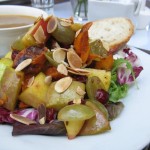
On Friday, I escorted a veteran to the cenotaph in Duncan and was rewarded with lunch at Bistro 160, which was chanterelle soup and a very fine roasted yam and apple salad. The fuel was needed to tackle the very large quantity of leaves that had blown up my driveway on that stormy day: gifts from the gods of mulch, to be enjoyed by my garden beds (and a whole new generation of slugs, I’m sure) over the winter.

Breaking bread with Capital Nuts

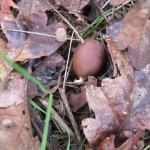
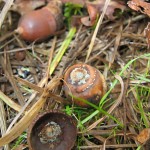
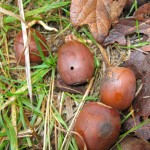
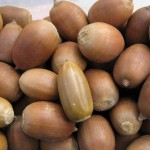
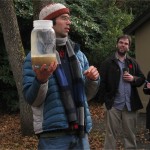
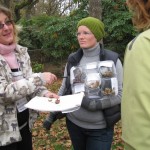
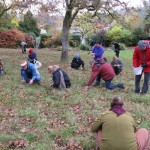
I attended a workshop yesterday organized by the Victoria Transition Capital Nut Project in Playfair Park, a restored Garry Oak Meadow in Victoria. It attracted a couple of dozen brave souls willing to stand in the November chill and learn how to make Garry Oak acorns edible. Being the proud custodian of a very large tree myself, and being overshadowed by a number of others, I thought it would be a worthwhile skill. We were led through the process by ethnoecologist and wild food forager Abe Lloyd.

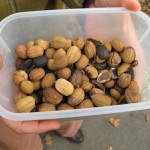
We learned about defects to watch for. Sprouted acorns (Garry Oaks are white oaks, a class of tree whose seed germinates in the autumn) are not necessarily a problem, although they are often cracked, which may allow insects or mould into the nut. Acorns with caps still in place when they fall are no good because the cap usually covers some mould. A small hold indicates that a worm has eaten the contents and left the premises. Spotting – especially dark discolouration – can indicate damage. The best way to find out is to open the nut (they are soft enough to crack with your teeth) and check. This time of year – October or November – is the best for hunting acorns. Early falls (August, September) are usually unripe or damaged nuts so should be avoided.


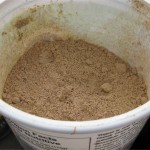
He showed us some samples – with a couple of English Oak acorns for comparison (there are a few of these trees in Victoria, though Garry Oaks are the native species). The ones that were still in their shells had been dried; his guideline for readiness was when the shell could be cracked easily by hand or nutcracker (or hammer). The shelled samples included some black ones which he said were still fine, but he’d hastened the drying process and discoloured them (they can be dried on racks, with fans or with a dehydrator). After drying, he ground them to flour in a blender. Because they have an oil content of about 10% they’re not well-suited to grain mills that use stone grinders, as they might gum them up (there is less oil in flour grains like wheat).


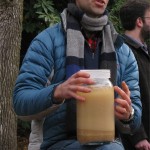
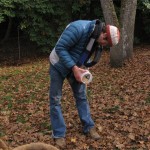
As it circulated, Abe invited us to have a sniff and a taste of the flour. We could smell the sugars in the flour, but it tasted bitter, because of the high tannin content in these acorns. The next step was to leech out these tannins, by soaking the flour in water for four or five days, pouring the liquids off morning and night, and then tasting the final product to check for bitterness. The colour of the liquid changes, growing lighter as the tannins are removed. The final sludge can be used straight away as a batter for flatbread, or dried and used with flour for flavour (bearing in mind it is low in glutens so wouldn’t make great yeast bread on its own).


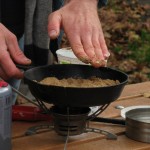
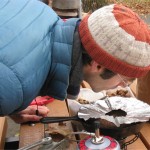
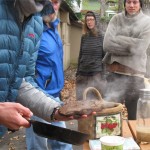
Abe demonstrated his flatbread technique. He usually adds maple syrup to sweeten the bread a little, but it worked well without.


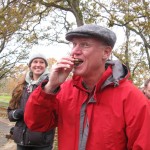
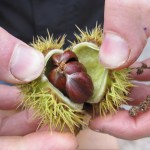
A morsel of hot acorn flatbread: just the ticket. Someone had brought some Spanish chestnuts – the edible variety which unfortunately don’t have quite enough time to ripen in our temperate climate. And local agrologist Kendell Neilsen was on hand with a sample of hazelnuts she’d gathered in the area.


Reading at Malahat Review Fall Launch Wednesday November 9

Next Wednesday, November 9 The Malahat Review is holding its fall launch party at The Well in Victoria. The launch party is one of the things I really love about this magazine: never more than in these days of precarious arts funding, every literary publication deserves celebration. On this occasion I am delighted to be reading with Tom WaymanZoey PetersonRichard OslerJulie Paul.

I have crossed paths with Tom Wayman numerous times over the years, and did so again yesterday when we shared the airwaves on CFUV radio, being interviewed by Colin Dower and Brian Mason. Tom was asked about his passion for work poems: he’s edited a couple of anthologies of these, and my poem “The Grievance” (from Creating the Country) was included in the “Less Like Ants” section of  Paperwork, back in 1991. He also included “Infinite Beasts” (from Hour of the Pearl) in The Dominion of Love, an anthology of Canadian love poems published in 2001.

The publication of “Dowsing Stick” in Issue 176 marks my fourth appearance in Malahat Review since 1984, and I’m happy to be back in its pages. Hope to see you at the launch! 7:00 p.m. Wednesday, November 9th at The Well, 821 Fort Street, (between Quadra and Blanshard), Victoria BC. FREE Admission.

Readings & mushrooms & quince

On Wednesday I went along to Bolen Books to hear Lynn Coady reading with Douglas Gibson. Gibson was in good form, spinning tales I hadn’t heard on my last listen, from WO Mitchell’s farewell joke, to respectful admiration of Alice Munro, to the dangers of crossing Montreal streets with Pierre Elliot Trudeau. Coady read a mesmerizing passsage from The Antagonist, which I must get my hands on one of these days when I can force myself to sit down and read something.

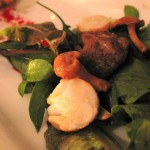
Last night I joined about 50 others to enjoy wild mushrooms, many of them unearthed earlier that day by participants in a foray led by our mycophilic host Sinclair Phillip. The chefs of Sooke Harbour House were given the challenge of coming up with a menu to suit the finds (on top of regular restaurant duties and, I think they said, a reception as well). They more than managed to offer us four fine courses, starting with a Matsutake broth in which were floating the selfsame pine mushrooms, surrounded by assorted wild morsels, a bit of nettle emulsion and a few nasturtium petals and shuagiku leaves.

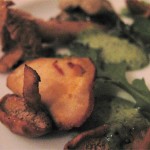
Second course was a trio of tasties: porcini quinotto topped with boletes; pear-poached white chanterelle; and a bear’s head and spot prawn herbal salad with pickled hedgehogs.


Third course, the “wild plate”, included morels (from Eric Whitehead) stuffed with polenta; a venison croquette of Sidney Island fallow deer (these are culled annually, a fellow diner told me) with shallots and hunter’s stew (made from assorted foraged mushrooms) ; a pretty triangle of beet-mushroom terrine; and boletus grilled in leek oil with Red Fife “soil”. And the finale was Kabocha squash pie accompanied by an amazing candy cap mushroom ice cream, candied chanterelles and a darling meringue mushroom. The jelly that topped the pie was made from a delicious mushroom reduction (from the icecream making).


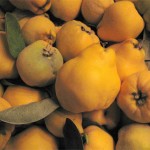
Back in my own kitchen, it’s preserving time and I’m wearingmy fingers to the bone making quince everything.

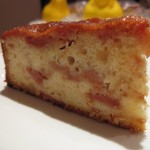
My lunch today was a modest harvest feast: a tomato-mustard tart, some fresh sauerkraut which made itself while I was away in Banff, and a crunchy baby cucumber from the garden; then a slice of yesterday’s Sticky Quince & Ginger Cake – part of my ongoing quest for new ways to use quince.

Raw and milky

I’ve been easing off the dairy products lately, though my cheese drawer still groans with long-lived goodness. One of the items that will always remain there is a hefty chunk of Parmigiano-Reggiano, a staple in my kitchen, as in many others I’m sure. It would probably startle many North Americans to discover that this is a raw milk cheese. Our governments allow it because it’s been aged over 60 days. It’s also salt-cured, which is a preserving process in many food products that helps to ensure food is safe by driving out liquids that can harbour pathogens, and making a generally unpleasant living environment  for them.

One of my classmates at Unisg was Australian and she shocked us by revealing that the Australian government allows no raw milk cheeses at all, including Parmigiano-Reggiano! This is still the case, and there are rumblings that the 60-day threshold in the US could change. Here in Canada only Quebec cheesemakers are allowed to make raw milk cheeses: I have not heard of reports of an increase in sudden deaths in that province since the regulations were changed in 2008.

In the Rest Of Canada, as we are known, we have watched a long and painful battle between Michael Schmidt, who wants to share the right of informed citizens to drink raw milk (or turn it in to cheese I suppose) and the government turn sour; he’s currently on a hunger strike to protest the reversal of his earlier court victory upon appeal by the province of Ontario, after heavy lobbying by the province’s milk marketing board.

Into the fray comes Slow Food. Although they do not seem to be following the Schmidt case, they are tracking developments in other countries, including Australia, and have set up a Raw Milk website to promote the cause, which they take up largely for the sake of cheesemaking. Slow Food is, after all, the champion of good food: raw milk cheeses are simply better than pasteurized in many ways, including flavour and texture.

Raw milk contains microflora and natural enzymes that allow for more complex flavours and textures in cheese. Pasteurization destroys these as well as vitamins A and D which must then be added back to milk products in artificial form. Minerals such as calcium and iron are altered by pasteurization, as are the fats, and the digestibility of the final product. One of the arguments against the findings of the China Study was that it failed to make a distinction between pasteurized and unpasteurized milk products.

For drinkers of raw milk, there seems no respite from the government ban. In order to drink raw milk you need to own your own cow, and tell nobody. For the immune-compromised, it’s probably not a good idea to drink it, but among the healthy adults who prefer it, there are many arguments in its favour (as long advocated by the Weston A. Price Foundation). I drank it while in Italy, where the law allows people to make their own choice, by filling the milk bottle themselves (in my case from a dispenser provided by a local dairy that also sold cheese and other food products in a shopping mall). Despite the official warning signs posted on the machine, I watched a heavily pregnant woman fill her bottle; the presence of a small child with her suggested she may have survived a raw-milk fuelled first pregnancy already.

It is, as raw milk supporters would say, a puzzle why raw milk should be targeted when so many government-approved toxic substances are already on our tables. There is no ban on fracked tapwater, for example, nor on processed foods high in salt, sugar and fats which are proven to cause catastrophic health problems.

Banff Finale

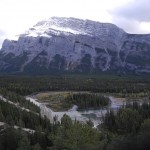
Two weeks have slithered by in a sly and uncatchable manner. Seldom have I written so hard, eaten so much and slept so badly. The weather blessed us with sunshine for our last week, and I got a couple of gentle hikes in between meals and hours spent slumped over laptop.

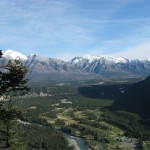
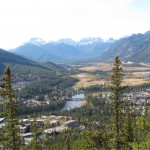
The Hoodoos still stand, shrinking daily I guess. They started life with limestone hats but have apparently lost those along the way. And Tunnel Mountain (which has no tunnel) was busy with walkers, including a lot of young women with babies strapped to their backs; it must be one of the places that local new mothers go to retrieve their waistlines and catch some stunning views of Banff and the Bow Valley. Fortunately the path (and the trail we take to Banff townsite) has been free of cougars, although we have heard there are three of them in the area who are duking it out for supremacy. A grizzly was also seen not far away a few weeks ago.


The meals at the Banff Centre are something to experience, an endless buffet which tries to serve most diets, with dairy and oil-free vegetables and starch, both meat and vegetable-based soups and a pretty good salad bar. At the lunch and supper buffets, the vegetarian offering is often vegan, and for some reason usually does not appeal to me either visually or in taste. Possibly I’m just not a buffet person. Vegetable biryani, vegan lasagne and vegetarian chile have been among recent items. Here, like most places in the western world, it’s possible to eat plenty of meat three times away if that’s where your interests lie.  The buffet also includes about half a dozen desserts for lunch and dinner. Fortunately for my waistline, after much careful sampling, I find I don’t care for most of the sweets though they look quite lovely.

WordFest is on in Banff this weekend and we were privileged to see Douglas Gibson this afternoon, speaking delightfully on his long experience as an editor and publisher. His new memoir, Stories About Storytellers, includes back room tales about 21 of the hundreds of writers he nudged and coaxed into print as an editor and then publisher for Macmillan and McClelland & Stewart. He is finding life interesting “on the other side of the mirror” and finding comfort in his own words of warning to authors. He loves to tell amusing stories but between laughs dropped some grains of hard truth into his tales and generous responses to the Q&A: publishers are shrinking in number (mainly because of being swallowed by larger fish); Mavis Gallant (whose description of Gibson: “I’ll kill him” adorns his book cover) is a brilliant writer and owned the concept of Own the Podium before that was thought of;  e-books are a force to reckon with – they are becoming a big part of every publisher’s repertoire, but if someone tells you how it’s going to be in ten years’ time, seek your advice elsewhere.

After which was a tribute to Robert Kroetsch who was killed in a car accident earlier this year. As he’d been booked to appear at WordFest it seemed only appropriate to honour him  with a display of his books and a few words on his life by Fred Stenson, and a reading of one of his poems by Steven Ross Smith.