Skip to content

Rhona

Organic Islands, featuring Percy Schmeiser

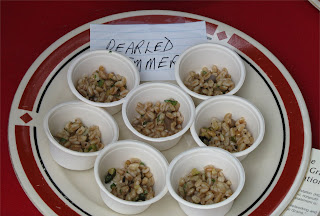
The Organic Islands festival took place last weekend, and we went for a sunny Saturday afternoon of tastings and talks and music. Found some Emmer (aka Farro, in Italy) an ancient wheat now being grown for the first time on Vancouver Island.
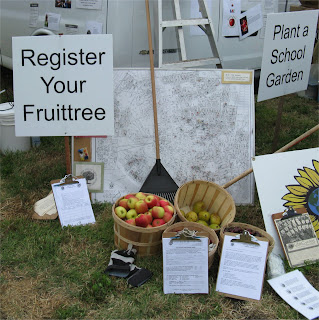
There were interesting causes to support, like this one where you can register your fruit tree and have others pick and use your fruit if you don’t want all of it.
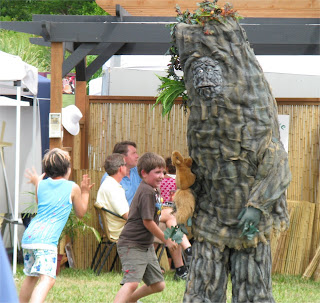
A lost tree being tormented by small children.
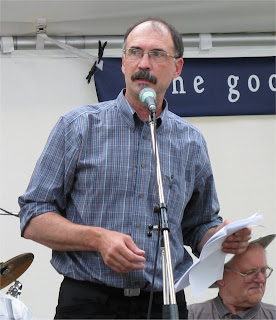
One of the events we wanted to catch was the GE Free BC panel, featuring Yukon farmer Tom Rudge,
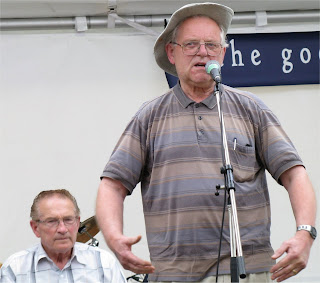
Powell River politician Colin Palmer,
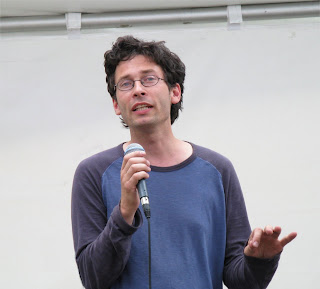
activist Josh Brandon from Greenpeace,
and special guest Percy Schmeiser,
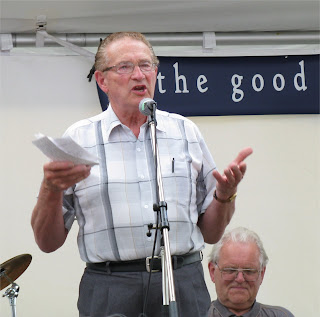
whose story I knew from CBC coverage and films like The Future of Food and Life Running Out of Control.

Schmeiser impressed me with his speaking skills. I hadn’t known he was a former MLA as well as a farmer. I did know he was a life-long seed developer who had spent $400,000 and 7 years of his life fighting Monsanto on the grounds of patent infringement when Monsanto found GM (Roundup-Ready) canola growing on Schmeiser’s field in 1998.

The rather alarming issue of GM canola crossing itself with non-GM canola is something Schmeiser talks a lot about: “You can’t contain nature” is his mantra, and the message he dearly wants to deliver to regions tempted to introduce GM crops alongside non-GM.

Canola, a Canadian cross-bred (not genetically-modified) brassica plant that was developed in the 1970s, is an important crop because it is used for vegetable oils (lower in saturated fats than any other oil) and animal feed as well as a rotation crop.

Canola has proven it doesn’t obey corporate laws of ownership and whether through wind, rain, pollen drift, flood or spillage, GM and non-GM canola have interbred right across Canada and pretty much killed the country’s organic production of canola (no GM crops or products are allowed in Canadian organic production).

Not only does being GM make the contaminated crops unexportable to the many countries which do not allow GM imports, it also – from Schmeiser’s experience – makes those crops, and their seeds, the property of Monsanto, since you have, willingly or not, and no matter to what degree, ended up growing a Monsanto-engineered plant. This is anathema to farmers who have traditionally saved seed from their own crops to plant the next year. But if you grow GM plants, Canadian patent law prevents you from saving and sowing or trading or selling that seed, since it includes Monsanto technology and is therefore not yours to do with as you please. To reinforce this message, farmers who buy the seed are required to sign Technology Use Agreements which forbid farmers from re-using seed, and require that they purchase new seed each year

Schmeiser also talked about the promises Monsanto had made: higher crop yields, better nutritional content, decreased use of pesticides (insecticides and herbicides), an end to world hunger. Instead, the crop yields from GM crops are lower, nutritional values from industrial crops are demonstrably down, and the potency of today’s Roundup is 4x what it was ten years ago because glyphosate-resistant strains of weeds (superweeds) have evolved; the content of new herbicides currently used in Saskatchewan includes Dioxins, which have toxic effects on human health and are largely passed to humans through the food supply.

Standing ovation…
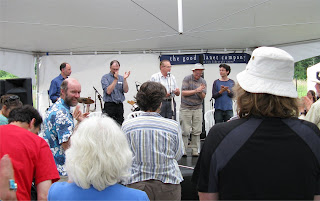
Also discussed by the panel was the point about there being no research about GM crops aside from what Monsanto itself funds, selects and publishes, and how that just might be a problem in terms of credibility and human safety.

The GE Free BC campaign aims to make BC a GE free region. They’re also linked with campaigns to promote that seemingly elusive goal of requiring food containing genetically engineered substances to be labelled in this country, and another worth-while movement to ban Terminator technology, which would allow corporations to genetically sterilise their crops, ensuring farmers would have no choice but to purchase seed from them each year.

After that we needed a hot dog, from the eternally popular organic hot dog stand where we managed to get the last three hot dog buns on offer for the day.
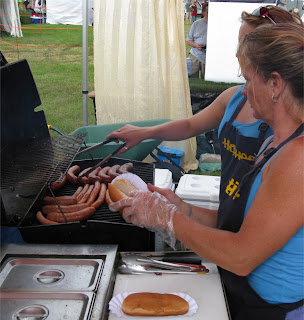
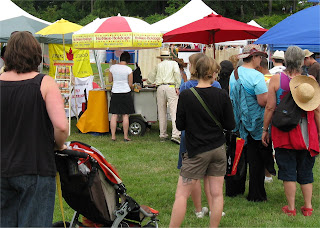
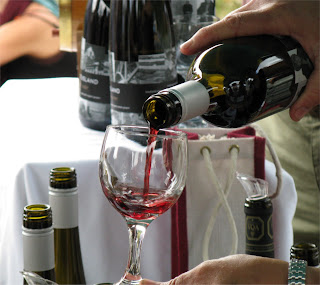
Then we wandered beneath the attractive drystone arches of the Green Drinkery
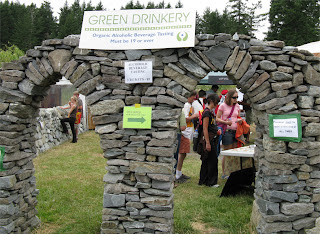
for a glass of local wine
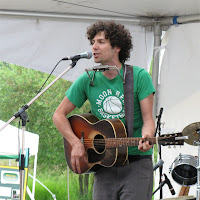
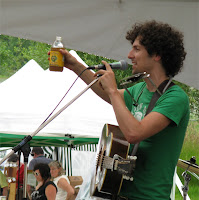
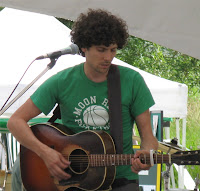
and a prime location to hear former Victoria resident Jeremy Fisher play us out.
Canada Day on the Gorge

I got back to Victoria just in time for Canada Day, last Tuesday, which is a happy time on the Gorge, as they block the road off and throw a big party, starting with a parade

and featuring music

(Morris) dancing

and food, including these popular items from Café Vieux Montreal.

We had earlier seen some besieged diners walking down the road bearing bbq salmon with pea shoot salads, asked at every turn where they’d got them, and this was where. They also served cream puffs with maple syrup, chocolate tarts with strawberries and Montreal smoked meat sandwiches.

But nothing beats the popularity of Mr Tubesteak.

Walking along the pathway, we saw what looked like an alien invasion on some wild roses and asked the plant guy, who told us it was rose canker. But it doesn’t look like any picture I’ve seen of rose canker, so I’m still thinking it’s more likely extraterrestrial.

There’s a vintage car show and a few crafts stalls and eventually everyone wanders off for a Canada Day barbeque. By the time night falls on the Gorge

gangs of youth, red and white and drunk all over,

make their way to the Inner Harbour to see the fireworks.

Saturday on the bay and Sunday at the Monkey

Saturday morning’s mission was shopping. We started at the Hubbards Farmers’ Market,

which, luckily, was in a barn, as it drizzled all morning. We found just about everything you could want on a Saturday morning: coffee

bread

jam

and lots of other good things.


In fact, by the time we got out of there, stuff was starting to grow in the back seat.

That didn’t stop us from stopping at another garden place

where the organic compost machines were living a pretty good life

and the bird houses came in all kinds of shapes, sizes and flotation devices.

We had a stop at Chester

where we paid our respects at the Matlady’s Gift Shop

and admired her giant clematis

and then went on to Mahone Bay, where the Deli Market and Bake Shop is rather beautiful

and the fancy swing doors are weighted with bags of carrots!

At the Cheesecake Cafe there was lots of local art, including some nifty stained glass. 3 out of 5 diners at our table enjoyed their meals.

Our real and ultimate destination, however, was Frenchy’s, a Maritime institution where you join a host of other shoppers all armed with big plastic laundry tubs, and poke through bins of old (and not so old) clothing to find bargains, priced to sell, and where (a different) 3 out of 5 shoppers found stuff.

Sunday we went to the Wooden Monkey,

where the food is organic and local and the ambience laid back.

And then it was Monday, and time to say farewell to Nova Scotia.


Digby doings & fun on the Fundy

Nova Scotia rocks.

On Thursday, I stayed over in Digby

where there is an excellent used/rare book shop called Crooked Timber, packed to the rafters with all kinds of everything.

The B&B; owners sent me in the welcome direction of the Boardwalk Cafe, which was a wonderful spot. I had some extremely good seafood chowder (featuring Digby scallops), accompanied by excellent home-made dinner roll

and I had to leave room for the strawberry rhubarb pie which was sublime.

After a lunch like that, supper needed to be light, so I wandered into O’Neil’s where I had earlier bought some dulse

and opted for some steamed Cherrystone clams, which the waitress explained were baby quahogs; but smaller, richer and less sandy. They were just the thing.

I had been thinking about lemon meringue pie since lunchtime, having just missed the last slice at the Boardwalk, but this was a perfect size to finish.

And then I was off on a hyper-tour of the Annapolis Valley, Canada’s first breadbasket.

First stop was Meadowbrook Meat Market, where they had some nice bacon. Then on to Port Williams, where the Fox Hill Cheese House lives,

and where they sell something called “Parmesran” which I can assure the buying public is nowhere near the item it seeks to imitate. They had a few aged cheeses (Gouda and Cheddar) which were good, but told me they didn’t have the space to age anything longer than that.

Had some coffee at Just Us! Coffee Roastery & Museum, where they’ve spent a lot of time and money making a righteous display about Fair Trade and coffee production, and they have a fair trade products shop and cafe. I picked up a very good lemon square for the road…

I didn’t have time for a tasting or tour at Grand Pre Winery, but I did make it to lunch, where I had something they called gnocchi, which I wouldn’t have called that, but which was good and covered in local mushrooms (oyster, portabella and button) and Fox Hill cheese curds.

I spent the second half of my day on the Bay of Fundy, watching the waves gallop in. Getting there, I found some of the back roads a bit less than perfect.

The shoreline is dramatic.

We had a little walk on the beach before the tide started coming in.

Then we were treated to some of Ian’s local, line-caught (by Ian) grilled trout with spicy mayo

while Susan demonstrated the amazing portable pedal organ

and then we ate some salmon pesto pasta

and the strawberry rhubarb crisp was steaming on the table

as tragedy struck the cream jug, but it made a fair map of the United States, so that was cool.


Nova Scotia

I arrived at St Margaret’s Bay to fair weather on Tuesday evening.

Wild poodles roam the woods, looking for crows to bark at

or bounce around with Geoff, noted local poodle herder

who made the spécialité de la maison, what he calls Zulu Bannock (or buns a la bbq)

with amazing mussels, before

and after cooking.

And of course there was lobster.

And strawberries are in season, yippee! Here with Jan’s hand-crafted tea biscuit:

If I read tails correctly, this one’s saying Don’t bug me.

Then on to Lunenburg, where there are more mussels, hanging from the electricity poles along with a lot of other seafood:

And I noticed some crowds milling around the docks, with a boat in the distance

coming nearer

coming nearer

and packed to the gunwhales with students, returning after a semester on the high seas in a tall ship as part of the Class Afloat program.

Newfoundland to Nova Scotia

Had a last supper in St John’s on Monday night from the Afghan Restaurant on Duckworth Street. A tiny place where granny literally cooks homestyle, on a home-sized stove in the back of a place that would be stretched to seat 12 people, the food is delicious. Not pretty, at least in my takeway, but the lamb was melt-in-your mouth, the rice excellently seasoned, and the naans stretchy and tasty.

And I confirmed that I was indeed experiencing a nouveau spring (after experiencing a record number of them this year: Victoria, London, Parma, Alicante, Saskatchewan and now Newfoundland) as the lilacs were just opening in St John`s.

Spent a last morning in The Rooms, which are big, but I didn’t feel they were terribly well laid out: everything a bit too chopped up with the art gallery divided between different floors. Still, some interesting things there, and some exciting sounding art to come in the galleries. I liked the Merchant Vessels functional pottery show, and in the museum there was a display of a couple of Innu caribou hide coats that blew my mind. Called pishakanakup, they were made of fine, thin hides: summer wear for caribou hunters, their designs intended to flatter their patrons, in colours intended to invoke caribou (the reds are to mimic caribou blood). According to the display only 30 such coats exist in Canadian museums.

In the seabird display, I was entranced by the story of the Razorbill, which is rare and the closest living relative of the now-extinct Great Auk. Apparently the chicks hatch and launch themselves into the ocean before they can fly, where they are tended by their fathers for the two months it takes them to fledge!

That wore me out and I went in search of food. The tomato soup with juniper berries was not good, but the salad was

and so was the view of the harbour (where I was standing the morning before is centre left at the harbour mouth).

Then it was goodbye Bond Street

hello Halifax cloudburst (right on our baggage as it was being unloaded!)