Skip to content

wine tasting

Arrivederci Apulia

Sea urchin (“UNI!!” shrieked the sushi-eaters), part of Friday’s lunch.

One of our speakers said he’d prefer to refer to the place we’ve been calling Puglia by its alternate and more ancient name, Apulia. We were rich in speakers this week.

Thursday we kicked off with a talk by eminent enologist Severino Garofano, about viticulture in the Mediterranean, as well as an overview of the Puglian grapes which we’d been encountering in liquid and nascent form all week. Negroamaro, primitivo, aleatico and susumaniello had all figured in our glasses, and we had a few more drops to sample the range of Garofano’s Azienda Monaci, over a lunch at our excellent hotel. It began with a clever little bundle of shellfish and ended with a triumph of torta: a warm, perfectly-sized almond souffle-ish marvel, melting with cream and a flourish of chocolate.

We took a chilly stroll through the vinyards of Tenute Rubino which are interlaced with fields of artichokes; a combination that works for me. The owners wanted us to get a sense of the land our evening wine would come from, and we certainly experienced the salt winds that flavour the grapes.


We travelled to Cisternino, a Slow City, where we enjoyed a meal of meat with our wine, in Rosticceria Antico Borgo Di Menga Piero, a fornello, a butcher shop where you can buy meat by day as in a regular butcher’s, but by night, when you approach the display cases as a steady stream of locals were doing, you choose your cut of meat much as North Americans might do with lobster. The offerings included involtini di trippa soffocati (tripe rolls), capretto (young goat), and costata di asino (donkey in a red sauce).

On Friday, there was another talk on fishing in the region which included discussion of garum, a Roman seasoning which lives on in the Vietnamese fish sauce nuoc mam, yet another food whose sustainability and provenance is under question (covered during the week in the (thanks Ruth) Christian Science Monitor).

We heard a lot about the different nets and traps used to catch seafood, including the technique of octopus-fishing requiring nothing more complicated than a chicken leg and a fishing line. Of course once you have your octopus you have to kill it, and then you have to beat it with a stick in order to tenderise it enough to eat.

We were given the opportunity to taste it raw, an opportunity that I do not think I will need to seek out again. It made me think how nice is octopus simmered in red wine. Or cooked in anything, really. Ditto the cuttlefish.

After lunch we headed out to see where the meal had come from, to the docks at Brindisi. We were on the brink of turning back, as it was windy and it seemed the fishermen may not have gone out, when a boat returned and its cargo was swiftly unloaded for a speedy fish auction.

One last supper – at the stylish Menhir – where we dined on fish of many faces including some local clams with broad beans and orecchiette.

We had some beautiful wines from Candido, including a mind-blowing Aleatico dessert wine. Then, clutching our tums and our lovely Maglio easter eggs, we stumbled off to bed to ready ourselves for the flight back to Milan early the next morning. Enough eight course suppers to fell an ox, more wines than we could count on two hands, and more enlightenment about the variety of local food products in this area than we would have believed possible. Next stop Vinitaly, in Verona this weekend, where we’ll certainly be seeing several of the wine-makers we’ve already encountered on our travels in Le Marche and Puglia.

Puglia Wednesday: wine and white cities

Wednesday’s schedule included a trip to la Riserva di Torre Guaceto where olive trees and other growing things are being protected. The olive trees we saw were at least 500 years old, and were part of a scheme to involve farmers in organic production methods by creating a co-op to produce and market organic extra-virgin olive oil.

There is also a marine park which includes the beach below, which we were told accommodates as many as 5000 visitors a day in the summer.

Although Italian marine parks like this one are off-limits to commercial fishermen, it seems that, through its conservation efforts, the reserve has enabled a 400% increase in fish stocks, and now a small local fishing enterprise is permitted, under strict scrutiny by the University of Lecce which monitors the size and type of fish that are caught.


We travelled next to a restored olive mill, Frantoio Locopagliaro, in the midst of a large olive grove. Underground mills were once the norm in this area, because they were practical to build – aboveground constructions required specialised labour – and their rock ceilings could withstand the pressure exerted by manual presses. The underground setting also maintained the oil and processing at optimal temperatures.

The press itself: after the olives and their stones were ground to a paste beneath horse-powered millstones, the paste was put in round woven baskets that were stacked and placed beneath the wooden screw which was turned by human effort. The oil was then separated from the rest of the liquid, and the paste was transferred for further pressing.

This olive crusher was used for the second crushing, to reduce the olive paste residue further for processing into lamp oil or other industrial use.

After a tasting of Puglian extra-virgin olive oils, we sat in intermittent sunshine to enjoy a terrific lunch which included such local novelties as chicory (a kind of spinach-like green) with pureed fava beans and roasted green peppers, a bit of burrata, some cacciocavallo, and a nice piece of capocollo tucked into an addictive little biscuit called taralli. And some lovely oily bread. And a glass of wine.

After this, we were whisked off to Ostuni – la Città Bianca – where we ascended to the summit for a quick look over the forests of olive trees below.


Then a speedy and very chilly visit to the vineyards, just starting to leaf, of Lomazzi & Sarli, who’d provided our previous night’s wines – including Dimastrodonato, a particularly good dessert wine made from a characteristic Pugliese grape (Aleatico) – and back we went to the hotel to rest up for supper.

Le Marche – lotsa pasta, a bit more wine

So, this account is jumping around a bit, but then so did we.

Last Wednesday’s pasta tour of Spinosi was great fun. We found ourselves on another hilltop, in the village of Campofilone, in more glorious sunshine, where we donned our paper outfits and toured the small factory that distributes its dried pasta around the world, and its fresh products locally.

Afterwards, we had a lunch (Spinosini with lemon and prosciutto) prepared by our host Marco Spinosi himself and after that, we did our best to the shelves of the Spinosi shop, and all piled back on the bus to commence our previously reported afternoon of pork.

Some of Spinosi’s Spiritosini biscotti for afters; these ones were almond, very nice indeed.

On Thursday, we had another wine talk, from the excellent and extremely well-travelled Gianpiero Rotini, Export Director for Umani Ronchi. He showed us round their cellars, including the new one which is something of an architectural marvel, buried in the hillside, with state of the art brickwork and underground humidification controls.

He was hugely informative and interesting on the subject of wine marketing and shared a lot of great tidbits for our grateful cogitation. He cleared up one area of confusion for me as a wine consumer: the Montepulciano grape is native to Le Marche, but is often confused with a Tuscan Sangiovese product from the Tuscan village of Montepulciano.

He also told us that wine is subject to the most restrictive legislation after food, which always makes for interesting challenges when approaching new markets. He told us about the punitive taxation on alcohol that is hindering European exports to India; the difficulties in distributing to a diverse and segmented market in the US; and the inward regional focus of the Spanish market which make it a difficult one to penetrate.

Italy, he said, was the hardest country to sell wines in. A well-established culture of daily consumption is offset by difficulties in transport and distribution: there is not a good road transportation network (those mountains again!) which makes it hard both to work as a distributor and to ship your product around the country. And a lot of the consumption is local, largely by preference and tradition, so it can be hard for new wines to break in.

On the theme of profit-driven distribution, we heard that international marketing has been subject to the greed that the market economy invites: so the imported wines we often recognise as characteristic of Italy – Chianti, Lambrusco – had in the past swamped export markets simply because they are immensely profitable for export = cheap to buy and can be sold for huge mark-ups.


After tasting some wines (Verdicchio), and eating some lunch and tasting some more wines (Montepulciano), we had a whirlwind tour of the Moreno Cedroni factory, which was apparently in its afternoon clean-up mode, so we didn’t actually see anything being made. Probably most factories don’t need 24 shutter-happy foodies sticking their noses in production, but it was a bit disappointing to be whirled round in 20 minutes flat. Pretty jars and interesting ingredients, though. Not everyone can spin a buck from a tin of stewed monkfish tripe, or sea-snail (raguse) with tomato, garlic and wild fennel. And the fig and tangerine marmalade sounded promising, though I couldn’t see any back at the shop at Umani Ronchi. So I satisfied myself with a bottle of top-flight dessert wine (Maximo) and another of Montepulciano (Cumaro, named for the small red berry that grows on Monte Conero).

Our day ended, more or less, with a fabulous shop-a-thon at Azzurra, a purveyor of all things Marchese (“vini e tipicità delle Marche“) in another seaside town, Numani. Upon first arrival we pressed our noses hopefully against the windows, which were ominously dark: oh no, said someone, it’s Thursday afternoon. Which of course is the giorno di chiusura we all know and love (not) in Parma, which makes those from twentyfourhoursevendayaweek retail cultures stomp their feet and wave their credit cards in rage. But of course this tale has a happy ending: somehow we managed to get in the door and buy, buy, buy. I’m still not sure if it was by special arrangement, but we think our saintly driver Franco might have had a hand in it…

Painting with light and tasting with wine

One of this week’s visiting lecturers was Alberto Cocchi, a Parma photographer who works out of his studio in Bologna. His American accent threw us at first – he spent some years in the US studying and working – but he was all Italian when it came to style and attitude to food – his photos were inventive and gorgeous. He revealed that the very etymology of “photography” comes from Greek roots, and means painting with light, before walking us through the technical stuff, the f-stops and the ISO settings, the digital vs film debate.

Depth of field, he said, is where it all begins when you’re talking about food. Or talking, more specifically, about food porn (a term last year’s students had taught him and which, since we’re getting technical here, I feel obliged to reveal was originally gastroporn, discussed in print as long ago as 1984, in The Official Foodie’s Handbook). He showed us some examples of his work with depth of field: selectively using focus to group objects, and using light to create interest and even a bit of mystery. We had a quick preview of his recent shoot in Scotland where he photographed whiskey, oysters and Black Angus (on and off the hoof).

Yesterday we had a photo shoot in the classroom where he worked magic on a couple of dishes, showing us the difference between natural light, side lighting, fill-in techniques (using plastic mirrors or even cosmetic mirrors) and more complicated stuff with softboxes, umbrellas and flashes. We got to watch the photos evolve on the screen. We’re looking forward to seeing him on one of our field trips later this year, when he’ll take us out and let us test what he showed us.

And we had an informal wine tasting. Some Barolo, Brunello di Montalcino, Amarone, Nero D’Avola, Cabernet and Pinot Nero passed beneath our noses and across our palates in quick succession, and then we had to run for the last bus home and – those of us attending – get ready for our Valentine’s Day dinner. It was red and white food, which included radishes & salt, cream cheese with red pepper jelly, pasta, roasted baby red potatoes, rice pudding and strawberries (in chocolate!). Oh, and red and white wine I guess. The Valentine’s cocktail was prosecco with pomegranate seeds, very pretty.

Nutella, Faust, wine and cured meats

Corrie passed along the important news about World Nutella Day which is coming up very quickly, on February 6.

Last night a group of us shared a box at the opera to see The Damnation of Faust. Reviews from our company were mixed, but I think it was agreed that overall the second half was better than the first, all beautifully sung of course, by a very large cast, but possibly overwhelmed by some of the visuals that were projected over the proceedings, and the choreography and circus work were a bit much. All in all I enjoyed the evening, though thought I sensed a touch of Lord of the Rings in the depiction of hell, and a lot of loin cloths were used in the making of this opera. Anyway, can’t come to Italy and not see opera, even a French one, so I’ve got that one under my belt.


We have been having “sniff parties” chez nous. MJ has a pretty comprehensive wine aromas kit which we’ve been working our way through with some diligence. We sniff 18 different bottles containing everything from acacia to leather to chocolate to mushroom to smoke, and then sample some wines to see what we can detect in them, and then we eat nice food. This week’s menu featured MJ’s gazpacho – an unorthodox version apparently as it lacked bread, but it was beautiful without – and the near unpronounceable kolokythokeftedes (zucchini cakes with feta and mint). Mint was actually the hardest ingredient to find, but I bought a bag from an erborista, which wasn’t quite right so to me it tasted a bit like mint tea, but it went down all right with some tzadziki. Corrie brought an Orange- cheesecakey- moussey- souffle- kind- of- thing, I think that was the official recipe name, and topped with blood oranges it was delightful.

We kept our menu quasi-vegetarian because we’d spent the afternoon doing a meat tasting, which was exhaustive and somewhat overwhelming: 21 different meats I think. I’d missed the salami tasting before Christmas, and this time we were doing only cured meats made from whole cuts. So we had prosciutto crudo e cotto (raw cured and cooked hams), some smoked hams and a couple of different kinds of lardo which were surprisingly good, even if we did have to take them without the requisite hot toast.

Some Culatello and Culaccia, Spalla crudo and cotto, Prosciutto di Sauris (a whole smoked prosciutto crudo), Alto Aldige (smoked), Cinta Sinese (Tuscan pig), Jamon Iberico, some black pig prosciutto with flavours of blue cheese; and the lardos came later, which I didn’t photograph.

Many prosciuttos: 16 months, 24 months, crudo and cotto, smoked and salted.

Barolo and back


Lining up for the blind tasting

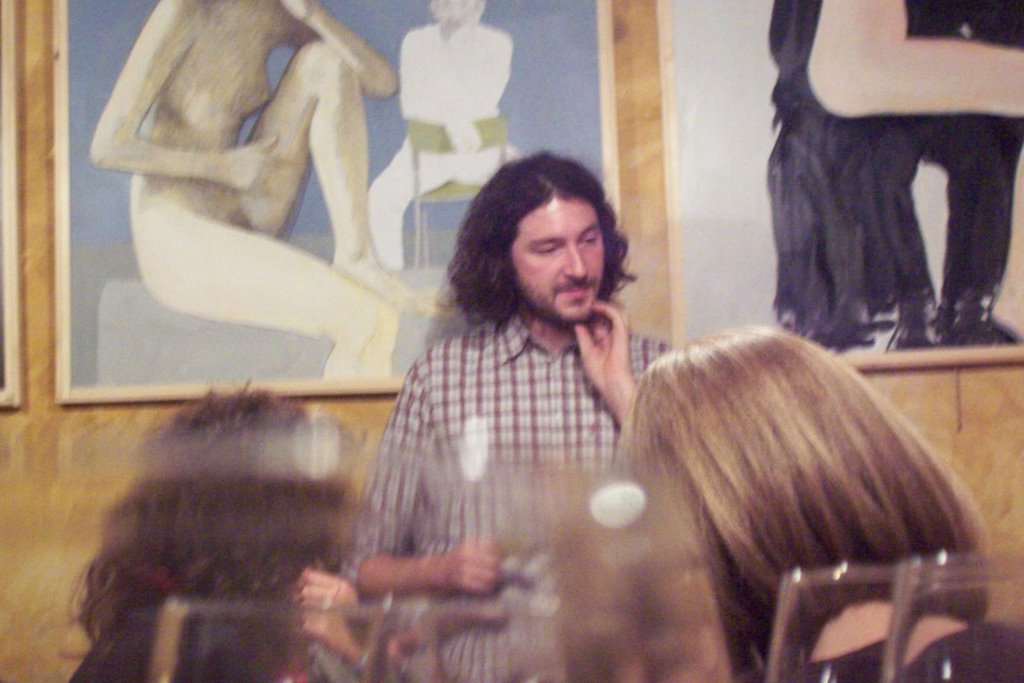
On Tuesday we attended a Barolo wine-tasting at a local enoteca (wine bar), called Ombre Rosse. We went through to a private room at the back where we rather swamped the place and probably startled the three locals who had come for the occasion.


Our host explains the wines.

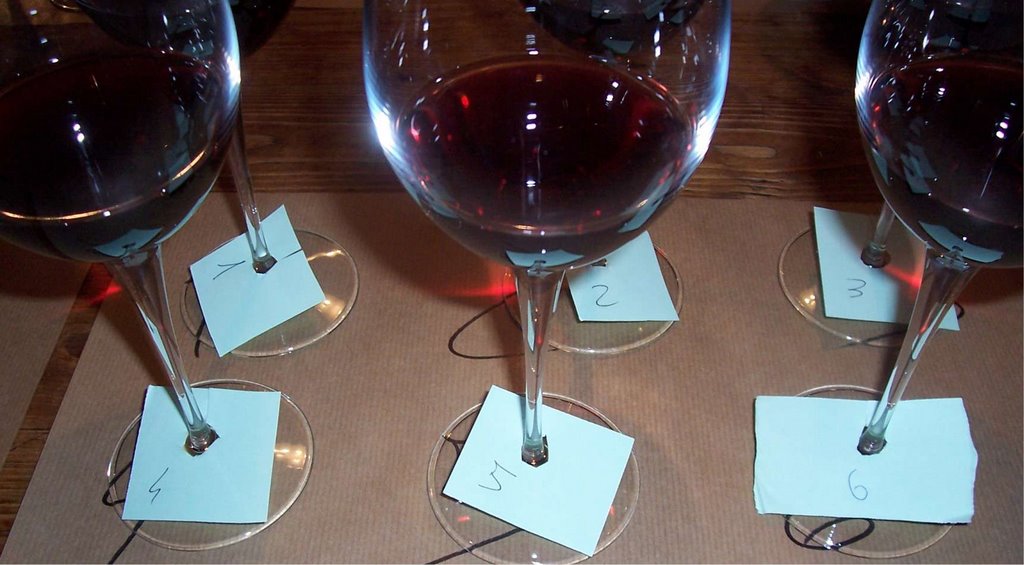
We did a blind tasting of six different Barolos – by wine producers: Bartolo Mascarello, Rinaldi, Aurelio Settimo, Clerico, Aldo Conterno and Montezemolo. As a complete wine rookie I had some trouble isolating the different scents and flavours, but did eventually manage to pull out cherries, black licorice, toffee, blackberry/blackcurrant, while others talked chocolate, nutmeg, panettone, candied fruits, raspberries, figs, mint and more. From different glasses, I hasten to add. After a survey by the proprietor, he disclosed that most of us preferred the fruitiest (and priciest I think, at about €50 a bottle), from Aldo Conterno.

We called it a night around 11.30, and left a large group still there savouring the dregs and gnawing on some chewy bread rolls the management had kindly brought in at the end. The evening was €30 and worth it for the education, the company (of course!) which included some more knowledgeable noses who led others of us, and the wine itself which goes for around €7 a glass.