Skip to content

poetry readings

Springtime in Saskatchewan

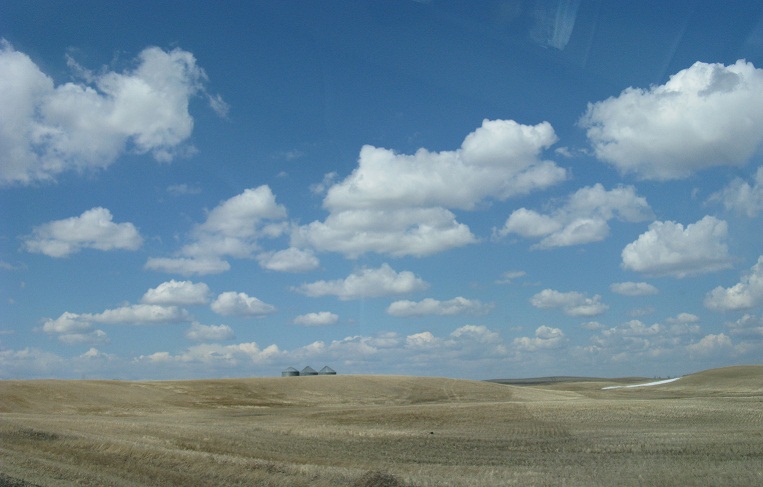
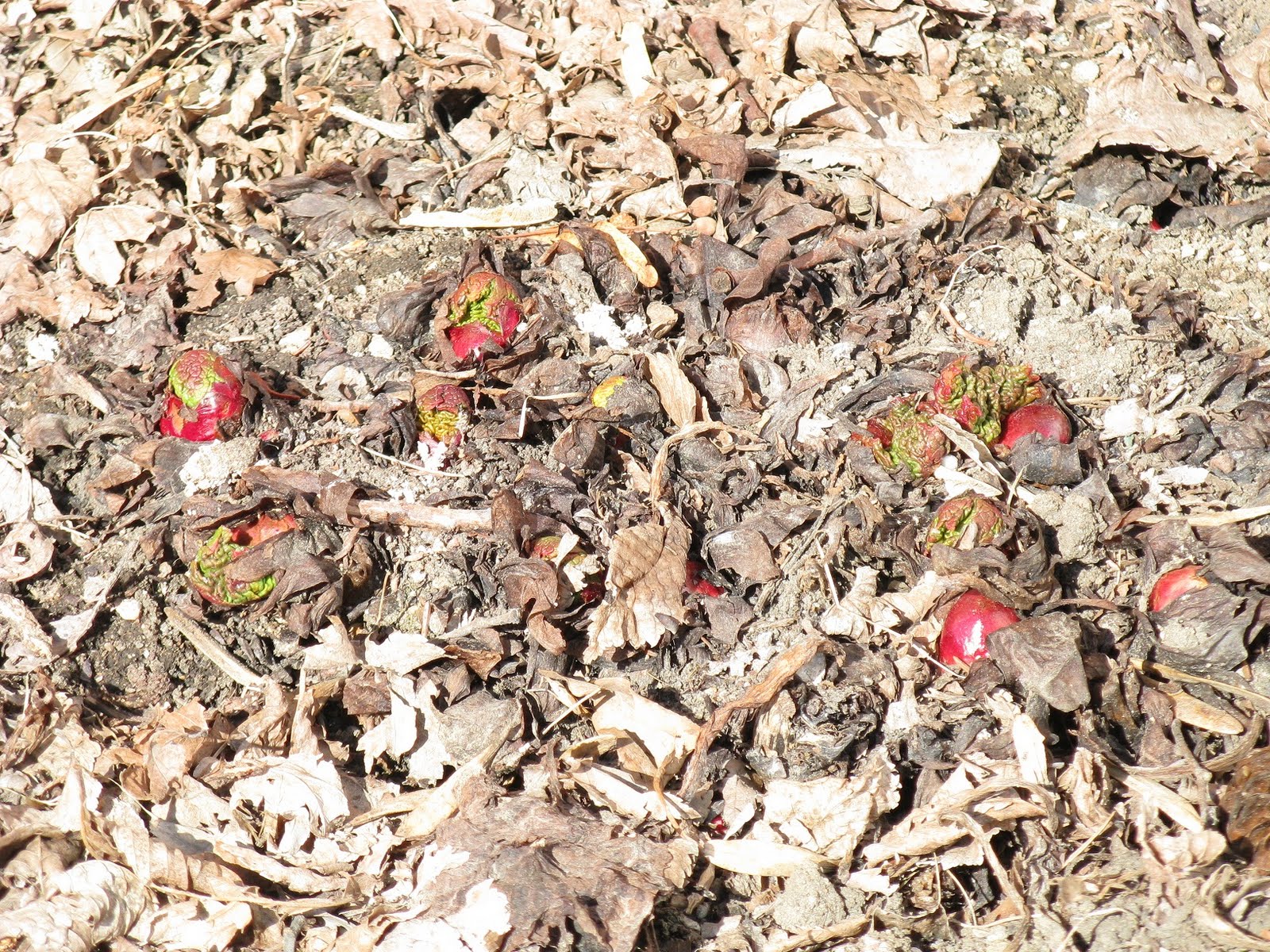
Well, nearly. A delayed springtime. I missed the one they had last weekend, but on the other hand I also missed the snowfall that left this behind,

though the ground is mostly bare and the sun comes out every so often, even as a powdery sprinkling comes and goes that I am trying to pass off as pollen, while I prepare for tomorrow’s food poetry workshop, followed by my reading at TiP.

Food Poetry Tour of Saskatchewan 2011

Just wanted to let you all know to let all your Saskatchewanian friends know that I’ll be reading from my new food poetry chapbook, The Earth’s Kitchen (soon to be published by Leaf Press) at the following venues in April.

Please pass it on!

Sunday, April 17 at 8:00 pm at Tonight it’s Poetry (TiP)
at Lydia’s Pub, 650 Broadway Avenue, Saskatoon
TiP’s Facebook page has more details about the series; up and comers are invited to sign up for the Community Stage.

Tuesday, April 19 at 7:30 pm at Reid Thompson Public Library
705 Main Street (next door to City Hall) Humboldt
306-682-2034 for more info, or check the library’s Facebook page.

Sunday, April 24 at 7:00 pm at Vertigo Reading Series
Orange Izakaya, 2136a Robinson Street, Regina
Vertigo’s Facebook page has more details about the series.

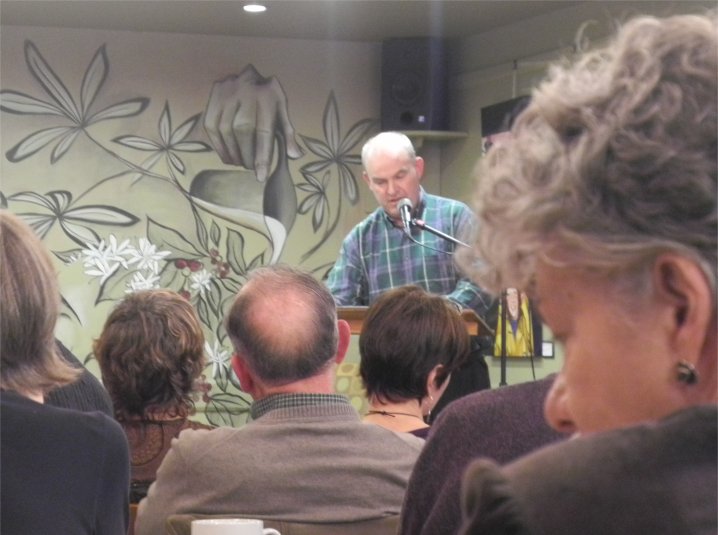
Four and a microphone

Busy times… I took in four interesting and very different readings and talks in just over a week. From Byzantium to North Van; from the farms of Milwaukee to forms of aging.

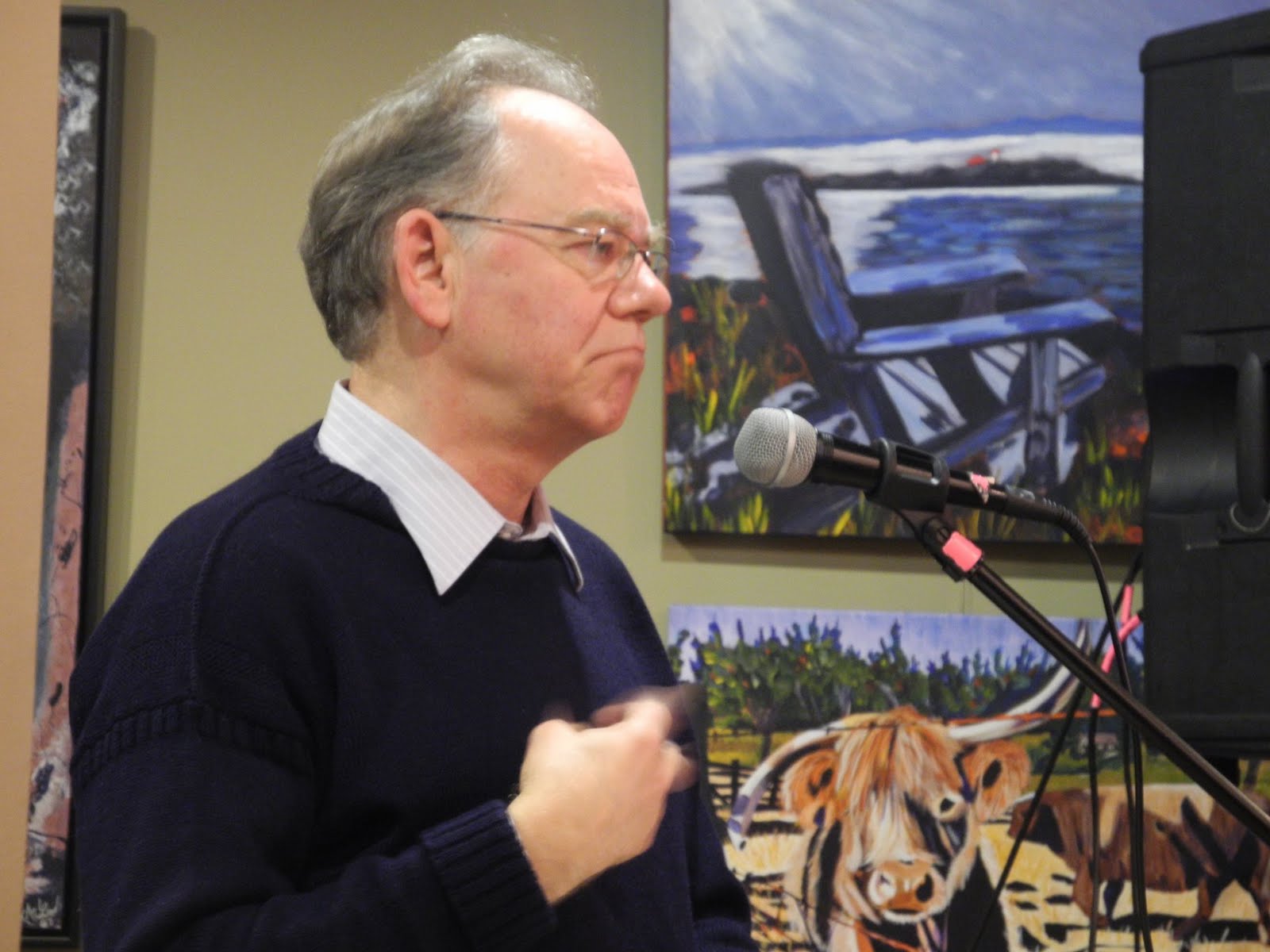
Chronologically, we start with Myrna Kostash,

who read and spoke at the Open Space Gallery on January 20, launching her new book, Prodigal Daughter, an exploration of Byzantium and the Eastern Christian (Orthodox) Church. It was a cold, wet, miserable night but a warm and engaging discussion (Where does the East begin? How does Demeter relate to St Demetrius?)

Next up was David Zieroth

who read – at Planet Earth Poetry – some of his fine work from The Fly in Autumn, as well as some new writing.

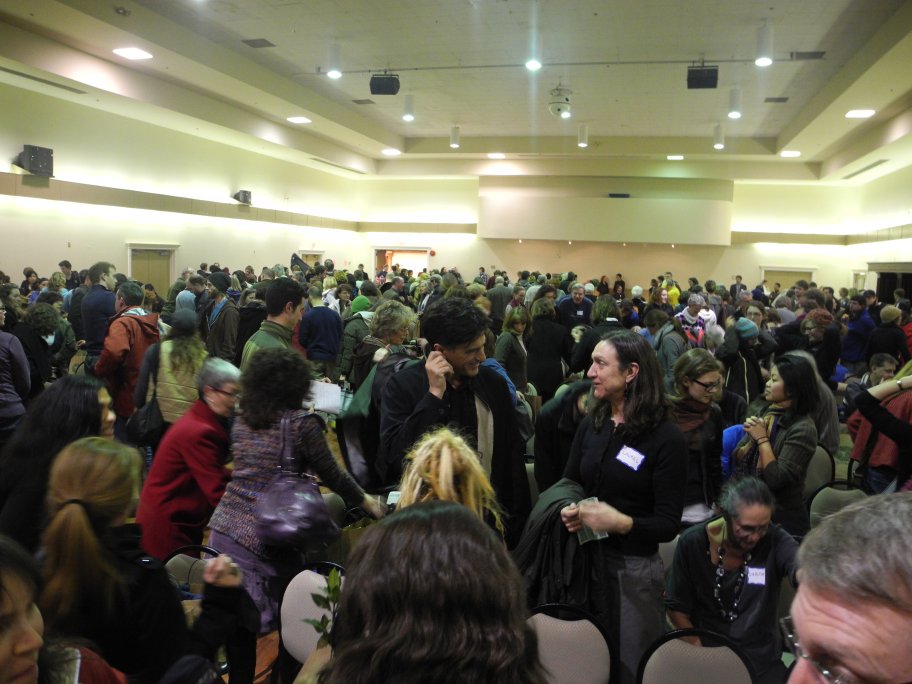
And last Thursday I joined 700 others at the Croatian Cultural Centre in Vancouver
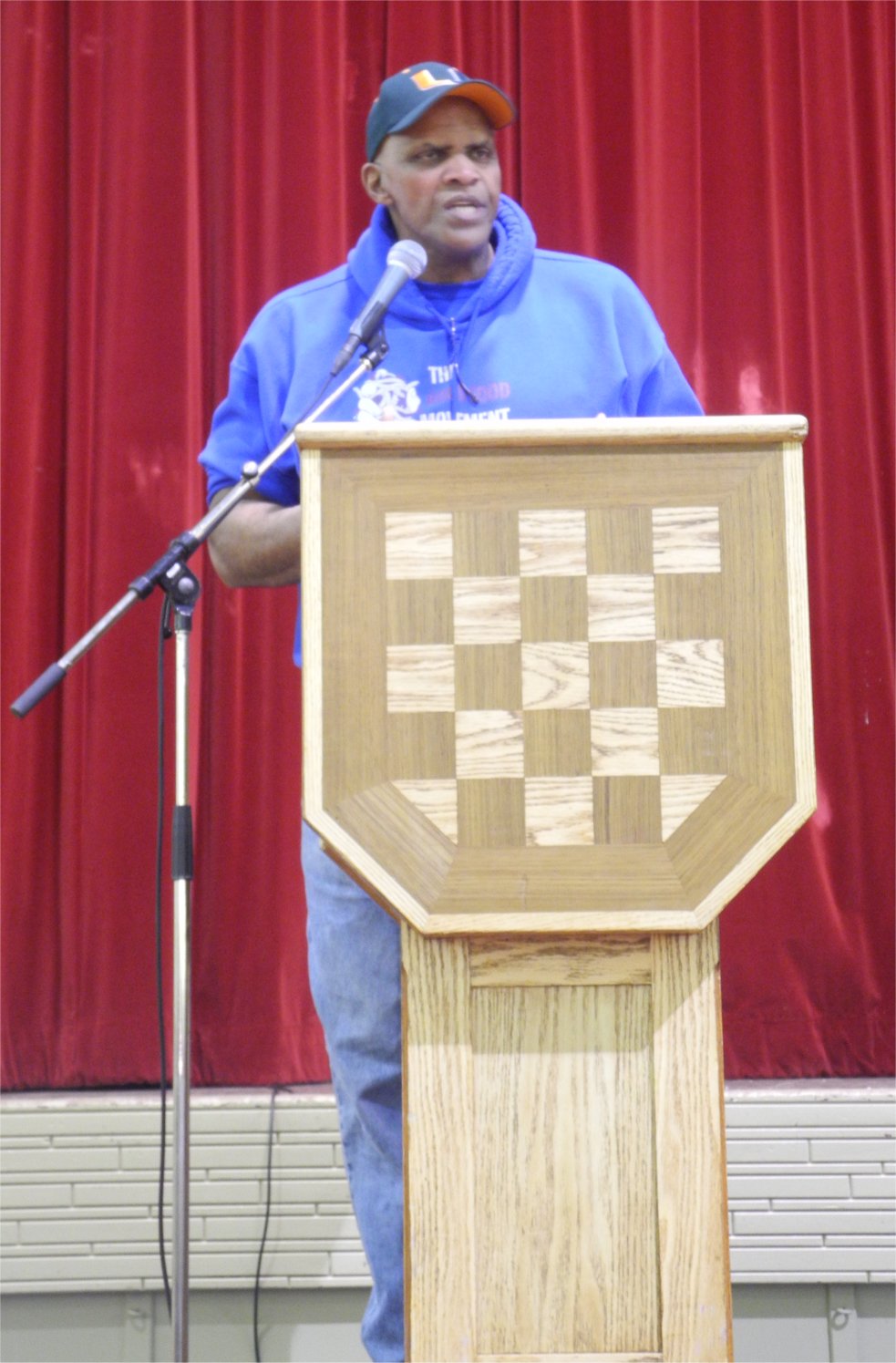
to hear urban agriculturalist Will Allen

talk about his work with Growing Power. He showed some 700 images of Growing Power’s many projects – mostly in the US but a few outside the country. His basic ideas are: that everyone deserves good, nutritious food; that it’s possible to provide this by intensive growing in cities; that the foundation of nutritious food is good soil, and it’s possible to provide this by composting. Which he does on an enormous scale, turning over truckloads of unsold warehouse fruits and vegetables with backhoes, and cultivating billions of worms to finish the job once the compost has been mostly broken down. He declares himself to be in direct competition with the landfill: showed us a picture of a garbage truck door that boasted the company had created 17,000 acres of wildlife habitat, and quipped “all I’ve seen is seagulls and really big rats.”

He shows that you shouldn’t let a little thing like lack of land to grow on stop you: he plants into 2 feet of compost, on top of concrete and tarmac, in abandoned industrial sites and on top of lawns and flower gardens. At its Milwaukee site, Growing Power produces a year round supply of herbs and greens in greenhouses; and is gaining some fame for its work in aquaponics, raising tilapia and yellow (freshwater) perch. Allen’s greatest interest is in teaching children about food and agriculture, and in providing disadvantaged people with the knowledge of how to produce food, as well as process and market it.

Too much time is wasted, he says, talking about urban agriculture: you need to get out there and do it. Create a project that will act to educate and motivate others in your community, that they can volunteer at, work on and buy from.

He’s big on creating networks that are inclusive and that reap tangible benefits like the space to grow food, and the tons of waste he diverts into his composting projects. When people sniggered at the picture of Wal-Mart execs touring his farm, he said “We need everybody at the good food revolution table. We can’t do it alone. The days are over when we exclude people and organizations.” And added, “Our families and friends work at these places.”

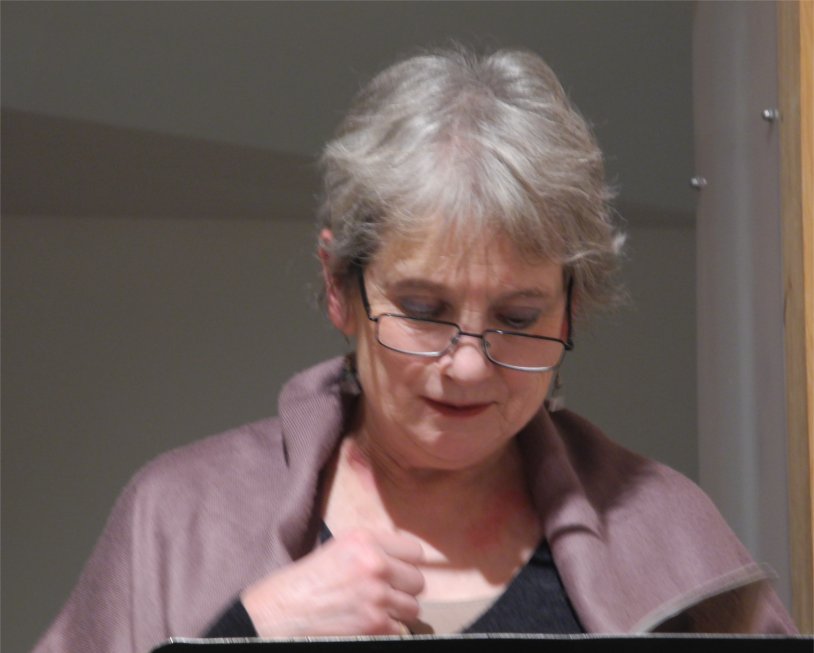
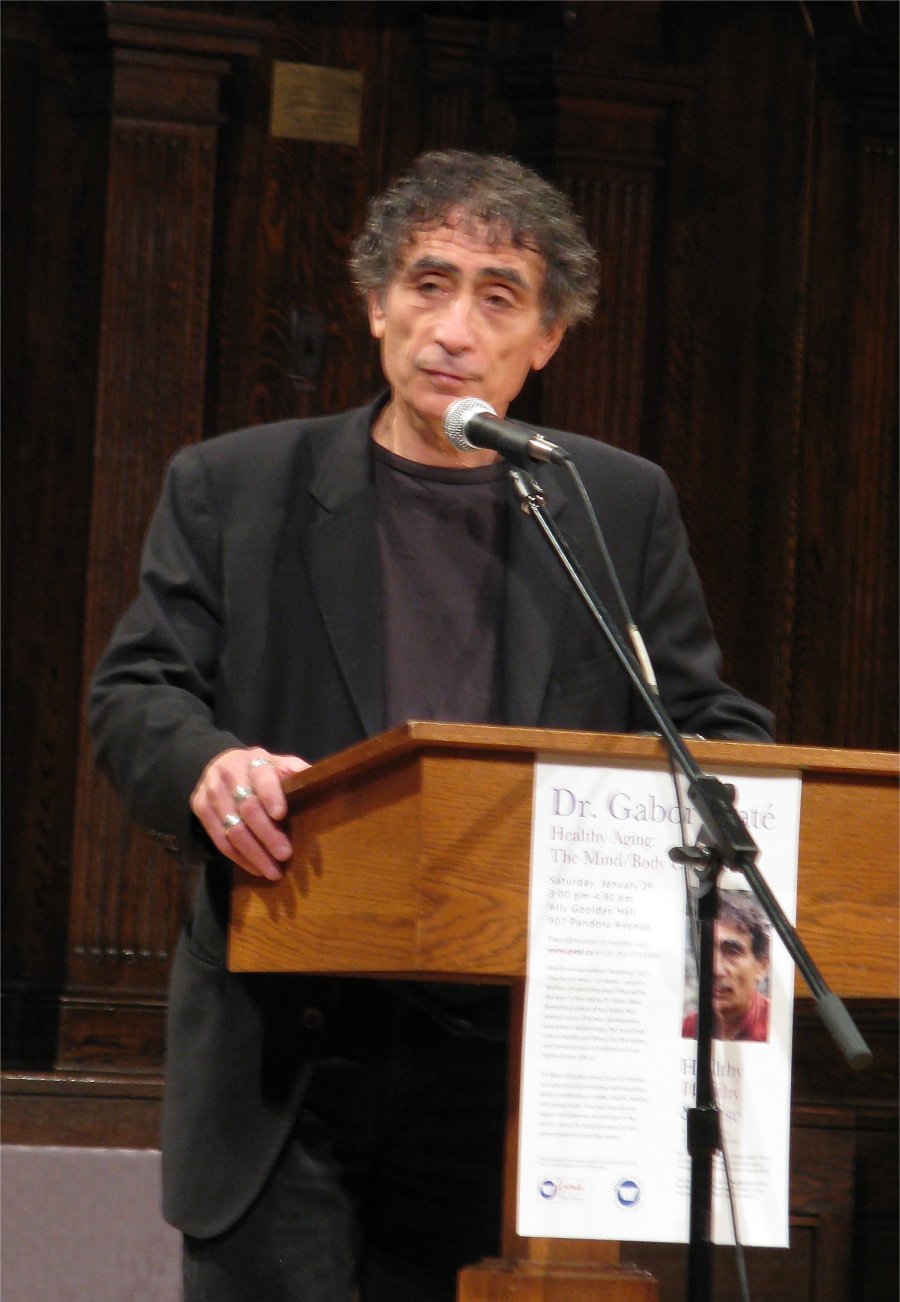
And then yesterday I joined several hundred others to hear physician/author Gabor Mate
talk about aging. We were bemused to see what a draw this topic is… Mate was blunt, opinionated and controversial, offering a blend of personal wisdom about the interconnectedness of the body, emotions and spirituality. When considering aging, he says, we are considering death, and that is why our youth-obsessed culture is so reluctant to permit it. In planning our lives, knowing they are finite, we should aim to leave the world as we entered it, with no baggage. By which he means we must discard the constraints and emotional demands of the world to be other than who we are.

His ideas on physical health as we age are quite simple: read Andrew Weil, get exercise, eat good food, and eat less. He moved on to some ideas about health and illness, saying that what he concludes from his experience in palliative care is: who gets ill is not a matter of fate. Nor are genetics the key to health and longevity: it is something of a no-brainer to say that there are too many variables in a person’s life, and genes are turned on and off by the environment.

To answer questions of illness, he says, we need to look at people’s lives. He read from a few obituaries and observed that so often in obits we celebrate the qualities that kill people: compulsive concerns with the needs of others to the neglect of their own. “When you don’t know how to say no,” he said, “your body will say it for you.”

Because the emotional centres in our brains send out hormones and chemicals that affect our physiology, it is not possible to draw a distinction between physical and emotional health when treating an illness; and if you suppress emotions, you also suppress the immune system. “Emotions are not luxuries: we have them in order to survive.” There are two primary emotions: fear and love; everything else is secondary. Love is about the human need for primary support.

There was a short unplanned interval while one of the audience members suddenly fell ill, but luckily there was a doctor in the house, and after ensuring that the man would be ok and the ambulance was on its way, Mate returned to the podium with a few words on dementia. It is not enough, he said, to keep your mind active with intellectual explorations; you must also maintain and develop emotional authenticity, because the biggest emotional stress you can put yourself under is trying to be other than you are.

Poetry & Food: PEP & another winter market

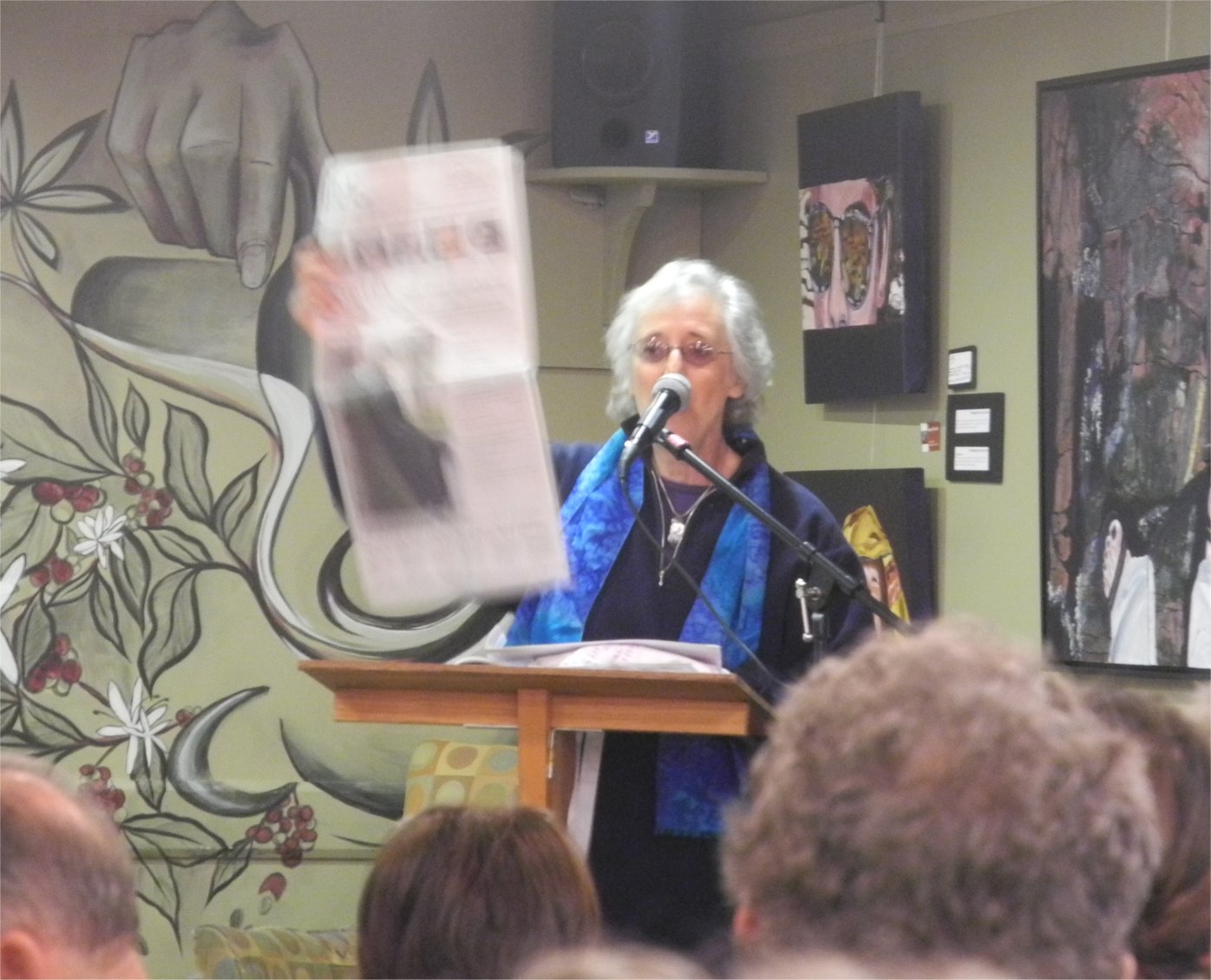
We started off the year in a little anxiety. The home for Planet Earth Poetry has been sold – the Black Stilt is in transition to becoming another Moka House – but so far the poets hold sway, and the coffee still flows of a Friday.

Wendy Morton wanted to call our attention to the Solstice Poets feature – the only full page poetry feature in a Canadian newspaper – and offer thanks for its support by departing Times-Colonist editor in chief Lucinda Chodan, who is doing things a little backwards and leaving Victoria for Edmonton.

She was presented with an autographed apron…

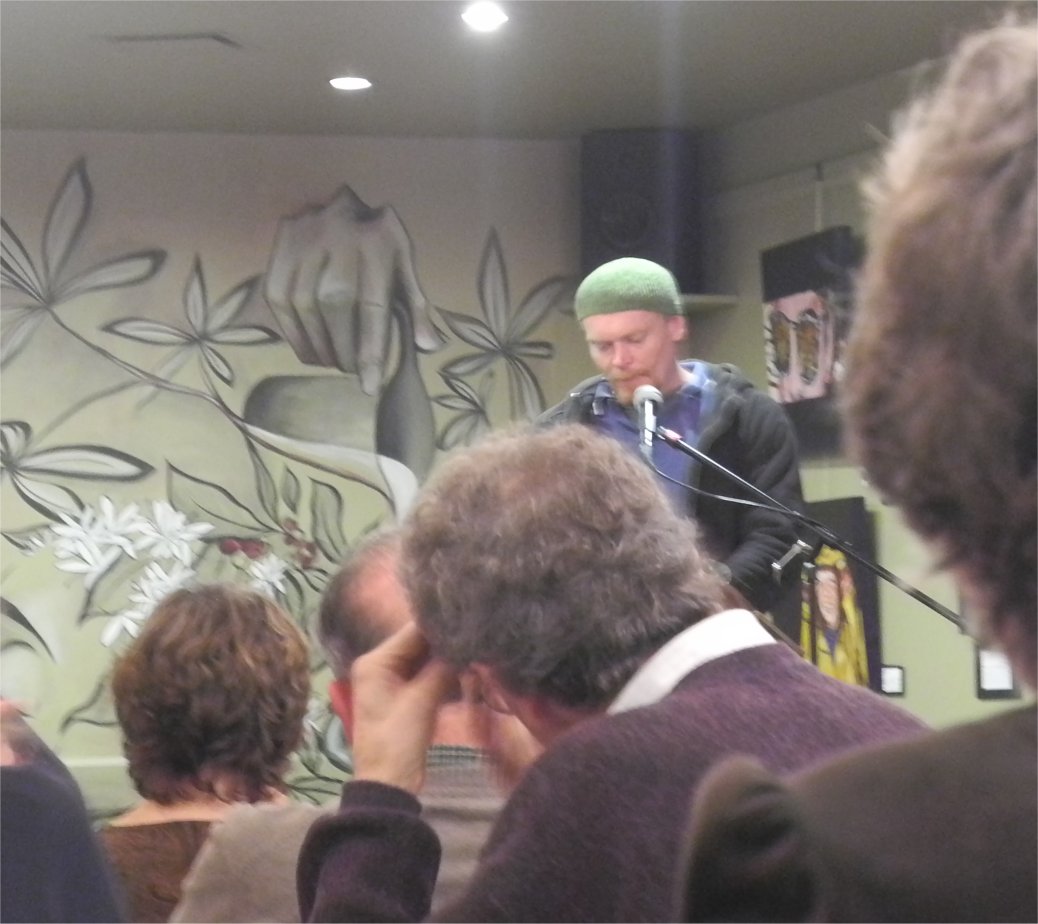
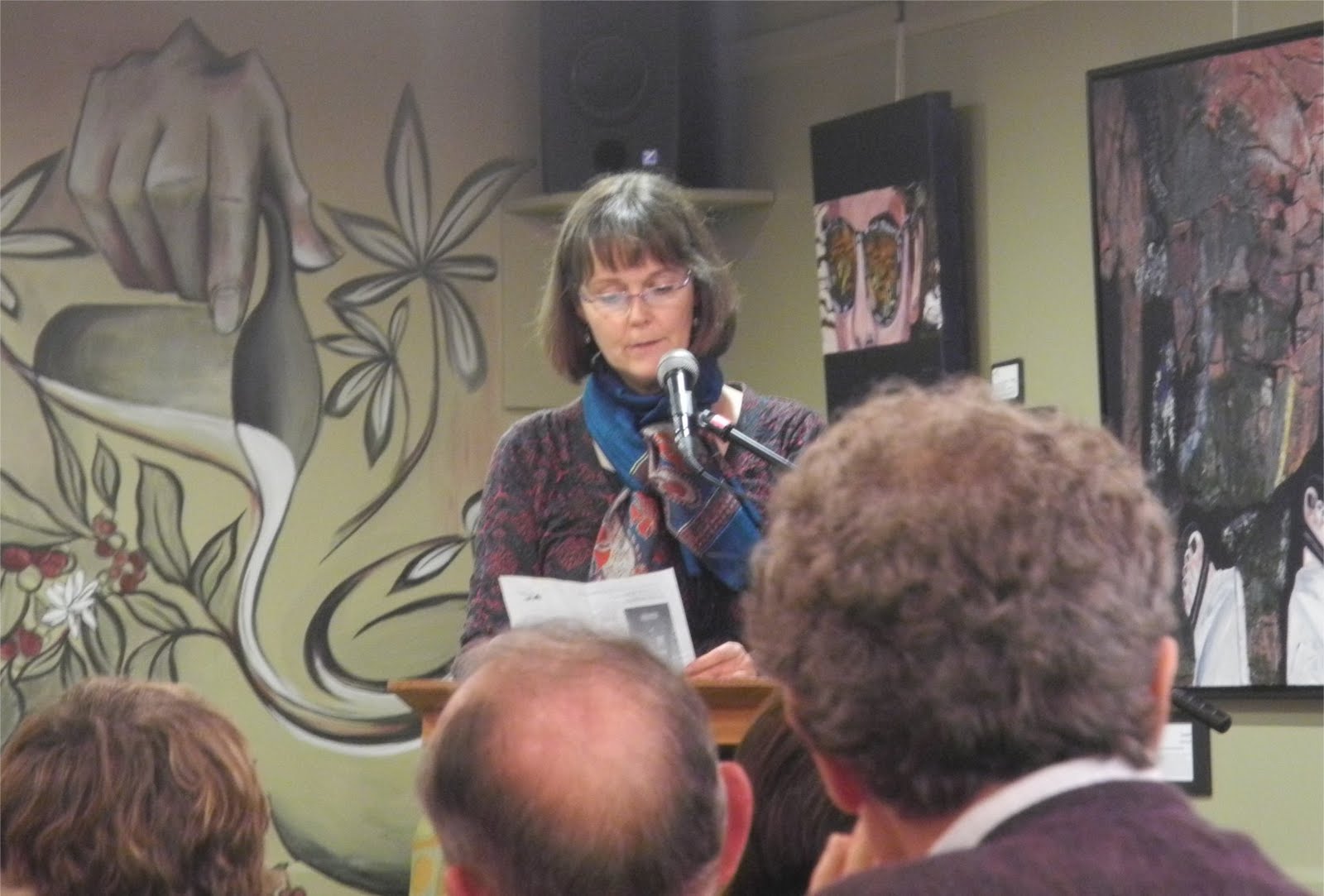
After which there followed the open mic

and Patrick Lane introduced the main event, which was a reading by various contributors to the annual Leaf Press anthology of a group who have been meeting with him for retreats for many years.

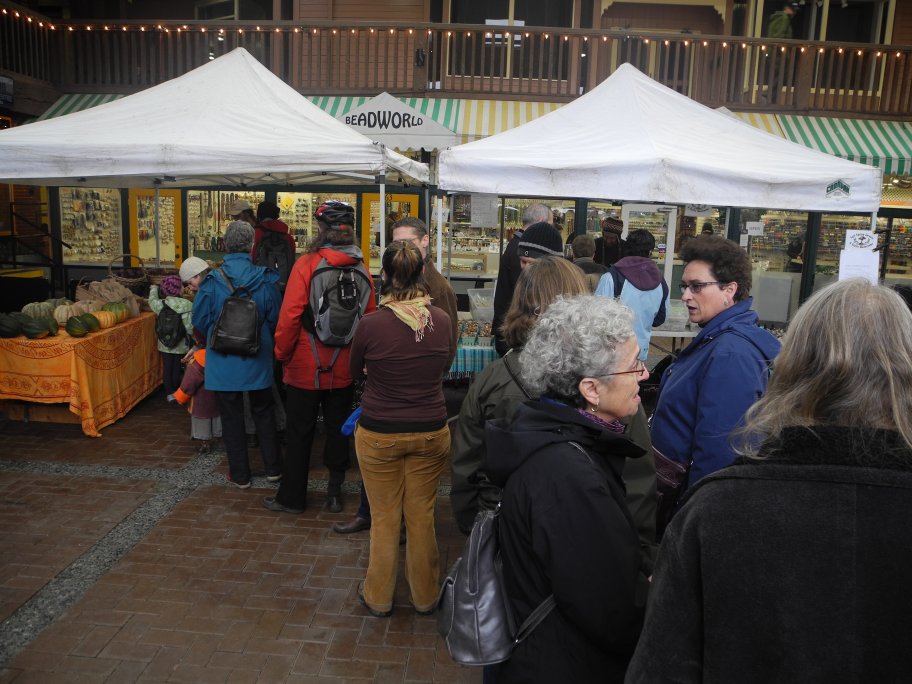
The January winter market took place at Market Square, luckily missing much of the rain that started falling again in the afternoon.

Terra Nossa proving popular with the meat crowd again

and Sea Bluff Farm attracting a queue for the vegetables.

Catching up with food, poetry and a great big cold

Time has been slipping by and a bout of flu stopped me from catching up earlier.

Here are a couple of pictures from a French market which sprang up out of nowhere in the N1 Centre in Islington one chilly day. This one’s for the Prosciutto di Parma consortium sleuths to track down… These certainly didn’t resemble any Parma Hams I’d ever seen.

Nice looking garlic though.

I was fortunate enough to receive an invitation to one of Islington’s more sought-after culinary hotspots, chez Nancy et Mike, where I dined on a Moro-inspired paella

and an Ottolenghi tart (reminds me I must go and worship in his temple of goodness before I leave town)

a Torta Especial Almendra, from Brindisi

and a nice bit of fruit and Manchego.

I was at a housewarming party last weekend, for a neighbour of this property. Big houses are hard to heat in the chilly sea winds they get on Sheppey and the small but beautiful fireplace I huddled near was apparently not enough to protect me from cultivating an ominous sore throat, which I took along on Sunday night to Tammy and Leah’s reading at Torriano, hosted as ever by John Rety.

I then succumbed to a brutal cold/flu thing which laid me low until Wednesday, when I dragged myself into the dusk to attend the Forward Prize do, which was – by spooky coincidence, Georgian properties occurring rather often in my life lately – held in the Georgian Group headquarters on lovely Fitzroy Square. Overcrowding (a superfluity of poets?) led to a dramatic incident – one person fainted – and was tended by paramedics, followed up by an ambulance.

Afterwards we wandered down Charlotte Street in search of a food type that our Lake District companions would be unlikely to find (passing along the way Passione, the restaurant of Jamie Oliver’s now slightly eclipsed mentor), and settled on Phillippine cuisine at Josephine’s. Although I wasn’t fully in control of my taste-buds at the time, I’m inclined to agree with the “not bad, not great” review of the place that I read later. We had the set menu which included a kind of chicken soup with green beans (and one green chili hiding on top)

and a pork dish which looked good

but was a bit sweet for my taste. I ordered it because it featured annatto seed; when I asked what this was, it appeared to be untranslatable: “from a tree” was the answer. I still don’t know what it tasted like; maybe next time.

And that, other than the previously reported efforts to exercise my civic duty, is it… for now.

Food & poetry

It seems I am not the only one on the planet with these twinned obsessions. On Friday I went to Farringdon Road and found my way up the near vertical stairs of the Betsey Trotwood, which by its position I’d guess is frequented by Guardian writers and which boasts music and poetry nights, and locally-sourced foods (though I think not including the tiny bag of crisps I purchased from them at some considerable expense: when did they go up to 80p I wonder?). Friday night’s reading theme got its title, as the lucky winner of the bottle of Italian brandy was able to identify, from The Naked Lunch: Unspeakably Toothsome – an evening of food poems. Co-hosts Annie Freud and Roddy Lumsden read and invited a number of other poets to read also, from their own work as well as favourite food related poems by other poets. Each poet participating was rewarded with a food and drink goodies parcel rather than a fee.

Readers included: John Stammers (reading John Berryman, Frank O’Hara‘s “For Grace after a party”), Simon Barraclough (reading from Titus Andronicus, and Anonymous); ex-chef Angela Kirby (Peter Phillips – “I want to be buried in a restaurant” and Anne Stewart “To a melon”); Isobel Dixon (Les Murray – “In a time of cuisine” and Jonathan Swift “Green Leeks”); Mark Waldron (Russell Edson “Mouse” and Mattea Harvey “Setting the table”); Roddy Lumsden (Paul Muldoon “Holy Thursday”, Neil Rollinson “Scampi” – and a memorable poem of his own about the horrors of eating stroganoff in Shannon Airport); Annie Freud (Wendy Cope “The uncertainty of the poet”, DH Lawrence “Figs” and Bertolt Brecht “Buying oranges”); Cath Drake (Michael Ondaatje “Rat jelly”, Jacques Prevert “Breakfast”); Heather Philipson (Wallace Stevens “Floral decorations for bananas”, Frank O’Hara “Animals”); Susan Grindley (Lewis Carroll “Walrus and the carpenter”) and Tim Wells (Rodney Jones “First coca-cola” and Luke Warmwater “Hungry for pizza”).

One afternoon I caught up on some Radio 4 listening and heard a recent Food Programme about anchovies, which told a by-now familiar tale of looming extinction: the best varieties of anchovy are being harvested for volume rather than sustainability, and so we are likely to lose them altogether before too long.

Brunch yesterday was a delightful piece of french toast

at Sam’s

I now embark on a week without (gasp) internet access. See ya later!