Skip to content

food

A long wordy account of the first morning of the Food & Morality conference

On Saturday morning I hopped a bus to Oxford at the unearthly hour of 7am on my way to the Oxford Symposium on Food and Drink, whose theme this year was food and morality. It was a gorgeous morning and I walked towards the college, passing a sunny graveyard.

By 8.45 I had dropped bags in my room at St Catherine’s college and was on my way to a vigourous survey of the ups and downs of right-thinking foodies in Berkeley California from the sixties to the present by the simply wonderful Ruth Reichl, in an opening address called What Should We Eat?

Speaking from her considerable experience in documenting food trends, she pointed out that we have been agonising over food ethics from the year dot, and that the underlying reasons have swung between efforts to control class, religion and the economy.

In the fifties and sixties, efforts to churn wartime industries into moneymaking economy meant that advertisers positioned cooking as symbolic of an unworthy, undesirable prison that modern women would be fools not to shed. We were encouraged to liberate cooking time for other aspects of life: time was more valuable than food in those days of plenty. Movement followed movement: food was politicised by such books as Diet for a Small Planet. Meat was out, boycotts were in.

By the mid nineties, industrialisation of our food had created all kinds of new jumping points for protest: chemical adulteration, genetic modification, contamination and disease; the end of food as we knew it. She mentioned a test by English volunteers who had tried to live as battery chickens for a week, and lasted 18 hours. There were starting to be a lot of questions about how our food animals were treated, and the demand for ethically raised meat has rocketed as a result.

For a while fish seemed like the answer, but fish are fighting a losing battle with the modern world: oceans are being drained of species by fishing technology, and the global hunger for sushi has had a huge impact, a food that is less about tradition and health than it is about the possibilities of refrigeration and air freight. Bluefin tuna was a despised fish 35 years ago, but its price has increased 10,000 times since then, and it is vanishing as a species.

And we have contamination of farmed fish, and contamination of sea and land and deforestation of wetlands resulting from increased fish and shellfish farming.

But what do we do? Technological advances mean it’s unrealistic to expect farmers to go back to ploughing the fields by hand. For the first time in history, we have too much food AND starvation: “while half the world goes hungry, the other half is killing itself with calories.” We have, she said, so many moral choices today it’s a wonder any of us eat at all.

We are hearing a lot about growing our own food, cutting down our food miles and buying locally. But is that the correct moral stance? There have been studies that show it’s a far from simple equation: the nature of mechanisation on the farms, the type of feed (it takes a lot of fossil fuel to produce grains like maize) and the slaughtering systems for meat (where are they, how are they powered, etc.) can all throw calculations off. So one New Zealand study found that 1 tonne of lamb raised in New Zealand and eaten in London was less fuel dependent than the same amount raised in Oxford and eaten in London.

She cited a recent review in Atlantic Monthly of Michael Pollan‘s Omnivore’s Dilemma as formulating an attack on gourmets: the author’s moral stance appeared to be that the only moral choice is vegan, “where the Christian and the gourmet part ways.” Will the vegetarian diet be the only acceptable diet of the future?

Most of us, she concluded, would like to do the right thing.. if only we could figure out what that was.

Well. That was some beginning. We turned then to a swiftly-moving panel.

Chocolateer John Scharffenberger talked all too briefly about ethical sourcing of cacao beans. The all-too familiar gist was that farmers are getting the short end of the stick, being paid very badly while supporting with those poor wages whole communities. He proposed instituting higher quality varieties of healthier beans which would allow a fair living to the people who grew them.

Then Raymond Blanc stepped up to dash our illusions about the charmed life of the kobe beef cattle. He’d visited Japan and, eager to see their living environment, met many stone walls. Finally he set up a visit himself and found filthy calves, confined to small pens, and force fed grain until a final year of grass fattening. And a slaughterhouse where the cattle were killed and hung in the open air in front of their fellows, the blood running between the hooves of the waiting animals. In short, marketing mythology at work.

Henrietta Green, described as the mother of farmers markets in Britain, talked about the evolution of chicken from a food of luxury to something valueless; bizarre questioning by supermarkets and fast food chains to decide whether chickens can suffer; questions about whether a battery chicken has a right to life or anything else just to feed us cheaply. And that, as always, it’s all about taste: a better reared chicken (free range and longer lived) tastes better.

And finally, Armando Manni talked about the decline of the polyphenols – the health-giving components of extra virgin olive oil – through poor bottling, transport and storage. I was thanking my lucky stars for my olive oil technology classes which meant I was, I gather, one of the few who understood every word he said.

Tim Lang talked about public policy and the role of the state as arbiter of food morality in a world where private morality can’t address most of the issues – since they mainly have to do with industrialised food whose safety and availability has been decided for us by the state. We may think we have too many choices nowadays, but according to Lang, we can call it choice but it’s really selection. The individual consumer cannot influence the food chain when it’s in the hands of a few large food companies. We are all, he concluded, juggling with highly complex bundles of contradictions.

Well, didn’t I take a wrong turn during the tea break. Look what found me

And here you could buy quinces and jams.

And here I’ll stop, for now.

Semlas, trading cards, Madhur and fortified coffee

Some things that came across my in-box this week.

Following Shrove Tuesday / Pancake Day / Mardi Gras / Martedi Grasso, Merna sent me some news about Fat Tuesday in Sweden. She’d found an article about a treat I haven’t tried: semlas, and a cautionary tale about the dangers of eating too many desserts…

I was also intrigued by the idea of Artists Trading Cards. I don’t think I ever traded or collected cards in my youth – maybe it was a guy thing: they were mostly sports cards, weren’t they? So it’s apt there should be a sub-set of this genre just for women. Probably easier for artists than poets, unless you are cruel enough to shrink your type to size, or on the other hand maybe ideal for haiku writers.

Ruth sent along a review of Madhur Jaffrey’s new autobiography which sounds delicious. I am among the many who have enjoyed her recipes as I experimented with Indian food; she must be the only food writer with equal weight as an actress (or is it vice versa?) I liked the disclosure in the review that her mother taught her to cook by mail: I reckon there is a whole new generation now learning to cook by email or internet.

I am not quite sure what to make of fortified coffee though. Is there no indulgence that can’t be tampered with to make it seem more wholesome?

Asian monster menu, and photos of Italy

We spent yesterday in Colorno, trying to eat our way through Asia. Amy, representing Hong Kong, gathered her pan-Asian army of chefs – Andy from Taiwan, Donghyun from Korea, Louisa from Australia – and together they fed us well, very very well. We are ready for the new year.


Amy’s Asian menu


Only the beginning… Thai carrot salad, sushi, beef with eggplant, rice…


A Korean favourite: Bi Bim Bap!

Spending the day digesting it all. Thought I’d try some feasts for the eyes for a change. A friend of a friend is a sublime photographer of the Tuscan landscape and many other things beside. Check him out: Fabio Muzzi. Phew. Photos so beautiful you want to eat them for breakfast.

I was nosing around to see what other photos were posted of this neck of the woods. A site called TrekEarth has a gorgeous selection of photos from all over the world, including this region, Emilia Romagna – a few beauties of Parma itself.

You can take a virtual tour of Parma in a number of 360 degree photos on the Comune di Parma website.

Oysters to Oysterage


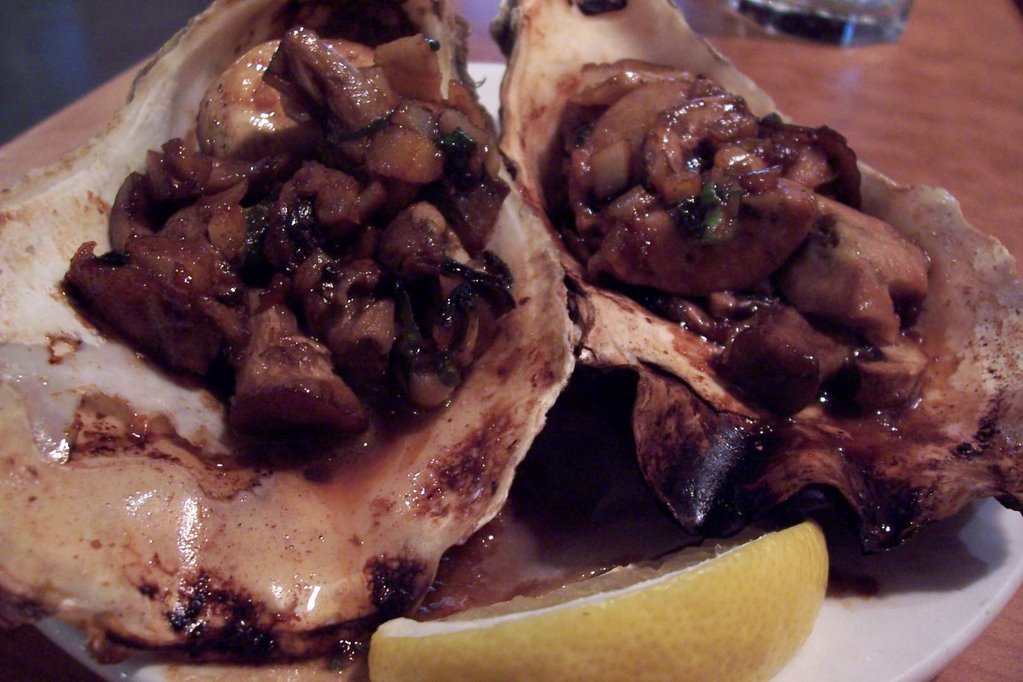
Garlic butter oysters from the Hanami Japanese Restaurant at the Vancouver Airport. Pan-fried with mushrooms.. not bad.. even better were the gyoza and California roll. A pleasant change to see an airport restaurant managing to serve nice food to a captive market!


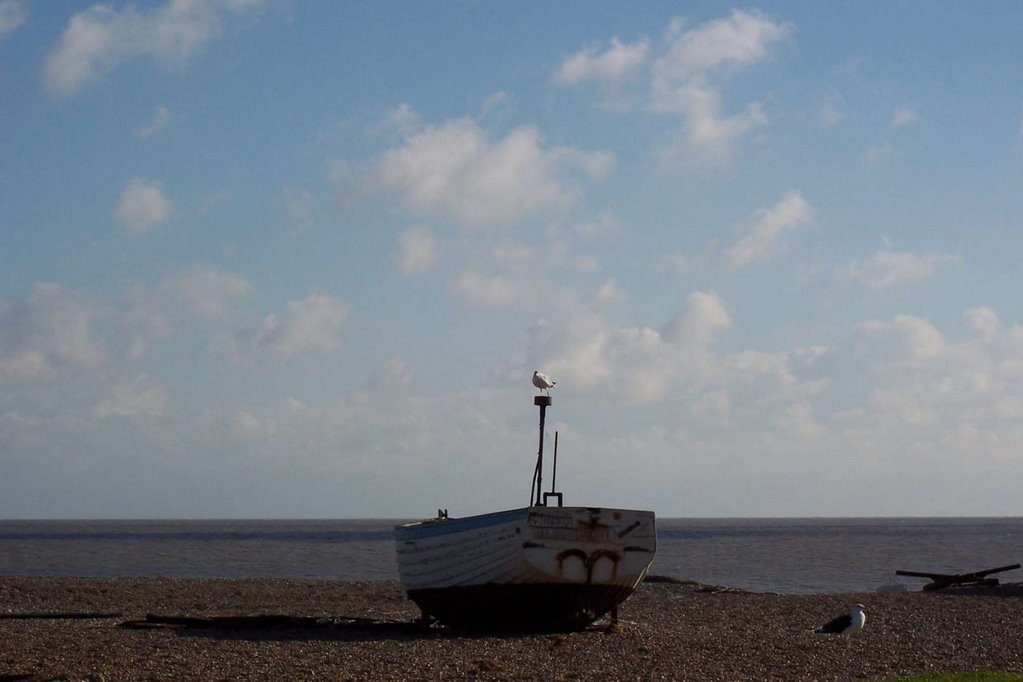
A beautiful day on the Aldeburgh seafront.


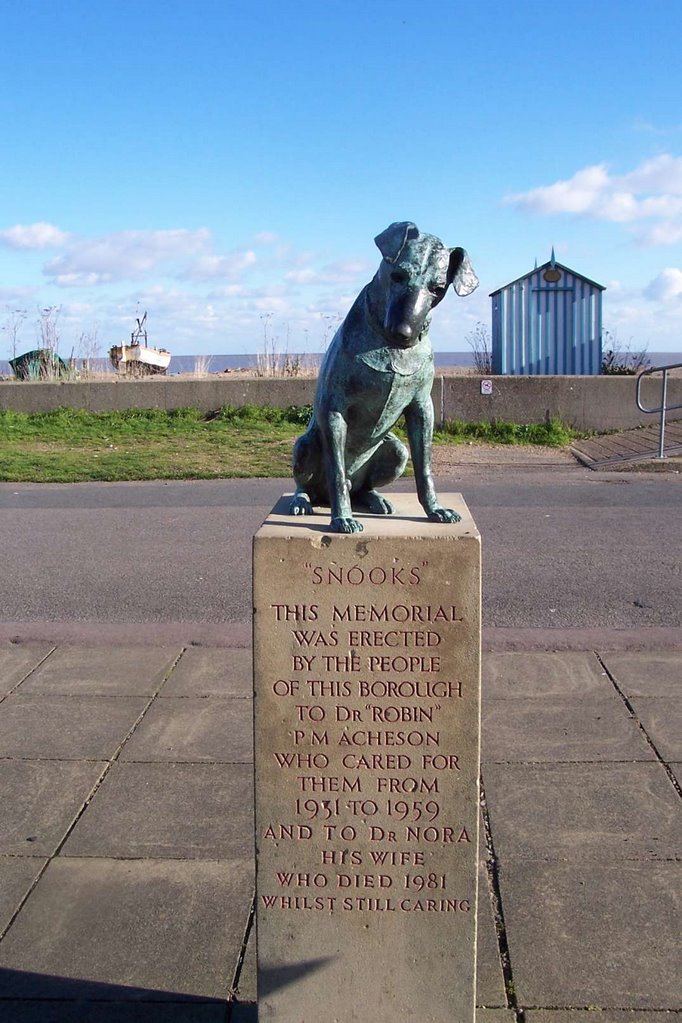
Dog-friendly town, Aldeburgh.


We did our best to liberate what cheeses we could from the overloaded display at Lawson’s Delicatessen: Suffolk Gold, Mrs Temple’s blue cheese, St André – a vignotte lookalike – and a wedge of Manchega. Lots of nice looking sheeps’ milk cheeses on offer too, and you can fill your bottle of olive oil from a silver keg in the back. Hours of fun.


Here was my welcoming committee to the Butley Orford Oysterage. Some big fat grilled sardines, who followed a very tasty oyster soup – thick and creamy with chopped oysters adrift in its scalding depths.


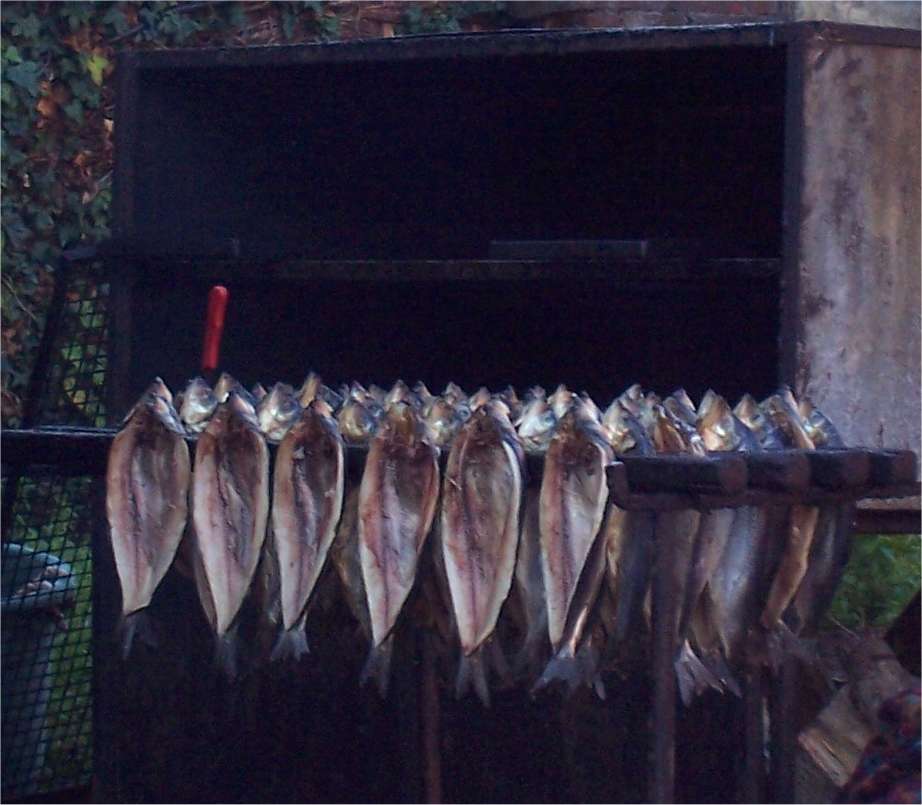
If you can think of it, they smoke it at Richardson’s Smokehouse. Some of their fish in preparation, below.

Crumbling allegiances to British food

I get raised eyebrows by the pair when I respond to the question “what do you miss about Britain?” with “the food”. But it’s true. Somehow, perhaps in an effort to stem the flood of immigrants, a myth has been perpetuated that the only food available in the UK is overcooked vegetables, slabs of meat and inedible puddings with strange names. In reality, the countryside is dotted with gastro-pubs offering superb menus; London has the staggering range of cuisine you’d expect of a city of 7 million; and the array of produce and ingredients in supermarkets and specialty shops is the boon of proximity to the Continent and beyond.

That having been said, the Guardian recently offered a grisly list of traditional British dishes that are falling off the nation’s menus, either because they don’t suit the low fat high speed preparation needs of contemporary cooks or because their ingredients – offal (such as calves’ feet or pig cheeks) or game (such as rooks or hare) – are no longer popular.

I was sad to see fruit crumble among the Ten most threatened puddings:

  1. Calf’s foot jelly
  2. Junket
  3. Sussex pond pudding (suet and lemon)
  4. Kentish pudding pie (rice and pastry)
  5. Dorset dumplings (apples and suet)
  6. Lardy cake
  7. Simnel cake
  8. Malvern pudding (fruit crumble)
  9. Singin hinnies (fried scone)
  10. Spotted dick

For those who don’t number fruit crisps on their hit list, there’s a wonderful recipe for Peach and Blackberry Crisp (I made it with apples, blackberries and blueberries and it was fabulous) that has pecans in the topping.

What passes for food in airports

I had some time on Monday evening – a couple of hours right around supper time to be exact – to meditate on the lack of edible food in our public places, in this case the Calgary Airport.

Having disembarked for my stopover – a tiny packet of pretzel-like substance my only sustenance during the four hour flight from Ottawa – I was looking for something freshly cooked or remotely resembling fresh edible food. But what a wasteland it is for the connecting traveller, with most so called food outlets already scraping up their leavings to shut down for the day at 7pm, or already closed. Unless your tastes run to donuts or foul smelling sandwiches, or greasy steamtabled chinese style food, or nasty looking pasta, you will roam the hallways hungry and without so much as a single decent retail outlet to distract you. There was no longer even a Dairy Queen to brighten the horizon.

The one sit-down restaurant – Montana’s last time I was there, but now replaced by Kelsey’s (no real change there since the same American company owns Harvey’s, Swiss Chalet, Second Cup, Milestones, Montana’s, Kelsey’s and Toast Cafe) – served me food and drink so utterly vile on my last visit that I was moved to write a letter of complaint. The response from the company was to offer me a coupon to dine with them again. As if.

Speaking of ownership, I read in the Guardian an article about corporate ownership changes to ethical companies including Green & Black’s (Cadbury), Rachel’s (Dean Foods), Ben & Jerry’s (Unilever) and the subsequent decline in their ethical rankings. Even the Body Shop is no more the lone voice in the cosmetic wilderness, since it’s been sold to L’Oreal! It’s so hard to keep up. Another good reason to try to give your custom to the dwindling number of locally owned operations wherever possible.