Time of the stinking rose – with rust
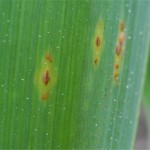
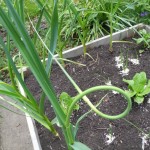
 I was looking forward to my garlic crop this year: I’d followed farmer Ray’s advice (plant deep, mulch well) and my plants seemed to be thriving. They also appeared to be rust-free, which surprised me since I’d had rust the last couple of years, and we’d heard at a recent GTUF talk by Linda Gilkeson that our area has been infected by a new strain of rust which affects garlic, leeks and other members of the allium family, and that “rust-resistant” leeks are not resistant to this one. So last Sunday, there were the first tell-tale spots, and I decided to go ahead and pull it anyway, as it was only a couple of weeks away from harvest.
At a potluck last weekend, Kate had been demonstrating how to harvest, peel,


and braid garlic:


Even hardneck garlic can be braided, if it’s done when the garlic is fresh from the ground, as it takes a bit of time for the neck to dry and stiffen. The idea is to place the bulbs, as far as possible, so they aren’t touching. After braiding the garlic should be hung in a dry, airy place out of the sun for at least two weeks to cure for long storage. Any damaged bulbs – or ones where too much of the protective wrapping was removed, can be eaten fresh, without curing. I’ll try curing the insect-damaged ones, but those I clipped with my digging fork (the hazards of deep planting in compacted soil!) will be most welcome in a bowl of delicious garlic soup.


I found rust spots (as well as insect damage – slugs, leatherjackets and wireworm run rampant in my beds which are next to grass) on the stems and bulbs of some of mine, even where it wasn’t showing in the leaves. Fingers crossed for my winter leeks, which are growing in a raised bed nearby.
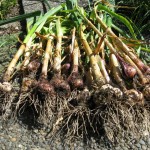
To reduce the spread of garlic rust, infected leaves should be snipped off – whether live or harvested plants – and disposed of in the garbage, not composted. Rust won’t affect the taste of the garlic and in most cases won’t reach the bulb,  but if it does it looks unsightly and garlic producers can’t sell it. If you let it go, it will affect the size of the bulb and eventually cause it to rot. It’s a particular hazard in community gardens where it can spread quickly from bed to bed, so community gardeners need to have agreements in place to control it. I saw this lot in a James Bay garden last year and suspect all the garlic there will be infected this year.