Skip to content

food tours

Fungus not chocolate
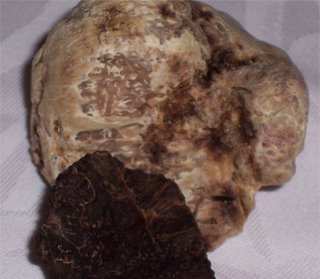

White (Tuber magnatum) and black (Tuber melanosporum) truffles.

Truffles. Tartufi. What are they? Chocolates? Tubers, like their names? Mushrooms? An acquired taste? Why so expensive? A million questions, many appetites, much interest. And so it transpired two Saturdays ago that 22 of us jumped out of bed at some breathtaking hour of the morning and piled onto a bus, on the trail of the truffles.

An hour or two later, we disembarked in Savigno, scene of the annual truffle festival in November which I’d taken in soon after arrival in Italy, and where they take their truffles very seriously, as you might expect of a town whose population is 2000, about 200 of whom are truffle hunters.

We loitered in town for a while before heading to the forest, and had the good fortune to get a tour of the basement of La Bottega del Macellaio, a 110-year-old family business. We dodged the hams curing in the rafters to see some cured lardo which we’d heard about in our cured meats lectures; it was among the first cured meats to find protection under the Arca del Gusto, (Ark of Taste), a project of Slow Food which seeks to protect traditional food products. After at least six months of seasoning and curing it’s served in thin slices like any other meat product, eaten on hot toast.

Lots of lardo

On we went. This has been a bad year for truffles, apparently: not enough rain, and ongoing and growing problem with too many hunters, too many inexperienced dogs, and poor forest management.
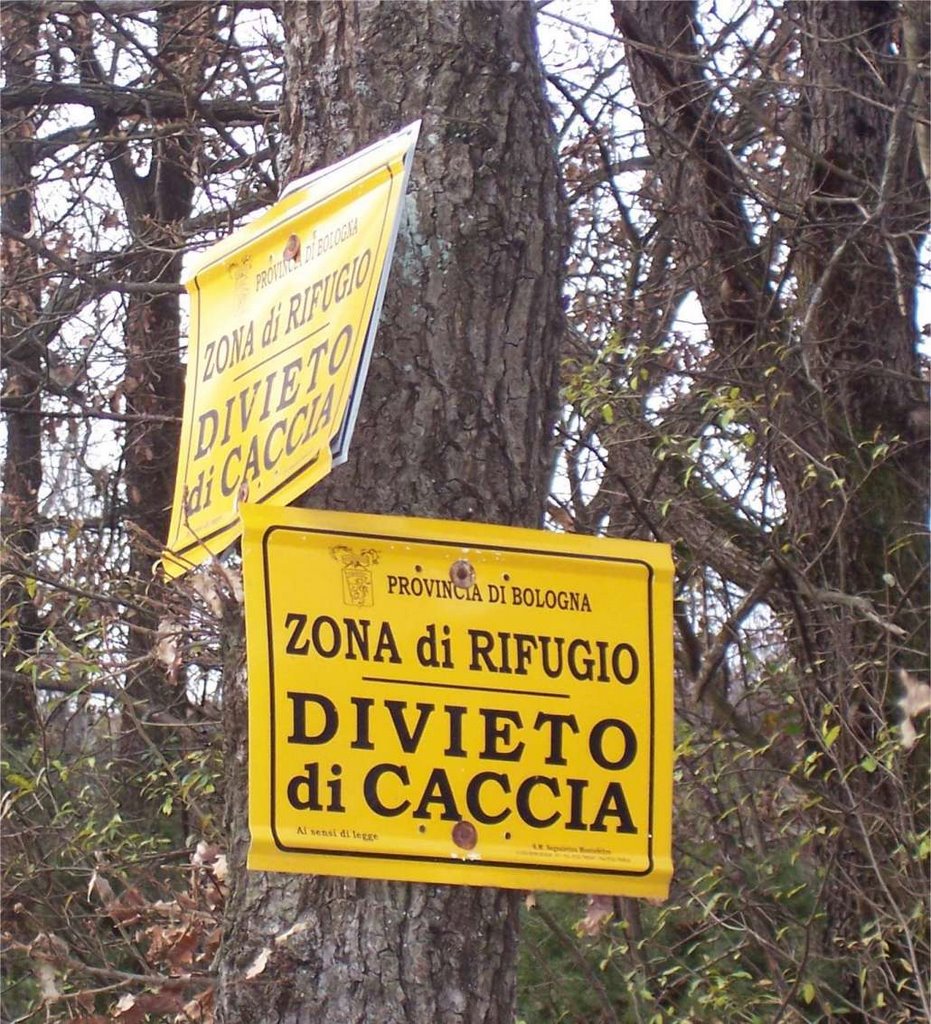
Forests in Italy mean hunters of many kinds, but we were, hopefully, not going to meet the kind with guns in this one.

We were looking for Tuber magnatum, the white truffle, found mostly in northern and central Italy and also known as the Alba truffle, because the enterprising citizens of Alba thought to nab the trademark while they could, though it’s not found only there. There are other varieties in these woods as well, like Tuber melanosporum – the black truffle. Although their Latin name is Tuber, they are not tubers, vegetables like potatoes for example. They are uncultivable fungi, a symbiotic variety: they exchange mineral salts with tree sugars, which is why they are always found in the roots, or near them, of trees.

We met two kinds of truffle dogs too. The first, the Lagotto Romagnolo, resembles a poodle and is the star among truffle dogs.

Pupa the dog and Adriano the truffle hunter.

The second, Hungarian Vizla, is a short-haired hunting dog, and we had the chance to witness some truffle training of a very high spirited four-month old.
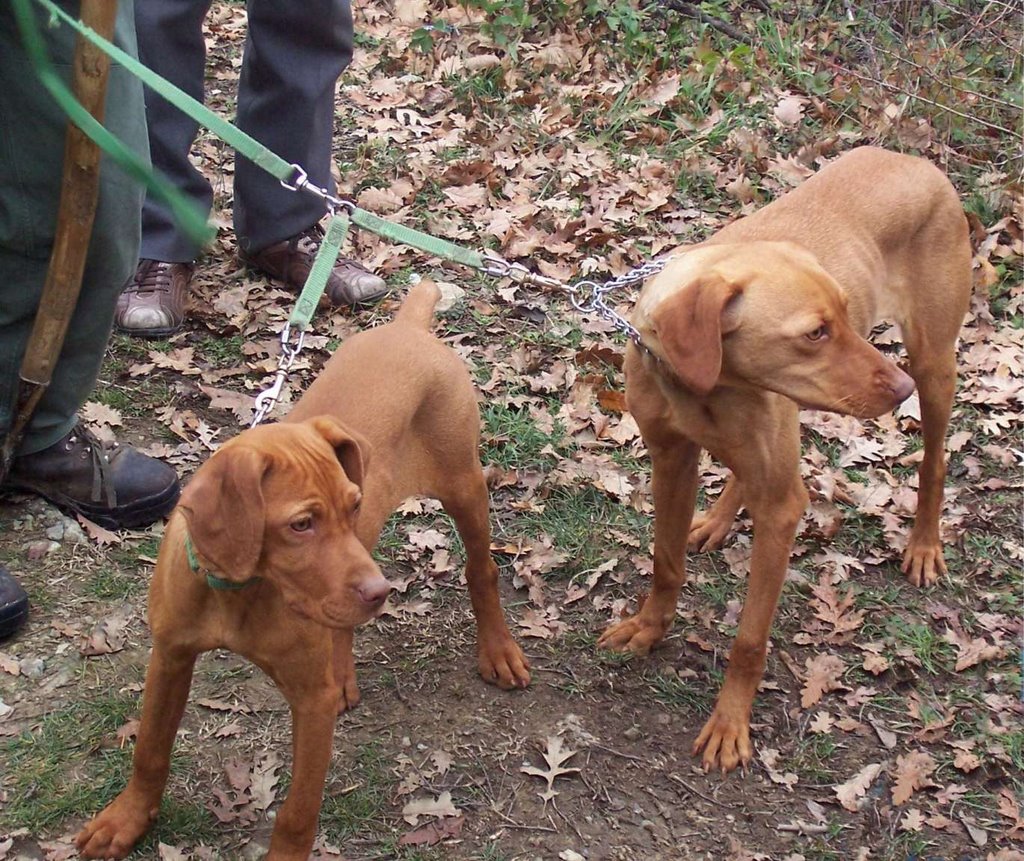
Rosita and Stella.

Both our hunters used only female dogs, and this is apparently quite common. I’d heard that pigs were sometimes used for truffle hunting, but they apparently make a terrible mess – truffle hunting is a game of stealth and concealment, and any truffle-beds must be returned to a pristine state so that the truffles may re-grow there and other hunters not see the location.

One of the tools used to dig truffles. The hunters carry long-handled short-bladed truffle spades, which double as walking sticks, and carry the sapin, a hand tool used to pry the truffle out of hiding.


Black winter truffle.

After the truffle hunt we stopped for lunch and a tour of an old flour mill, Il Mulino del Dottore, where we watched water-powered stone grinding of grain. They grind corn, wheat and chestnuts there, and the shop seemed to get a steady stream of local business. Our venue for supper, Da Amerigo, gets the flours for its pasta from this mill, which has been in operation since 1680.

The cross on the roof of the mill, surmounting the crow which was the family emblem, advised pilgrims crossing the Appenines that they could find food and lodging here.

We had a talk about truffles by longtime truffle merchant Luigi Dattilo at Appennino Funghi e Tartufi. He talked about the products – truffle oil, rice, pasta, polenta and pasta sauces flavoured with truffles – and then we watched a truffle dealer handle the merchandise – staggering to consider the monetary value of what we were observing.

He chooses them by smell, feel, weight and appearance. Because his customers may shave them at the table they need to look nice. He says that a partially-nibbled truffle is not necessarily a reject, since it says something found this one good enough to eat!

It was getting late but we found the time to taste some local wine at Vigneto San Vito and pick up a few bottles for our supper.

We then braced ourselves for a five course meal of truffles and seasonal goodies at Da Amerigo. Much loved by the Slow Food people, it’s described in the famed Osterie & Locande D’Italia guide as “a perfect combination of innovation and tradition.” Which I think we agreed with the moment the first course landed on our table.

It was a soft, warm polenta served in parfait glasses, its surface layered with shaved white truffles which we stirred into the mixture to eat — after first enjoying the perfume. Beautiful.

Swiftly followed by Parmesan gelato: parmigiano-reggiano cooked with cream, formed into gelato-sized balls, drizzled with some fine balsamico and served on a wee local flatbread. To die for.

Third starter – chicken and veal lasagne with black truffle shavings.

Mmmm… so happy…
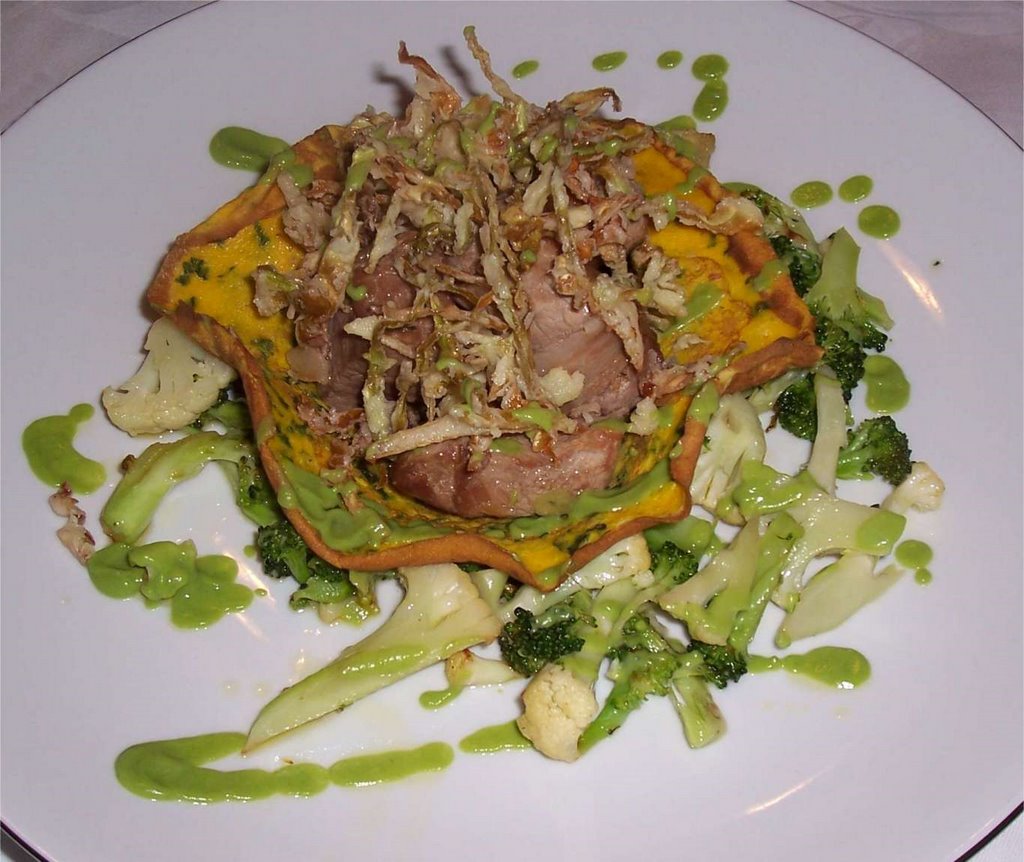

Main course – lots of lovely chili-tossed vegetables and nuggets of fresh local pork, girded in pancetta and crowned with frizzled cabbage.


Dessert was a mercifully dainty, delicate and delicious gelato trio: pumpkin (zucca) topped with some orange marmelata, pomegranate (melograno) and persimmon (cachi).
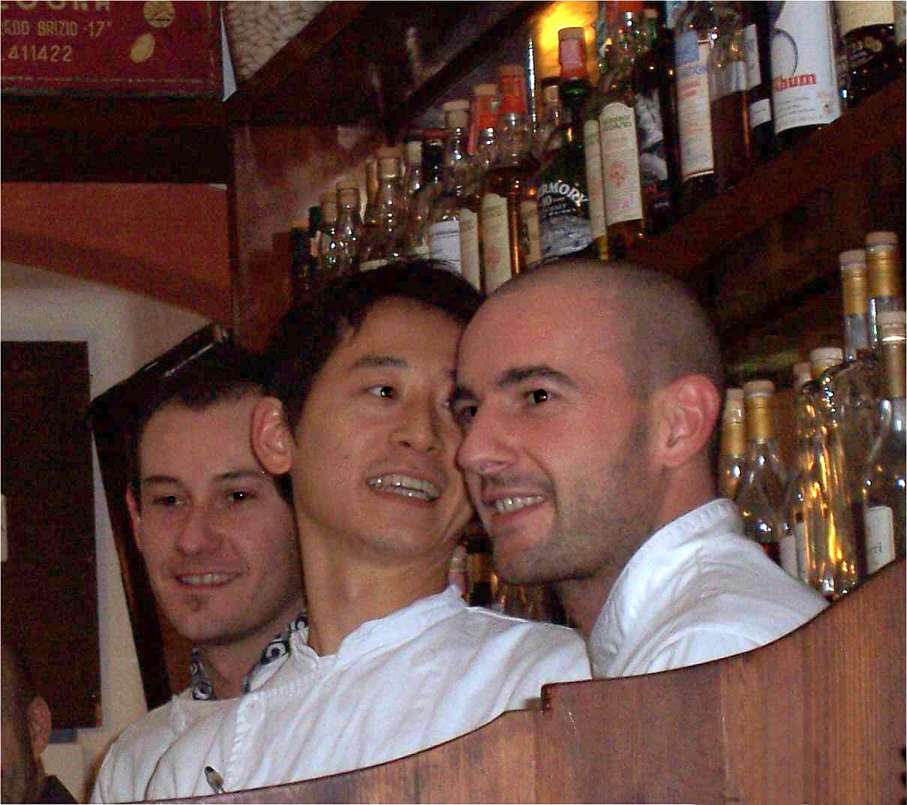

Praise to the chefs.

Where the milk comes from

So today’s trip was to the dairy farm:
we got in the bus
to go to the farm
to meet the man
who owns the cows
who give the milk
that makes the cheese…


But before the farm, there was the Christmas market, and a stall selling small round edibles of a Sicilian persuasion.

Then there was the farm. More round things.


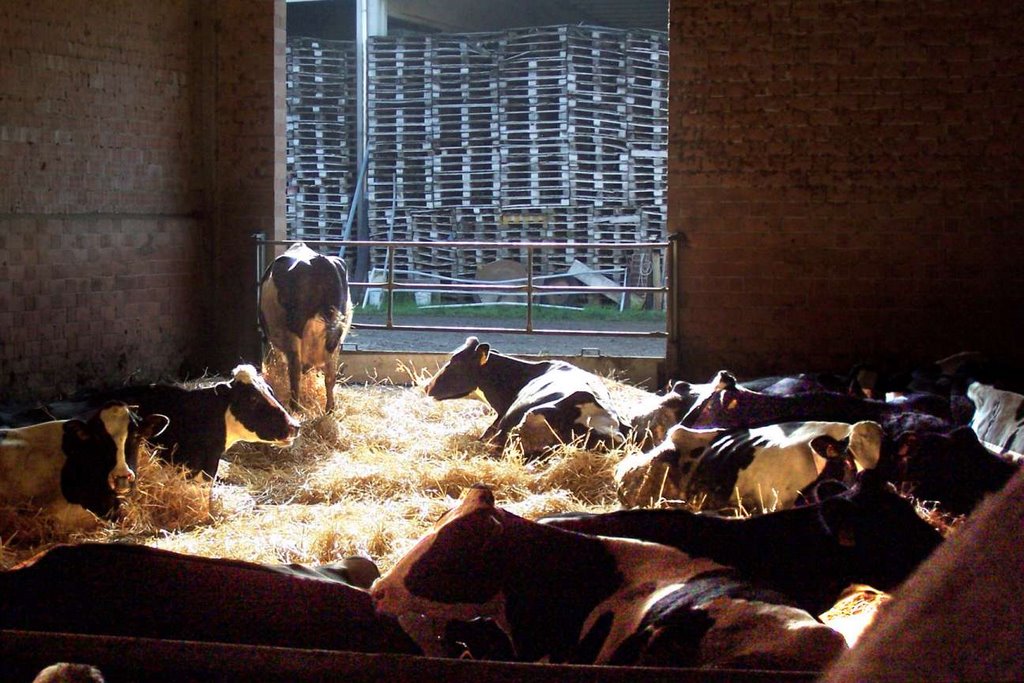
In addition to a persimmon tree, they had 200 cows, about half of which are giving milk at any time while the others are either growing up or getting ready to give birth. This farm had only Friesians, which came from Canada and the U.S. The farmer belonged to a dairy co-op of 11 farms and was very near his cheese factory, convenient for making that 2 hour deadline to deliver the milk. The other restriction on milking for Parmigiano-Reggiano is that the actual milking must be completed within four hours, start to finish (this farm managed it in one and a half hours, twice a day).


Hmm… these remind me of something I’ve seen lately… cylindrical, straw-coloured, stacked to the ceiling… The Parmigiano-Reggiano consortium obliges its dairy farms to produce – on-site – at least 50% of the feed for their cattle; this farm produces 90% of its feed. No animal products can be included in the diet of the dairy cattle, and no silage or wet grass, all to preserve the safety of the cheese, the reliability of the ripening process, and the purity of the flavour.


My fellow Canadian?


We observed the bedroom of the cows.


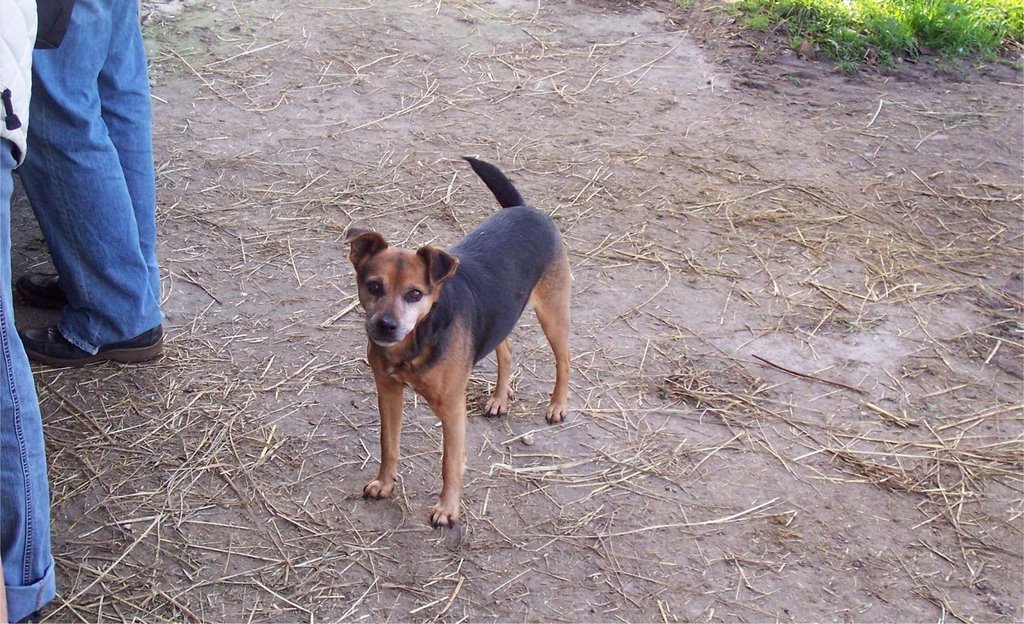
Scary farm dog.


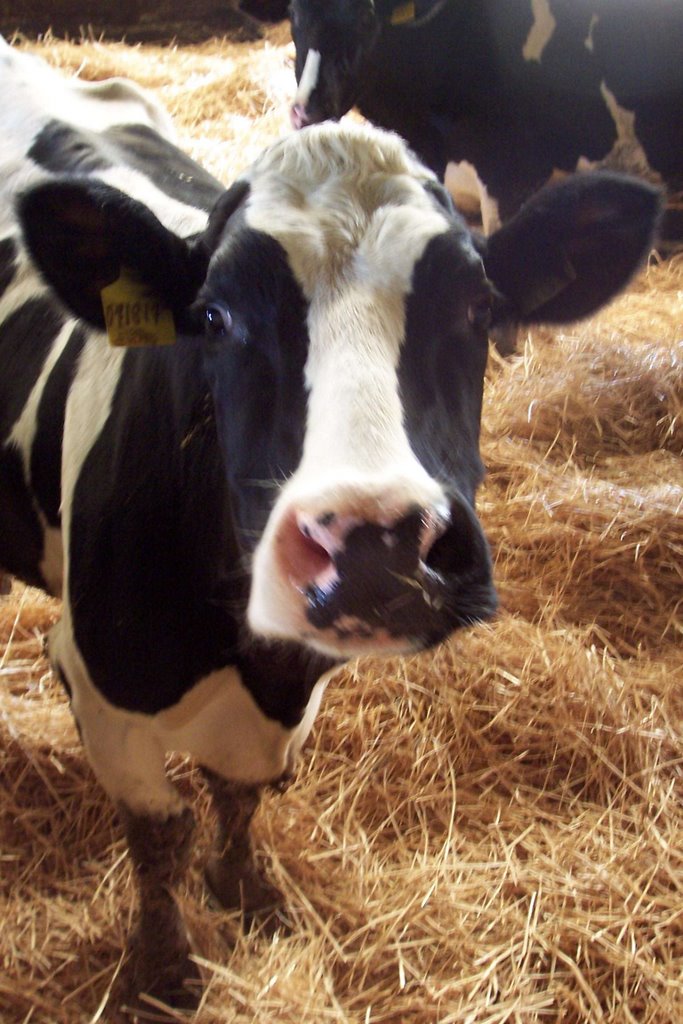
And on that farm there was a cow…


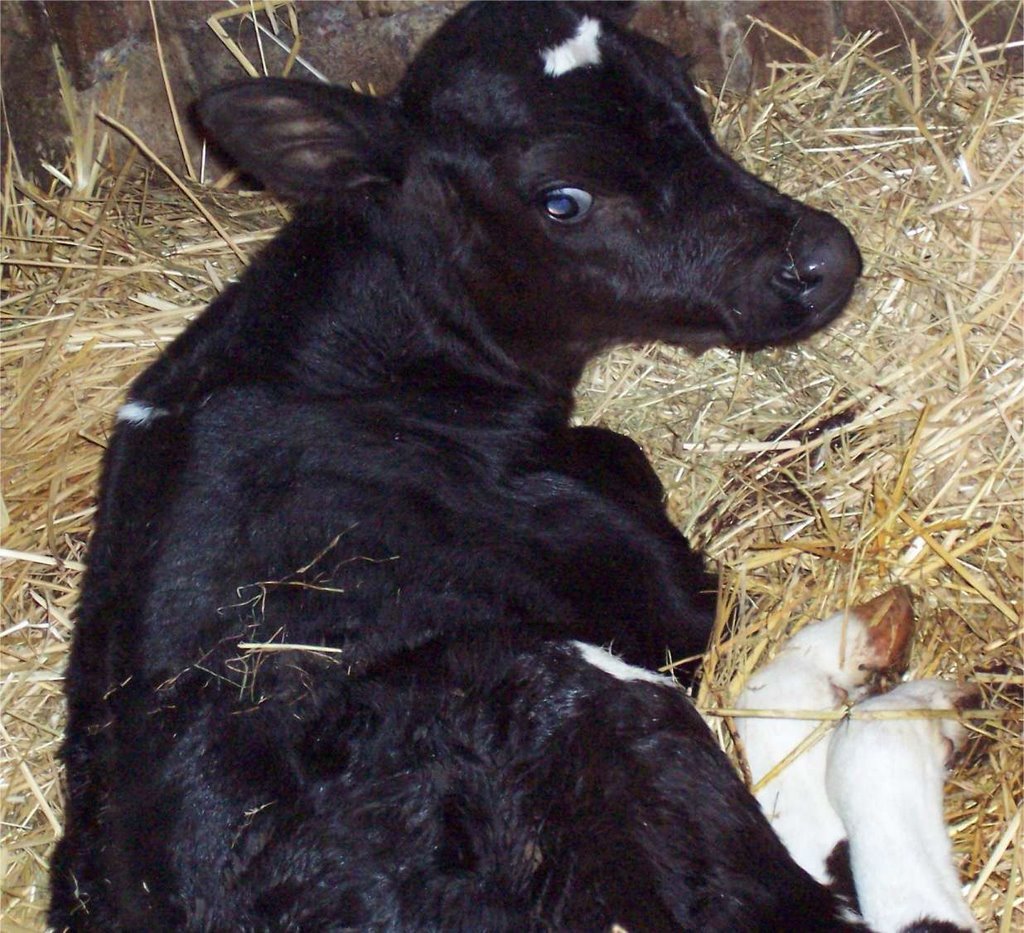
Why yes, as a matter of fact, I was born yesterday.

The real thing – Parmigiano-Reggiano

Again the sciopero raises its ugly head. We had been scheduled to visit a cheesemaking factory and then a dairy farm on Wednesday and Thursday, but the bus strike would have affected our, um, bus, so the visit and our classes were rescheduled so we could go Thursday and Friday instead. Then the Wednesday strike was cancelled. Then we heard an all-out strike (buses, trains, planes) was planned for Friday instead. Then that was cancelled. Or was it? All so confusing.

Anyway we were, on Thursday, very happy to visit a Parmigiano-Reggiano cheese factory in nearby Baganzolino on Thursday and see all that had been described to us actually happen before our eyes. We arrived at 8am in time to see the whole range of the day’s cheese production. and were well briefed on the bus.

The milk that arrives at the factory must be delivered within two hours of milking, so there was no time to lose. Everybody went wild with cameras and I think several thousand images were taken as we watched it all unfold; here are a few of mine.


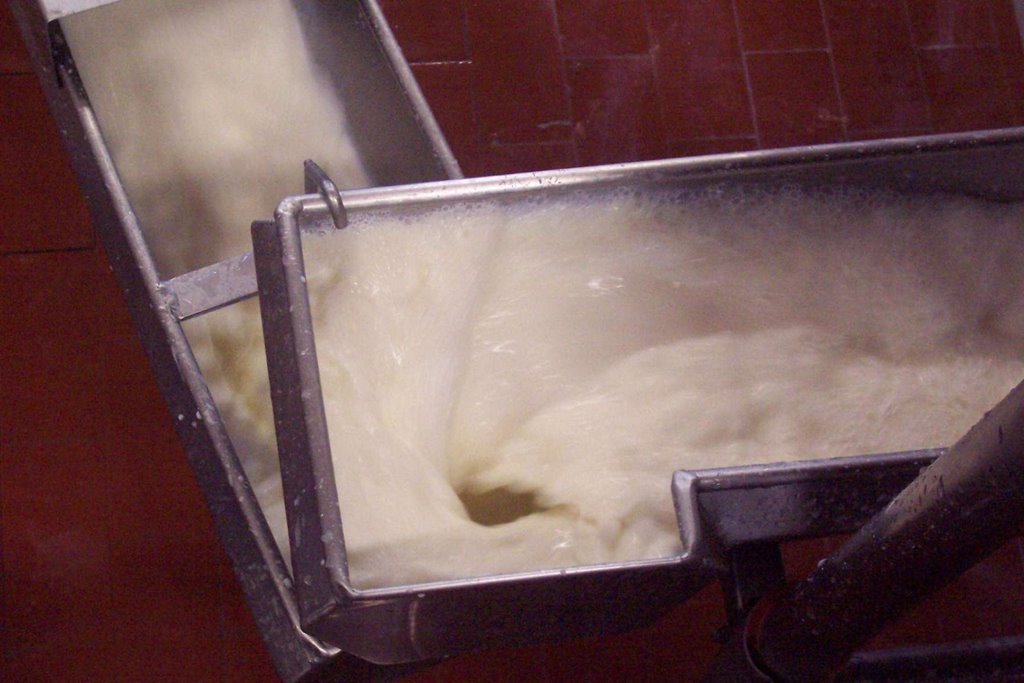
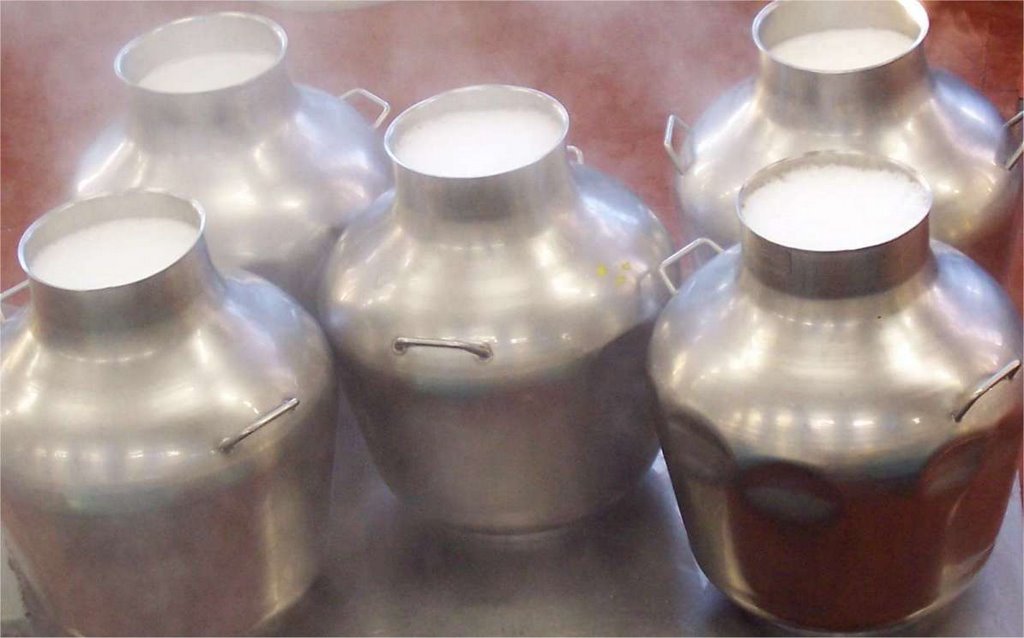
The milk from the evening milking is set out in trays to separate overnight. The cream is skimmed off and this milk is mixed with that of the morning milking, so it’s genuinely partly skimmed. It’s then heated, and whey (naturally fermented from the previous milking) and rennet are added.


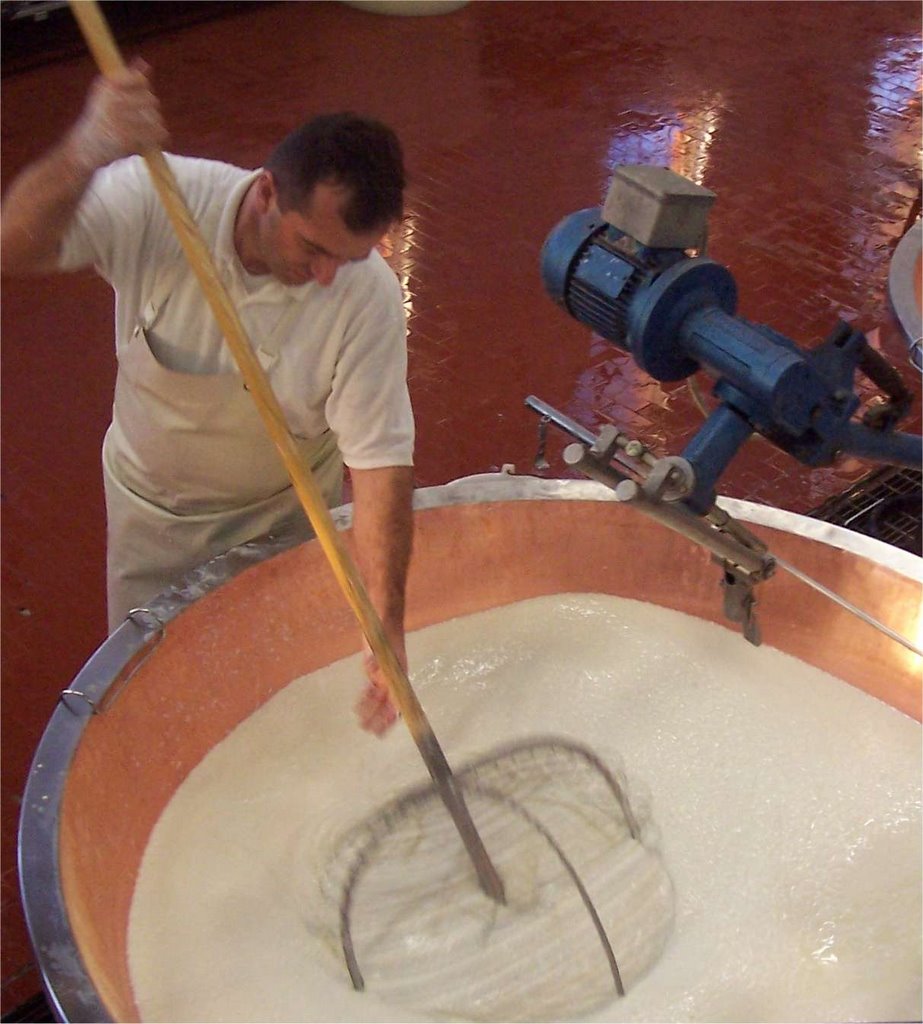
The whey and rennet have been added to the milk; it has coagulated and the curds are being broken up into grains the size of wheat kernels. For this task they use the spino, a whisk unique to Parmigiano-Reggiano cheese-making, named for the thorn branches that were originally used (hawthorne, according to our Italian teacher).


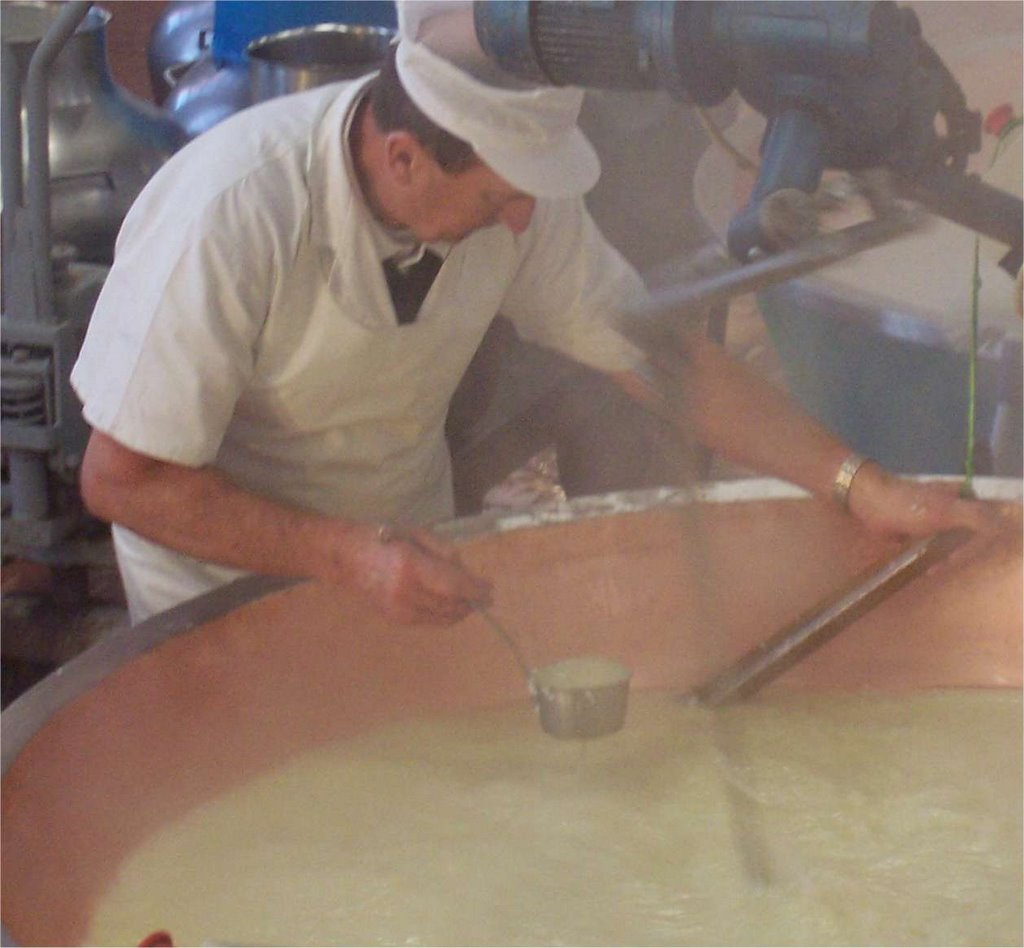
The master cheesemaker – we were told that, like the cows, he never gets a day off – checks the temperature and curd. Once he deems it cooked, the heat is switched off. Traditionally and practically, copper urns are used because of their excellent conductivity: and their ability to both heat up and cool down quickly.


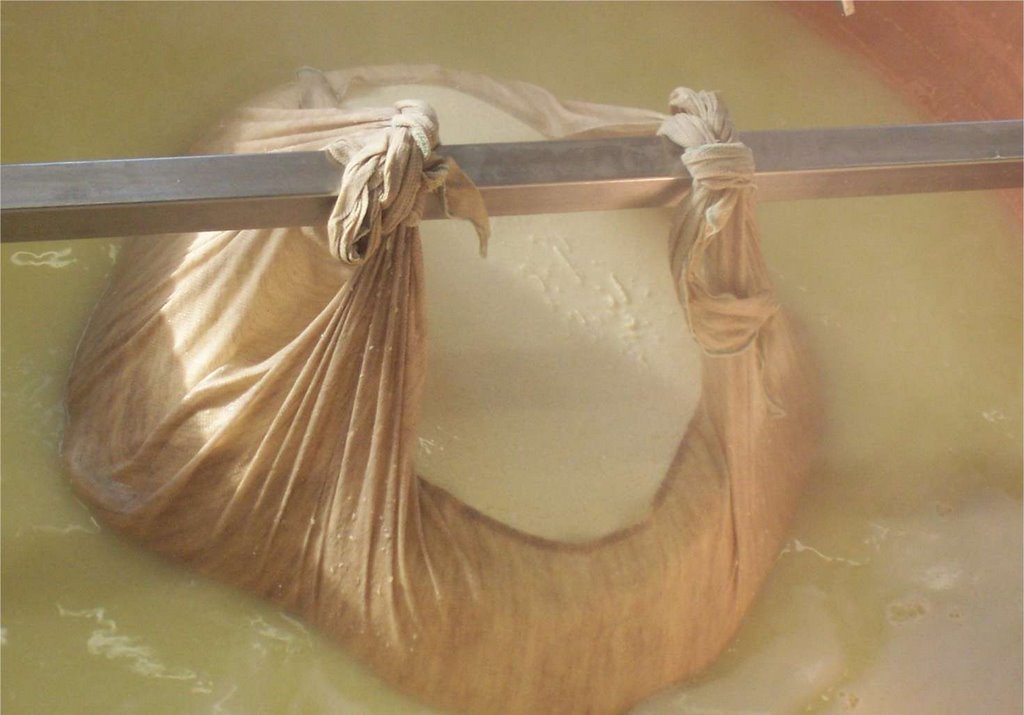
The cheese has coagulated into a nice big ball. It’s cut in half after this; each vat makes two cheeses, a total – for this factory – of 24 cheeses a day.


Most of the whey goes to the pigs (this be prosciutto country after all); some is made into ricotta; this batch will be used for the next day’s cheesemaking.


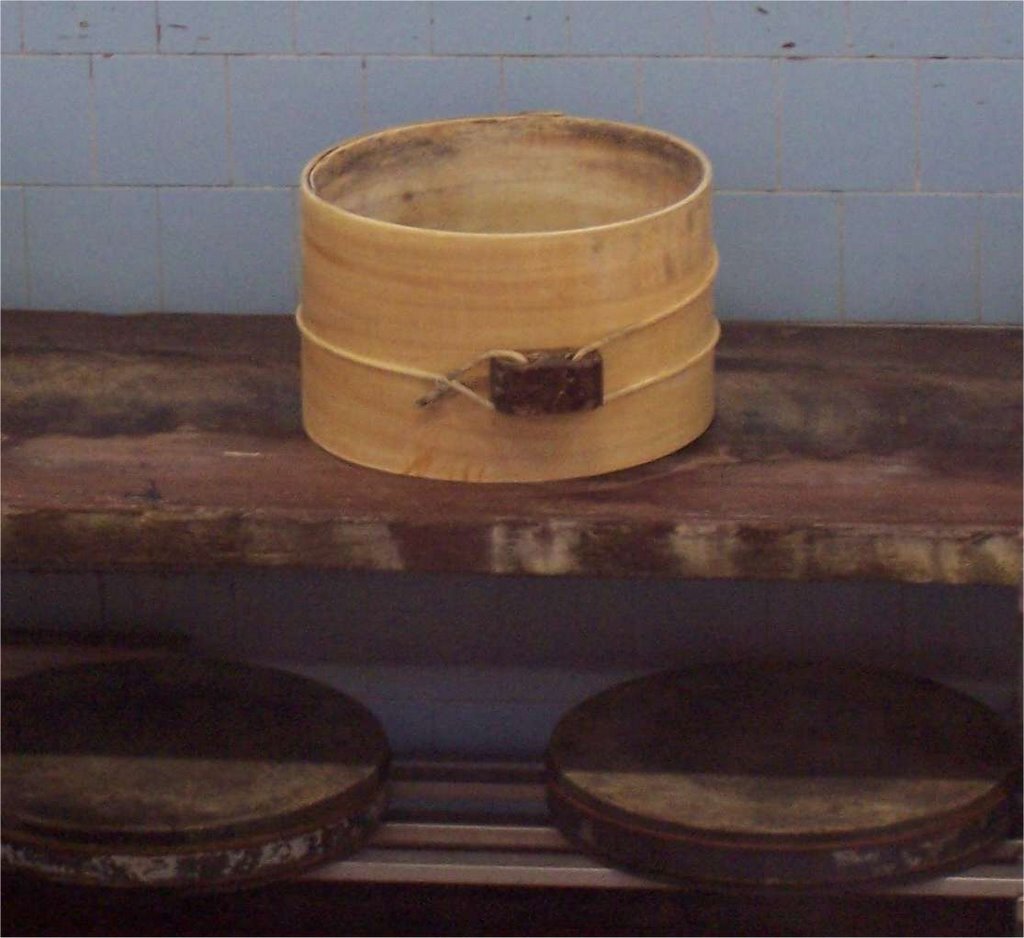
The first mould for the cheese.


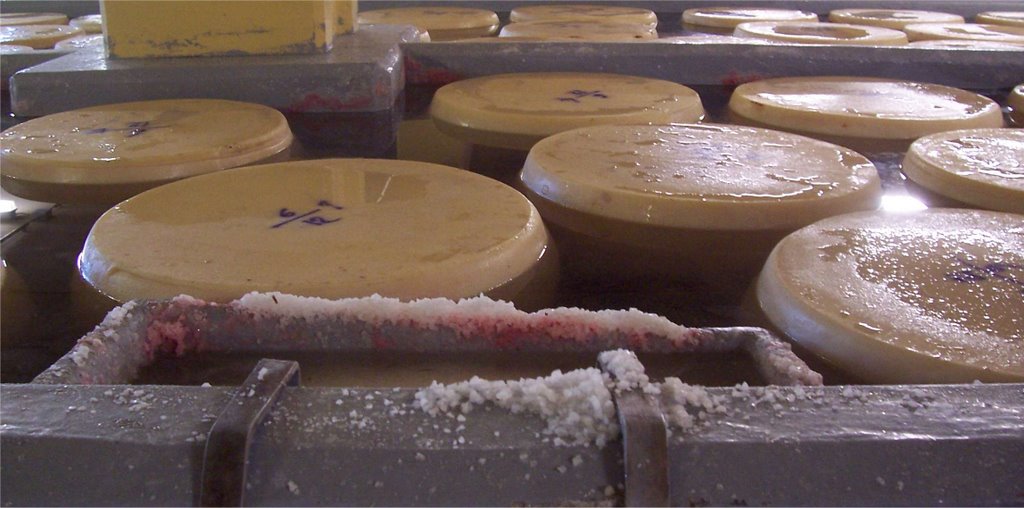
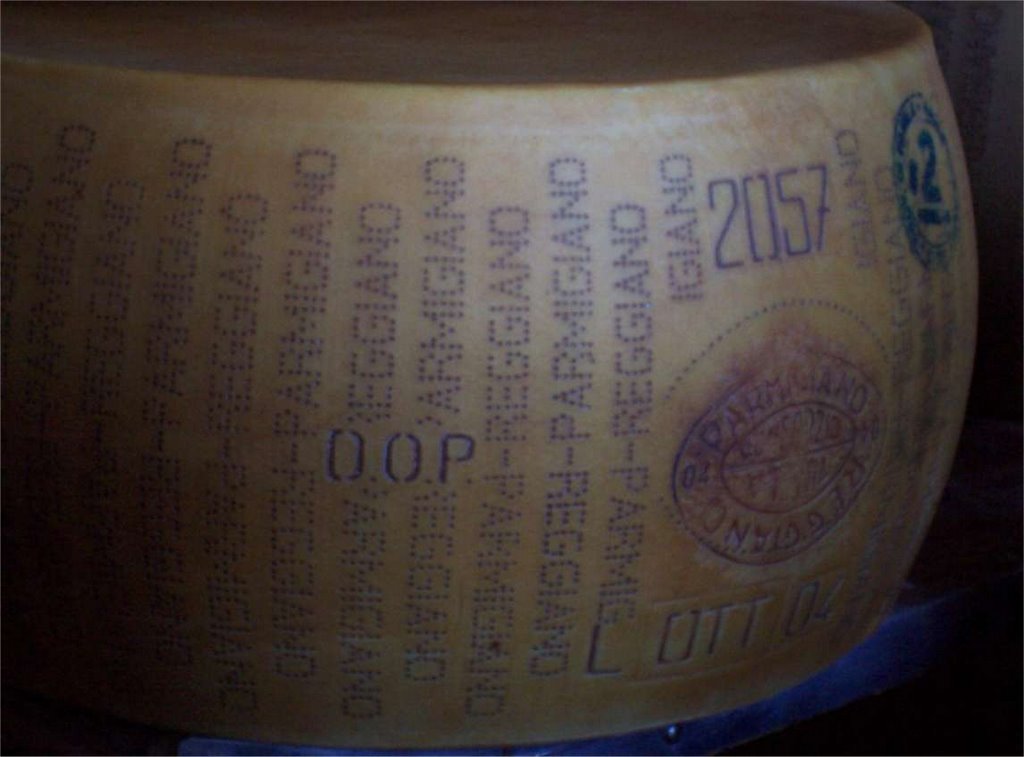
After two days – the Parmigiano-Reggiano brand having been imprinted the first day and the cheese shaped in metal moulds the next – the cheeses are floated in brine for 20-odd days, to firm up the rinds and allow osmosis to do the work of removing excess moisture and prepare the texture for a good long aging process. The cheeses are turned and re-salted regularly. Salt is the only preservative allowed in Parmigiano-Reggiano.


Look up… look wheeeeeyy up!


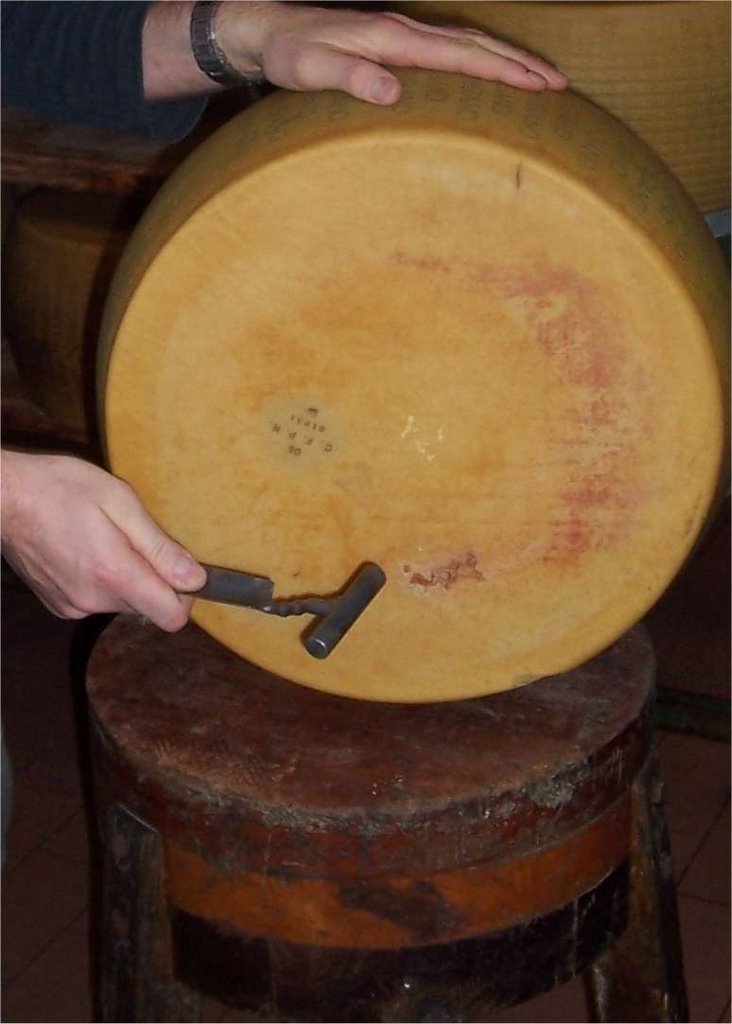
Once aged, the cheeses are tested by experts (battitore) who use a hammer to determine the depth of the rind and the quality of the cheese through sound alone. A hollow note can indicate uneven texture or holes (eyes). We’ve heard from several directions that holes are an impermissible defect in Parmigiano-Reggiano; formed by fermentation within the cheese paste, they can allow bacterial growth and spoil the flavour. The farmers go to great lengths to prevent the cows from eating wet grass, and neither are they permitted to eat silage, because these can promote lactic fermentation that could spoil the cheese during aging; so notes on permissible feed for the cows have been included in the regulations that govern Parmigiano-Reggiano production.

Much of the cheese is sold after 12 months, just to pay the bills. We were told that currently the Parmigiano-Reggiano consortium cheesemakers are operating at a loss, and the earliest they can sell their product is 12 months, at which point it is fine for grating, though the preferred age for eating it as a table cheese is after 24 months. Its digestibility and flavour improve, but its texture gets drier as it ages. One of the distinguishing features of the well-aged Parmigiano-Reggiano is the presence of small white crystals – an amino acid called tyrosine – which you find also in other long-aged hard cheeses such as (yum) gouda.

British cookery writer Delia Smith visited this region and learned about Parmigiano-Reggiano and documented her take on it on her website. I especially liked what she revealed about its noble history in England:

During the Great Fire of London, that most discerning of diners, Samuel Pepys, thought the cheese so precious that he dug a hole to bury his Parmigiano Reggiano to preserve it from the flames.