Skip to content

Terra Madre: Food diversity & safety

Friday’s workshop on “Ensuring food diversity and safety in Europe” had some sponsorship from the EU’s Directorate-General for Health & Consumers. If I understood correctly, this was the first year that EU delegates came to join the discussions at Terra Madre, and they were well placed to respond to concerns – long publicised in the media and elsewhere – that EU regulations are out to destroy traditional foods in Europe.

Eric Poudelet was first up, talking about food safety. He cited a figure of about 4000 declared instances of “food intoxications” – estimating the total with undeclared instances could be more like 2 million (for the EU’s 500 million population). The EU’s response to the major food problems of the nineties (BSE, Belgium’s dioxin contamination, etc) was a white paper on food safety in 2000, which proposed some 80 food actions to assure “farm to table” safety, including traceability of feed and food, and risk control measures. (This led to the creation of the European Food Safety Authority, whose mandate includes food and feed safety, nutrition, animal health and welfare, plant protection and plant health.)

He denied that Brussels aims to kill of traditional food products, maintaining that they believe it’s possible to prepare traditional food products while respecting hygiene rules. Member states are responsible for developing and administering appropriate hygiene procedures in line with EU guidelines.

Poudelet said that the EU wanted to stimulate the use of raw milk, one of the most important ingredients of great food in Europe, and the guidelines were adaptable to this and other traditional methods and ingredients. So for example although stainless steel is preferable for mixing foods – including meats – wood or copper can be allowed if these are important to traditional methods of preparation. Protected designation of origin, which protects these exceptions, does not cover all varieties of foods, but it may be extended to cover products that are currently excluded. So that’s hopeful.

Academic Jean-Pierre Poulain, who teaches sociology and anthropology at the University of Toulouse, spoke next about the importance of traditional foods in European culture. He talked about urbanization, and the food traditions that have moved on and off the land with the people moving to cities; he noted that “peasants” are still few but vocal, and they should be heard as we work out how to feed the world.

He went on to discuss some of the shifts in the world of food; how it’s becoming more and more “medical”. Though it’s true we have more treatable medical conditions than ever before, we can view food as one of the factors in both cause and prevention. There are new challenges to improve the quality of our food as we grow older.

Food is also becoming more “legalized”: many laws and regulations try to govern traceability and safety, and lead to prosecutions. We may not all be victims taking our complaints to the courts, but the legal profession is getting actively involved (he gave the example of Erin Brockovich), and this further distances people from food.

Food is also “politicized” through protests against industrial food systems; the north/south divide and dialogue over access to food; climate change and carbon emissions; and the “buycott vs boycott” effect for marketing ethical, fair trade and local foods.

Food heritage is also on the table: in principle at least, the UN is willing to admit culinary traditions to its intangible heritage lists, which register for protection “practices, representations, and expressions, and knowledge and skills which are transmitted from generation to generation and which provide communities and groups with a sense of identity and continuity.” (Although food traditions that relate to the activities that have been approved for the list are often included, no culinary tradition on its own has yet been approved, as far as I’m aware, though France and Mexico have both tried and been rejected twice.)

Poulain ended with a brief analysis of the issues around animals, and the two poles of concern: anthropomorphism (Bambi syndrome) vs idealization of the natural, neither of which is helpful when addressing the full scale of the place of meat animals in a world struggling to feed itself equitably. What planet do we choose to leave to our children, he asked, and what fairness can be found between north-south and urban-rural divides?

One other speaker I’ll mention was Daniele Rossi, the project coordinator for Truefood which has 11 member organizations (Federalimentaire is the Italian one; there is no UK representation) representing some 35,000 small to medium European food and drink businesses. Because most research into food safety and technological innovation is done for large-scale enterprises, Truefood aims to find applicability for smaller ones, and to help them tap into food safety initiatives and technological innovations, as well as better understand consumer perceptions and improve marketing and supply chain development. In other words, it seemed to me, to make small companies act more like big ones. It left me wondering how helpful that really was when the economic might of the multinationals overhangs us all; might it not just prepare the small fish to be more easily digested by the large?

Small-scale traditional food production is a massive segment of the European economy: in Italy alone about two-thirds of the national sales turnover is in traditional foods. Europe-wide, some 300,000 small/medium sized producers, most family-owned, typically with fewer than 20 employees, account for 4.4 million jobs. When you consider the numbers, that’s a lot of clout, but it’s fragmented and dispersed throughout the continent; on the other side of the balance are the 30 large multinationals. And we know what their aims are.

There has been a lot of discussion this week about the skewed reality we’re living, where economics has overwhelmed humanity, and left us a more brutal world to live in. More on that in the next post.

Terra Madre: Sustainable education

If I had a few more lifetimes I would have gone to a few more workshops – can’t imagine how many there were at Terra Madre, with 8 meeting rooms, a Lingua Madre space and a Slow Food Projects Meeting room; plus two auditoria for larger gatherings. And then the many tasting events occuring simultaneously.

One hopeful session I went to was about sustainable education

where Chilean economist Manfred Max-Neef (author of Human Scale Development) rocked the room with frank views on the economic, social and political context in which we’re living. Decision-makers, he said, are letting us down: political action can only come from the bottom up. For all the talk of an improved economy, nobody mentions the people: are we all five percent happier now? His vision for new economies, coherent with the problems of today have five aspects:

  1. Economies serve people rather than people serving economies;
  2. Development is about people, not objectives;
  3. Growth is not the same as development; growth doesn’t require development;
  4. Economics cannot ignore ecology;
  5. Economics are a subsystem of a larger system, the biosphere, so infinite growth is impossible.

His bottom line: under no circumstances can economic interests be above reverence for life. The most developed society, he says, is the one where its people have the best quality of life; where growth can be measured by whether you are happier next year than this. Yet the more stupid a society becomes, he says, the more it consumes, and that is what economists mean by growth. He points to problems in how economists have been trained, with utter disregard for the ecosystem. It is easily apparent that the contributions by the ecosystem to this planet are many time more annually than global GDP, but economists value them as zero.

Alice Waters was on the panel as well and explained that she came to start the Edible Schoolyard program because she had been a Montessori teacher before she went into restaurants. It is a principle of Montessori teaching that if you can engage children at the table and in the kitchen, you can open their sense and give them the values that will allow them to become good stewards of the earth. Although this teaching is aimed at young children, the American food system was so broken that she aimed her program at teens, middle school kids. First they made the garden, and then built a kitchen, but the aim was to take over the cafeteria.

Her dream is to achieve funding to feed American kids at school, to help the economy (fair pay for local farmers), tackle obesity and nutritional deficiencies (by serving nutritious, delicious food at school), change the social order (kids involved in food and cooking spend time in communal kitchens rather than watching tv, and spend money on food instead of cell phones and computer games) and help the environment (kids involved in growing their own food understand and care about where it comes from).

In what was one of many examples I heard that were sad reminders about the shameful social atrocity visited upon the Canadian prison system, she spoke briefly about Catherine Sneed, whose horticulture program in San Francisco County Jail, growing vegetables on prison land that were then donated to soup kitchens and homeless shelters, was so successful it spawned a sort of halfway garden for released inmates, The Garden Project.

Many participants got up to share their experiences and projects; it is these exchanges that prove the world is not yet bereft of hope, energy and positive action. Some of these extraordinary initiatives that Terra Madre delegates are working on include

  • the Manor House Agricultural Centre in Kitale, Kenya, where high school students are offered a biointensive agriculture course, basically relearning what their grandparents knew, with an emphasis on building soil fertility and growing and saving seeds in low-input, low technology farming methods;
  • a Colombian program to teach nutrition and food safety to youth and students in agro/ecological schools;
  • an open slaughterhouse (s-laughterhouse, he called it) in Virginia, to teach people where their meat comes from, and the difference between industrial and small-scale slaughter of meat animals;
  • school gardens in Romanian highschools, where students visit farmers and bakers and learn to make their own bread; as well as gastronomic summer camps where Unisg and community trainers teach international students about everything from cheese production, nutrition and herbs to biodiversity and food processing.;
  • a series of 60 national Venezuelan programs that bring veterinarians and others to teach principles of sustainable development to farmers and young people, to break the idea that knowledge is sequestered only in universities;
  • Argentinian initiativesthat bring chefs into impoverished areas to give cooking classes (and learn themselves about traditional food preparation methods from the elders they meet there); and over 30 growth centres funded by the government that teach organic methods of home-growing vegetables;
  • a former Unisg graduate from Brooklyn has started a Good Food Jobs website (overwhelmingly American at this point but perhaps that will change) and asks anyone working in this area to contribute stories about grassroots change: what are you working at that is making positive change to food?
  • another Argentinian initiative, the Argentinian Movement for Organic Farming, a nonprofit that educates farmers and provides support and produces new knowledge about farming methods;
  • an Argentinian who was so empowered by learning about prison gardens in California that she started a program in Argentina; the first year there were four people involved but the interest this engendered by other inmates expanded it to 40 participants, who could grow food for themselves, to support their families at home, and to feed their fellow inmates. As they moved to different institutions they brought their knowledge and interest with them and the program is expanding in a holistic way throughout the prison system;
  • a school project in Istanbul that seeks to restore the connections lost between urban and rurual life, through interactive lessons in the classroom on seasonal eating, and fair and ethical production and consumption. The program also includes taste and sensory education and cooking lessons; they are planning school gardens but there is no space within the urban schools so they are seeking community spaces for these;
  • a German university initiative teaching students at the University of Hohenheim about food growing and environmental safety, as well as providing an open space where students can watch or participate in cooking food from the university’s food garden or from local farmers; as well as an academic program to combine agricultural science and ethics to teach about areas such as land grabbing.

Sensorial overload

Hard to find coherent words to report on an overwhelming couple of days. Here are some sights:

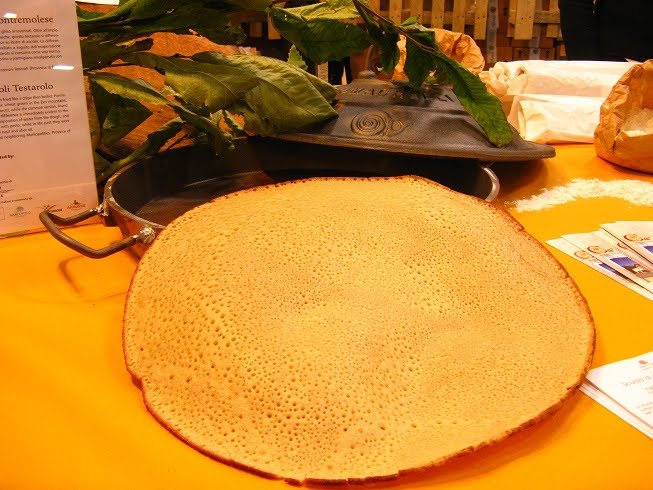
I found my long lost love, Testarolo; said to be the earliest pasta, it’s named for the large flat pan it’s cooked in. Cut it into strips, cook in water and toss with pesto. Heaven…

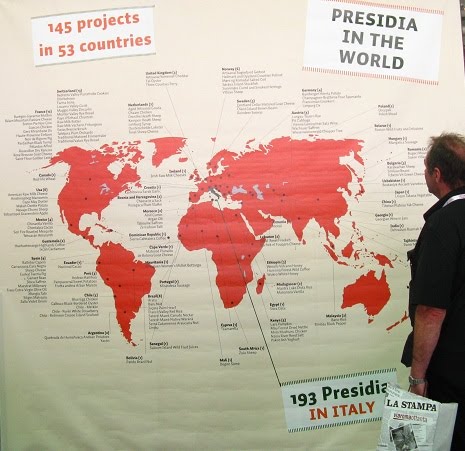
Some of the educational displays in Terra Madre include a map of the world’s Presidia products.

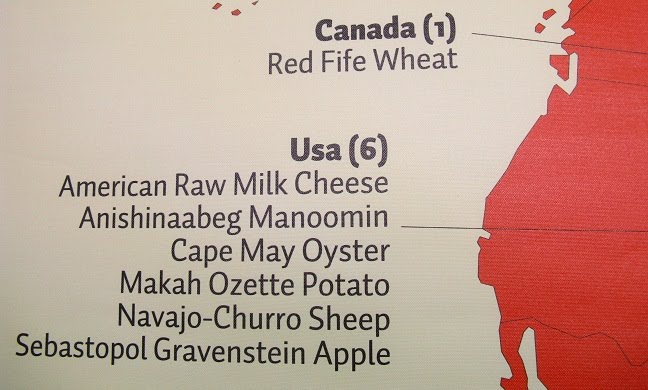
These are characteristic, traditional food products that are singled out for promotion; Slow Food helps with product development and marketing. I sense Canada’s not exactly pulling its weight here…

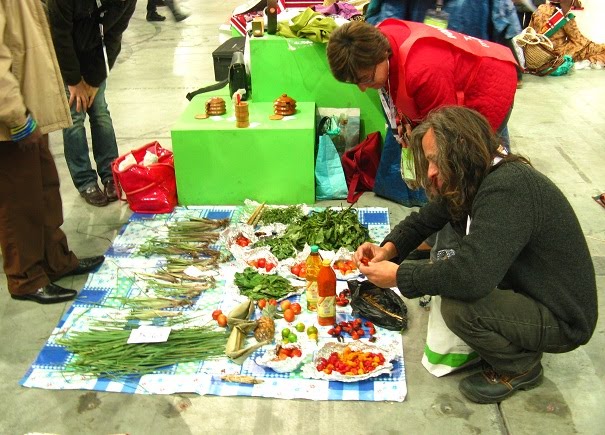
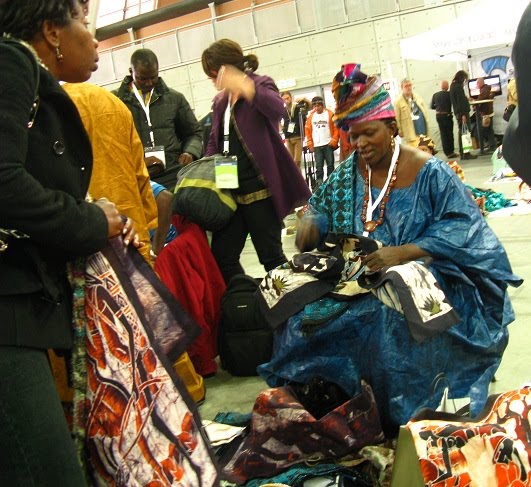
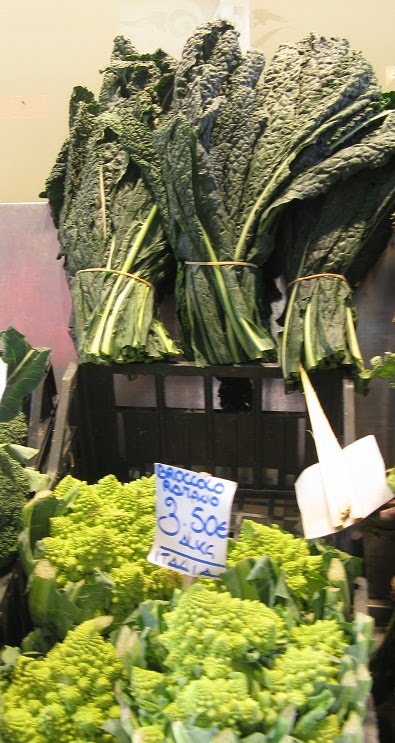
All kinds of everything at the Terra Madre World Market; vendors lay down blankets and sell whatever they’ve brought from their countries. Here, some vegetables:

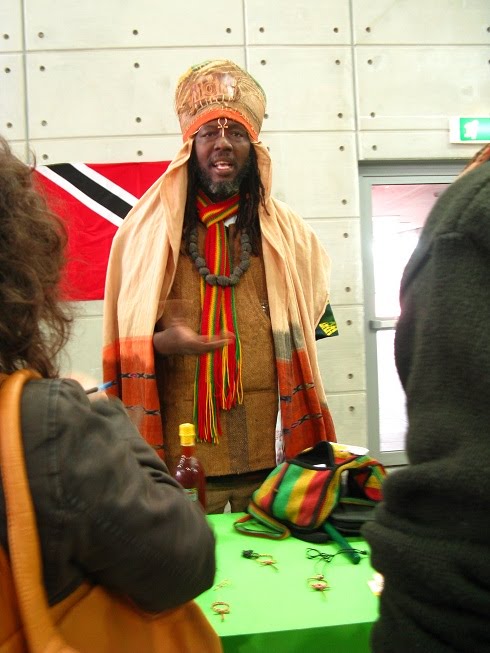
there, some education on the Jamaican view of the world:

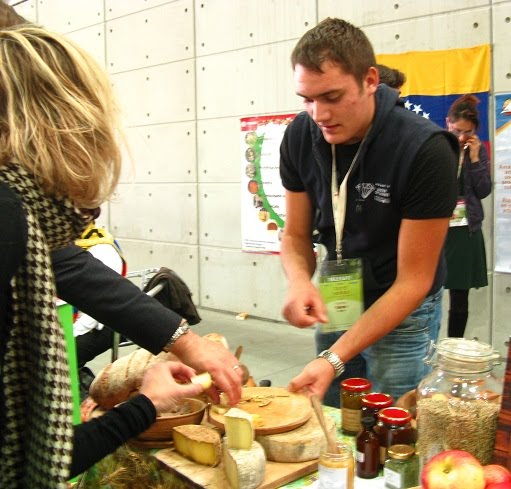
or some Austrian cheese:

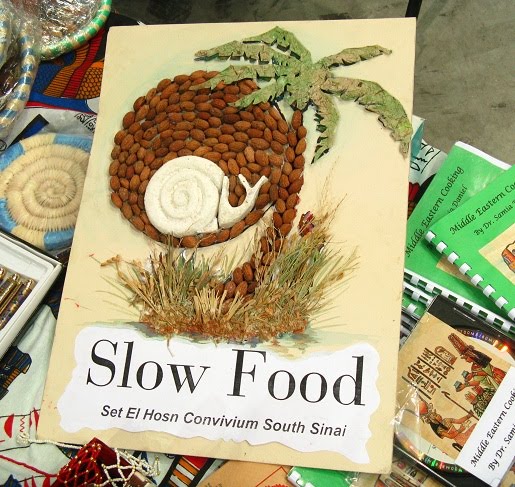
And some other stuff:

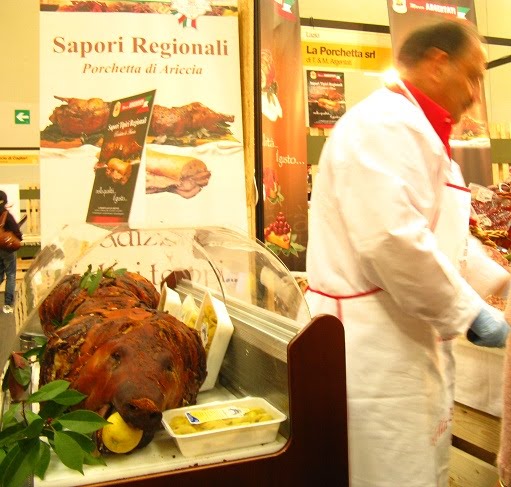
A few more forays into the Salone. Here’s one pig with a sobering outlook:

Melanzane rosse di Rotonda from Basilicata. Tiny red eggplants that look like tomatoes:

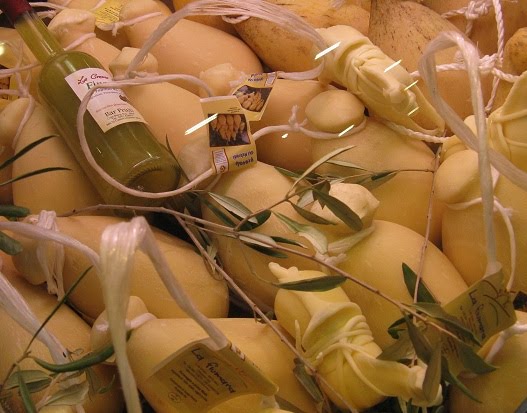
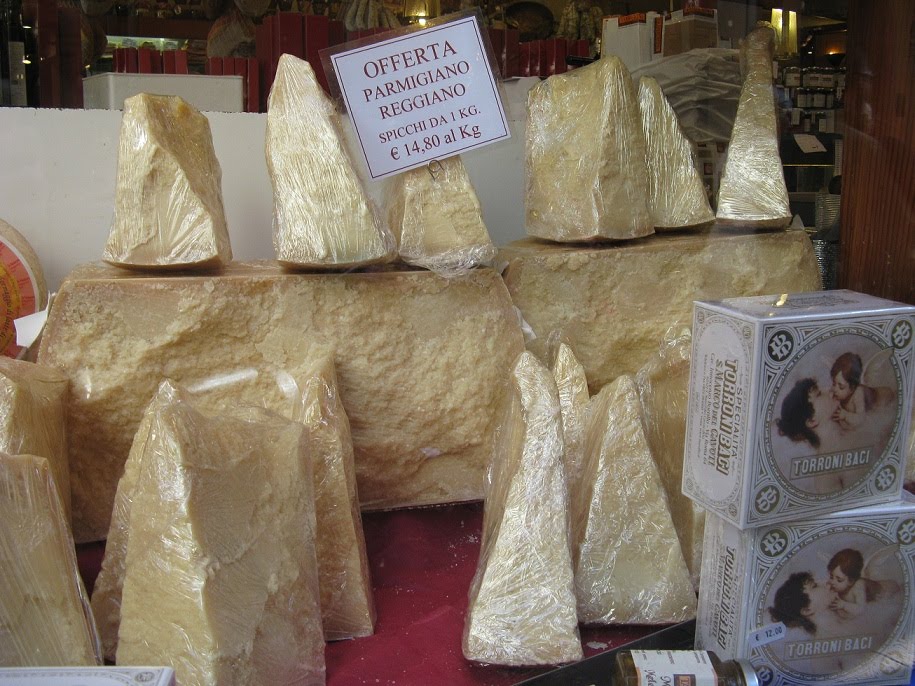
Some very large, very interesting looking cheese from Abruzzo:

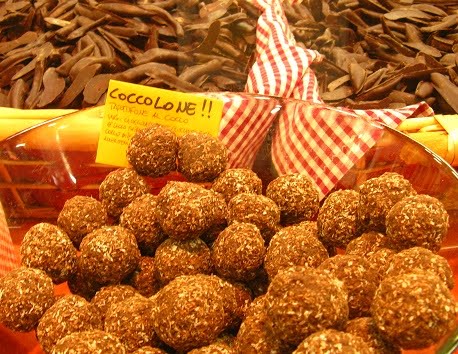
Coconut truffles:

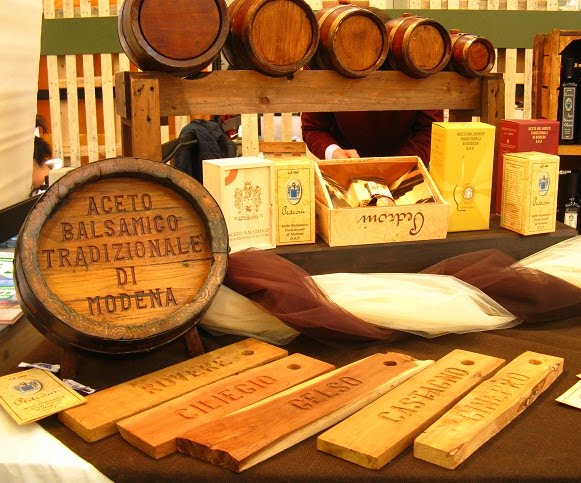
A display of the woods used in the barrels that balsamico tradizionale are aged in:

Dear olde England didn’t quite get it…

Dutch oyster shucker:

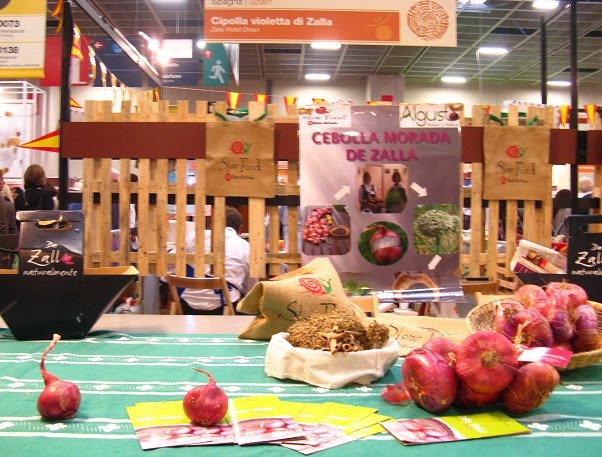
Red onions from Spain:

German potatoes:

French crepes:

Norwegian herring:

Still two days of food – and several hundred more photos – to go.

Terra Madre opening

The first day of anything is chaotic, especially in Italy. The first day of a fair expecting 150,000 especially so. And the logistics of herding some 5000 very international delegates to the opening ceremonies for Terra Madre were handled with something less than military precision. But like all many-peopled events in this country, you can only stand back and admire the scope of the vision and the success of its achievements. That is, after you have tended your blisters, or picked yourself off the floor where hours ago you wept with fatigue and hunger, or exhausted your repertoire of bluster at the elegant shrugs and lengthy excuses of whatever group of officials you were dealing with. The queues are almost hilarious in their orderly beginnings and their scrum-like property when the gates open.

I especially enjoyed crossing three lines of traffic to get to the bus…

But then you taste the food, and see the pride in the faces of its makers, and you are suddenly enraptured; helpless in fact. Where else in the developed world can you still find so many labels that don’t yet all say “Made in China”? Food, shoes, clothing. You sense it’s a culture, like all of them, poised at the brink even so, but for now, we embrace it with gratitude.

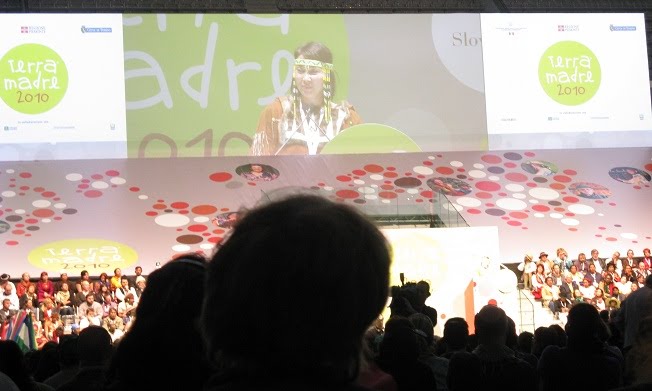
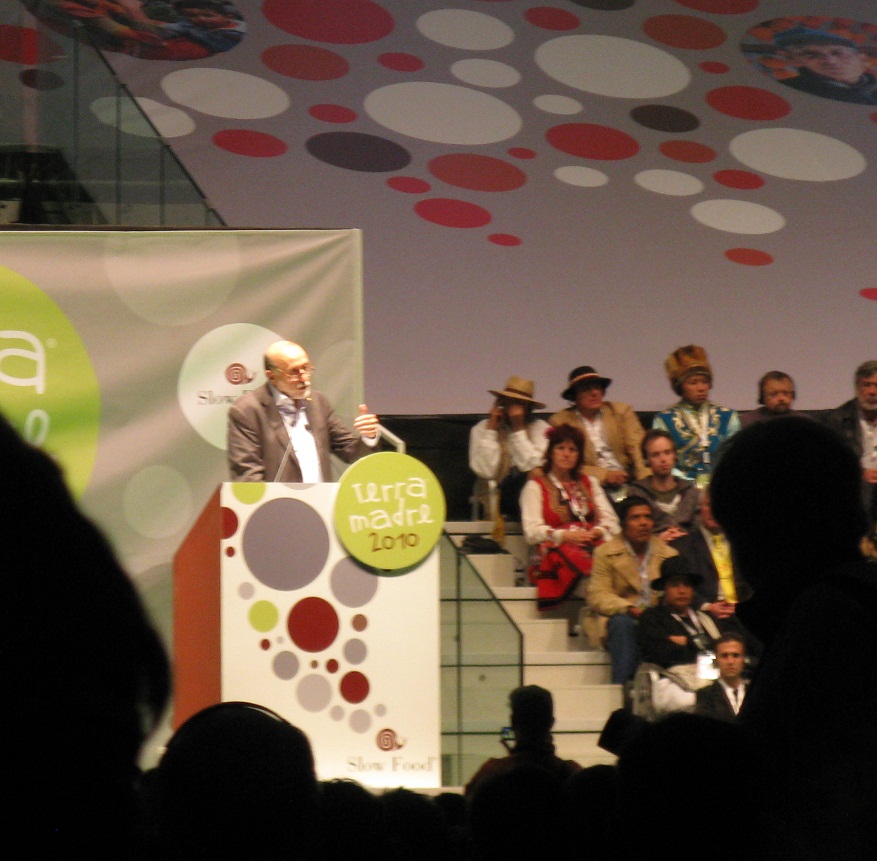
Terra Madre opening ceremonies were all about indigenous. Spokespeople from many endangered cultures talked about the fight to preserve their traditions and languages.

The Sami reindeer herder pointed to the difficulties of maintaining a culture when your traditional territories have been appropriated by four different countries (Russia, Finland, Norway and Sweden), but invited the world to a conference on indigenous issues there next summer. Carlo Petrini was last up, of course, preaching fraternity and tolerance.

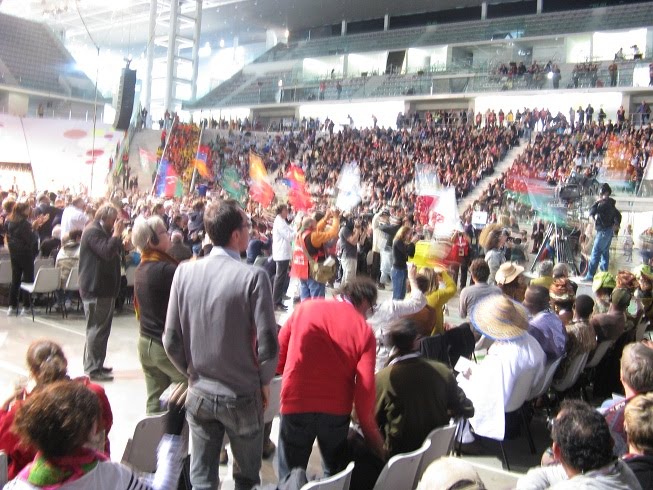
Lots of flags…

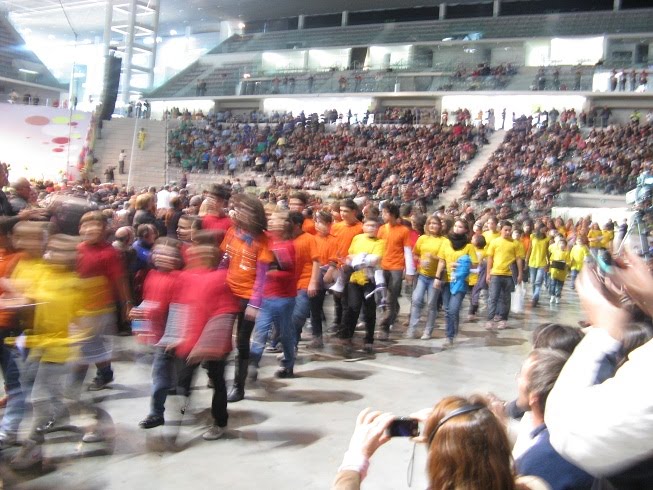
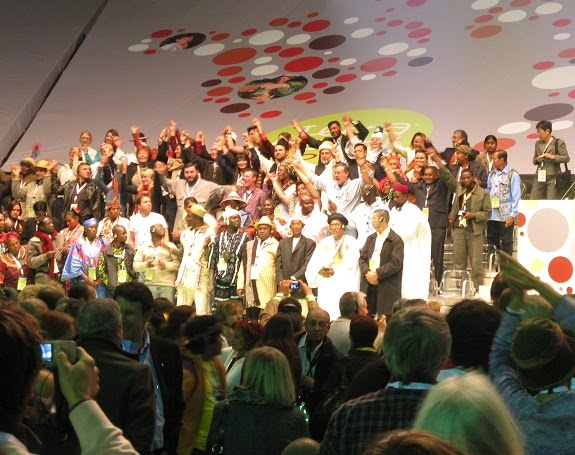
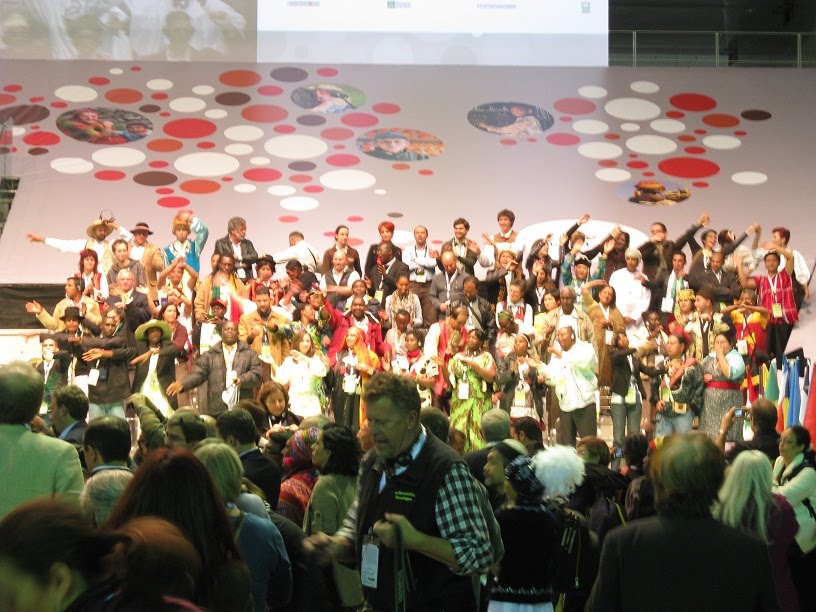
Generalised dancing and bopping about by the 161 flag-bearers at the end.

Starting with Salone

What can one say about Salone del Gusto? The world’s largest artisanal food fair is how I describe it. We attempted to have a quick look round in an hour or so, but barely managed to tour one small corner. An interesting corner though.

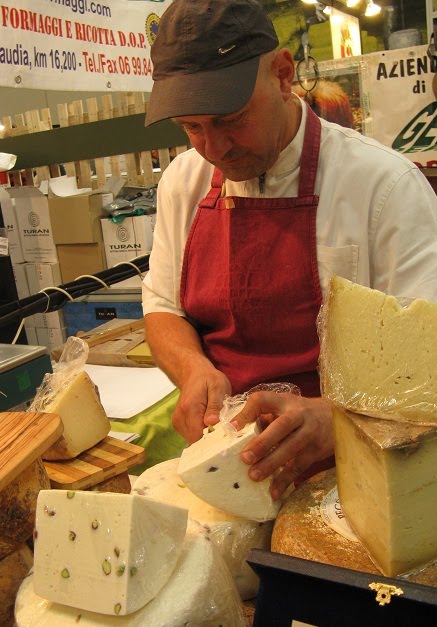
We started in Sardinia, where there were lots of interesting shapes and sizes of cheese:

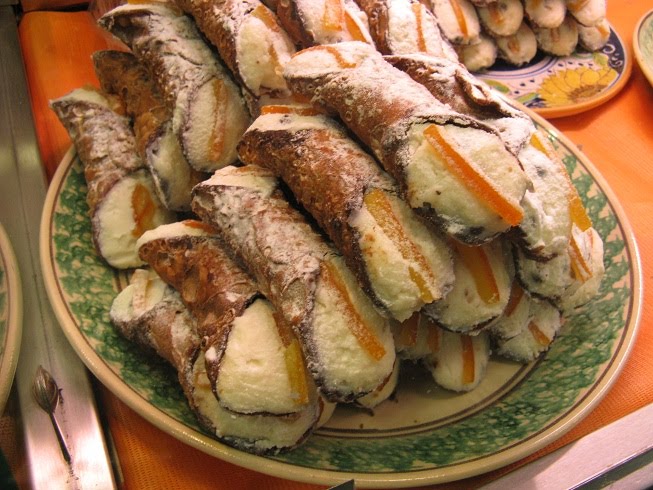
Sicily had lots and lots and lots and lots and lots of things on offer as well, including pastries and cheese.

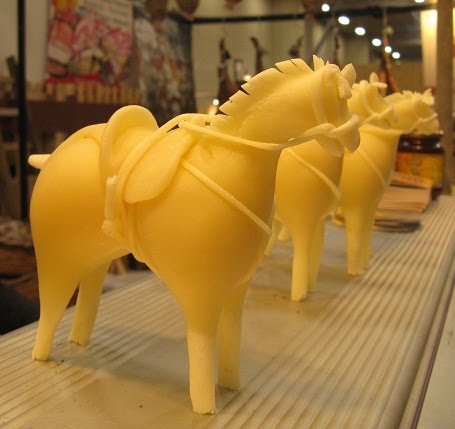
The caciocavallo stall was nicely decorated:

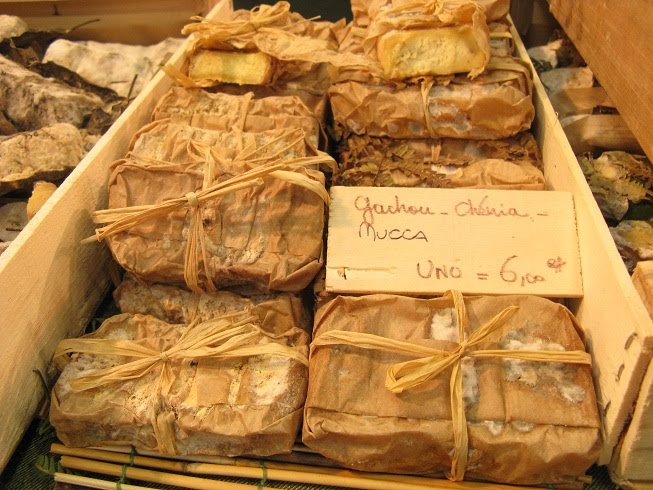
They don’t hesitate to choose interesting ways to wrap their cheeses either:

The capers were incredible:

The salt was stupendous:

The plums were plump and perfect.

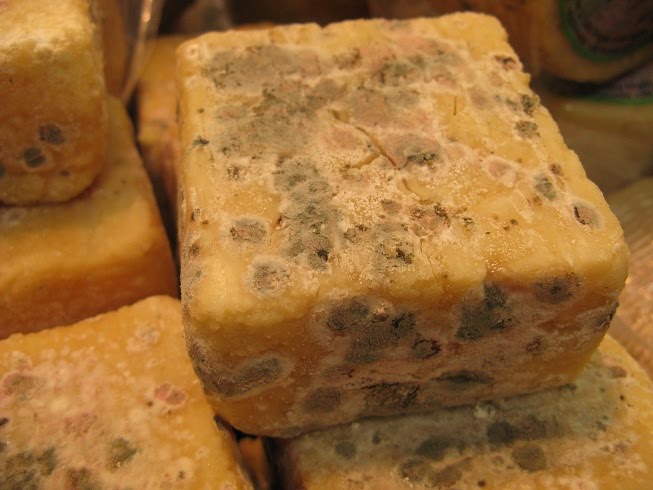
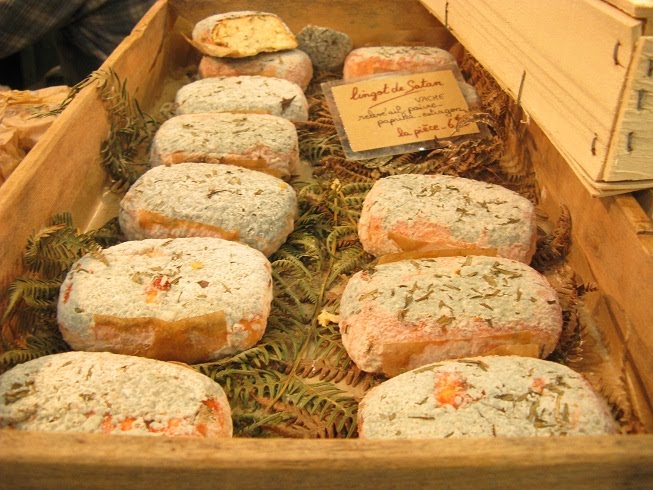
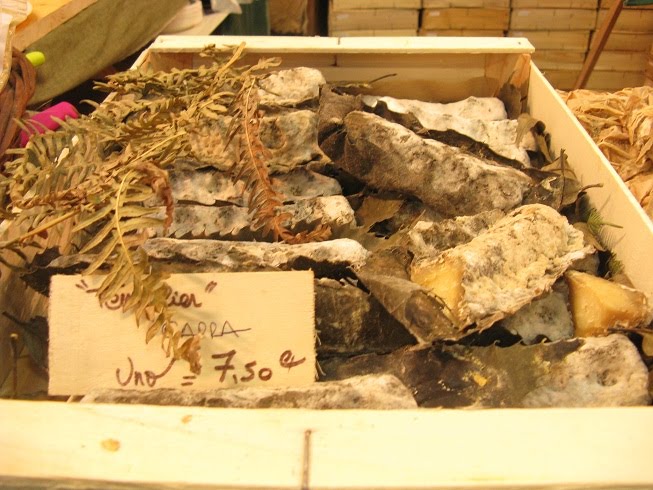
We passed France which had stunning cheeses of many shapes

The nougat was popular,

but the armagnac stand is going to be hard to pass by again. I feel sure my bags are going to be heavier by at least one bottle.

Italian beginnings

Flew into Bologna only yesterday, shattered after an early morning that could have passed for a late night; such are the travails of crossing London in time for a 7.10 flight from Stansted Airport. After a doze on the plane and another on the airport bus, I woke into a happy dream when we found our way to the market area.

After a good lunch at Tamburini, everything felt more than OK as we headed out of town, to start our journey west.

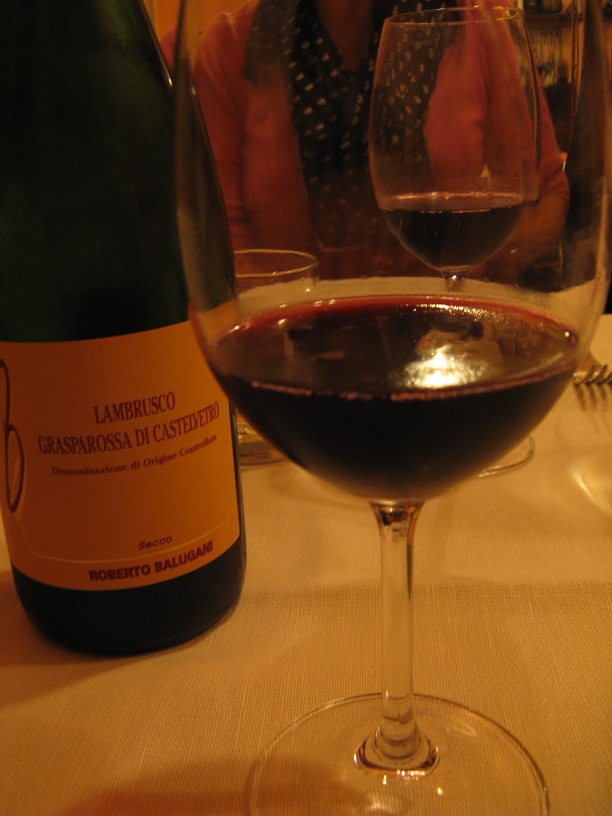
We arrived in Modena, which is Lambrusco country.

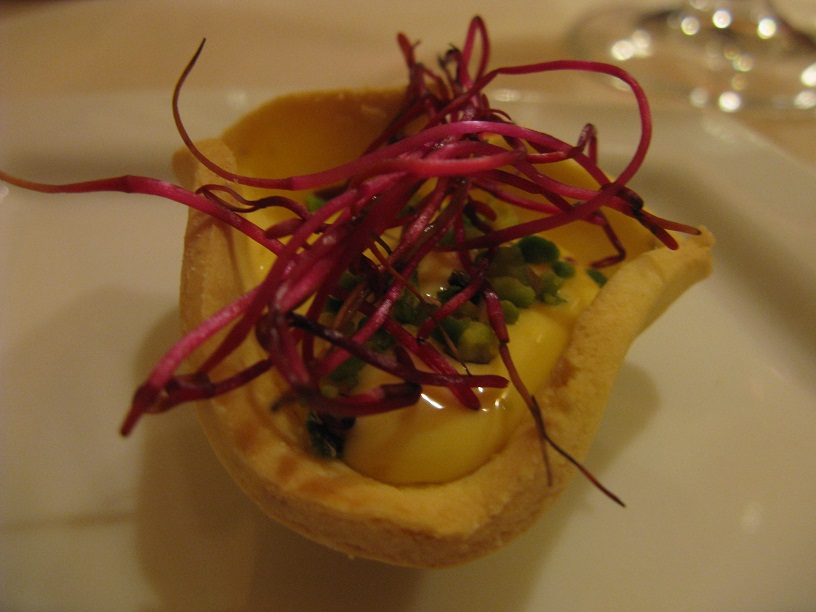
The meal at the Osteria Stallo del Pomodoro was affably served and began with this fetching amuse-bouche, a tart of soft goat cheese with pistachio and fried shredded beetroot. So pretty!
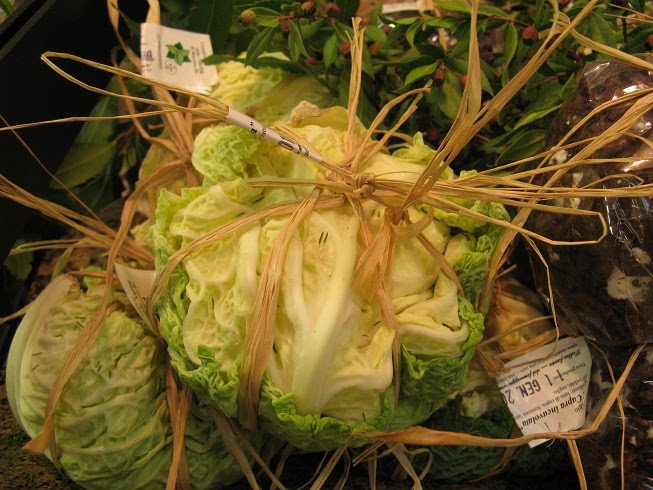
The antipasto misto was a marvellous misto of many interesting things. So colourful!
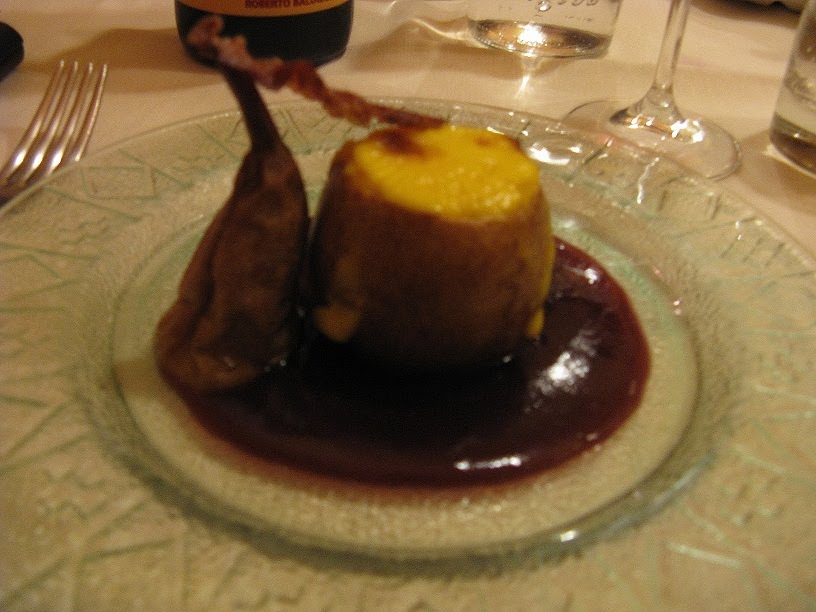
The Soffiato di Parmigiano-Reggiano was a cheesy mousse baked in a hollow pear and served with vino cotto. Very nice.

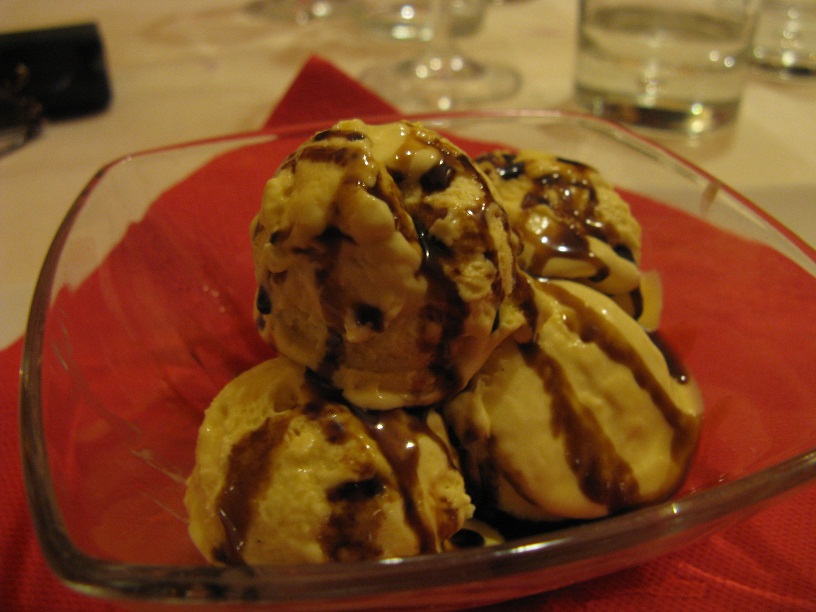
When in Modena… gelato with balsamico tradizionale. We behaved so nicely that the waiter gave us each a few precious drops of 25+ year old traditionale as a parting gift.

En route to Asti, we stopped for some inexplicable reason at the AutoGrill,

where the amusements are many. It is not what most countries stock their highway rest stops with…

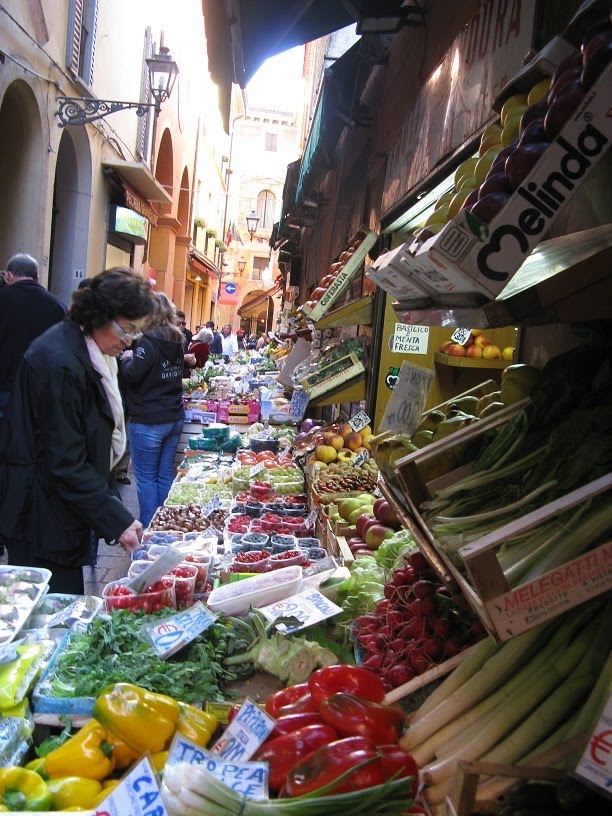
On to Asti where the sun shone on our afternoon stroll.

A watchful dog:

Who wouldn’t want to shop at Save Money Square?

Supper at Il Convivio began with a warm and wonderful jerusalem artichoke tart, which was a sort of artichoke custard, with a sauce of local cheese and anchovies.

Then Ganascino di maiale – described as pork chicklets in the menu – braised in Barbera and beautifully seasoned; served on a polenta pancake which was a bit like a lovely dumpling.

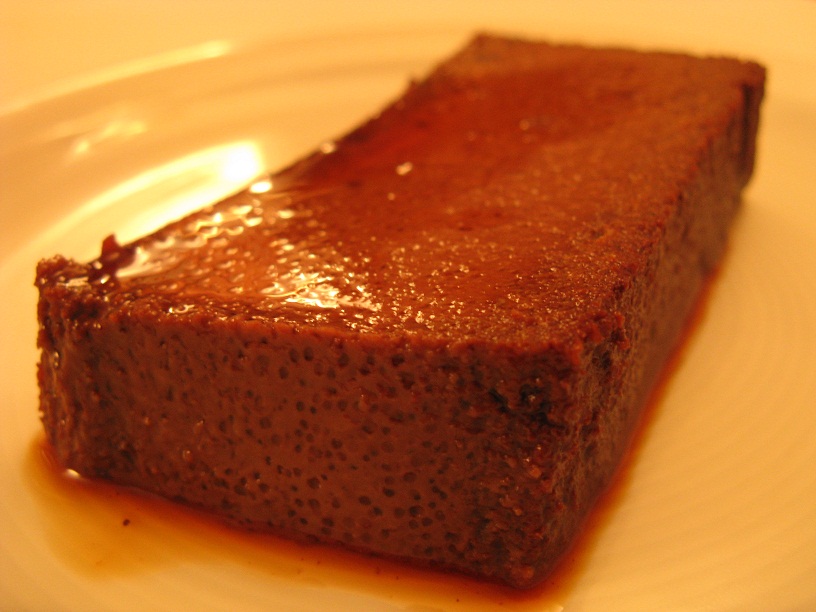
When in Piemonte… of course it was necessary to finish with Bonet!

Tomorrow the biannual food and madness of Terra Madre/Salone del Gusto begins. Watch this space…