Skip to content

Stones in your Soup

I was thrilled to be among those invited to present at Victoria’s Stone Soup event back on December 2: much like the story it grew in a few short weeks from nothing to a sold out celebration of food and community. There were storytellers, artists, musicians, writers and farmers in the lineup, two cauldrons of soup to warm us on another rainy evening, and even a vegetable auction! Funds raised were destined for agricultural micro-lending projects. Below, one of the organizers, Neil Johnson, explains the event; local farmers Robin Tunnicliffe, Sol Kinnis and Goldie Paquette were part of the farmers panel; Mason Street farmers Jesse and Angela explain their crowd-funding efforts towards hiring interns and creating Victoria’s first urban greenhouse aquaponics operation; Chef Dwane MacIsaac of the Island Chefs Collaborative discusses the soups he and his volunteers made from entirely donated ingredients; and my book, which someone purchased using only No Tanker loonies.

Food so clean & local

It’s been a couple of weeks of book promotion and food events… I keep waiting for things to slow down but they keep speeding up instead, so I will try to catch up a little.

Last week began well, with a unanimous vote by Saanich District Council in favour of a no-GMO motion that had been in the works for a couple of years:

“That the Healthy Saanich Advisory Committee recommends that Saanich Council does not support the use of genetically modified seed crops within the District of Saanich, and that Council write to the federal Minister of Agriculture, the Canadian Food Inspection Agency, and local MPs in support of the mandatory labeling of genetically modified foods.”

For those who don’t hail from these parts, Saanich is one of the largest of the 13 municipalities that make up the Capital Regional District (what outsiders would call “Victoria”) and one that has an interesting mixture of urban and rural properties. It joins other BC communities, including Powell River, New Denver, Kaslo, Rossland, Nelson and Richmond in banning GMOs.

Biotech Crop Countries+Mega-Countries 2010I was among those who spoke in favour of this motion at a public meeting in October, on the grounds that GMOs have not been proven safe for human consumption. While some might argue the horse has long since exited the barn, I am with those who believe we can only carry on letting people know they have a choice and a voice and trying to educate the wider public on under-discussed aspects of what should still be a lively GMO debate. I pointed out that since our parliament has failed to allow our population to safeguard itself against eating GMO products by introducing mandatory GMO labeling, all Canadians have been fed GMO foods without their knowledge or consent since 1996. So I was particularly pleased to see that the municipality would be writing to the federal representatives about labeling. And would urge all sensible people to do likewise while they have ink in their pens or pixels on their screens. Sanity may yet prevail in this country when poor brainwashed Canadians manage to grasp the same realities as the citizens of more advanced nations including South Africa, Kenya and Peru.

Tuesday there was a round-table meeting of Victoria’s CR-FAIR which brought a couple of dozen food and agriculture activists together to discuss local initiatives. The range of activities was heartening and included work or plans for community gardens, agricultural land protection, community seed banks, access to food by low income residents, community kitchens and kitchen gardens, gardening workshops, food redistribution tools and access to farmland.

Friday I was at a promotional do for my beautiful book, held at the even more beautiful Maritime Museum. Appropriately for a daughter of the bench, I took my turn speaking from the place where Judge Begbie had thumped the gavel in days of yore (and he was *not* a hanging judge, according to Marlyn Horsdal, who also presented as author of a novel in which he is a character). Thirteen books from the Heritage Group of publishers were celebrated by 14 authors, each of whom had five minutes to say something about their books. One book, in fact the only one I bought (in a spirit of strictest frugality) – Saanich Ethnobotany – was co-authored by the excellent Nancy Turner and Richard Hebda whose collaborative tale-spinning made a fitting finale for an evening well spiced with food, drink and tantalizing introductions to a good mix of fiction, nonfiction and anthologies.

And finally, tonight I launched Digging the City at the Cornerstone Cafe in fabulous Fernwood, with the kind assistance of Don Genova as my celebrity host. About which event I will say not much except a good time and tasty treats were had by all.. and my generous readers took away some purdy books and free seeds!


A small culinary diversion

I was lucky to be able to attend a Slow Food dinner last night, when Chef Naotatsu Ito collaborated in the Sooke Harbour House kitchen with Chef Robin Jackson. They offered us a menu that celebrated and honoured vegetables and featured winter bounty from Umi Nami farm served with local fish, seaweed and foraged mushrooms. Each of the eight courses was paired with teas from Silk Road Tea, chosen by Japanese Tea Master Daniela Cubelic; others took advantage of the chance to try Osaka Artisan Sake from Granville Island in Vancouver –made with local rice!

First course was a winter vegetable terrine (kabu, chard, broccoli, daikon) held together with agar rather than gelatin, and served on a green sauce potato puree with Nootka rose vinegar. Next came some pretty little morsels of crab meat seated on a bit of broth-infused daikon wrapped in coppa.


And then came octopus – some lightly cooked and sliced, the rest simmered and mixed with kabocha and daikon and then garnished with shredded vegetables and a dribble of red wine sauce. Next we had marinated freshly-caught albacore tuna wrapped in daikon and served with pretty and crunchy watermelon radishes. The next course required some audience participation: we were brought bowls containing lingcod rolled around green onion, seated on a bed of fir and seaweed beneath which was a hot rock. The servers poured hot tea in and covered it, and after five minutes or so we uncovered and enjoyed.


After which arrived some sauteed lingcod, served on a delicious kabochamiso puree with a green “barlotto” and green onions and nodding onion. More kabocha appeared in the next course, combined with fresh local mushrooms and some bacon. Slivers of kabocha peel had been fried and arranged around all. The finale was a trio of desserts: green tea & turnip ice cream terrine, black turtle-bean cake and an exceptionally good matcha tea cookie (what a custard cream cookie might dream of being in its next life), with tart and sweet Japanese plum cherry jelly and subtle little drops of minty syrup.


Food & mood, sleep & diabetes

Having kicked off my conference by hearing from the magnificent Sandor Katz, I wondered how the rest would compare. My second session, Depression & Anxiety Epidemic: How, why & what works better than anti-depressant drugs, though interesting, was a little disappointing. Julia Ross MD (author of The Mood Cure) had clearly spent some of her thunder in the first of her three-part appearance (while I was hearing Katz) and so left unexplained in this session some of the technical aspects of her talk that she’d covered earlier.

However, she gave some good causal information: that people have a 51% greater chance of mood disorder if they eat the Standard American Diet. The top three causes of mood disorder problems are the dietary changes since the seventies (when refined foods replaced home cooking, cereal product and sugar consumption increased, and refined industrial vegetable oils replaced animal fat); the increased addictiveness of refined sugars; and low calorie dieting, where the brain chemistry needed to support mood (and much else) is literally starved out.

She sketched out the diet needed for proper brain function, and explained a useful fact about the WAPF dietary principles’ obsession with pastured meat (grass-fed and finished beef, for example), which is that corn-fed protein is deficient in tryptophan, the amino acid without which serotonin – the body’s chief mood regulator – cannot be produced or function. There was much else, including a discussion of how caffeine, aspartame and ritalin block the effects of the body’s natural relaxants, keeping it in a perpetual state of stimulation, which of course doesn’t allow the brain to rest and recharge. She observed that most people on SSRI (antidepressants) really need them, but may be unaware of the side effects or addictive qualities, or the non-pharmaceutical alternatives (she provides amino acid therapies to her patients).

After a break, she moved on to discussing Insomnia. She observed we’ve been sleeping so badly for so long, we don’t know what good sleep is, so she defined it for us:

  • 8-10 hours in the dark, with no awakening
  • dream recall in the morning
  • regular breathing (no apnea)
  • waking up rested

Insomnia is rampant in Western culture – she said that a third of teenagers report having it – and is costing us in many ways: it correlates with food cravings (increasing them by 30%), insulin resistance/diabetes, depression/anxiety, ADHD, fatigue and injury. There is also a fourfold increased risk of mortality with the use of sleep medications. So it’s a good idea to solve this without. The first step is to identify the type of insomnia (night owl who enjoys staying up late; can’t get to sleep/don’t enjoy it; light sleeper waking several times through the night; or some combination of these; apnea sufferer; person in chronic pain; restless leg; short sleeper needing only around 5 hours a night; or caffeinated or medicated – ADHD – manic type). Each one corresponds to a different neurotransmitter or amino acid treatment (details in her Mood Cure book, I imagine).

After a hearty supper we were off again, and I chose Treating Diabetes with Dr Deborah Gordon as my post-prandial entertainment. It was excellent. She had much to say on the subject (more info on her website) but the (by now) usual advice applied: no sugar or refined carbohydrates; lots of high quality protein; and the inclusion of dietary fat. She cited a study that was done of 311 women following the Atkins (high protein, low carb), LEARN (low fat, high carb) and Ornish (low fat, plant-based) diets which showed that the Atkins diet was the most successful: it’s very similar to both the Paleo and Weston  A Price eating plans. She also recommended lifestyle choices including avoiding environmental toxins (pesticides, cleaning products), reducing stress, getting enough sleep, avoiding iron supplements (shown to contribute to diabetes), and doing strength training such as the HIIE exercise plans, like Tabata Training.

Food for thought

Santa Clara Topiary

The older I get the more I experience the Whoosh factor: one minute I’m staring at West Coast rain, and the next it’s a sunny morning in Silicon Valley, and I’m part of a 1,700-strong hive of health at the Santa Clara Conference Center. We’re buzzing round stands promoting magnetic beds, fermented cod liver oil, natural cosmetics, books on healthy stomach acid and fermentation and nutritional cures for mood disorders. There’s a seafood stand doing a brisk trade in Alaskan salmon roe, a couple of guys selling crispy nuts – raw almonds which have been soaked and dried according to principles laid down by Sally Fallon Morrell, our queen bee if ever there was – and someone offering tastes of a new product made with ratfish oil.

Soon my hands are warmed by my cup of beef broth and I’m balancing a bowl of full fat sheep’s milk yogurt with frozen blueberries. I have some organic fruit and cheese in my pocket for later and am considering how I can manage to juggle a couple of boiled eggs before grabbing a bottle of raw milk to wash it all down. In my bag I have a small jar of coconut oil, some pecan nut butter and a small package of granola made from pre-soaked grains and coconut.

Such was the sweet beginning to my first Weston A Price Foundation conference. Those breakfast items were purchased for Moolah, tickets sold in support of the Farm-to-Consumer Legal Defense Fund, which exists to help those persecuted by the FDA for living the WAPF dream of eating nutrient-dense foods, including raw milk.

And eat we did over those three days. If I saw one person raising a piece of sourdough wholemeal rye topped with half an inch of butter to their lips, I saw a hundred, at every meal. The lunch and supper buffets were groaning with pastured meats, whole fat cheese and sour cream, fresh green salads, liver sausage and fermented foods of all descriptions. We had sauerkraut pretty much every meal, plus kimchi, fermented apple butter, lightly pickled beets and kombucha. (In keeping with the foundation’s food principles, there were no refined carbohydrates or sugar or caffeine.) Several times the meal lines stalled while the kitchen scrambled to keep up with demand. At every table there was a shaker of Celtic sea salt with which we could lavish minerals as well as flavour onto our food. More than one mealtime conversation embellished the theme of “how great is it to be able to trust conference food?” And it was good.

And given all that food, what was really unusual here was the size of the participants. There was another event going on at the same time in the centre, a spirituality conference: the participants there were strikingly like most large gatherings of Americans that I’ve been to: a good proportion were morbidly obese, most were at least chunky. The Weston A Price people were proportioned more like Canadians or Europeans: not many would have been described as heavy, very few obese, and most were either slender or fit. And this wasn’t because they were all in the first flush of youth: middle age was the norm. Living proof that fat doesn’t make you fat.

I’ll follow this entry up with more about the talks I attended that left my brain buzzing even while my body hummed with contentment.

Brewing change – Sandor Katz

The Iambic Cafe has been in a process of change in recent weeks, and is now emerging in a slightly altered state, as my interest in food tracks itself inward through the body. I’m studying how food can heal, nourish and sustain us, and so I find myself today in Santa Clara California at the annual Weston A Price Foundation Conference. I’m here with some 1,699 others who think food is the answer to many of the ills that we have brought upon ourselves through industrial agriculture, monocropping, pesticide and biotech damage to soil, crops and consumers; environmental contamination; the consumption of industrial foods; and destructive public health policies that have led to dangerous practices such as low fat diets and overmedication.

I have this weekend achieved a long cherished dream to hear Sandor Katz speak. We met briefly on the floor (literally) of the marketplace at Terra Madre 2008, when he was gathering his blanket with a bemused look on his face, having just sold his last copy of Wild Fermentation. He has published two books since then, and the latest, The Art of Fermentation, is a tome of near biblical proportions which reflects his expanded understanding of all things fermented, and offers extensive footnotes and references. If you’re looking for a cookbook, this is not that. Instead it gives a cultural context plus detailed guidelines for the ingredients and steps involved in fermenting many different foods, in accordance with Katz’s view that fermentation is not a precision activity but a wider cultural movement. Fermentation, he believes, gives us control over our food by allowing us to regain the skills of traditional forms of preservation.. which just happen to offer massive benefits to our gut bacteria as well.
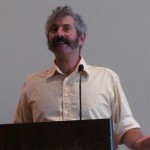
Think you don’t like fermented foods? he asked us. Think again: about a third of what we consume even in a Western Diet involves a degree of fermentation. Coffee, cheese, chocolate, yogurt, bread and vinegar all involve this process of microbial transformation.
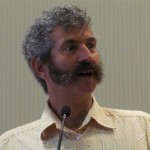
Our history of guiding the transformation began with wine, and the edible repertoire expanded as humans took careful note of the natural processes of rot. For really, says Katz, fermentation spans a fine line between rot and delicacy: one culture’s compost is another’s survival food. Rotting fish, whale, seal or walrus until it has the texture of cheese was the far north’s traditional means of making vitamins and minerals bioavailable. (It was also a concept the Franklin expedition failed to embrace, to their cost: cooking their food killed the nutrients and contributed to the crew’s starvation.)

Fermentation was not a human invention, but a discovery: our most observant ancestors noticed that insects and animals were attracted to fermenting fruits; the inventive ones simply took that a step further to cause fermentation to happen on their own terms, and then we had wine and mead.

Agricultural societies adopted fermentation as one form of preservation because we simply couldn’t invest all our energy in crops that are seasonally available without some way to keep them stable and edible beyond harvest. Fresh milk is a 20th century phenomenon: most people in this culture have a “fermentation slowing device” in their homes, otherwise known as a fridge. The obsession with safe storage temperatures is a modern concept, because until refrigeration, we never had a way to store foods below 40f.

Nowadays, fermentation is a way to renew our acquaintance with the healthy gut bacteria we’ve been abusing through years of antibiotic use and poor diets. We need bacteria to digest our food and to sustain a healthy immune system and balanced mental functions. The war on bacteria has proven a very misguided campaign when so many of our internal bodily functions have been enabled or enhanced by the presence of bacteria. While the first triumphs of microbiology had to do with the discovery of pathogenic bacteria, we have ever since been having trouble letting go of idea that all bacteria are pathogenic.

Before opening the floor to questions, Katz held up one pre-emptive hand for a question he knew would otherwise be asked: Safety. From his research, the USDA has never reported a single case of food poisoning from fermented vegetables. Given our recent experience with tainted spinach and cantaloupe, it may be that fermented produces is even safer than raw. The basic reason is that fermented foods are populated with lactic acid bacteria which will overwhelm pathogens. The notorious anaerobic bacterium botulism (clostridium botulinum) can only grow in the complete absence of oxygen (such as in canned foods, sausages), but vegetables are never fermented anaerobically, always with oxygen circulating above and in a liquid which contains some oxygen. In minced meat products (such as sausages) nitrates are what prevent botulism from forming and he doesn’t recommend eating sausages unless they contain nitrates.
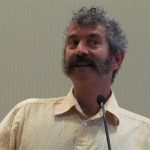
After which followed a good hour’s worth of intelligent questioning by people who had attempted fermentation themselves or wondered about the effects and benefits of varieties of these. After that, Katz spent a further couple of hours patiently signing books and answering still more questions. And yes, I got mine, and damn the weight of my poor suitcase!

For those unable to be here but within easy reach of Vancouver, check Katz’s website to learn about his upcoming January visit to UBC.