Skip to content

More Aldeburgh Poetry

Saturday was a long ‘un. After our workshop (and fish pie) we dashed off to Aldeburgh to attend the conversation with Sharon Olds. Michael Laskey presided, in place of Philip Levine who’d had to cancel, and did an admirable job of getting some background from a poet who’s been reviled and revered in equal measure, it seems.

Laskey asked her about some of the “strongly felt and strongly put” criticism that must have made her career deeply uncomfortable at times, from, as she said, “critics who were at pains to tell me why what I did was not poetry.” Although she’d been writing for many years, she’d taken a long time to publish her poems, which she’d really never thought anyone but she would see (her first collection came out when she was 37). She’d tried to learn to cope with the hardest criticism: over time she was able to drop one phase of her response to it – the four parts of which were to burst into tears, throw up, fly into a rage, and finally fall asleep. At one point she actually made a chart listing her poems, with the negative adjectives attributed to each, and tried to learn from this what emotions certain themes were raising in her critics. It’s hard to imagine anyone surviving the kind of battering she’s had on the public stage; how much does prescriptive criticism really help? Give me instead the school of thought that says if you don’t like it, don’t read it — and move on.

In terms of process, she said she’d historically always written very quickly and often in single drafts with little or no changes, a process of gathering, and at a certain point “the gates open and the poem comes out.” She says she revises more nowadays, and her editing rule is to write the draft and then “remove half the adjectives and a third of the self pity, so the poem doesn’t have to carry so many rocks in its pockets.” She remarked on the danger of place-holders: words she’d stuck in her lines while she tried to think of something better, which to her surprise began to resonate with the music and sense of the poem so that it would become difficult to get rid of them later. She spoke of the importance of the “objective correlative” – an object that correlates to some emotion in the poem – without which the poem might blather on, self-absorbed, talking about itself too much instead, let’s say, of the tiny pair of scissors.

Her aims in the bigger world of poetry are to increase poetry’s reach and to help it to join with the wider communities in which we live. She said she’d been inspired by Jean Kennedy Smith’s founding of Very Special Arts in the 1970s, and that her dream – attempted when she was Poet Laureate of New York State – had been to try to encourage every writing MFA program to reach out to jails, mental institutions, hospitals, special schools, hospices and introduce writing programs in these. She feels it is a profound way to extend the usefulness and place of poetry into a larger world, and create a community for poetry – as well as a means of providing teaching experience to writing program graduates.

Next on the bill was the Master Class Poetry Workshop, led by Vicki Feaver with Michael Laskey co-hosting. Following a time-tested format, the Aldeburgh master classes present poems selected from the work of experienced but not necessarily widely published poets which are discussed first by the workshop leader, then the other participants, and finally by members of the audience, before the poet may – if wished – say a few words in response. The participating poets were Julia Bird, Administrator of the Poetry School, up and comer Valeria Melchioretto, and Sam Riviere – whose nicely turned poem “The Kiss” seemed the most technically interesting, being written in paired statements, employing some of the constraints of the palindrome:

the more she thought
she’d keep it to herself – he’d never know
exactly how it happened (she didn’t know)
and he’d see replays of her face
opening and reaching towards his face

.. and so on. Useful quote du jour from Vicki Feaver: “One test of a good poem is to ask if it’s about more than one thing.”

Finally we moved into our third and final event of the day, once again balancing on the brink of perishing hunger and fatigue, and by now more than well burdened by books. We were all delighted by the Scottish poet Alastair Reid, unknown to all of our group but historically much published and apparently all out of print – a situation the festival organisers had deftly dealt with by publishing a fine little chapbook that many of us snapped up. He was a delightful reader and a name to look out for. He was followed by a distinguished Spaniard, Joan Margarit, whose passionate recitations in Catalan were interlaced with softer renderings of the English translations by Anna Crowe; best bits were his daring to read two translations himself, expressive and entirely well spoken. Final reader up was Sharon Olds, who read mostly new work, including poems of humour and wry digs at her critics, in her usual gracious manner and clear, simple style.

Enough food for the mind: off we went to our long awaited meal at 152, where 10 of us shared a groaning board. Pot-roasted pheasant for me, with braised red cabbage (with fennel? anise? some unusual and not unsuccessful seasoning) and a glass or two of tempranillo, followed by my dish of the day: coffee creme brulee. A perfect ending.

Aldeburgh Poetry

Another day, another meal. We had a gorgeous fish pie for lunch today, mid-poetry workshop. Tammy attributes the recipe to Clodagh who pinched it from Sophie Grigson. The world’s simplest fish pie, but success entirely depends on using absolutely fresh fish. (A doctor/scientist I met on the bus in London a couple of days ago adds that it must be a Sea Fish, for the iodine, which you need for a healthy thyroid.) Take your fresh fish and lay it in a buttered baking dish; mix up dry bread crumbs, lots of fresh parsley, some chopped garlic, salt and pepper and sprinkle it over the fish. Drizzle with melted butter. Squeeze lemon juice over all and bake at 220c for about 20 minutes until the fish is just done and topping is golden.

A slice of fondly remembered Suffolk Gold Cheese.

We had an entirely local meal in fact. Fish from the last hut on the left, on the seaside in Aldeburgh; local greens (rocket, Belgian endive, radicchio); local new potatoes. We finished with the cheese which was heavenly, particularly the St. Andre/vignotte, which is a lot like eating butter (it’s triple cream, but who’s counting).

Last night’s start to the poetry festival included a free session, an excellent idea that didn’t quite work. Various festival guests are invited to present 15 minute “Close readings” of poems. Last night’s was Sharon Olds, presenting “Those Winter Sundays” by Robert Hayden. The reading wasn’t quite close enough for my taste, although I like the poem, but I think it’s a hard one not to like. We then went on to Jubilee Hall to hear three readers: Nick Laird, who’d won last year’s Jerwood Aldeburgh Prize (part of which is a featured reading at the following year’s Aldeburgh); John Powell Ward and Jenny Joseph, who was not wearing or reading anything purple. She did read a six minute poem towards the end of her set, which we debated later: is it better not to warn the audience that you’re going to do this? I didn’t mind the warning (sorry) but did mind that she chose this one to read next to last, when we were perishing from frozen bums and looking forward to a late supper. We didn’t get out till just before 10pm.


We had been forewarned that last orders at our restaurant were at 10pm, so we had to sprint down dark streets to secure our plates at The Lighthouse. Ah, succulent Irish oysters with shallot vinegar; an excellent taramasalata; some gorgeous looking calves’ liver with bacon; a crisp dirigible of halibut on home-cut chips; hot scallop salad; roasted cod – it all paraded by, and some of it even stopped at our table. The rioja was perfect. A nibble of Mike’s walnut tart with butterscotch ice cream was enough to prove the excellence of the sweets. We’d earlier witnessed – but passed on – some brutally beautiful desserts in Orford: hot lemon cake with spooning cream; pineapple ice cream served frozen in a wedge of pineapple.

Oysters to Oysterage


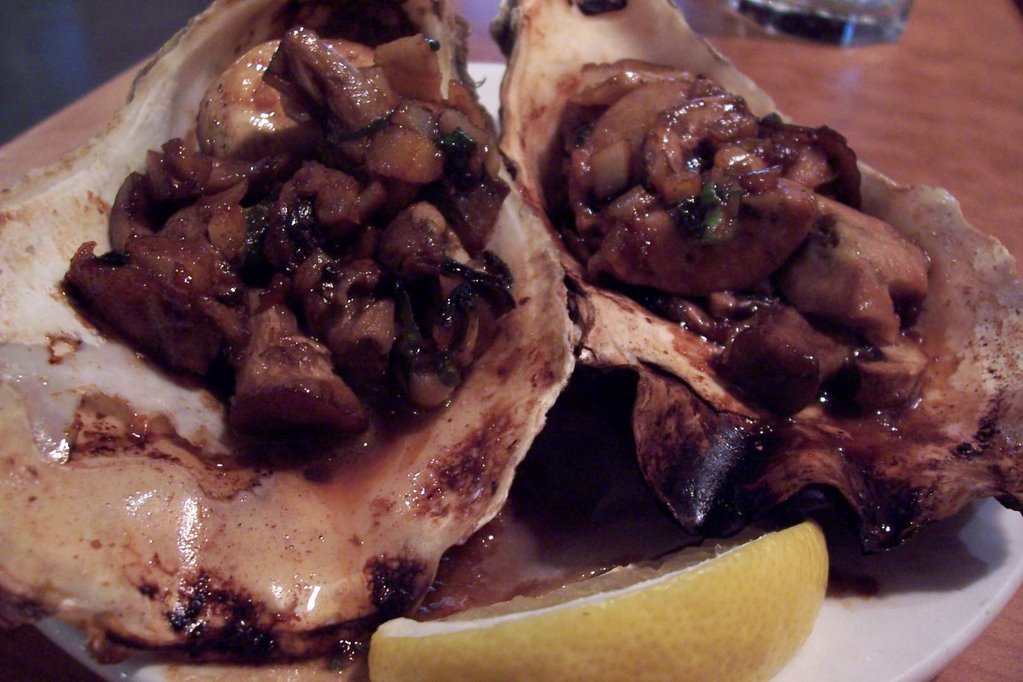
Garlic butter oysters from the Hanami Japanese Restaurant at the Vancouver Airport. Pan-fried with mushrooms.. not bad.. even better were the gyoza and California roll. A pleasant change to see an airport restaurant managing to serve nice food to a captive market!


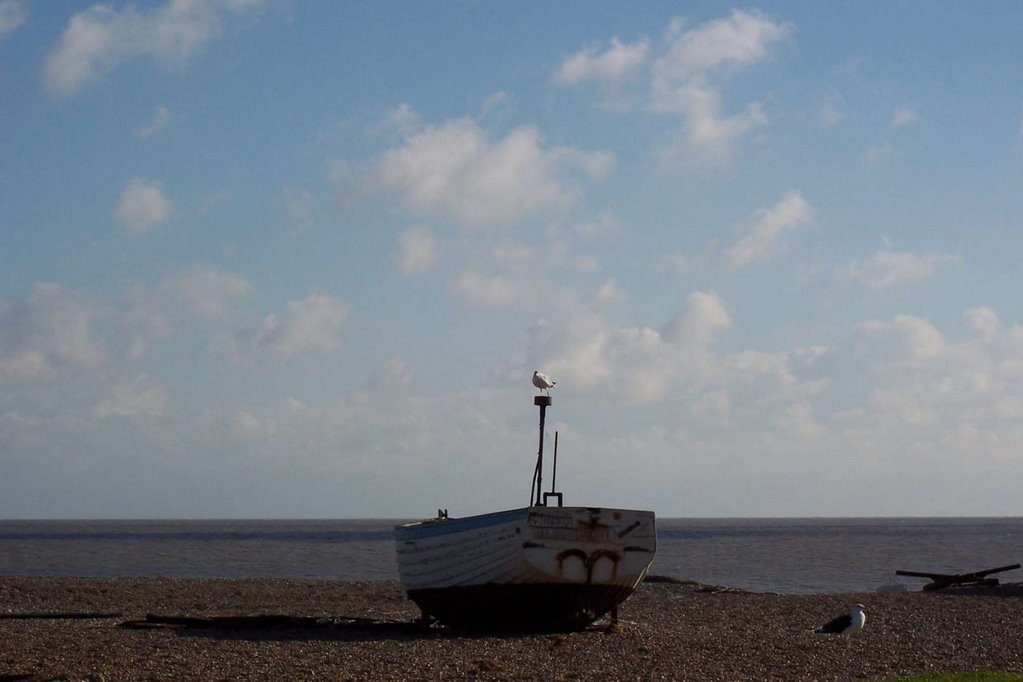
A beautiful day on the Aldeburgh seafront.


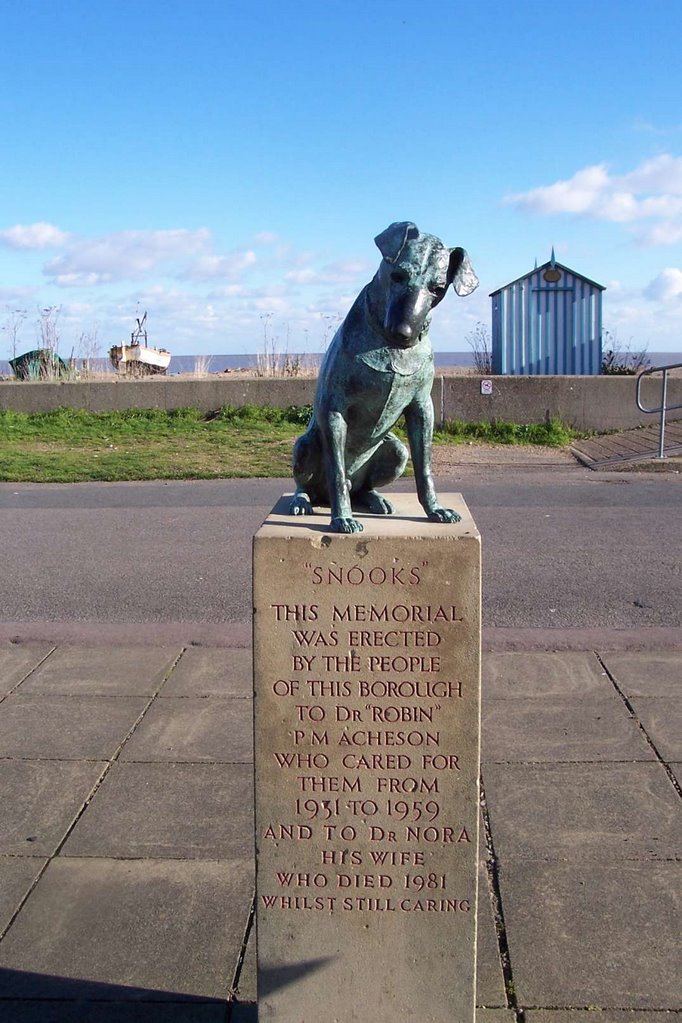
Dog-friendly town, Aldeburgh.


We did our best to liberate what cheeses we could from the overloaded display at Lawson’s Delicatessen: Suffolk Gold, Mrs Temple’s blue cheese, St André – a vignotte lookalike – and a wedge of Manchega. Lots of nice looking sheeps’ milk cheeses on offer too, and you can fill your bottle of olive oil from a silver keg in the back. Hours of fun.


Here was my welcoming committee to the Butley Orford Oysterage. Some big fat grilled sardines, who followed a very tasty oyster soup – thick and creamy with chopped oysters adrift in its scalding depths.


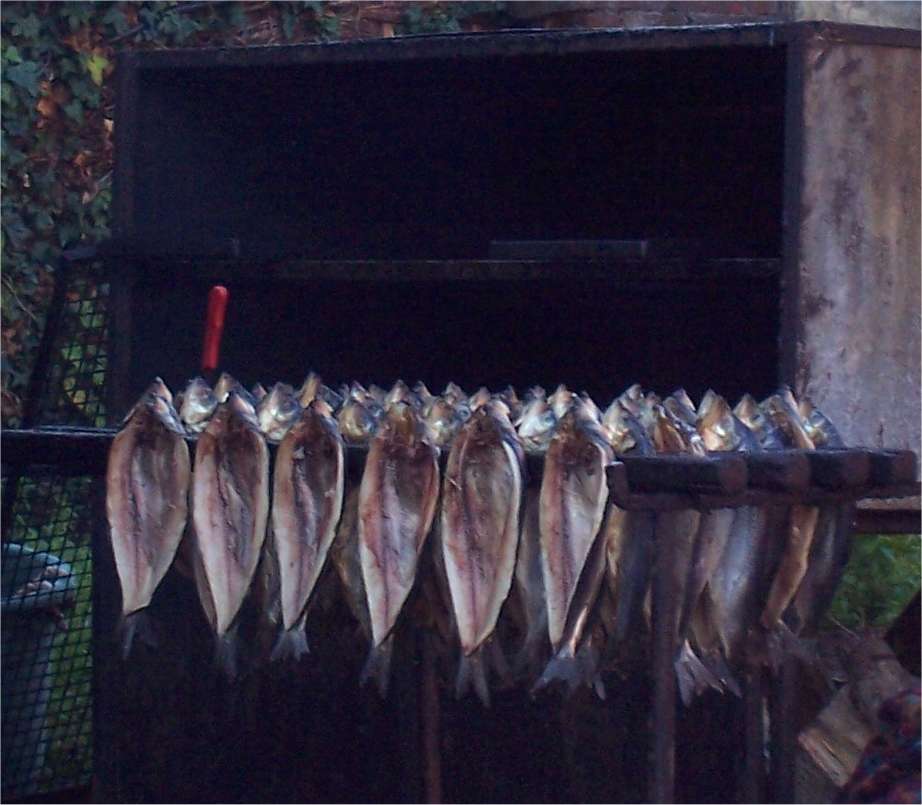
If you can think of it, they smoke it at Richardson’s Smokehouse. Some of their fish in preparation, below.

Eng-landed


It was goodbye Gorge on Tuesday, and hello London Wednesday afternoon.

We left London last night and here we are in Suffolk, where the sun is improbably shining on a cool autumn countryside and the Aldeburgh Poetry Festival is about to get underway. Headliner is Sharon Olds; Philip Levine has had to pull out. My Suffolk hosts have promised me a tour of local fooderies with the possibility of lunch at Butley Orford Oysterage. We tried to lunch there a couple of years ago but were too late for the restaurant; the extremely kind man in the adjoining shop took pity on us and shucked us a couple of dozen to eat standing at the counter with brown bread and butter. Our non-oyster eating companion simply gazed at us in disgust while she meditated on a batch of smoked prawns.

So. Much to look forward to. Looking back on the blur of packing, packing, packing and more packing, the bright moments included a farewell trip to Fanny Bay, where the sun shone on us on our last walk through the Wacky Woods.

A lovely bay on a windy day.


What would farewell to Canada be without a dinner at Tita’s, all dressed up for Halloween? The quince maragaritas were divine and the ancho chile chocolate ganache smoother than silk.


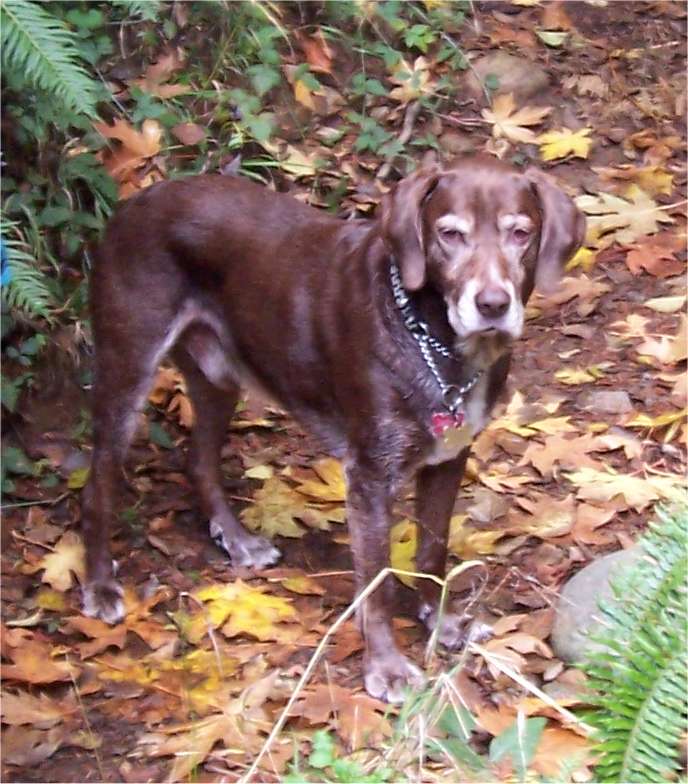
Anton, great dog of the forest, says cheerio.


Rosewall Creek, a beautiful place to walk any time of the year.

Coconut cake

I found a very good recipe to use up some coconut I found in the back of my cupboard – relic of a failed macaroon initiative I suspect. It seems a pretty perfect cake to me: everything can be mixed up quickly, you don’t need to ice it and it won’t dry out by morning! I reduced the quantities from the original recipe (which makes a 9×13 version) and it was excellent — and perfumed the house nicely to boot. The oil and the syrup should ensure it keeps well for several days, although it does not seem destined to last that long.

Middle Eastern Coconut Cake (Harissah)

Syrup
3/4 cup water
3/4 cup sugar
1/2 tsp vanilla
Harissah
1 cup sugar
3 eggs
1 cup oil
3/4 cup milk
1 tsp vanilla
1 tsp lemon juice
1 cup flour
1 tbsp baking powder
2 cups unsweetened coconut (I used dessicated) (- if you use sweetened, reduce sugar to about 3/4 cup)

  • Boil the water and sugar together 5 to 10 minutes until nearly consistency of pancake syrup. When syrup has cooled a few minutes, carefully add vanilla (do not add it immediately to the scalding syrup unless you want to experience a volcano effect on your stovetop).
  • Mix sugar, eggs, oil, milk, vanilla and lemon juice until blended. Add flour and baking powder to mixture and blend well. Stir coconut into batter, and pour mixture into greased and floured 8×8 square cake pan.
  • Bake 40 minutes at 325 F until set and top is a light/medium golden brown.
  • When cake is done and still hot, and still in the pan, poke holes with a skewer or toothpick and pour the syrup evenly over the top.
  • Let cool, then cut in squares or diamonds.

Rubicon at the Black Stilt

Tonight’s reading at the Black Stilt was a launch by Anglo-Canadian chapbook press Rubicon, promoting Tempus, an anthology/chapbook on the theme of summer, and other works. The night was prefaced by the musical stylings of the David Kosub Trio and very good it all was too, even and also the swift and absorbing open mic set betwixt music and main event.


Yvonne Blomer introduces the evening, with a copy of Todd Swift’s new chapbook, Natural Curve, in hand, with one of the handsome and poem-adorned Rubicon t-shirts hanging on the right.


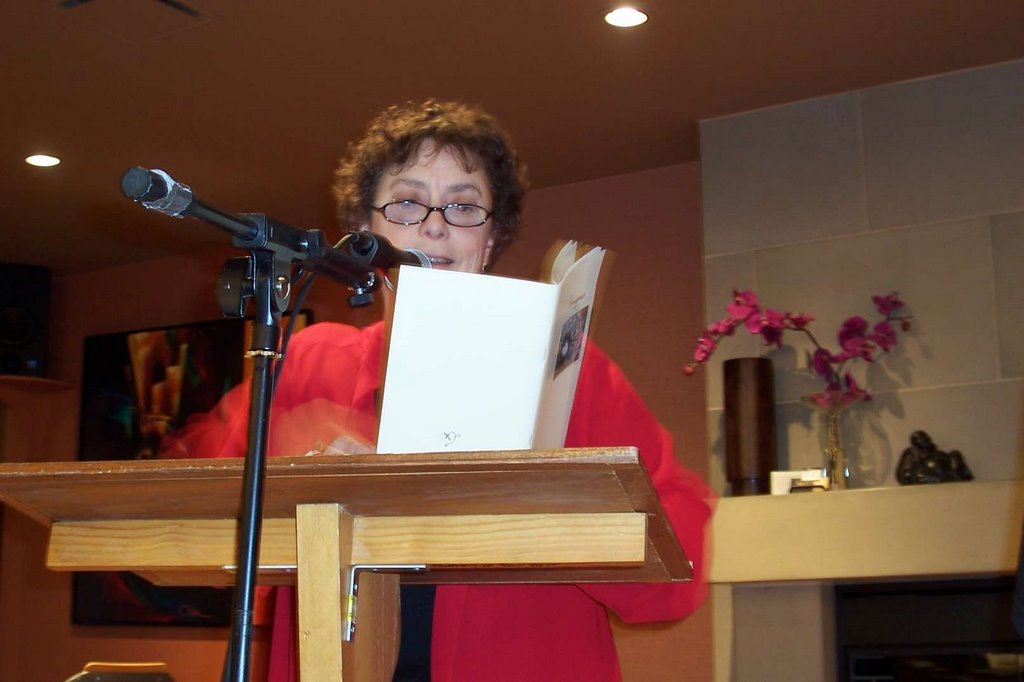
Grace Cockburn reads.


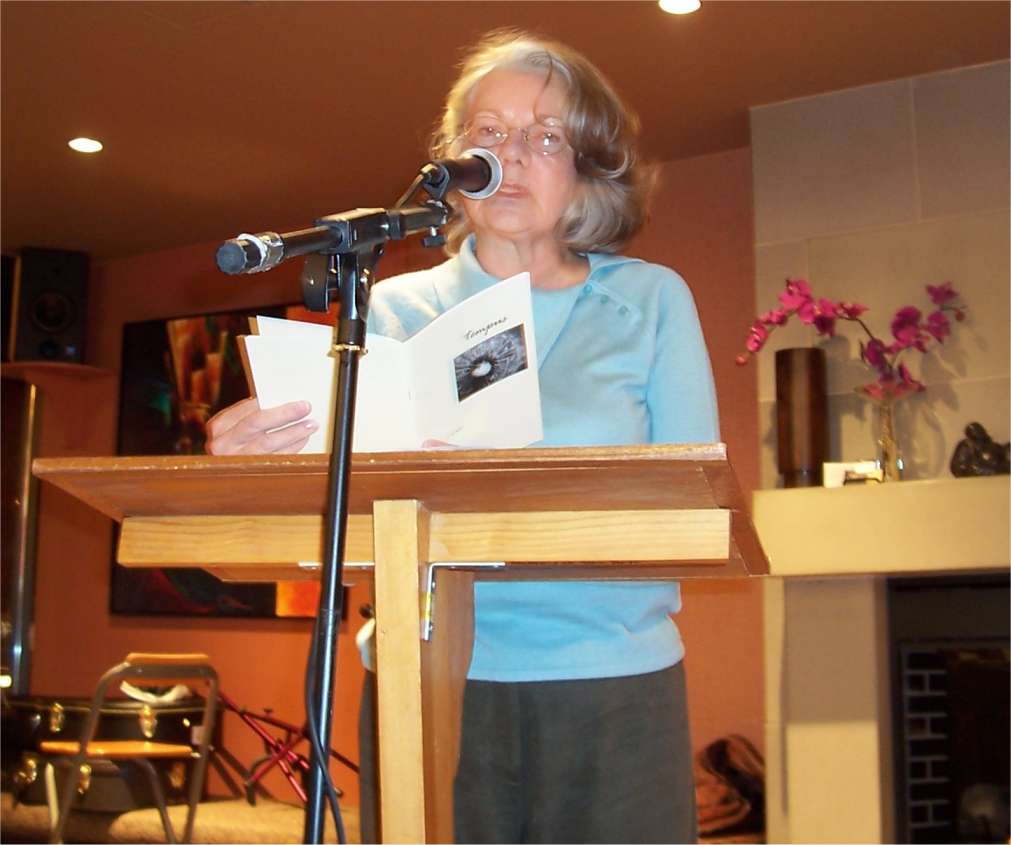
Barbara Pelman, reading from Tempus and One Stone.


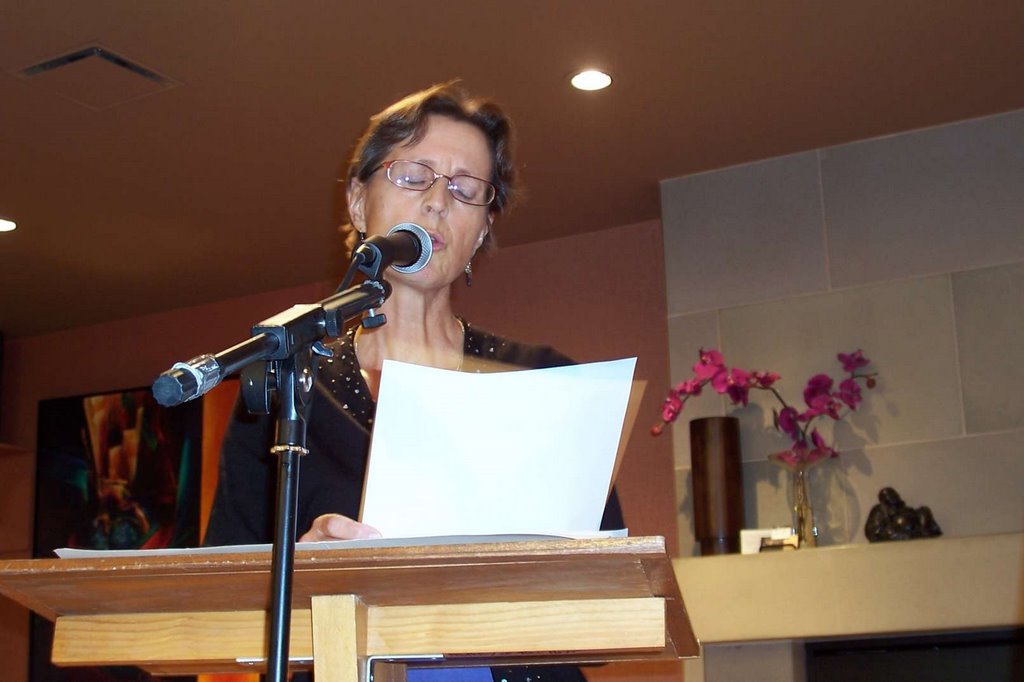
Cynthia Woodman Kerkham concluded the evening, following Andrea McKenzie.