-
White Rock reading for National Organic Week
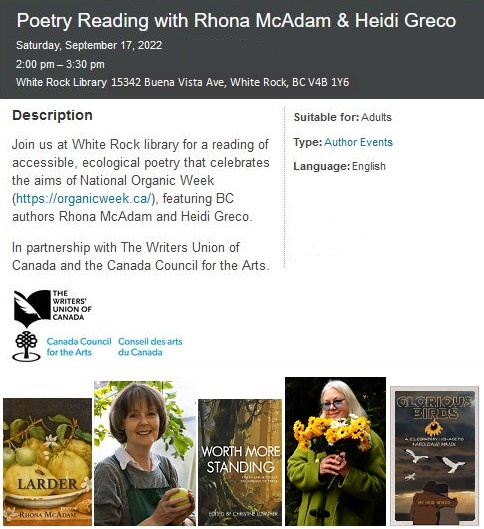
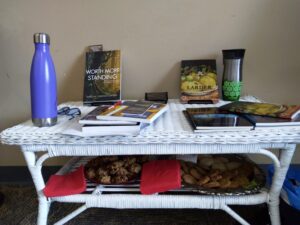 I was delighted to have a chance to read with local (Surrey BC) poet and civic treasure Heidi Greco, a fellow foodie and activist in all good causes. We decided to celebrate National Organic Week with a poetry conversation at White Rock Public Library on September 17.
Our poetry extended into a bit of baking, and we provided cookies as a reward to our delightful audience.
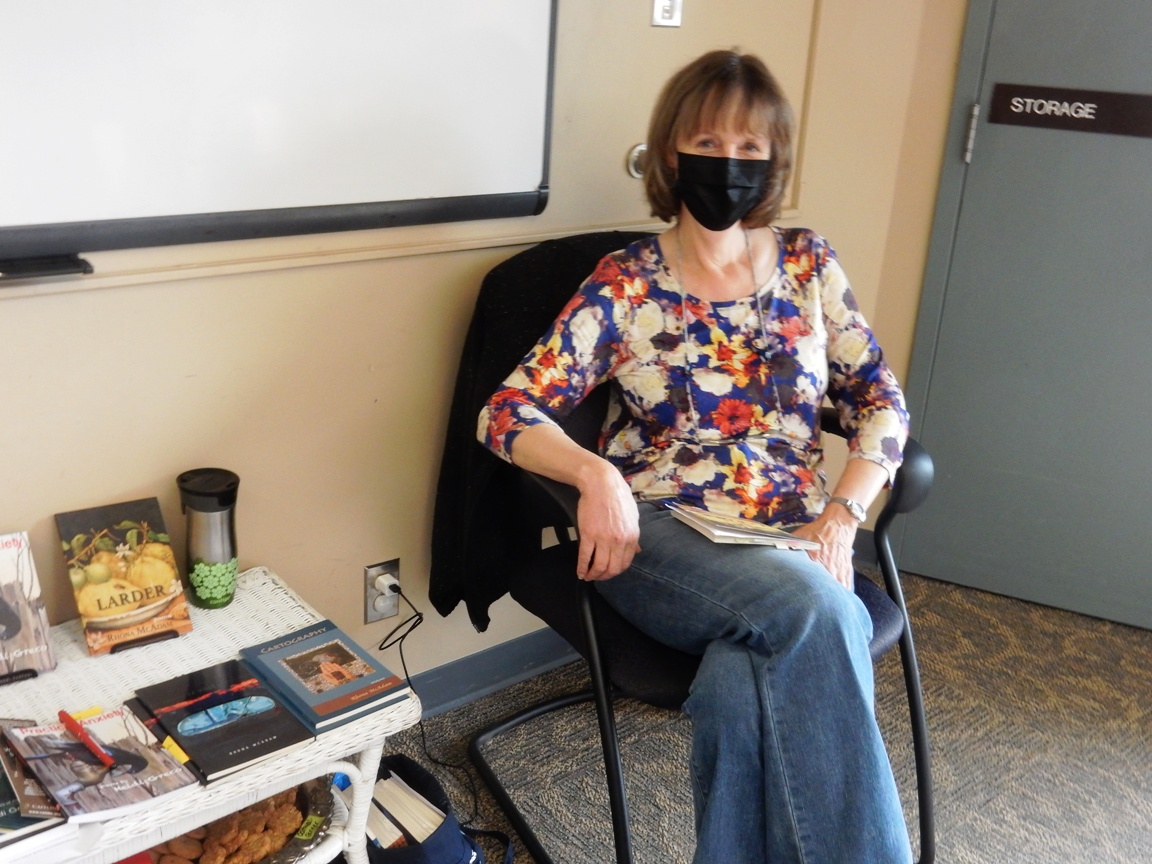
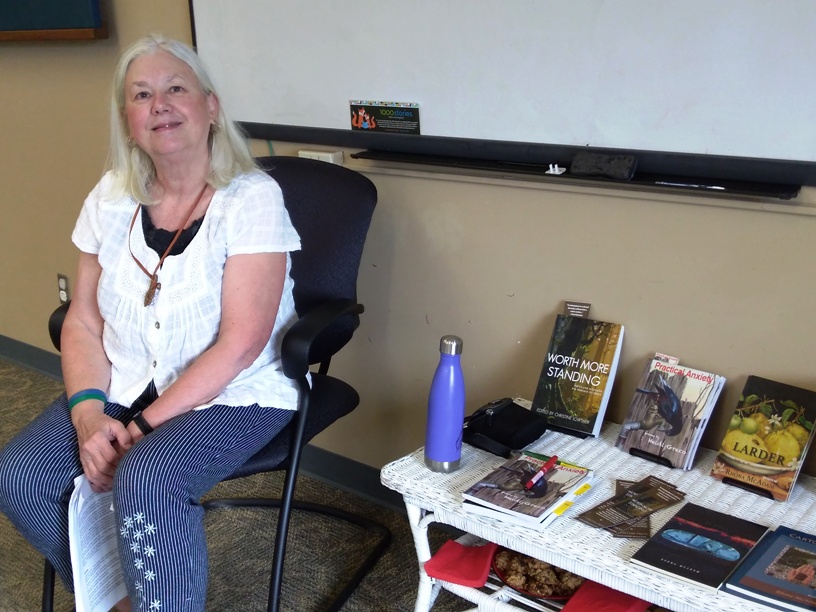
 We made it a poetry conversation, alternating poems and thoughts on trees, food and matters ecological. Was busy reading and talking so not much time for photos, but here we were beforehand!
 -
National Organic Week- with poetry!
-
Where does all the garbage go?
I learned the important connection between food and sewage years ago when I came across the excellent documentary Crapshoot: The Gamble with Our Wastes. The film of course talked also about garbage disposal and the endless growth of landfill waste which humans create so easily and dispose of so badly.
So I was pleased to finally be able to catch a Hartland Landfill tour, which I’d heard was well worth taking. So much has already been written and said about the growth of food waste in well-fed nations I won’t belabour the point here; but just to say it seems we are not willing or able to manage the food we buy, grow or manufacture, and despite composting pick-up systems now in place, too much of it still finds its way to places like Hartland, where it generates greenhouse gases.
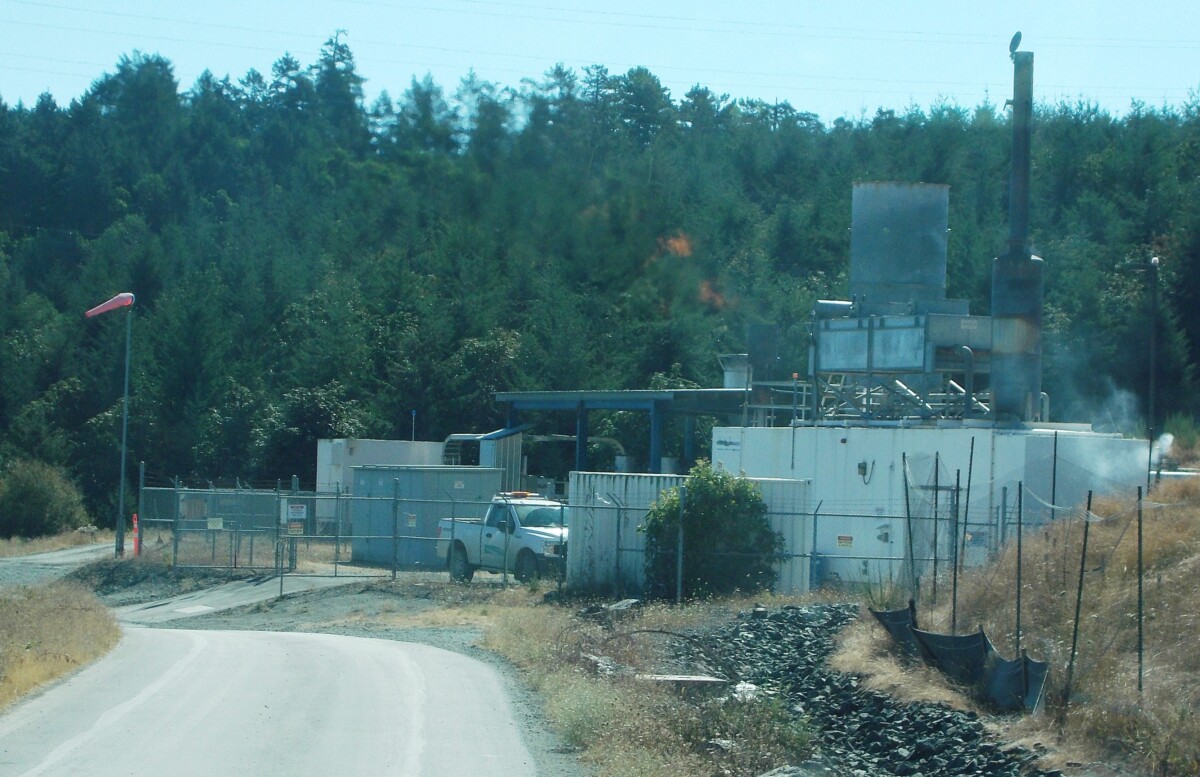
So one of the features that most intrigued me was the methane capture system – basically a series of pipes laid into and across the ever growing garbage mountain, feeding into an electricity plant – which powers (so far) about 1600 homes in the area, with plans for expansion. However, as long as food waste – the primary source of this methane – can be diverted into composting programs, the growth will slow.
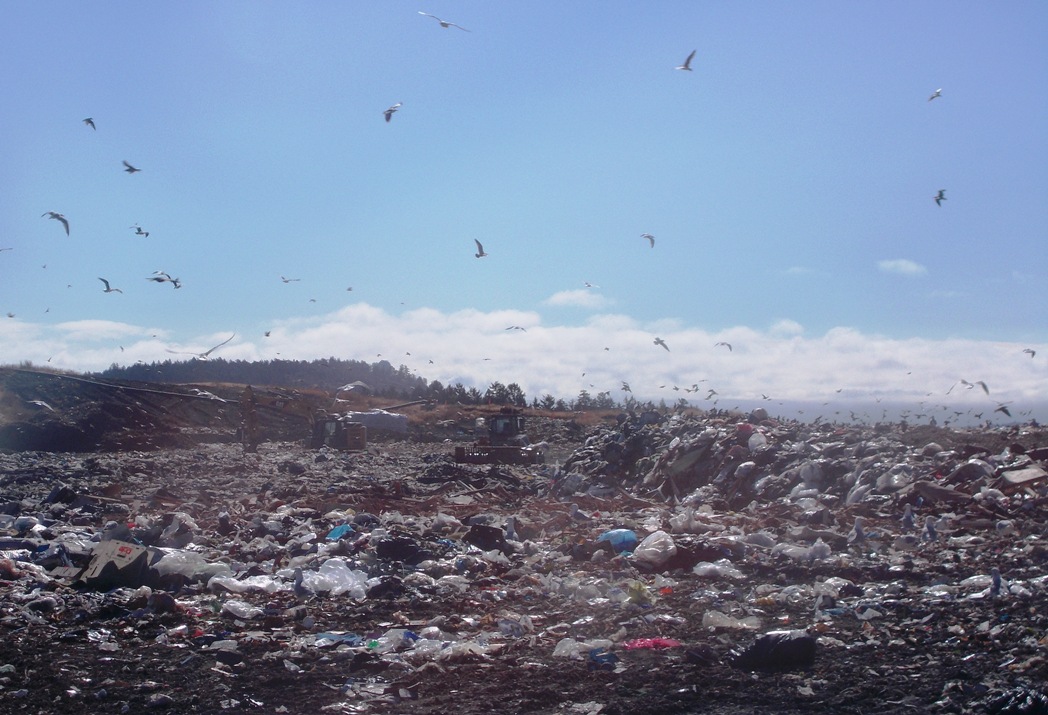
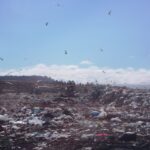 Our tour bus spent time sitting at the top of the current garbage mountain, so we could watch birds scavenging and scattering. Our guide told us that birds of prey (from the Cowichan Raptor Centre) come to keep order later in the year, and this program of Natural Predation is by far the most effective preventive measure they have found. The birds who feed on our garbage end up the worse for it because of consuming microplastics and toxins.
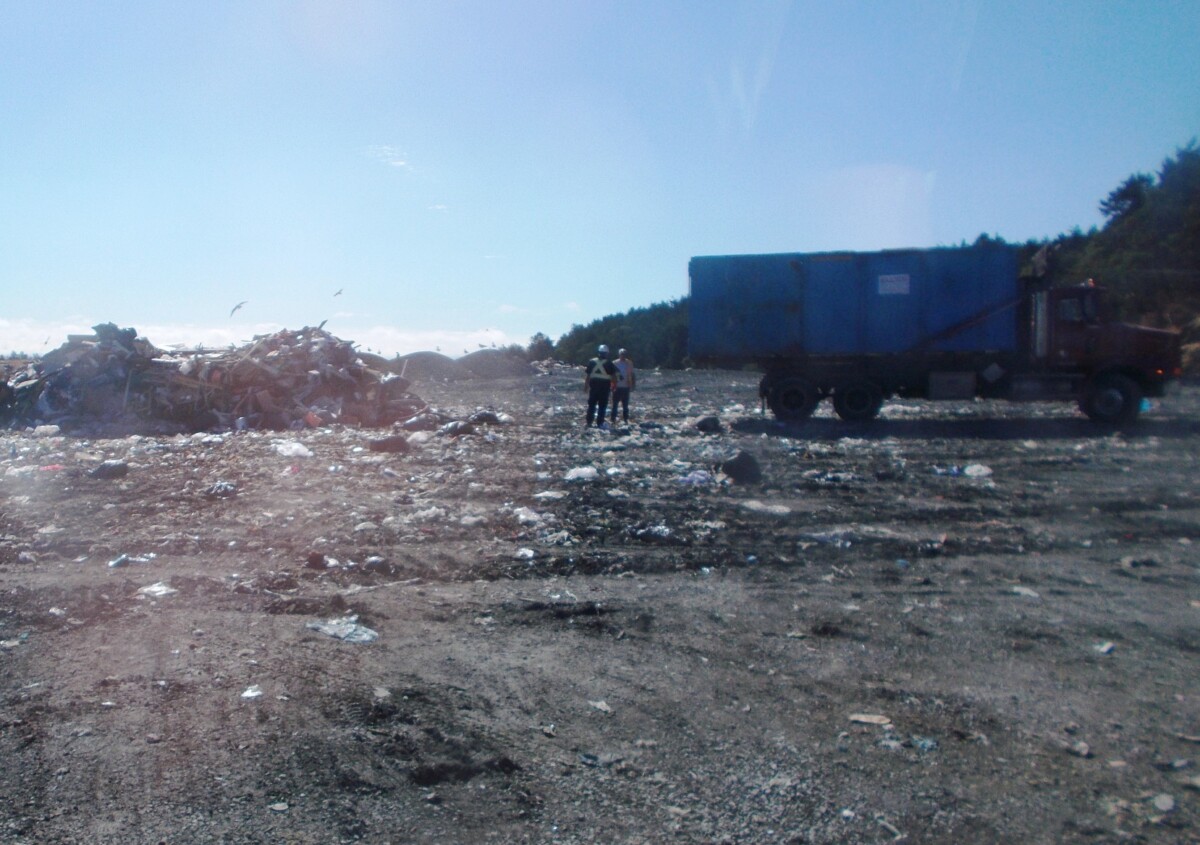
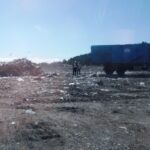 I was also encouraged to see inspectors checking each load that was deposited by garbage trucks. Because space is limited by planetary constraints, our municipalities have strict guidelines about garbage vs recyclables and compostables; the guidelines are enforced through fining the trucks that pick up our bins. A 2016 study of Hartland found that organics, paper and plastics made up half of what is thrown away by locals; hence our blue and green bin pick-up programs.
Even so, unless consumers and businesses change their ways by reducing their annual waste load of 400kg/person to 125kg, Hartland expects to run out of space by 2045. At this point the waste will be destined to take over some of the local hiking and bike trails on a neighbouring mountain.
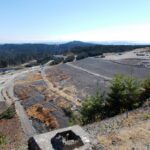
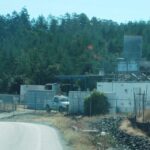
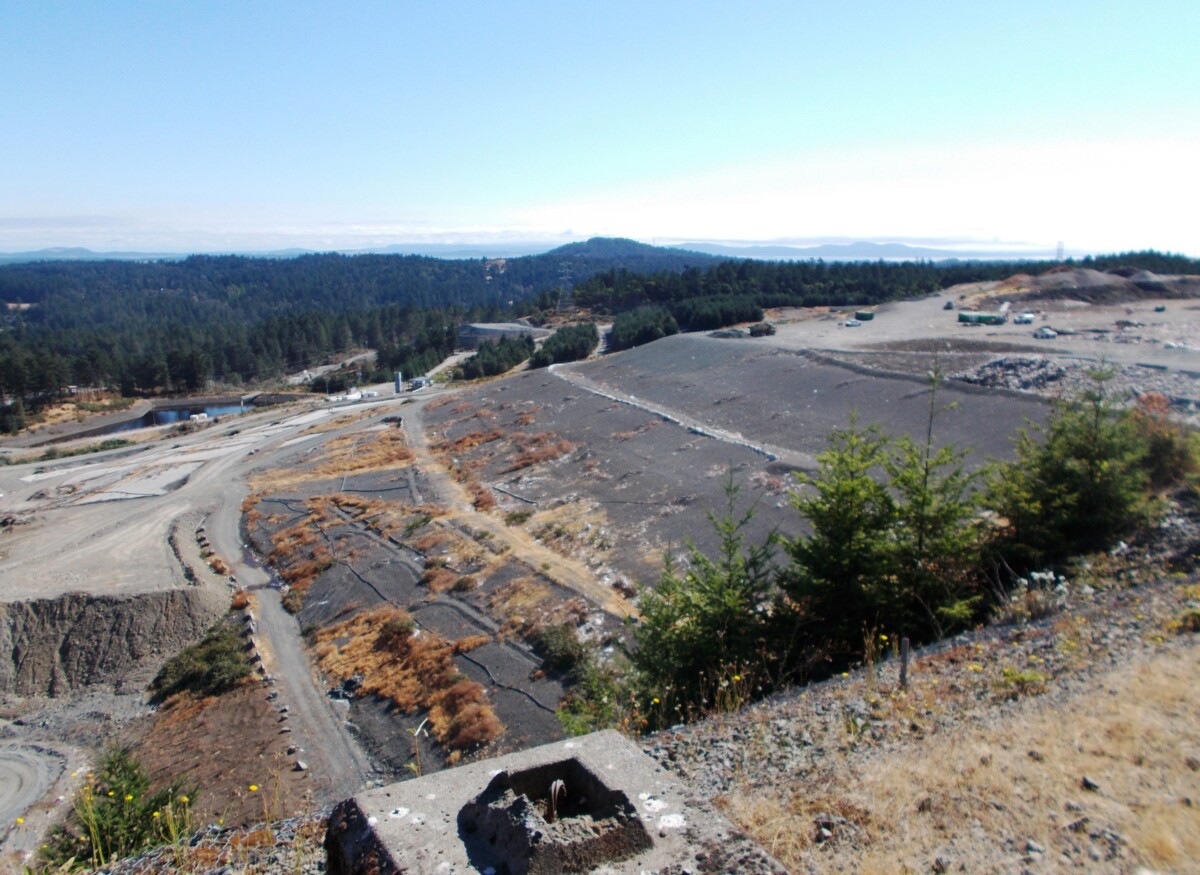
Adjoining the current mountain is a new valley being excavated ready to fill; in the background are sea, sky and mountains. And here’s what the power station looks like. There’s a nearby leachate pond as well, which is toxic fluid runoff, contaminated by
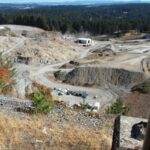
The landfill site is also a busy recycling centre, trying to reclaim as much as possible from consumer waste – people can bring in plastics, metal, clothing, paint etc to a public drop-off area, and the centre distributes and sorts it for whatever further life it might have. There’s composting available for larger scale drops, for a fee.
Here’s a closing thought: one of the items that has been deemed not recyclable is a damaged blue box!

Latest Posts
- Sublime
- Good weather for reading
- The world, the world
- Sublime launch!
- Planet Earth Poetry – Readings by Volunteers, Victoria 2026
- Poetry at the Goldfinch
Aldeburgh Poetry Festival Barny Haughton BBC BC poets Berkswell blackberries Black Stilt Bologna book launch Borough Market Caerphilly Carlo Petrini Catalonia culatello Cyrus Todiwala dairy Dijon Edinburgh Fanny Bay Feast of Fields ferries Food and Morality food journalism Michael Pollan olive oil tasting Omnivore's Dilemma Our Food Our Future Oxford Parmigiano-Reggiano persimmons Planet Earth Poetry poetry poetry readings Poetry videos prosciutto salumi Sean O'Brien sensory analysis Suffolk ticks tortelli di zucca Troubadour Wendell Berry Wendy Morton Yvonne Blomer
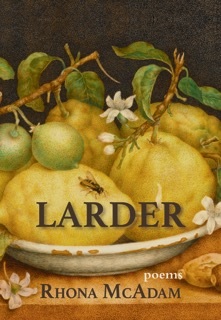
In her latest collection, Rhona McAdam navigates the dark places of human movement through the earth and the exquisite intricacies lingering in backyard gardens and farmlands populated by insects and pollinators, all the while returning to the body, to the tune of staccato beats and the newly discovered symmetries within the human heart.
“…A beautiful, filling collection, Larder is a set of poems to read at the change of the seasons, to appreciate alongside a good meal, and to remind yourself of the beauty in everything, even the things you may not appreciate before opening McAdam’s collection….”
Rhona McAdam is a writer, poet, editor, and Registered Holistic Nutritionist with a Master’s in Food Culture from Italy and a deep-rooted passion for ecology and urban agriculture. Her work spans corporate and technical writing to poetry and creative nonfiction, often exploring the vital links between what we eat and how we live. Based in Victoria, BC, and available via Zoom, Rhona is always open to new writing commissions, readings, or workshops on nutrition and the culinary arts.