-
Okara, and GE-free shopping guides
Read Full Post: Okara, and GE-free shopping guidesIt’s a byproduct, it’s a food, it’s a fertilizer..? Okara is all of these things. It’s made up of the solids left over from tofu and soy milk making, and resembles cottage cheese. It starts to sour and then rot fairly quickly so is perishable if you’re planning to eat it, as many Japanese do. It is rich in iron, low in fat, high in fiber, and also contains protein (not nearly as much as whole soybeans of course) as well as calcium and riboflavin.
Raw okara needs some preparation before using, both because it’s relatively flavourless on its own and because the proteins need cooking to become digestible. It should be steamed or baked or toasted for 25 to 45 minutes, or fried in oil for about 20 minutes until thoroughly cooked, and then cooled before using. It’s very light and crumbly once cooked, and still pretty flavourless.

You can add it to baking, use it as a substitute for nuts or ground beef; there are recipes around for okara falafel. I added it to some potato-vegetable pancakes last night, and it was good. There’s a useful-sounding blog out there, Okara Mountain, which has many more ideas.
Here’s a video on home tofu making, (and another one on making your own soya milk at home). The astute will notice that both tofu and soy milk begin the same way, and it is in these early steps that the okara is produced.
Okara is also a great soil enhancer if added to your garden or compost in the spring. If you leave it too long and it starts rotting in the bag, it will, as one of Haliburton‘s farmers put it to me, stink like a dead deer, though when spread over a garden and loosely raked under the leaf mulch, I haven’t noticed a smell. But that decompositional tang, certainly discernable to the canine nose, might explain why old Anton has developed quite a fondness for it, so I have to watch him closely until it rots down. I hope I am not attracting other four-legged browsers in the meantime.
And further to an earlier post which featured a Genetically-Engineered Foods Shoppers’ Guide from The Center for Food Safety, here’s one for Canadians, thanks to our friends at Greenpeace.
-
Sweet stuff
Read Full Post: Sweet stuffA recent article asks if maple syrup is the new sugar? A timely question with the Bigleaf Maple Syrup Festival seeping up on our horizon. The instigators of this festival go by the charming name of the Sapsuckers, and for a couple of years now, they’ve been promoting what is news to most of us: that even out here in the west, our local bigleaf maple trees (Acer macrophyllum, aka Oregon maple) can be tapped and the sap boiled down to make maple syrup.
The reason this isn’t more well known, or more frequently done, is that the more commonly known and aptly named sugar maple (Acer saccharum) – growing in Eastern Canada – has a higher sugar content. So although both need to be boiled down to acceptable levels of sweetness, the Eastern variety will take less sap and therefore less cooking time to reduce to a syrup.
Before you rush out to tap all your trees to see if there’s more sweet gold in them thar trees, the research has already been done: the only other tree you can tap for syrup is the birch, and its syrup has a distinctive flavour that not all will enjoy. Like the bigleaf maple, birch sap is lower in sugar than sugar maple sap, so will take much longer to boil down. But if you want to go for it, here’s how it’s done:
And if you’re looking for syrup recipes, here’s a good puddle of them. When I was in Nova Scotia a year or two ago I picked up a couple of interesting alternatives to syrup: maple sugar (sinzibukwud) and maple butter, both of which are produced by boiling past the syrup point.
-
Happy farmers and googly-mad writers
Read Full Post: Happy farmers and googly-mad writersThe blessed 60 day extension to the Madrona Farm fundraising campaign has yielded some truly gratifying results. Written up in Guy Dauncey‘s EcoNews, it caught the attention of a right thinking reader, Mel McDonald, who came up with the $200,000 that was needed for a matching donation by Ed Johnston, which reduced the amount needed to an entirely manageable sounding $287,000 – by March 31st. Still a lot of money to come up with, but “a lot” is certainly less than “a staggering amount”. And it’s a pittance compared with the amount that’s been raised – $1,413,000 so far.
A group of BC writers are carrying on their declamation of the Google Book Settlement as the final opt-out date looms hugely (January 28) before us. This is the date to opt out or opt back in if you went out but changed your mind. If you’re just plain mad, there’s a letter of protest (Canadian Writers Against Google Settlement petition) being sent to the US courts: to add your name, send it quickly to dvbolt@aol.com . Writers who are spending this last day on the fence are advised to devote some small part of it reading this FAQ on the settlement by the (US) National Writers Union.


Latest Posts
- (no title)
- Sublime and Twisted Readings coming up!
- Sublime
- Good weather for reading
- The world, the world
- Sublime launch!
Aldeburgh Poetry Festival Barny Haughton BBC BC poets Berkswell blackberries Black Stilt Bologna book launch Borough Market Carlo Petrini Catalonia Cyrus Todiwala dairy Daunt's Books Dijon Edinburgh Fanny Bay Feast of Fields Food and Morality food history food journalism Jenna Butler lardo Malahat Review Michael Pollan Okanagan olive oil tasting olive trees Omnivore's Dilemma Our Food Our Future Oxford Parmigiano-Reggiano Planet Earth Poetry poetry poetry readings Poetry videos prosciutto salumi Sean O'Brien Suffolk ticks Wendy Morton Wired Writing Yvonne Blomer
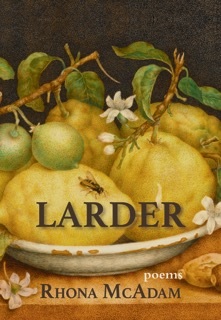
In her latest collection, Rhona McAdam navigates the dark places of human movement through the earth and the exquisite intricacies lingering in backyard gardens and farmlands populated by insects and pollinators, all the while returning to the body, to the tune of staccato beats and the newly discovered symmetries within the human heart.
“…A beautiful, filling collection, Larder is a set of poems to read at the change of the seasons, to appreciate alongside a good meal, and to remind yourself of the beauty in everything, even the things you may not appreciate before opening McAdam’s collection….”
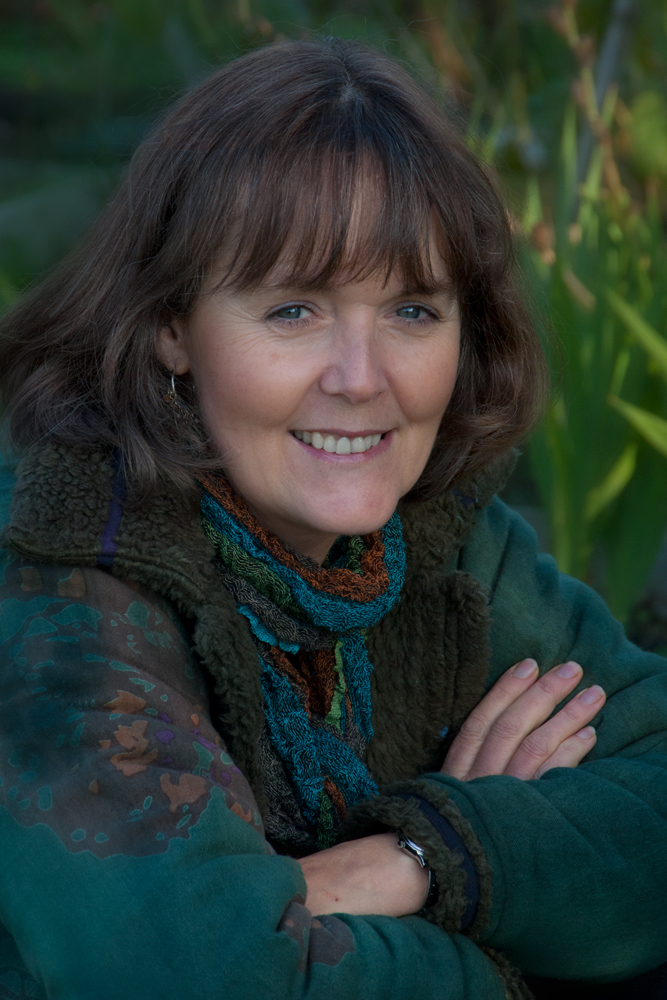
Rhona McAdam is a writer, poet, editor, and Registered Holistic Nutritionist with a Master’s in Food Culture from Italy and a deep-rooted passion for ecology and urban agriculture. Her work spans corporate and technical writing to poetry and creative nonfiction, often exploring the vital links between what we eat and how we live. Based in Victoria, BC, and available via Zoom, Rhona is always open to new writing commissions, readings, or workshops on nutrition and the culinary arts.