-
Complicated chocolate
Read Full Post: Complicated chocolateIt seems right that on Valentine’s Day I should come upon this article about the reasons to seek out free trade chocolate.
-
Call of the coypu…
Read Full Post: Call of the coypu…… or do I mean Revenge of the Nutria?
Visitors to Florence, I’m told, often remark on the web-footed, beaver-like creatures you can see frolicking in the Arno. Here too in Parma we’d noticed mammals in the river and wondered what they were: nutria, we were told (aka coypu / coipú / kóypu / ragondin / nuture rat / swamp beaver — but not to be confused with the river otter). And as their species name (Myocastor coypus) suggests, beaver-like they are, in many ways.. until you see their tails, and their colourful teeth!
Apparently these little blighters – Argentinian rodents with rat-like tails – were imported into Europe from South America in the 1920s. They arrived in Italy in 1928, brought here by commercial furriers hoping to turn a quick lire. When this didn’t happen, it seemed easiest to just.. set them free. And some of the rest escaped fair and square, and have made a real success of it: since their first sighting in the wild in 1960, they have spread from Italy to Sicily and Sardinia .
Alas for Italy, coypu really like it here and find many nice things to eat in the river systems, to the extent that they have laid waste to a great deal of native vegetation, as well as rice farms, and their burrowing habits weaken irrigation systems and riverbanks, causing tens of millions of euros in damage per year.
They were introduced to Britain as well, where they caused a lot of agricultural damage, but Britain embarked on an eradication campaign, employing 24 trappers who managed to eradicate the species there in just under a decade, by 1989 (… or did they?).
They are still raised in France for fur, and other products including soap, pate and even jewellery (those lovely teeth, just the colour of Mimolette, alors). Here are a couple of recipes in case you want to make your own pate or ragout. (Lucky for the nutria, animal rights activists at Bite Back are hard at work liberating these giant rodents into the French countryside.)
The French are not the only connaiseurs: apparently the meat is lean and low in cholesterol (well, they are herbivoires) and the Louisiana Department of Wildlife and Fisheries is aiming to get locals to help eradicate them through fine dining, and has helpfully posted some other recipes. If you need some visual prompts, here’s a YouTube video – sponsored by LDWF – to show you how it’s done.
Ironically, just as they are really making a nuisance of themselves by busting loose wherever they were imported, their numbers in the rivers and streams of Argentina appear to have been dwindling.
-
Chocolate finale
Read Full Post: Chocolate finaleHow do you make 24 foodie students happy? So easy. Make their last class on Friday afternoon a chocolate tasting session. We were reunited with our affable guide through cured meats, Mirco Marconi, who confessed his passion for artisanal chocolate, and treated us to a sampling of 23 different varieties.
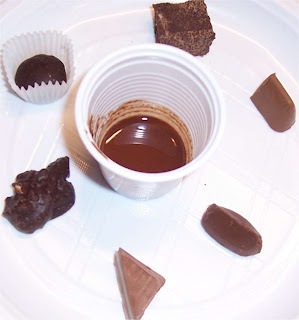
We learned a bit about the history of cacao – its discovery by the Olmecs and its appreciation by the Mayans who consumed it as a liquid, relishing the foam. He showed us a picture of the Mexican chocolate whisk, the molinillo, which was actually a contribution by the Spaniards.
The New Taste of Chocolate by Spanish writer Maricel Presilla is, he says, the best book he’s read on chocolate. There seemed to be interest among my long-suffering classmates in doing more of the onerous research required to master this subject: there are chocolate festivals enough to keep us happy: CioccolaTO in Turin next month; the recently elapsed but highly recommended purists’ festival, Cioccolasita; and one to look forward to, Le Salon du Chocolat in Paris, from October 19-22, 2007.
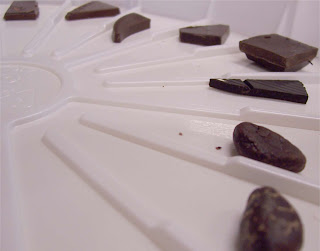
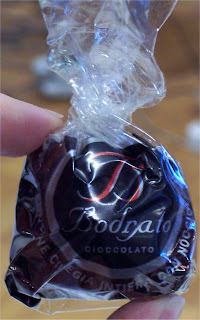
We heard about the chocolate making process, from harvest through fermentation and drying, to refining, conching and tempering. We tasted chocolate beans, unsweetened chocolate, liquid chocolate, and ‘grand cru’ chocolates from Venezuela; we tried chuao and porcelana; criollo, forestero and trinitano. Bewildering varieties and many epiphanies of taste and texture.My favourites were Guido Gobino’s Cialdine lemon and ginger – a chocolate covered nugget of exquisite candied fruit; Ravera‘s Baci di Cherasco – a crunchy fusion of fine chocolate and top quality hazelnuts (nocciola from Langhe); and Château Domori Porcelana – a silky bite of Venezuelan (70%) criollo — from a company evidently run by a chocophilic poet!? Marconi even brought us a special treat from his personal collection – a Bodrato cherry chocolate, the kind of treat he’d adored as a child and which is now produced with high quality cherries (la ciliegia d.o.p. di Vignola) which, bathed whole in grappa, are encased in a fabulous dark chocolate.
As we were picking and chewing I couldn’t help but think if we’d been served any one of the sampling – unsweetened versions aside – we’d probably have been overjoyed. Taken together, of course, you really notice the differences.There were three artisan producers named from the US, Scharffen Berger (which has been bought out by a multinational since he’d first encountered them), Ghirardelli and E. Guittard. I’m eager to get back to Hot Chocolates in Courtenay and do a little taste-testing to see how they measure up now…


Latest Posts
- Sublime
- Good weather for reading
- The world, the world
- Sublime launch!
- Planet Earth Poetry – Readings by Volunteers, Victoria 2026
- Poetry at the Goldfinch
Aldeburgh Poetry Festival Barny Haughton BBC BC poets Berkswell blackberries Black Stilt Bologna book launch Borough Market Carlo Petrini Catalonia Cyrus Todiwala dairy Daunt's Books Dijon Edinburgh Fanny Bay Feast of Fields Food and Morality food history food journalism Jenna Butler lardo Malahat Review Michael Pollan Okanagan olive oil tasting olive trees Omnivore's Dilemma Our Food Our Future Oxford Parmigiano-Reggiano Planet Earth Poetry poetry poetry readings Poetry videos prosciutto salumi Sean O'Brien Suffolk ticks Wendy Morton Wired Writing Yvonne Blomer
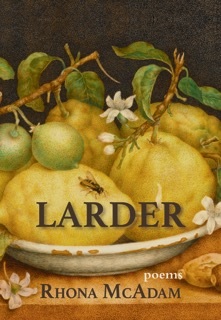
In her latest collection, Rhona McAdam navigates the dark places of human movement through the earth and the exquisite intricacies lingering in backyard gardens and farmlands populated by insects and pollinators, all the while returning to the body, to the tune of staccato beats and the newly discovered symmetries within the human heart.
“…A beautiful, filling collection, Larder is a set of poems to read at the change of the seasons, to appreciate alongside a good meal, and to remind yourself of the beauty in everything, even the things you may not appreciate before opening McAdam’s collection….”
Rhona McAdam is a writer, poet, editor, and Registered Holistic Nutritionist with a Master’s in Food Culture from Italy and a deep-rooted passion for ecology and urban agriculture. Her work spans corporate and technical writing to poetry and creative nonfiction, often exploring the vital links between what we eat and how we live. Based in Victoria, BC, and available via Zoom, Rhona is always open to new writing commissions, readings, or workshops on nutrition and the culinary arts.