-
Massa to Mosaiko
Read Full Post: Massa to MosaikoLast weekend, in an attempt to escape the unending heat of Parma, we took a trip to the seaside, in search of cooling breezes and nice chilly marble museums. We found a breeze or two, and a few other things of interest.
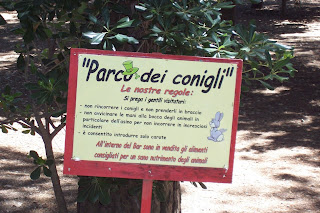
We arrived in Massa and hopped a bus to the seaside which was large and developed. While looking for the information office we passed a rabbit park which was, well, hopping with rabbits. And little horses. And a lot of signs, like these ones.

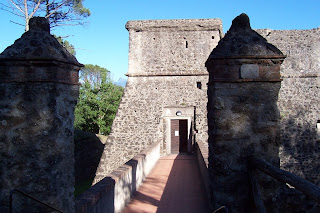
A half hour or so in the information office was enough to convince us we didn’t need to stay in Massa, and while searching for other diversions, we spotted a castle in Aulla, which if all else failed was at least on the way back to Parma. And indeed it was a castle, the Brunella Fortress. Its address is number 3 Via Fortezza (why not number 1??) and within it we found a small natural history museum, with a few items of interest including a collection of rather sad looking stuffed animals. Nice views, though.
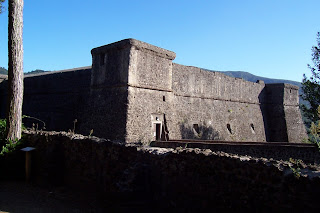
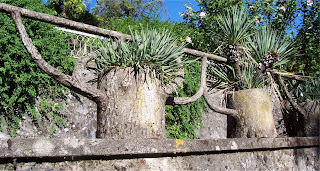
We walked up the hill and then down the hill. We passed a nifty looking fence.
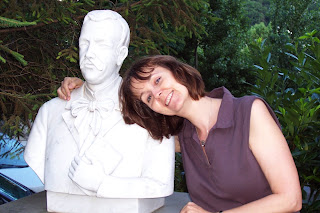
And then in town, I made the acquaintance of a poet, Ceccardo Roccatagliata Ceccardi (1871-1919), who touched down for a few formative years in Massa (but not as far as I can make out in Aulla) during his life of poverty and peregrination. It was some consolation to having missed the Parma poetry festival…
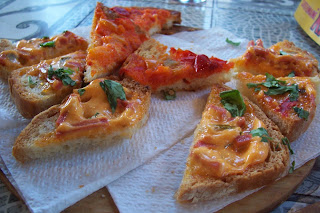
We escaped back to Parma having found only this in the way of sustenance: is it Italy’s answer to Cheez Whiz?
After that, mercifully, it cooled down for a few days in Parma. We had our wine tutor Sandro Bosticco back for some informative tastings, and then spent the rest of the week alternately in a journalism workshop with Corby Kummer and learning about consumer psychology from Nadia Olivero.
Last night, a return visit to Ristorante Mosaiko: very nice indeed. We talked to chef Davide who told us his training route included France, England, Japan and Australia, and before that enjoyed the tasting menus: seafood for me, including in-house smoked salmon (with a touch of wasabi), followed by a mosaic of octopus on a tart nicoisey salad of green beans, potatoes, carrots, capers and more:
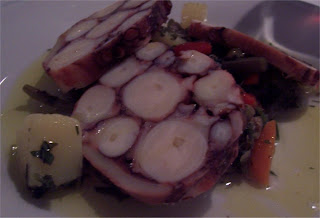
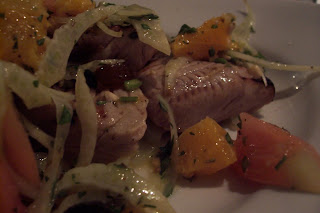
followed by some awesomely artfully seared tuna with fennel, oranges, olives and tomatoes and a tantalising pinch of je ne sais quois:
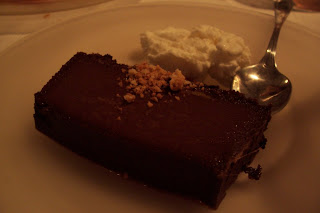
and what do you do when you can’t decide which dessert to have? Have them all of course. That Piemonte classic, bounet, like a chocolate/nut creme caramel as Corrie so rightly observed:
Tart lemon tart:
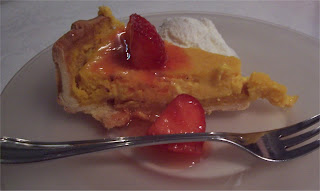
And the winner was… simple is best? delicious strawberries laced with citrus and topped with yogurt gelato:

And with that it will be over and out, for a while, as we head to Catalunya tomorrow.
-
Food reading
Read Full Post: Food readingJust back from a sprint round northern Italy.
Meanwhile, a couple of journals we’ve been pointed towards. Food For Thought, self-described (in the spirit of nose to tail gastronomic studies?) as the Organ of the University of Gastronomic Sciences, is a beautiful thing, like all the Slow Food publications. Helpful in many ways to be part of an organisation started by writers.
And Anthropology of Food is a webjournal produced by a network of European food academics.
-
Piemonte Thursday
Read Full Post: Piemonte ThursdayWe spent our last day touring Torino‘s ethnic markets with Vittorio Castellani, journalist, broadcaster and self-declared gastronomad, known locally as Chef Kumalé. An anthropologist by training, he has put his background to good use in communicating the issues, circumstances and foods of Torino’s ethnic communities. He’s a writer as well, and worked with our friends at Lavazzo to write Coffee Roots. He was kind enough to agree to an impromptu book signing at our meeting point, outside the Hamam, which originally served as the bath house to Torino’s immigrant workers. We toured the facility later: abandoned for 20 years, it’s been refurbished and offers meeting spaces, a cool and tempting basement restaurant and a turkish bath open on alternating days to men and women.

These are the tenements where the workers lived, above the market. Abandoned now, they held workers from the south of Italy and from many immigrant communities; they still host occasional squatters, many these days coming from China.

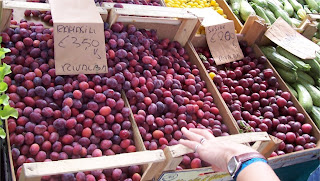
The food market is large and varied and sprawls across many streets and buildings: this is the farmer’s market section, an unusual feature in Italy where the food markets nowadays tend to be straight retail operations selling imported produce. One of Slow Food’s projects is to try to develop a network of farmer’s markets around the country.

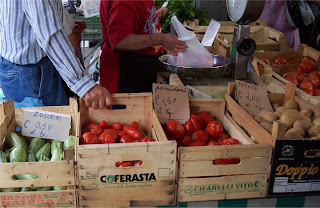
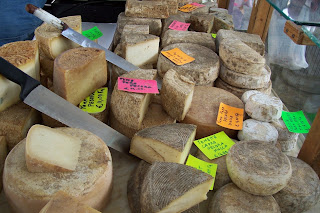
The market changes to reflect the communities it serves. In the enclosed section of the food market, Italian traditional producers now also sell cheeses and salumi tailored to Romanian tastes. There are areas of the market for all the different regions of Italy as well: we passed a little slice of Puglia, way up here in the north.
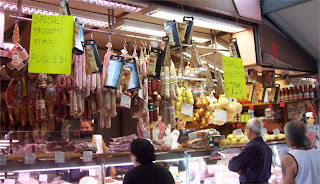
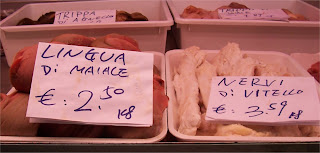
From an Asian-run stand, you can buy a bit of pork tongue or veal nerves. Why not?
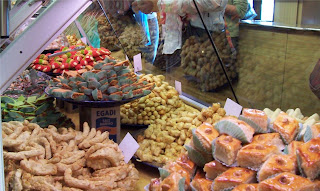
We checked out a local Moroccan bakery, serving that community’s needs for pastries and sweets. These are part of its culture; a social currency as well as a food tied to religious observance. When breaking Ramadan fast, sweets and pastries are some of the allowed items. Packed with dates, nuts and honey they are a quick, effective source of energy to bodies depleted by fasting.
In the courtyard at Torino’s mosque. It’s the simple grey door left of centre in the photo, situated in the courtyard of a tenement well hung with laundry and plastic sheeting. There were 24 of us there, which was comfortable; every Friday afternoon 20,000 moslems head in here for worship, aiming for one of the 200 spaces inside. The ensuing tension and conflict are widely reported, but nobody seems to know what to do about it.

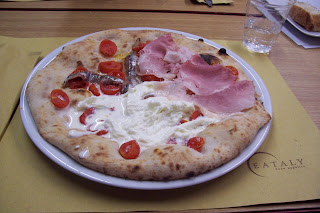
After we parted from Vittorio, we leapt back into the bus and sped off to Eataly for lunch. Built in a former vermouth factory, it’s a large and impressive edifice, one of the new wave of groceries (not unlike Whole Foods?) promising products for all budgets and offering a whole consumer experience. We started our day there with very good bread and lovely pizza (mine had fresh tomatoes, ham, anchovies and burrata – a fresh mozzarella with cream).
We travelled round the facility with Sebastiano Sardo, Slow Food’s man in Eataly. He shows us a whole lot of beer. Unusual for Italy.

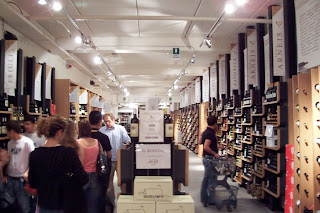
A whole lot of wine. Not so unusual.
A Spanish wood fired oven explained in part why the bread and pizza were so good…

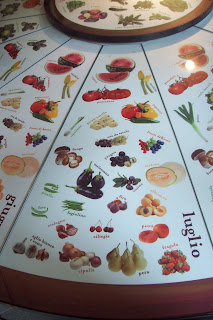
Education is a big part of the picture: the seasonal wheel shows families, as they enter the store, what’s in season here.
The store has a library where you can browse food guides, surf the internet and even buy books and Slow Food paraphernalia.

The foods of Piemonte, a special display which gives a bit of history and background to the foods of the area.
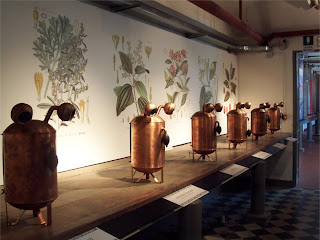
Paying tribute to the building’s origins, there’s a vermouth museum on the top floor, with these cool copper sniffing devices which give you a sense of the relevant aromas.


Latest Posts
- Writers at Word!
- Sublime and Twisted Readings coming up!
- Sublime
- Good weather for reading
- The world, the world
- Sublime launch!
Aldeburgh Poetry Festival Barny Haughton BBC BC poets Berkswell blackberries Black Stilt Bologna book launch Borough Market Carlo Petrini Catalonia Cyrus Todiwala dairy Daunt's Books Dijon Edinburgh Fanny Bay Feast of Fields Food and Morality food history food journalism Jenna Butler lardo Malahat Review Michael Pollan Okanagan olive oil tasting olive trees Omnivore's Dilemma Our Food Our Future Oxford Parmigiano-Reggiano Planet Earth Poetry poetry poetry readings Poetry videos prosciutto salumi Sean O'Brien Suffolk ticks Wendy Morton Wired Writing Yvonne Blomer
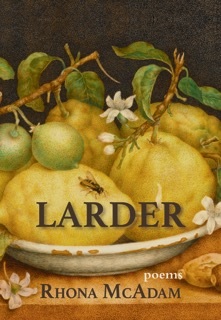
In her latest collection, Rhona McAdam navigates the dark places of human movement through the earth and the exquisite intricacies lingering in backyard gardens and farmlands populated by insects and pollinators, all the while returning to the body, to the tune of staccato beats and the newly discovered symmetries within the human heart.
“…A beautiful, filling collection, Larder is a set of poems to read at the change of the seasons, to appreciate alongside a good meal, and to remind yourself of the beauty in everything, even the things you may not appreciate before opening McAdam’s collection….”
Rhona McAdam is a writer, poet, editor, and Registered Holistic Nutritionist with a Master’s in Food Culture from Italy and a deep-rooted passion for ecology and urban agriculture. Her work spans corporate and technical writing to poetry and creative nonfiction, often exploring the vital links between what we eat and how we live. Based in Victoria, BC, and available via Zoom, Rhona is always open to new writing commissions, readings, or workshops on nutrition and the culinary arts.