-
Something not to put on our fields
The National Film Board’s treasure-trove of free films includes an hour long 2003 documentary called Crapshoot: The Gamble with Our Wastes. Well worth a look, it covers the basics of waste treatment and some of the truly monumental problems in dealing with sewage sludge.
Because the problem with sludge (aka biosolids, “bioslurp” and “black gold” – the terminology is ever-changing) is that it is not just human faecal matter, but completely random combinations of chemicals and metals. As long as they have private control over what goes into sinks and toilets, people can and do flush all kinds of things – pharmaceuticals, bleach, hair dyes and perm chemicals, paint thinners, pesticides, cleaning agents – down the drain, and then there’s effluent from industrial operations, and whatever chemicals, metals and toxins wash off streets and buildings and road accidents down the storm drains. So we really don’t know what’s in there.
Sludge from Edmonton’s sewers is combined with household (“municipal solid”) waste in a cruelly misnamed process called “co-composting” and used to produce something called NutriPlus, sold and labelled as an “organic” compost or “organic soil conditioner” (this is also done in the US). People are actually told to grow their backyard vegetables in this stuff. There appears to be no regulation of the term “organic” as it applies to fertilizer labelling (if anyone knows differently, please let me know) which seems crazy and dangerous. Sewage sludge is not a substance allowed into organic food production, but how would an unsuspecting gardener or farmer twig that an “organic” compost at the garden centre was actually made of municipal waste?
Edmonton’s household waste is, I would have thought, pretty likely to contain one or more of the following: carpets, foam, pillows, bedding, cushions, upholstery, insulation, sofas, chairs, other items of furniture (housing for TVs, stereos, computers, faxes, telephones, microwaves, kitchen appliances), cabling, glue, textiles, drapery, furnishing backings and coatings. And all of these things contain brominated fire retardants.
Brominated fire retardants (BFRs, aka PBDEs or polybrominated diphenyl ethers) show up nowadays at alarming levels in human breast milk. According to University of Pittsburgh’s Center for Environmental Oncology, these chemicals cause in experimental test animals:
permanent brain damage, abnormal development of sex organs, and defects in sperm. Many of these chemicals (and their combustion by-products) have also been shown to damage DNA (mutagenic), cause cancer (carcinogenic), and act like the hormone estrogen (endocrine disruptors).
They are linked to non-Hodgkin’s lymphoma (as well as hyperthyroidism in cats, a previously unknown feline disease that is now the second most common disease in North American moggies).
BFRs came to public attention in Sweden, where they were found in sewage sludge that had been used in agriculture; as we might think typical behaviour for governments, there was no government move to stop spreading this on the fields, but consumer reaction was such that the Swedish National Farmers’ Union banned the practice. As has been done by farmers’ unions in France, Germany, Sweden, Luxembourg and Finland; the Netherlands and Switzerland have banned it entirely.
Truly, where it meets the world of food, sludge is at its most terrifying. As one of the Swedish scientists interviewed in the film, remarked, if you think broccoli is a healthy food, maybe you need to have a closer look at what it was grown in. (And, it follows, from what may eventually leech into groundwater from the fields.)
The problem is, what on earth do you do with sewage waste? For lack of a better idea, all across Canada, legislators have simply agreed that sewage sludge is good for the land, and that there’s no problem dumping it on our food crops: Ontario’s website practically bursts with pride in sludge’s benefits to soil health.
Here in Victoria, the city lumbers towards a decision about where to place its yet-to-be created sewage treatment plant, after years of taking stick for dumping raw sewage into the ocean, as do many other Canadian coastal communities. I guess in some ways it’s hard to see which could win the moral high ground: spreading it “treated” on the fields or dumping it raw into our seafood.
The film’s brightest notes came in its promotion of composting toilets as one practical way we can close our individual ecological loop. But stopping industrial pollution is a vastly more difficult task for political systems, although the film’s instructions are simple:
Industrial waste has to be a tight loop. Every industry should recycle, in one way or another, its own wastes. And if you can’t do it, you can’t produce those things. That’s what the policy should be.
The planet’s health and life will depend on such policies. Unfortunately, life and health are not always considered conclusive arguments in human policy-making.
-
Salve that’s hard on toads, mud pies, and Help Grow Your Soup
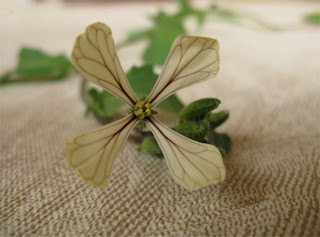
An arugula flower; if I were a bee I think I’d find this pretty irresistable…
I was thinking about the zinc ointment my mother used to apply to our childhood contusions, Dr. Chase’s Ointment, it was called, which led me to stumble upon this strange recipe for a toad salve for sprains, which sounds ghastly. Can’t help but wonder how he devised the recipe in the first place. Why toads? Why 4 of them? What did it smell like as it ripened?
For sprains, strains, lame-back rheumatism, caked breasts, caked udders, Etc. Good sized live toads, 4 in number; put into boiling water and cook very soft; then take them out and boil the water down to a 1/2 pt. and add fresh churned, unsalted butter 1 lb. and simmer together; at the last add tincture of arnica 2 ozs. This was obtained from an old Physician, who thought more of it then any other prescription in his possession. Some persons might think it hard on toads, but you could not kill them quicker any other way.
I am greatly entertained by my new soil-blocker, which I used to make cubes for seeding my winter veg. It all looks oddly like brownies at this point.
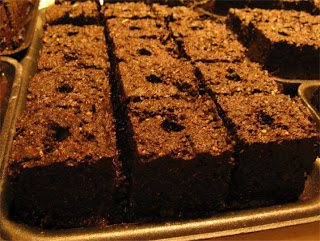
Though I ran out and bought one, soil-blockers take many forms and can be made in various ways, as in these instructions.
On a more edible note, Campbell’s Soup company is stepping into the realm of grow-your-own, by donating seeds to the National FFA Organization (formerly known as the Future Farmers of America) in the US. Visit the Help Grow Your Soup page to click them on their way.
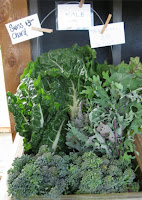
Some nice things on the farm stand at Haliburton this week:


-
Something not to put in your compost
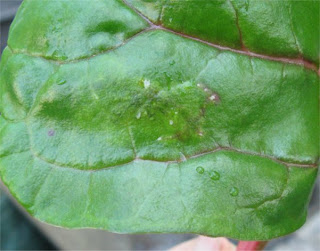
A series of unfortunate discoveries have led me to learn all about the spinach leaf miner, which is wreaking havoc on my spinach, chard and beets. Here is the innocuous appearance of one infected chard leaf.
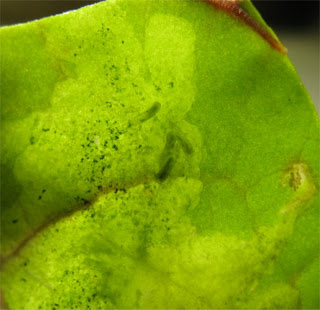
Holding leaves up to the light shows the perpetrators at work. The little brown patch at right is a clutch of eggs.
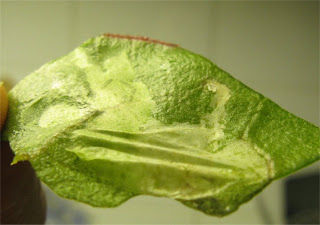
A nasty case on some spinach.
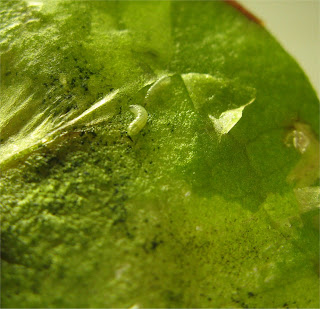
Evil grubs (now deceased).
There appears to be no organic solution other than to remove damaged leaves (not into the compost!), check for eggs on the backs of leaves and get rid of them (but make sure you do not knock them into the soil, where they can still hatch).


Latest Posts
- Sublime
- Good weather for reading
- The world, the world
- Sublime launch!
- Planet Earth Poetry – Readings by Volunteers, Victoria 2026
- Poetry at the Goldfinch
Aldeburgh Poetry Festival Barny Haughton BBC BC poets Berkswell blackberries Black Stilt Bologna book launch Borough Market Carlo Petrini Catalonia Cyrus Todiwala dairy Daunt's Books Dijon Edinburgh Fanny Bay Feast of Fields Food and Morality food history food journalism Jenna Butler lardo Malahat Review Michael Pollan Okanagan olive oil tasting olive trees Omnivore's Dilemma Our Food Our Future Oxford Parmigiano-Reggiano Planet Earth Poetry poetry poetry readings Poetry videos prosciutto salumi Sean O'Brien Suffolk ticks Wendy Morton Wired Writing Yvonne Blomer
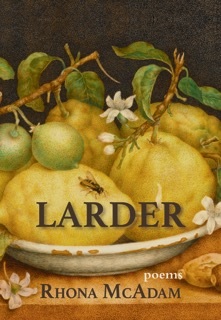
In her latest collection, Rhona McAdam navigates the dark places of human movement through the earth and the exquisite intricacies lingering in backyard gardens and farmlands populated by insects and pollinators, all the while returning to the body, to the tune of staccato beats and the newly discovered symmetries within the human heart.
“…A beautiful, filling collection, Larder is a set of poems to read at the change of the seasons, to appreciate alongside a good meal, and to remind yourself of the beauty in everything, even the things you may not appreciate before opening McAdam’s collection….”
Rhona McAdam is a writer, poet, editor, and Registered Holistic Nutritionist with a Master’s in Food Culture from Italy and a deep-rooted passion for ecology and urban agriculture. Her work spans corporate and technical writing to poetry and creative nonfiction, often exploring the vital links between what we eat and how we live. Based in Victoria, BC, and available via Zoom, Rhona is always open to new writing commissions, readings, or workshops on nutrition and the culinary arts.